Student Accident Report Form
About this form
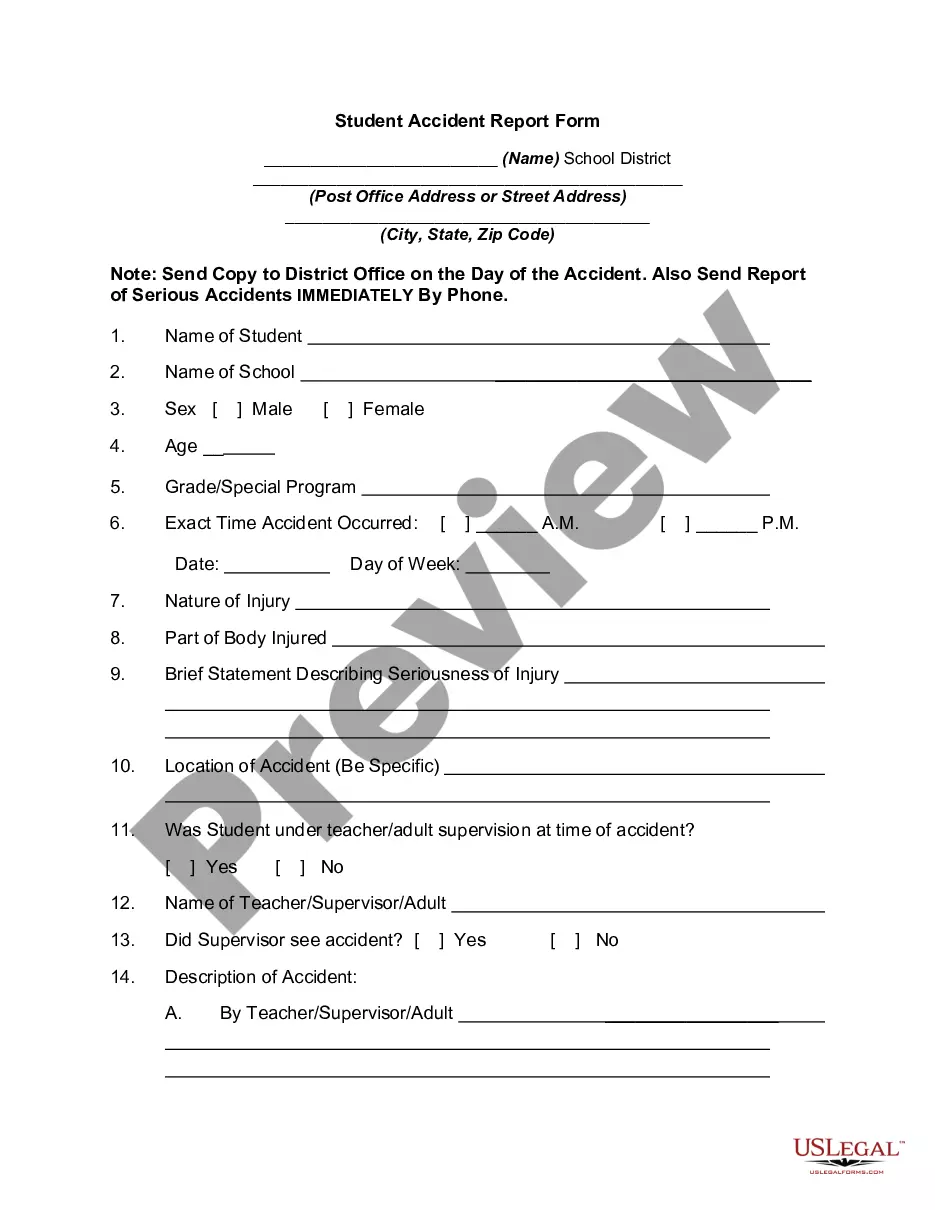
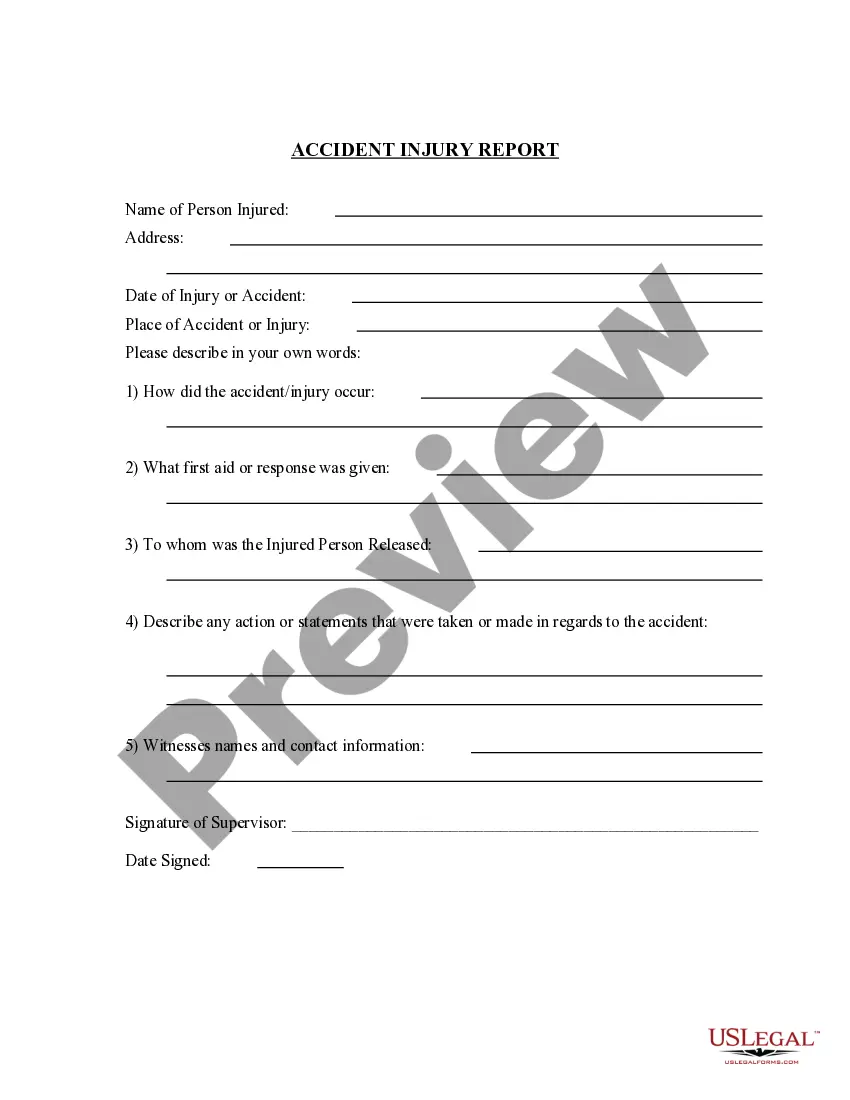
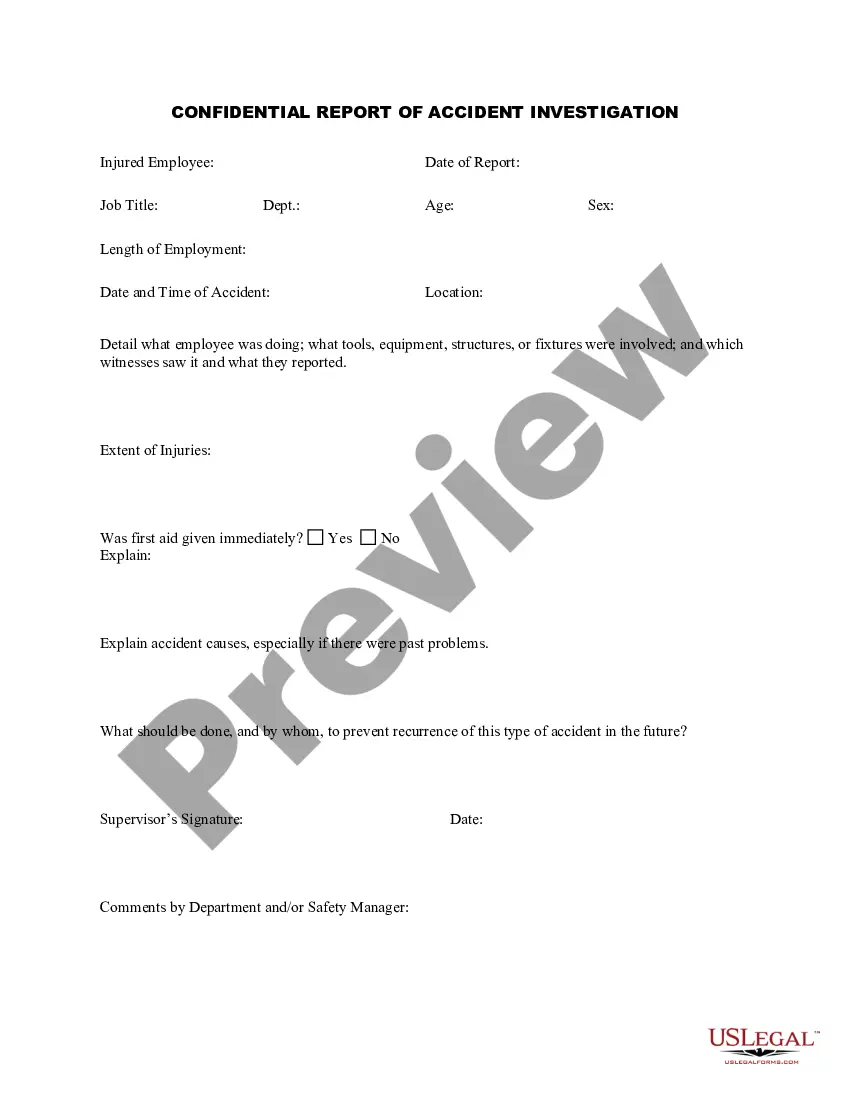
The Student Accident Report Form is a vital document used to document incidents that result in injuries to students within an educational environment. This form serves to record essential details surrounding the accident, ensuring that the information is accurately captured for legal and administrative purposes. Unlike other forms, this specific template is tailored to cater to school settings, focusing on the specifics of student accidents to ensure proper reporting and follow-up actions.
Key parts of this document
- Name of the student involved in the accident
- Date, time, and location of the incident
- Nature and seriousness of the injury
- Details of supervision at the time of the accident
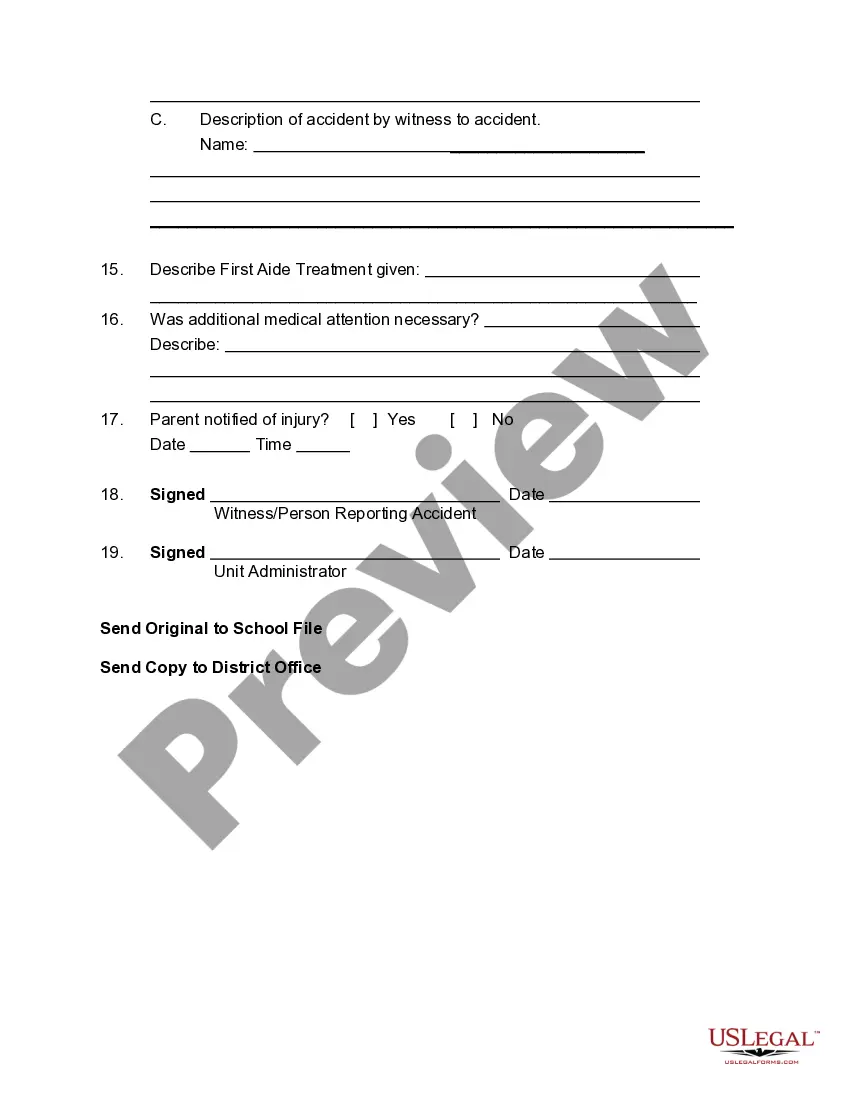
- Description of the accident from different perspectives
- Information about first aid treatment and further medical attention
- Notifications to parents or guardians

When to use this form
This form should be utilized whenever an accident involving a student occurs on school property or during school-sponsored activities. It is crucial for situations that require documentation of injuries that happen at school, on school trips, or during extracurricular activities. Proper completion of this form will ensure adequate follow-up and adherence to school policies regarding student safety and health reporting.
Intended users of this form
- Teachers and school staff responsible for supervising students
- School administrators overseeing student safety
- School nurses or medical personnel assessing the injury
- Parents or guardians of the injured student for notification purposes
Completing this form step by step
- Begin by filling out the school district information, including the name and address.
- Document the details of the student involved, including their name, age, and grade.
- Record the exact time and date of the accident along with the nature and specifics of the injury.
- Detail the location of the accident and whether adult supervision was present.
- Provide descriptions of the accident from the teacher, injured student, and any witnesses.
- Sign and date the report to finalize the documentation and ensure it is filed appropriately.
Is notarization required?
This form usually doesn’t need to be notarized. However, local laws or specific transactions may require it. Our online notarization service, powered by Notarize, lets you complete it remotely through a secure video session, available 24/7.
Get your form ready online
Our built-in tools help you complete, sign, share, and store your documents in one place.
Make edits, fill in missing information, and update formatting in US Legal Forms—just like you would in MS Word.
Download a copy, print it, send it by email, or mail it via USPS—whatever works best for your next step.
Sign and collect signatures with our SignNow integration. Send to multiple recipients, set reminders, and more. Go Premium to unlock E-Sign.
If this form requires notarization, complete it online through a secure video call—no need to meet a notary in person or wait for an appointment.
We protect your documents and personal data by following strict security and privacy standards.

Make edits, fill in missing information, and update formatting in US Legal Forms—just like you would in MS Word.

Download a copy, print it, send it by email, or mail it via USPS—whatever works best for your next step.

Sign and collect signatures with our SignNow integration. Send to multiple recipients, set reminders, and more. Go Premium to unlock E-Sign.

If this form requires notarization, complete it online through a secure video call—no need to meet a notary in person or wait for an appointment.

We protect your documents and personal data by following strict security and privacy standards.
Typical mistakes to avoid
- Failing to document the time and location accurately.
- Leaving out critical details about the nature of the injury.
- Not providing sufficient description of the accident.
- Neglecting to obtain signatures from all relevant parties.
Benefits of completing this form online
- Easy access to a standardized template that ensures completeness.
- Convenient download options that enable quick completion.
- Flexibility to complete the form at any time without the need for physical paperwork.
- Reliability in documentation, promoting proper follow-up procedures.
Main things to remember
- The Student Accident Report Form is essential for documenting incidents involving student injuries.
- Complete the form promptly and accurately to ensure proper reporting and follow-up on the incident.
- Consult local regulations to ensure compliance with state laws regarding accident reporting.
Looking for another form?



Form popularity
FAQ
Type of incident (injury, near miss, property damage, or theft) Address. Date of incident. Time of incident. Name of affected individual. A narrative description of the incident, including the sequence of events and results of the incident.
RIDDOR puts duties on employers, the self-employed and people in control of work premises (the Responsible Person) to report certain serious workplace accidents, occupational diseases and specified dangerous occurrences (near misses).
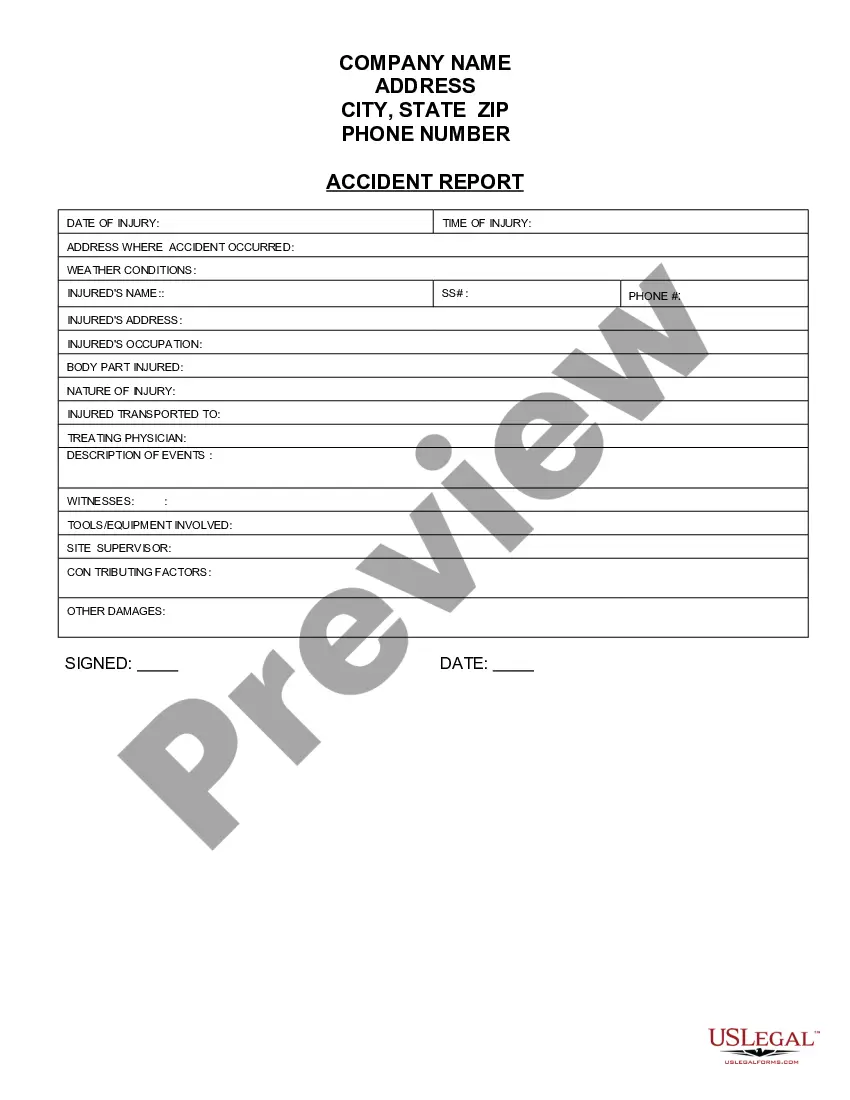
In the event of an accident in the workplace that you or a colleague has been involved in, you may need to record the incident. The accident report form covers the workers involved as well as the company should any repercussions occur. It also helps to track trends in occupational injury so they can then be rectified.
Date, time and specific location of incident. Names, job titles and department of employees involved and immediate supervisors. Names and accounts of witnesses. Events leading up to incident. Specifically what the employee was doing at the moment of the accident.
The accident book can be filled out by anyone, but it should be checked by the qualified first aider in your workplace. It's more important that the details written in the accident book are accurate, rather than who fills it out. Ideally, someone with first-hand involvement in the accident would write the record.
Ensure that all essential questions (what, where, when, why, and how) are covered in the incident report. Record not only the people who were injured and what caused the accident to happen, but also include details such as people who witnessed and reported the incident or those who will conduct an investigation.
Type of incident (injury, near miss, property damage, or theft) Address. Date of incident. Time of incident. Name of affected individual. A narrative description of the incident, including the sequence of events and results of the incident.
The time and date the incident occurred. Where the incident occurred. A concise but complete description of the incident. A description of the damages that resulted. The names and contact information of all involved parties and witnesses. Pictures of the area and any property damage.
The accident book can be filled out by anyone, but it should be checked by the qualified first aider in your workplace. It's more important that the details written in the accident book are accurate, rather than who fills it out. Ideally, someone with first-hand involvement in the accident would write the record.