Prepayment Agreement
What this document covers
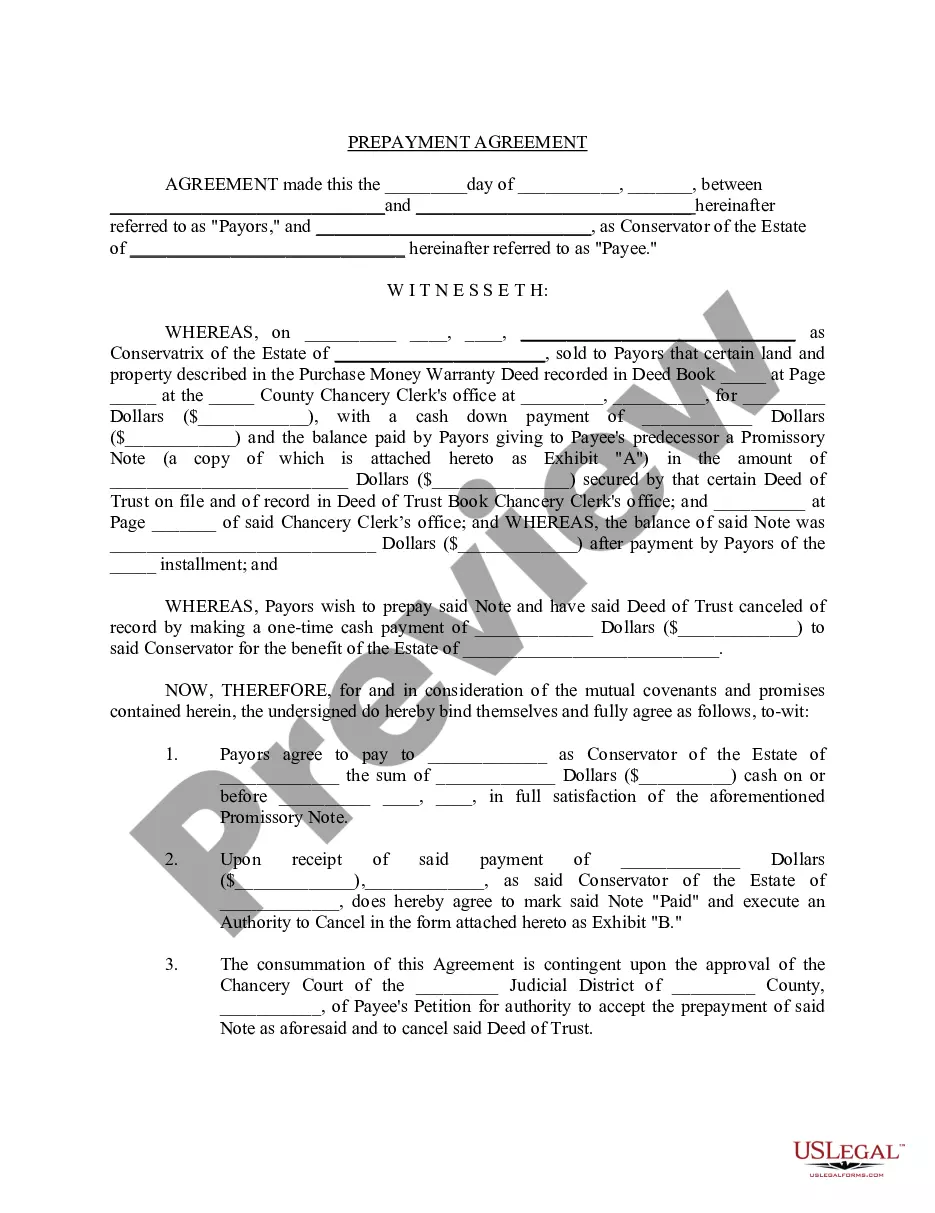
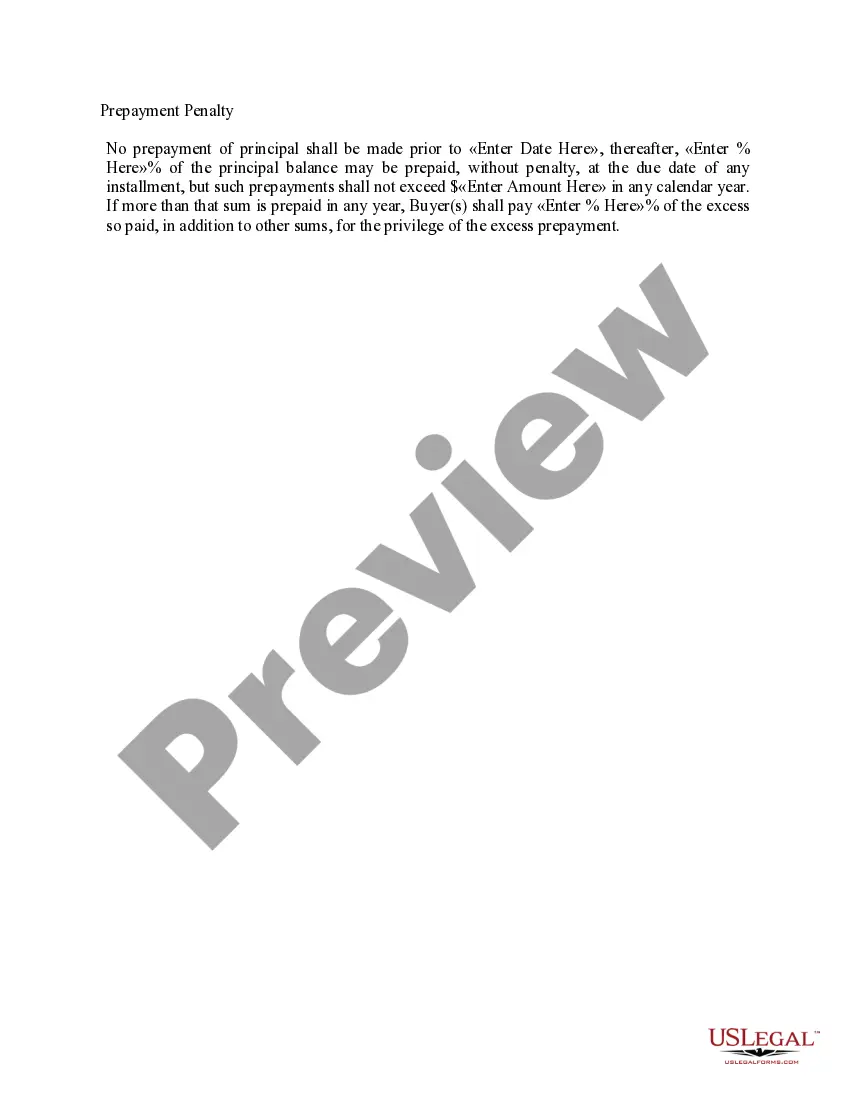
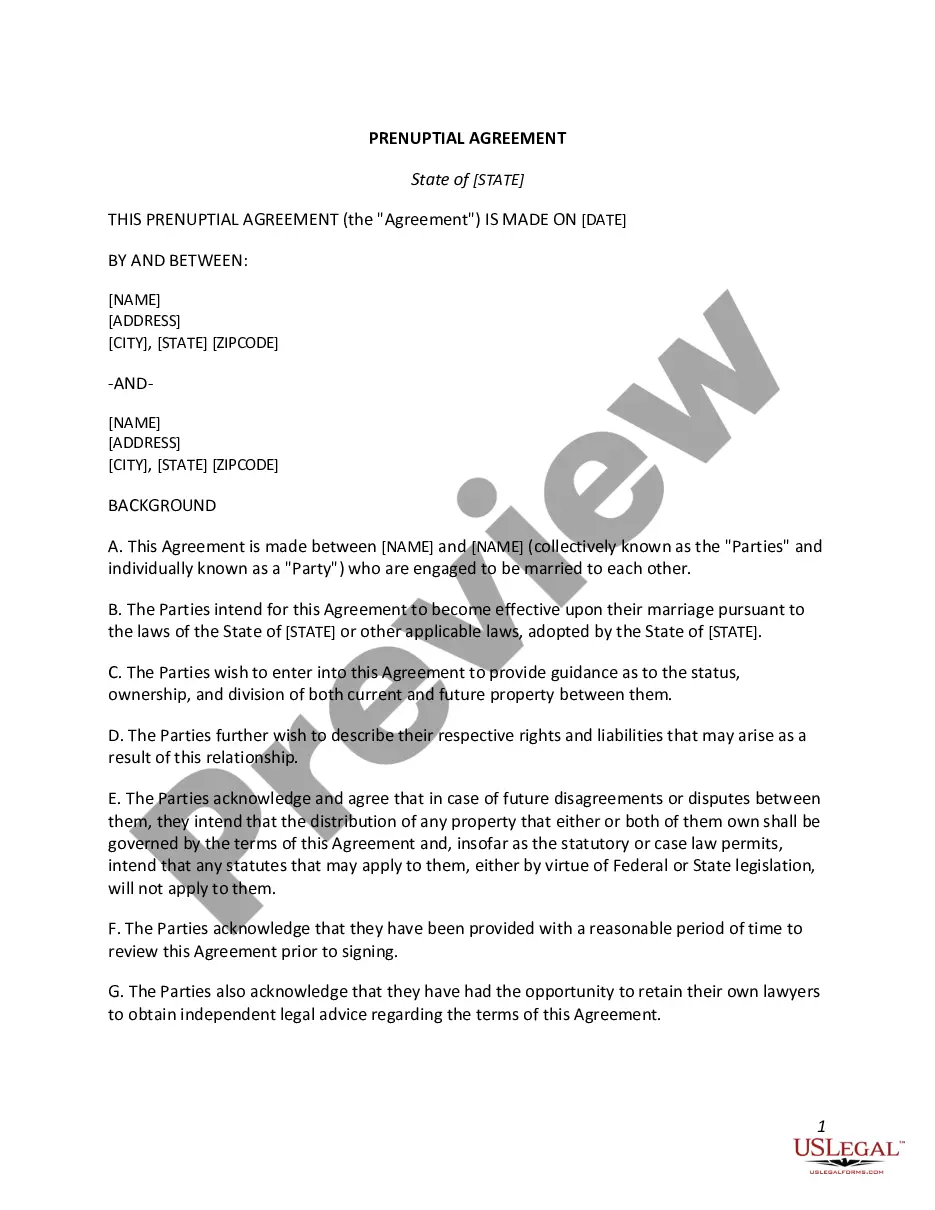
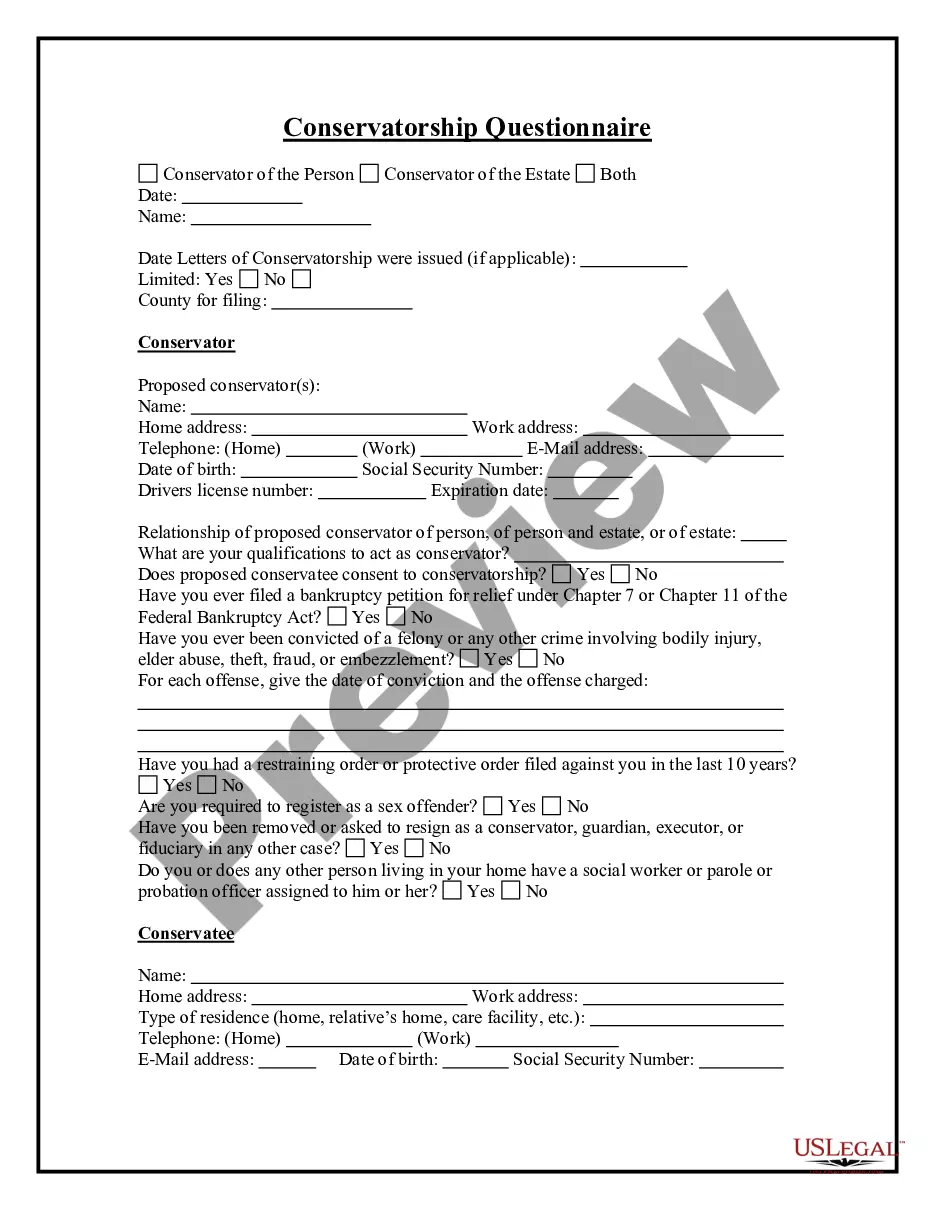
The Prepayment Agreement is a legal document outlining the terms under which a borrower may prepay a promissory note before its due date. This agreement is designed for situations where a borrower wishes to pay off their outstanding debt early, thereby canceling the related mortgage or deed of trust. Unlike similar forms that may only provide for regular payments, this agreement specifically addresses early repayment and the necessary legal steps to ensure the transaction is properly documented and authorized.
Key parts of this document
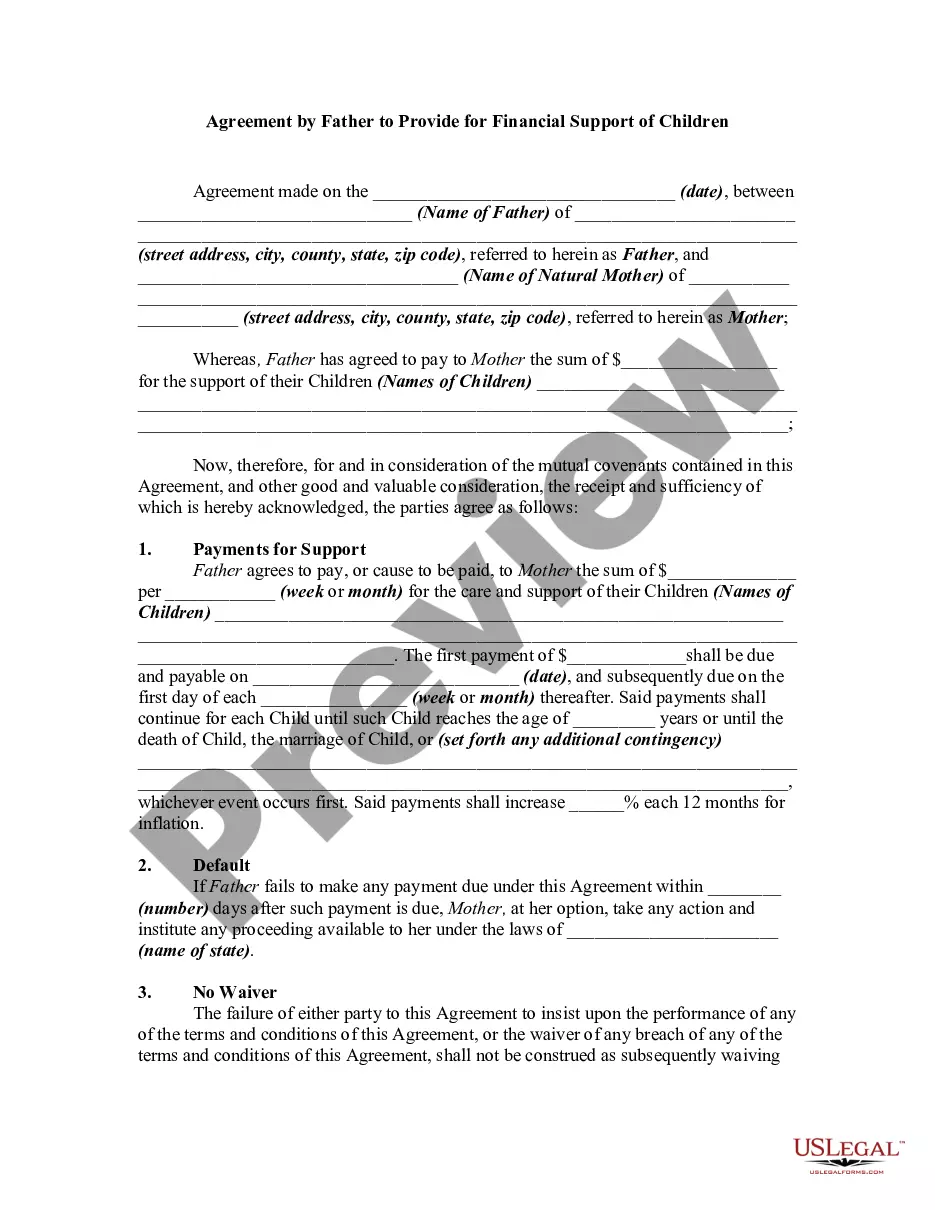
- Identification of parties: Specifies the Payors (borrowers) and the Payee (Conservator of the Estate).
- Payment details: States the cash amount to be prepaid and the deadline for this payment.
- Contingency clause: Outlines the requirement for Chancery Court approval for the prepayment and cancellation of the deed of trust.
- Certification of payment: Describes the Payee's responsibilities upon receiving the prepayment, including marking the note as paid.
- Exhibits: References attachments that provide additional legal context and documentation related to the agreement.
Situations where this form applies
This form should be used when a borrower wants to pay off their loan early, specifically when the loan is secured by a deed of trust and involves a conservatorship. Situations may include financial windfalls making early repayment possible or strategic financial planning to avoid interest payments on a promissory note. This agreement ensures that the prepayment is legal and binding and protects both parties involved.
Who should use this form
- Borrowers (Payors) who wish to prepay their loan and cancel the related deed of trust.
- Conservators managing an estate who need formal documentation for financial transactions involving real property.
- Legal representatives handling matters of conservatorship and interested in ensuring compliance with court requirements.
- Individuals seeking to understand their options for managing estate debts effectively.
Steps to complete this form
- Identify the parties involved by entering the names of the Payors and the Payee.
- Specify the date of the agreement and the amount to be prepaid in cash.
- Include relevant details about the original promissory note and deed of trust.
- Address the contingency clause concerning Chancery Court approval.
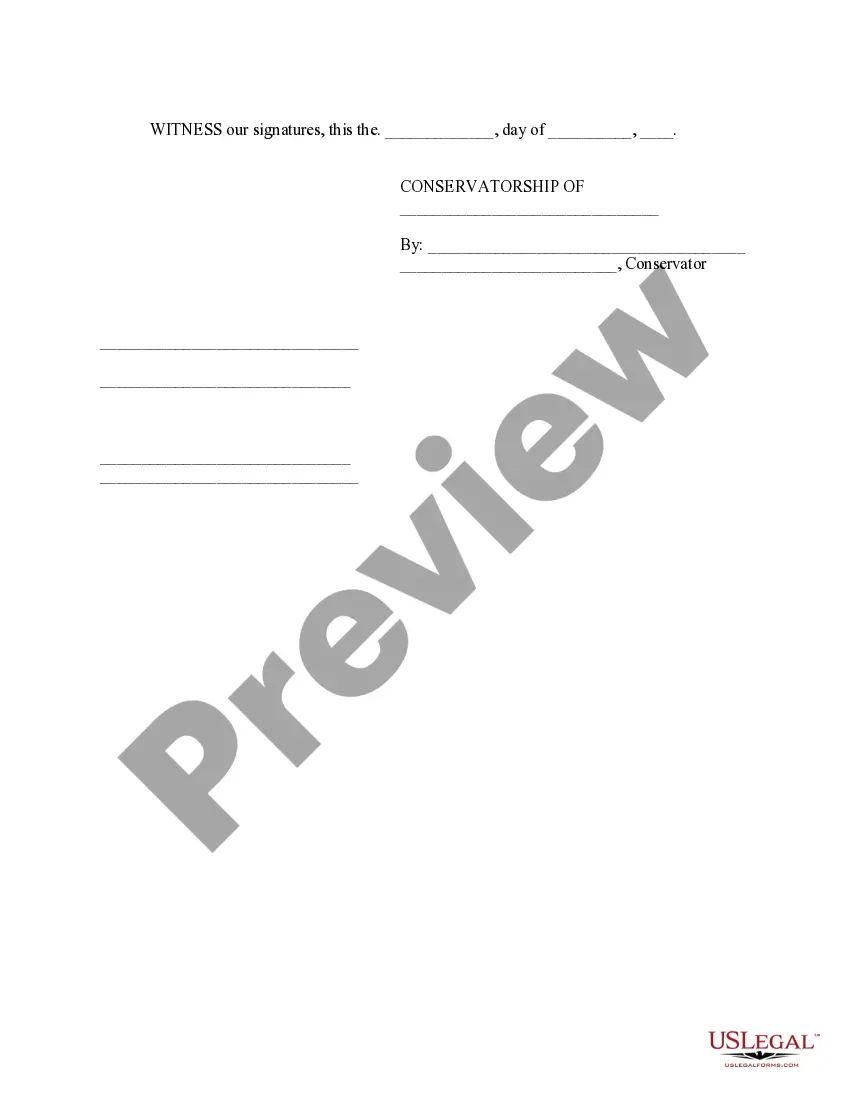
- Obtain signatures from all parties involved and include necessary dates.
Does this form need to be notarized?
This form does not typically require notarization unless specified by local law or regulations governing conservatorships and real property transactions. However, confirmation with legal counsel or local regulations is recommended to ensure compliance.
Get your form ready online
Our built-in tools help you complete, sign, share, and store your documents in one place.
Make edits, fill in missing information, and update formatting in US Legal Forms—just like you would in MS Word.
Download a copy, print it, send it by email, or mail it via USPS—whatever works best for your next step.
Sign and collect signatures with our SignNow integration. Send to multiple recipients, set reminders, and more. Go Premium to unlock E-Sign.
If this form requires notarization, complete it online through a secure video call—no need to meet a notary in person or wait for an appointment.
We protect your documents and personal data by following strict security and privacy standards.

Make edits, fill in missing information, and update formatting in US Legal Forms—just like you would in MS Word.

Download a copy, print it, send it by email, or mail it via USPS—whatever works best for your next step.

Sign and collect signatures with our SignNow integration. Send to multiple recipients, set reminders, and more. Go Premium to unlock E-Sign.

If this form requires notarization, complete it online through a secure video call—no need to meet a notary in person or wait for an appointment.

We protect your documents and personal data by following strict security and privacy standards.
Common mistakes
- Failing to properly identify all parties, leading to legal ambiguities.
- Neglecting to include crucial payment details such as amounts and due dates.
- Overlooking the contingency requirement for Chancery Court approval, which can invalidate the agreement.
- Not signing or dating the agreement correctly, rendering it unenforceable.
Benefits of using this form online
- Convenience of instant download and accessibility from home or office.
- Editability allows users to customize the form easily to fit their specific situation.
- Reliability of forms drafted by licensed attorneys ensures legal compliance and accuracy.
Looking for another form?

Form popularity
FAQ
A prepaid expense is a type of asset on the balance sheet that results from a business making advanced payments for goods or services to be received in the future. Prepaid expenses are initially recorded as assets, but their value is expensed over time onto the income statement.
The initial journal entry for prepaid rent is a debit to prepaid rent and a credit to cash. These are both asset accounts and do not increase or decrease a company's balance sheet. Recall that prepaid expenses are considered an asset because they provide future economic benefits to the company.
Most prepaid expenses appear on the balance sheet as a current asset, unless the expense is not to be incurred until after 12 months, which is a rarity.
From the perspective of the seller, a prepayment is recorded as a credit to a liability account for prepayments, and a debit to the cash account. When the prepaid customer order is eventually shipped, the prepayment account is debited and the relevant revenue account is credited.
To recognize prepaid expenses that become actual expenses, use adjusting entries. As you use the prepaid item, decrease your Prepaid Expense account and increase your actual Expense account. To do this, debit your Expense account and credit your Prepaid Expense account. This creates a prepaid expense adjusting entry.
The prepayment agreement sets out the terms on which the prepayment is made, including any conditions which must first be satisfied, such as any security or credit support that the supplier must provide.
The following list shows common prepaid expenses examples: Rent (paying for a commercial space before using it) Small business insurance policies. Equipment you pay for before use. Salaries (unless you run payroll in arrears)
Prepayments are amounts paid for by a business in advance of the goods or services being received later on. Any payment made in advance can be considered a prepayment. A prepayment is not dissimilar to a deposit, but generally falls under a more set time period for fulfillment of the goods or service purchased.