Employee Request for Early Raise
What this document covers
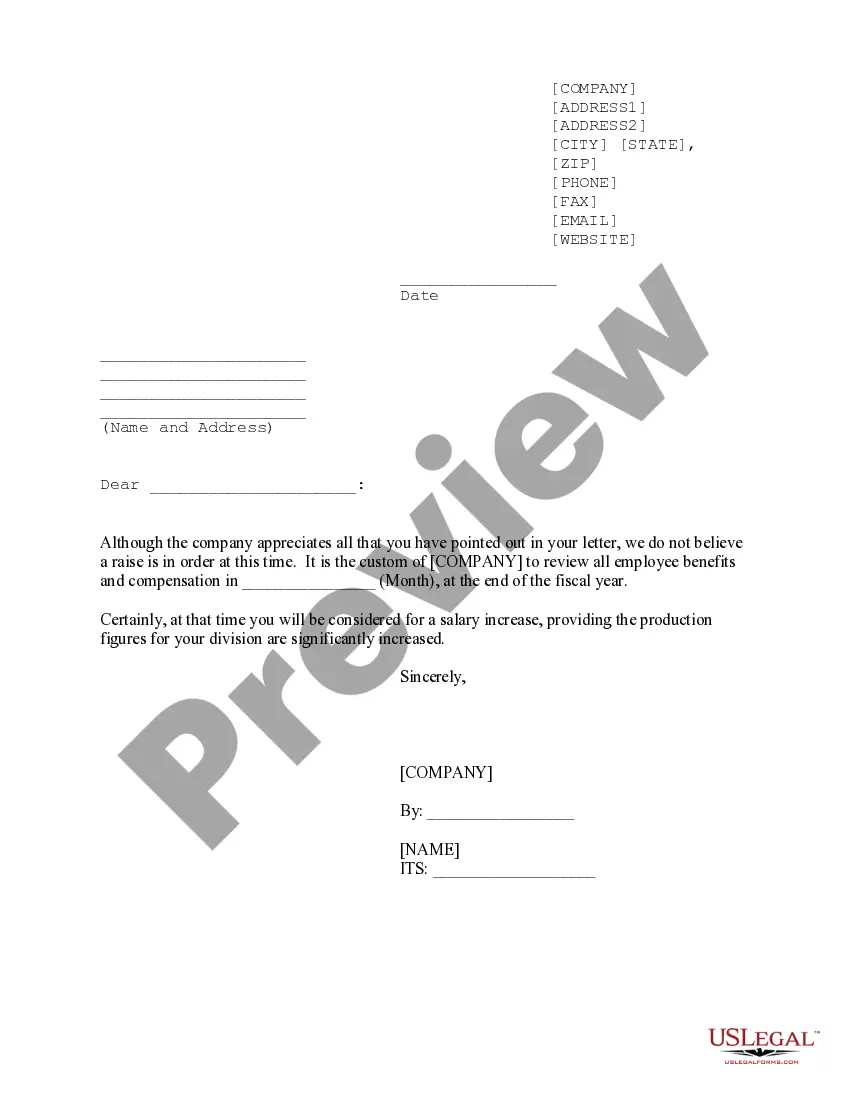
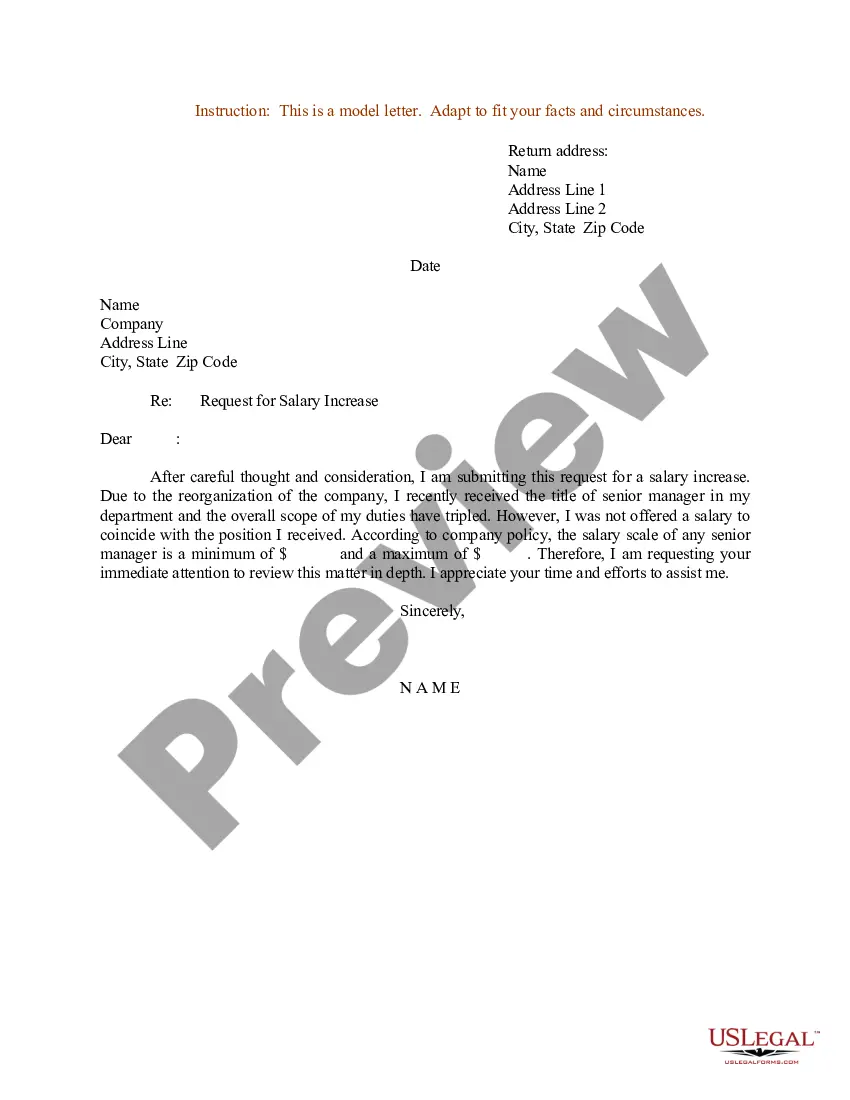
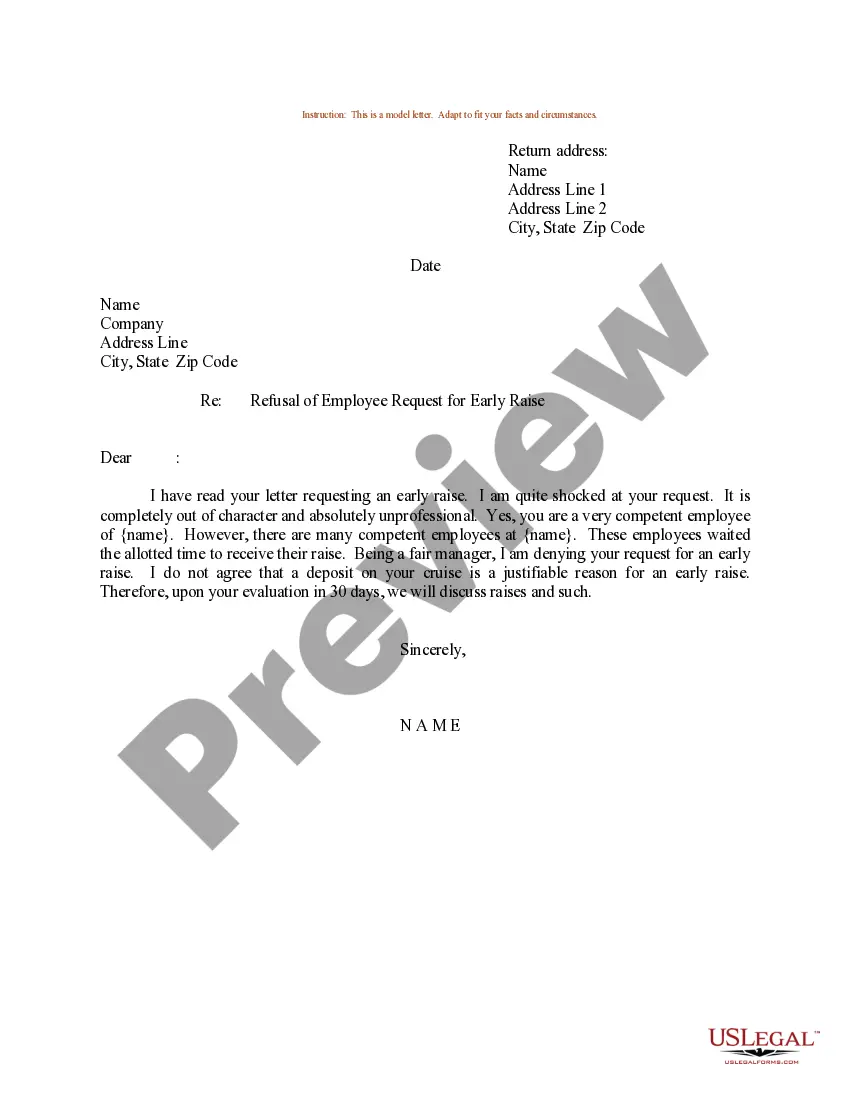
The Employee Request for Early Raise is a formal document that allows an employee to request a salary increase ahead of the scheduled review period. This form serves to communicate the employee's reasons for seeking an early raise and provides the employer with the necessary information to consider the request. Unlike a standard annual raise request, this form addresses the need for a salary evaluation outside the usual timeline.
Main sections of this form
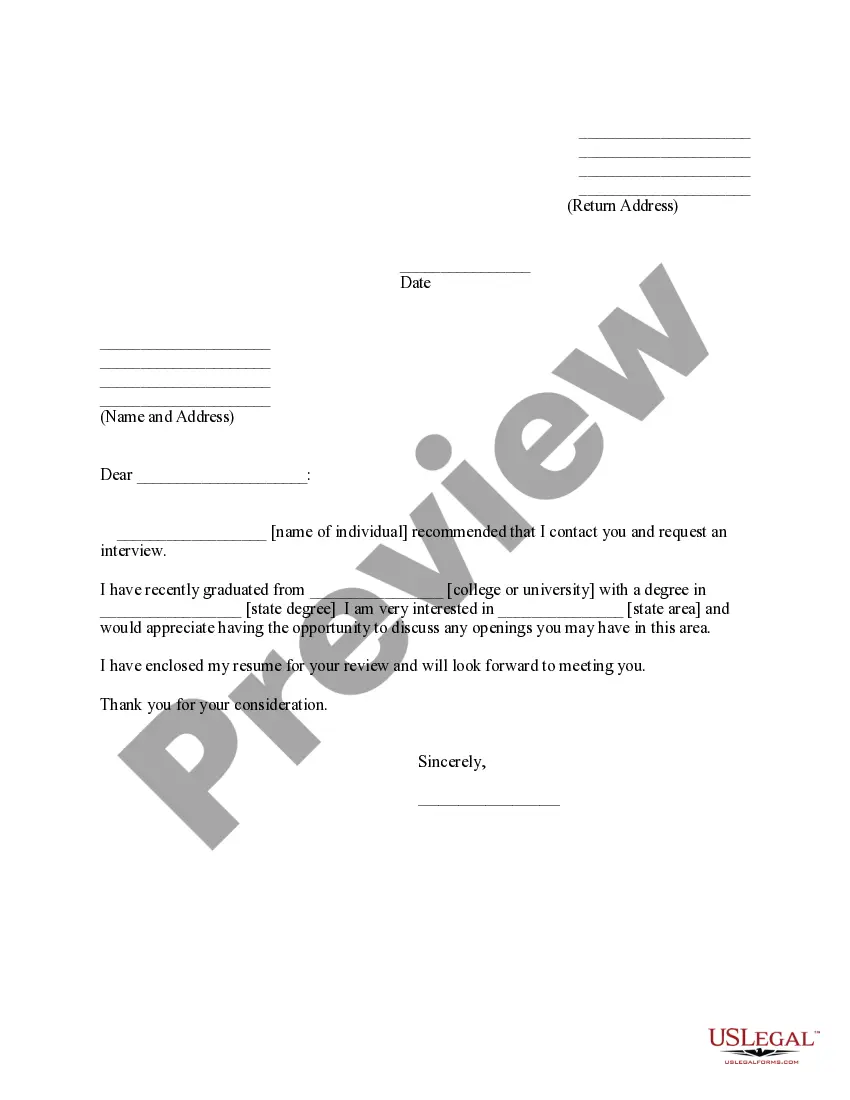
- Employee contact information: Includes fields for the employee's address, phone number, email, and other relevant details.
- Employer address: Space to include the name and address of the employer or the HR department.
- Date: A field for the date the request is being submitted.
- Reason for request: An area for the employee to articulate their reason for requesting an early raise.
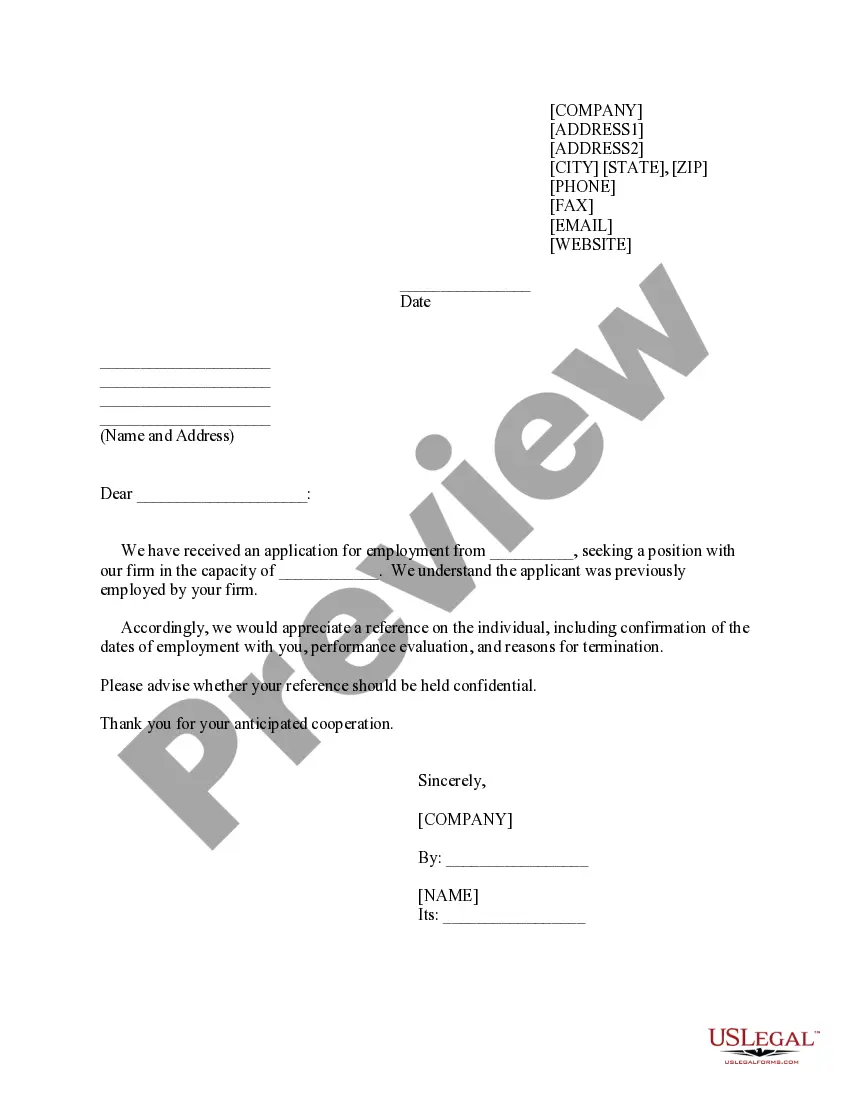
- Company's response section: A standard response to be customized by the employer, indicating their decision regarding the request.
Common use cases
This form should be used when an employee feels that their current salary does not reflect their contributions to the company or when they believe market conditions warrant an adjustment. Common scenarios include exceptional performance in a recent project, taking on additional responsibilities, or market fluctuations that have increased the value of their role.
Intended users of this form
- Employees seeking a salary increase before the regular performance review period.
- Individuals who have taken on new responsibilities or achieved significant accomplishments in their role.
- Employees who believe their current compensation is not aligned with industry standards.
Completing this form step by step
- Fill out your personal information at the top of the form, including your address and contact details.
- Enter the date on which you are submitting the request.
- Provide the name and address of your employer or HR department.
- Clearly articulate the reason for your request in the designated section.
- Submit the completed form to your supervisor or HR department as per company policy.
Notarization guidance
This form does not typically require notarization unless specified by local law. It is used for internal company processes related to salary requests.
Get your form ready online
Our built-in tools help you complete, sign, share, and store your documents in one place.
Make edits, fill in missing information, and update formatting in US Legal Forms—just like you would in MS Word.
Download a copy, print it, send it by email, or mail it via USPS—whatever works best for your next step.
Sign and collect signatures with our SignNow integration. Send to multiple recipients, set reminders, and more. Go Premium to unlock E-Sign.
If this form requires notarization, complete it online through a secure video call—no need to meet a notary in person or wait for an appointment.
We protect your documents and personal data by following strict security and privacy standards.

Make edits, fill in missing information, and update formatting in US Legal Forms—just like you would in MS Word.

Download a copy, print it, send it by email, or mail it via USPS—whatever works best for your next step.

Sign and collect signatures with our SignNow integration. Send to multiple recipients, set reminders, and more. Go Premium to unlock E-Sign.

If this form requires notarization, complete it online through a secure video call—no need to meet a notary in person or wait for an appointment.

We protect your documents and personal data by following strict security and privacy standards.
Typical mistakes to avoid
- Failing to provide sufficient context or reasons for the raise request.
- Not including accurate contact information for follow-up.
- Submitting the form without checking company policies or timelines related to salary reviews.
Why complete this form online
- Convenient access to a professionally drafted request template.
- Time-saving with instant downloads and easy editing options.
- Guidance on completing the form ensures clarity and improves chances of acceptance.
Looking for another form?



Form popularity
FAQ
It's always a good idea to ask for anywhere between 10% to 20% higher than what you're making right now. You may be able to ask for more based on your performance, length of time with the company, and other factors. Make sure you come prepared when you negotiate your raise and be confident.
"I am writing to request a raise in my current salary. I have been with the company for five years now and believe that my contributions warrant an increase in salary. The skills and experience I've gained during my time with the company are on point with a $5,000 raise. I appreciate your consideration of my request.
Schedule a meeting in a private place. All the employees do not need to know that you are denying an employee a raise.Get to the point quickly.Explain briefly why you did not grant her the raise.Allow the employee time to ask any questions he may have.Encourage the employee.
How often should you ask for a raise? If you recently started a job, wait a minimum of six months to ask for a raise. Most employers are more likely to give you a raise if you have been with the company for at least a year or more. If you have been with the company for multiple years, then you can ask once a year.
What to do when an employee is asking for a raise Listen to the employee, but wait to respond.Conduct an internal pay audit.Analyze pay rates outside your business.Consider the employee's value.Examine pay raise alternatives.Calculate an appropriate raise.Respond to the employee's request.
If you recently started a job, wait a minimum of six months to ask for a raise. Most employers are more likely to give you a raise if you have been with the company for at least a year or more. If you have been with the company for multiple years, then you can ask once a year.
If an employee asks for an increase in their pay, take the request seriously. If necessary, ask clarifying questions (e.g., "how much of a raise are you seeking?" or "what prompted you to request a pay raise?"). Avoid making promises about future pay increases.
Although there's no law against it, firing employees simply for asking for a raise isn't a good business practice. You want to keep employees who put their best efforts into their job, and are willing to go the extra mile.