Sample Letter transmitting Last Will and Testament of Decedent
Understanding this form
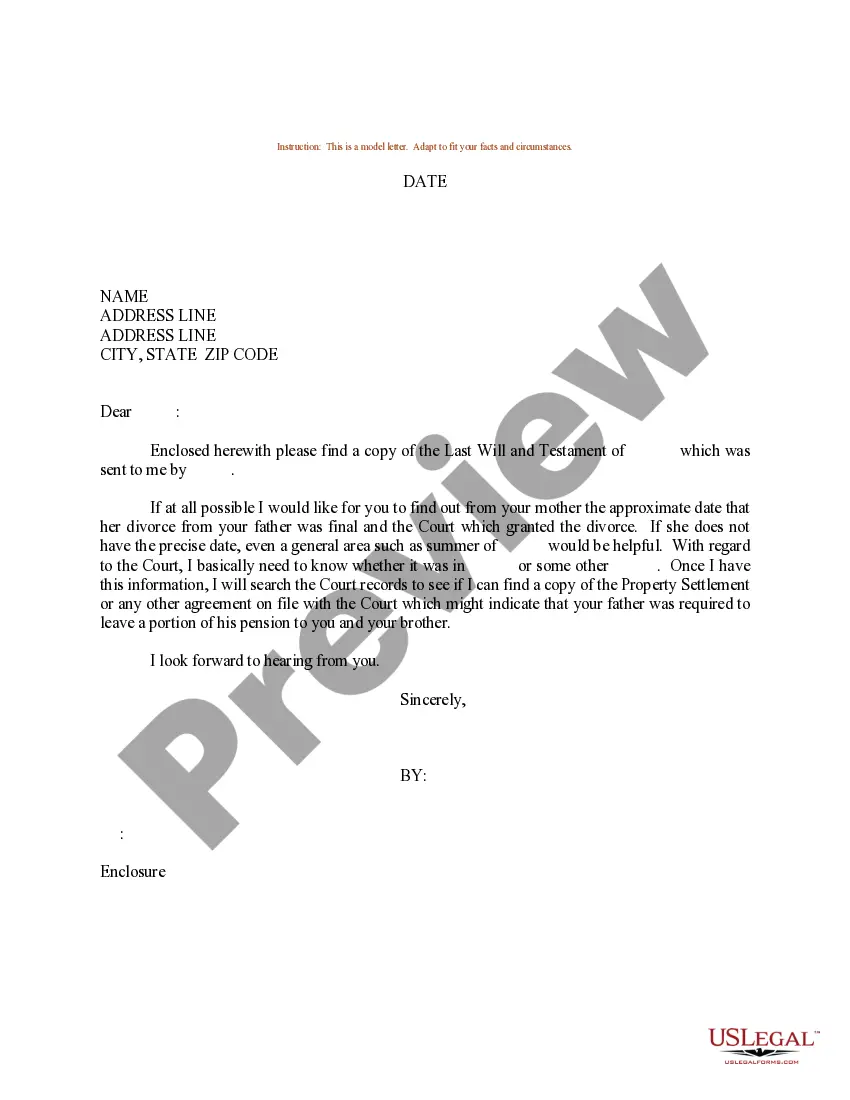
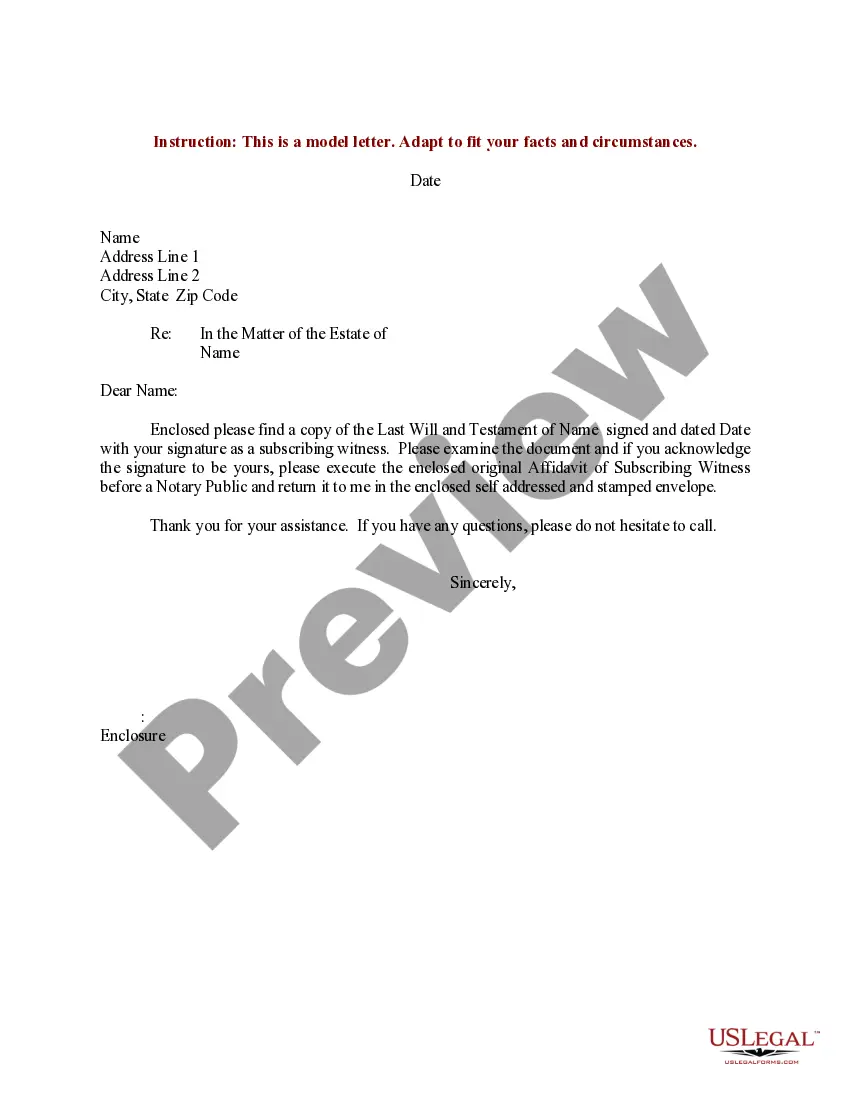
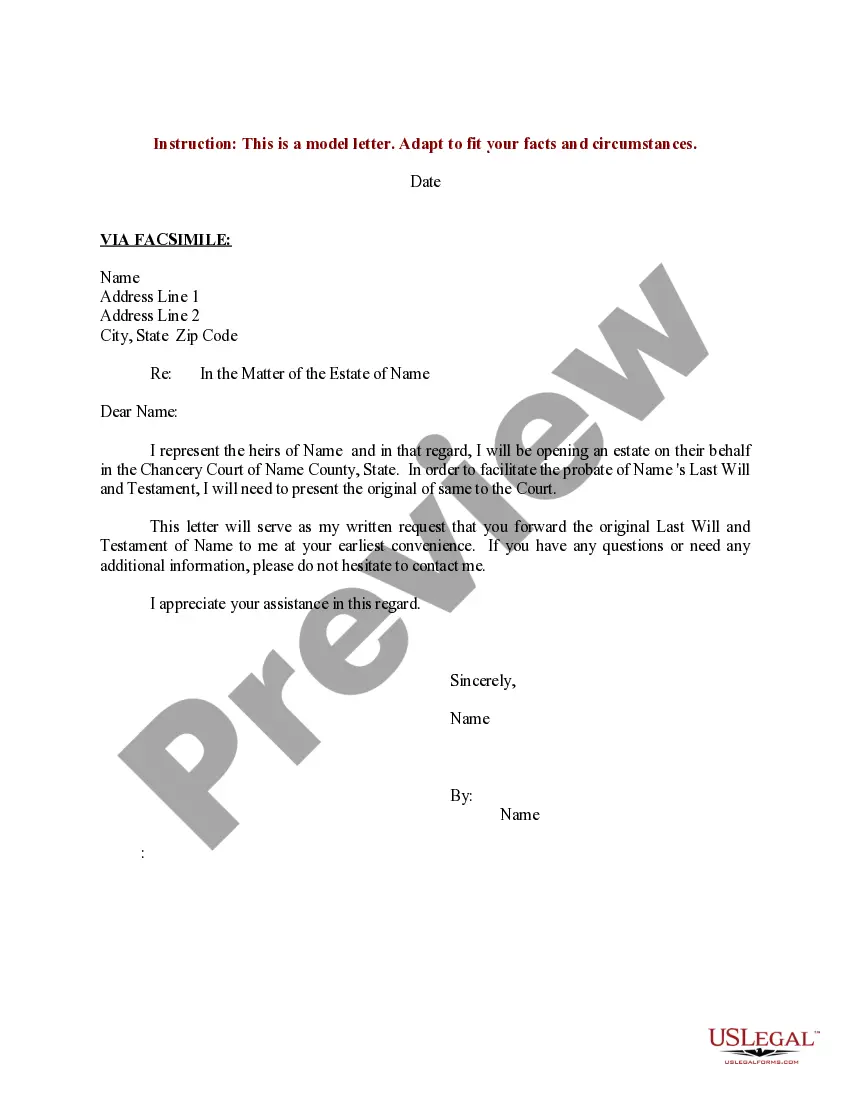
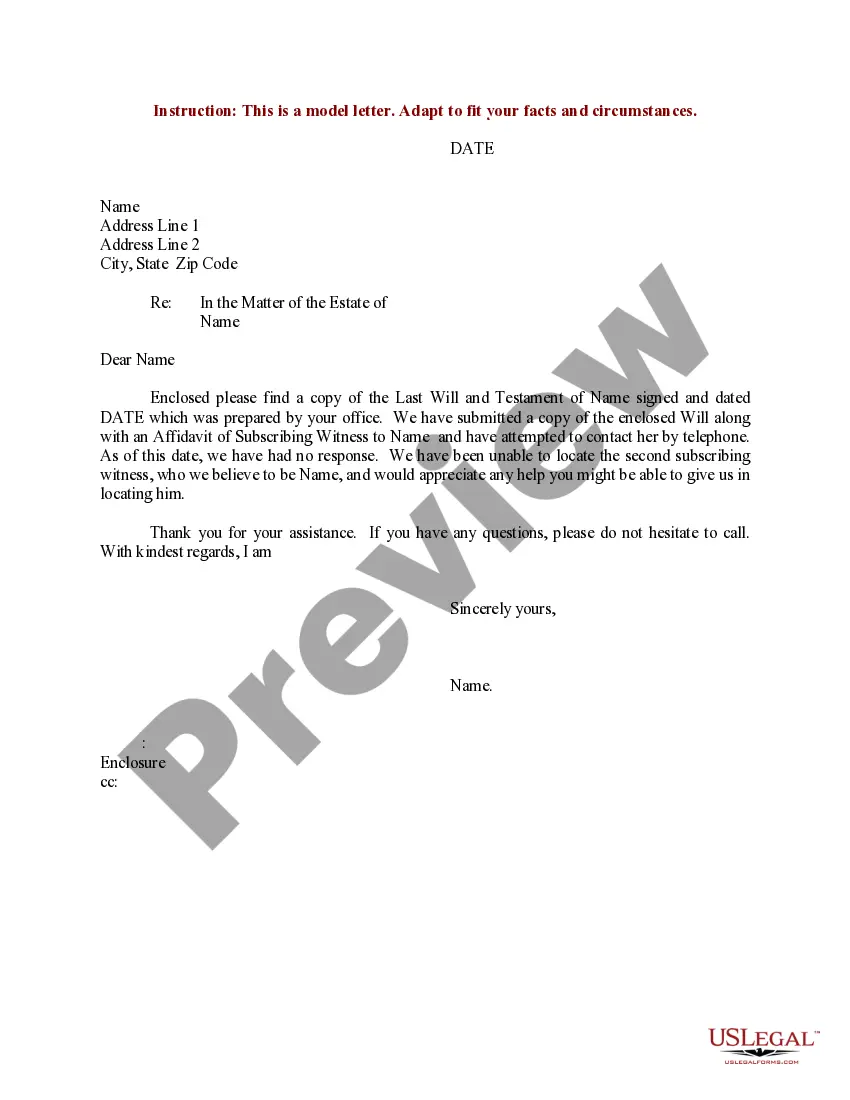
The Sample Letter transmitting Last Will and Testament of Decedent is a professional document crafted to accompany the distribution of a deceased person's will. This letter serves to formally communicate essential details regarding the last will to beneficiaries or relevant parties, ensuring clarity and transparency. Unlike other legal forms, this sample letter specifically addresses the transmission of the will, making it an essential part of the estate management process.
Form components explained
- Date of transmission
- Name and address of the sender
- Name and address of the recipient
- Notification of the enclosed Last Will and Testament
- Instructions regarding the next steps
Common use cases
This letter should be used when a person passes away and their last will needs to be transmitted to beneficiaries or fiduciaries. It is particularly useful in situations where multiple parties are involved, or when there are specific legal obligations to notify certain individuals of their rights under the will. The form helps facilitate clear communication and helps in managing the estate's affairs professionally.
Who can use this document
This sample letter is intended for:
- Executors or personal representatives of an estate
- Attorneys managing estate matters
- Beneficiaries who are receiving the last will
- Family members or friends involved in the estate process
Instructions for completing this form
- Start by entering the date at the top of the letter.
- Fill in your name and address in the appropriate fields.
- Add the recipient's name and address to ensure proper delivery.
- Clearly state that the enclosed document is the Last Will and Testament.
- Include any specific instructions or next steps for the recipient.
Notarization requirements for this form
This form does not typically require notarization unless specified by local law. Always check with local regulations to ensure compliance.
Get your form ready online
Our built-in tools help you complete, sign, share, and store your documents in one place.
Make edits, fill in missing information, and update formatting in US Legal Forms—just like you would in MS Word.
Download a copy, print it, send it by email, or mail it via USPS—whatever works best for your next step.
Sign and collect signatures with our SignNow integration. Send to multiple recipients, set reminders, and more. Go Premium to unlock E-Sign.
If this form requires notarization, complete it online through a secure video call—no need to meet a notary in person or wait for an appointment.
We protect your documents and personal data by following strict security and privacy standards.

Make edits, fill in missing information, and update formatting in US Legal Forms—just like you would in MS Word.

Download a copy, print it, send it by email, or mail it via USPS—whatever works best for your next step.

Sign and collect signatures with our SignNow integration. Send to multiple recipients, set reminders, and more. Go Premium to unlock E-Sign.

If this form requires notarization, complete it online through a secure video call—no need to meet a notary in person or wait for an appointment.

We protect your documents and personal data by following strict security and privacy standards.
Mistakes to watch out for
- Neglecting to include the correct date of transmission.
- Forgetting to enter complete addresses for both the sender and recipient.
- Not specifying what the enclosed document is or its importance.
- Failing to provide clear instructions for the recipient.
Why complete this form online
- Convenient access from anywhere at any time.
- Editability allows personalization to fit specific circumstances.
- Reliability of a professionally drafted document ensures legal standards are met.
Looking for another form?

Form popularity
FAQ
Bank accounts. Brokerage or investment accounts. Retirement accounts and pension plans. A life insurance policy.
Give the letter a personal touch and address each of your heirs and beneficiaries personally. Tell them any last wishes you may have or any hopes you have for their future. Write as clearly as possible. Use specific details and avoid using shorthand.
Explain that the trust exists. Provide your name and contact information. Tell beneficiaries that they have the right to see a copy of the trust document and that you will send them one if they request it. Give the deadline for court challenges.
In most situations, a will template is an easy and inexpensive way to make sure your wishes are known and carried out. Most people can get everything they need by using a will template, with little cost or hassle.
Explain why you are giving property to certain beneficiaries and not to others. explain disparities in bequests. express positive or negative sentiments about a beneficiary. express wishes about how to care for a pet.
It has no legal standing, so it can't supersede a will, but a letter of intent (LOI), also called a letter of instruction, can be of enormous practical and emotional value to your loved ones.The letter should go to your spouse, a child, a close friend, or a family member. A copy should go to the executor of the will.
The Free Last Will and Testament Template for Word is compatible with Word 2003 or later versions.