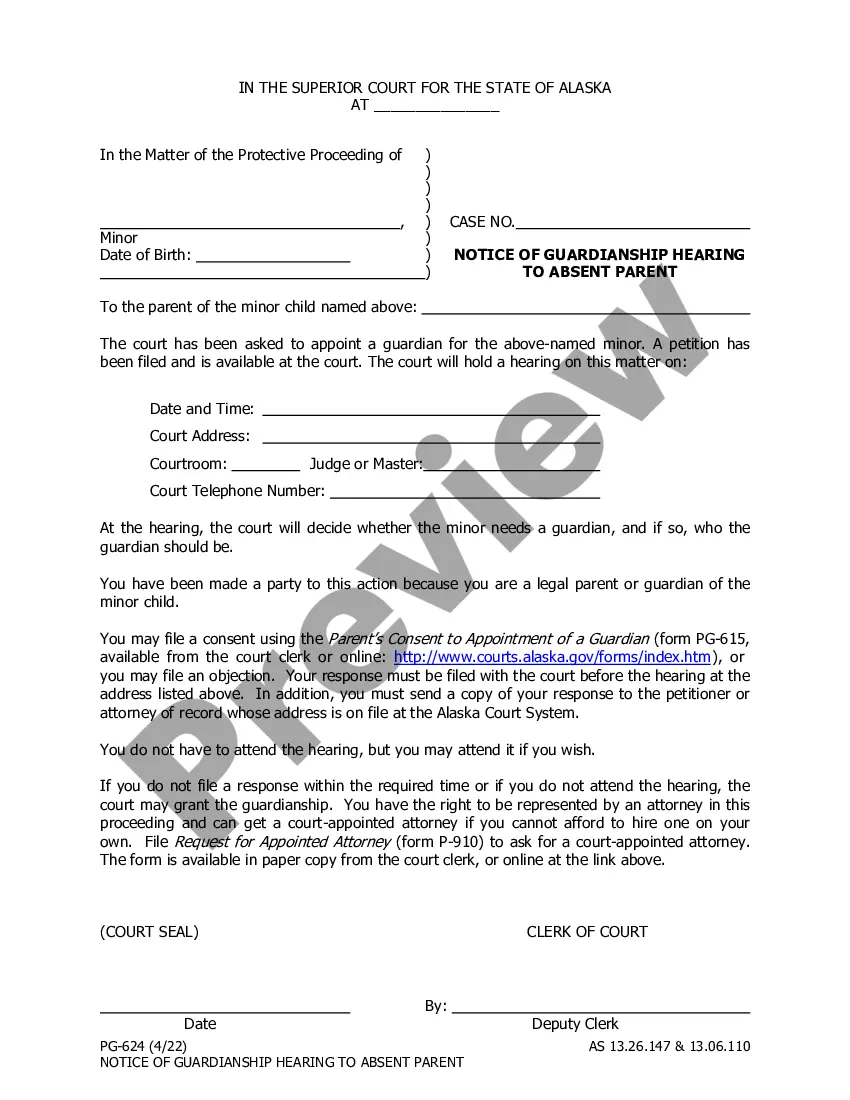
Complaint for Declaratory Judgment and Interpleader Action or Burial Policy
Overview of this form
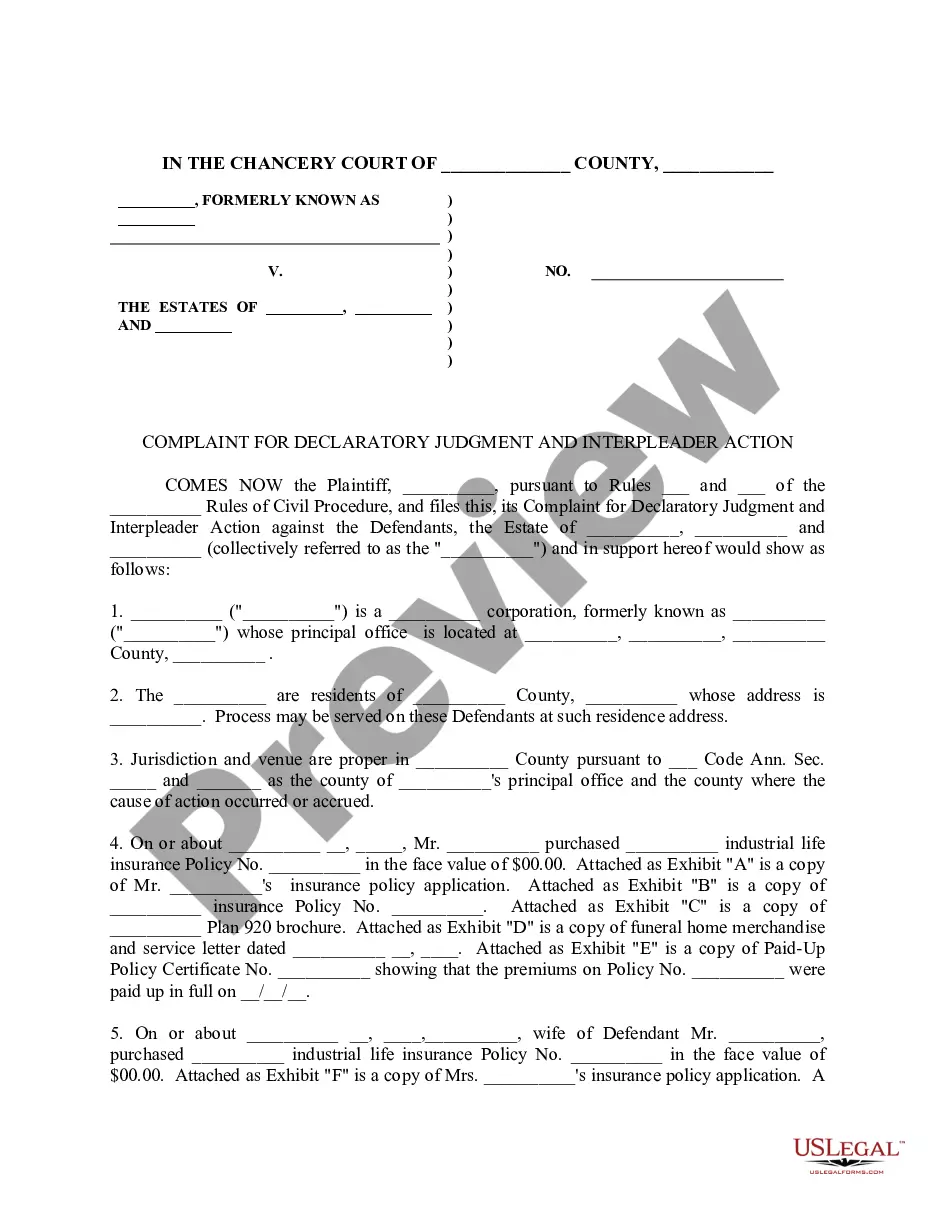
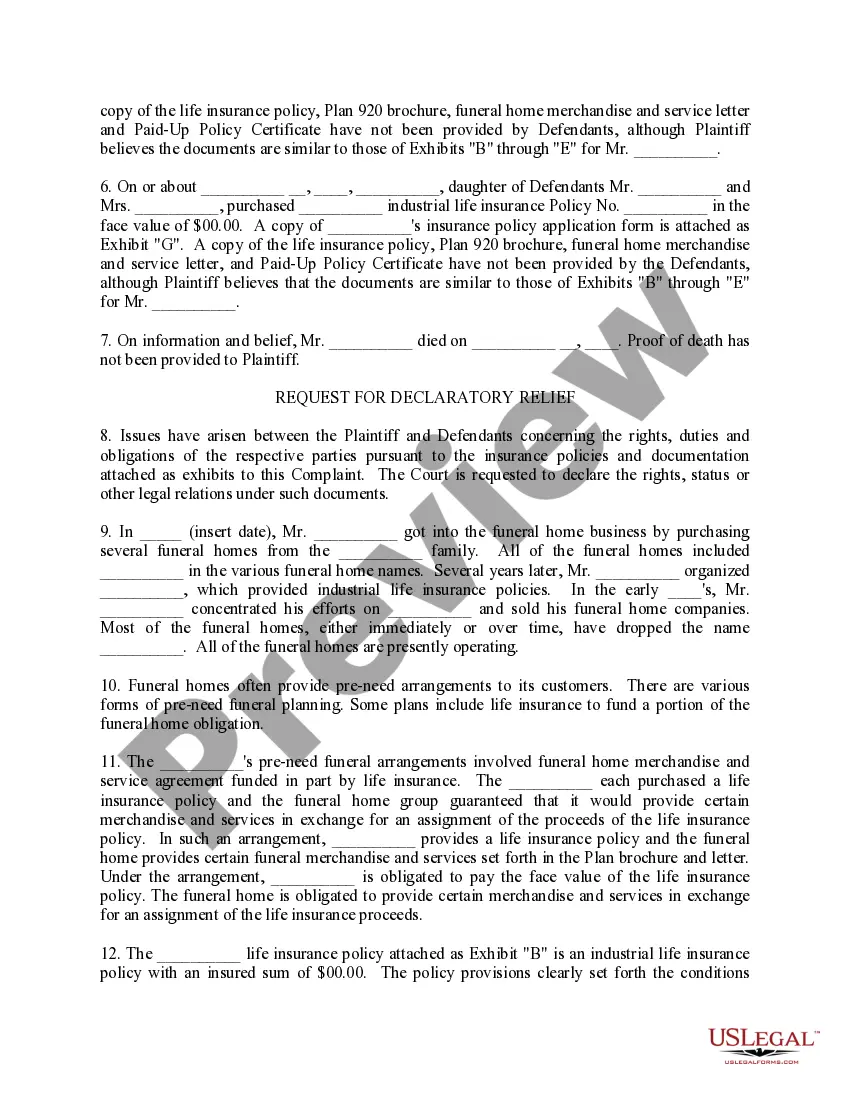
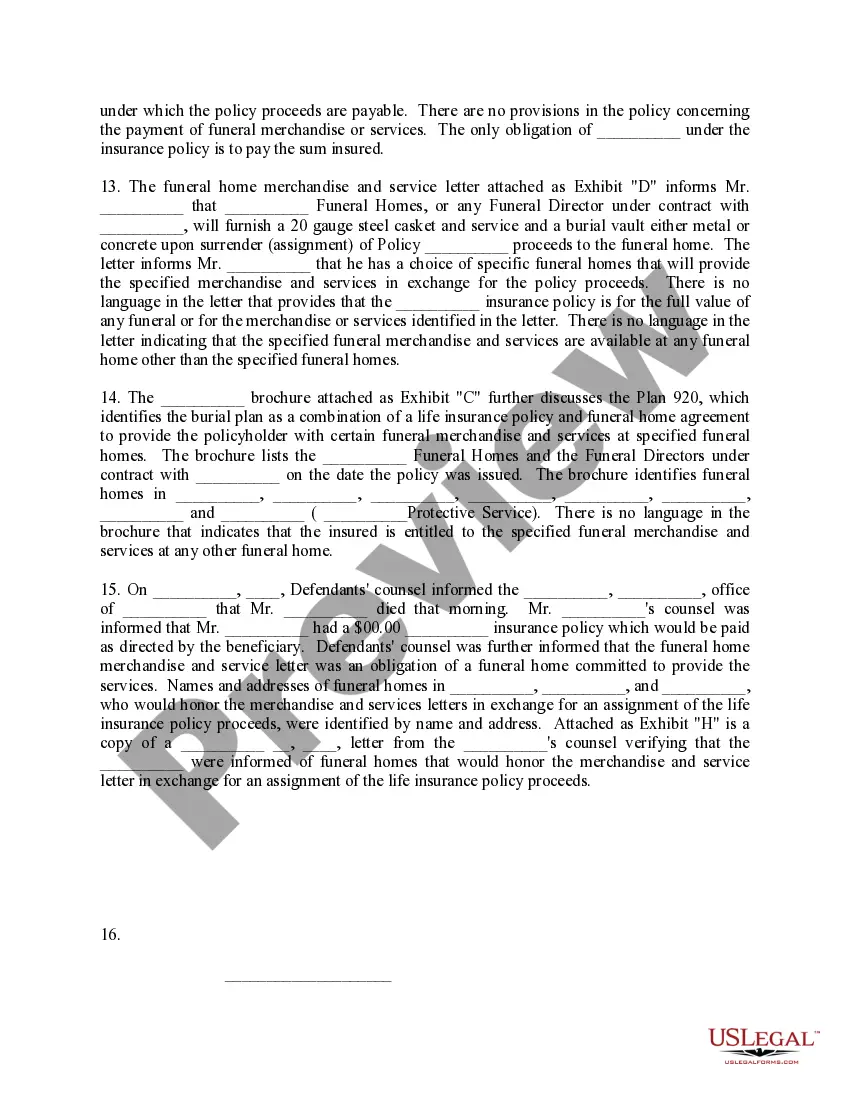
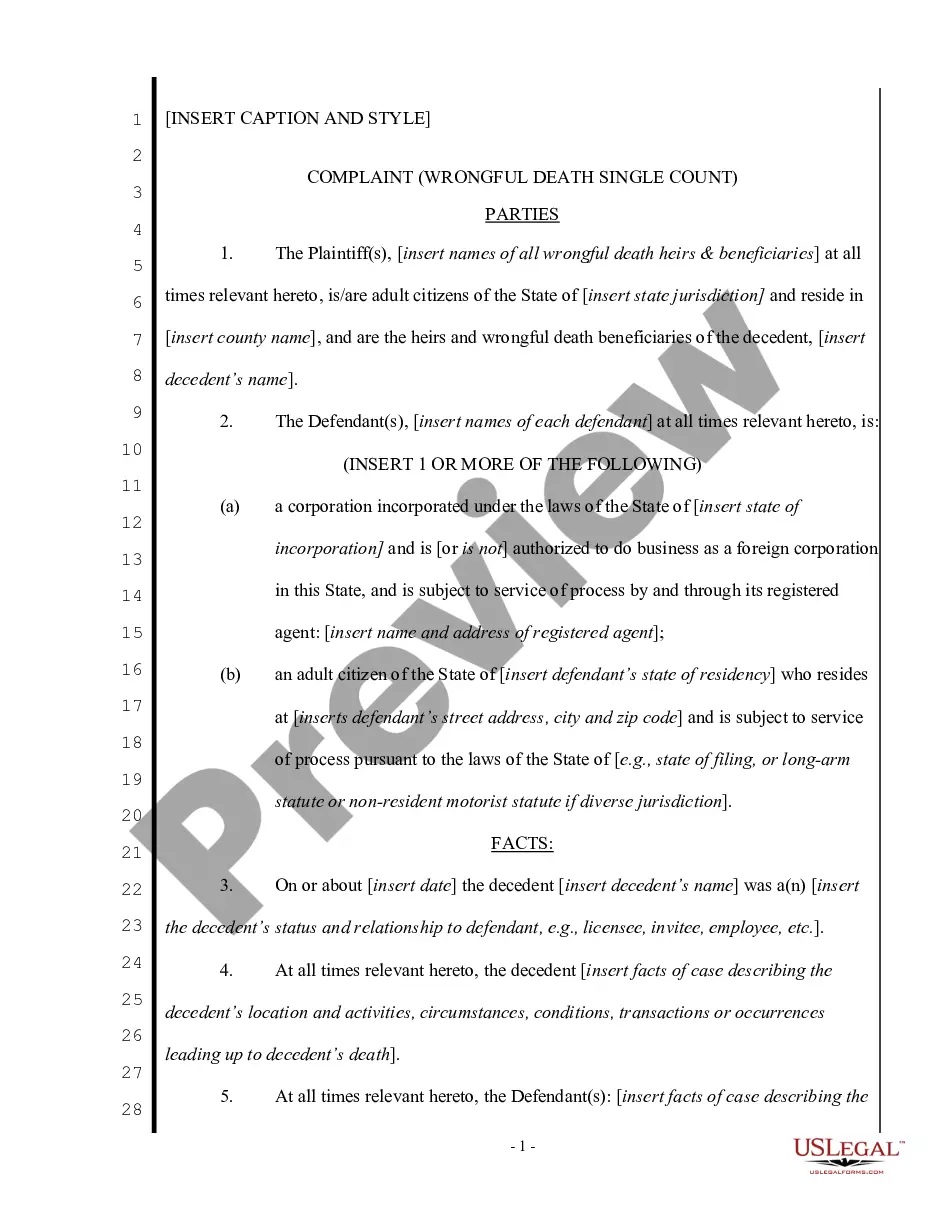
This Complaint for Declaratory Judgment and Interpleader Action serves as a legal document initiating a lawsuit regarding disputes over life insurance policy proceeds and preneed funeral arrangements. This form differs from standard civil complaints as it specifically addresses issues related to insurance policies and estate matters, aiming to clarify the legal rights and obligations of the parties involved in the context of life insurance and funeral service agreements.
Key components of this form
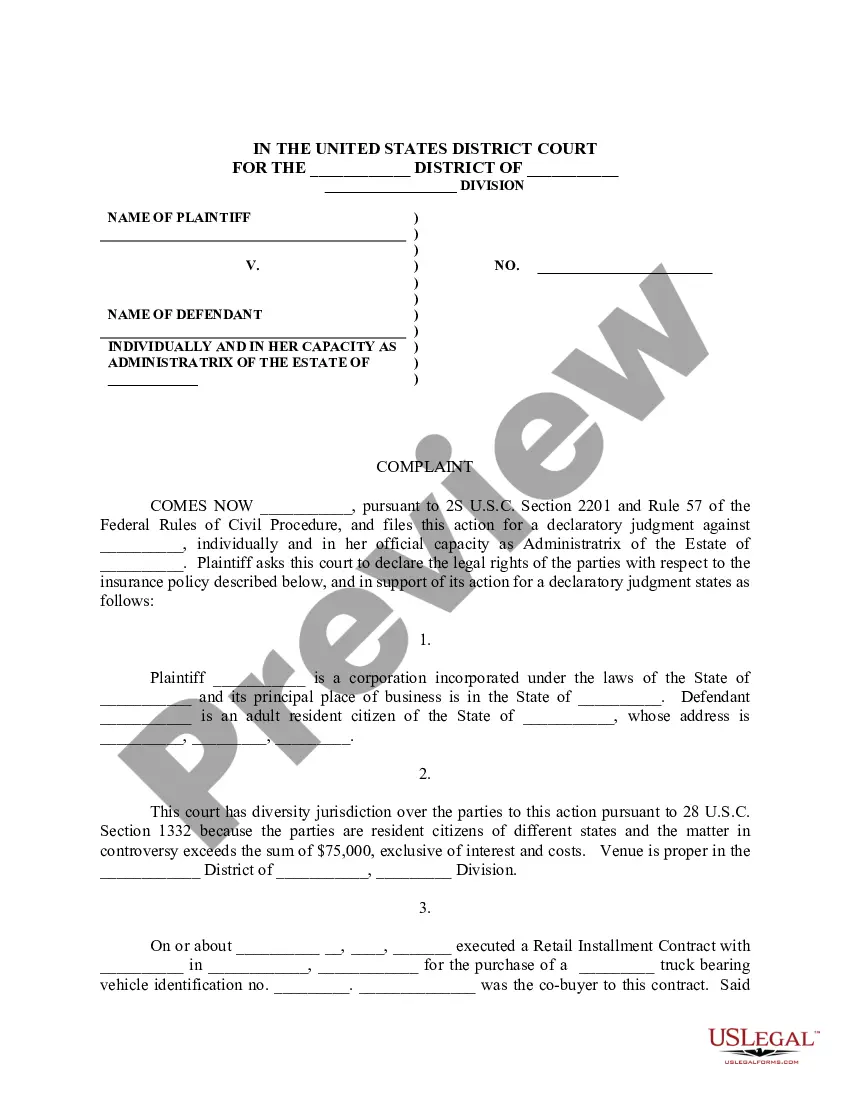
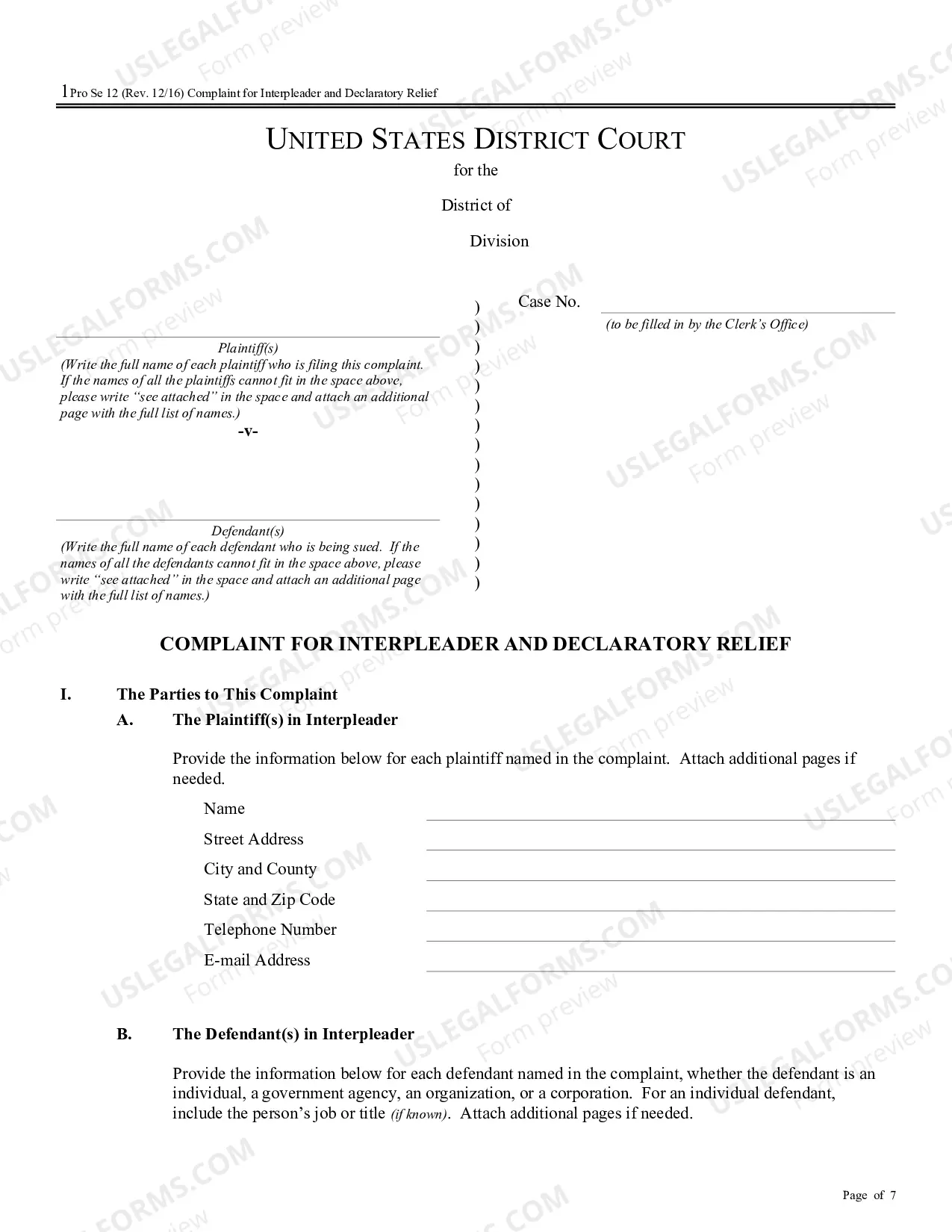
- Introduction and Identification of Parties: Names the Plaintiff and Defendants involved in the action.
- Jurisdiction and Venue: States the appropriate jurisdiction for the case.
- Details of Life Insurance Policies: Describes the insurance policies and their attached exhibits.
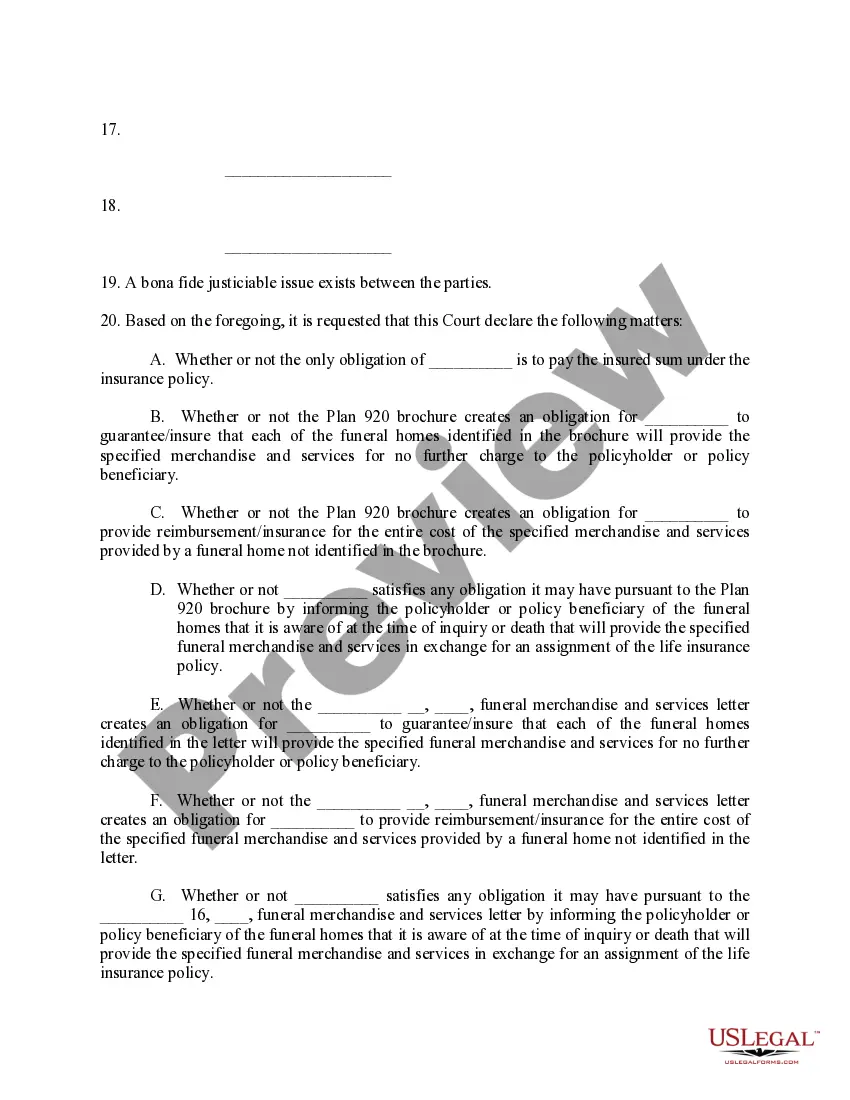
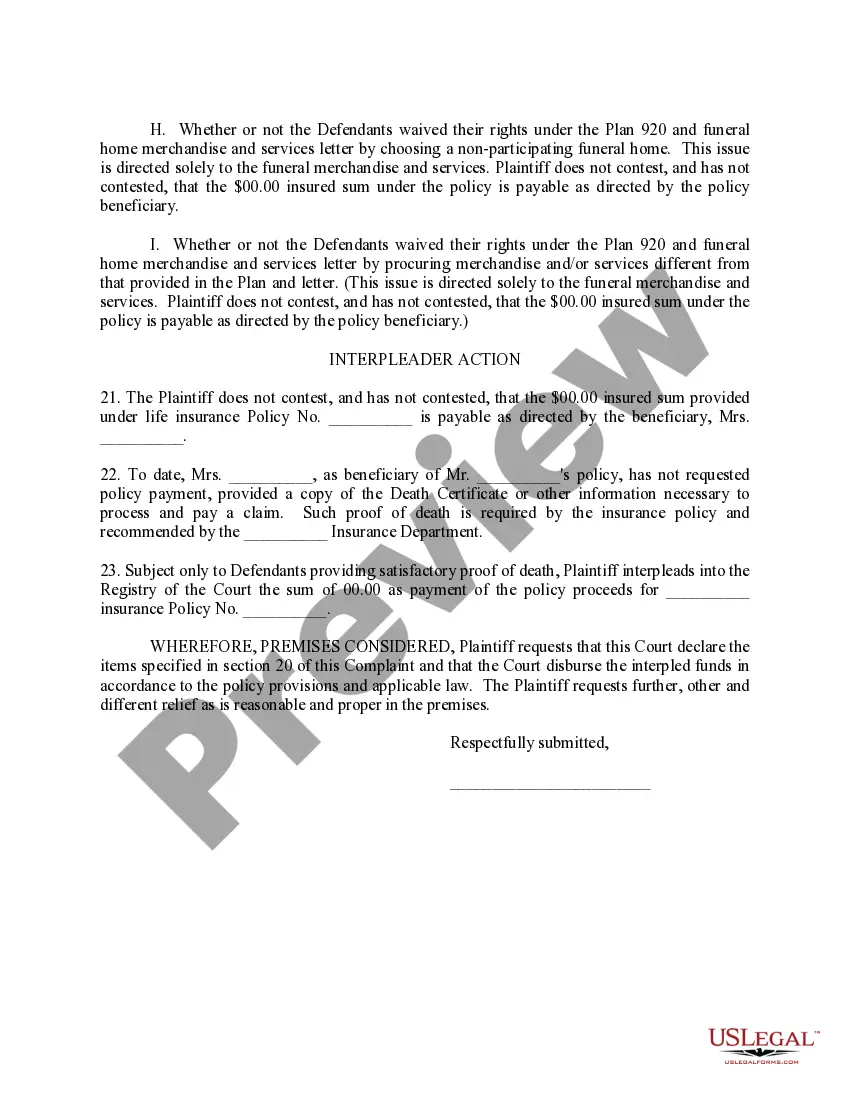
- Request for Declaratory Relief: Explains the specific legal matters the Court is asked to clarify.
- Interpleader Action Section: Discusses the Plaintiff's actions concerning policy proceeds and the beneficiary process.


When this form is needed
This form is applicable in situations where there is a dispute regarding the distribution of life insurance proceeds, particularly when multiple parties claim entitlement to these funds. It is often used when the insured has passed away, and beneficiaries are uncertain about their rights under existing funeral arrangements or insurance policies. This form can help clarify obligations and enforce rights through the court system.
Who should use this form
- Individuals or entities acting as a Plaintiff seeking a declaratory judgment regarding a life insurance policy.
- Beneficiaries or potential beneficiaries of a life insurance policy who are facing disputes about the proceeds.
- Attorneys representing clients involved in interpleader actions related to insurance and estate issues.
How to prepare this document
- Identify the parties: Enter the names and addresses of the Plaintiff and Defendants.
- Provide jurisdictional details: Specify the legal grounds for venue and jurisdiction.
- Include details of the insurance policies: List all relevant policy numbers and attach necessary exhibits.
- Articulate the request for declaratory relief: Clearly specify the issues on which the Court's judgment is sought.
- Prepare the interpleader action: Indicate the amounts to be interpleaded and the reasons for the action.
Notarization requirements for this form
This form usually doesn’t need to be notarized. However, local laws or specific transactions may require it. Our online notarization service, powered by Notarize, lets you complete it remotely through a secure video session, available 24/7.
Get your form ready online
Our built-in tools help you complete, sign, share, and store your documents in one place.
Make edits, fill in missing information, and update formatting in US Legal Forms—just like you would in MS Word.
Download a copy, print it, send it by email, or mail it via USPS—whatever works best for your next step.
Sign and collect signatures with our SignNow integration. Send to multiple recipients, set reminders, and more. Go Premium to unlock E-Sign.
If this form requires notarization, complete it online through a secure video call—no need to meet a notary in person or wait for an appointment.
We protect your documents and personal data by following strict security and privacy standards.

Make edits, fill in missing information, and update formatting in US Legal Forms—just like you would in MS Word.

Download a copy, print it, send it by email, or mail it via USPS—whatever works best for your next step.

Sign and collect signatures with our SignNow integration. Send to multiple recipients, set reminders, and more. Go Premium to unlock E-Sign.

If this form requires notarization, complete it online through a secure video call—no need to meet a notary in person or wait for an appointment.

We protect your documents and personal data by following strict security and privacy standards.
Avoid these common issues
- Failing to provide complete and accurate information about all parties involved.
- Not attaching necessary exhibits or documentation to support claims made in the complaint.
- Overlooking jurisdictional requirements specific to the state of filing.
Advantages of online completion
- Quick access to legal documents crafted by licensed attorneys.
- Easy download and printing options for immediate use.
- Increased reliability with templates designed to meet legal standards.
Looking for another form?

Form popularity
FAQ
This form initiates a civil action to resolve disputes over life insurance policy proceeds and preneed funeral arrangements. It combines a declaratory judgment request with an interpleader action, allowing a plaintiff to seek a court ruling on rights and duties while funds or proceeds are held for distribution. It helps identify parties, states jurisdiction, describes the policies, and requests relief when multiple claims exist.
A declaratory judgment complaint asks the court to determine the parties’ legal rights and obligations under uncertain facts, without requiring enforcement or damages. In this form, it seeks a declaration related to life insurance policy proceeds and funeral arrangements and combines that relief with an interpleader action for competing claims.
In an interpleader, the complaint asks the court to determine, among rival claimants, who is entitled to the policy proceeds or burial trust. This form merges declaratory relief with interpleader, enabling the plaintiff to obtain a court order that resolves rights and directs distribution while subjecting competing claims to adjudication.
Counterclaims may be allowed under applicable rules, but this form is drafted for a plaintiff to seek declaratory relief and interpleader relief. A counterclaim would generally be filed in a responsive pleading following state rules. Consult a licensed attorney to determine if adding declaratory relief via a counterclaim is appropriate in your case.
After a declaratory judgment is issued, the court clarifies the parties’ rights regarding the life insurance policy proceeds and funeral arrangements. If interpleader relief is pursued, the court may determine entitlement to funds and direct distribution, or the case may proceed to further proceedings consistent with the ruling. An attorney can provide case-specific guidance.
This form uniquely combines a declaratory judgment request with an interpleader action in the context of life insurance policy proceeds and preneed funeral arrangements. It includes key components for identifying parties, stating jurisdiction, detailing the policies, requesting declaratory relief, and addressing interpleader concerns in a single filing designed for multi-party disputes.