Sample Brief - Injunction
About this form
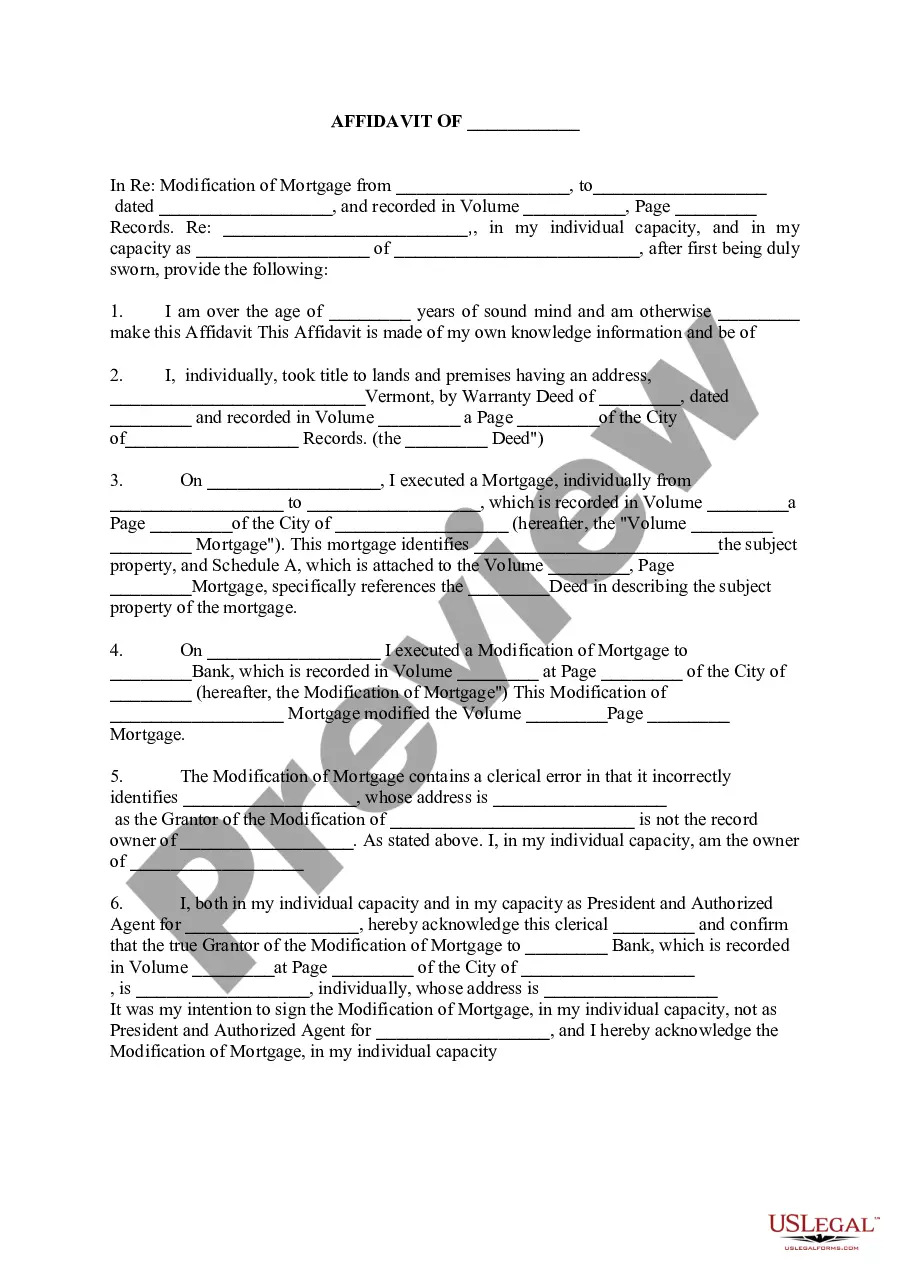
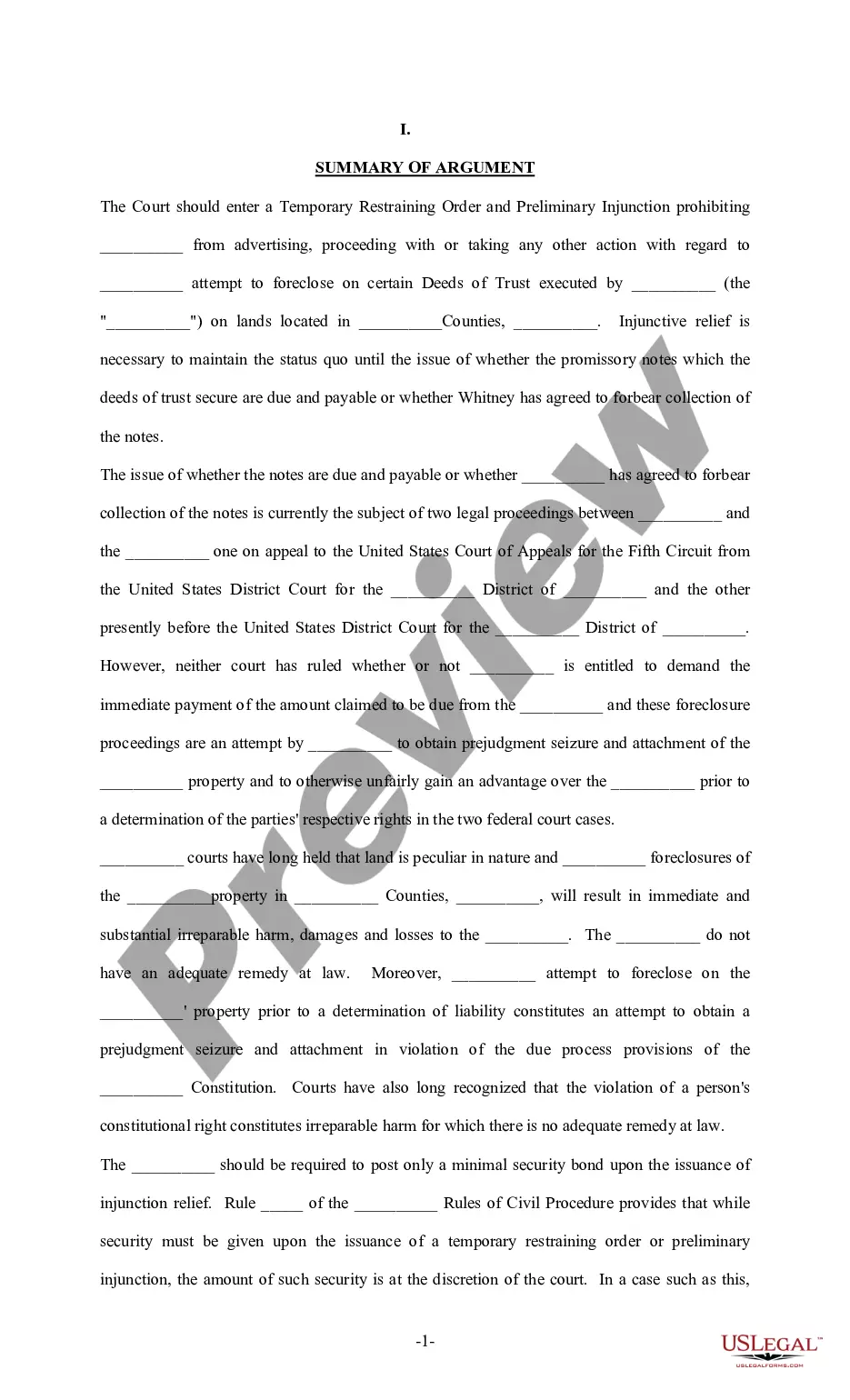
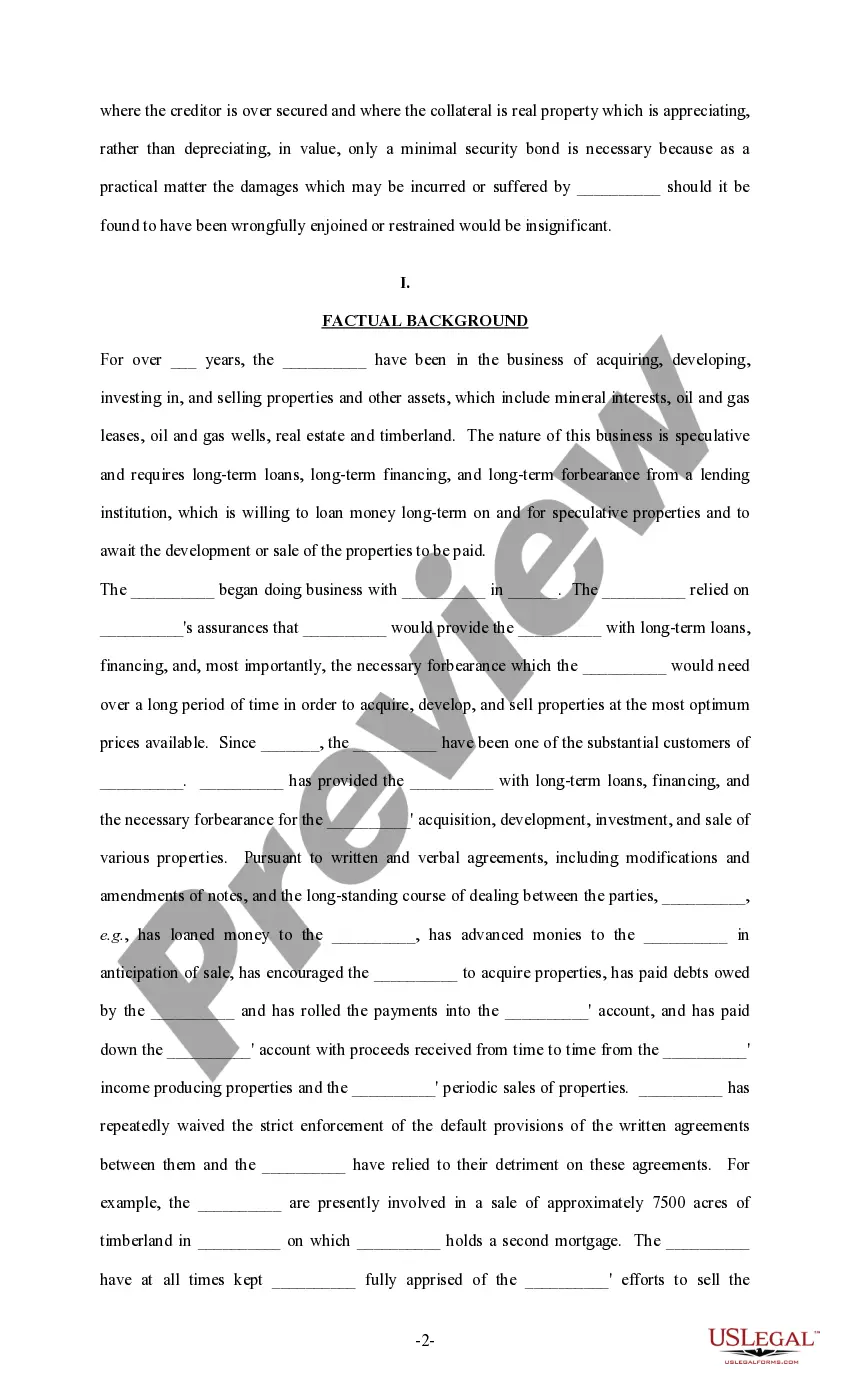
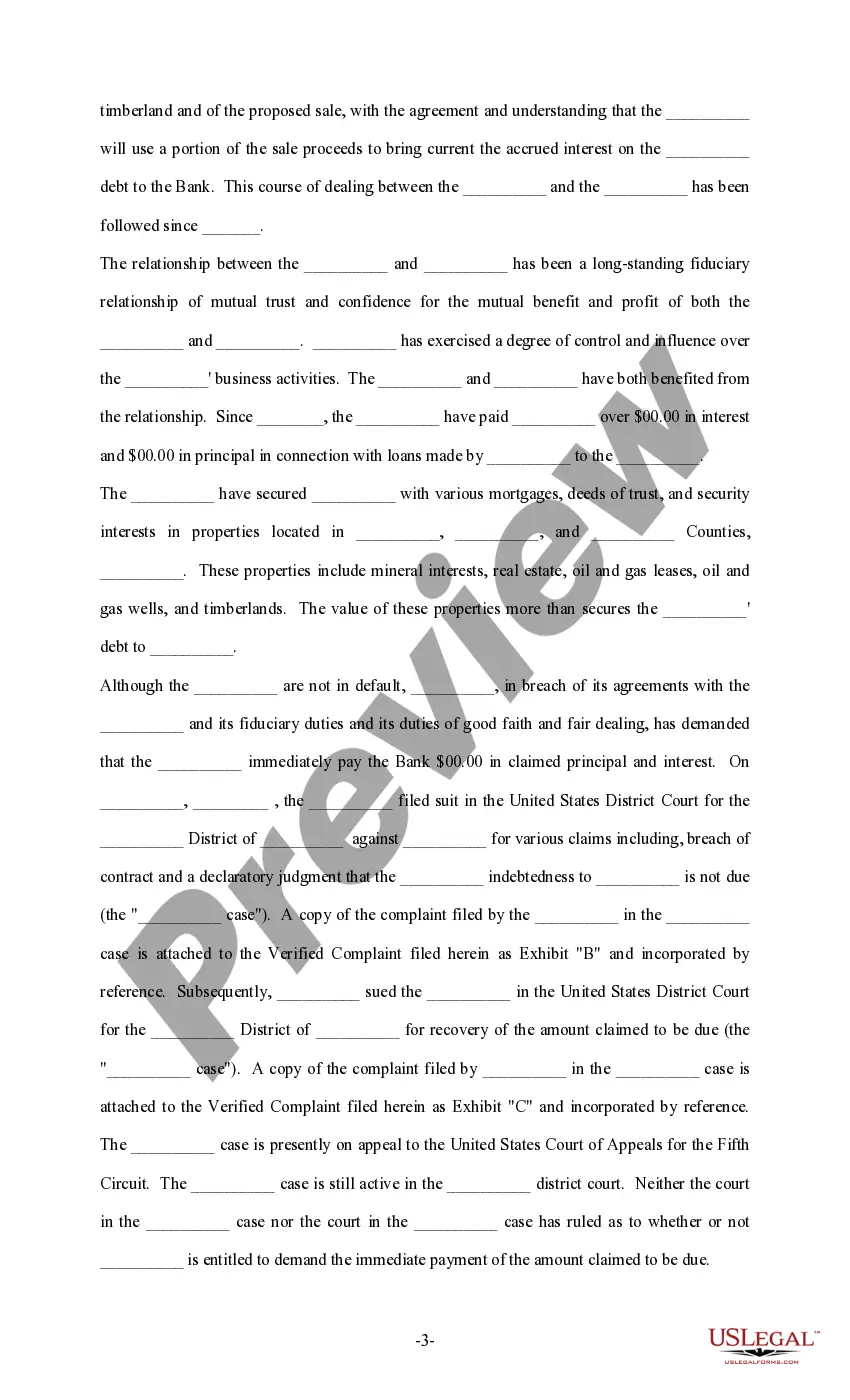
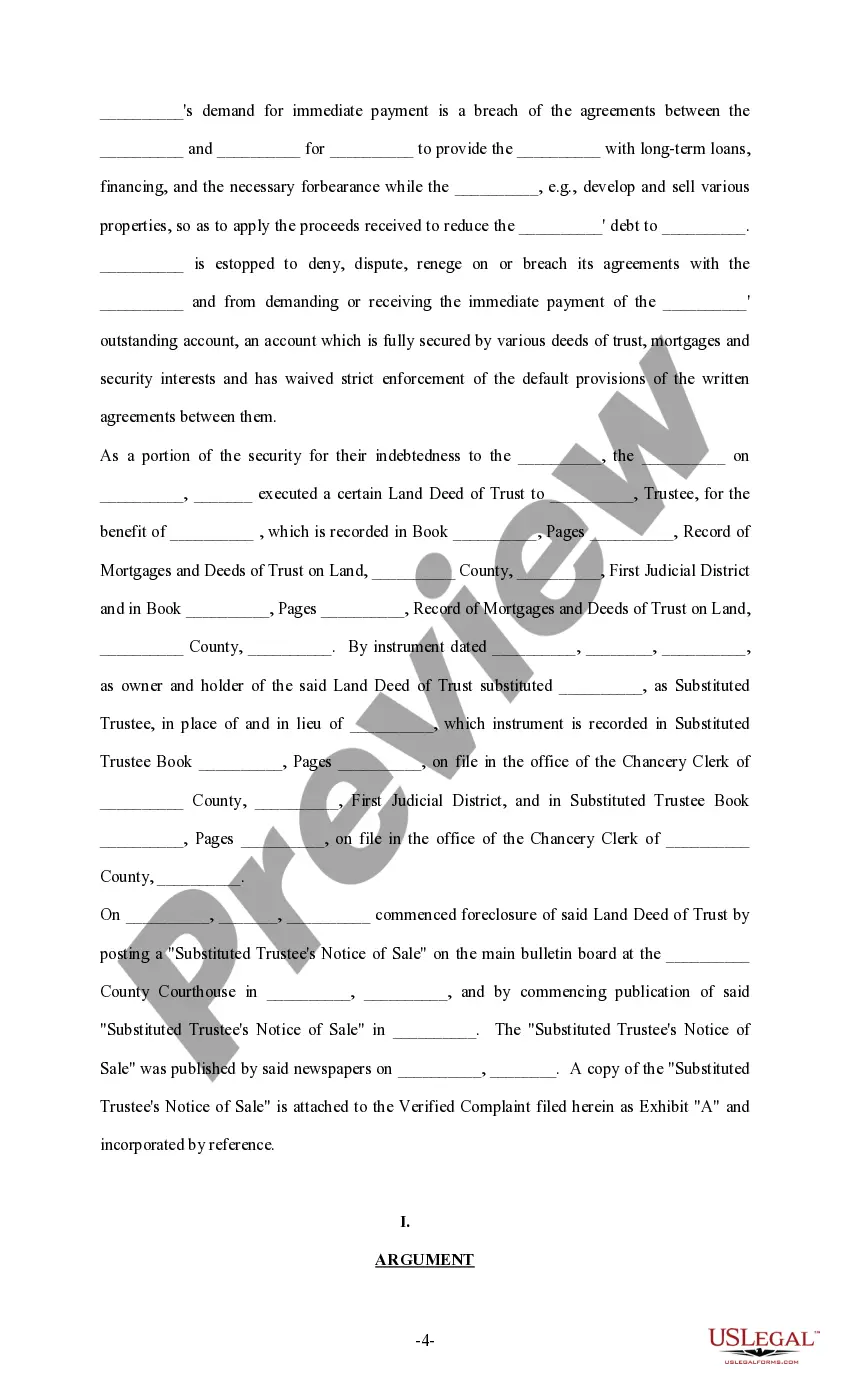
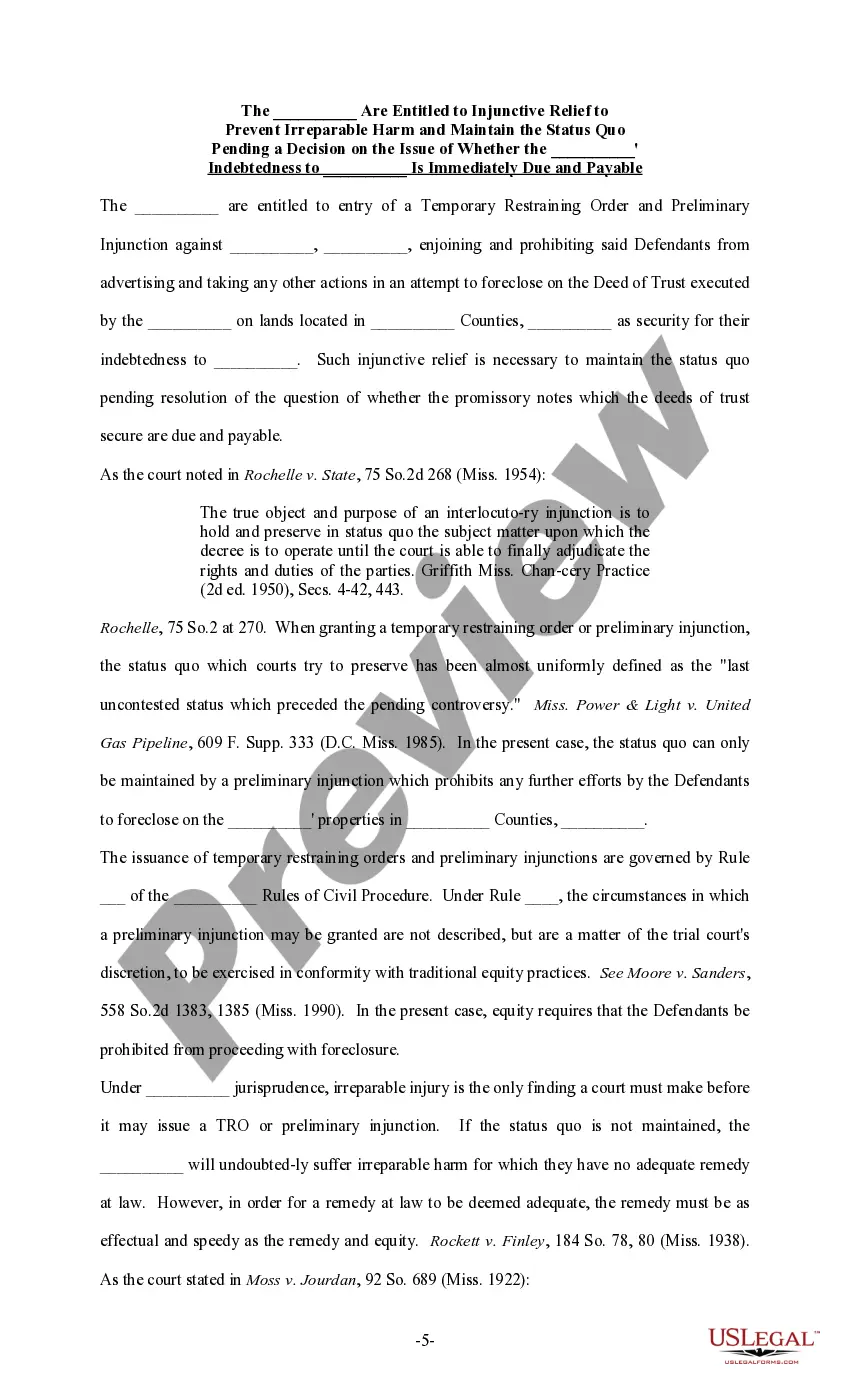
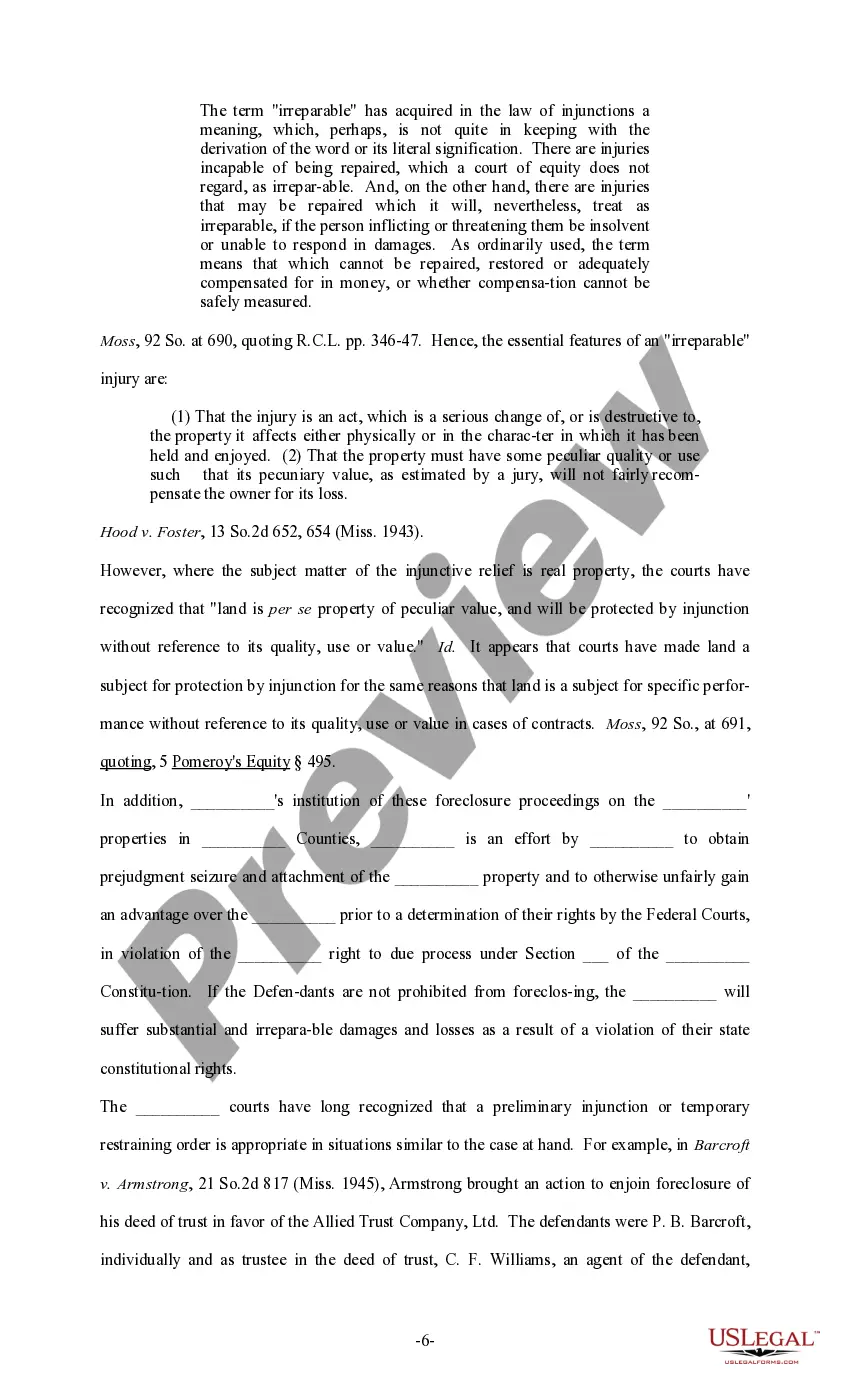
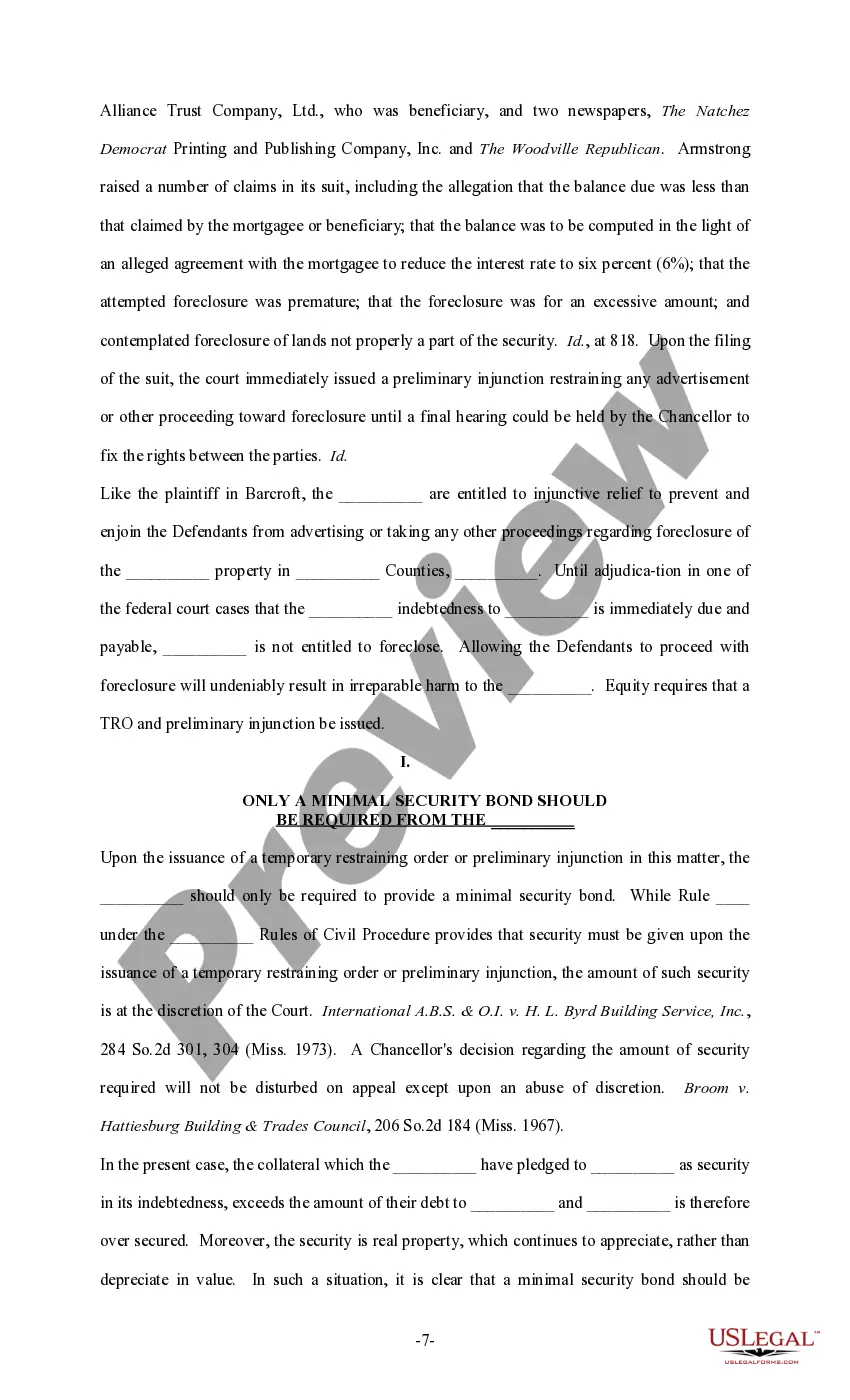
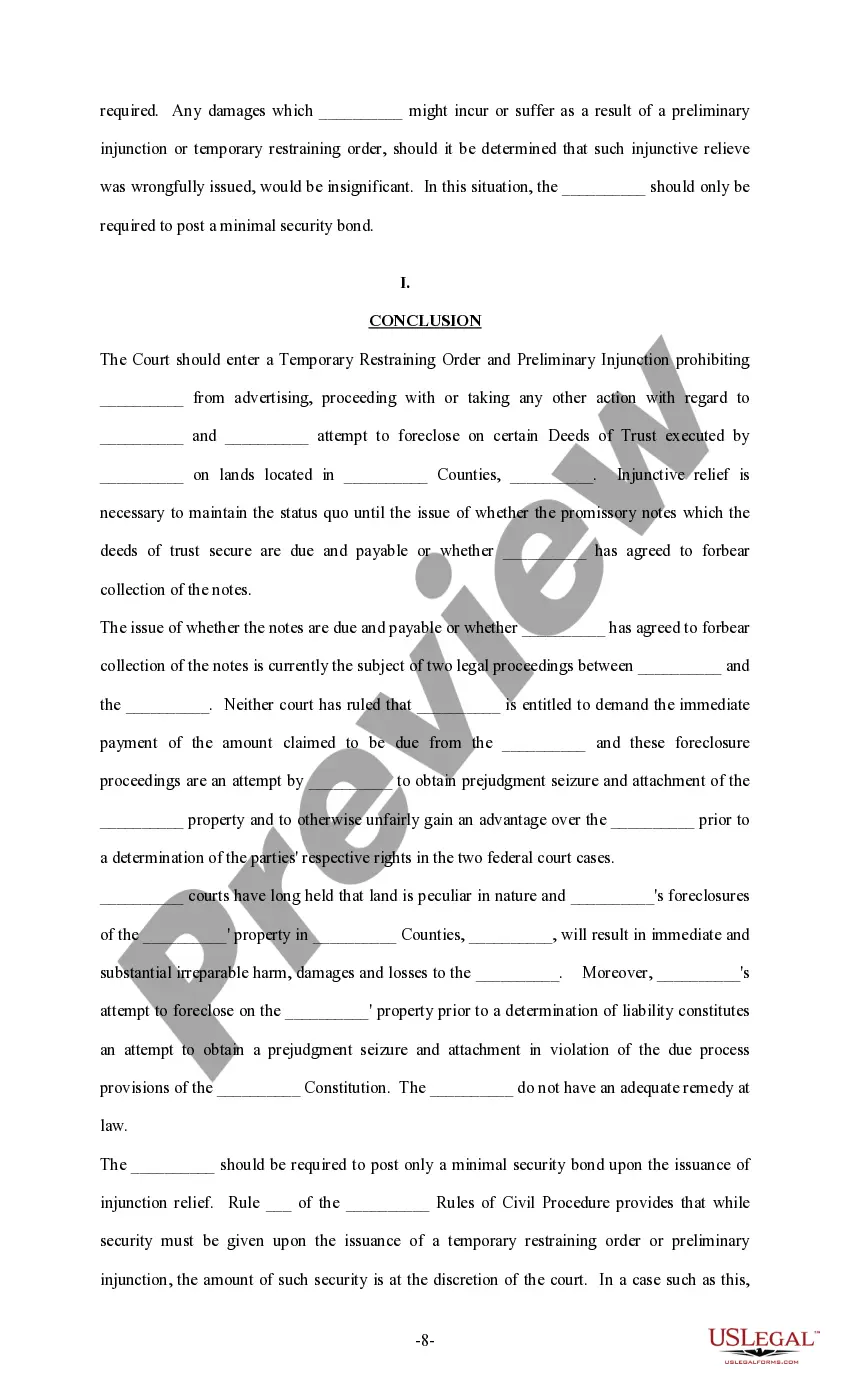
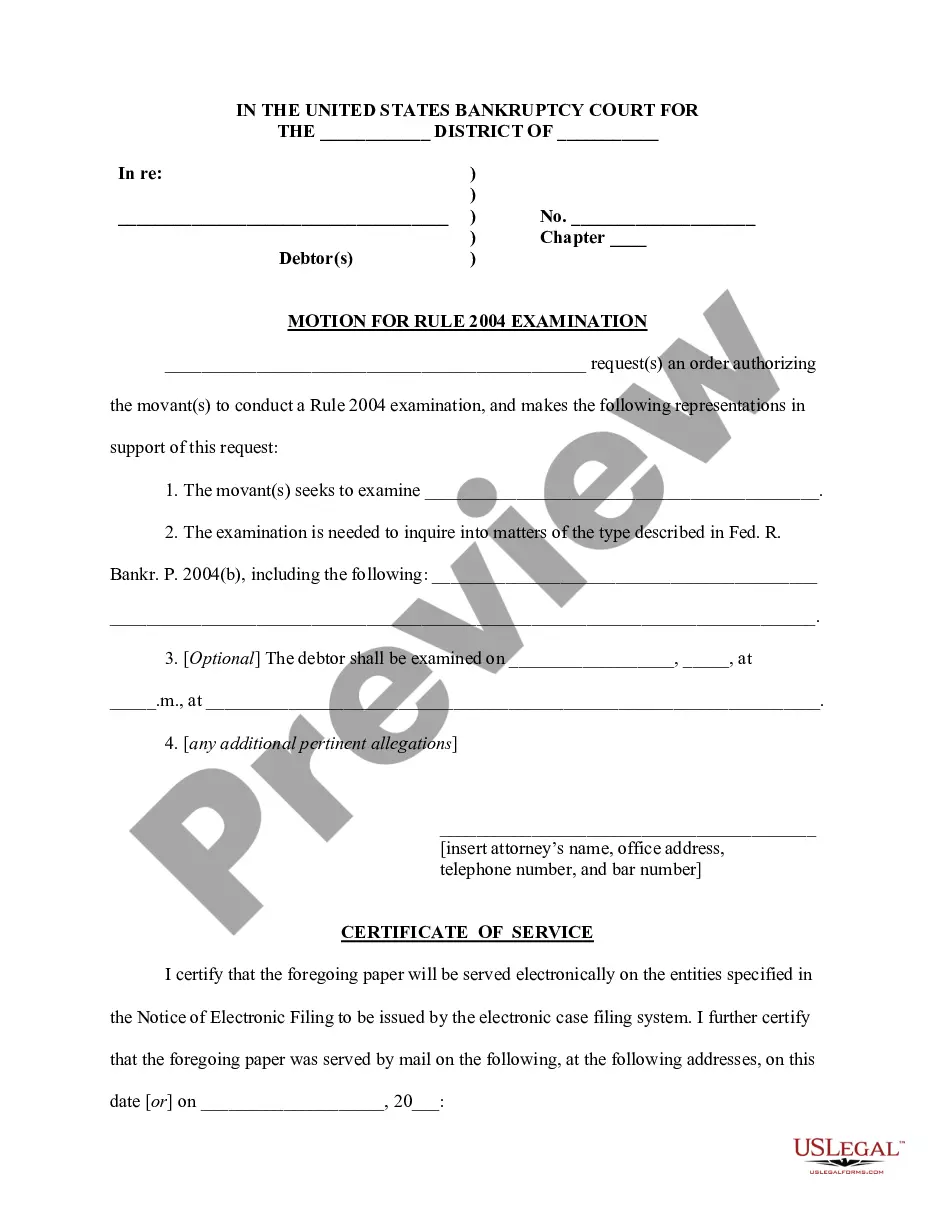
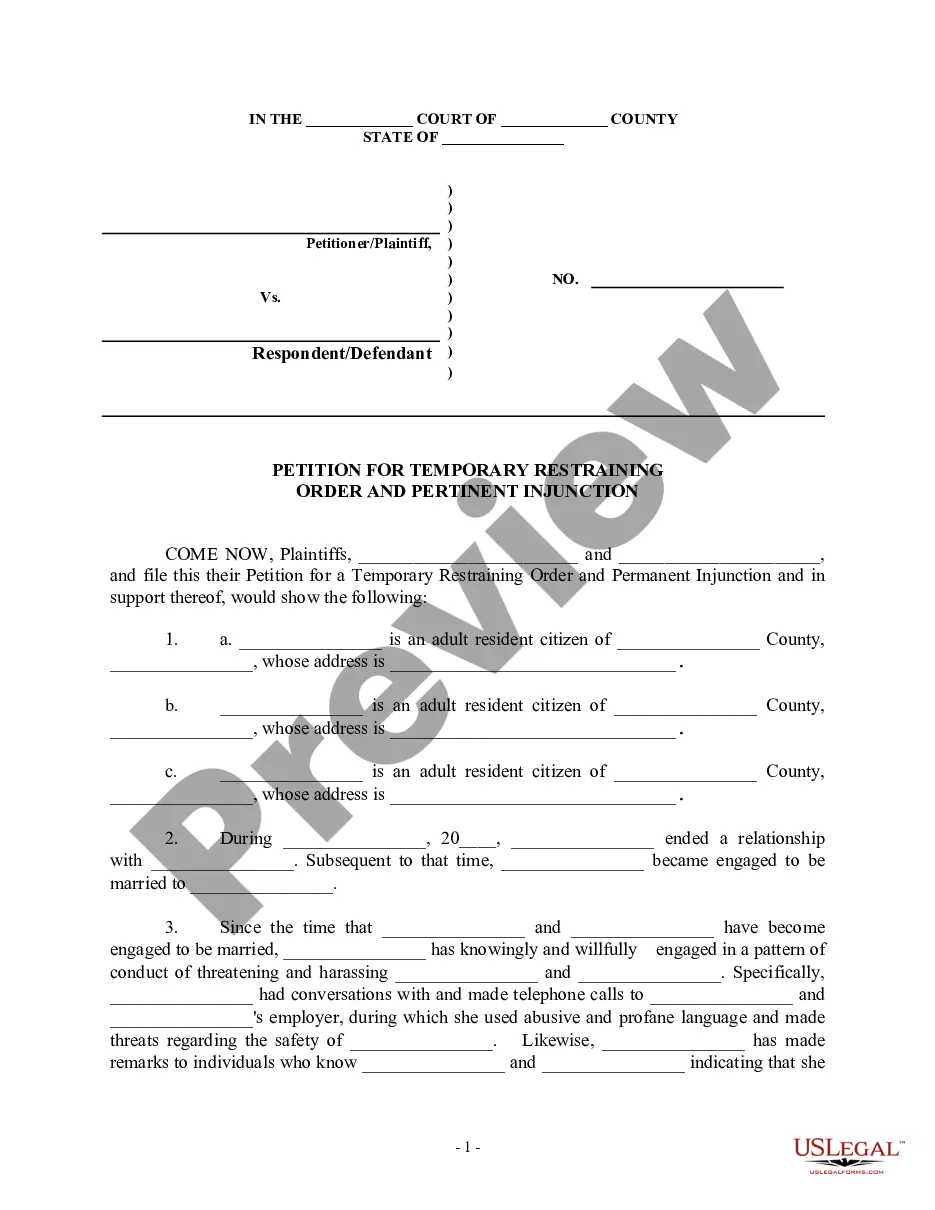
The Sample Brief - Injunction is a legal document designed to outline the arguments and necessary facts to obtain a temporary restraining order and preliminary injunction against foreclosure actions. This form is essential for parties seeking to maintain the status quo in legal disputes concerning property without being subjected to immediate actions that could compromise their rights. Unlike general legal briefs, this document specifically addresses injunctions related to foreclosure on deeds of trust, making it critical for individuals involved in such situations.
Key components of this form
- Summary of argument: An introduction to the key legal arguments for seeking an injunction.
- Factual background: A detailed account of the events leading to the request for an injunction.
- Legal argument: Specific legal principles and precedents supporting the request for an injunction.
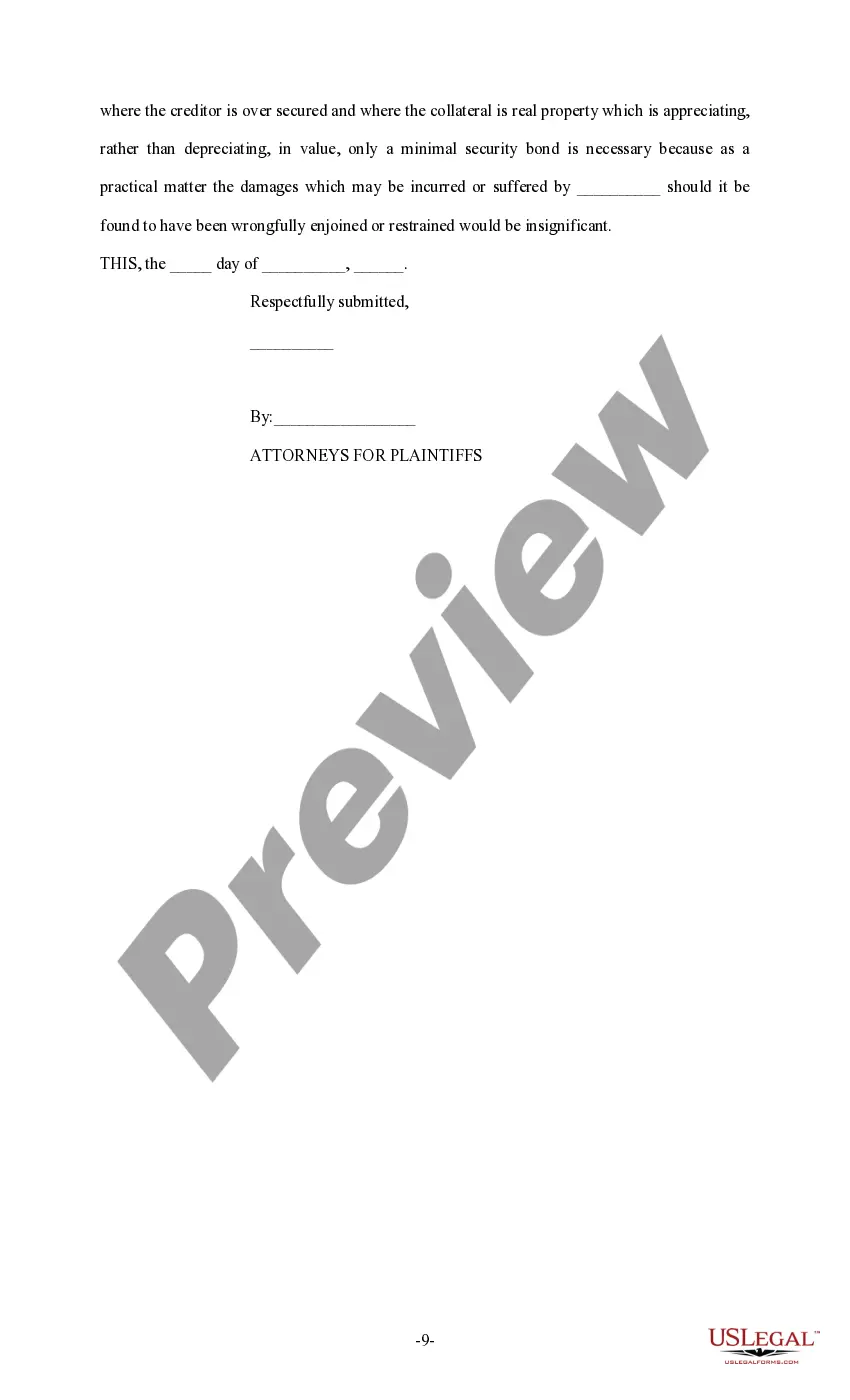
- Request for minimal security bond: Explanation of the necessity for a limited financial bond if the injunction is granted.
- Conclusion: A clear statement of the relief sought from the court.

When to use this document
This form is used when a party needs to prevent another party from taking specific legal actions, particularly in foreclosure cases. It is crucial in scenarios where there might be a risk of irreparable harm due to premature foreclosure on property, pending a determination of the rightful obligations and rights under existing financial agreements. Use this form when involved in ongoing litigation related to property disputes or when facing imminent foreclosure actions without a court's ruling on the subject indebtedness.
Who needs this form
- Property owners facing foreclosure proceedings.
- Developers or investors involved in property disputes under financial agreements.
- Legal representatives assisting clients in preventing foreclosure actions.
- Anyone involved in ongoing litigation regarding trust deeds or property investment disputes.
Steps to complete this form
- Identify the parties involved: Clearly state the names of the plaintiffs and defendants.
- Summarize the facts: Provide a concise narrative of the events leading to the need for an injunction.
- Outline the legal arguments: Detail the reasons for requesting the injunction, including any relevant legal precedents.
- Include requests for relief: Specify the type of injunction sought and if applicable, the conditions regarding the security bond.
- Review for compliance: Ensure the document adheres to local court rules before submission.
Notarization requirements for this form
To make this form legally binding, it must be notarized. Our online notarization service, powered by Notarize, lets you verify and sign documents remotely through an encrypted video session.
Get your form ready online
Our built-in tools help you complete, sign, share, and store your documents in one place.
Make edits, fill in missing information, and update formatting in US Legal Forms—just like you would in MS Word.
Download a copy, print it, send it by email, or mail it via USPS—whatever works best for your next step.
Sign and collect signatures with our SignNow integration. Send to multiple recipients, set reminders, and more. Go Premium to unlock E-Sign.
If this form requires notarization, complete it online through a secure video call—no need to meet a notary in person or wait for an appointment.
We protect your documents and personal data by following strict security and privacy standards.

Make edits, fill in missing information, and update formatting in US Legal Forms—just like you would in MS Word.

Download a copy, print it, send it by email, or mail it via USPS—whatever works best for your next step.

Sign and collect signatures with our SignNow integration. Send to multiple recipients, set reminders, and more. Go Premium to unlock E-Sign.

If this form requires notarization, complete it online through a secure video call—no need to meet a notary in person or wait for an appointment.

We protect your documents and personal data by following strict security and privacy standards.
Typical mistakes to avoid
- Failing to customize the template to fit specific facts and legal circumstances.
- Not checking compliance with local court rules.
- Providing insufficient factual background or legal reasoning.
- Neglecting to include necessary signatures or dates.
Advantages of online completion
- Easy customization of templates to suit specific legal needs.
- Immediate access to essential legal documents without the need for in-person consultations.
- Secure online storage and management of legal forms for easy retrieval.
- Guidance from licensed attorneys to ensure legal compliance and accuracy.
Looking for another form?



Form popularity
FAQ
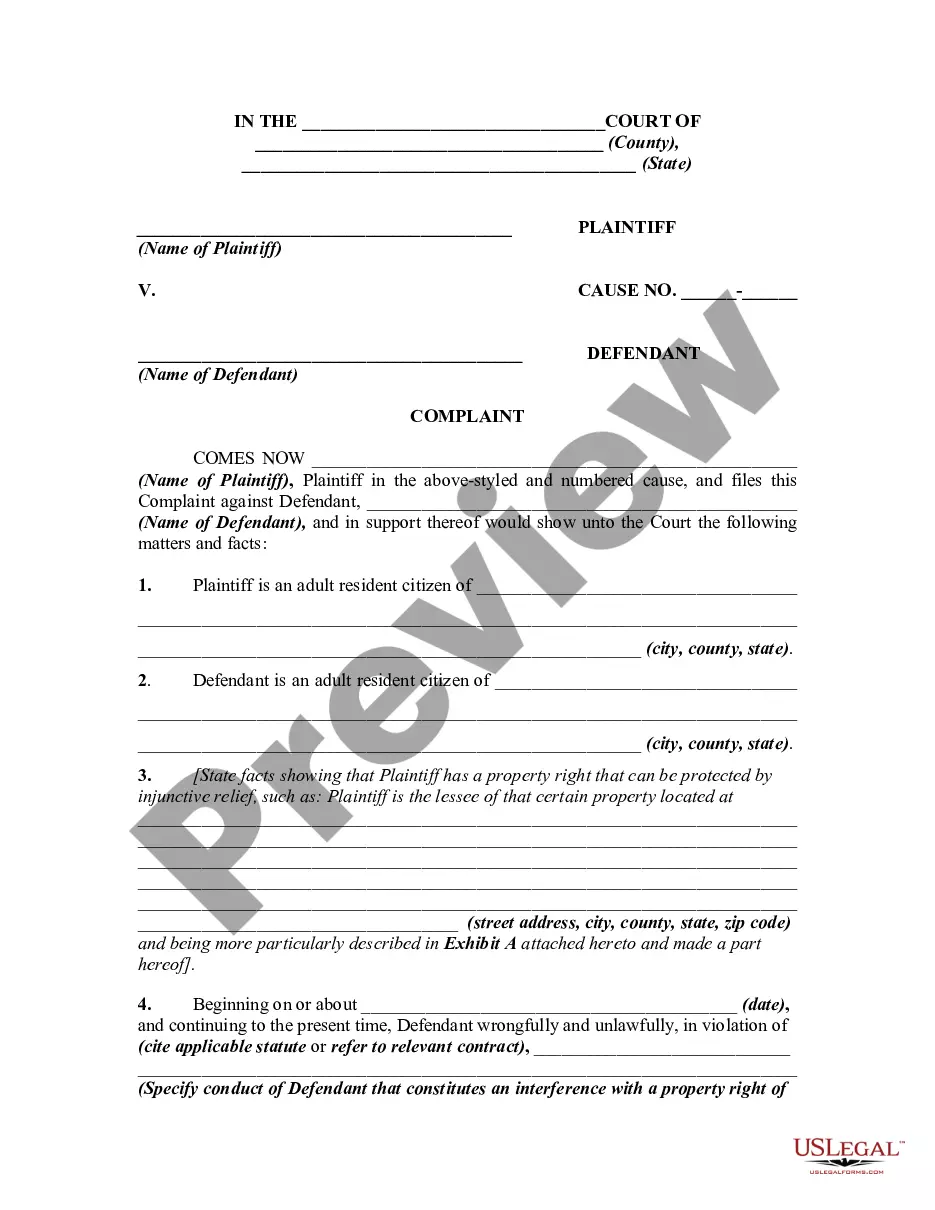
An injunction is a court order requiring a person to do or cease doing a specific action. There are three types of injunctions: Permanent Injunctions,Temporary restraining orders and preliminary injunctions.Choosing whether to grant temporary injunctive relief is up to the discretion of the court.
Temporary and Permanent Injunctions ( Sections 36 & 37) Perpetual Injunctions ( Section 38) Mandatory Injunctions ( section 39) Damages in lieu of or in addition to Injection( Section 40) Injunction to perform a negative covenant( section 42)
An injunction is a court order requiring a person to do or cease doing a specific action. There are three types of injunctions: Permanent Injunctions,Temporary restraining orders and preliminary injunctions.
Oppression or injustice from harsh judgements of common law courts. o Petitions dealt with through common injunctions orders preventing opposing party from. putting forward claim which equity found obnoxious/executing obnoxious common law judgement.
Courts often issue preliminary injunctions for the purpose of stopping action until such time as a hearing can be held to determine what the course of action should be. For example: Mary and Tom have lived in their home for more than 40 years, and have cultivated a lovely property, filled with mature shade trees.
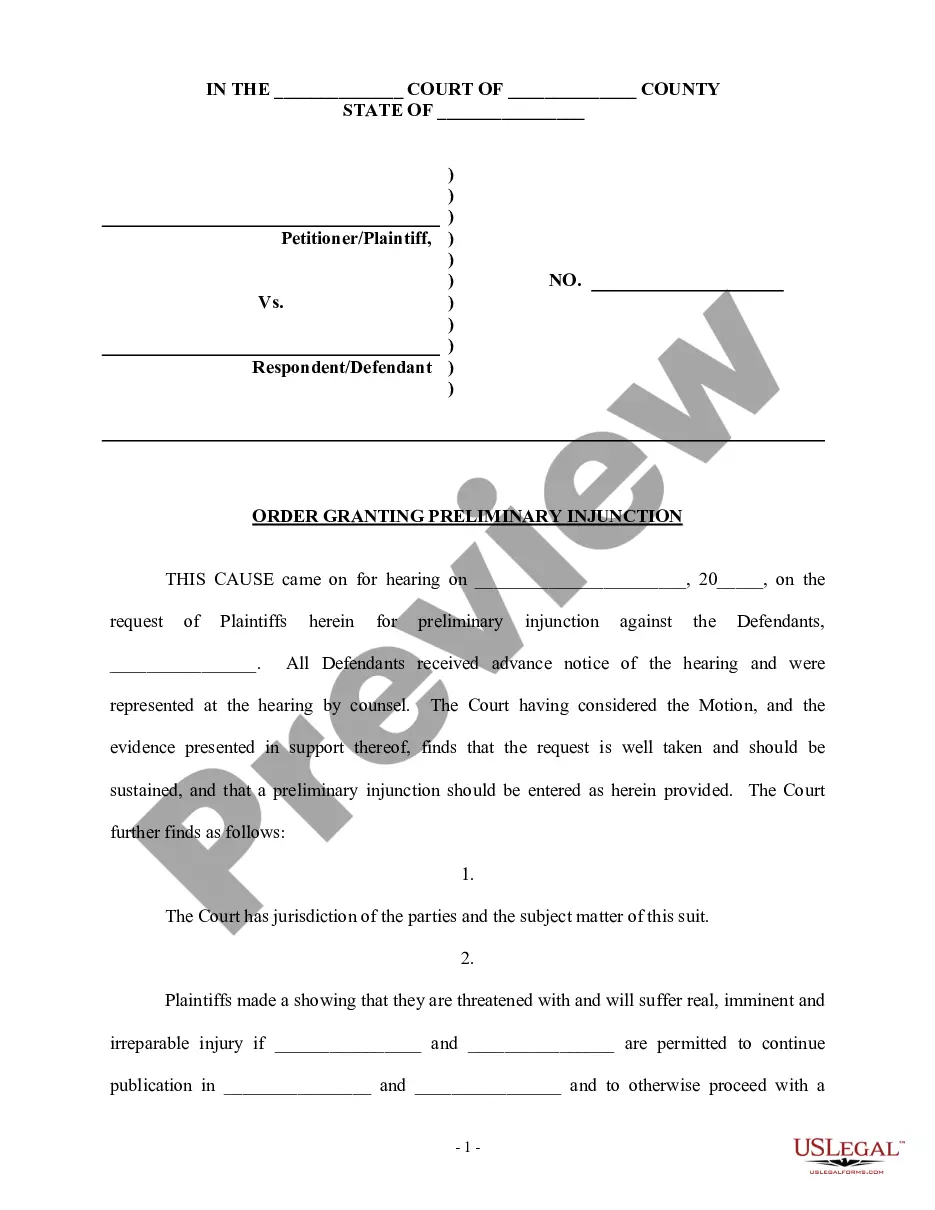
Temporary Restraining Orders: A temporary restraining order (TRO) is an order by the court immediately prohibiting a threatened action.Preliminary Injunctions: A preliminary injunction is an order prohibiting an action, to preserve the status quo while the underlying court case is decided.
An injunction is an order by a court commanding or prohibiting a specific action. If a defendant fails to abide by an injunction issued against them, they can be held in contempt of court and punished with imprisonment or fines.The rules regarding the issuance of injunctions vary somewhat by jurisdiction.
Generally speaking, there are two types of injunctions under the act, as mentioned below: Temporary Injunction. Perpetual/Permanent Injunction.