Order Refunding Bond
What this document covers
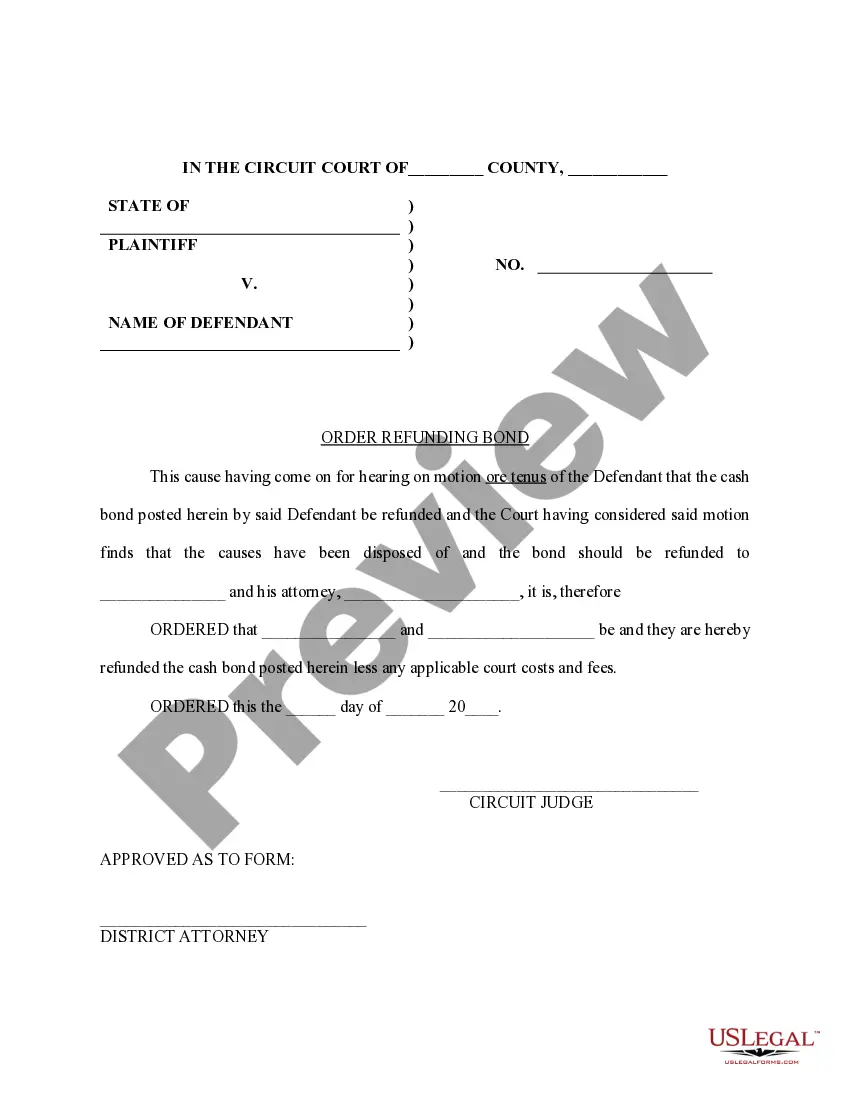
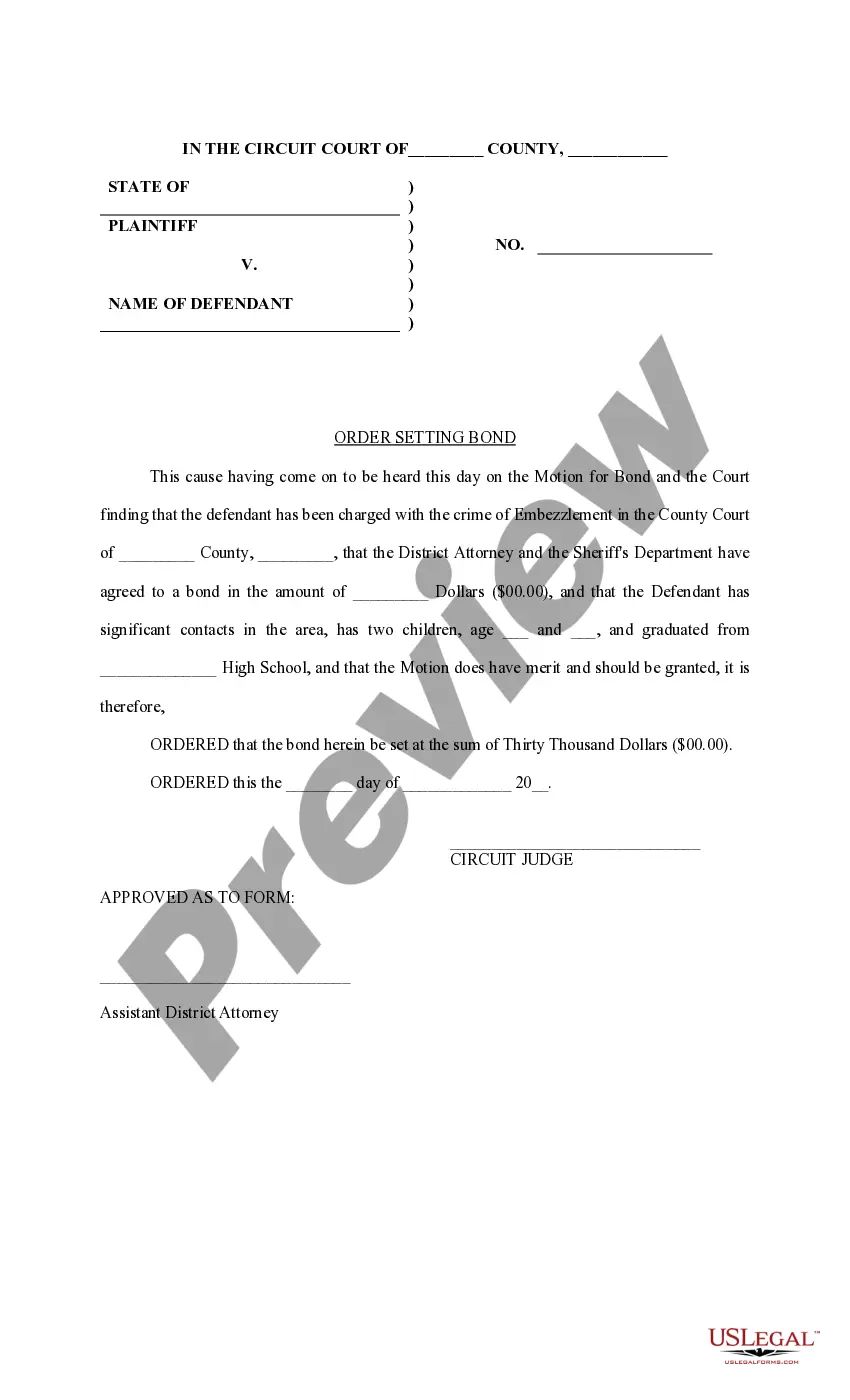
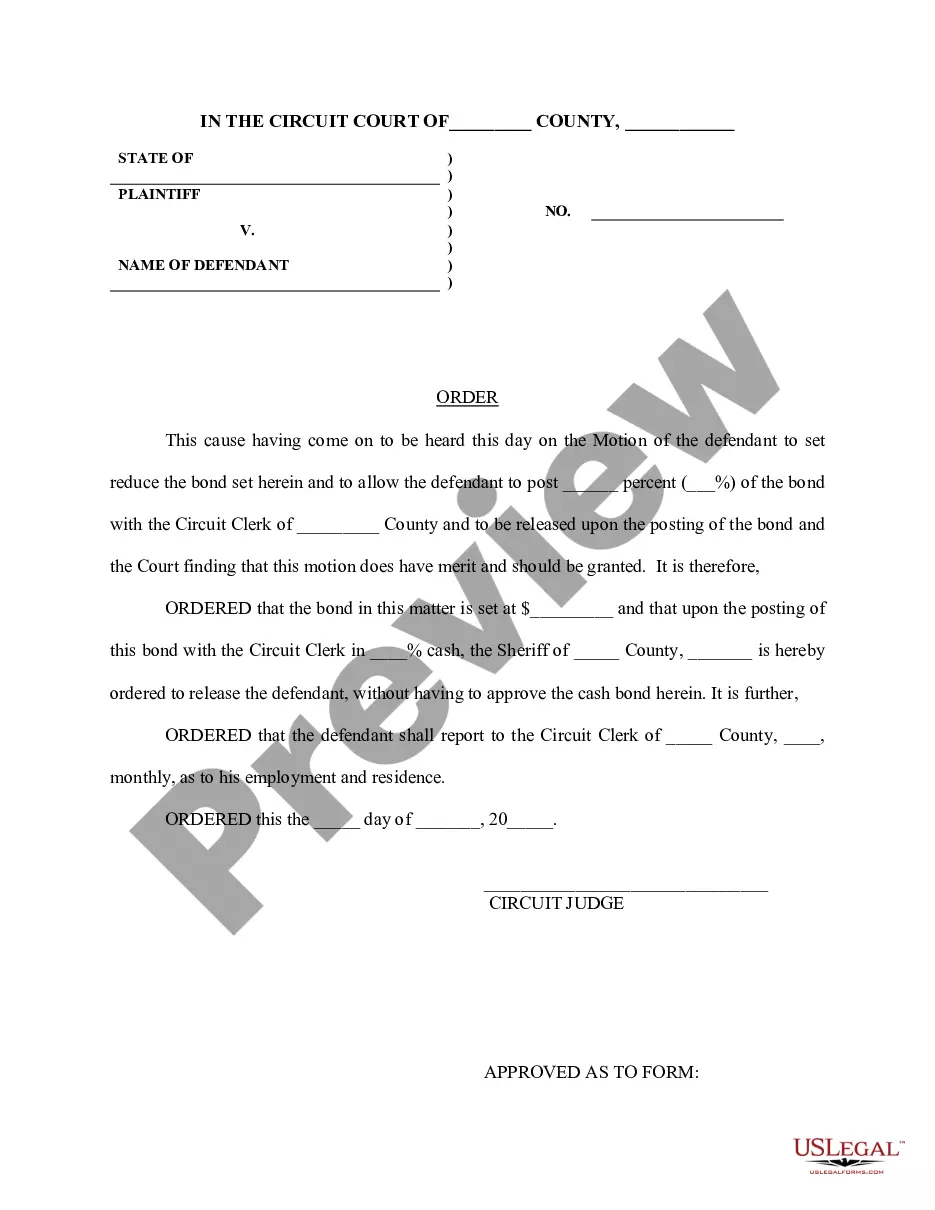
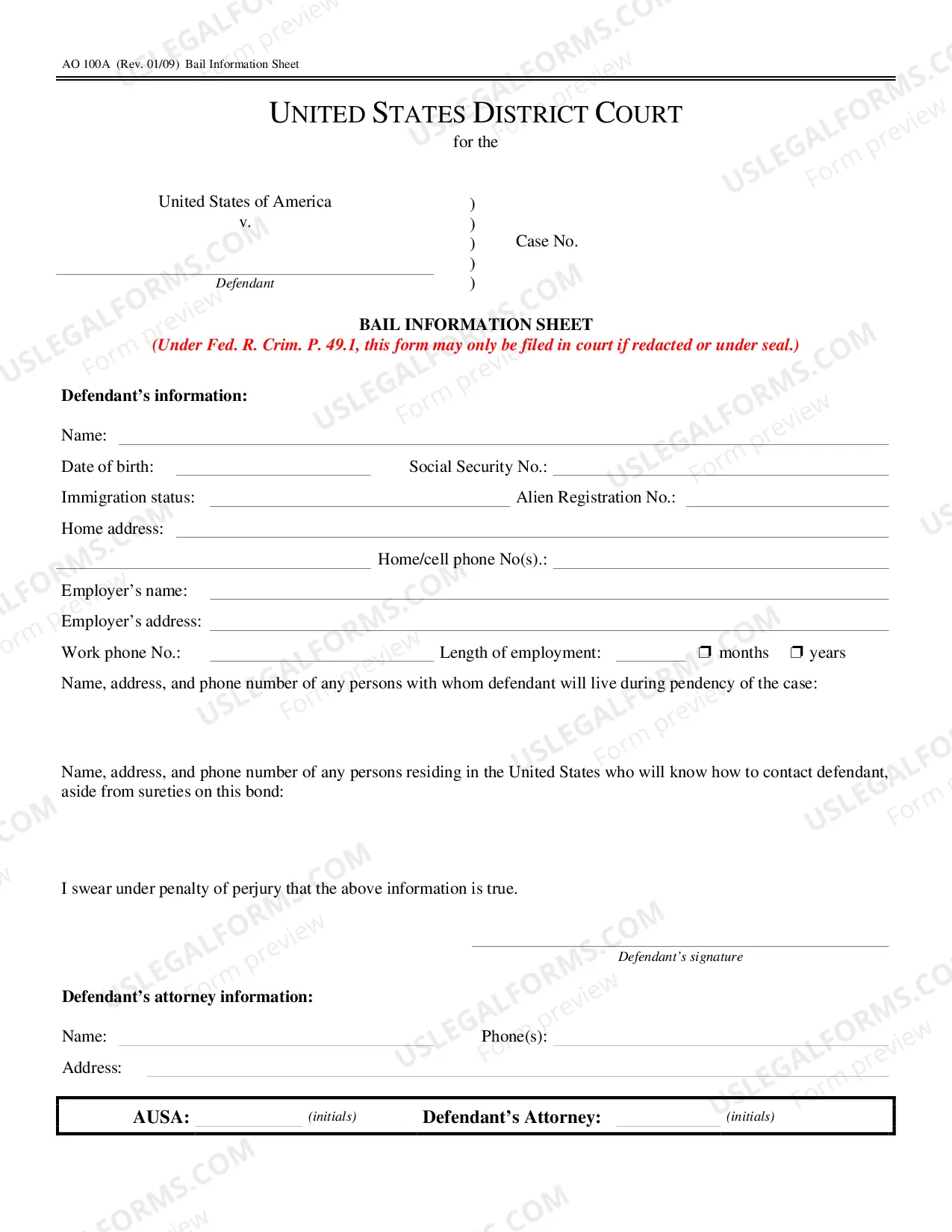
An Order Refunding Bond is a legal document used when a defendant requests the return of bond money that was posted in a case. This form allows the court to order a refund of the cash bond, either fully or partially, to the defendant and their attorney. It is distinct from other bond-related forms as it specifically addresses the return of already posted bond funds following the resolution of the underlying legal matters.
Form components explained
- Identification of the defendant and attorney who will receive the bond refund.
- The court's confirmation that the legal issues have been resolved.
- Details on the amount to be refunded, including any applicable court costs or fees.
- Spaces for signatures of the circuit judge and district attorney for official approval.
- Field for date of order issuance.

When this form is needed
This form is necessary when a defendant wants to recover the bond money they posted. Common scenarios include cases where the bond was set in relation to charges that have been disposed of favorably for the defendant, or when a settlement has been reached that allows for the release of funds. If you believe that the circumstances of your case warrant a refund of the bond, using this form is a step in the right direction.
Who should use this form
This form is intended for:
- Defendants who have posted a cash bond and seek a refund.
- Attorneys representing defendants in cases where a bond refund is sought.
- Individuals involved in legal proceedings who wish to recuperate bond funds after cases are resolved.
How to complete this form
- Identify the defendant and their attorney by entering full names in the appropriate fields.
- Specify the amount of the bond to be refunded, noting any deductions for court costs.
- Provide the date on which the court order is issued.
- Sign the form where indicated, ensuring that the circuit judge and district attorney also provide their signatures.
- File the completed form with the court to initiate the refund process.
Notarization requirements for this form
This form does not typically require notarization unless specified by local law. It's always recommended to check the requirements in your specific state to ensure proper processing and acceptance of the form.
Get your form ready online
Our built-in tools help you complete, sign, share, and store your documents in one place.
Make edits, fill in missing information, and update formatting in US Legal Forms—just like you would in MS Word.
Download a copy, print it, send it by email, or mail it via USPS—whatever works best for your next step.
Sign and collect signatures with our SignNow integration. Send to multiple recipients, set reminders, and more. Go Premium to unlock E-Sign.
If this form requires notarization, complete it online through a secure video call—no need to meet a notary in person or wait for an appointment.
We protect your documents and personal data by following strict security and privacy standards.

Make edits, fill in missing information, and update formatting in US Legal Forms—just like you would in MS Word.

Download a copy, print it, send it by email, or mail it via USPS—whatever works best for your next step.

Sign and collect signatures with our SignNow integration. Send to multiple recipients, set reminders, and more. Go Premium to unlock E-Sign.

If this form requires notarization, complete it online through a secure video call—no need to meet a notary in person or wait for an appointment.

We protect your documents and personal data by following strict security and privacy standards.
Typical mistakes to avoid
- Failing to sign the form by the required individuals.
- Not providing the correct names of all parties involved.
- Leaving out important information such as the amount to be refunded.
- Not adhering to state-specific rules regarding submission or processing.
Benefits of completing this form online
- Convenience of downloading and printing the form at your own pace.
- Easy access to the latest legal templates reviewed by licensed attorneys.
- Edit and customize the form to fit your specific situation without needing extensive legal knowledge.
Looking for another form?


Form popularity
FAQ
Refunded bonds maintain a cash amount held aside by the original issuer of the debt to repay its principal. A refunded bond will use a sinking fund to hold in escrow the principal amount, making these bonds less risky to investors.
Under Probate Code section 16004.5, a Trustee cannot require a beneficiary to sign a release in exchange for making a distribution of Trust assets, provided that the Trust distribution is required to be made as stated in the Trust document.
The Refunding Bond and Release has a dual purpose:Refunding To refund to the Executor or Administrator out of his/her share of the estate his ratable part of any unpaid debts, owed by the testator or intestate, if there are no other assets to pay them.
Transitive verb. 1 : to give or put back. 2 : to return (money) in restitution, repayment, or balancing of accounts. refund.
Re·fundA·ed, reA·fundA·ing, reA·funds. To give back, especially money; return or repay: refunded the purchase price. To make repayment. n. ( r01132032f016dnd2032)
Explain the difference between calling a bond and a bond refunding.The freely call provision, the bond can be called anytime before its maturity and will be redeemed by the issuer. Whereas, the deferred call provision allows redeeming the bond only after some fixed period.
Any creditor who wishes to make a claim against the estate's assets must do so within 9 months under New Jersey law. The 9 months begins on the date of debtor's death. The executor/personal representative cannot distribute assets to beneficiaries until all claims are satisfied.
A pre-refunding bond is a debt security that is issued in order to fund a callable bond. With a pre-refunding bond, the issuer decides to exercise its right to buy its bonds back before the scheduled maturity date.