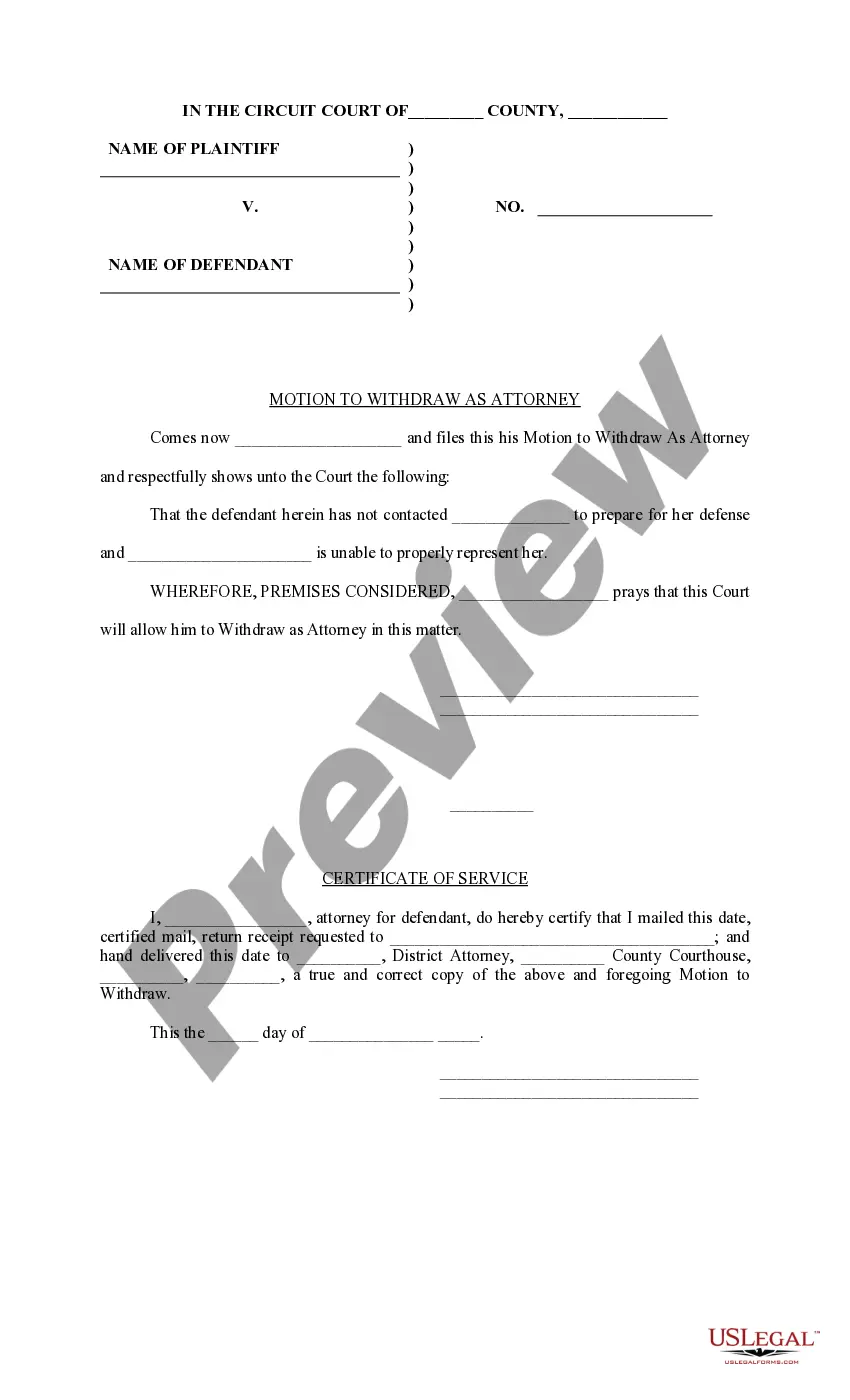
Motion to Withdraw as Attorney
Understanding this form
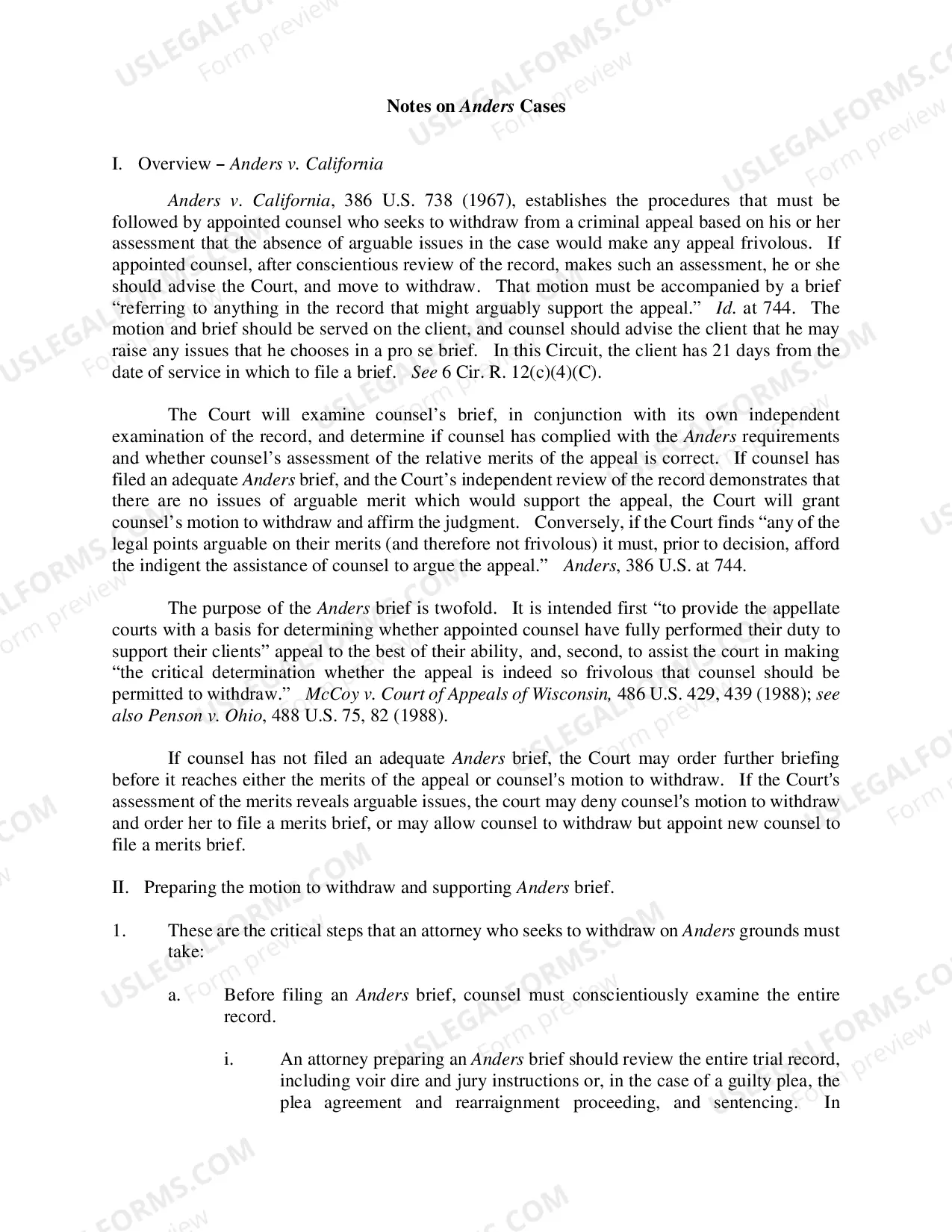
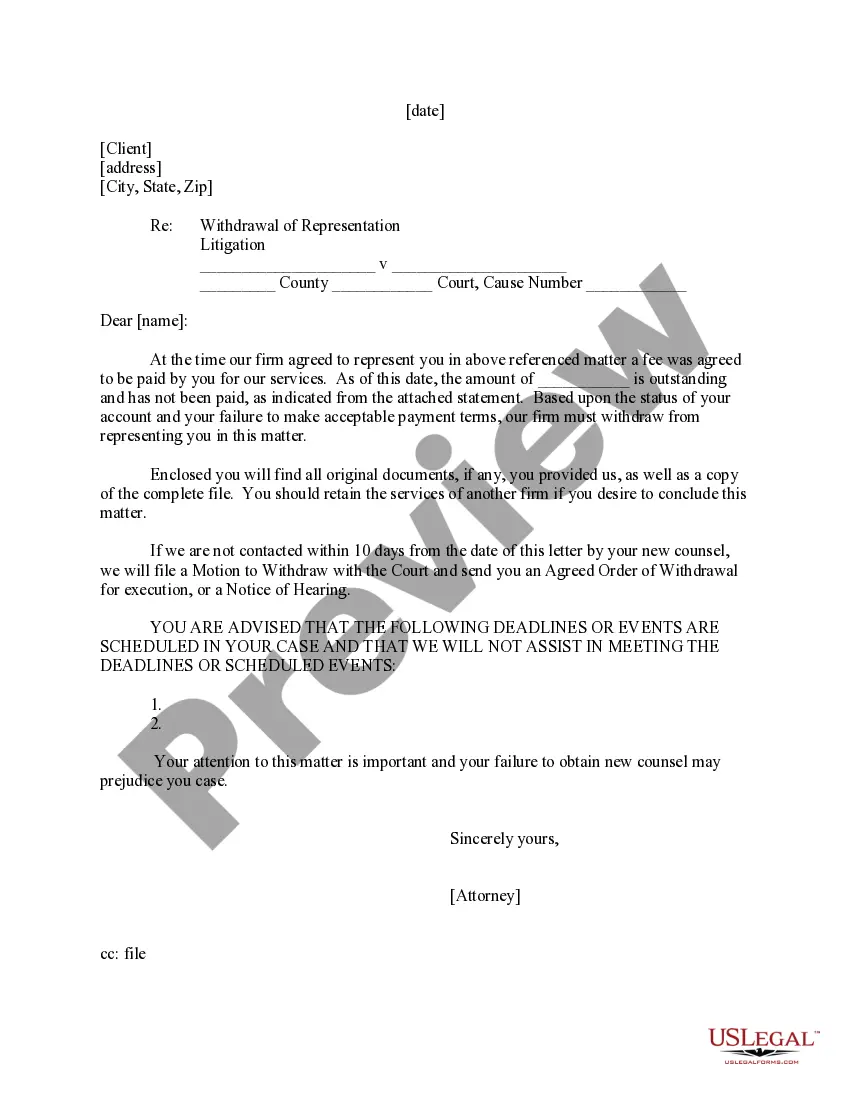
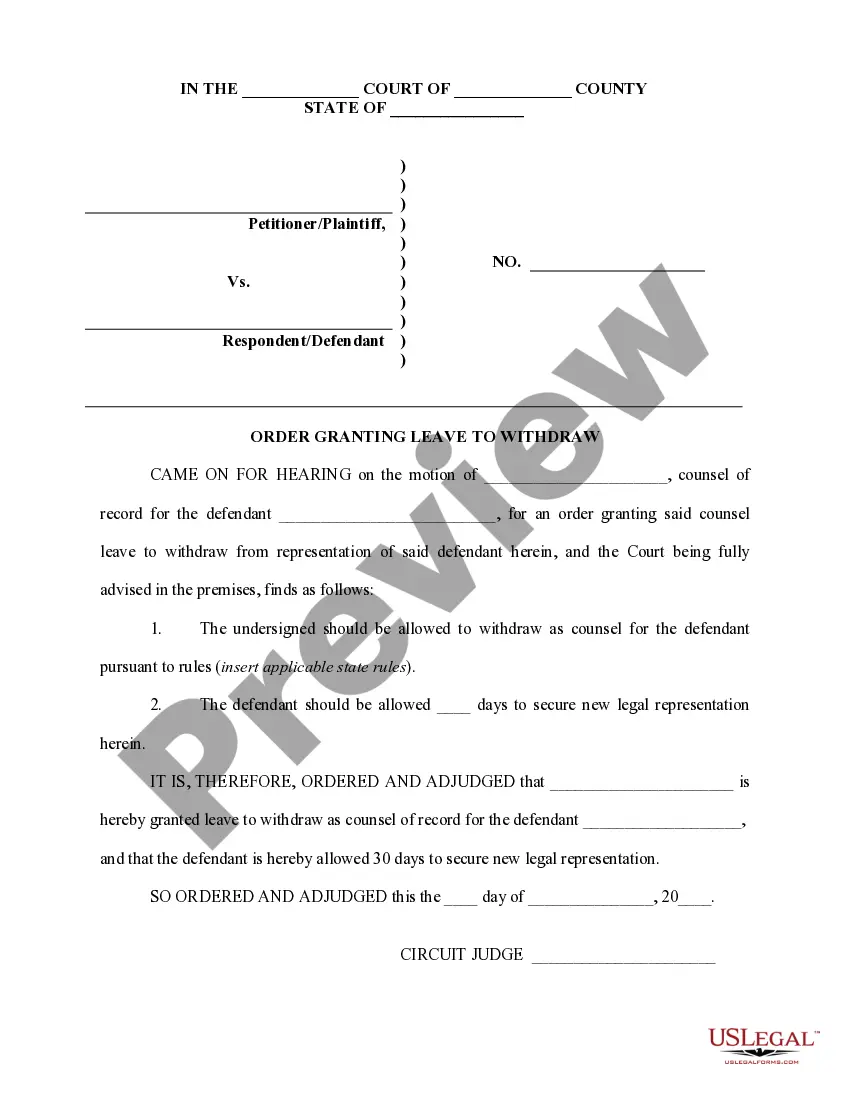
The Motion to Withdraw as Attorney is a legal document used when an attorney seeks to stop representing a client in a criminal case. This form is important because it formally requests the court's permission for withdrawal, especially in situations where communication with the defendant is lacking, preventing the attorney from preparing an adequate defense. Unlike other forms related to legal representation, this motion specifically addresses the attorney-client relationship and the reasons for withdrawal.
Key parts of this document
- Name of the attorney seeking to withdraw.
- Statement of the defendant's failure to communicate.
- Reason for the inability to represent the defendant effectively.
- Request for the court's permission to withdraw.
- Certificate of service as proof of notification to relevant parties.
When this form is needed
This form is used in specific scenarios, such as when an attorney has been unable to contact their client or when the client has not participated in the preparation of their defense. It is often necessary when the attorney feels they can no longer adequately represent the client due to lack of communication or cooperation, and it is essential to formally inform the court to avoid any potential legal issues.
Intended users of this form
This form is intended for:
- Attorneys who represent clients in criminal cases.
- Lawyers needing to officially withdraw from representing a defendant.
- Legal professionals seeking to ensure compliance with court requirements when ending representation.
How to prepare this document
- Identify the attorneyâs name and the defendant's name in the relevant fields.
- State the reasons for withdrawal clearly based on the lack of communication.
- Include the court's name and address where the motion is being filed.
- Sign and date the document appropriately, ensuring all necessary signatures are included.
- File the motion with the court and ensure a copy is served to the defendant and district attorney.
Does this form need to be notarized?
This form does not typically require notarization unless specified by local law. It is always advisable to check local regulations to ensure compliance with any specific requirements regarding attorney withdrawal motions.
Get your form ready online
Our built-in tools help you complete, sign, share, and store your documents in one place.
Make edits, fill in missing information, and update formatting in US Legal Forms—just like you would in MS Word.
Download a copy, print it, send it by email, or mail it via USPS—whatever works best for your next step.
Sign and collect signatures with our SignNow integration. Send to multiple recipients, set reminders, and more. Go Premium to unlock E-Sign.
If this form requires notarization, complete it online through a secure video call—no need to meet a notary in person or wait for an appointment.
We protect your documents and personal data by following strict security and privacy standards.

Make edits, fill in missing information, and update formatting in US Legal Forms—just like you would in MS Word.

Download a copy, print it, send it by email, or mail it via USPS—whatever works best for your next step.

Sign and collect signatures with our SignNow integration. Send to multiple recipients, set reminders, and more. Go Premium to unlock E-Sign.

If this form requires notarization, complete it online through a secure video call—no need to meet a notary in person or wait for an appointment.

We protect your documents and personal data by following strict security and privacy standards.
Common mistakes
- Failing to provide adequate reasons for withdrawal.
- Not notifying the defendant or court properly.
- Omitting required signatures or dates.
- Using incorrect court formatting or terminology.
Advantages of online completion
- Convenient access to a professionally drafted form.
- Editability to adapt it to specific circumstances easily.
- Reliable templates that comply with legal standards.
Summary of main points
- The Motion to Withdraw as Attorney is essential for formalizing an attorney's withdrawal from representation.
- Ensure that all required sections are completed thoroughly to prevent issues.
- Proper notification to all parties involved is crucial.
Looking for another form?
Form popularity
FAQ
A motion to withdraw is usually when an attorney asks the permission of the judge to be taken off of a case. This usually happens when the client does not pay the lawyer, or when another attorney wants to take over or be substituted onto the...
It is difficult for a lawyer to withdraw from representing a client. Judges have discretion in appointing guardian ad litem or indigent cases to attorneys. Judges have discretion in appointing guardian ad litem or indigent cases to attorneys.
A lawyer must withdraw from representing a client under the following circumstances: (1) they are discharged by the client; (2) the client persists in instructing the lawyer to act contrary to professional ethics; (3) the lawyer is instructed by the client to do something that is inconsistent with the lawyer's duty to
A motion to withdraw is a document an attorney files with the court when that attorney no longer wishes to represent his client.
Withdrawal from representation, in United States law, occurs where an attorney terminates a relationship of representing a client.Where litigation has been filed and an attorney is representing the client in court, permission of the court must usually be sought in support of an attorney's withdrawal.
When your attorney files a motion to withdraw from your case, you will be allowed to object. However, it is important to note that objection will result in the motion going to court. This will only delay your case further.
The Rules of Professional Responsibility encourage attorneys to work with clients until their legal matter is completely resolved.If your lawyer does withdraw from the case, he or she must inform you and the court. However, the court may refuse an attorney's request and order him or her to continue to represent you.
The answer depends. If the attorney is withdrawing due to your inability to pay or a difference in opinion as to bow the case should be presented should not have a negative affect on you. However, if the attorney withdraws for ethical reasons that may look questionable.