Financial Statements
What this document covers
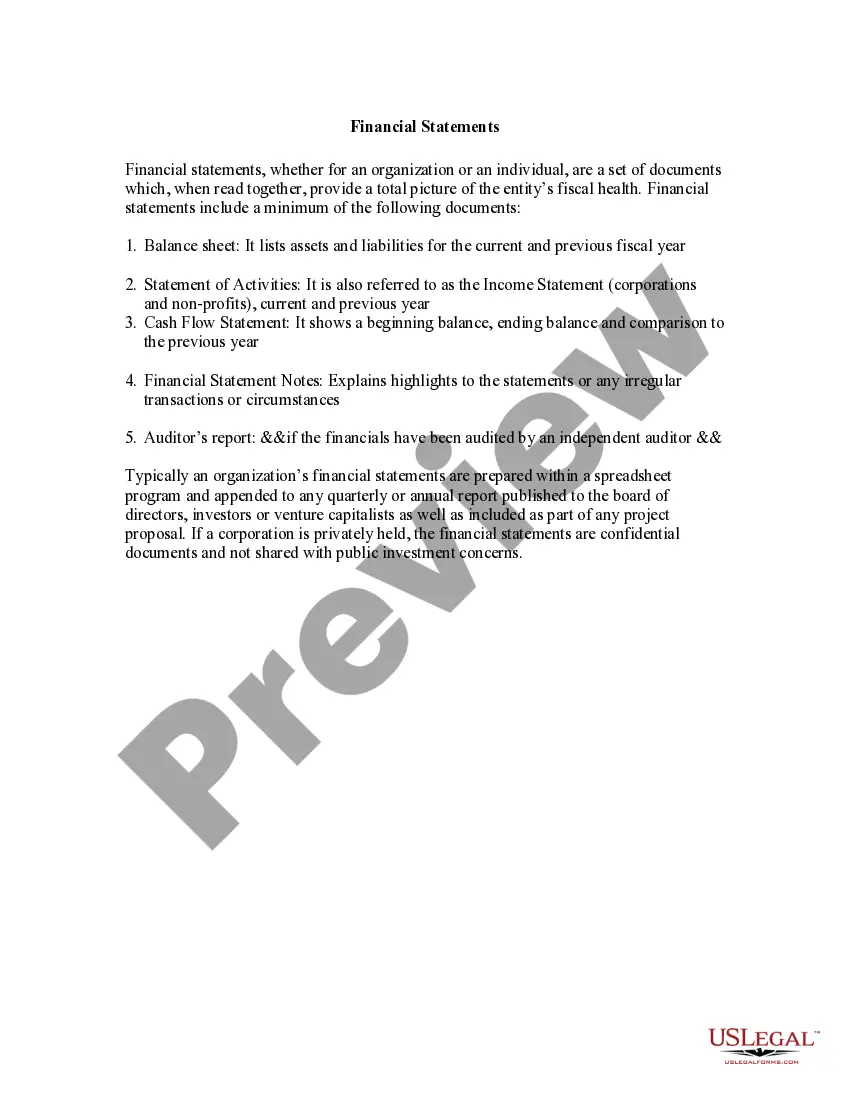
The Financial Statements form provides a comprehensive overview of an organization's or individual's financial health through essential documents. Unlike other financial forms, this set includes a balance sheet, an income statement, a cash flow statement, and accompanying notes, which when read together, present a complete fiscal picture. It is critical for stakeholders such as investors, board members, and financial analysts to assess the profitability and stability of the entity.
Main sections of this form
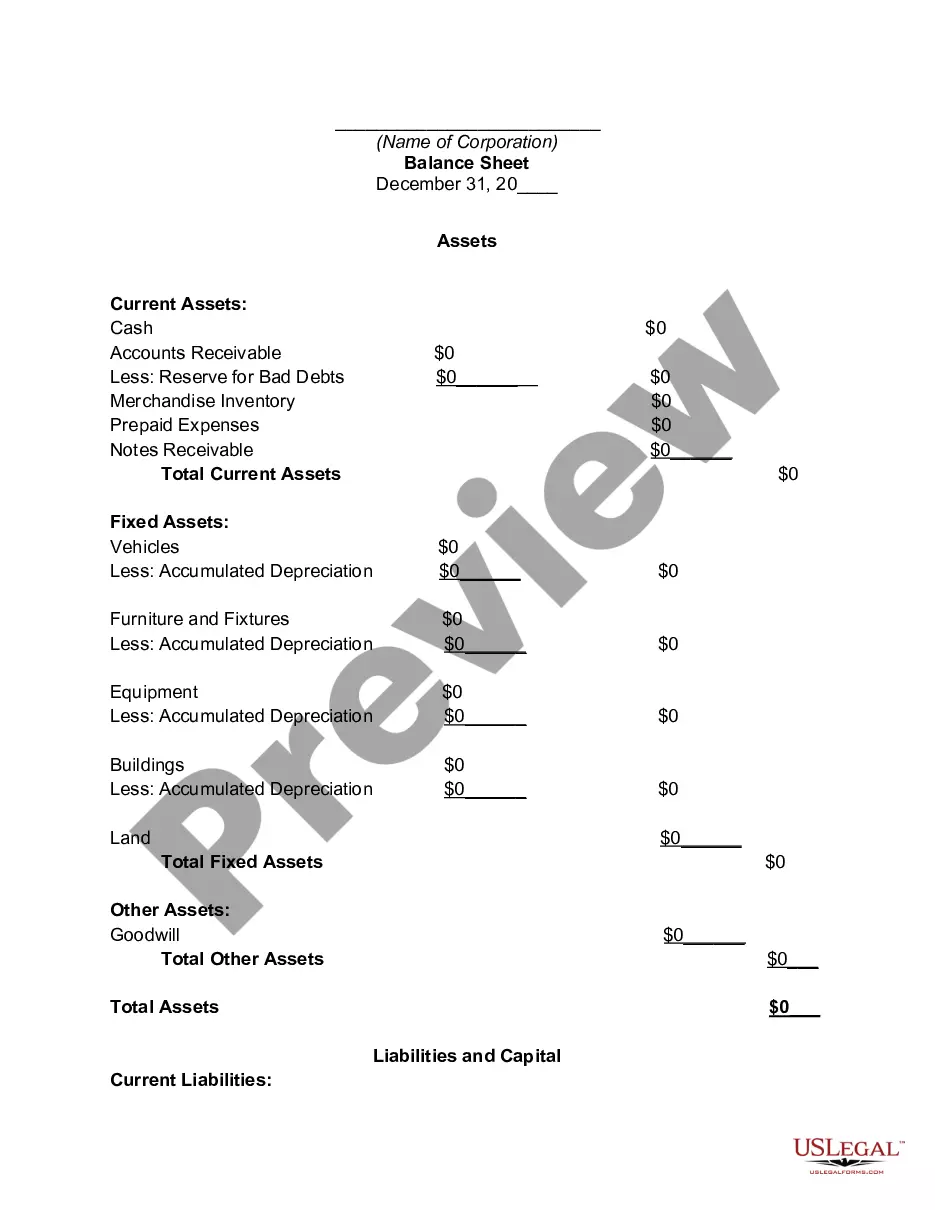
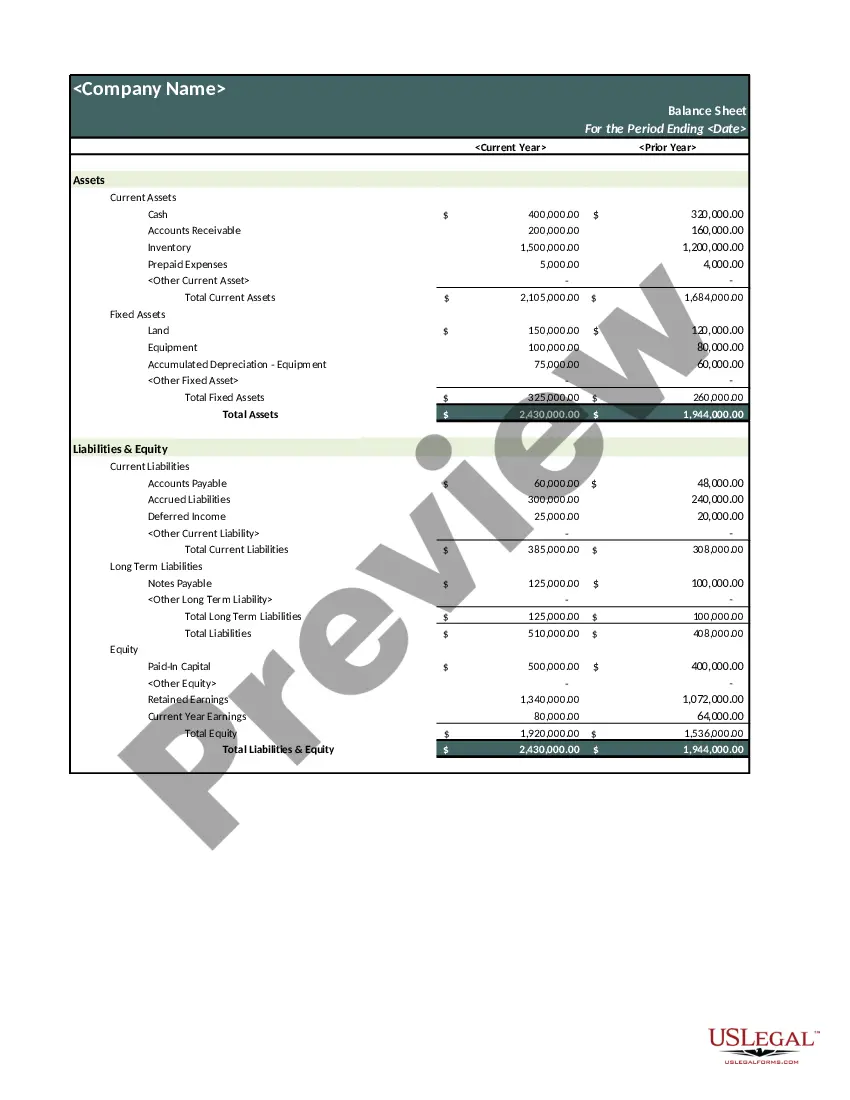
- Balance Sheet: Lists assets and liabilities for the current and previous fiscal year.
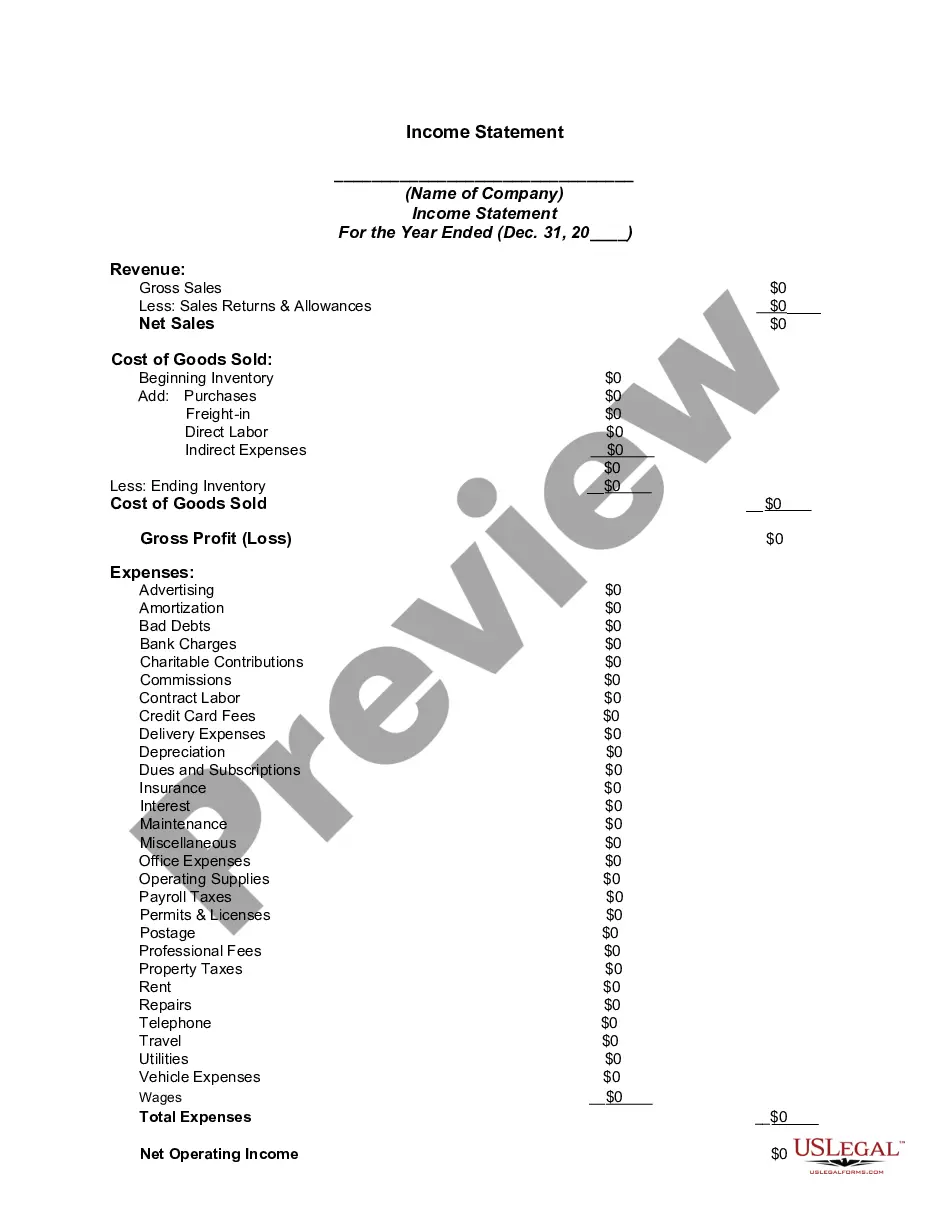
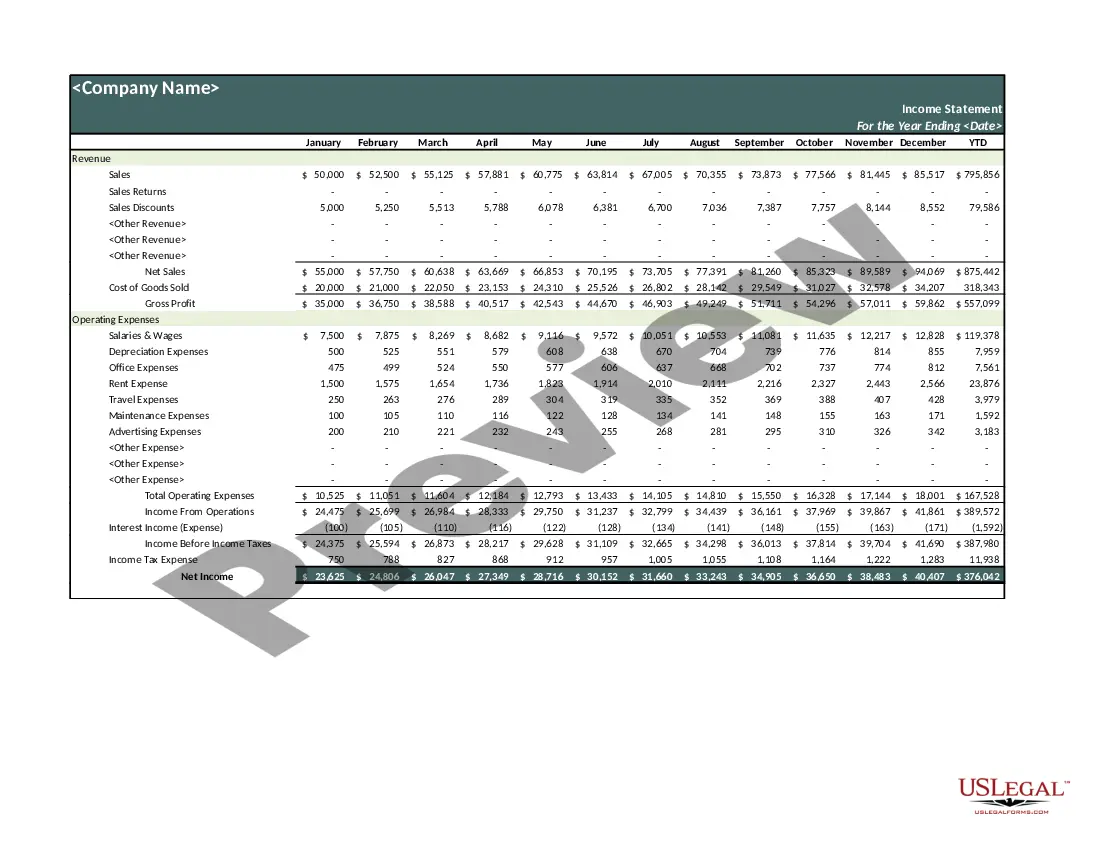
- Statement of Activities: Also known as the Income Statement, it outlines the revenues and expenses over the current and prior periods.
- Cash Flow Statement: Shows the beginning and ending cash balances along with a comparison to the previous year.
- Financial Statement Notes: Provides explanations for any highlights or irregular transactions.
- Auditor's Report: If applicable, documents findings from an independent audit of the financial statements.
Common use cases
This form is used in various situations including when preparing annual reports for shareholders, submitting financials for loan applications, or creating project proposals that require evidence of financial viability. It is also critical for internal assessments by management to review the fiscal status of an organization.
Intended users of this form
- Small business owners who need to present financial information to potential investors.
- Non-profit organizations that must report financial activities to funding sources.
- Individuals preparing personal financial statements for banks or loan applications.
- Corporations, both public and private, needing to compile and communicate financial performance to stakeholders.
Completing this form step by step
- Gather relevant financial data from accounting records.
- Prepare the balance sheet, ensuring all assets and liabilities are accurately listed.
- Create the income statement by documenting revenue and expense figures for the periods in question.
- Compile the cash flow statement by tracking cash inflows and outflows.
- Add notes to the financial statements explaining any unusual transactions or important information.
Is notarization required?
This form does not typically require notarization to be legally valid. However, some jurisdictions or document types may still require it. US Legal Forms provides secure online notarization powered by Notarize, available 24/7 for added convenience.
Get your form ready online
Our built-in tools help you complete, sign, share, and store your documents in one place.
Make edits, fill in missing information, and update formatting in US Legal Forms—just like you would in MS Word.
Download a copy, print it, send it by email, or mail it via USPS—whatever works best for your next step.
Sign and collect signatures with our SignNow integration. Send to multiple recipients, set reminders, and more. Go Premium to unlock E-Sign.
If this form requires notarization, complete it online through a secure video call—no need to meet a notary in person or wait for an appointment.
We protect your documents and personal data by following strict security and privacy standards.

Make edits, fill in missing information, and update formatting in US Legal Forms—just like you would in MS Word.

Download a copy, print it, send it by email, or mail it via USPS—whatever works best for your next step.

Sign and collect signatures with our SignNow integration. Send to multiple recipients, set reminders, and more. Go Premium to unlock E-Sign.

If this form requires notarization, complete it online through a secure video call—no need to meet a notary in person or wait for an appointment.

We protect your documents and personal data by following strict security and privacy standards.
Mistakes to watch out for
- Failing to include all relevant assets or liabilities on the balance sheet.
- Not accurately calculating revenues and expenses which can misrepresent financial health.
- Neglecting to provide clear notes for irregular transactions that could raise questions.
Advantages of online completion
- Convenience of downloading and completing the form anytime.
- Editability allows for easy adjustments to reflect the latest financial figures.
- Reliability of attorney-drafted templates ensuring legal compliance.
Key takeaways
- Financial statements provide critical insights into an entity's fiscal health.
- Completing this form requires accuracy in financial reporting.
- Utilizing attorney-drafted forms ensures compliance with legal standards.
Looking for another form?







Form popularity
FAQ
Financial statements provide a snapshot of a corporation's financial health, giving insight into its performance, operations, and cash flow. Financial statements are essential since they provide information about a company's revenue, expenses, profitability, and debt.
The three-statement model links your company's income statement, balance sheet, and cash flow projections together so you can project your future cash position and financial health.
5 Types of Financial Statements Balance Sheet. The first type of financial report is the balance sheet.Income Statement. The second type of financial report is the income statement.Cash Flow Statement.Statement of Changes in Capital.Notes to Financial Statements.
The income statement, balance sheet, and statement of cash flows are required financial statements. These three statements are informative tools that traders can use to analyze a company's financial strength and provide a quick picture of a company's financial health and underlying value.
The three main types of financial statements are the balance sheet, the income statement, and the cash flow statement. These three statements together show the assets and liabilities of a business, its revenues and costs, as well as its cash flows from operating, investing, and financing activities.
For-profit businesses use four primary types of financial statement: the balance sheet, the income statement, the statement of cash flow, and the statement of retained earnings.
5 Types of Financial Reports and Their Benefits for Business Balance Sheet. Income Statement. Cash Flow Statement. Statement of Changes in Capital. Notes to Financial Statements.
The financial statements are used by investors, market analysts, and creditors to evaluate a company's financial health and earnings potential. The three major financial statement reports are the balance sheet, income statement, and statement of cash flows.
Balance sheets show what a company owns and what it owes at a fixed point in time. Income statements show how much money a company made and spent over a period of time. Cash flow statements show the exchange of money between a company and the outside world also over a period of time.