Written Warning/Discharge Notice
About this form
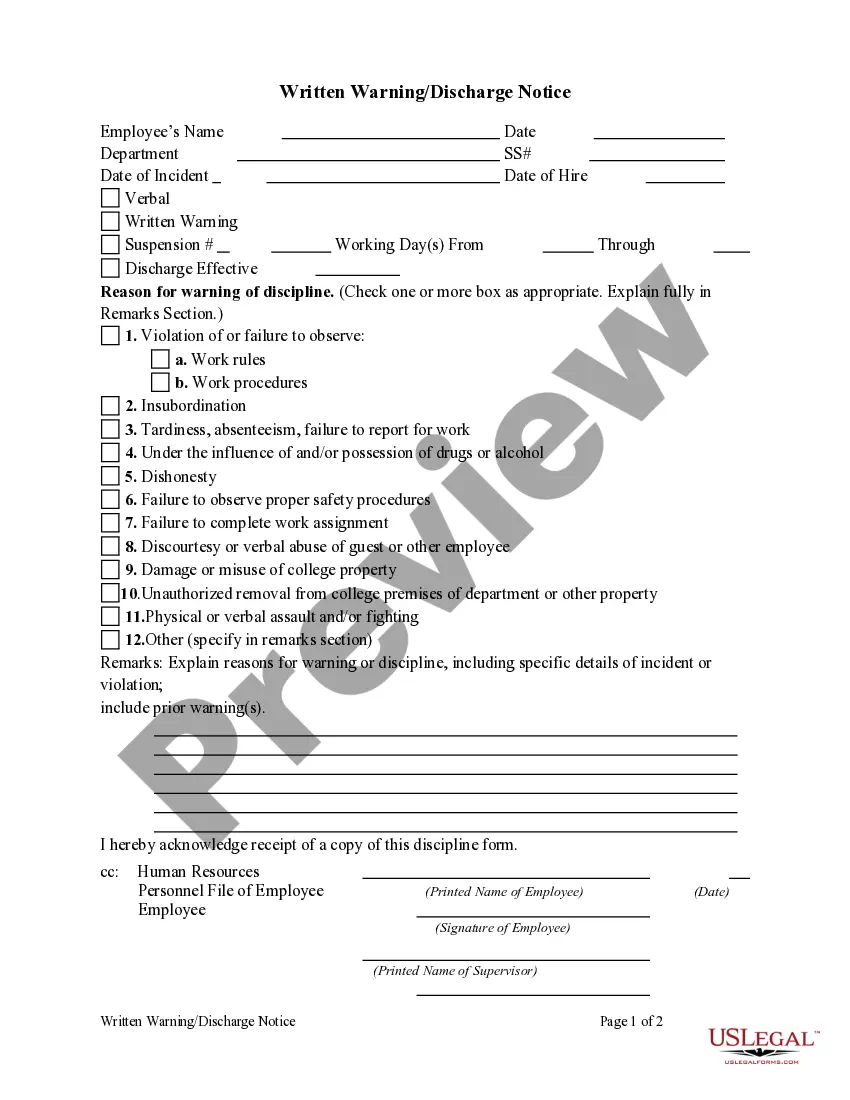
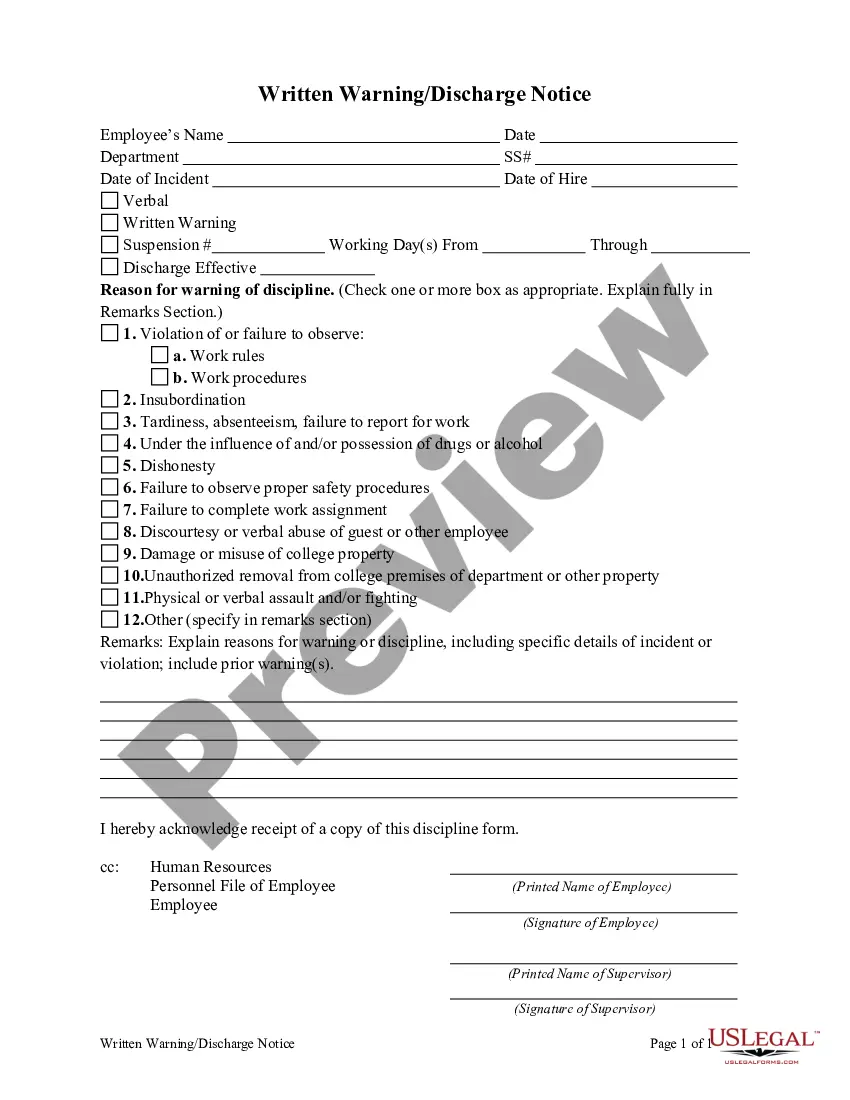
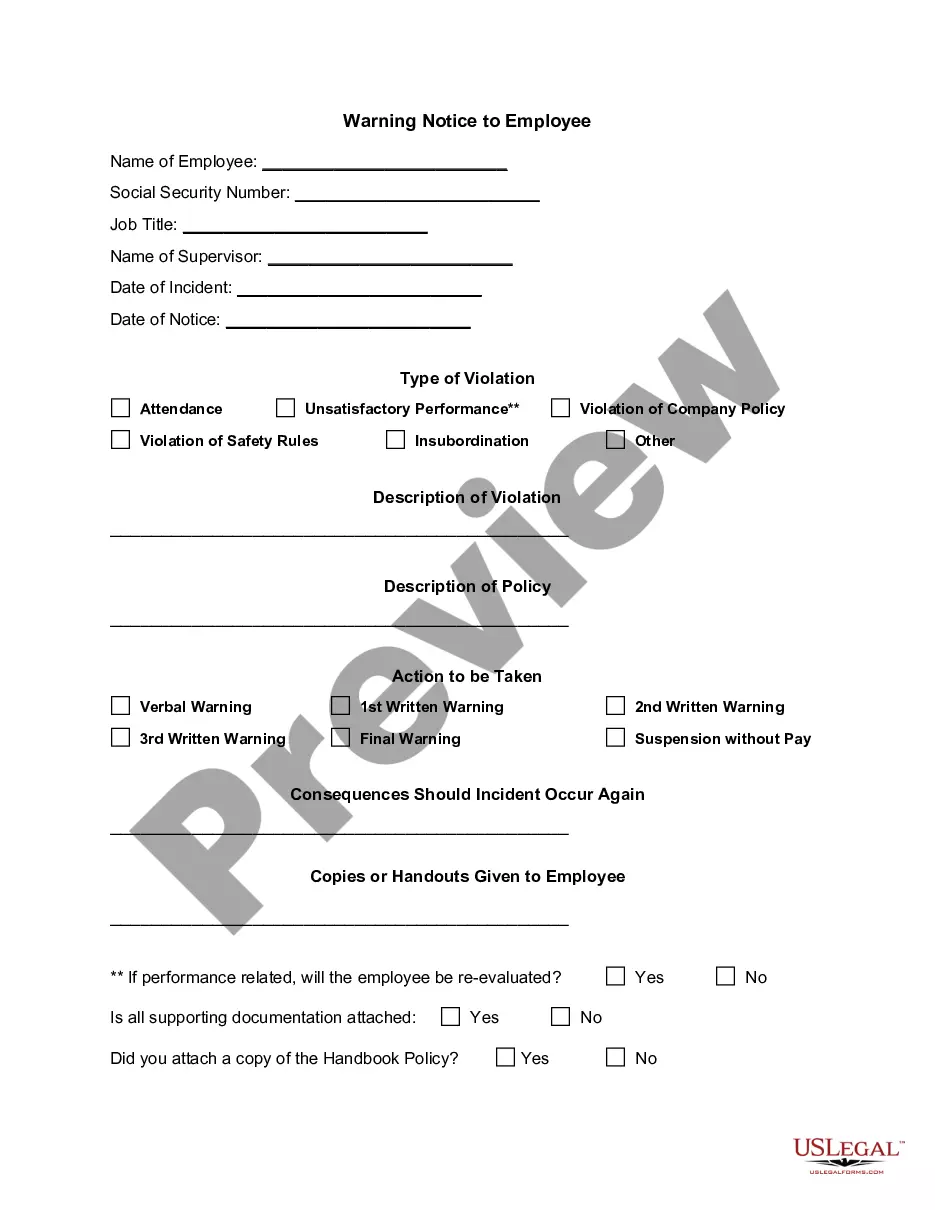
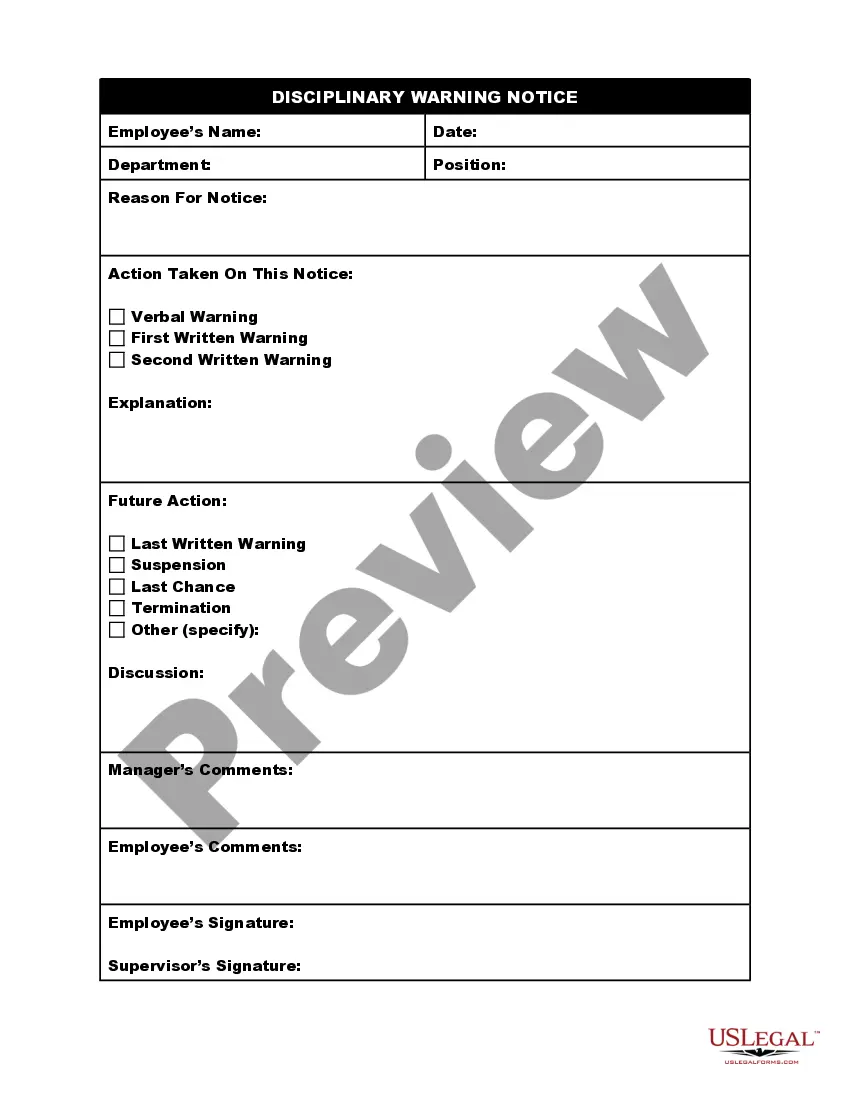
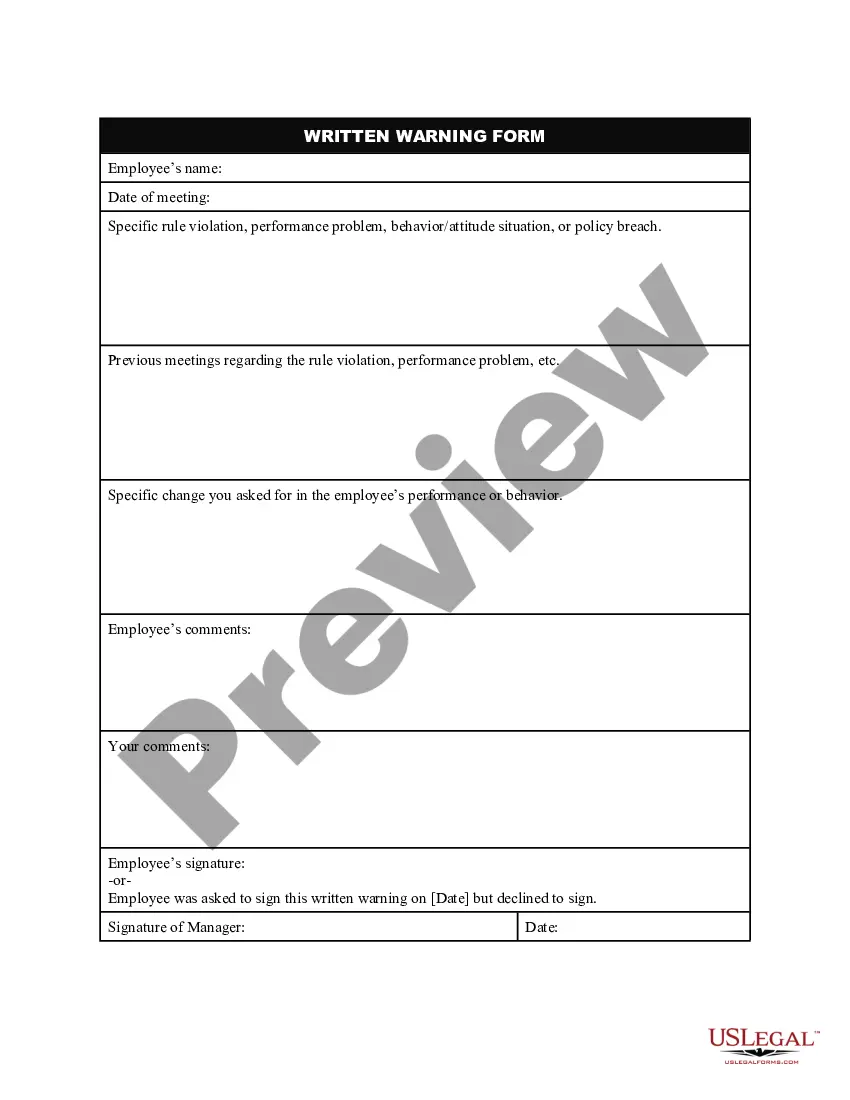
The Written Warning/Discharge Notice is a formal legal document used by employers to outline an employee's performance violations and to detail steps taken prior to termination. This form serves as a crucial tool in the disciplinary process, ensuring that employees are aware of their infractions and have the opportunity to improve. It differs from standard performance reviews by specifically documenting rule violations and disciplinary actions, helping to prevent potential legal issues related to wrongful termination claims.
Key components of this form
- Details of the violation or infraction
- Specific categories of misconduct listed (e.g., absenteeism, dishonesty, insubordination)
- Explanation of the reasons for the warning or discipline
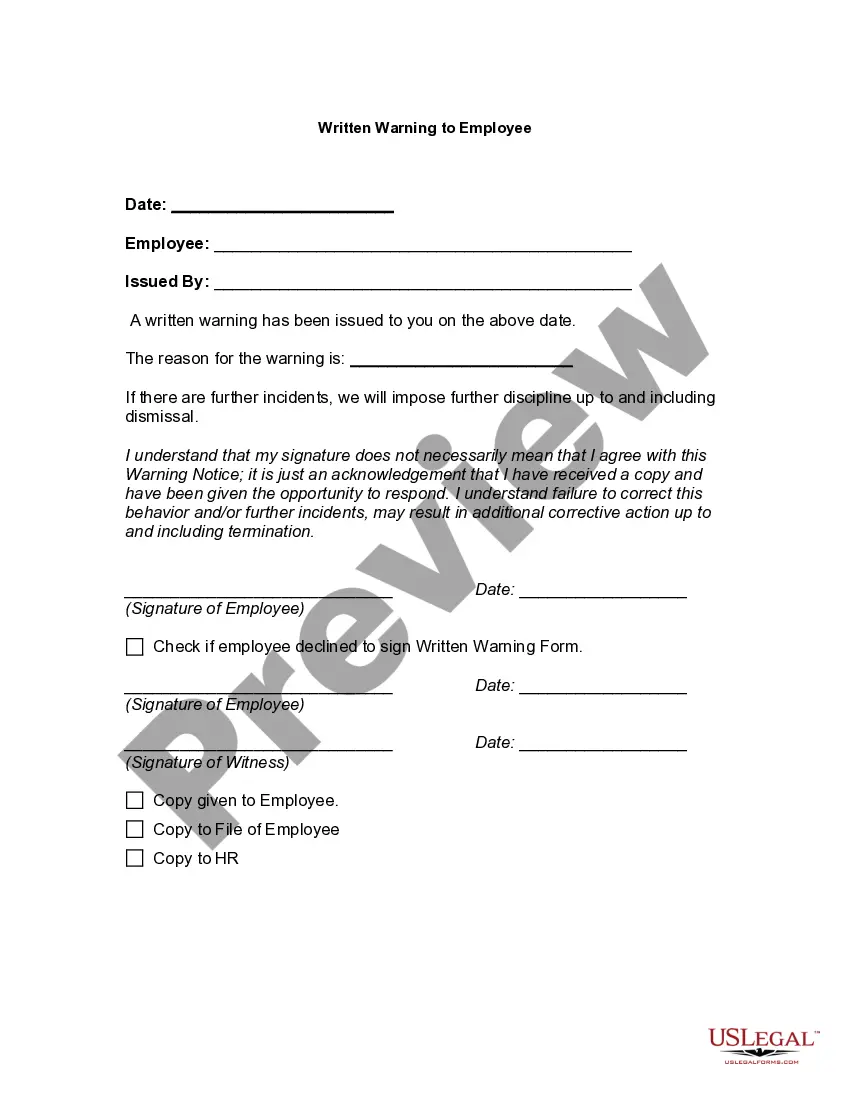
- Space for employee acknowledgment and signature
- Signature section for a witness, if necessary
Situations where this form applies
This form is utilized when an employer needs to formally warn an employee about performance issues or misconduct that may lead to termination. Common scenarios include repeated tardiness, violation of company policies, or behaviors that disrupt workplace harmony. By providing this written notice, employers create a documented record of attempts to address the employee's shortcomings before taking more severe actions, such as discharge.
Who can use this document
- Employers or HR professionals managing employee performance issues
- Business owners needing to document disciplinary actions
- Managers handling employee conduct violations
- Organizations aiming to maintain compliance with workplace regulations
Steps to complete this form
- Identify the specific violation or misconduct by selecting from the provided categories.
- Clearly articulate the reasons for the warning in the remarks section, including specific incident details.
- Ensure the date and name of the employee are correctly filled out.
- Present the form to the employee and allow them to review it.
- Obtain the employee's signature, or if refused, have a witness sign and document this refusal.
Does this form need to be notarized?
In most cases, this form does not require notarization. However, some jurisdictions or signing circumstances might. US Legal Forms offers online notarization powered by Notarize, accessible 24/7 for a quick, remote process.
Get your form ready online
Our built-in tools help you complete, sign, share, and store your documents in one place.
Make edits, fill in missing information, and update formatting in US Legal Forms—just like you would in MS Word.
Download a copy, print it, send it by email, or mail it via USPS—whatever works best for your next step.
Sign and collect signatures with our SignNow integration. Send to multiple recipients, set reminders, and more. Go Premium to unlock E-Sign.
If this form requires notarization, complete it online through a secure video call—no need to meet a notary in person or wait for an appointment.
We protect your documents and personal data by following strict security and privacy standards.

Make edits, fill in missing information, and update formatting in US Legal Forms—just like you would in MS Word.

Download a copy, print it, send it by email, or mail it via USPS—whatever works best for your next step.

Sign and collect signatures with our SignNow integration. Send to multiple recipients, set reminders, and more. Go Premium to unlock E-Sign.

If this form requires notarization, complete it online through a secure video call—no need to meet a notary in person or wait for an appointment.

We protect your documents and personal data by following strict security and privacy standards.
Common mistakes
- Failing to clearly specify the violation can lead to confusion.
- Not documenting the date of the violation or warning can weaken the case for termination.
- Neglecting to have the employee sign the document can lead to disputes over the claim.
- Using vague language instead of specific details about the incident.
Why complete this form online
- Convenient access to the form allows for prompt action in addressing employee issues.
- Editable fields help ensure that all necessary information can be tailored to specific circumstances.
- Reliable templates drafted by licensed attorneys increase legal compliance and protect against liability.
Legal use & context
- This form serves as a documented record of disciplinary actions that can protect the employer during potential legal disputes.
- Proper documentation helps ensure compliance with employment laws and regulations.
- Employers should follow company policies regarding disciplinary procedures as outlined in their employee handbook.
What to keep in mind
- The Written Warning/Discharge Notice is a critical tool in documenting employee performance issues.
- Properly completing this form helps prevent legal claims of wrongful termination.
- Clear communication and documentation are essential in the disciplinary process.
Looking for another form?

Form popularity
FAQ
The non-statutory Acas guide: discipline and grievances at work, which accompanies the code, states that warnings should normally be live only for a set period, for example six months for a first written warning and 12 months for a final written warning.
Warnings do expire and are usually only valid for specific periods of time. It is generally accepted that a verbal or first warning is valid for 3 months, a second warning for 6 months and a final written warning is valid for 12 months. The employee should sign receipt of the warning.
Six Months. If they are going to be purged, figure they will be considered for about six months. Probably no one will take the paperwork out if the file, but the policy would generally be that if you didn't cause trouble for six months, the previous writeups would not be considered against you.
Disciplinary and grievance records should be stored for a minimum of six months following termination of employment in case the employee brings a claim against the organisation.
For example, a first written warning could last six months, but a final one could last twelve months.
Your employer is allowed to give any type of warning that they think is appropriate. For example, in a case of theft or violence they might decide to go straight to a final warning - or even dismissal.This might happen if your employer has treated a simple telling off as an official verbal warning.
In cases of serious misconduct or poor performance, the employer does not have to give a first written warning and can instead go straight to a final written warning. For example, where the employee's actions have, or could, cause serious harm to the business.The employer should make this clear to the employee.
Employees have to sign disciplinary documents. While it is a good policy to have some system that proves the employee was presented with the write-up, it is not required that the employee sign the document.
If an employee refuses to sign the disciplinary report or warning, you might ask him or her to submit a signed rebuttal document instead. The rebuttal should reference the concerns raised in the written warning. This shows that the employee was notified about the problem.