Texas Executor's Deed - Estate to Five Beneficiaries
What this document covers
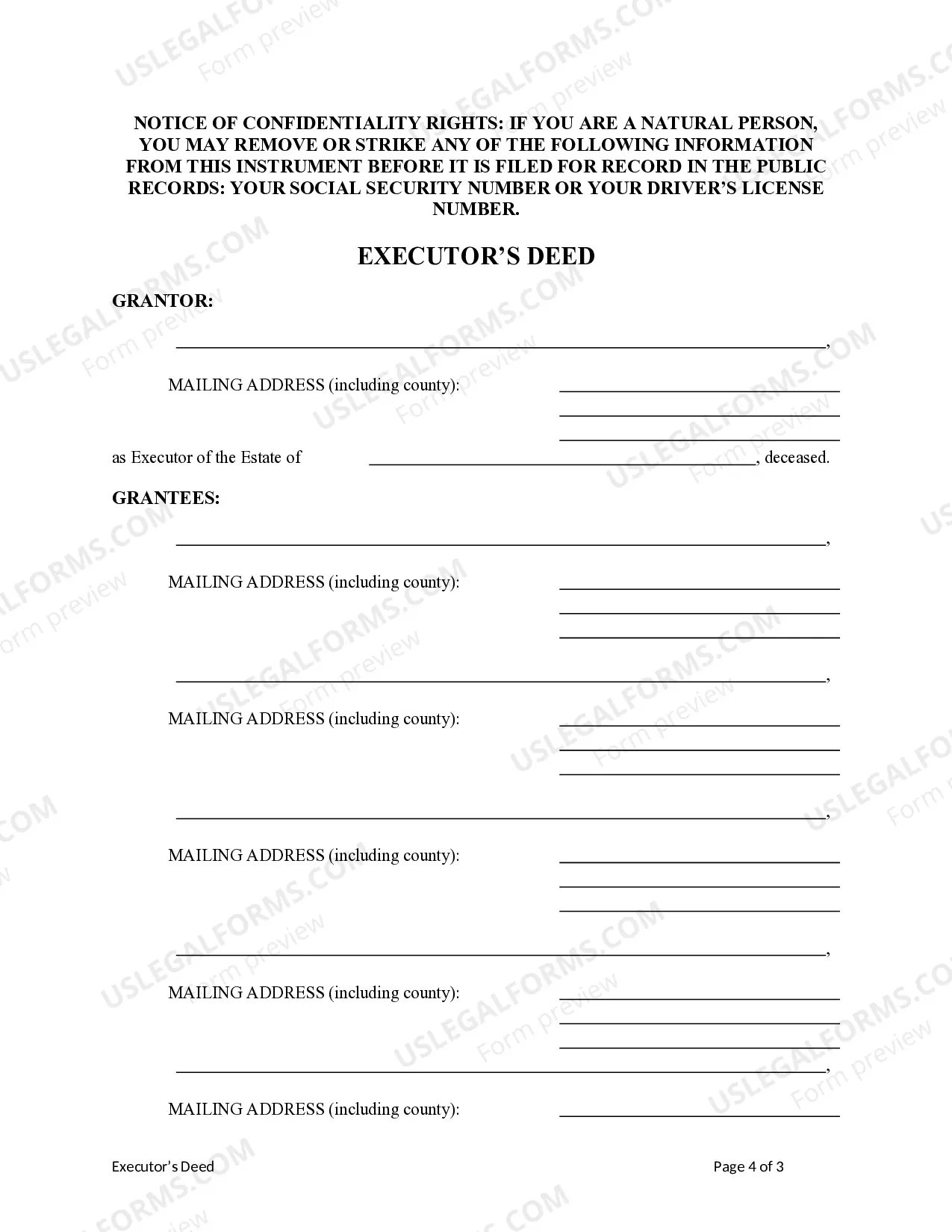
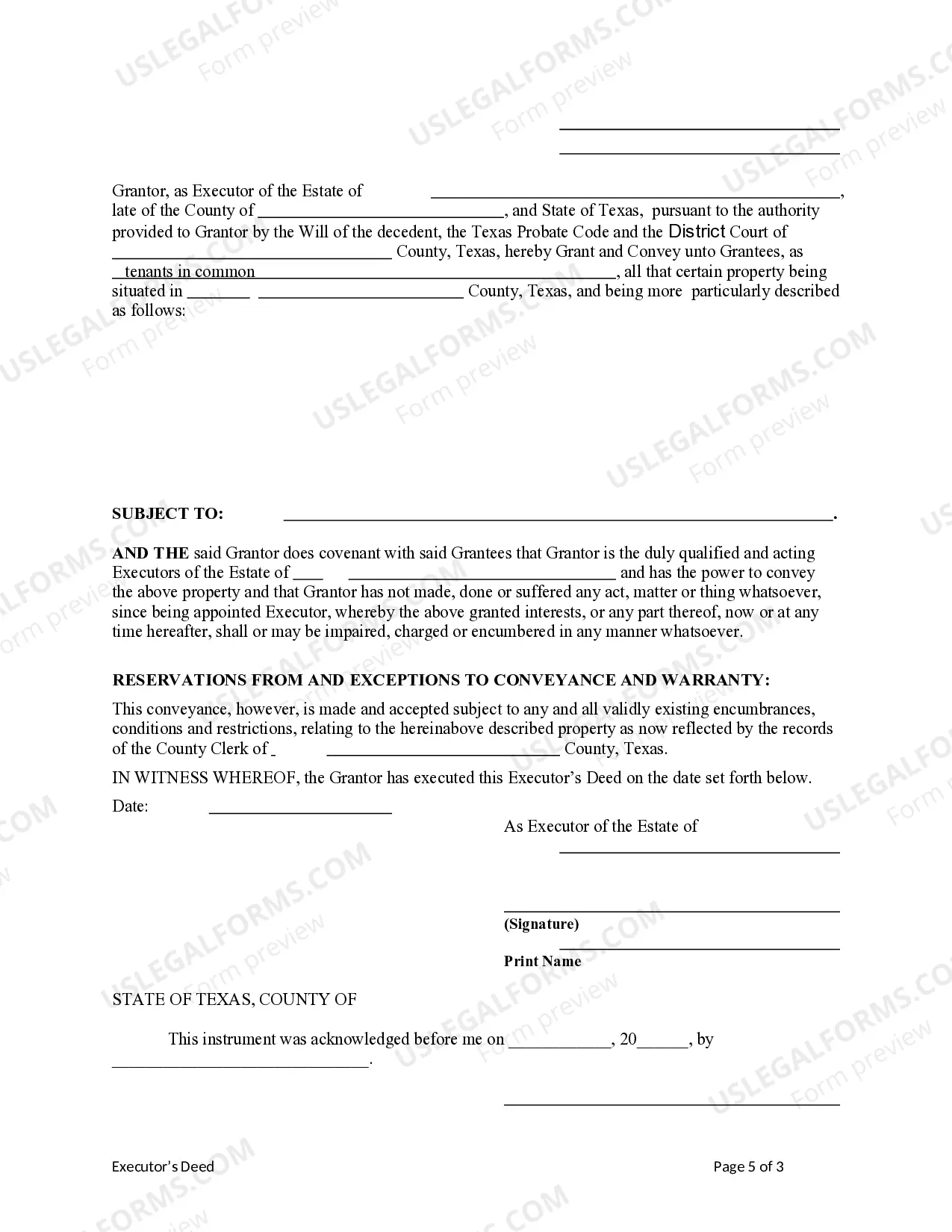
The Executor's Deed - Estate to Five Beneficiaries is a legal document used by an executor to transfer property from a deceased person's estate to the designated beneficiaries. This deed ensures that the property ownership is formally conveyed, distinguishing itself from other deed types by its specific application in the probate process. The executor acts on behalf of the estate to facilitate this transfer in compliance with state laws.
What’s included in this form
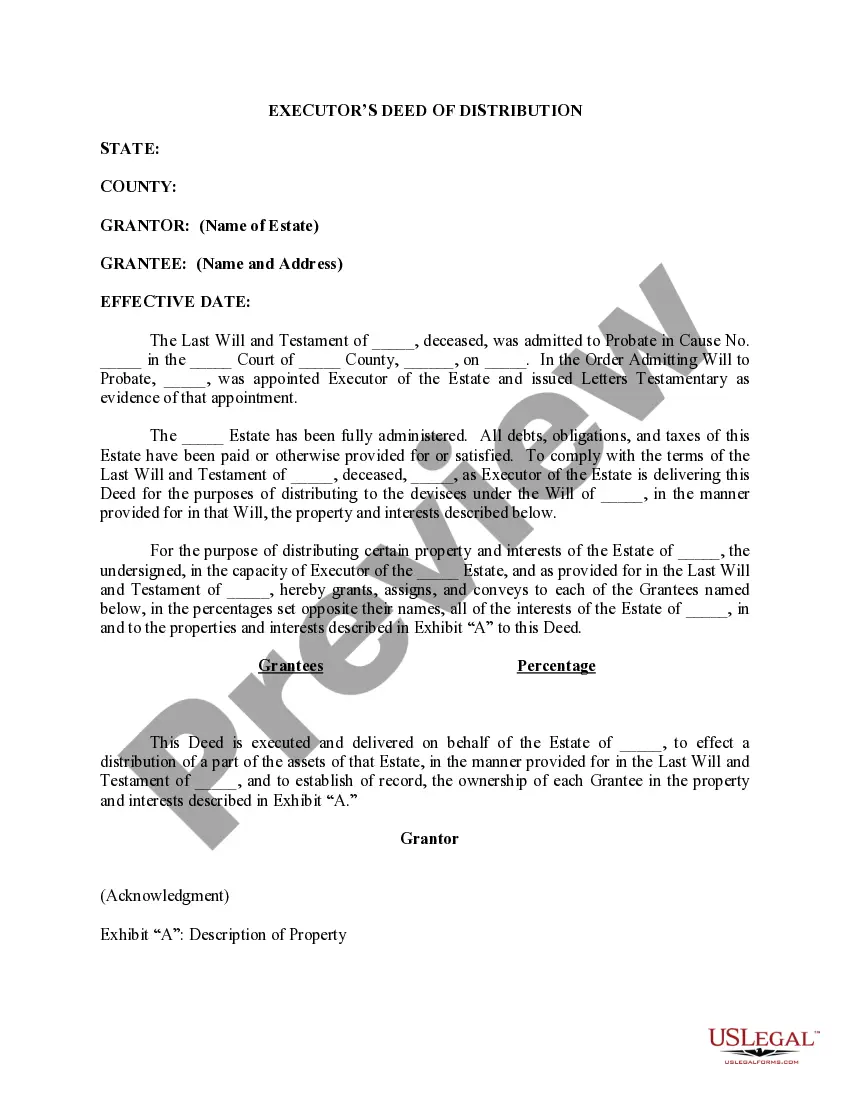
- Grantor details: Identifies the executor of the estate.
- Grantees information: Lists the five beneficiaries receiving the property.
- Property description: Clearly describes the property being transferred.
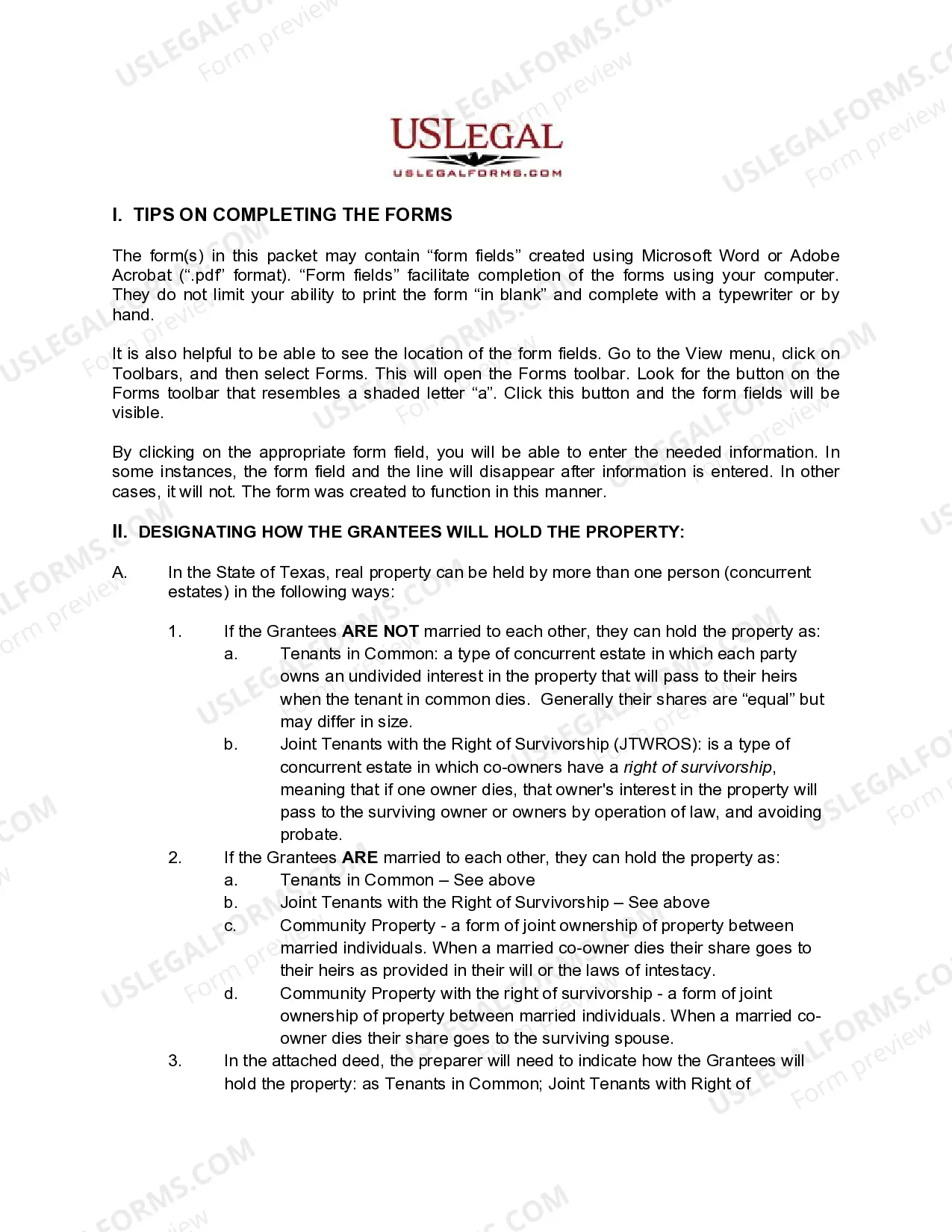
- Method of holding title: Specifies how beneficiaries will hold the property (e.g., tenants in common, joint tenants).
- Signatures: Requires the grantor's signature and possibly witnesses, depending on state law.


Situations where this form applies
This form is essential when an estate is settling and property needs to be transferred to multiple beneficiaries. It is commonly used when a person passes away, and their property must be conveyed as part of the estate settlement process. The executor of the estate must use this deed to ensure the beneficiaries receive their share of the estate legally and efficiently.
Intended users of this form
- Executors of estates who are responsible for managing and distributing property after a person's death.
- Beneficiaries who need to formally receive their share of the property from the estate.
- Legal representatives working on behalf of the estate during the probate process.
Steps to complete this form
- Identify the parties involved by entering the correct names of the executor and beneficiaries.
- Clearly describe the property being transferred, including legal descriptions if necessary.
- Specify how the beneficiaries will take title (e.g., tenants in common, joint tenants with right of survivorship).
- Have the executor sign the document, ensuring any required witnesses are present or notarization is completed.
- File the completed deed with your local property records office, if necessary.
Does this document require notarization?
This form needs to be notarized to ensure legal validity. US Legal Forms provides secure online notarization powered by Notarize, allowing you to complete the process through a verified video call, available anytime.
Get your form ready online
Our built-in tools help you complete, sign, share, and store your documents in one place.
Make edits, fill in missing information, and update formatting in US Legal Forms—just like you would in MS Word.
Download a copy, print it, send it by email, or mail it via USPS—whatever works best for your next step.
Sign and collect signatures with our SignNow integration. Send to multiple recipients, set reminders, and more. Go Premium to unlock E-Sign.
If this form requires notarization, complete it online through a secure video call—no need to meet a notary in person or wait for an appointment.
We protect your documents and personal data by following strict security and privacy standards.

Make edits, fill in missing information, and update formatting in US Legal Forms—just like you would in MS Word.

Download a copy, print it, send it by email, or mail it via USPS—whatever works best for your next step.

Sign and collect signatures with our SignNow integration. Send to multiple recipients, set reminders, and more. Go Premium to unlock E-Sign.

If this form requires notarization, complete it online through a secure video call—no need to meet a notary in person or wait for an appointment.

We protect your documents and personal data by following strict security and privacy standards.
Common mistakes
- Failing to include a complete legal description of the property.
- Not indicating how the grantees will hold the property.
- Incomplete or invalid signatures from the executor or witnesses.
- Not filing the deed with the appropriate authorities after completion.
Benefits of using this form online
- Convenience of completing the form from any location at any time.
- Editability allows for easy corrections before finalizing the document.
- Access to templates drafted by licensed attorneys, ensuring compliance with state laws.
- Quick download options provide immediate access to necessary documents.
Looking for another form?

Form popularity
FAQ
All taxes and liabilities paid from the estate, including medical expenses, attorney fees, burial or cremation expenses, estate sale costs, appraisal expenses, and more. The executor should keep all receipts for any services or transactions needed to liquidate the assets of the deceased.
According to estate planning attorney Adam Ansari, it is legal for an executor to purchase the home instead of selling it, as long as the executor purchases the property for fair market value and all of the beneficiaries agree with the terms of the sale.
The executor can sell property without getting all of the beneficiaries to approve.If the executor can sell the property for more than 90 percent of its appraised value then they do not need to get the permission of the beneficiaries or of the court.
An executor can sell a property without the approval of all beneficiaries. The will doesn't have specific provisions that require beneficiaries to approve how the assets will be administered. However, they should consult with beneficiaries about how to share the estate.
In most states, an executor's deed must be signed by a witness and notarized. An executor's deed should be recorded in the real estate records of the county in which the property being conveyed is located.
Once the COURT appoints you as executor, you will record an affidavit of death of joint tenant to get your mother's name of the property. Then, when you get an order for final distribution, you will record a certified copy to get the property into the names of the beneficiaries under the will.
Depending on the circumstances, the executor might transfer the title to heirs as directed in the decedent's will or sell the property outright.In any case, the executor must issue a deed for the transfer. Note that executor's deeds do NOT typically include a general warranty on the title.
Generally the heirs don't decide if the house is sold unless somehow it is titled in all their names. If is a specific gift and the will requires it be transferred to all six, and one does not want to sell, that person can buy out the other 5. There of course is always a partition Acton.