Rhode Island Divorce Summons

Understanding this form
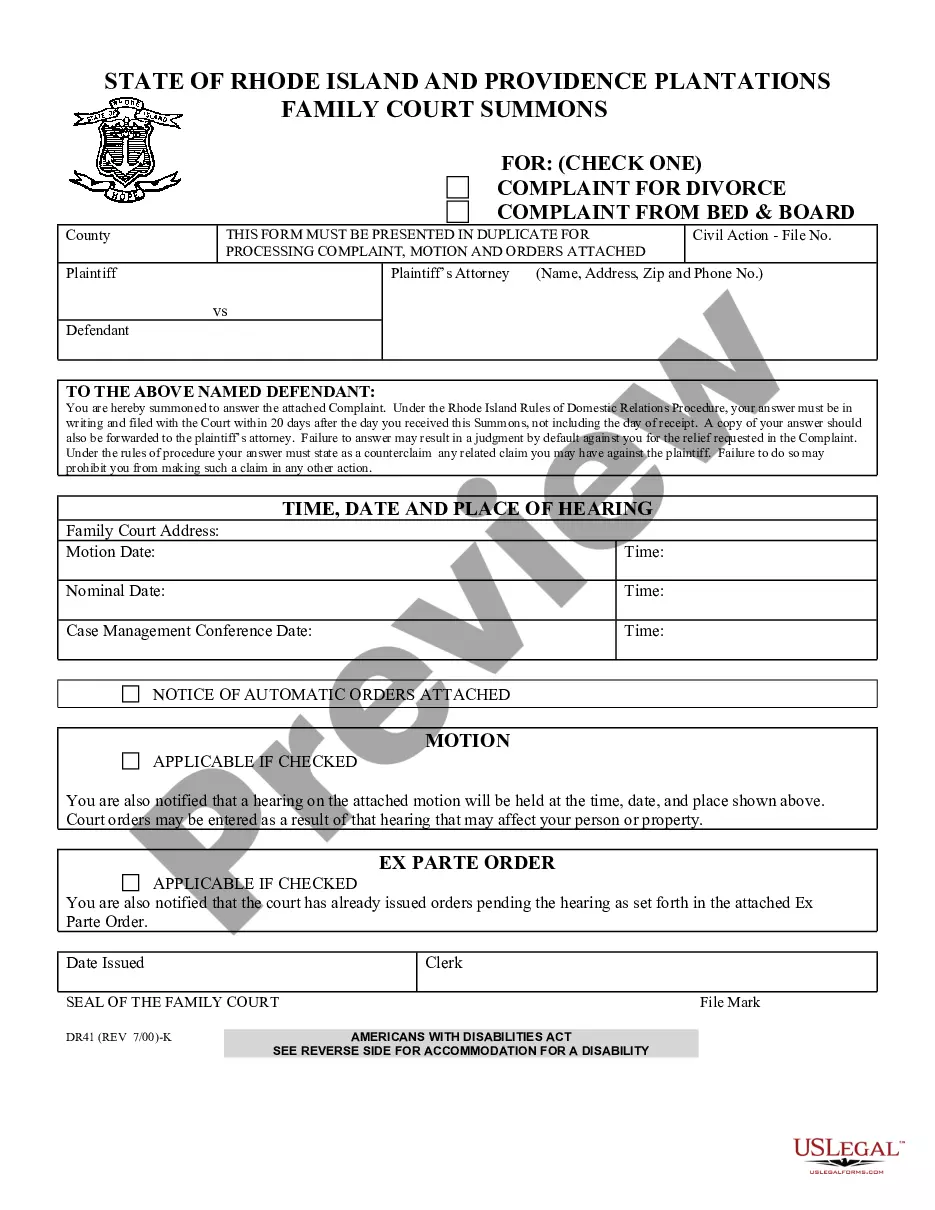
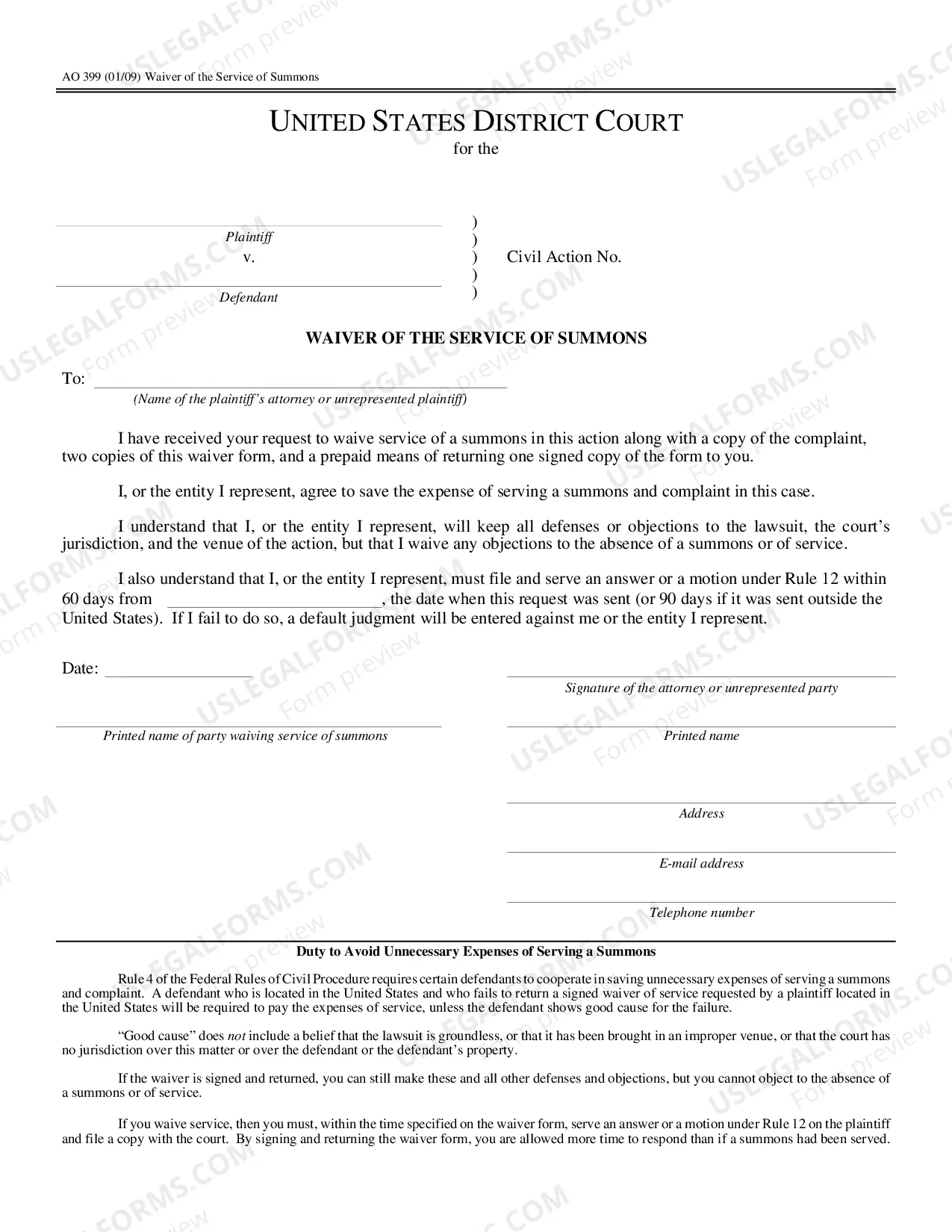
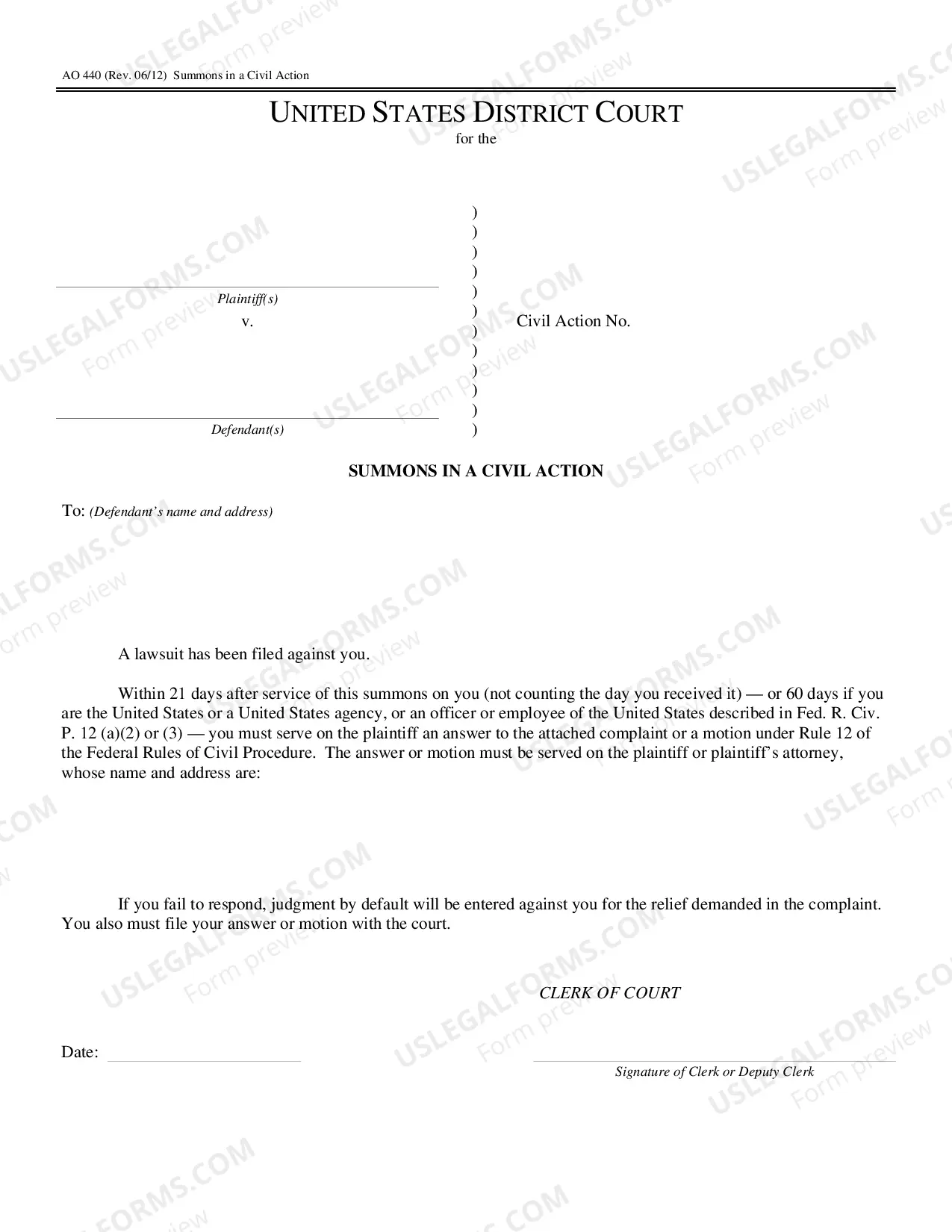
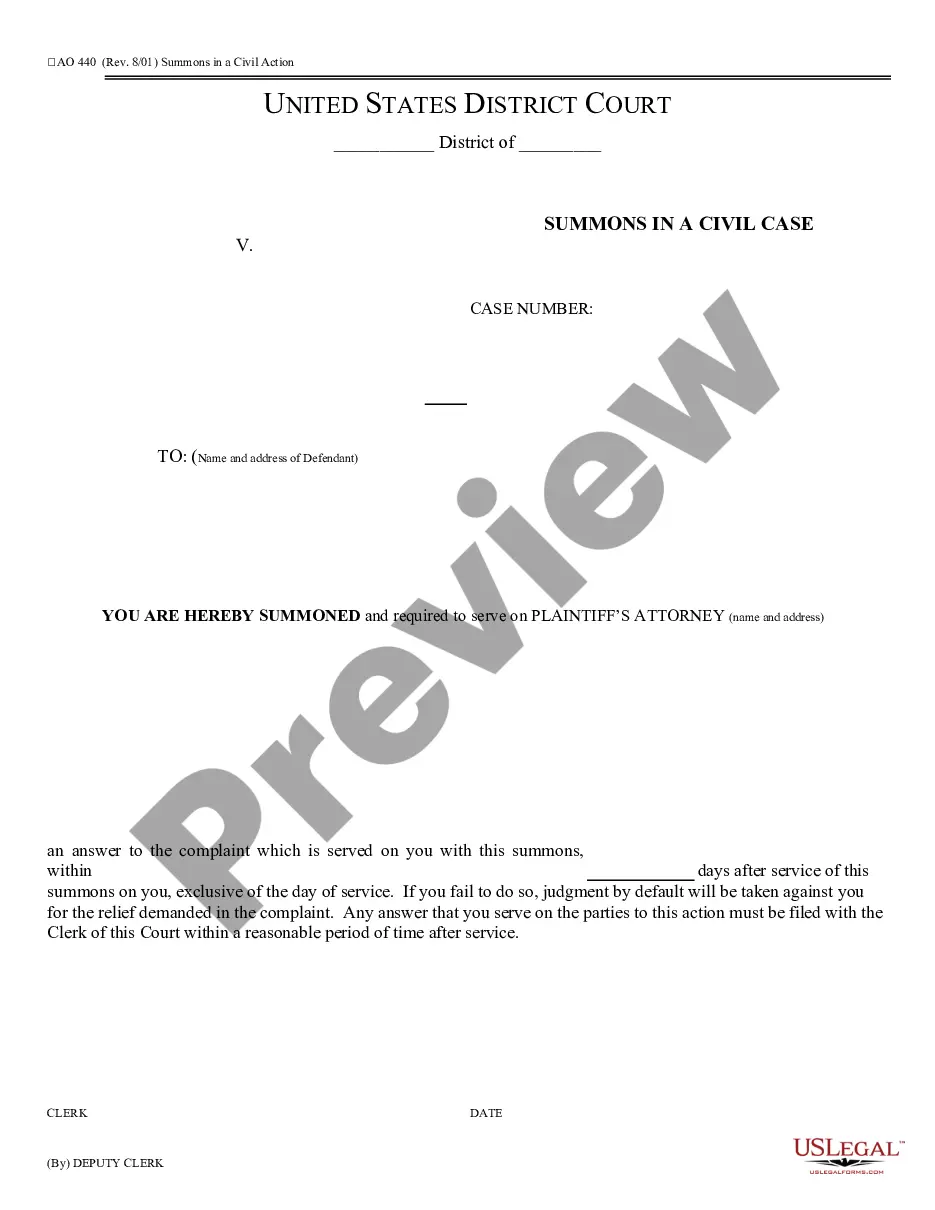
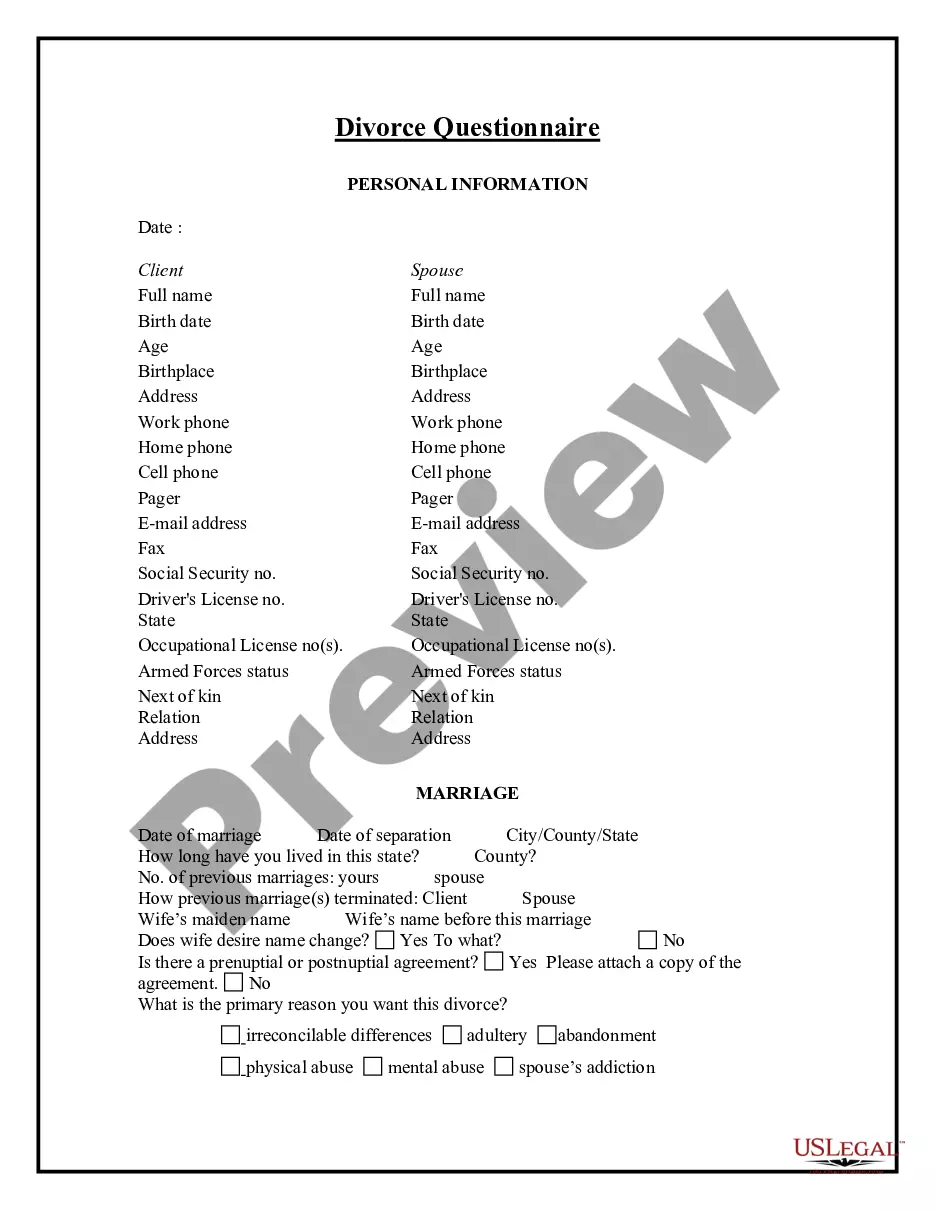
A Divorce Summons is a legal document issued to the Defendant in a divorce proceeding. It serves to notify the Defendant that a Complaint for Divorce has been filed against them. This form is important as it outlines the Defendant's rights and obligations in response to the divorce petition, distinguishing it from other forms related to divorce, such as the divorce complaint itself.
Main sections of this form
- Identification of the court where the divorce is filed.
- Notification of the Complaint for Divorce being served.
- Details regarding any court orders that may be pending.
- A check box for indicating specific requests, such as an Ex Parte Order.
- Instructions on how the Defendant should respond to the summons.
When to use this document
This form is used when a person files for divorce and needs to formally notify their spouse (the Defendant) about the proceedings. It is essential in situations involving contested divorces, where the Defendant must be made aware of the divorce filing before any court hearings take place. Additionally, this form is applicable in both scenarios with and without children from the marriage.
Who can use this document
- Individuals who have filed a Complaint for Divorce and are initiating the divorce process.
- The Defendant in a divorce case needs to be informed of the legal proceedings.
- Either party involved in the divorce, regardless of whether children are present.
Completing this form step by step
- Identify the court where the divorce is being filed.
- Fill in the names and addresses of both parties involved in the divorce.
- Check the appropriate box indicating if there is an Ex Parte Order.
- Review any attached documents that pertain to pending court orders.
- Sign and date the form as required, ensuring it is filed with the court.
Notarization requirements for this form
Notarization is generally not required for this form. However, certain states or situations might demand it. You can complete notarization online through US Legal Forms, powered by Notarize, using a verified video call available anytime.
Get your form ready online
Our built-in tools help you complete, sign, share, and store your documents in one place.
Make edits, fill in missing information, and update formatting in US Legal Forms—just like you would in MS Word.
Download a copy, print it, send it by email, or mail it via USPS—whatever works best for your next step.
Sign and collect signatures with our SignNow integration. Send to multiple recipients, set reminders, and more. Go Premium to unlock E-Sign.
If this form requires notarization, complete it online through a secure video call—no need to meet a notary in person or wait for an appointment.
We protect your documents and personal data by following strict security and privacy standards.

Make edits, fill in missing information, and update formatting in US Legal Forms—just like you would in MS Word.

Download a copy, print it, send it by email, or mail it via USPS—whatever works best for your next step.

Sign and collect signatures with our SignNow integration. Send to multiple recipients, set reminders, and more. Go Premium to unlock E-Sign.

If this form requires notarization, complete it online through a secure video call—no need to meet a notary in person or wait for an appointment.

We protect your documents and personal data by following strict security and privacy standards.
Common mistakes to avoid
- Failing to provide accurate information regarding the court or parties involved.
- Not responding to the summons in the specified time frame.
- Overlooking required signatures or failing to date the document.
Benefits of completing this form online
- Convenient access to legal documents without the need for in-person visits.
- Editable templates that can be customized to meet individual needs.
- Instant download availability, allowing for immediate use.
Looking for another form?




Form popularity
FAQ
To search court records, click on "Smart Search" and enter the party's name in last name, first name format. By following this link you acknowledge that you are leaving the website for the Rhode Island Public Defender and you will be taken to the Rhode Island Judiciary website.
A divorce is filed by submitting to the family court clerk the following forms: a complaint, a DR6, two statements listing the children of the divorce, a family services counseling report form, a report of divorce, a copy of the marriage certificate, the summons, and the filing fee.
Most of the forms you will need are available from the family court clerk where you file. Some forms may also be available online at the Rhode Island Judiciary website.
Divorce records, like marriage records, are public. You can search for divorce records from the comfort of your own home, or you can visit the state's Department of Health and Vital Records. Although records are sometimes free, you might need to pay to use certain private or state services.
Rhode Island divorce records are available to interested members of the public upon request. While these records are open to the public, selected information relating to the divorce process may be with-held. This includes details of the financial status of the parties and any agreed-upon financial settlements.
When one spouse in California files a petition for divorce, the other spouse must be formally served with papers.When a spouse doesn't respond to a divorce petition, the person who failed to file the answer to the court will lose his or her rights to make arguments about property division, support, and child custody.
If you file for divorce, you are the plaintiff (or petitioner) in your divorce proceedings. Your spouse is the defendant (or respondent). By filing first, you have the advantage of getting all your ducks in a row before you file. The defendant, on the other hand, has 30 days to respond to the complaint.
Generally, court proceedings are public matters.When a court files divorce records under seal, confidential or sensitive information within those records remains private and doesn't become a matter of public record. Courts can order entire records or portions of them to be filed under seal.