Oregon Deed of Reconveyance
What this document covers
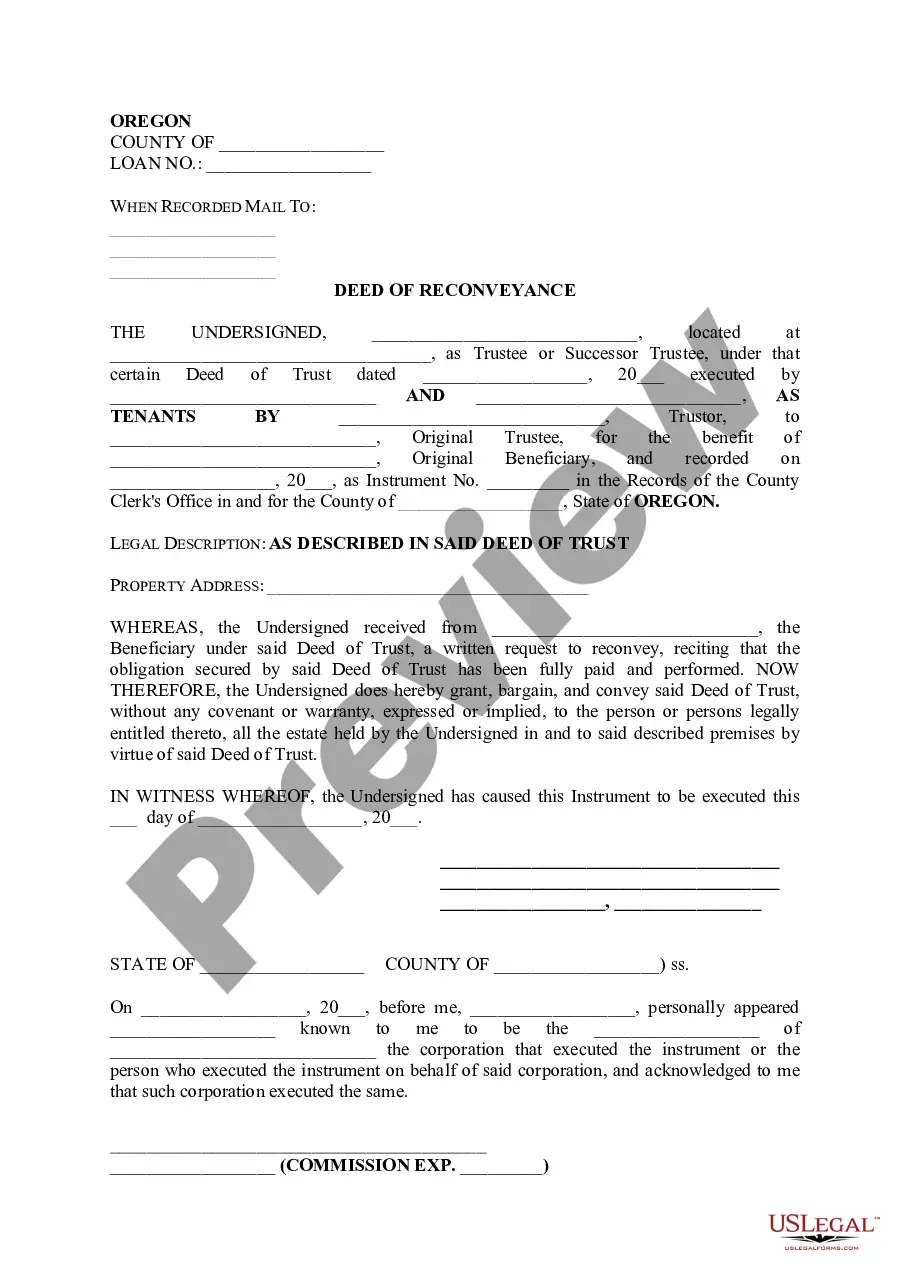
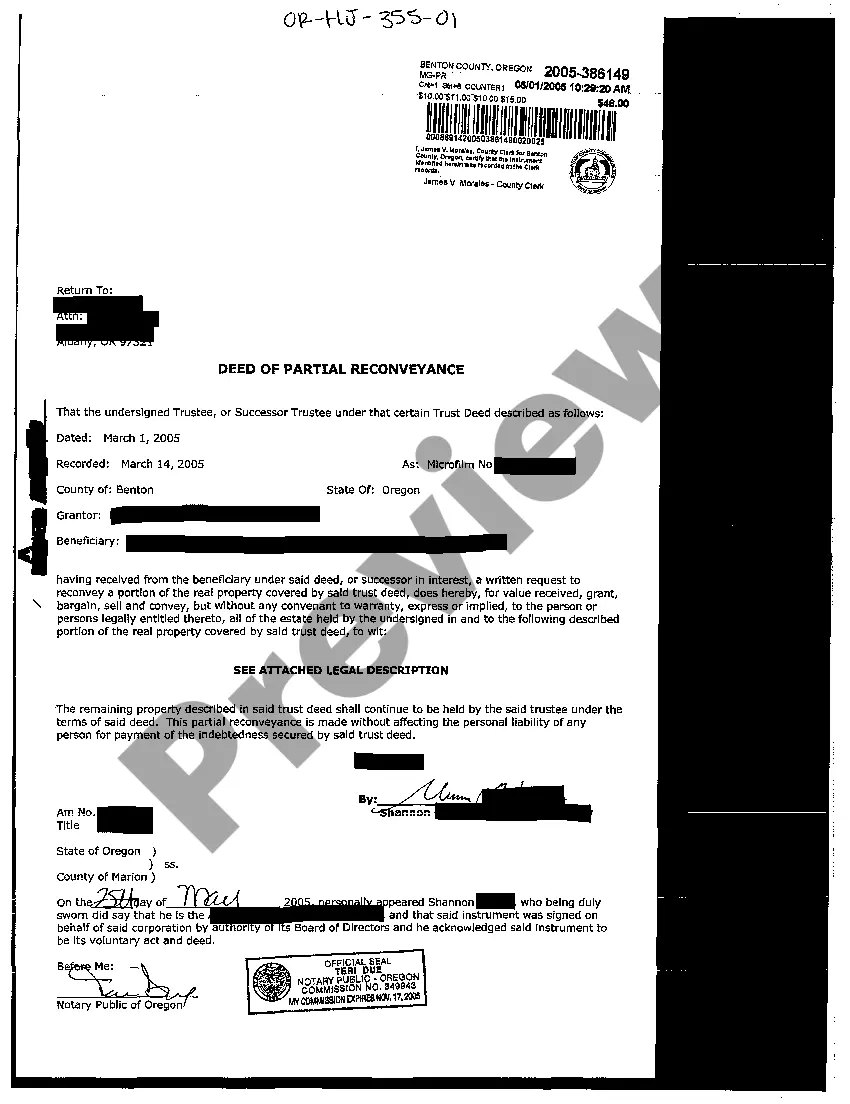
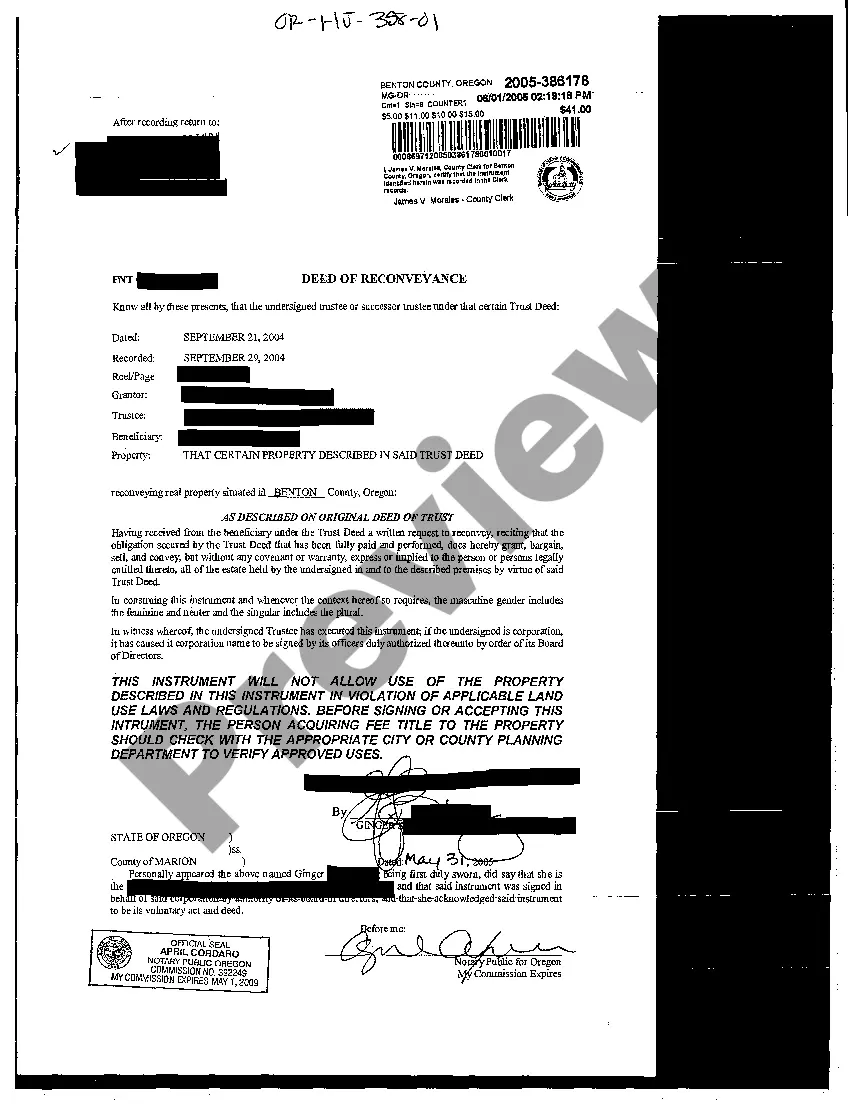
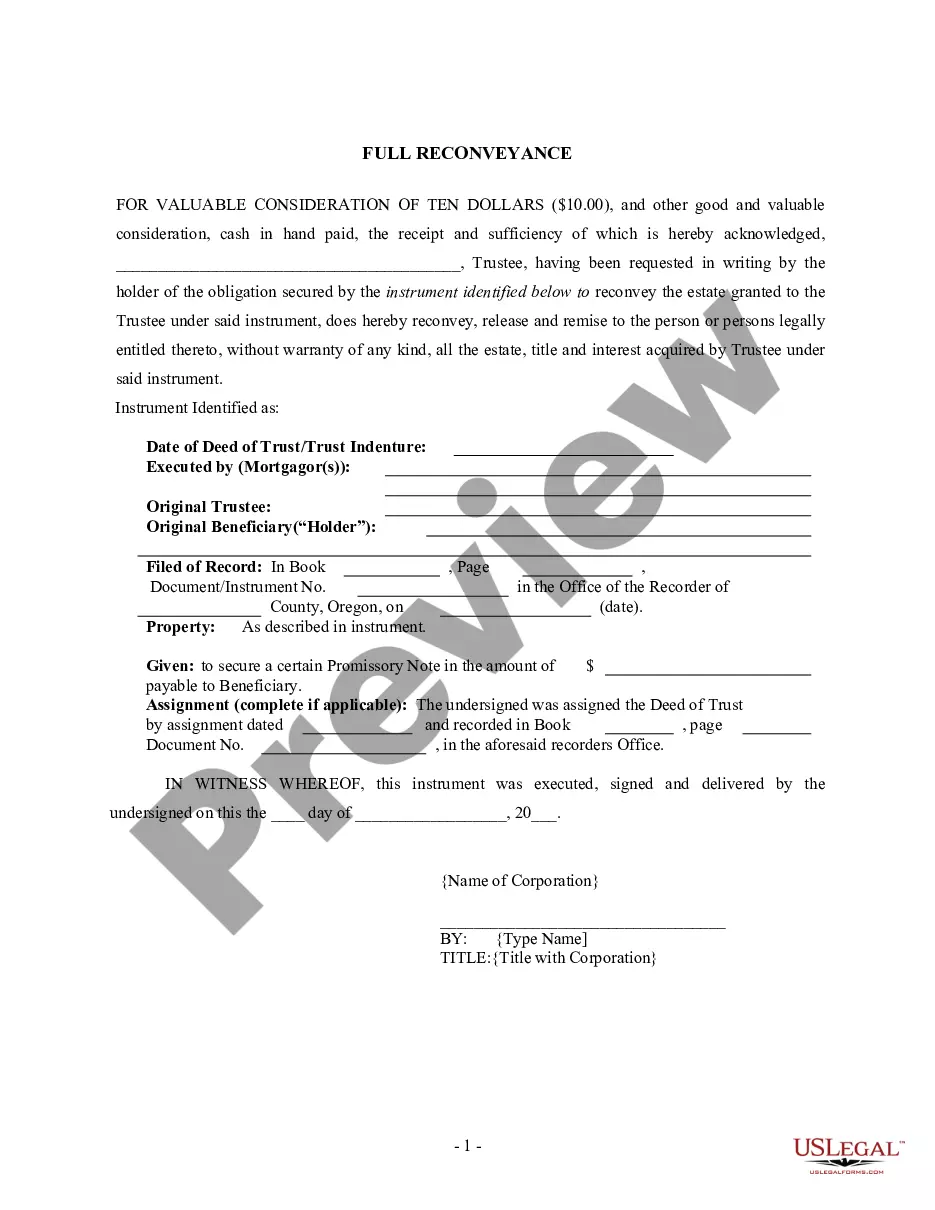
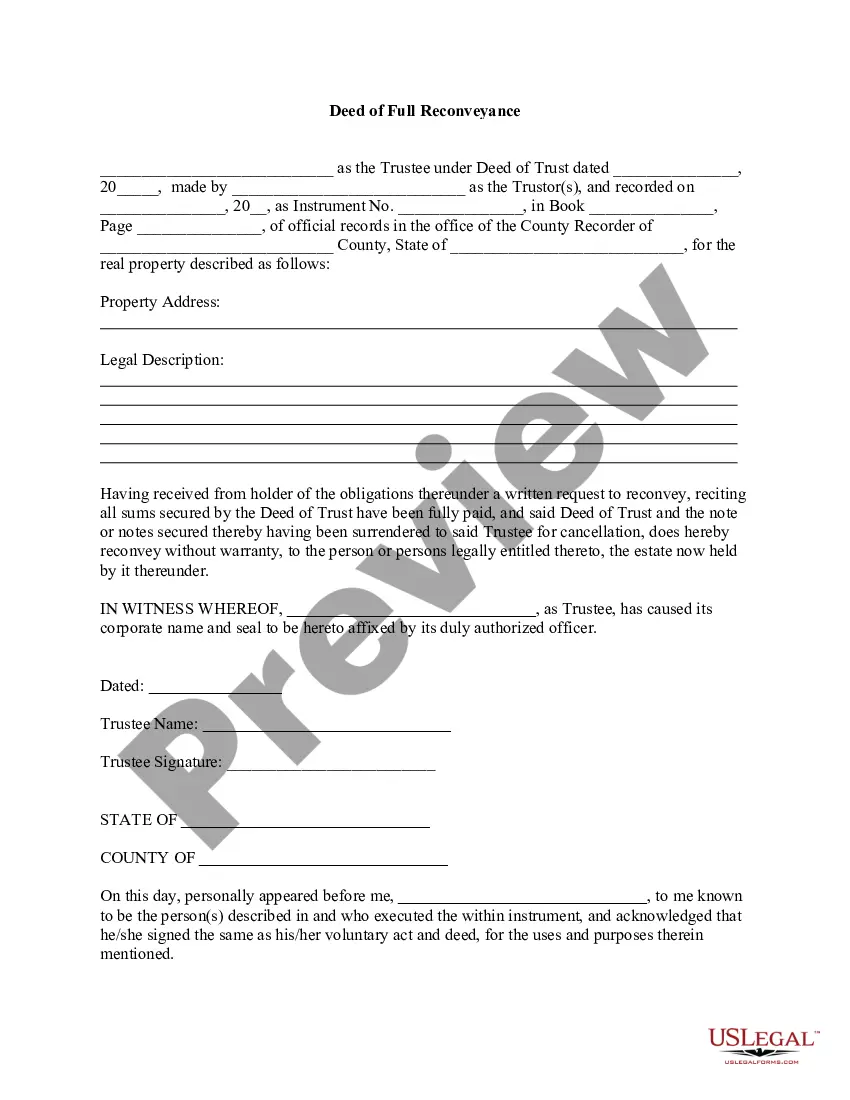
The Deed of Reconveyance is a legal document used to release a deed of trust once the associated mortgage has been fully paid. This form specifically applies to the state of Oregon and is typically executed by a trustee or successor trustee at the request of the beneficiary. Unlike other property deed forms, the Deed of Reconveyance confirms that the borrower's obligations related to the loan have been fulfilled, effectively returning the property's title to them.
Main sections of this form
- Identification of the trustee or successor trustee.
- Details of the original deed of trust, including date and recording information.
- Legal description of the property as stated in the deed of trust.
- Statement confirming the satisfaction of the loan obligations.
- Signature lines for the trustee and acknowledgment by a notary public.

When to use this form
This form should be used when a borrower has completed all payments under a deed of trust and needs a formal declaration that the deed is no longer valid. This situation commonly arises after the full payment of a mortgage on property located in Oregon, facilitating the return of the title to the borrower and eliminating the lien on the property.
Intended users of this form
- Trustees or successor trustees acting on behalf of the lender.
- Borrowers who have fully paid their mortgage obligations.
- Anyone involved in the transfer of title back to a property owner after debt satisfaction.
Steps to complete this form
- Identify and fill in the name of the trustee or successor trustee.
- Provide details of the original deed of trust, including the date it was executed and any relevant instrument numbers.
- Enter the legal description of the property as it appears in the deed of trust.
- Include the date and place where the form is executed.
- Ensure the document is signed by the trustee and duly notarized.
Does this form need to be notarized?
Yes, this form must be notarized to be legally valid. You can use US Legal Forms' integrated online notarization service, available 24/7. This allows you to complete the notarization process securely via video call without needing to travel.
Get your form ready online
Our built-in tools help you complete, sign, share, and store your documents in one place.
Make edits, fill in missing information, and update formatting in US Legal Forms—just like you would in MS Word.
Download a copy, print it, send it by email, or mail it via USPS—whatever works best for your next step.
Sign and collect signatures with our SignNow integration. Send to multiple recipients, set reminders, and more. Go Premium to unlock E-Sign.
If this form requires notarization, complete it online through a secure video call—no need to meet a notary in person or wait for an appointment.
We protect your documents and personal data by following strict security and privacy standards.

Make edits, fill in missing information, and update formatting in US Legal Forms—just like you would in MS Word.

Download a copy, print it, send it by email, or mail it via USPS—whatever works best for your next step.

Sign and collect signatures with our SignNow integration. Send to multiple recipients, set reminders, and more. Go Premium to unlock E-Sign.

If this form requires notarization, complete it online through a secure video call—no need to meet a notary in person or wait for an appointment.

We protect your documents and personal data by following strict security and privacy standards.
Common mistakes
- Failing to provide accurate property descriptions can lead to disputes.
- Not including the proper dates or recording numbers may cause issues with record-keeping.
- Omitting the notarization step could invalidate the document.
Benefits of completing this form online
- Convenience of accessing and downloading the form from any location, at any time.
- Editable fields allow for easy customization to fit individual circumstances.
- Reliable templates drafted by licensed attorneys ensure compliance with legal standards.
Looking for another form?
Form popularity
FAQ
The deed must be signed by the party or parties making the conveyance or grant; and 7.
A deed of reconveyance refers to a document that transfers the title of a property to the borrower from the bank or mortgage holder once a mortgage is paid off. It is used to clear the deed of trust from the title to the property.
How do you file a Deed of Reconveyance? A Deed of Reconveyance should be filed with your local county recorder or recorder of deeds once it has been signed by a notary public (such as an attorney). Once the document has been filed, the debt that was registered to the property will be considered paid off.
Generally, the lender sends the documents to be recorded after the closing. The recording fees are included in your closing costs. Typically, the lender will provide you with a copy of the deed of trust after the closing. The original warranty deeds are often mailed to the grantee after they are recorded.
A deed of trust is a method of securing a real estate transaction that includes three parties: a lender, borrower and a third-party trustee.
Is completed and signed by the trustee, whose signature must be notarized. Full Reconveyance form can be purchased at most office supply or stationery stores. Usually the trustee named on your Deed of Trust will also have forms available and will issue the Full Reconveyance.
The following states may use either Mortgage Agreements or Deed of Trusts: Colorado, Idaho, Illinois, Iowa, Maryland, Montana, Nebraska, Oklahoma, Oregon, Tennessee, Texas, Utah, Wyoming, Washington, and West Virginia.
A Deed of Trust is a type of secured real-estate transaction that some states use instead of mortgages.A deed of trust involves three parties: a lender, a borrower, and a trustee. The lender gives the borrower money. In exchange, the borrower gives the lender one or more promissory notes.
The terms "title" and "deed of trust" are associated with real estate transactions. They're closely related to each other, but are slightly different. The title to your property contains a detailed history of past owners and liens. A deed of trust is a type of security instrument used by your mortgage lender.