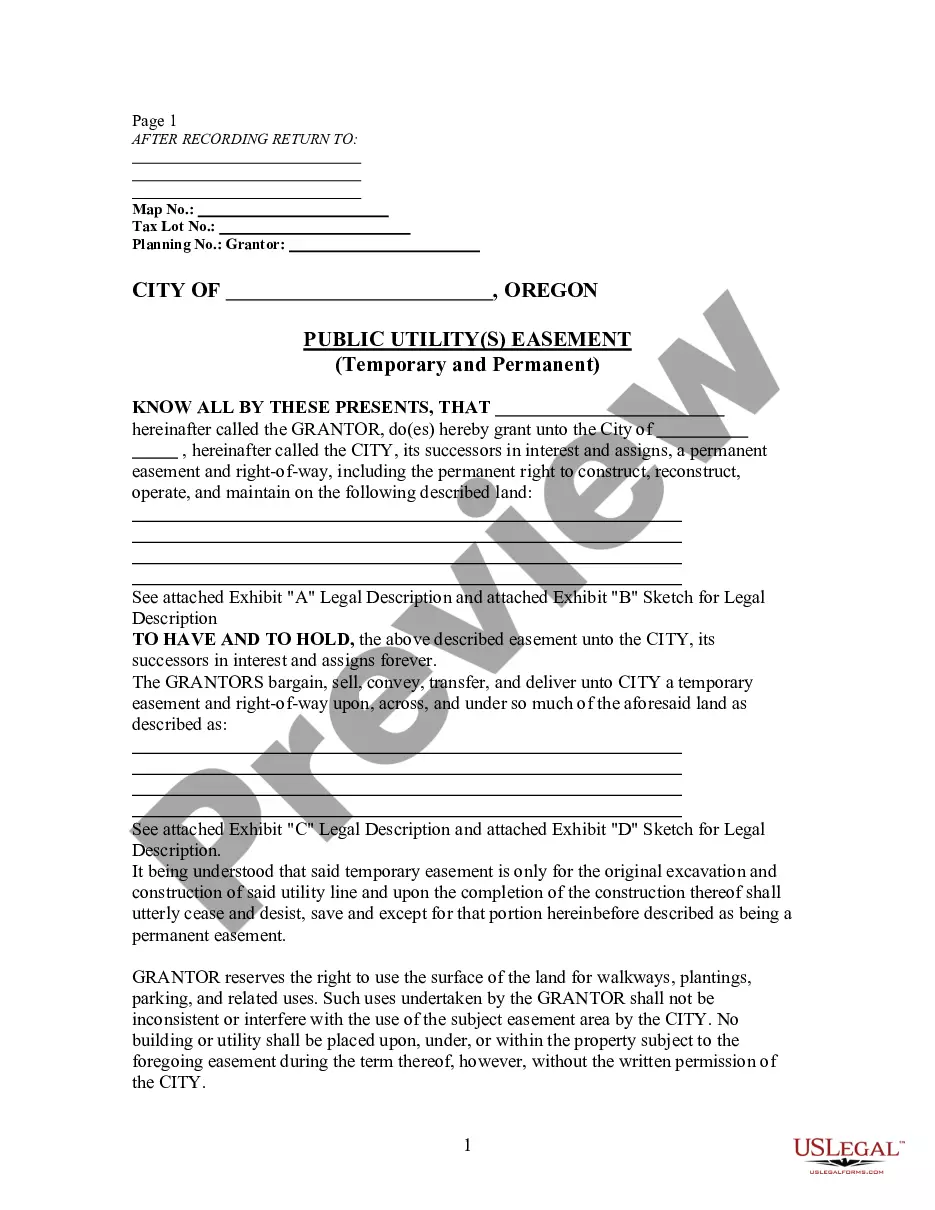
Oregon Public Utilities Easement - temporary and permanent
What is this form?
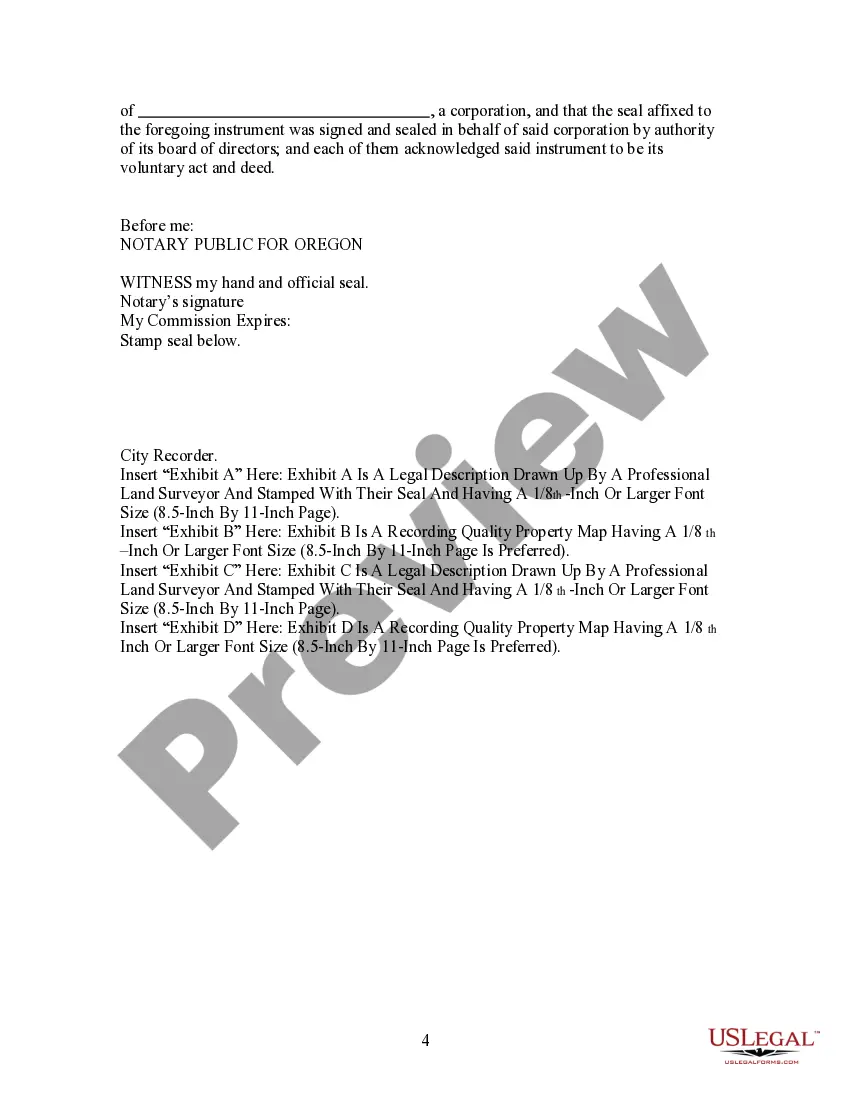
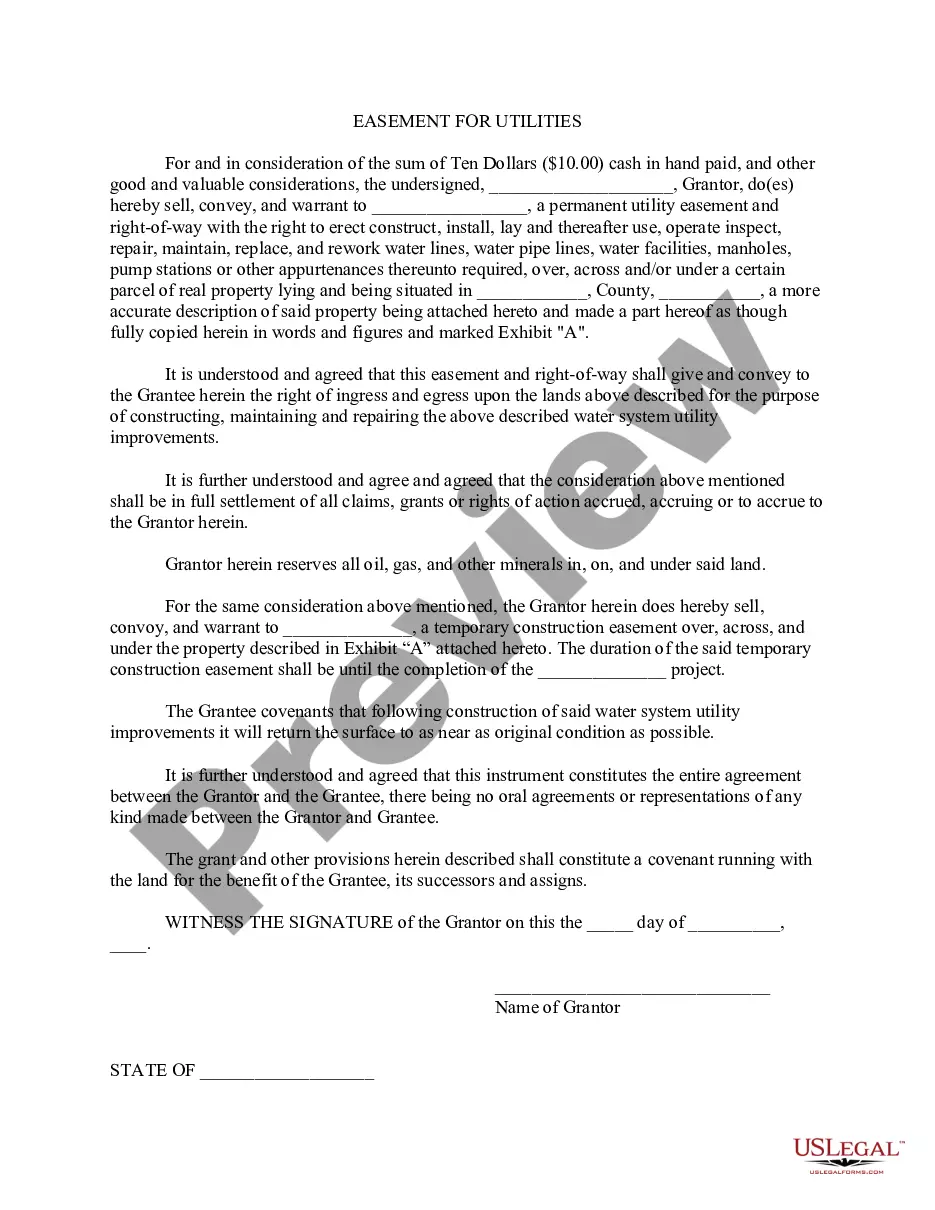
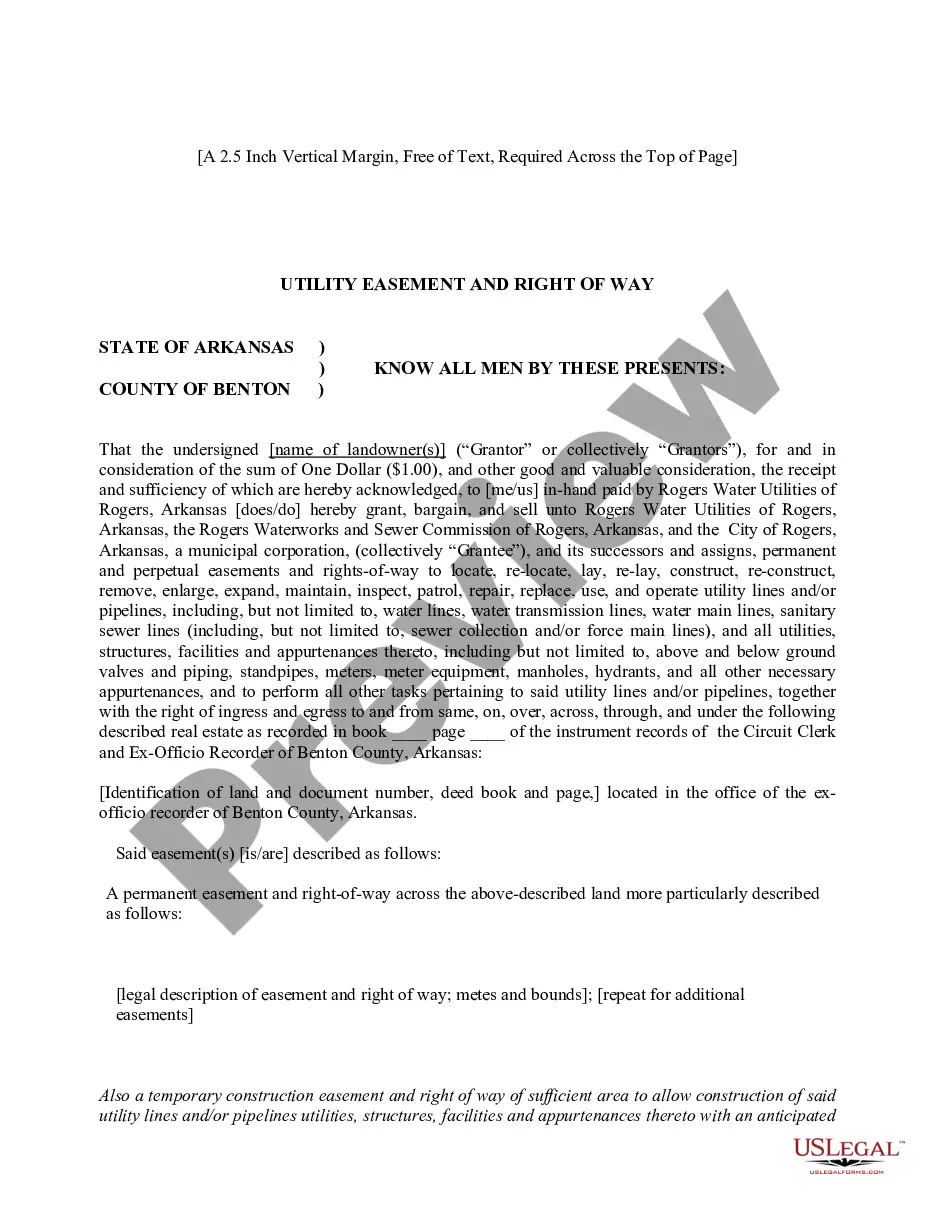
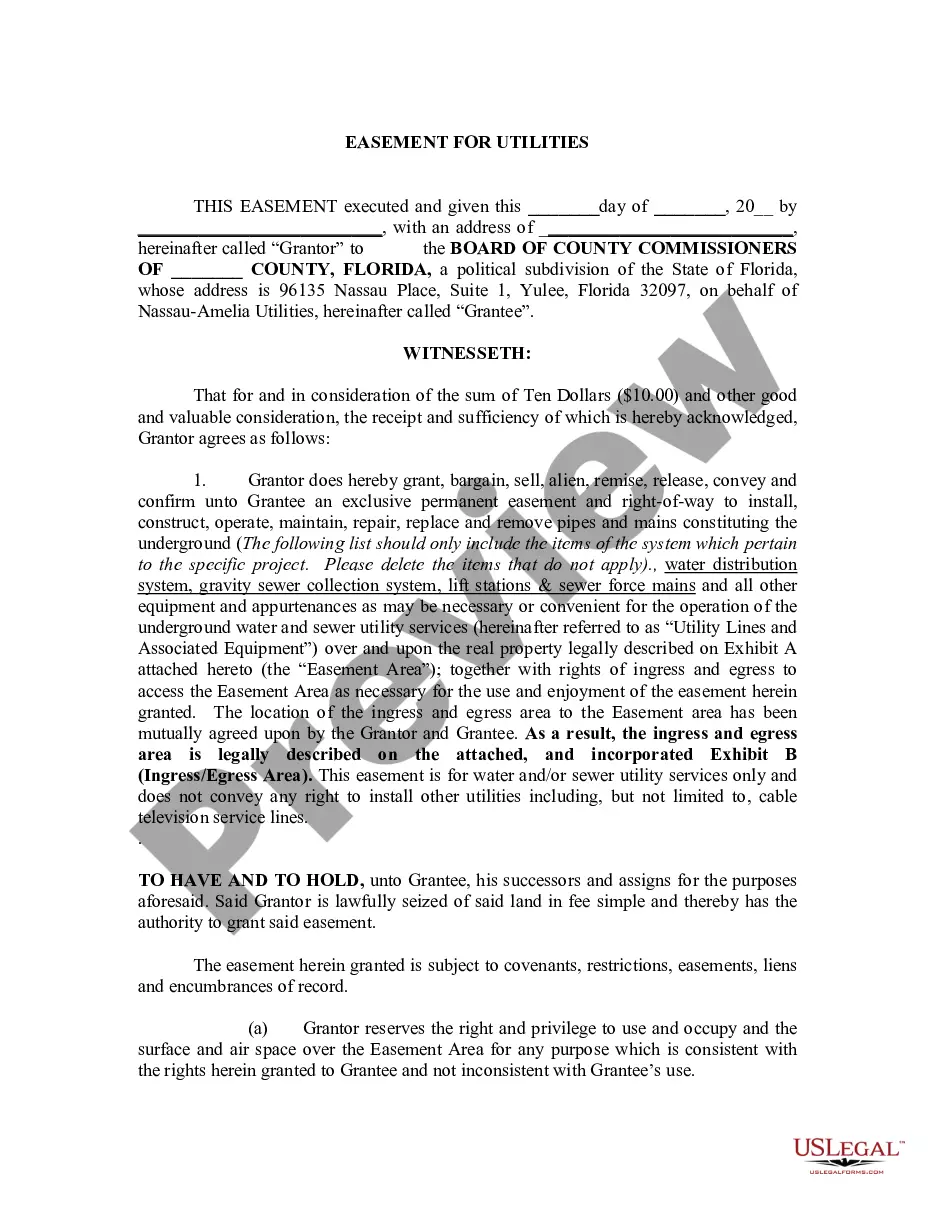
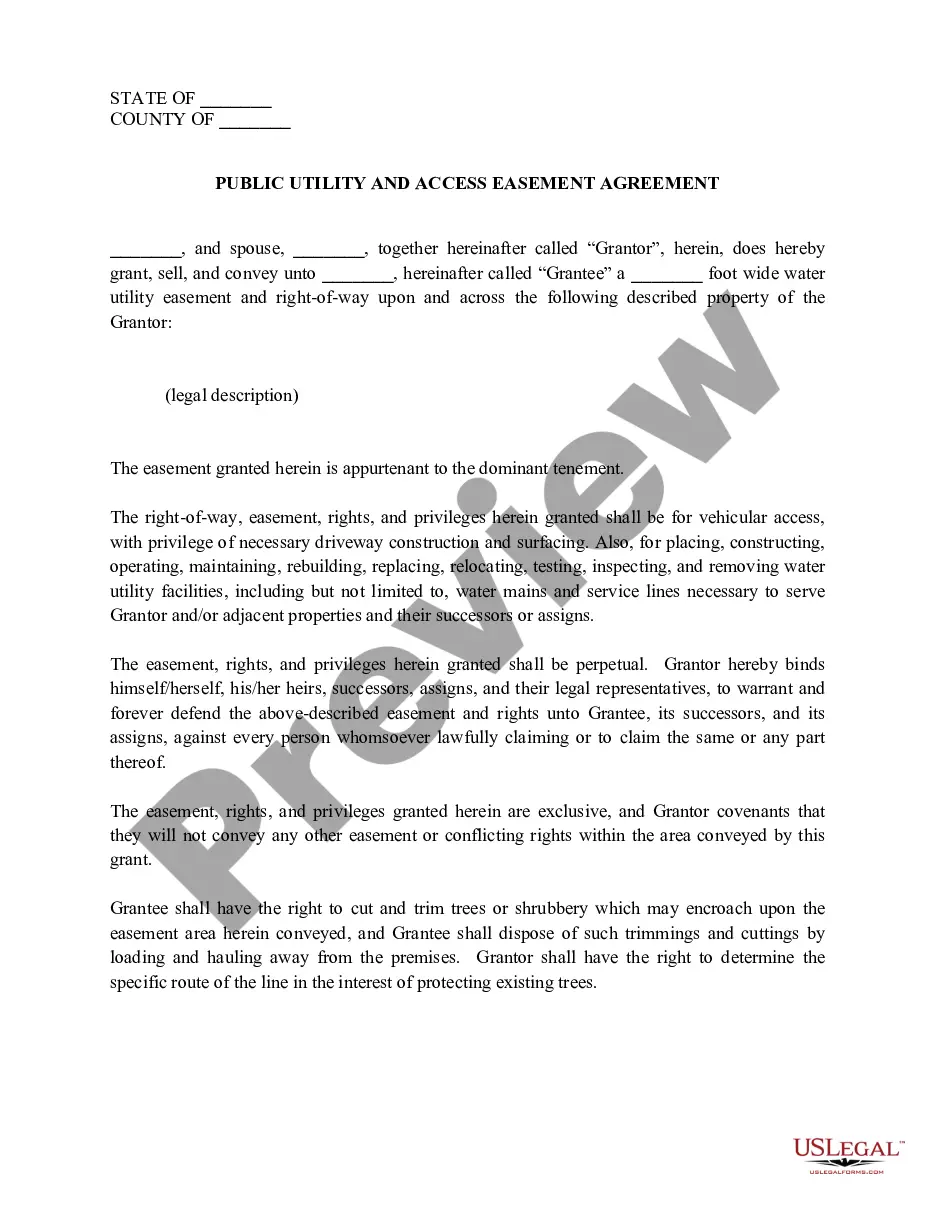
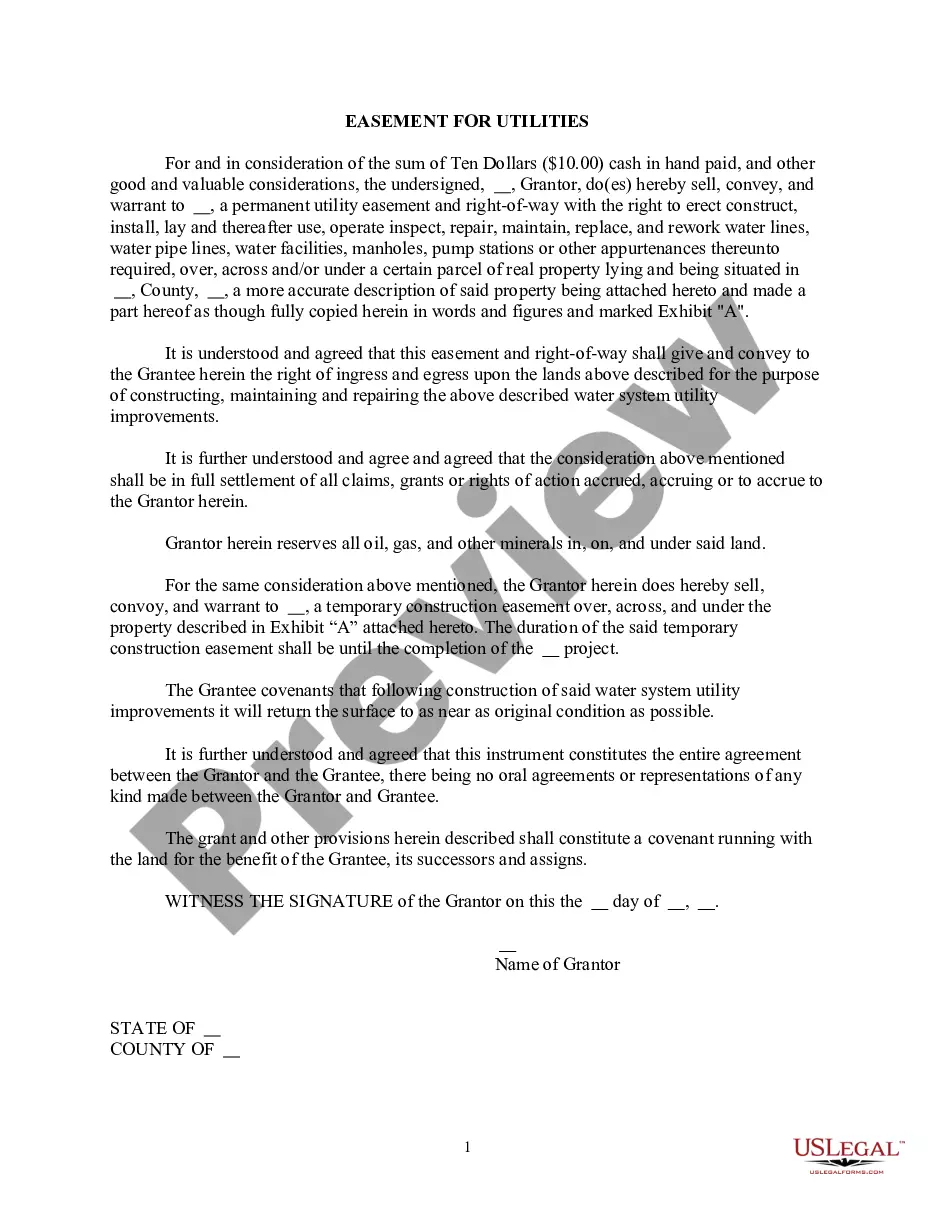
The Public Utilities Easement form (temporary and permanent) grants a utility company the right to excavate and construct utility lines on your property. This easement allows for necessary work while protecting the property owner's interests by distinguishing between temporary and permanent access rights. Unlike other property agreements, this form specifically addresses utilities, ensuring both temporary construction and long-term easement considerations are met.
Key parts of this document
- Grant of temporary easement for utility line construction.
- Specification of permanent easement rights post-construction.
- Rights reserved for the property owner to use the land surface.
- Conditions on the placement of structures or utilities by the property owner.
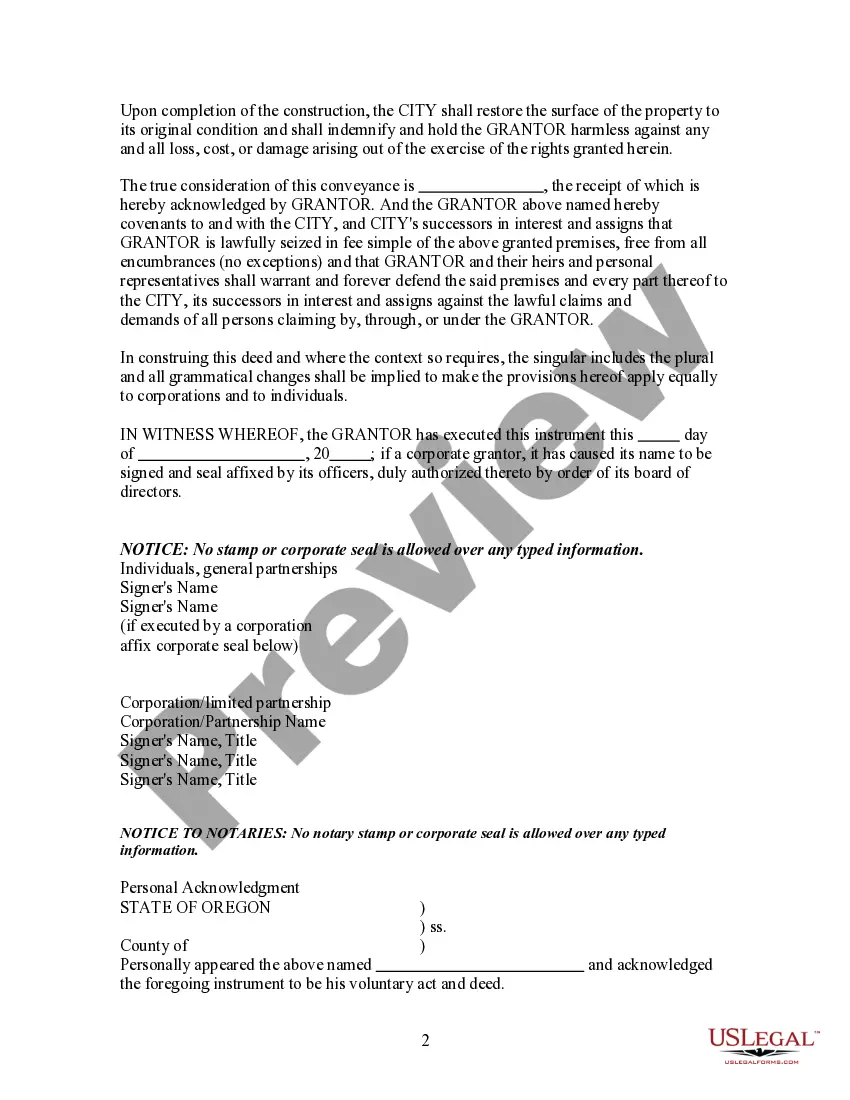
- Restoration obligations of the utility company after construction.
- Indemnification clause protecting the property owner from loss or damage.
When this form is needed
This form should be used when a utility company requires access to your property for the installation or maintenance of utility lines, such as electricity, gas, or telecommunications. It is particularly relevant during the construction phase, ensuring that any temporary disruption to the property can be legally sanctioned while protecting the owner's rights and access to their property.
Intended users of this form
This form is intended for:
- Property owners who need to grant access for utility work.
- Utility companies requiring legal permission to install or maintain lines.
- Real estate attorneys advising clients on easement matters.
Instructions for completing this form
- Identify the parties involved, including the property owner (Grantor) and the utility company (City).
- Specify the property involved and the exact location of the easement.
- Detail the construction timeline and the nature of the utility work to be completed.
- Enter any additional agreements regarding land use and restoration procedures.
- Sign and date the form, ensuring all parties have a copy for their records.
Does this form need to be notarized?
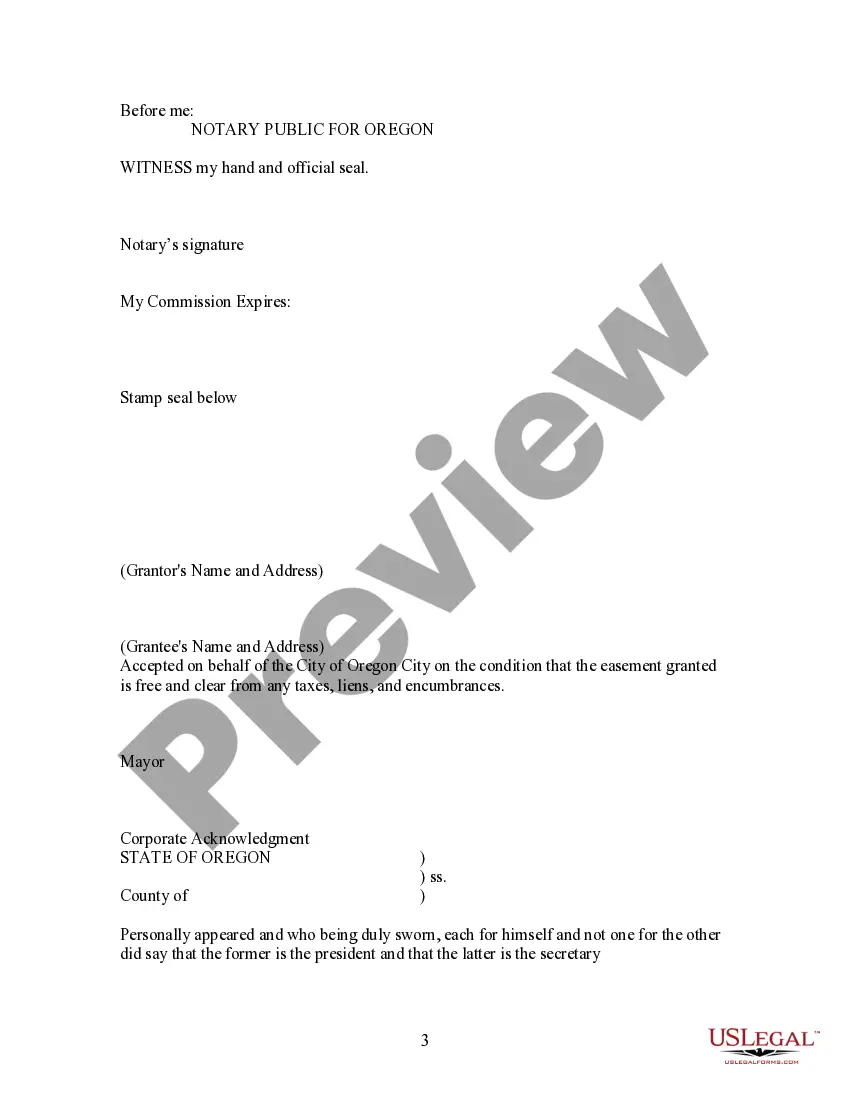
To make this form legally binding, it must be notarized. Our online notarization service, powered by Notarize, lets you verify and sign documents remotely through an encrypted video session.
Get your form ready online
Our built-in tools help you complete, sign, share, and store your documents in one place.
Make edits, fill in missing information, and update formatting in US Legal Forms—just like you would in MS Word.
Download a copy, print it, send it by email, or mail it via USPS—whatever works best for your next step.
Sign and collect signatures with our SignNow integration. Send to multiple recipients, set reminders, and more. Go Premium to unlock E-Sign.
If this form requires notarization, complete it online through a secure video call—no need to meet a notary in person or wait for an appointment.
We protect your documents and personal data by following strict security and privacy standards.

Make edits, fill in missing information, and update formatting in US Legal Forms—just like you would in MS Word.

Download a copy, print it, send it by email, or mail it via USPS—whatever works best for your next step.

Sign and collect signatures with our SignNow integration. Send to multiple recipients, set reminders, and more. Go Premium to unlock E-Sign.

If this form requires notarization, complete it online through a secure video call—no need to meet a notary in person or wait for an appointment.

We protect your documents and personal data by following strict security and privacy standards.
Typical mistakes to avoid
- Failing to specify the exact location and dimensions of the easement.
- Not including the restoration obligations after construction has concluded.
- Overlooking the need for signatures from all parties involved.
- Neglecting to consult local laws that may impact easement requirements.
Benefits of completing this form online
- Convenient access to professionally drafted forms that meet legal standards.
- Ability to download and edit forms as needed before finalizing.
- Instant access without the need for in-person visits to legal offices.
- Secure storage options to keep legal documents safe and organized.
Looking for another form?
Form popularity
FAQ
An easement usually is written so that it lasts forever. This is known as a perpetual easement. Where state law allows, an easement may be written for a specified period of years; this is known as a term easement. Only gifts of perpetual easement, however, can qualify a donor for income- and estate-tax benefits.
Permanent easement means an easement that lasts in perpetuity.
Generally, easements are created by express grant or reservation. Easements are perpetual unless they are expressly limited, or terminated by agreement, abandonment, implication (e.g. necessity ceases to exist), adverse possession, or another means of formal termination.
If the property is sold to a new owner, the easement is typically transferred with the property. The holder of the easement, however, has a personal right to the easement and is prohibited from transferring the easement to another person or company.
So, having an easement on a property may have a permanent outcome on the property with rights of the home owner. But not all easements are bad.If you live in a rural area, you run into bad easement issues more often, typically where the easement was created by a parcel owner next to your land.
Easements will continue indefinitely unless terminated by one of the following methods: Express Agreement. An easement holder and easement owner may decide by written agreement to terminate the easement.
An easement holder is not allowed to occupy or exclude others from using the land unless they interfere with the easement holder's use.The owner of the land may continue to use it, according to . Easements are usually held to be permanent unless the agreement states otherwise.
Easements are specified in a property deed, which is typically recorded at the county courthouse. However, deeds may be kept in other locations, such as a county tax assessor's office or county clerk's office.Your local utility company may also maintain records on utility easements.
Types of Easements An easement may be classified as either an easement appurtenant or an easement in gross. Easement Appurtenant. An easement appurtenant is an easement that benefits one parcel of land, known as the dominant tenement, to the detriment of another parcel of land, known as the servient tenement.