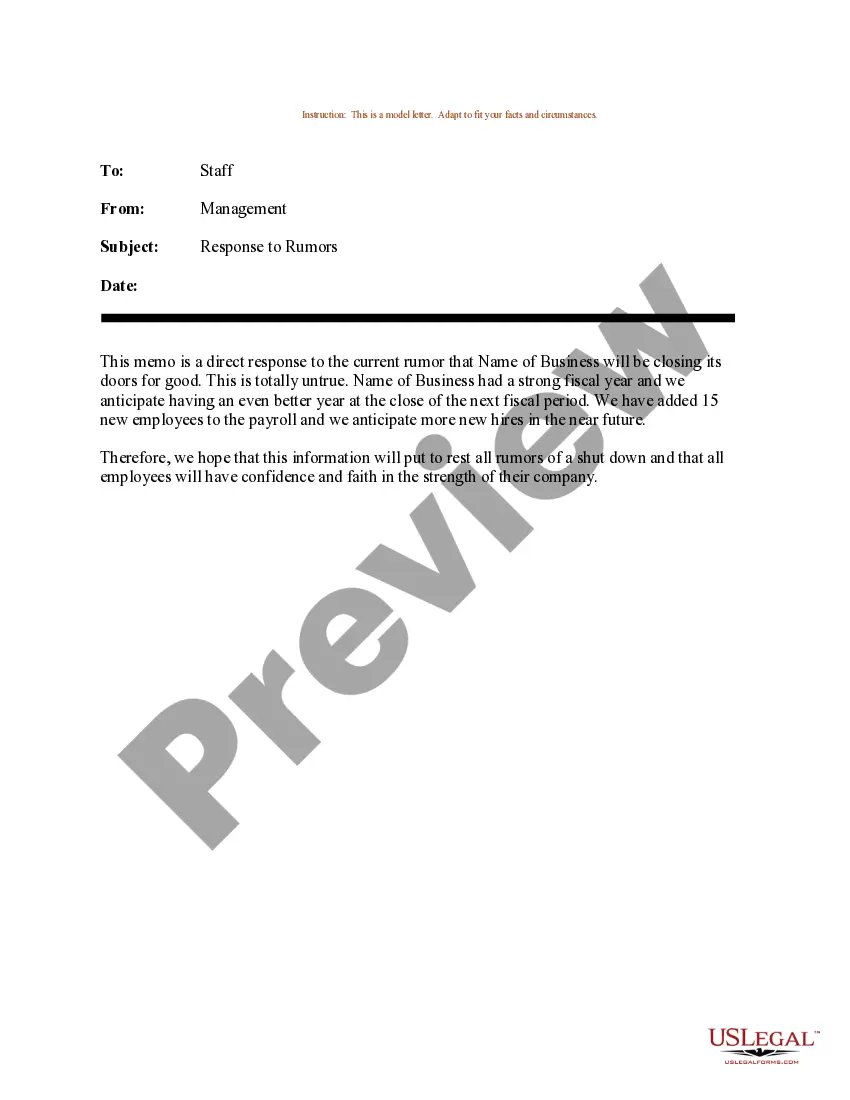
New York Itemized Statement - Individual
Overview of this form
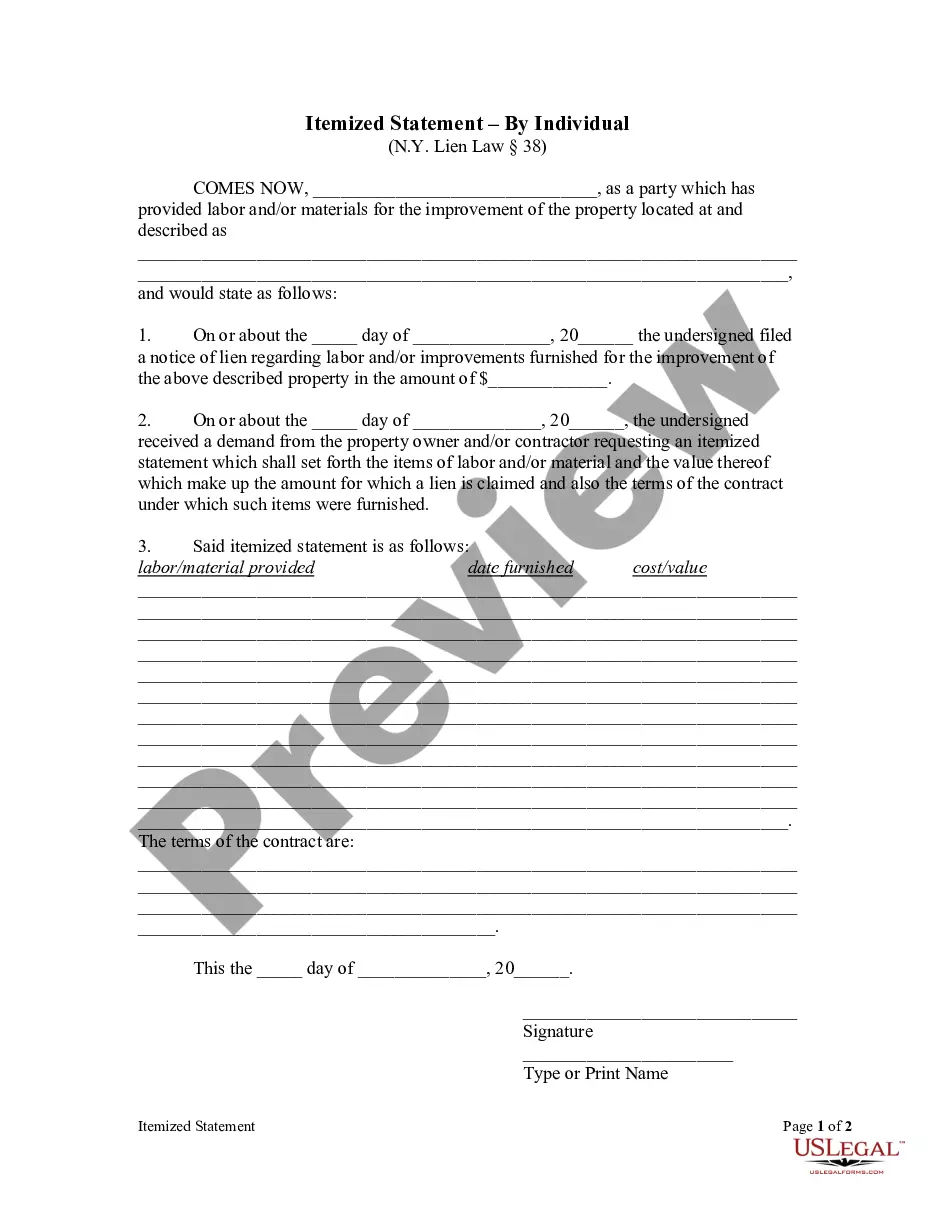
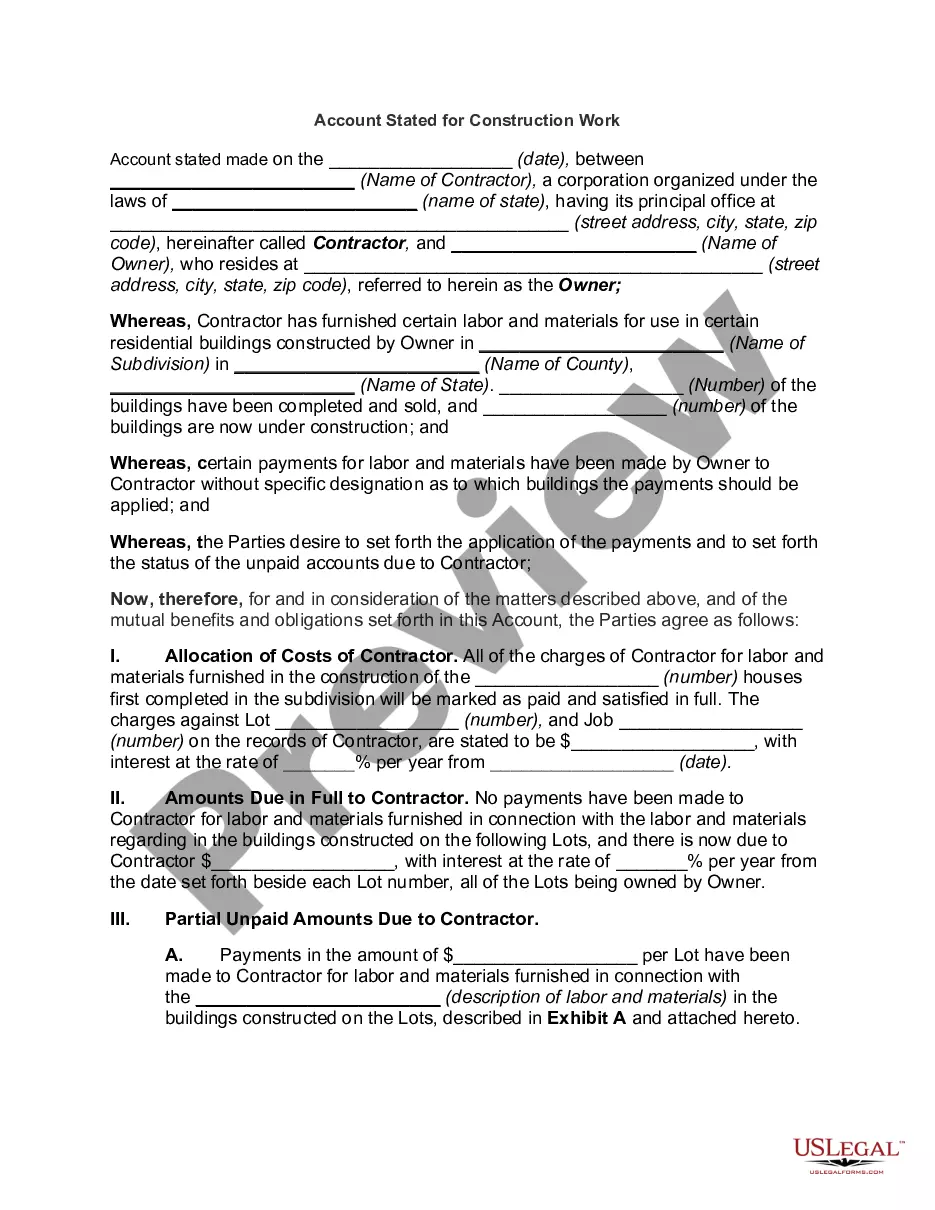
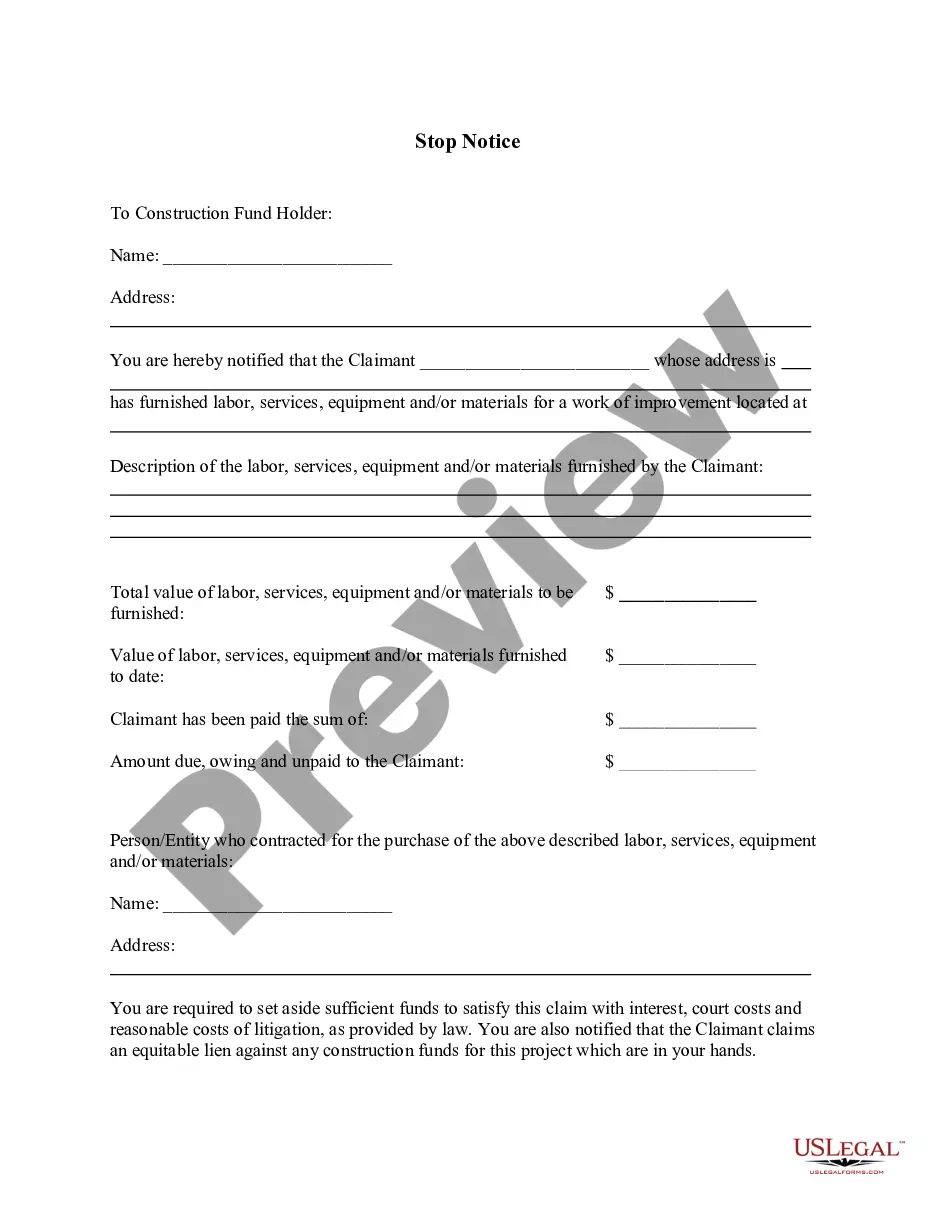
The Itemized Statement - Individual is a legal document used by property owners or contractors to request a detailed account of labor and materials provided by a lien holder. This form serves to clarify the amount owed for work done and materials supplied, distinguishing it from other lien-related documents by its focus on itemization and accountability. The lien holder is required to respond within five days, failing which the owner or contractor may seek court intervention.
Key parts of this document
- Identification of the party providing labor and materials.
- A description of the property where work was performed.
- A detailed breakdown of labor and materials with associated costs.
- Declaration of the contract terms under which the services were provided.
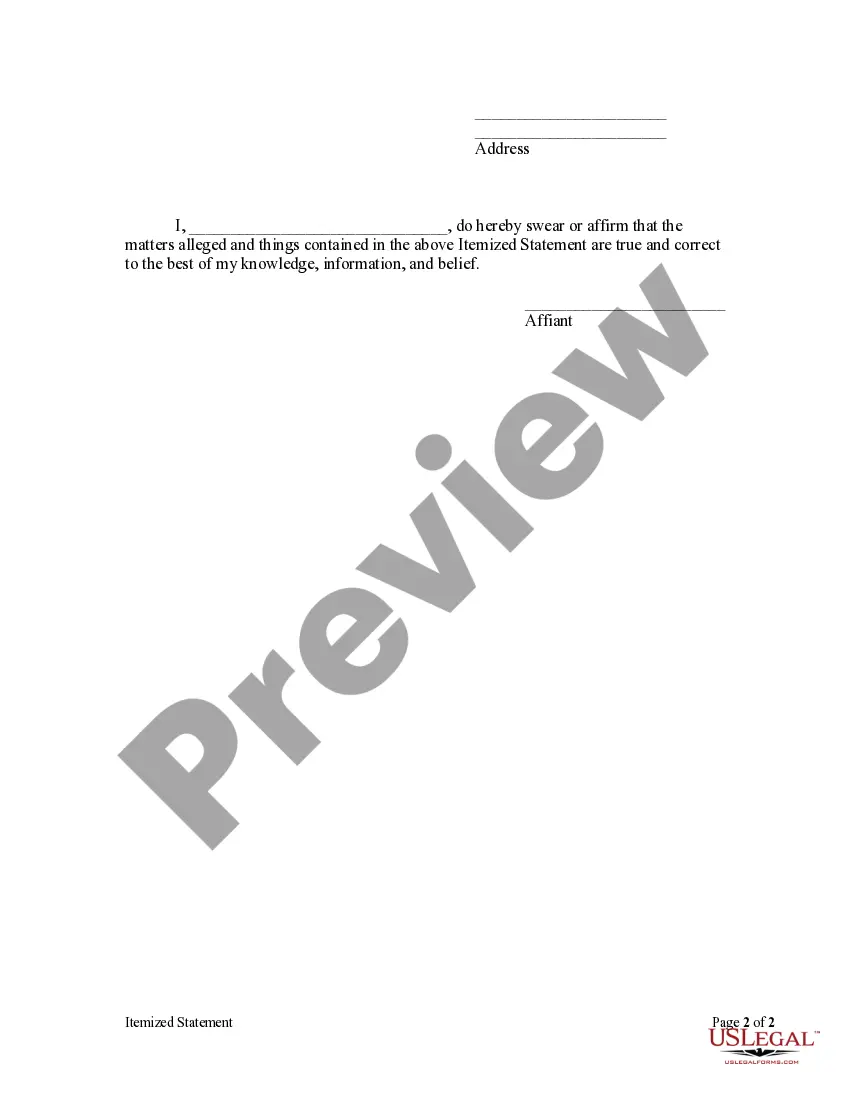
- Signature of the affiant affirming the accuracy of the information.
Common use cases
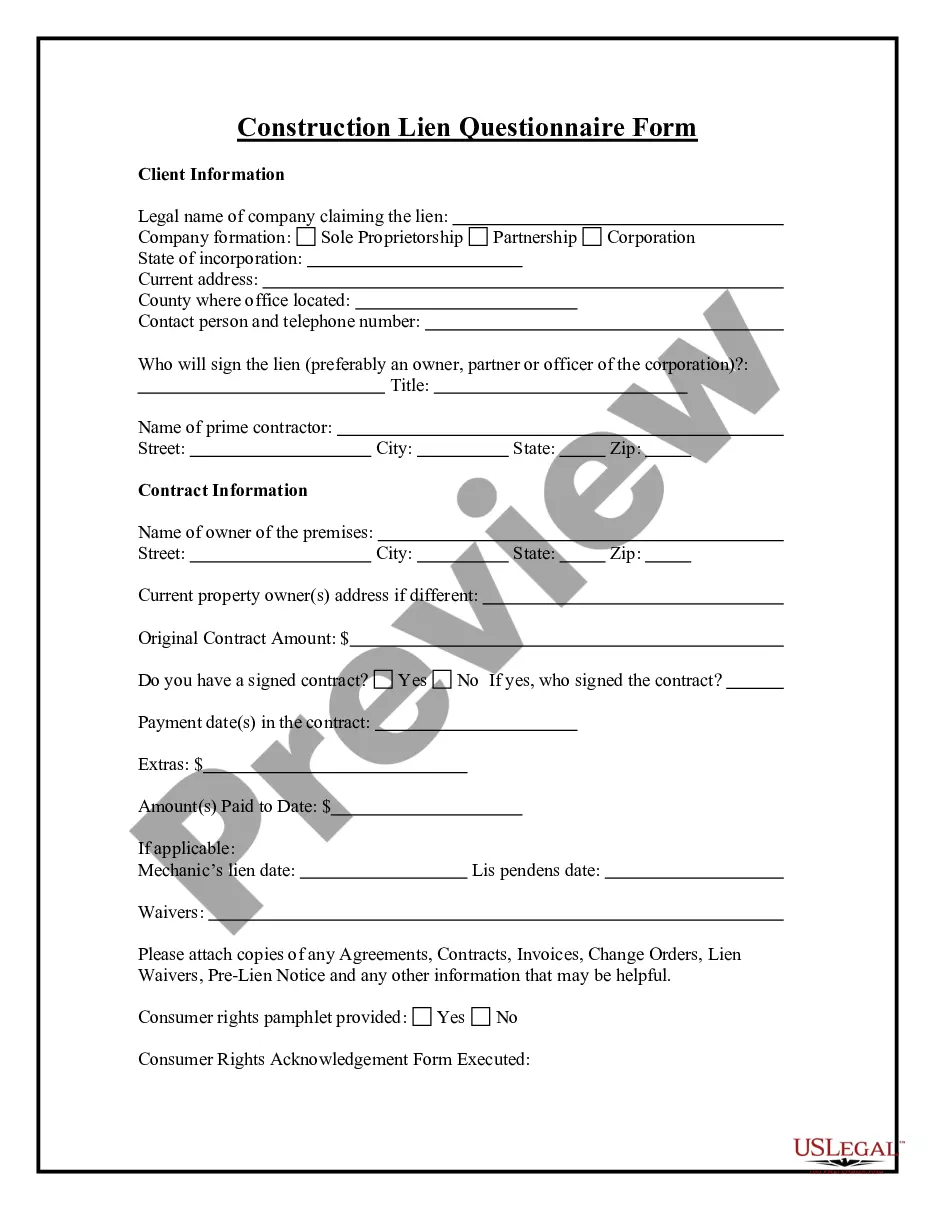
This form is used when a property owner or contractor has filed a notice of lien and needs a detailed statement of labor and materials from the lien holder. It's essential when there is a dispute over the validity or amount of the lien. The Itemized Statement can also be beneficial when seeking to enforce a lien through court if the lien holder does not respond appropriately.
Who should use this form
- Property owners needing clarification on a filed lien.
- Contractors ensuring accurate billing for work completed.
- Lien holders required to provide a response detailing their claims.
How to complete this form
- Identify the party issuing the itemized statement and provide their name.
- Clearly describe the property for which labor and materials were provided.
- Furnish specific dates and amounts for each item of labor or materials listed.
- Include the terms of the contract relating to the provided services.
- Sign the document and ensure the affiant affirms the accuracy of the contents.
Is notarization required?
This document requires notarization to meet legal standards. US Legal Forms provides secure online notarization powered by Notarize, allowing you to complete the process through a verified video call, available 24/7.
Get your form ready online
Our built-in tools help you complete, sign, share, and store your documents in one place.
Make edits, fill in missing information, and update formatting in US Legal Forms—just like you would in MS Word.
Download a copy, print it, send it by email, or mail it via USPS—whatever works best for your next step.
Sign and collect signatures with our SignNow integration. Send to multiple recipients, set reminders, and more. Go Premium to unlock E-Sign.
If this form requires notarization, complete it online through a secure video call—no need to meet a notary in person or wait for an appointment.
We protect your documents and personal data by following strict security and privacy standards.

Make edits, fill in missing information, and update formatting in US Legal Forms—just like you would in MS Word.

Download a copy, print it, send it by email, or mail it via USPS—whatever works best for your next step.

Sign and collect signatures with our SignNow integration. Send to multiple recipients, set reminders, and more. Go Premium to unlock E-Sign.

If this form requires notarization, complete it online through a secure video call—no need to meet a notary in person or wait for an appointment.

We protect your documents and personal data by following strict security and privacy standards.
Mistakes to watch out for
- Failing to list all items of labor and materials provided.
- Providing incomplete or vague descriptions of the property.
- Neglecting to sign or properly execute the form.
- Missing the five-day deadline for response to the property owner or contractor.
Advantages of online completion
- Instant access to a professional template drafted by licensed attorneys.
- Convenience of filling out and customizing the form remotely.
- Secure storage and easy retrieval of your legal documents.
- Ability to quickly produce multiple copies as needed.
Looking for another form?



Form popularity
FAQ
Itemized deductions include amounts you paid for state and local income or sales taxes, real estate taxes, personal property taxes, mortgage interest, and disaster losses from a Federally declared disaster. You may also include gifts to charity and part of the amount you paid for medical and dental expenses.
You can still claim deductions on your taxes without receipts for every transaction. Keep in mind that you don't have to send your shoe box full of receipts to the IRS to prove you're being honest.
Traditional IRA deduction. HSA/FSA deduction. Dependent care FSA contributions. Student loan interest deduction. Teacher classroom expenses. Self-employed tax deductions. Alimony deduction.
The most common expenses that qualify for itemized deductions include: Home mortgage interest. Property, state, and local income taxes. Investment interest expense.
Facing an IRS Tax Audit With Missing Receipts?The IRS will only require that you provide evidence that you claimed valid business expense deductions during the audit process. Therefore, if you have lost your receipts, you only be required to recreate a history of your business expenses at that time.
The Internal Revenue Service does allow taxpayers to deduct some expenses without keeping receipts, and the agency allows credit card records and paid bills to serve as proof of expenses.
The Internal Revenue Service allows you to deduct expenses that are ordinary and necessary for the operation of your business. However, if you are audited, you need to show receipts for these deductions. So, you should keep receipts for everything you plan to write off when you file taxes for your business.
Beginning with tax year 2018, the Tax Law allows you to itemize your deductions for New York State income tax purposes whether or not you itemized your deductions on your federal income tax return.
The ATO generally says that if you have no receipts at all, but you did buy work-related items, then you can claim them up to a maximum value of $300. Chances are, you are eligible to claim more than $300. This could boost your tax refund considerably.