North Carolina General Warranty Deed from Two Individuals to an Individual
Understanding this form
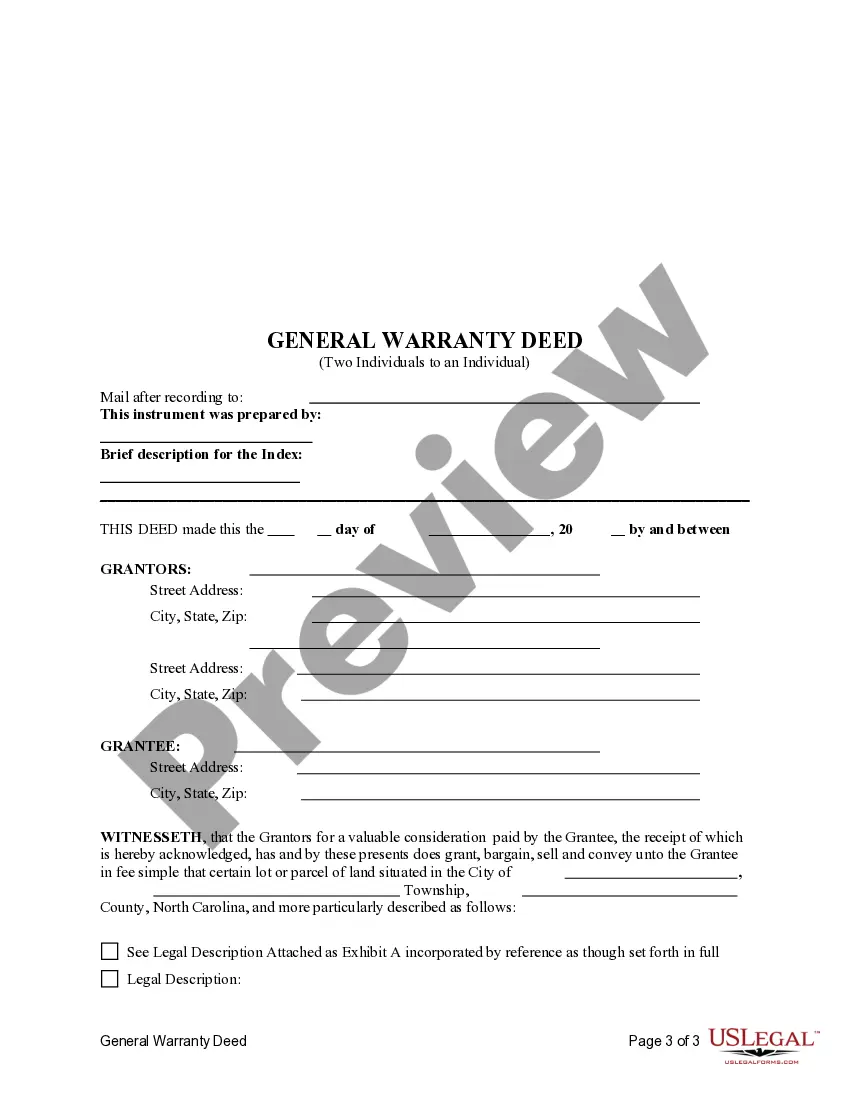
This General Warranty Deed allows two individuals (the Grantors) to transfer ownership of a property to another individual (the Grantee). This form provides comprehensive warranties regarding the title, ensuring that the property is free of any claims or encumbrances. Unlike other types of deeds, a General Warranty Deed offers the highest level of protection for the Grantee, as it not only transfers the property but also guarantees that the Grantors will defend the title against any future claims.
Form components explained
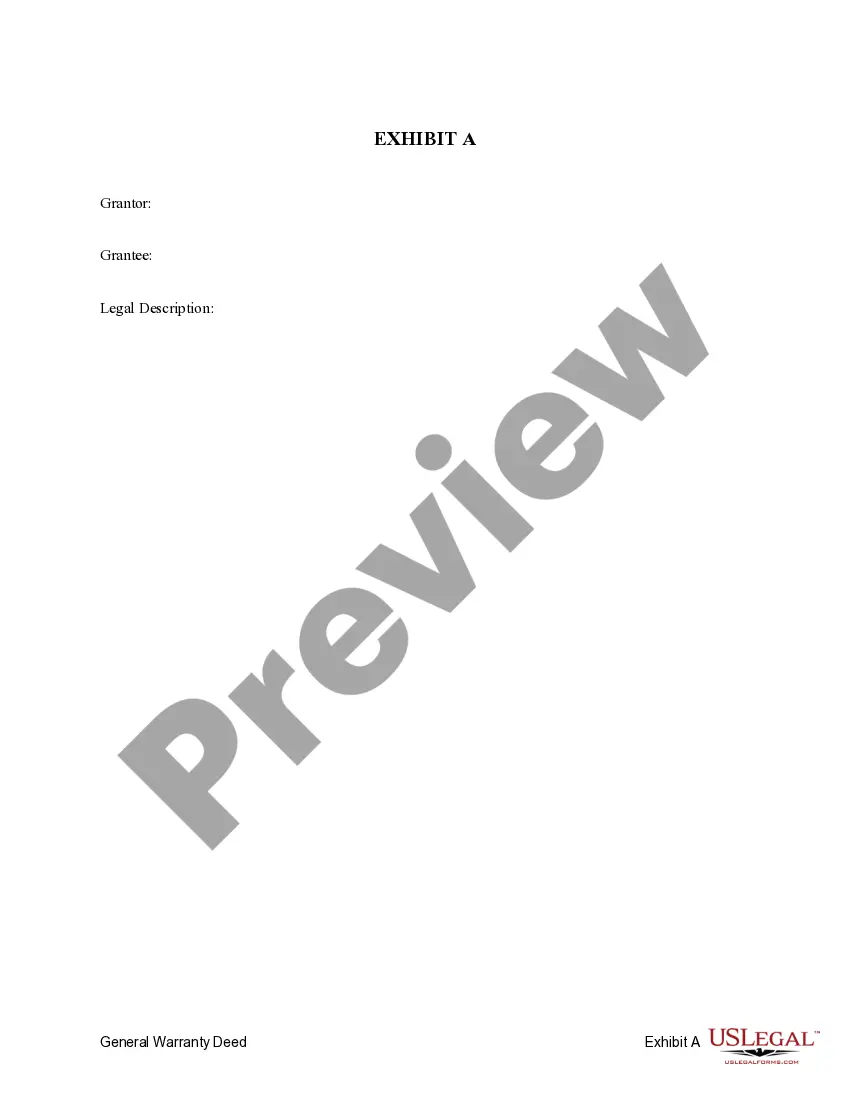
- Identification of the Grantors and Grantee.
- Description of the property being transferred.
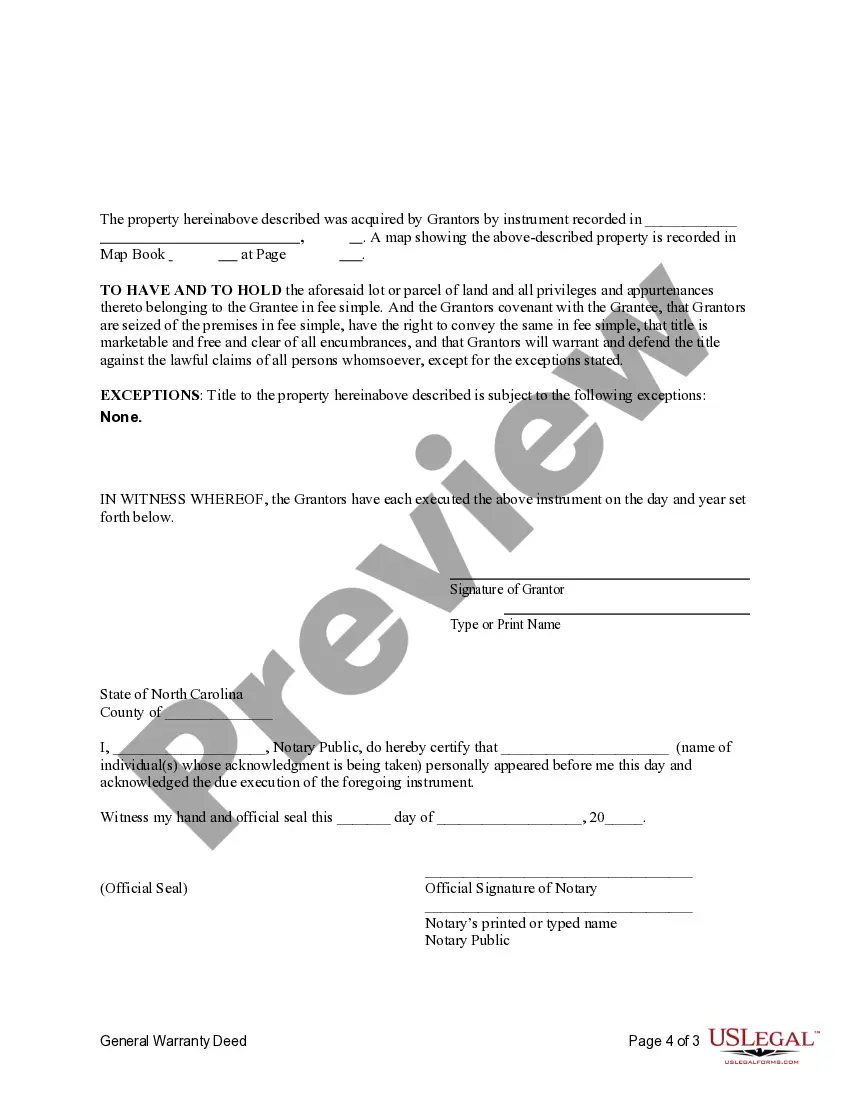
- Warranties of title by the Grantors.
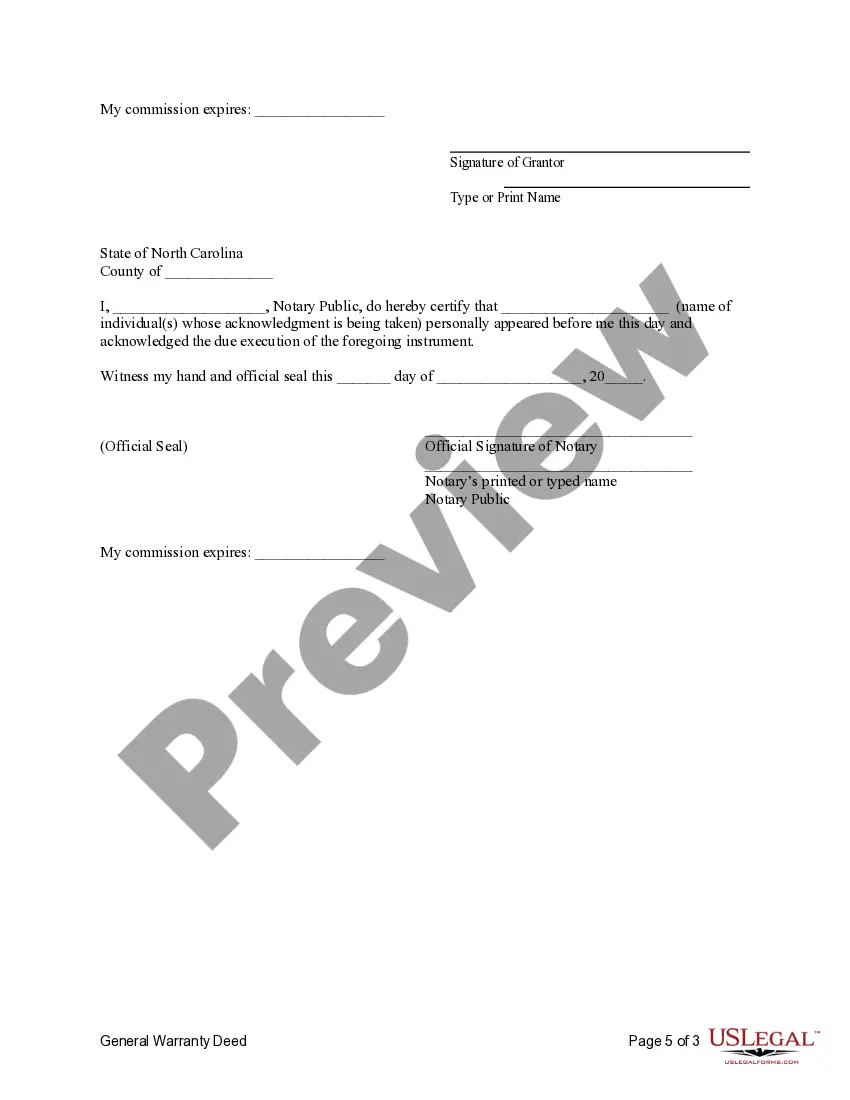
- Signature of the Grantors.
- Notary acknowledgment.





When to use this document
This form is essential when two individuals wish to transfer their ownership interests in a property to another individual. It is commonly used in situations such as divorce settlements, inheritance transfers, or when one party is selling their share of a jointly owned property. If you need to ensure the Grantee receives a clear title with guaranteed protections, this form is appropriate.
Who this form is for
- Individuals looking to transfer property ownership legally.
- Co-owners of property who want to jointly convey their interests.
- Anyone needing to provide legal warranties on the title of a property.
How to prepare this document
- Identify the parties involved: Enter the names of the two Grantors and the individual Grantee.
- Specify the property: Clearly describe the property being transferred, including any boundaries or identifiers.
- Include the warranties: Ensure the Grantorsâ warranties of title are properly stated.
- Obtain signatures: Have the Grantors sign the deed in the appropriate locations.
- Notarize the document: Ensure the form is signed in the presence of a notary public to validate the transfer.
Notarization requirements for this form
Yes, this form must be notarized to be legally valid. Notarization ensures that the identities of the Grantors are verified, adding an extra layer of legal protection to the transaction. U.S. Legal Forms offers a convenient online notarization service, available 24/7, allowing for secure video calls without the need for travel.
Get your form ready online
Our built-in tools help you complete, sign, share, and store your documents in one place.
Make edits, fill in missing information, and update formatting in US Legal Forms—just like you would in MS Word.
Download a copy, print it, send it by email, or mail it via USPS—whatever works best for your next step.
Sign and collect signatures with our SignNow integration. Send to multiple recipients, set reminders, and more. Go Premium to unlock E-Sign.
If this form requires notarization, complete it online through a secure video call—no need to meet a notary in person or wait for an appointment.
We protect your documents and personal data by following strict security and privacy standards.

Make edits, fill in missing information, and update formatting in US Legal Forms—just like you would in MS Word.

Download a copy, print it, send it by email, or mail it via USPS—whatever works best for your next step.

Sign and collect signatures with our SignNow integration. Send to multiple recipients, set reminders, and more. Go Premium to unlock E-Sign.

If this form requires notarization, complete it online through a secure video call—no need to meet a notary in person or wait for an appointment.

We protect your documents and personal data by following strict security and privacy standards.
Mistakes to watch out for
- Failing to provide a clear and adequate property description.
- Not having the Grantors sign the document.
- Neglecting to obtain notarization, which may render the deed invalid.
- Incorrectly listing the names of the parties, leading to confusion in ownership.
Benefits of using this form online
- Accessibility to customized forms anytime and anywhere.
- Easy to edit and fill out using your computer.
- Secure storage of completed forms for future reference.
- Quick downloading process that saves time and effort.
Main things to remember
Key takeaways:
- This General Warranty Deed transfers property from two individuals to one individual.
- It provides full warranties regarding the property title.
- Proper notarization is required to ensure the document's validity.
- Carefully complete the form to avoid common errors.
Looking for another form?
Form popularity
FAQ
Recording All deeds must be filed in the Register of Deeds in the County where the real estate is located. Signing (§ 47-38) All deeds must be signed with the Grantor(s) signing in front of a Notary Public.
The North Carolina general warranty deed is used to transfer property in North Carolina from one person to another legally. A warranty deed comes with a guarantee from the seller that the property has clear title.
Let's start with the definition of a deed: DEED: A written instrument by which one party, the Grantor, conveys the title of ownership in property to another party, the Grantee. A Warranty Deed contains promises, called covenants, that the Grantor makes to the Grantee.
Under the Grantor section of the deed, write the name of the person transferring title. Under Grantee, write the name of the person receiving title. Describe the parcel of land. Use the street address and include the North Carolina County where the land is located.
A warranty deed, also known as a general warranty deed, is a legal real estate document between the seller (grantor) and the buyer (grantee). The deed protects the buyer by pledging that the seller holds clear title to the property and there are no encumbrances, outstanding liens, or mortgages against it.
A warranty deed is a common real estate deed in North Carolina used to transfer title to real property. A typical warranty deed contains covenants of seisin, right to convey, marketability of title, freedom from encumbrances, and covenants of warranty from the grantor to the grantee.
The name and address of the seller (called the grantor) The name and address of the buyer (called the grantee) A legal description of the property (found on the previous deed) A statement that the grantor is transferring the property to the grantee.
To make the form legally binding, you must sign it in front of a notary public. You must then file your signed and notarized deed with the county office that's in charge of recording property documents. Once the grantee signs the warranty deed, he/she legally has ownership and claim to the property.