Mississippi Order allowing Amended Complaint
What is this form?
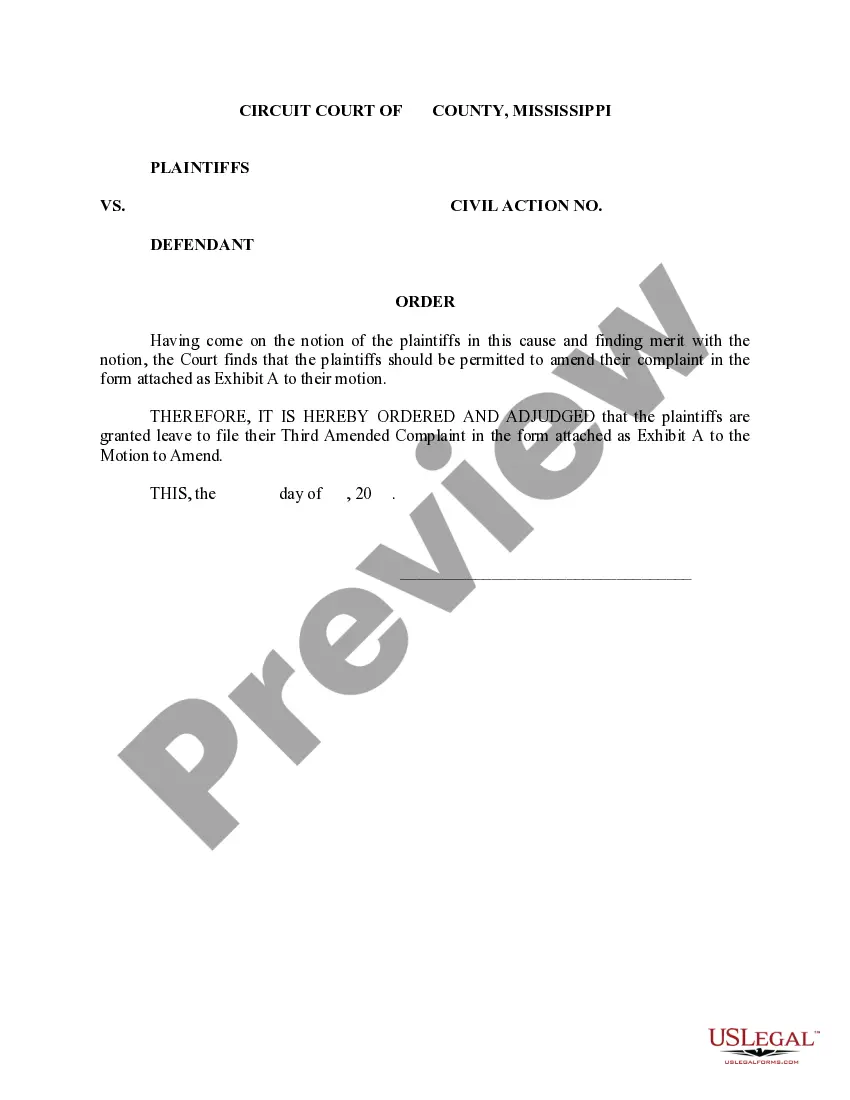
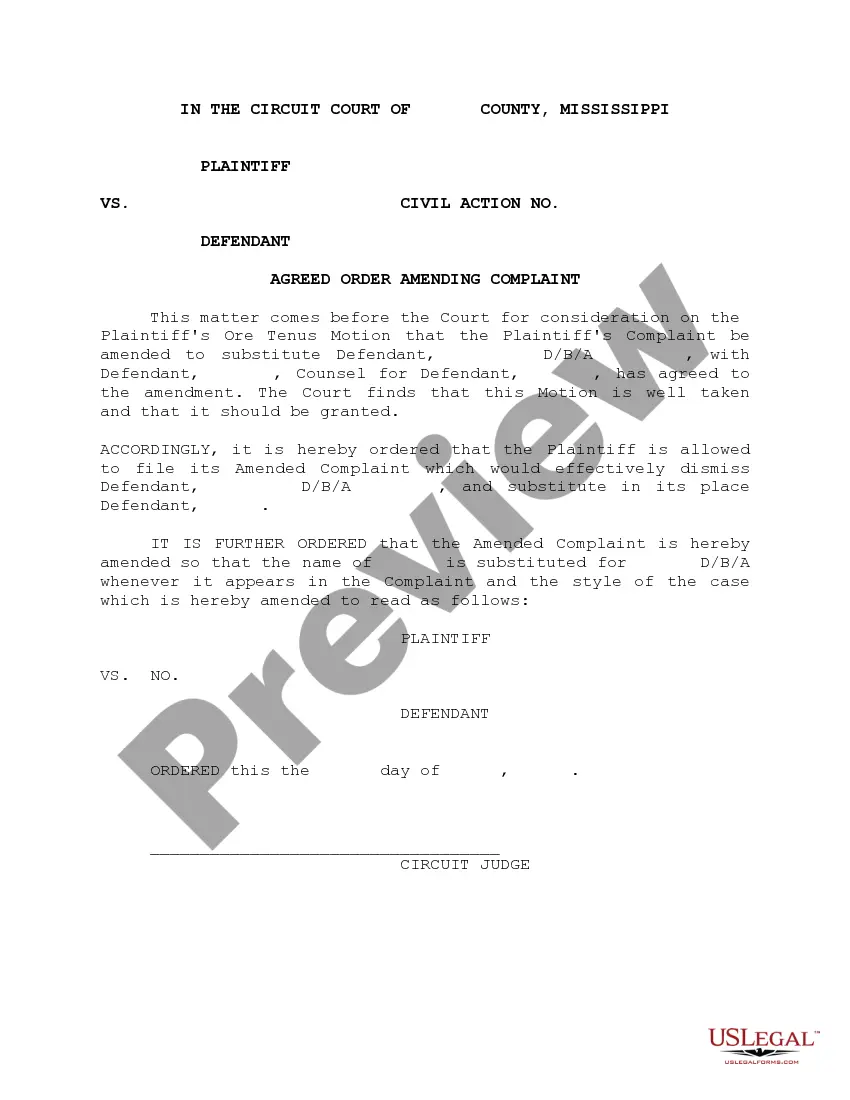
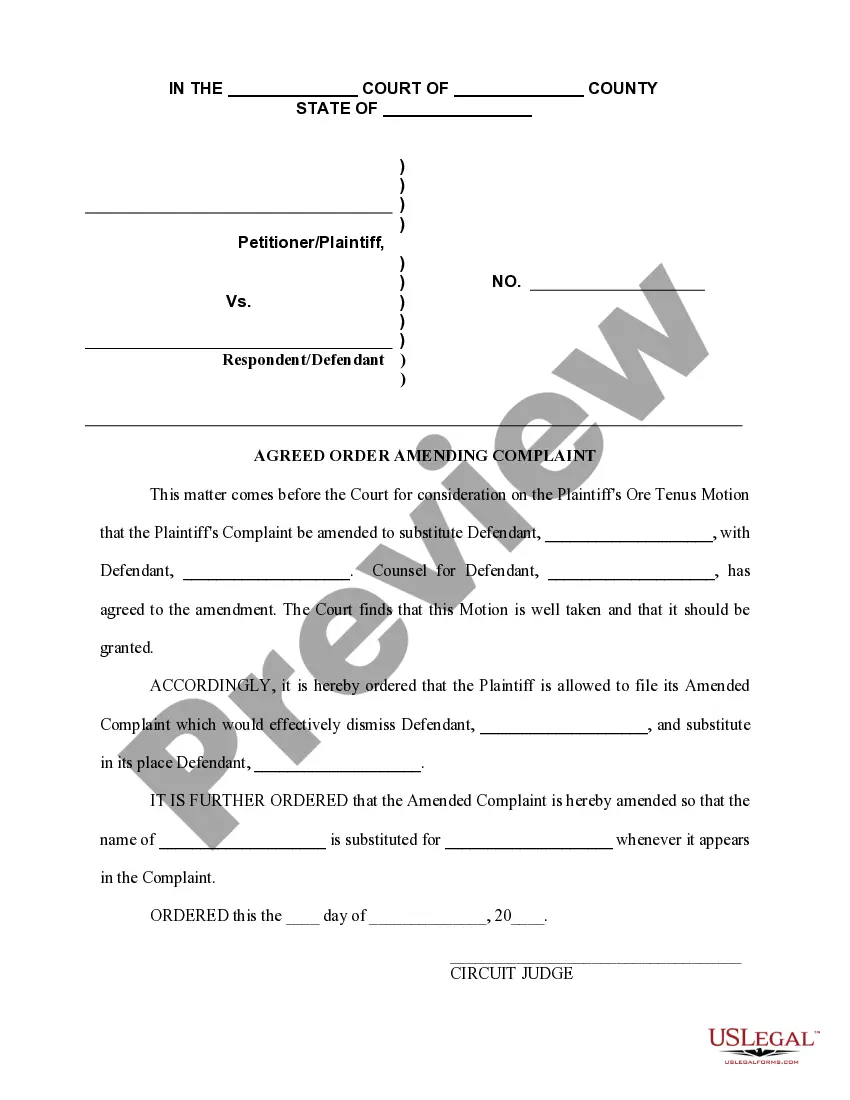
The Order allowing Amended Complaint is a court-issued document that grants permission to a party to revise their previously filed complaint. This form is crucial when new facts arise or changes are needed in a case, allowing for the correction or expansion of arguments. Unlike other orders, this document specifically addresses the amendment of complaints, ensuring that the legal process remains fair and accurate.
Key components of this form
- Case identification: Names of the plaintiff and defendant, along with the civil action number.
- Judicial findings: Statement by the court indicating the merits of the plaintiffs' request for an amendment.
- Order granting leave: Official directive allowing the plaintiffs to file an amended complaint.
- Date of issuance: A section to indicate when the order is signed.
- Judge's signature: Space for the judge's signature to authenticate the order.
When this form is needed
This form is typically used when a party involved in a lawsuit wishes to modify their complaint due to new evidence, mistakes, or additional claims that were not included in the original filing. It is essential in instances where clarity or detail is needed to present the case accurately in court.
Who can use this document
- Litigants who need to amend their initial legal complaints in a civil case.
- Attorneys representing clients in need of filing a revised complaint.
- Individuals who are self-represented and require court approval to amend their filings.
How to prepare this document
- Identify the names of the plaintiffs and defendants along with the civil action number.
- Provide details regarding the court's decision to allow the amendment.
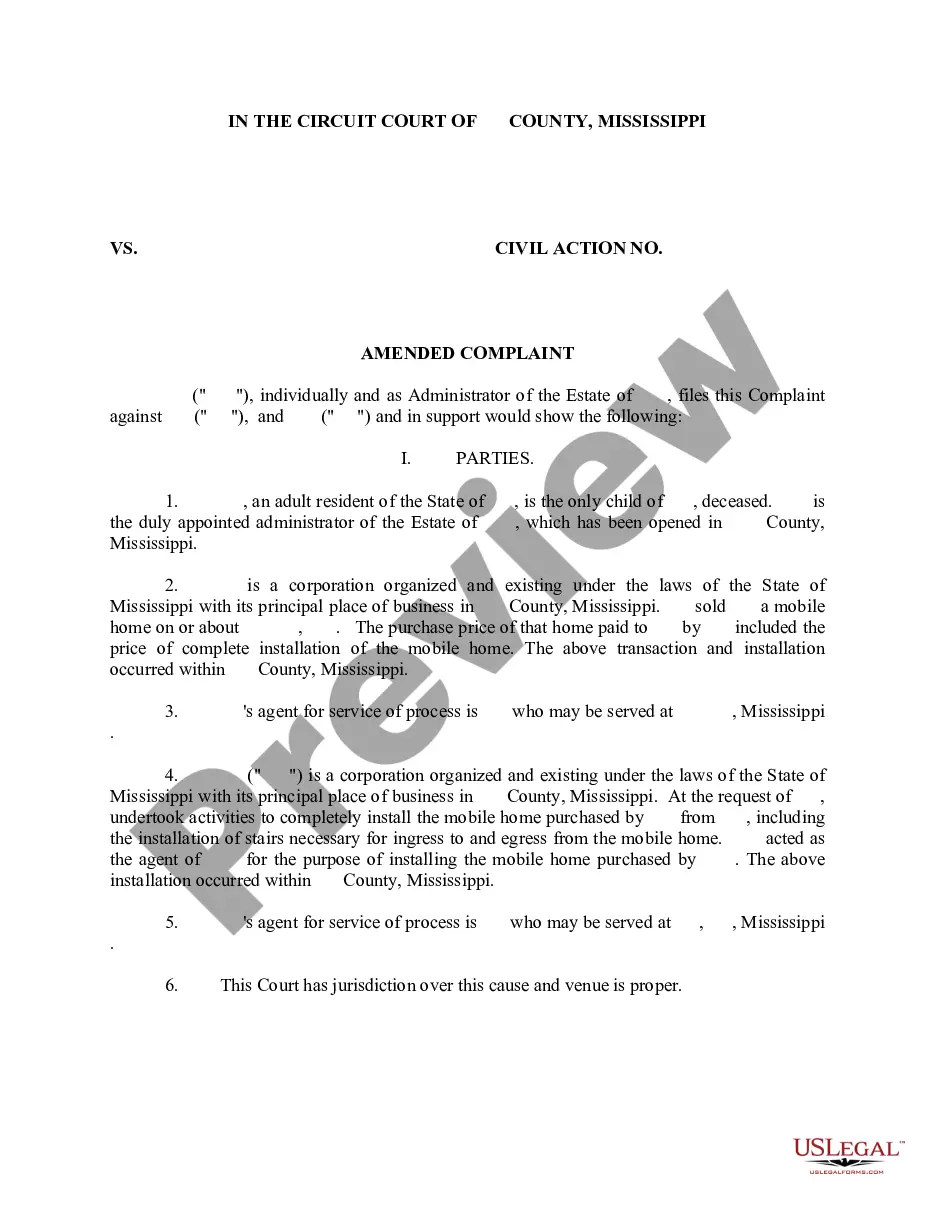
- Attach the proposed amended complaint as Exhibit A.
- Enter the date of the court's order issuance.
- Ensure the judgeâs signature space is clear for authentication.
Notarization guidance
Notarization is not commonly needed for this form. However, certain documents or local rules may make it necessary. Our notarization service, powered by Notarize, allows you to finalize it securely online anytime, day or night.
Get your form ready online
Our built-in tools help you complete, sign, share, and store your documents in one place.
Make edits, fill in missing information, and update formatting in US Legal Forms—just like you would in MS Word.
Download a copy, print it, send it by email, or mail it via USPS—whatever works best for your next step.
Sign and collect signatures with our SignNow integration. Send to multiple recipients, set reminders, and more. Go Premium to unlock E-Sign.
If this form requires notarization, complete it online through a secure video call—no need to meet a notary in person or wait for an appointment.
We protect your documents and personal data by following strict security and privacy standards.
Make edits, fill in missing information, and update formatting in US Legal Forms—just like you would in MS Word.
Download a copy, print it, send it by email, or mail it via USPS—whatever works best for your next step.
Sign and collect signatures with our SignNow integration. Send to multiple recipients, set reminders, and more. Go Premium to unlock E-Sign.
If this form requires notarization, complete it online through a secure video call—no need to meet a notary in person or wait for an appointment.
We protect your documents and personal data by following strict security and privacy standards.
Typical mistakes to avoid
- Omitting the civil action number, which can lead to processing delays.
- Failing to attach the proposed amended complaint to the order.
- Not accurately reflecting the changes made in the amended document.
- Leaving the date or judge's signature space blank, which invalidates the order.
Advantages of online completion
- Convenience of downloading the form at any time from home.
- Editability allows customization to specific case details before submission.
- Access to templates drafted by licensed attorneys ensures legal accuracy.
Looking for another form?





Form popularity
FAQ
Amended complaint. n. what results when the party suing (plaintiff or petitioner) changes the complaint he/she has filed. It must be in writing, and can be done before the complaint is served on any defendant, by agreement between the parties (usually their lawyers), or upon order of the court.
The defendant shall answer the amendments, or the complaint as amended, within 30 days after service thereof, or such other time as the court may direct, and judgment by default may be entered upon failure to answer, as in other cases.
Amend. v. to alter or change by adding, subtracting, or substituting. One can amend a statute, a contract or a written pleading filed in a law -suit. The change is usually called an amendment.
The court should freely give leave when justice so requires. (3) Time to Respond. Unless the court orders otherwise, any required response to an amended pleading must be made within the time remaining to respond to the original pleading or within 14 days after service of the amended pleading, whichever is later.
2000) (Because a motion to dismiss for failure to state a claim is not a 'responsive pleading,' a plaintiff may amend the complaint once without leave, even during the pendency of a motion to dismiss, if the defendant has not yet served an answer.)
2021 California Rules of Court (2) "Amended pleading" means a pleading that completely restates and supersedes the pleading it amends for all purposes.A supplement to a pleading may add information to or may correct omissions in the modified pleading.
It means to change the basis for the case in some way. A motion to amend a complaint is the formal way of asking the court for permission to change the original complaint.
(e) (1) In response to a demurrer and prior to the case being at issue, a complaint or cross-complaint shall not be amended more than three times, absent an offer to the trial court as to such additional facts to be pleaded that there is a reasonable possibility the defect can be cured to state a cause of action.