Mississippi Petition to Commit Defendant for Mental Exam
What is this form?
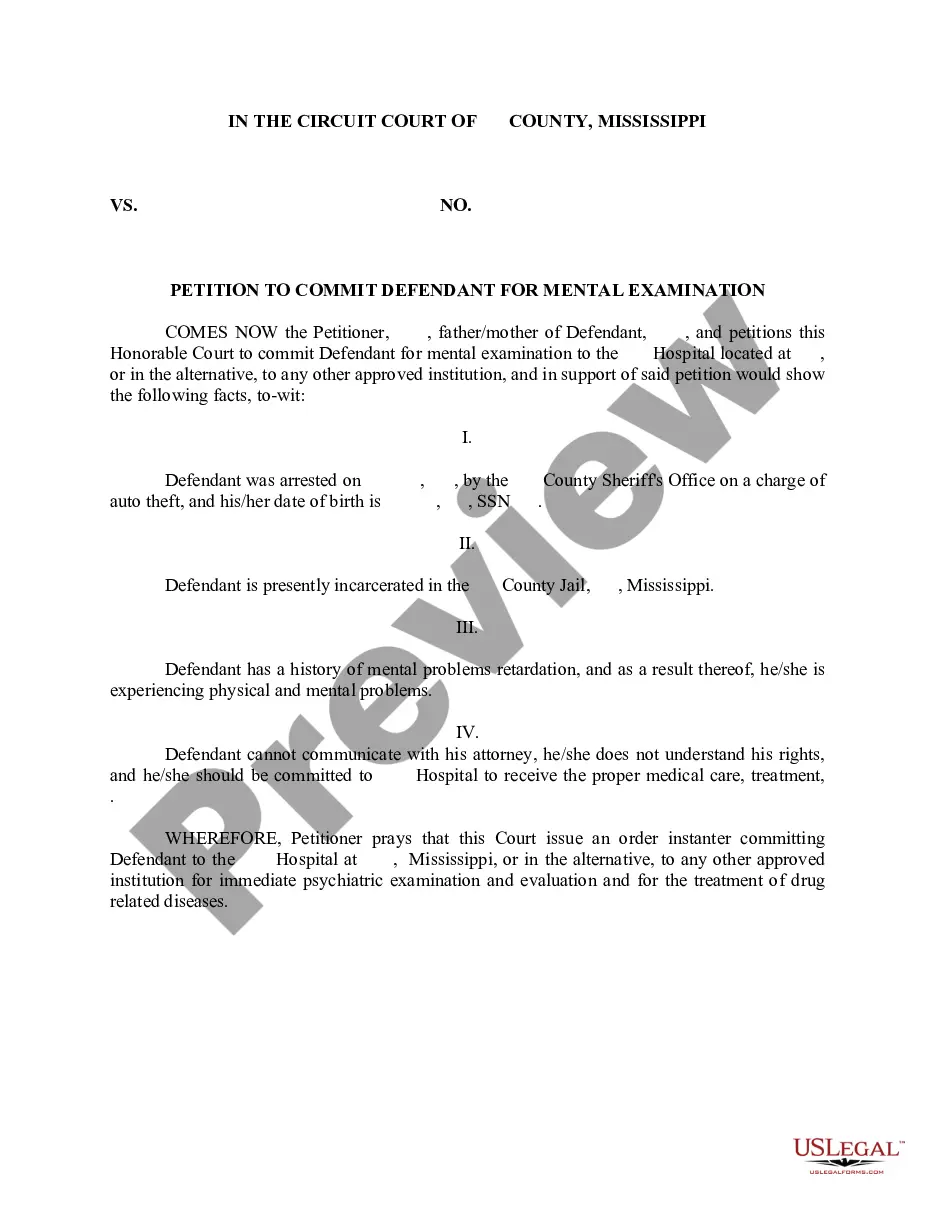
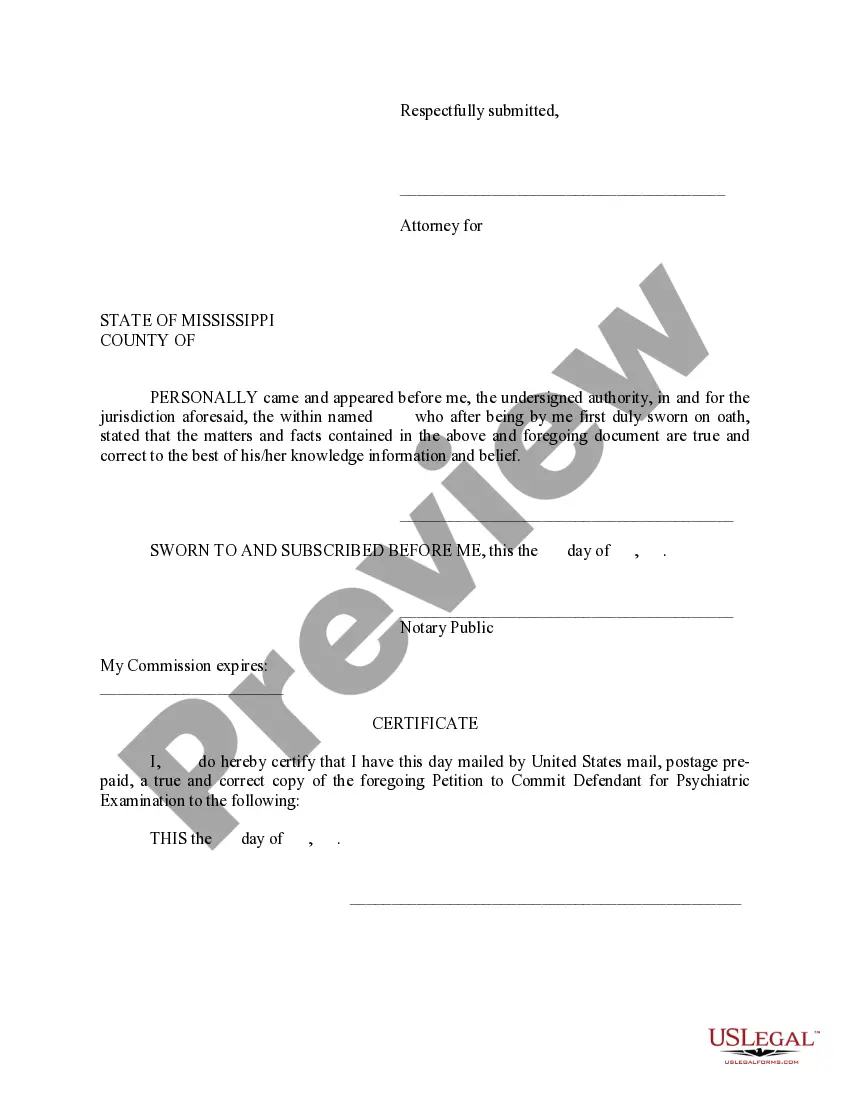
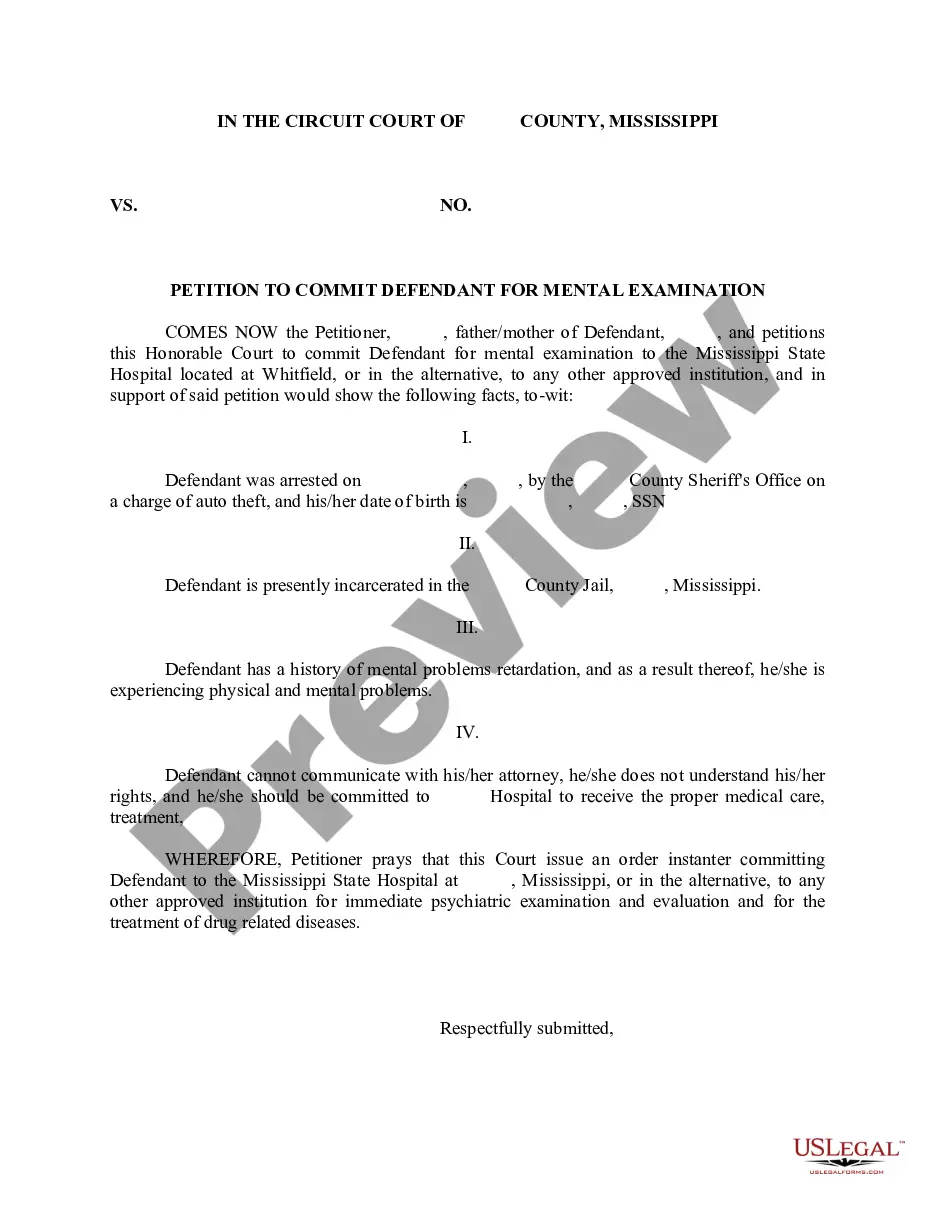
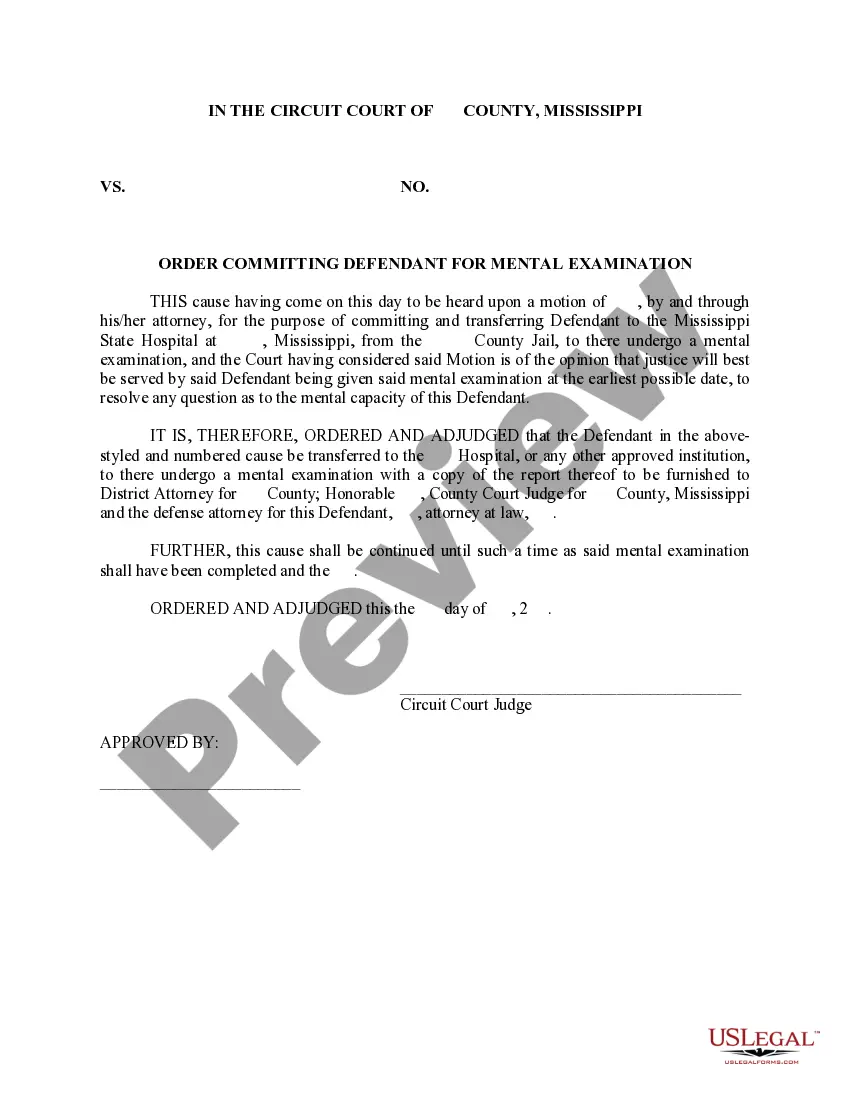
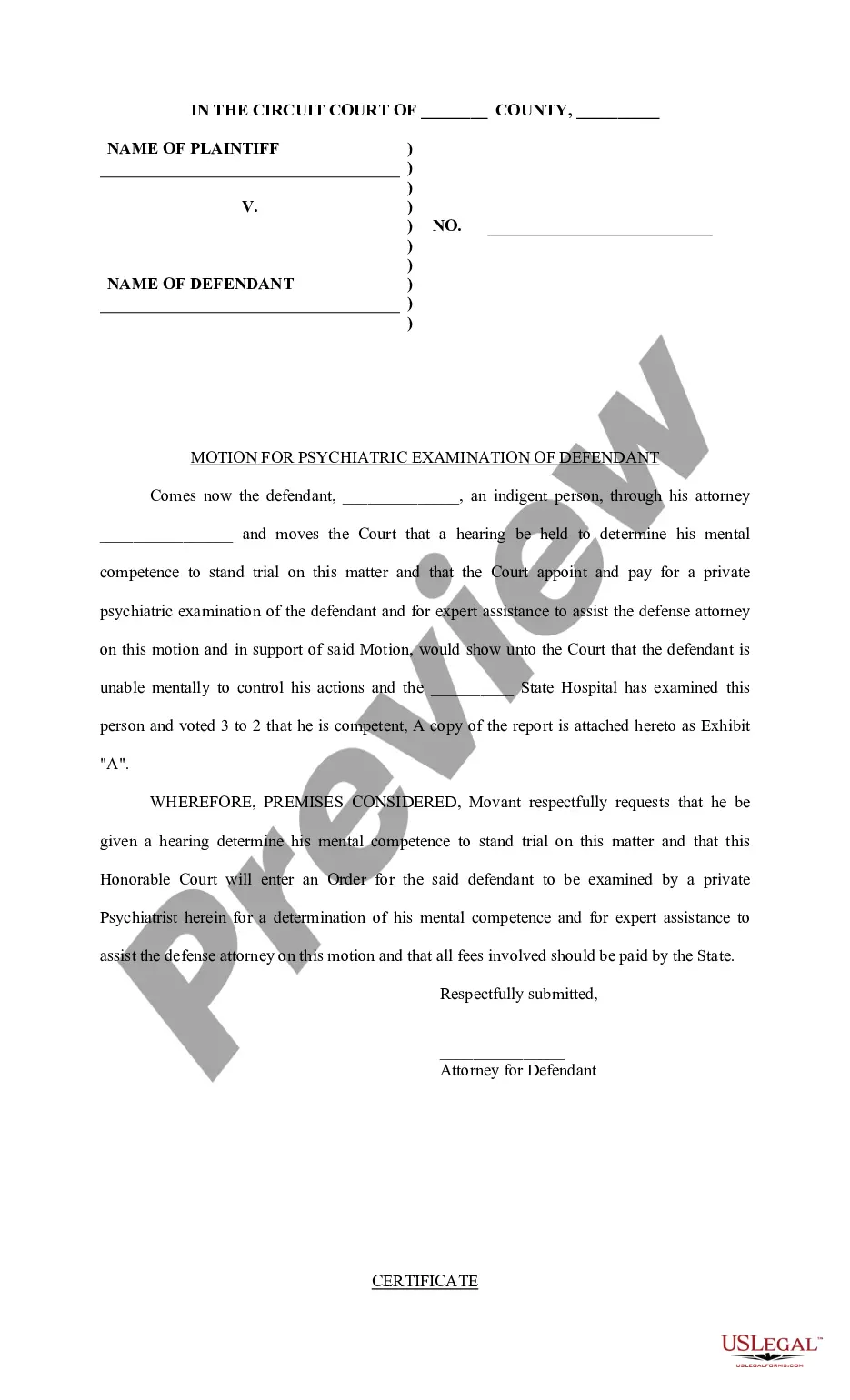
The Petition to Commit Defendant for Mental Examination is a legal document used to request the court to order a mental evaluation of an individual accused of a crime. This form is particularly relevant when the defendant exhibits signs of mental incapacity, preventing them from adequately understanding their legal situation or communicating with their attorney. This form helps to initiate a court proceeding for mental health evaluation, distinguishing it from other legal documents that might address different aspects of competency or defense.
Key components of this form
- Petitioner's information, including relation to the defendant
- Defendant's details, such as charge, date of birth, and Social Security Number
- Statement of the defendant's current incarceration and mental health history
- Request for commitment to a specific hospital or approved institution
- Signature of the petitioner and notary acknowledgment
Situations where this form applies
This form is needed when a defendant in a criminal case exhibits signs of mental illness or impairment that affect their ability to understand the charges against them or work with their legal counsel. It might be used when the defendant has had prior mental health issues or if their behavior raises concerns about their mental competency during legal proceedings. The petition seeks immediate psychiatric assessment to ensure that the defendant receives the necessary care.
Who needs this form
This form is intended for:
- Parents or guardians of defendants seeking a mental health evaluation
- Legal representatives who need to file for a mental examination on behalf of their clients
- Any party involved in a criminal case where mental competency may be in question
Instructions for completing this form
- Identify the petitioner and provide their relationship to the defendant.
- Enter the necessary details about the defendant, including arrest date and charges.
- Describe the defendant's mental health history and current state of incarceration.
- Request commitment to a specified hospital or institution for evaluation.
- Have the petitioner sign the form and ensure it is notarized for legal validity.
Notarization requirements for this form
This document requires notarization to meet legal standards. US Legal Forms provides secure online notarization powered by Notarize, allowing you to complete the process through a verified video call, available 24/7.
Get your form ready online
Our built-in tools help you complete, sign, share, and store your documents in one place.
Make edits, fill in missing information, and update formatting in US Legal Forms—just like you would in MS Word.
Download a copy, print it, send it by email, or mail it via USPS—whatever works best for your next step.
Sign and collect signatures with our SignNow integration. Send to multiple recipients, set reminders, and more. Go Premium to unlock E-Sign.
If this form requires notarization, complete it online through a secure video call—no need to meet a notary in person or wait for an appointment.
We protect your documents and personal data by following strict security and privacy standards.

Make edits, fill in missing information, and update formatting in US Legal Forms—just like you would in MS Word.

Download a copy, print it, send it by email, or mail it via USPS—whatever works best for your next step.

Sign and collect signatures with our SignNow integration. Send to multiple recipients, set reminders, and more. Go Premium to unlock E-Sign.

If this form requires notarization, complete it online through a secure video call—no need to meet a notary in person or wait for an appointment.

We protect your documents and personal data by following strict security and privacy standards.
Common mistakes
- Failing to include complete and accurate information about the defendant.
- Neglecting to provide necessary details regarding the mental health history.
- Omitting the signature or notary acknowledgment, which can invalidate the petition.
- Not specifying a hospital or institution for the evaluation.
Benefits of using this form online
- Easy access to professionally drafted legal forms tailored to meet legal requirements.
- Convenient download and ability to fill out the form without leaving home.
- Editable formats that allow customization to suit specific circumstances.
- Guidance provided to ensure all necessary information is included for legal compliance.
Main things to remember
- The Petition to Commit Defendant for Mental Examination is essential for addressing mental competence issues in criminal cases.
- Accurate completion of this form is crucial for legal processing and the well-being of the defendant.
- This form requires notarization and adherence to state-specific regulations.
- Using this form online streamlines the process and helps avoid common mistakes.
Looking for another form?






Form popularity
FAQ
Involuntary commitment, civil commitment, or involuntary hospitalization (also known informally as sectioning or being sectioned in some jurisdictions, such as the United Kingdom) is a legal process through which an individual who is deemed by a qualified agent to have symptoms of severe mental disorder is detained in
Involuntary commitment should be limited to persons who pose a serious risk of physical harm to themselves or others in the near future. Under no circumstances should involuntary commitment be imposed upon someone based upon a risk of harm to property or a risk of non-physical harm.
Any citizen of Mississippi can initiate the process by submitting a sworn statement requesting psychiatric treatment for that person. The statement must include strong evidence that the person is dangerous to him or herself or to others by reason of mental illness.
Commitment Process Any citizen of Mississippi can initiate the process by submitting a sworn statement requesting psychiatric treatment for that person. The statement must include strong evidence that the person is dangerous to him or herself or to others by reason of mental illness.
Call 1-800-273-TALK or text MHA to 741741 if you are in crisis. Look up your local MHA affiliate for services in your area. Find a therapist. Find a support group. Plan for crisis by setting up a Psychiatric Advance Directive. Is hospitalization necessary? Read more about inpatient options.
A capacity hearing, which is also called a Riese hearing, may be held to determine whether you can refuse treatment with medications.The hearing officer will determine whether you have the capacity to consent to or refuse medication as a form of treatment.
The criteria for involuntary hospitalization are as follows: patients must exhibit dangerous behavior toward themselves or others, they must be helpless and unable to provide for their basic daily needs, and there is a danger of essential harm to their mental health if they do not receive mental care.
Chapter 51, Wisconsin Statutes Provides legal procedures for voluntary and involuntary admission, treatment and rehabilitation of individuals (adults and minor children) with mental illness, developmental disability, drug dependency, or alcoholism.
The laws for Treatment Orders vary by state, but generally speaking, a mental health professional can apply for an order, which must then be approved by a legal authority such as a magistrate or tribunal.