Maine Spoliation
About this form
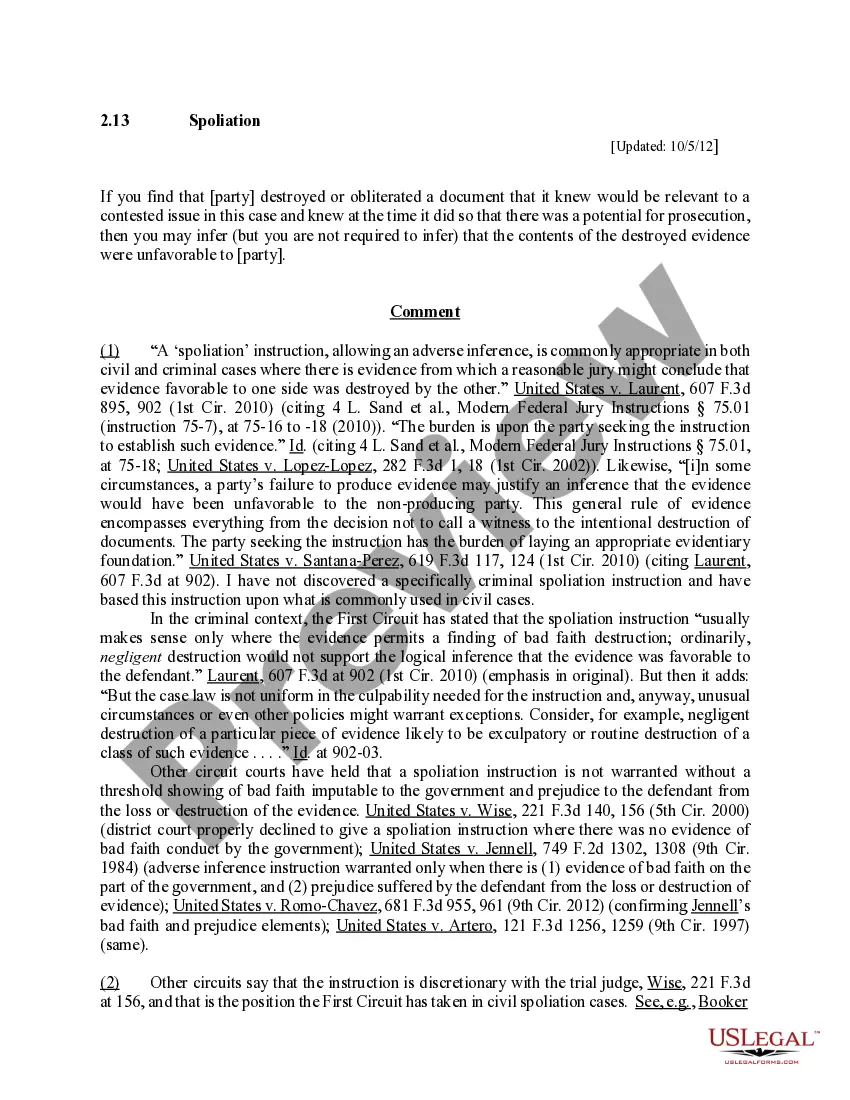
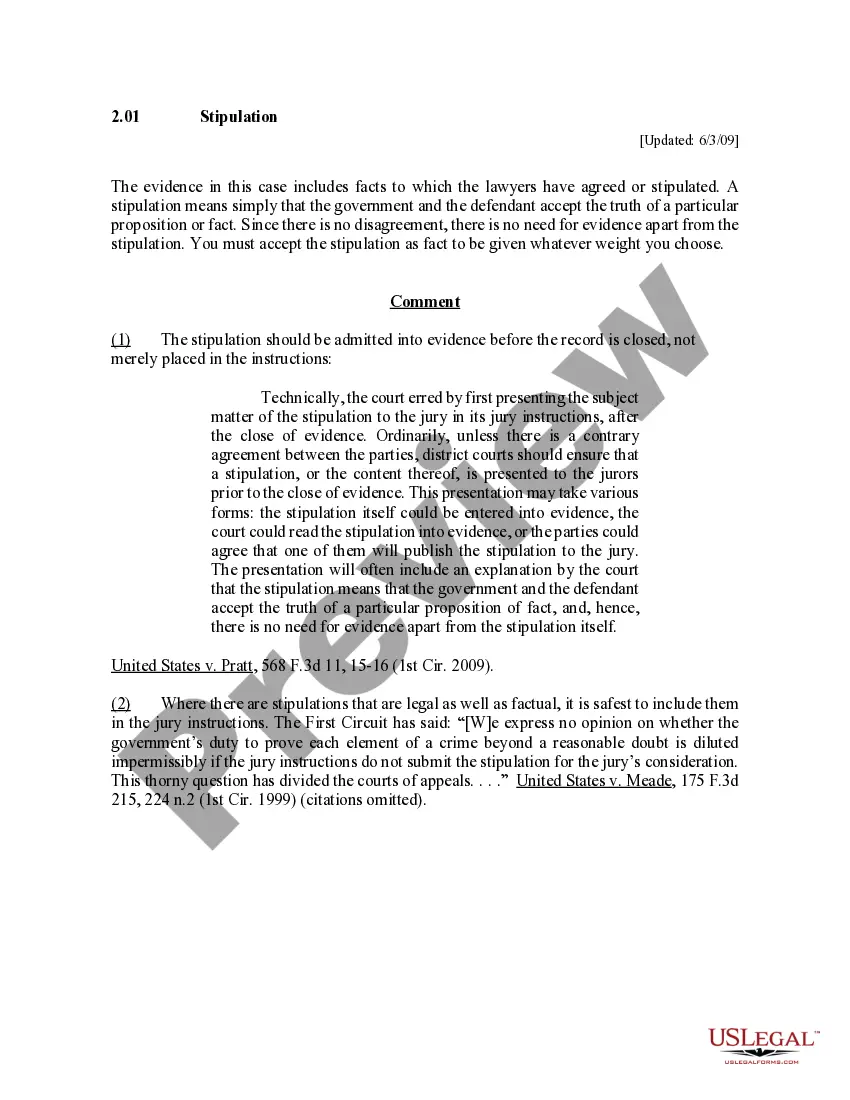
The Spoliation instruction form guides juries in cases where evidence has been destroyed or concealed. It allows jurors to infer that the destroyed evidence would have been unfavorable to the party responsible for its destruction. This form is crucial in both civil and criminal contexts, differing from other legal instructions by specifically addressing the implications of spoliation, or the act of destroying evidence, during legal proceedings.
Form components explained
- Definition of spoliation and its legal implications.
- Criteria for determining when to issue a spoliation instruction.
- Guidelines for establishing bad faith in evidence destruction.
- Conditions under which adverse inference may be drawn.
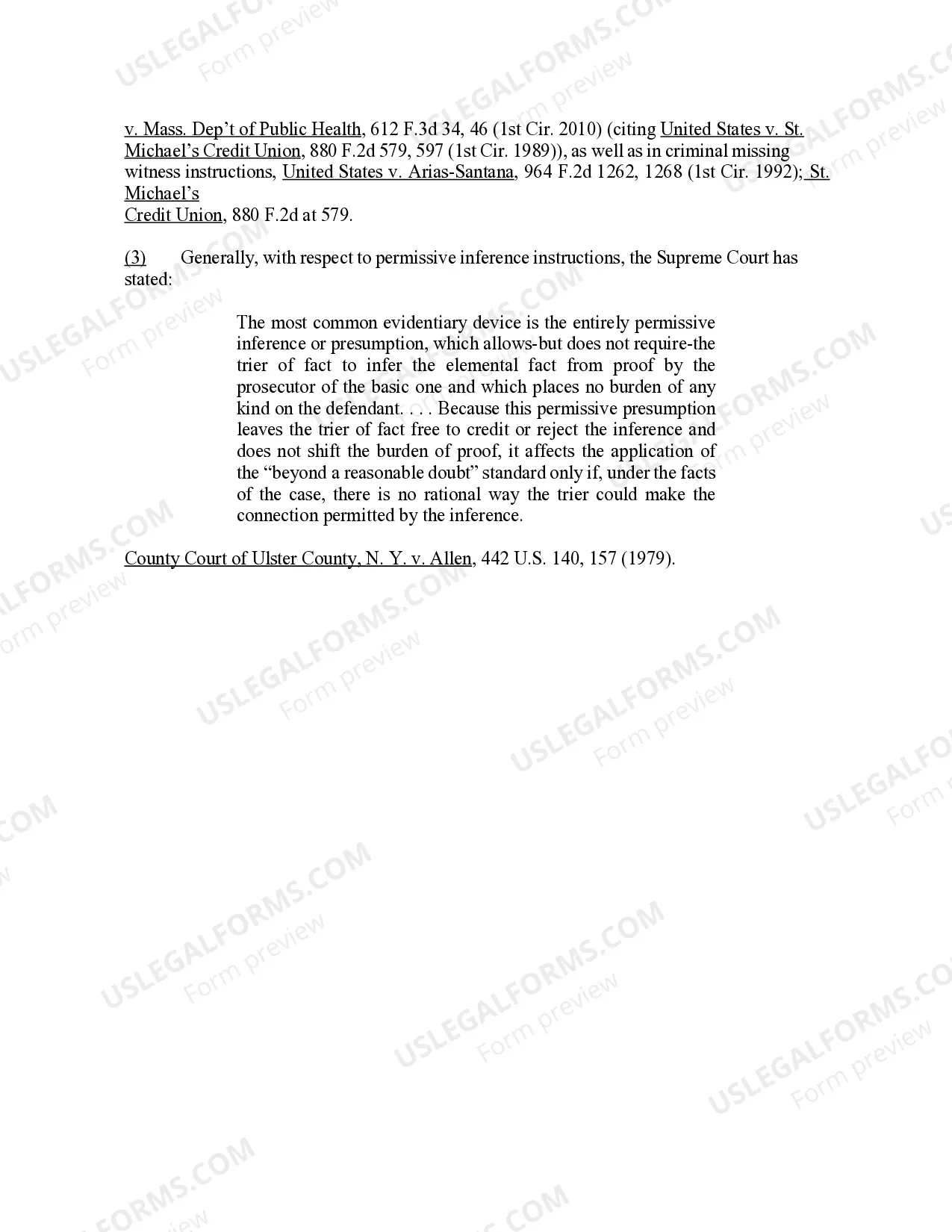
- References to relevant case law for context and support.
Common use cases
This form is typically used during criminal proceedings when there is reason to believe that a party destroyed evidence relevant to the case. Situations can include when a defendant or claimant has failed to produce evidence that could potentially exonerate or favor them, leading to an inference that the evidence would have been detrimental to their case.
Who this form is for
- Attorneys representing clients in criminal cases.
- Judges presiding over trials that involve evidence spoliation.
- Litigants involved in disputes where evidence destruction is contested.
How to complete this form
- Identify the parties involved in the case.
- Determine if evidence has been destroyed or concealed, noting the potential impact on the case.
- Establish if the party that destroyed the evidence acted in bad faith.
- Include references to relevant case law to support the grounds for spoliation.
- Finalize by indicating the circumstances under which the instruction should apply, allowing for jurors' adverse inference.
Notarization requirements for this form
This form usually doesn’t need to be notarized. However, local laws or specific transactions may require it. Our online notarization service, powered by Notarize, lets you complete it remotely through a secure video session, available 24/7.
Get your form ready online
Our built-in tools help you complete, sign, share, and store your documents in one place.
Make edits, fill in missing information, and update formatting in US Legal Forms—just like you would in MS Word.
Download a copy, print it, send it by email, or mail it via USPS—whatever works best for your next step.
Sign and collect signatures with our SignNow integration. Send to multiple recipients, set reminders, and more. Go Premium to unlock E-Sign.
If this form requires notarization, complete it online through a secure video call—no need to meet a notary in person or wait for an appointment.
We protect your documents and personal data by following strict security and privacy standards.

Make edits, fill in missing information, and update formatting in US Legal Forms—just like you would in MS Word.

Download a copy, print it, send it by email, or mail it via USPS—whatever works best for your next step.

Sign and collect signatures with our SignNow integration. Send to multiple recipients, set reminders, and more. Go Premium to unlock E-Sign.

If this form requires notarization, complete it online through a secure video call—no need to meet a notary in person or wait for an appointment.

We protect your documents and personal data by following strict security and privacy standards.
Avoid these common issues
- Failing to provide adequate evidence of bad faith.
- Not citing relevant case law to support the spoliation claim.
- Neglecting to specify how the lost evidence is potentially unfavorable to the other party.
Why use this form online
- Convenience of accessing and downloading the form anytime.
- Editability allows for customization based on specific case needs.
- Reliable templates crafted by licensed attorneys to ensure legal validity.
Legal use & context
- Spoliation instructions are permitted in both civil and criminal cases.
- Legal standards vary by jurisdiction regarding the requirements of bad faith.
- Failure to preserve evidence can impact the outcome of a trial significantly.
Key takeaways
- The Spoliation instruction is critical in cases involving destroyed evidence.
- Parties must demonstrate bad faith to establish a foundation for the instruction.
- Juries can draw adverse inferences based on evidence destruction when appropriate.
Looking for another form?



Form popularity
FAQ
Courts generally have relied on four affirmative defenses when denying a motion for sanctions or refusing to invoke the spoliation inference. They are: (1) the victim's behavior; (2) privilege; (3) lack of custody or control; and (4) destruction pursuant to routine document management program.
Consequences of Spoliation The most common penalty for spoliation of evidence is an adverse inference charge. This basically means that a finder of fact, like a jury, is entitled to take a negative inference against a party because that party destroyed evidence.
To conclude that a party spoliated evidence, the court must find that (1) the spoliating party had a duty to reasonably preserve evidence, and (2) the party intentionally or negligently breached that duty by failing to do so.
Some examples of these potential sanctions include, but may not be limited to: Finding of contempt against the wrongful party; Designating facts as established by the prevailing party; Prohibiting the wrongful party from supporting and/or opposing claims and/or defenses; Dismissing the action or proceeding;
To establish a claim for spoliation by a non-party, the plaintiff must prove six elements: (1) existence of a potential civil action, (2) a legal or contractual duty to preserve evidence which is relevant to the potential civil action, (3) destruction of that evidence, (4) significant impairment and the ability to
Spoliation is "the intentional destruction, mutilation, alteration, or concealment of evidence, usually a document." 6 The spoliation doctrine is invoked when a party alleges that its opposing party has caused a crucial piece of evidence to be unavailable.
In response to spoliation, courts have developed several remedies against spoliators including adverse inference jury instructions, monetary or evidentiary sanctions, criminal penalties and possibly a separate spoliation tort.