Massachusetts Heirship Affidavit - Descent
What is this form?
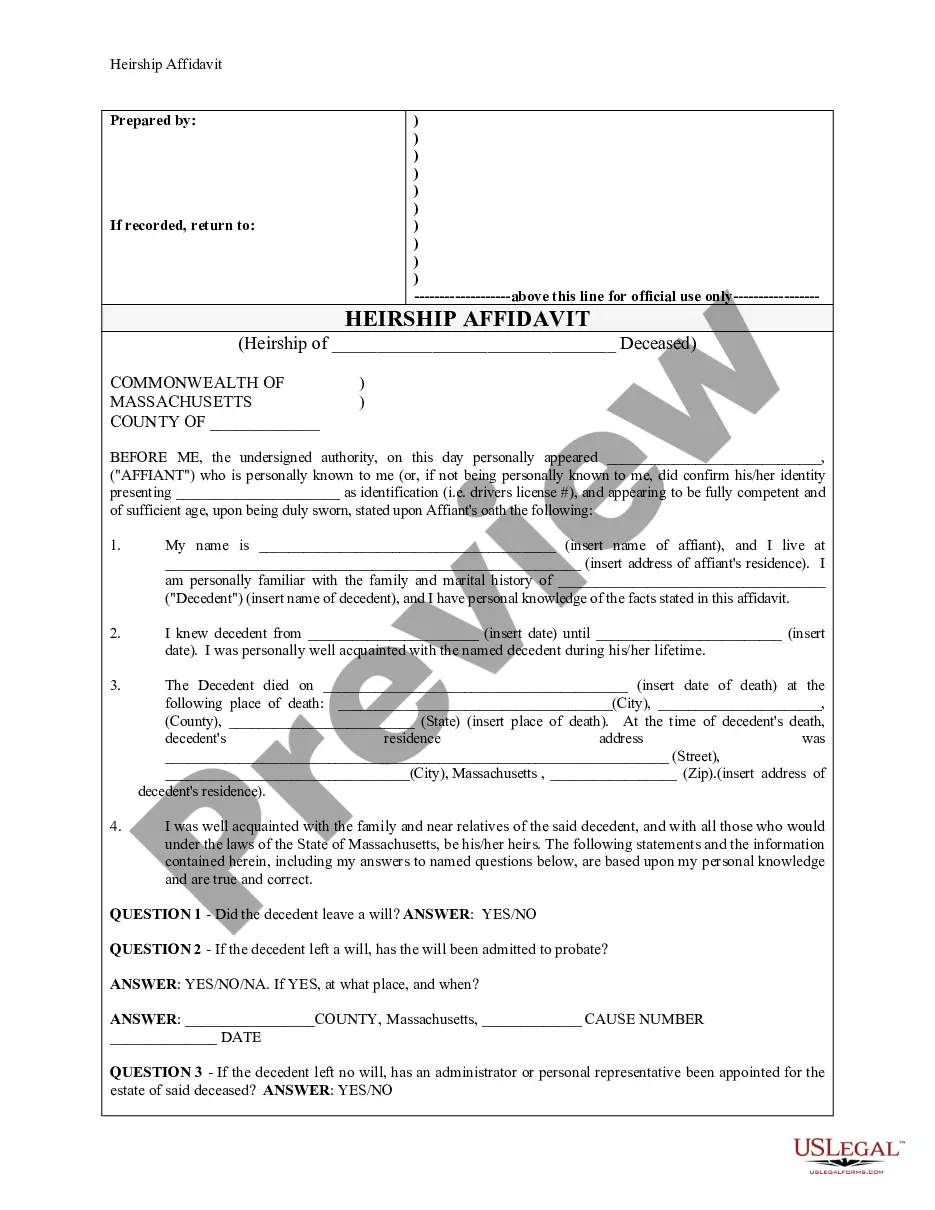
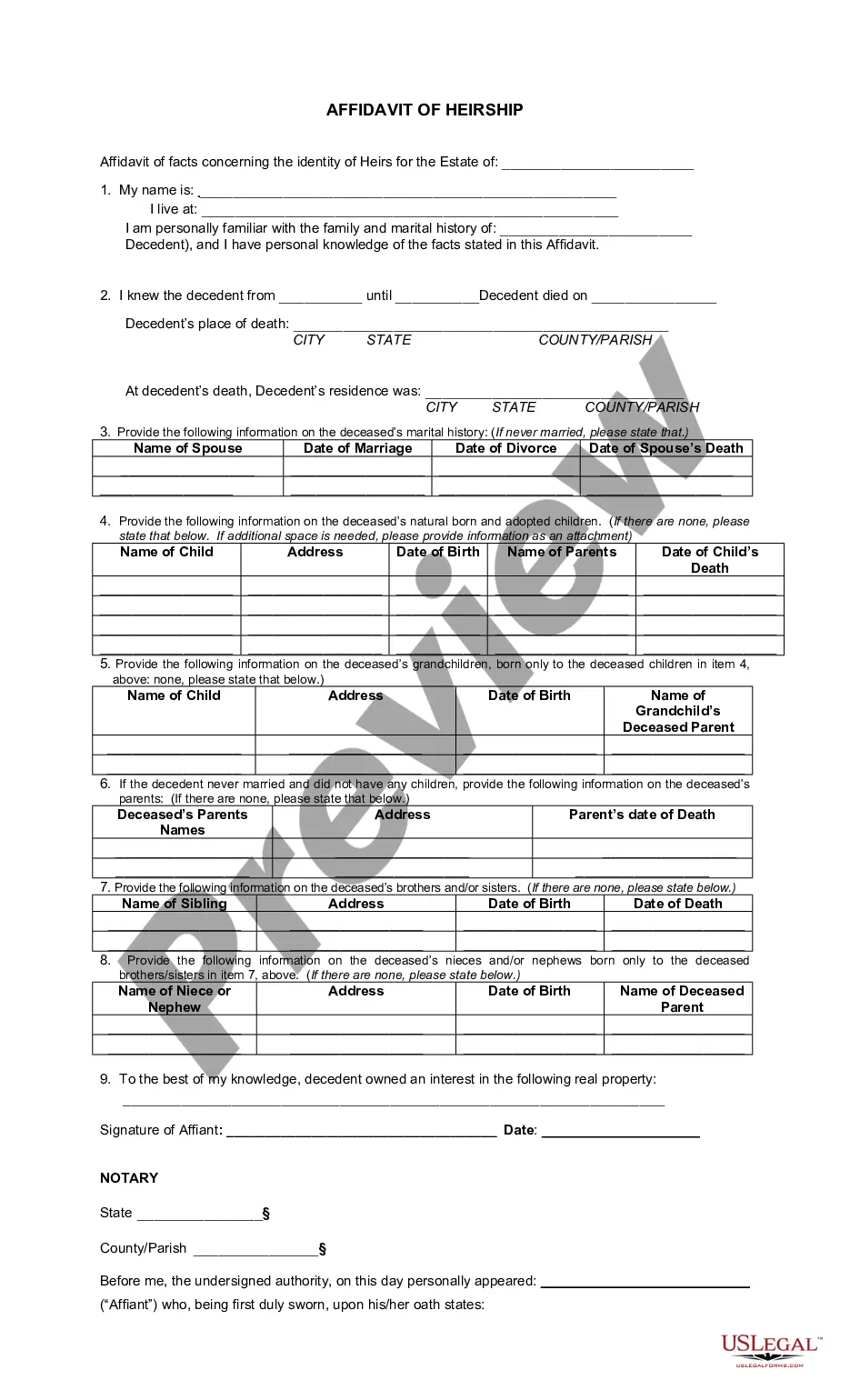
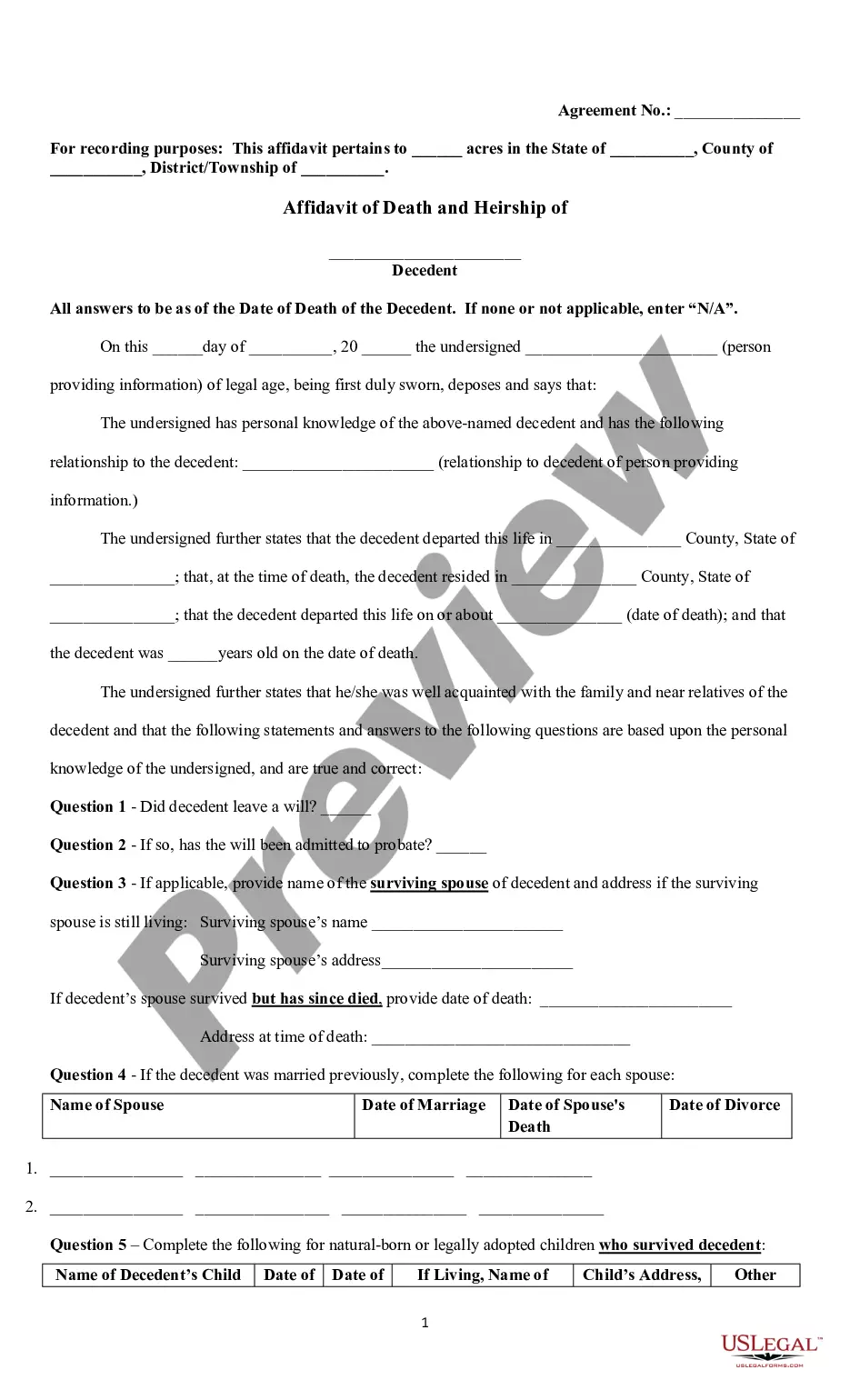
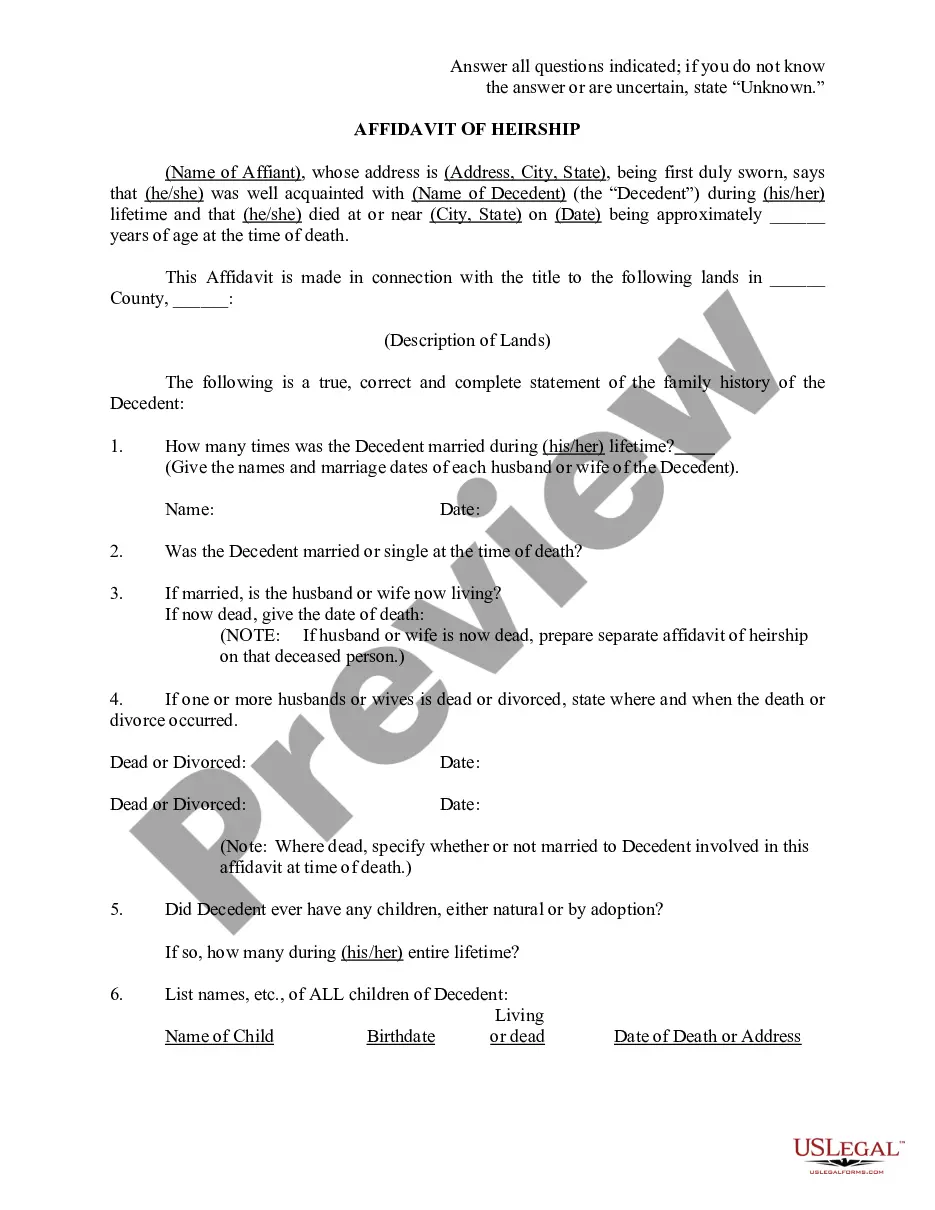
The Heirship Affidavit - Descent is a legal document used to establish the heirs of a deceased individual, particularly when no will exists. It serves to clarify the rightful heirs for both personal and real property ownership. This form differs from other forms of affidavits by its specific focus on determining heirs, which can be essential in property transactions or settling estate matters.
Key components of this form
- Affiant's personal information including name and residence.
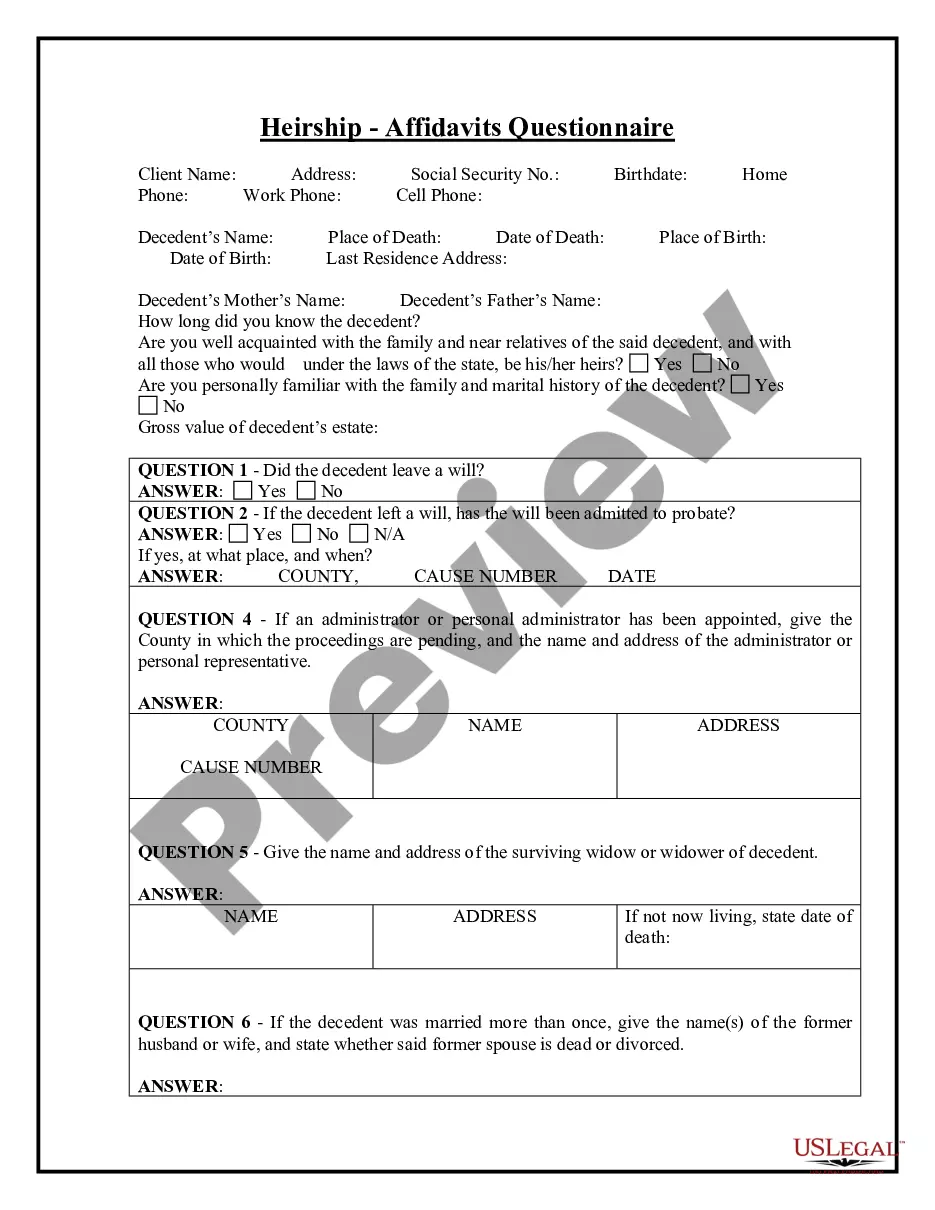
- The decedent's details such as name, date of death, and residence.
- Questions regarding the existence of a will and probate status.
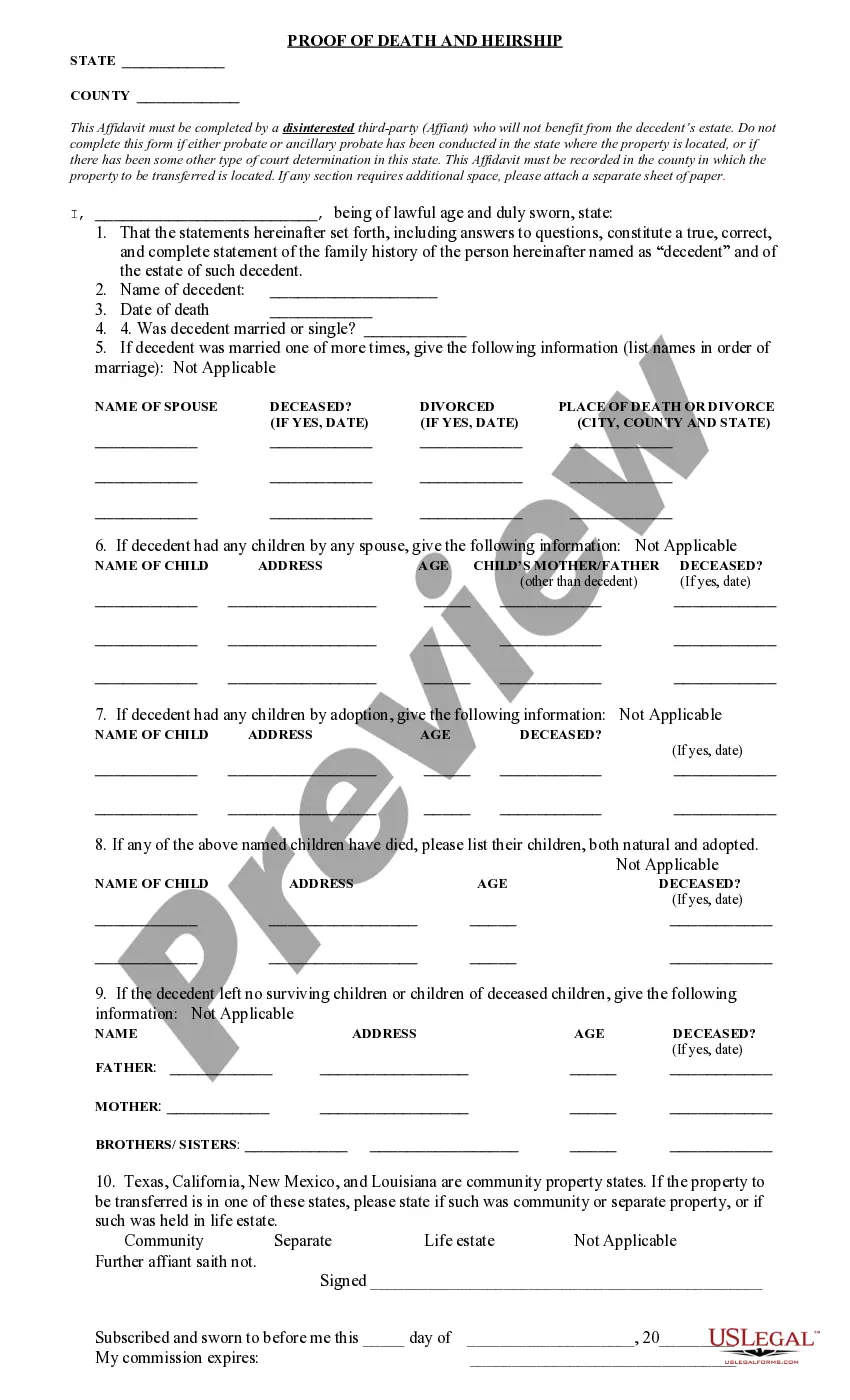
- Information on surviving relatives and heirs, including children, spouse, and parents.
- Details about any debts owed by the decedent.
- Affiant's signature and a notary public section for validation.


When this form is needed
This form is commonly utilized in various scenarios, such as when a person passes away without leaving a will. It is particularly important when heirs need to demonstrate their right to inherit property or assets. For example, if an heir wishes to sell a property that belonged to the deceased, they can use this affidavit to legally establish their claim to the property during the transaction process.
Intended users of this form
- Individuals who are heirs to a deceased personâs estate.
- Affiants who have personal knowledge of the family and marital history of the deceased.
- Those needing to resolve property ownership issues after someone's death.
- People involved in estate management or probate procedures in Massachusetts or similar jurisdictions.
How to complete this form
- Identify the affiant by entering their name and address at the top of the form.
- Provide the decedent's name and details, including the date and place of death.
- Answer questions regarding the existence of a will, probate status, and any surviving relatives.
- List any real estate owned by the decedent and answer questions about debts owed by them.
- Ensure the affiant signs the affidavit and it is notarized for authenticity.
Notarization guidance
This form must be notarized to be legally valid. US Legal Forms provides secure online notarization powered by Notarize, allowing you to complete the process through a verified video call.
Get your form ready online
Our built-in tools help you complete, sign, share, and store your documents in one place.
Make edits, fill in missing information, and update formatting in US Legal Forms—just like you would in MS Word.
Download a copy, print it, send it by email, or mail it via USPS—whatever works best for your next step.
Sign and collect signatures with our SignNow integration. Send to multiple recipients, set reminders, and more. Go Premium to unlock E-Sign.
If this form requires notarization, complete it online through a secure video call—no need to meet a notary in person or wait for an appointment.
We protect your documents and personal data by following strict security and privacy standards.
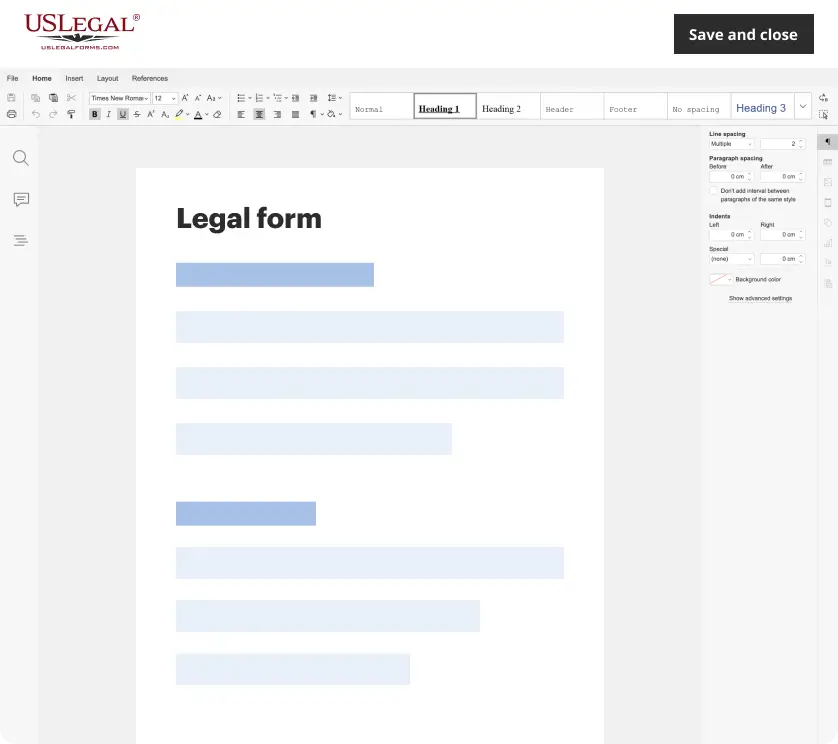
Make edits, fill in missing information, and update formatting in US Legal Forms—just like you would in MS Word.
Download a copy, print it, send it by email, or mail it via USPS—whatever works best for your next step.
Sign and collect signatures with our SignNow integration. Send to multiple recipients, set reminders, and more. Go Premium to unlock E-Sign.

If this form requires notarization, complete it online through a secure video call—no need to meet a notary in person or wait for an appointment.

We protect your documents and personal data by following strict security and privacy standards.
Mistakes to watch out for
- Failing to provide complete and accurate information about the decedent and heirs.
- Leaving questions unanswered or incorrectly marking "yes" or "no."
- Not obtaining notarization, which could invalidate the affidavit.
- Neglecting to keep a copy of the completed form for personal records.
Why complete this form online
- Convenient access to legally vetted templates drafted by licensed attorneys.
- Easy-to-follow instructions for completion, reducing the likelihood of errors.
- The ability to edit the document as necessary before finalization.
- Secure downloading and storage of your completed legal documents.
Main things to remember
- The Heirship Affidavit - Descent is crucial for establishing heirs and transferring property when a will is not present.
- Clear and complete information is essential for the affidavit's effectiveness and legal acceptance.
- Notarization of the affidavit is required for it to hold legal weight in property transactions.
- This form simplifies the process of clarifying inheritance rights without the need for probate court, making it a valuable tool for heirs.
Looking for another form?



Form popularity
FAQ
An affidavit of heirship is needed to transfer a deceased person's interest in real or personal property to his or her heirs when the decedent dies without leaving a last will and testament or without disposing of all of his or her property in a will.
Degrees of kinship are used to identify heirs at law in the next of kin category ONLY if there are no members in the first four groups of heirs: (1) surviving spouse, (2) children and their descendants, (3) parents, and (4) brothers/sisters and their descendants.
If you die intestate, according to Massachusetts intestacy law, everything goes to your next of kin. Your next of kin are the people who have the closest relation to you. If you're married, then that's your spouse. If you're not married, your closest blood relations or equivalent, will inherit your property.
"If you die without a will in Massachusetts, your assets will go to your closest relatives under state 'intestate succession' laws.
When a person who owns real property dies intestate, and there is no survivor mentioned in the deed, the heirs of the decedent, must file an affidavit of descent to establish their chain of title to the property. This affidavit, is known as an affidavit of descent.
An heir-at-law is anyone who's entitled to inherit from someone who dies without leaving a last will and testament or other estate plans.
"If you die without a will in Massachusetts, your assets will go to your closest relatives under state 'intestate succession' laws.
An heir is a person who is legally entitled to collect an inheritance, when a deceased person did not formalize a last will and testament. Generally speaking, heirs who inherit the property are children, descendants or other close relatives of the decedent.
Heirs at law are persons entitled to receive the Decedent's property under the intestacy succession laws if there is no will. For dates of death on or after March 31, 2012, the Massachusetts Uniform Probate Code, G. L.