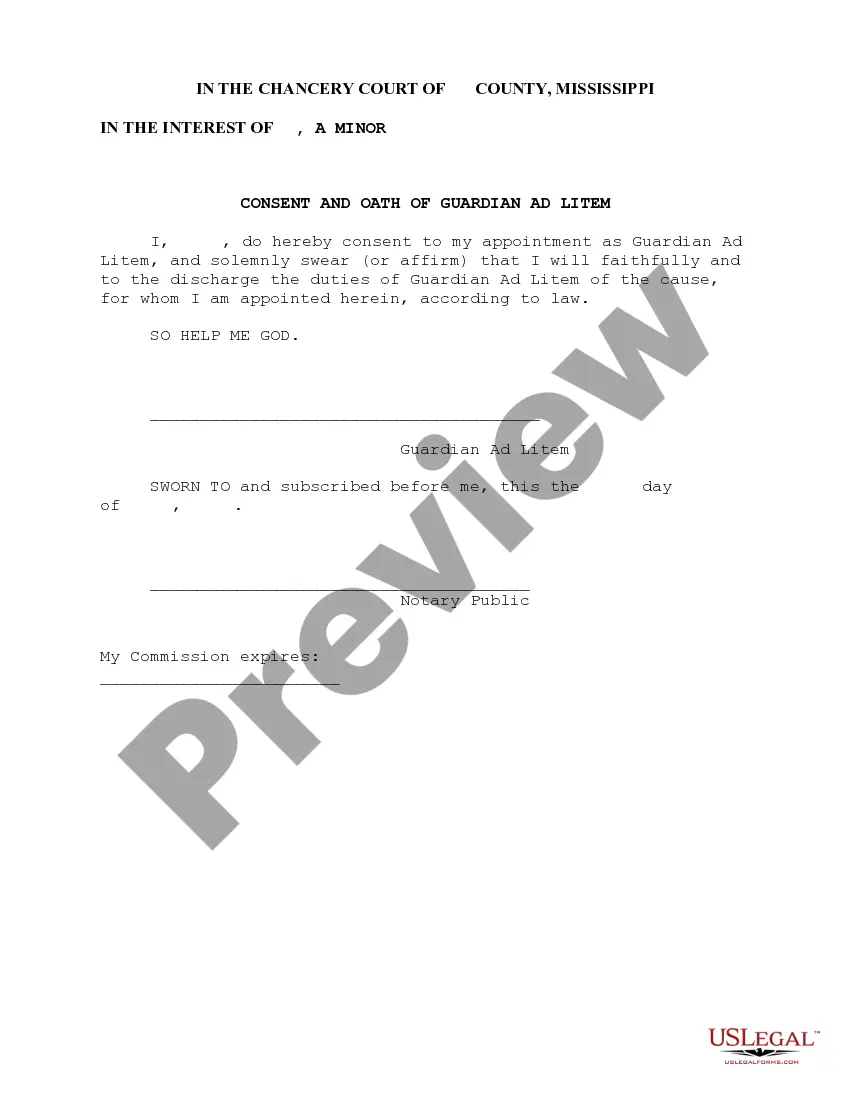
Louisiana Affidavit of Identity
About this form
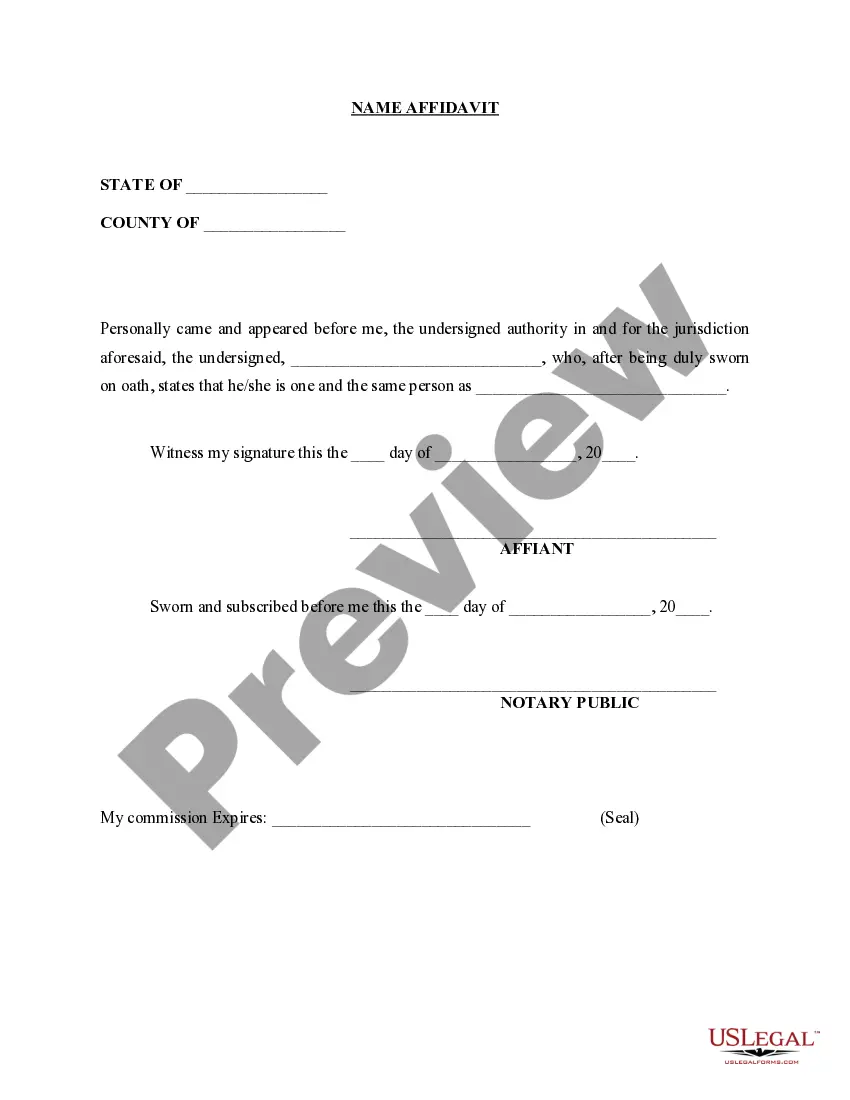
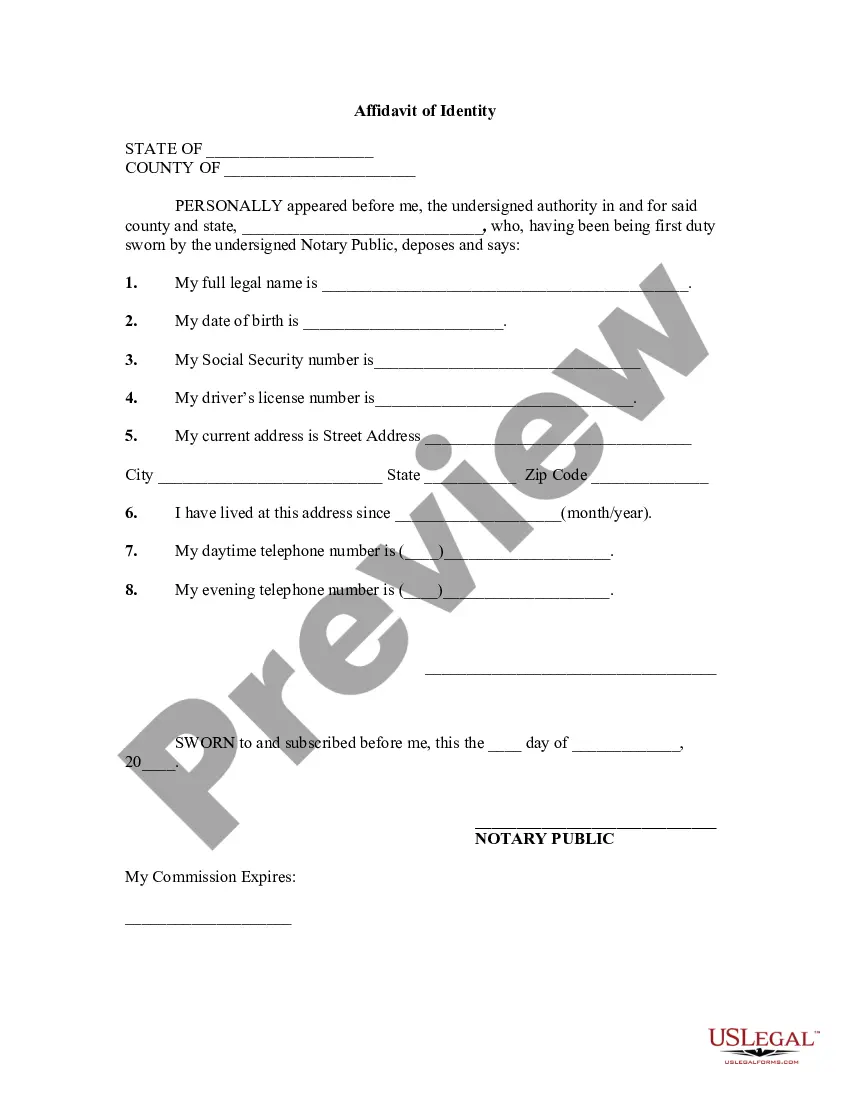
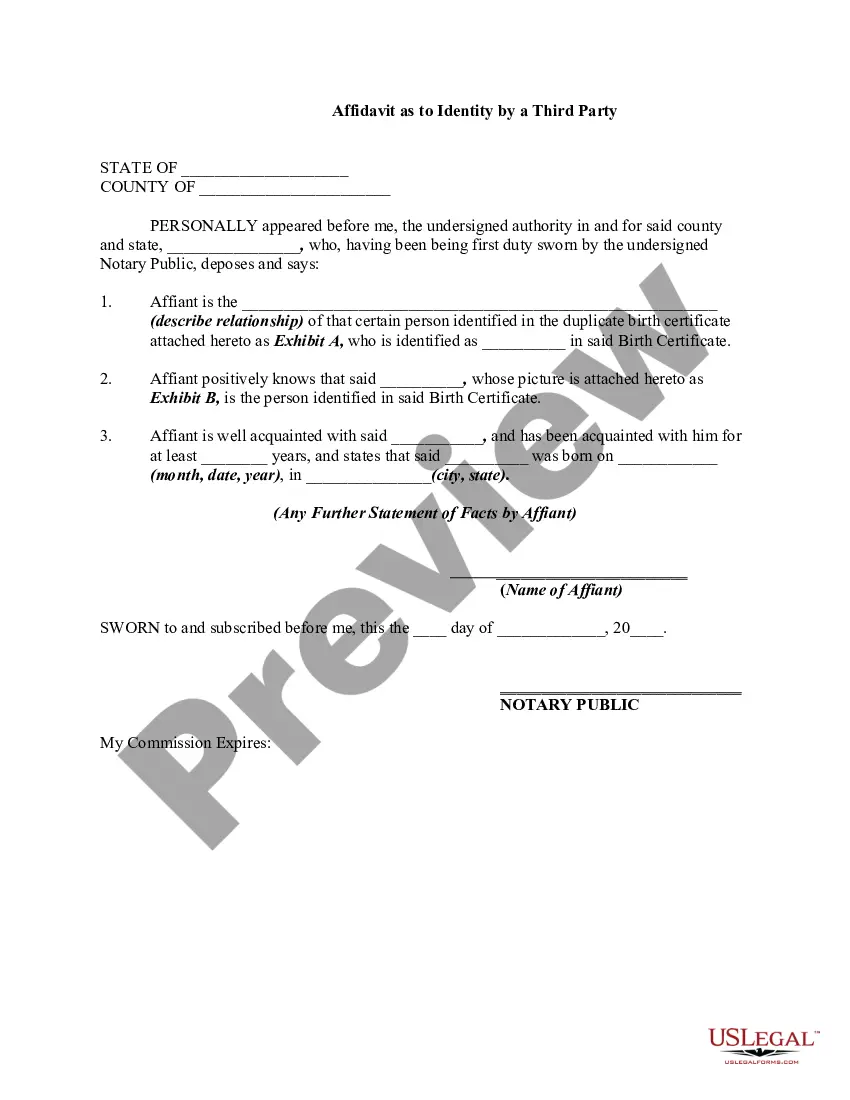
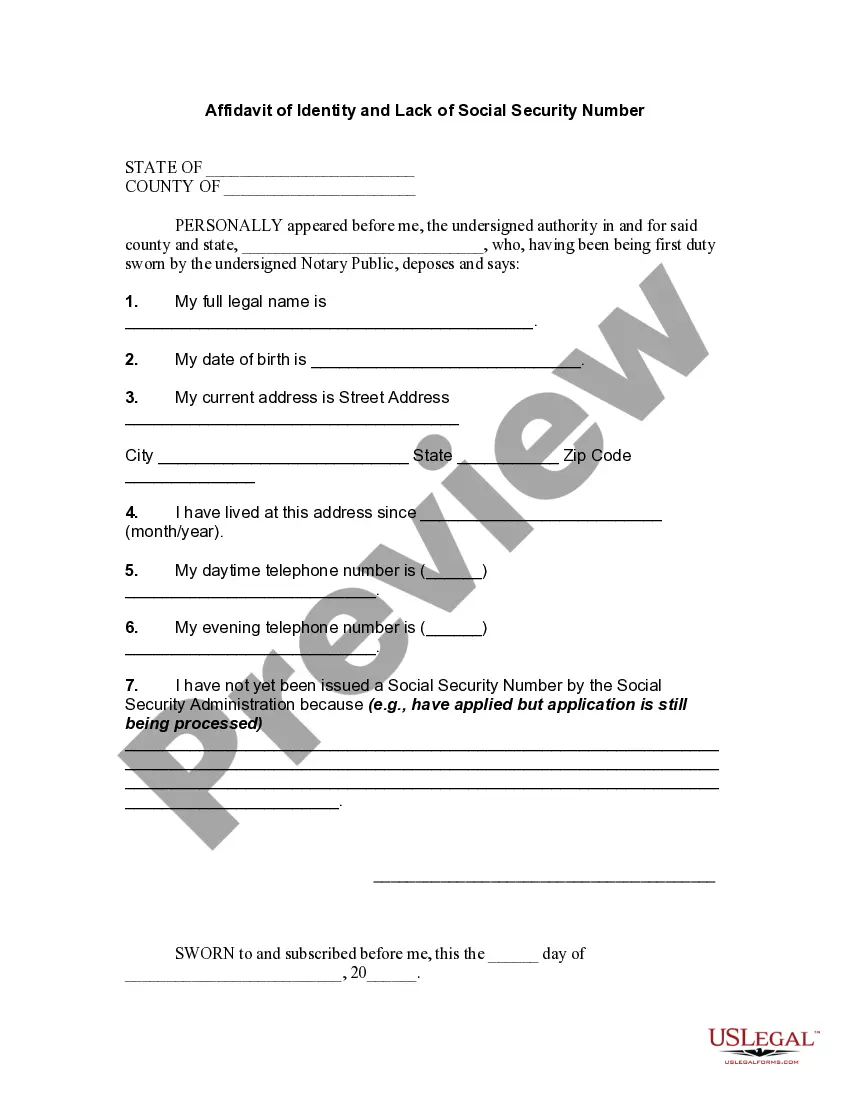
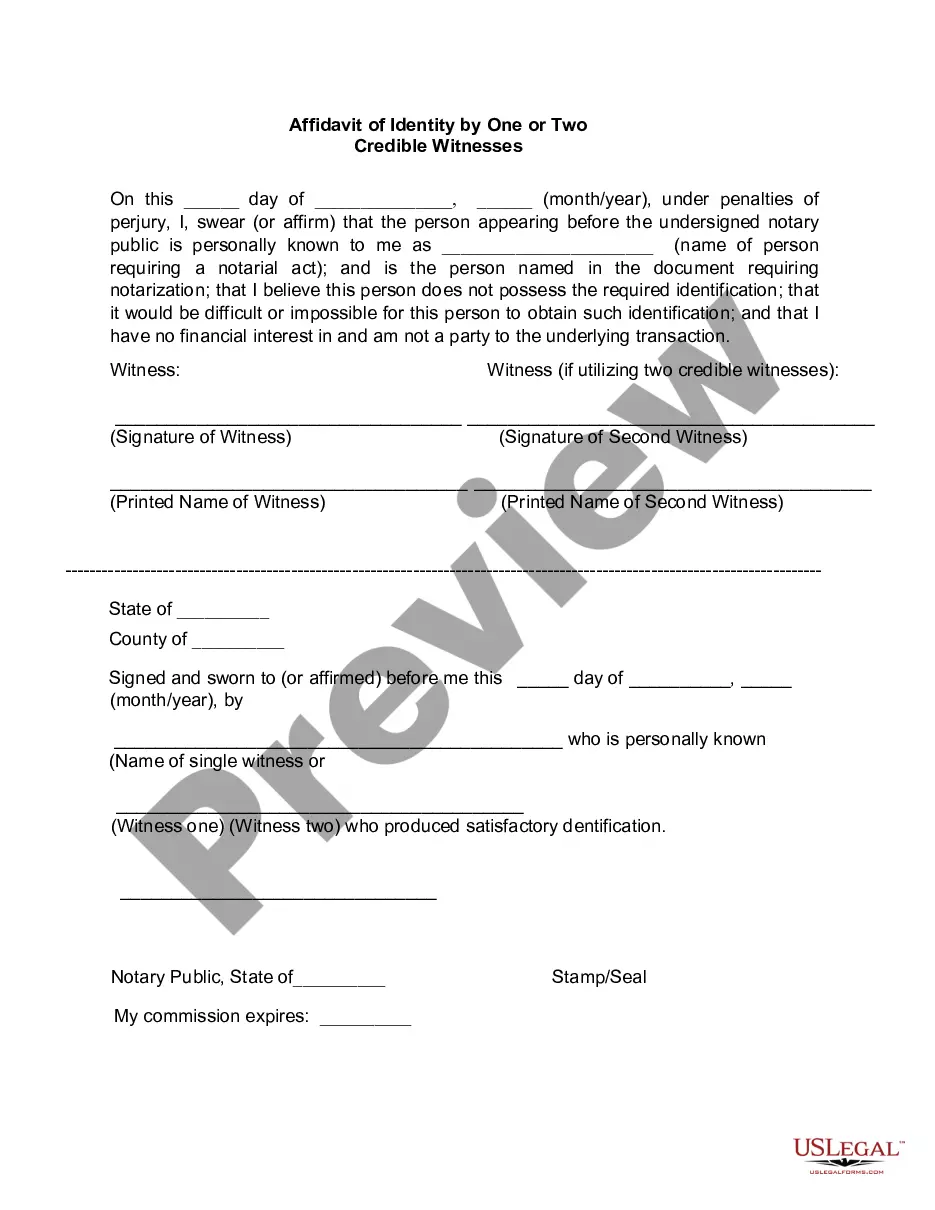
The Affidavit of Identity is a legal document used in Louisiana that helps distinguish an individual from a judgment debtor who shares a similar name. This affidavit confirms that the affiant is not the person against whom the judgment was made, thereby protecting their property and rights. Unlike a regular identification affidavit, this form specifically addresses concerns related to legal judgments and liens.
What’s included in this form
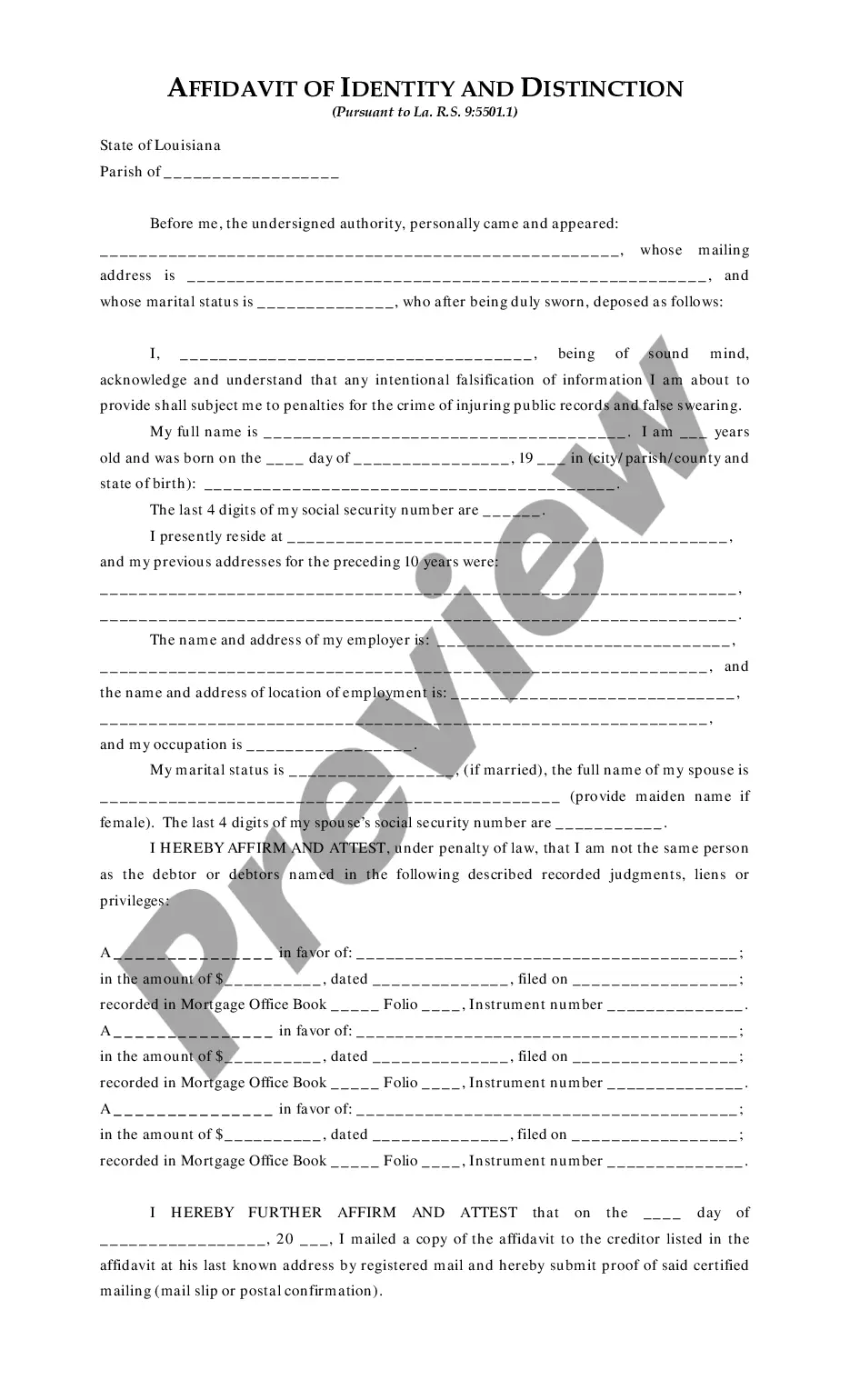
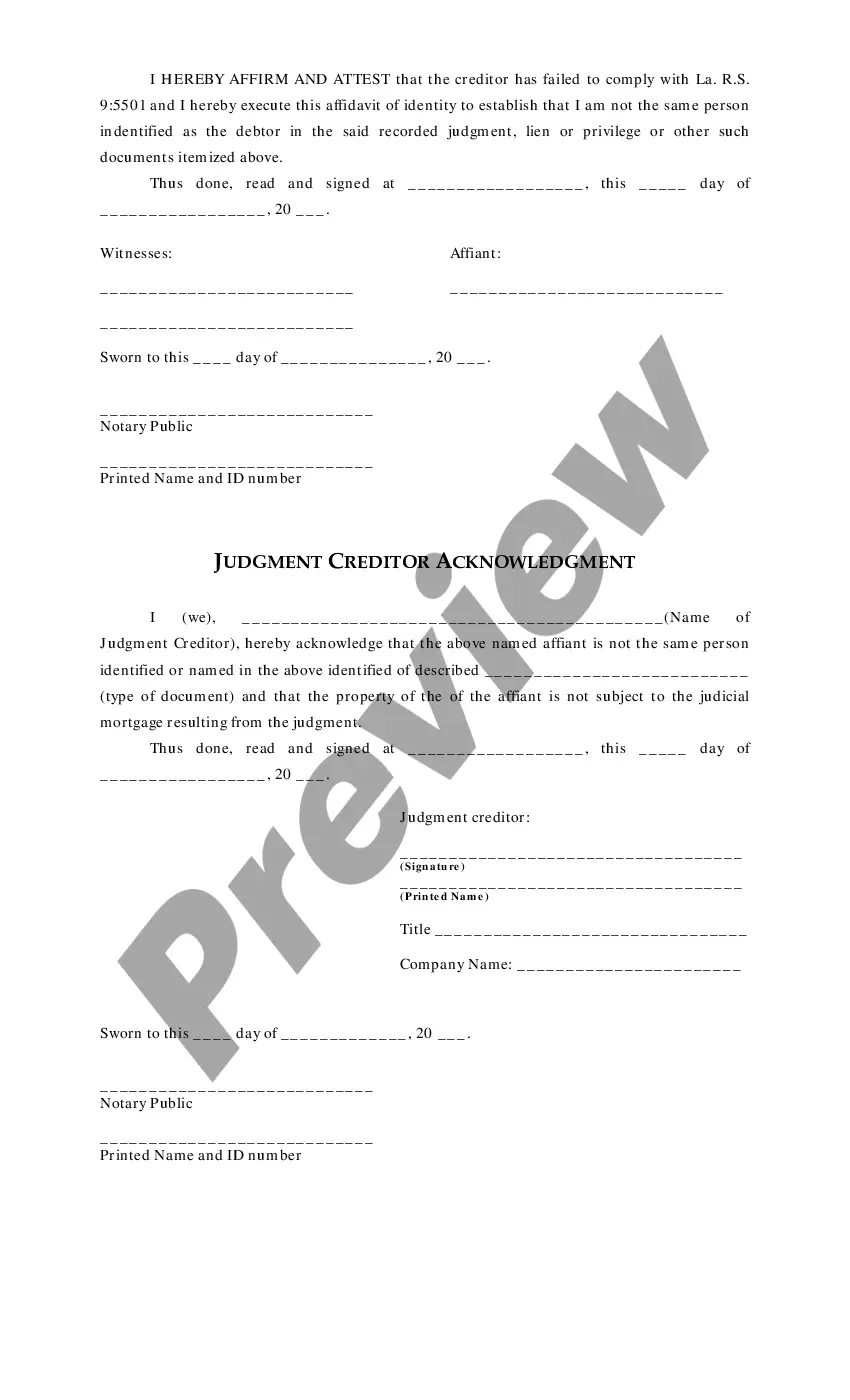
- Affiant's full name and personal information, including addresses and social security number.
- Details regarding the judgment or lien being addressed, including amounts and filing information.
- Statement affirming that the affiant is not the same as the judgment debtor.
- Verification of mailing the affidavit to the judgment creditor via registered mail.
- Witness and notary acknowledgment sections for legal validation.
Common use cases
This form is typically used when an individual is facing confusion or complications related to a legal judgment or lien against another person with a similar name. It is essential when trying to assert that you are not the debtor involved in any recorded judgments or liens that might affect your property ownership or credit status.
Who should use this form
This affidavit is intended for:
- Property owners or individuals who share a name with a judgment debtor.
- Anyone seeking to clarify their identity in relation to a legal judgment that affects their property.
- Individuals needing to protect their rights and ownership against false liens or judgments.
Completing this form step by step
- Provide your full name, current address, and some personal information such as age and social security number.
- List the judgments or liens you are distinguishing yourself from, including amounts and filing dates.
- Affirm that you are not the same person identified as the debtor in those judgments or liens.
- Mail a copy of the affidavit to the creditor and include proof of mailing.
- Obtain signatures from witnesses and a notary public to validate the affidavit.
Does this form need to be notarized?
Yes, this form must be notarized to be legally valid. After completing the affidavit, you will need to have it signed in the presence of a notary public to ensure its authenticity and acceptance in legal proceedings.
Get your form ready online
Our built-in tools help you complete, sign, share, and store your documents in one place.
Make edits, fill in missing information, and update formatting in US Legal Forms—just like you would in MS Word.
Download a copy, print it, send it by email, or mail it via USPS—whatever works best for your next step.
Sign and collect signatures with our SignNow integration. Send to multiple recipients, set reminders, and more. Go Premium to unlock E-Sign.
If this form requires notarization, complete it online through a secure video call—no need to meet a notary in person or wait for an appointment.
We protect your documents and personal data by following strict security and privacy standards.

Make edits, fill in missing information, and update formatting in US Legal Forms—just like you would in MS Word.

Download a copy, print it, send it by email, or mail it via USPS—whatever works best for your next step.

Sign and collect signatures with our SignNow integration. Send to multiple recipients, set reminders, and more. Go Premium to unlock E-Sign.

If this form requires notarization, complete it online through a secure video call—no need to meet a notary in person or wait for an appointment.

We protect your documents and personal data by following strict security and privacy standards.
Avoid these common issues
- Failing to provide complete and accurate personal information.
- Not including all relevant judgments or liens.
- Omitting the proof of mailing to the judgment creditor.
- Neglecting to have the affidavit notarized when required.
Benefits of using this form online
- Convenient access to download and complete the form from anywhere.
- Editable templates that allow you to fill in your information easily.
- Reliable legal language drafted by licensed attorneys ensuring compliance.
Looking for another form?
Form popularity
FAQ
In the sentence, the person writing the statement must state that he or she is stating that the information is accurate. (Example: I, Jane Doe, solemnly swear that the contents of this document are true and correct, and that I agree to abide by the terms in this affidavit.)
A person who makes an affidavit is called a Deponent or an Affiant. The person who has authority to attest a certificate may be a Magistrate who may in turn be either a Judicial or an Executive Magistrate, a Notary Public or a Commissioner of Oaths depending upon the affidavit which needs to be attested.
9255), public document is defined as "affidavits of recognition executed by the father such as the Affidavit of Admission of Paternity or the Affidavit of Acknowledgement".In addition, the Rules of Court (Section 19, Rule 132) also provided examples of public documents.
The signer's full name; Date of birth of the signer; The signer's address; The form of identification relied upon; A signature of the person seeking to be identified; The signature of a notary public; and. The seal of the notary public.
In the Affidavit for Identity Proof, you have to provide your personal and identifiable information which includes your full name, date of birth and residential address. You will have to swear that the information given is true and correct. And have to get the Affidavit witnessed, signed and sealed by Notary public.
A person who makes an affidavit is called a Deponent or an Affiant. The person who has authority to attest a certificate may be a Magistrate who may in turn be either a Judicial or an Executive Magistrate, a Notary Public or a Commissioner of Oaths depending upon the affidavit which needs to be attested.
The document is signed both by the person making the statement, called an affiant, and by a person who is legally authorized to administer an oath, such as a notary public or certain court and government officers. Signing an affidavit that contains false information can subject the affiant to criminal penalties.
In a nutshell, an affidavit is a sworn statement that is in writing. Affidavits are usually used in a court or in negotiations. They are common in family law cases and bankruptcy cases. They are also used in civil and criminal cases, though not as often as family or bankruptcy law cases.
Title the affidavit. First, you'll need to title your affidavit. Craft a statement of identity. The very next section of your affidavit is what's known as a statement of identity. Write a statement of truth. State the facts. Reiterate your statement of truth. Sign and notarize.