Indiana Release of Judgment
Overview of this form
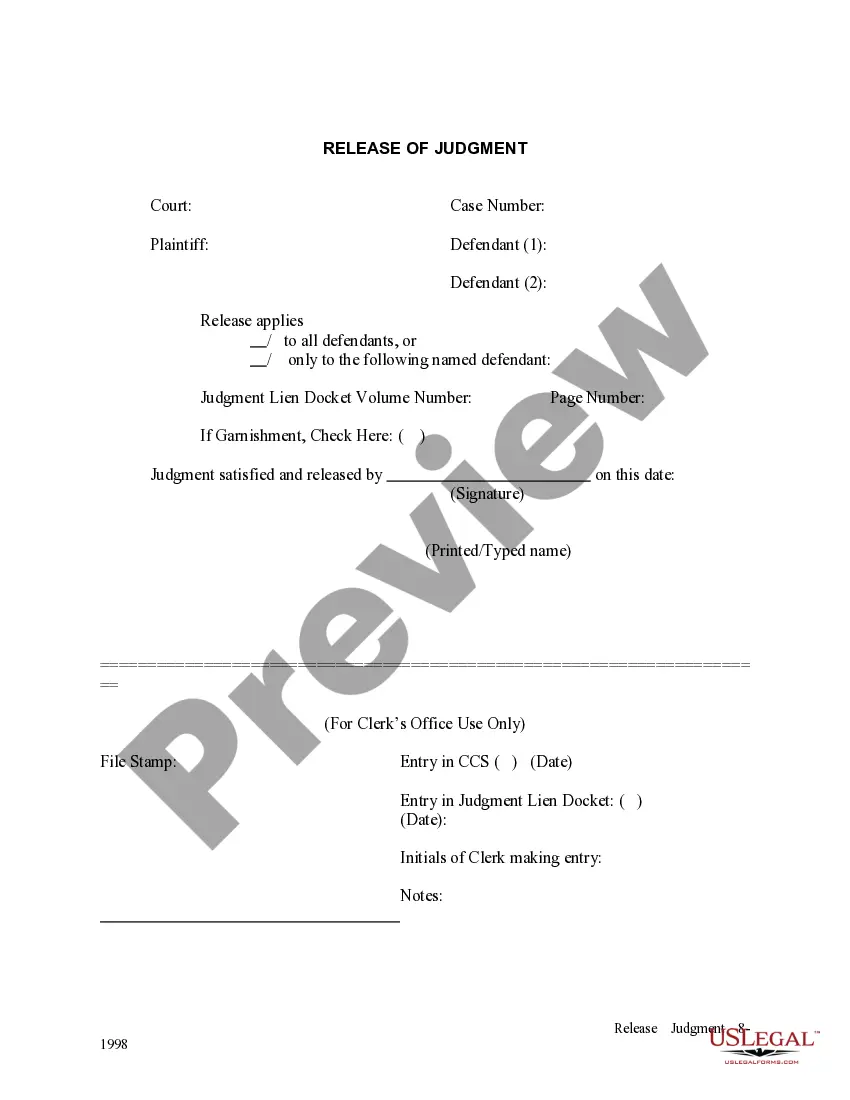
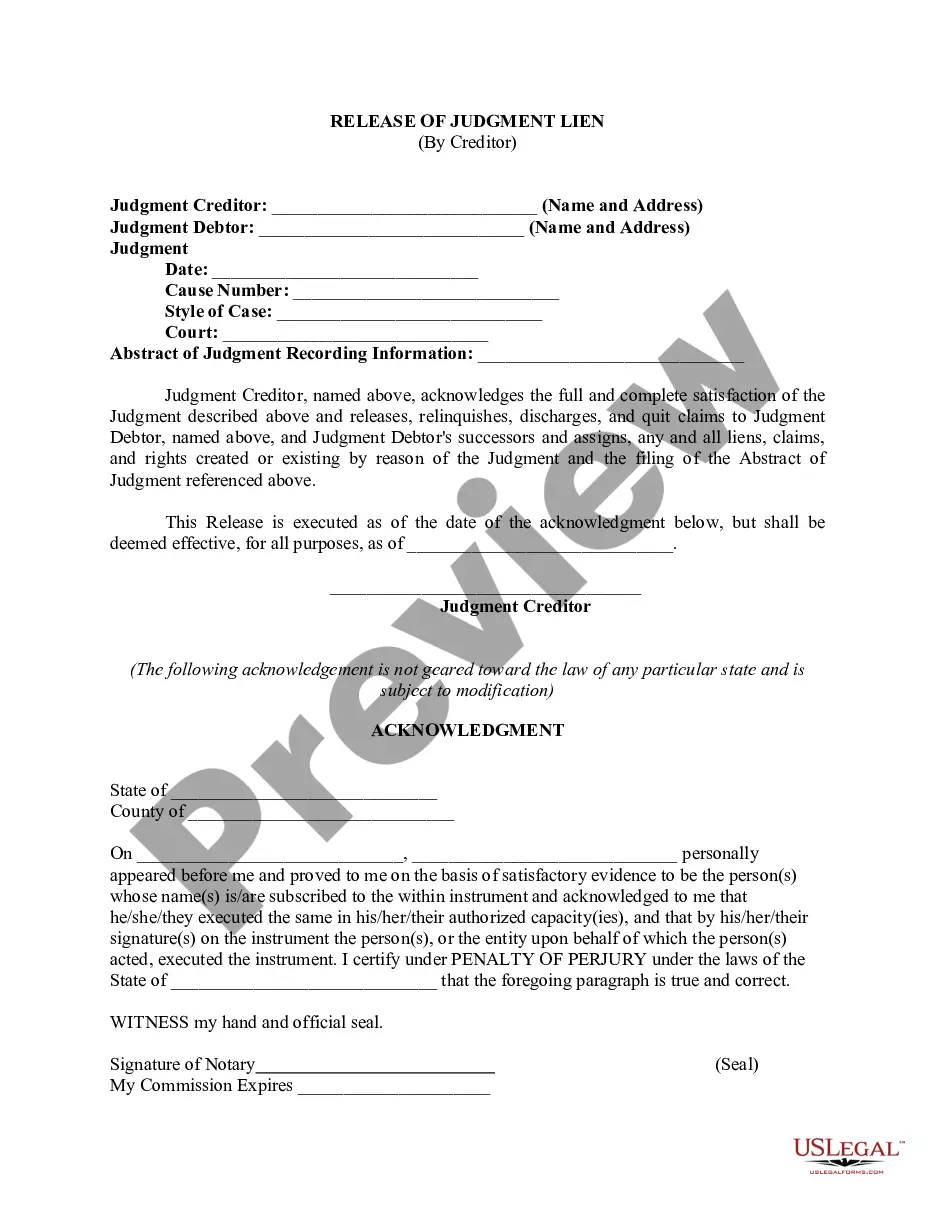
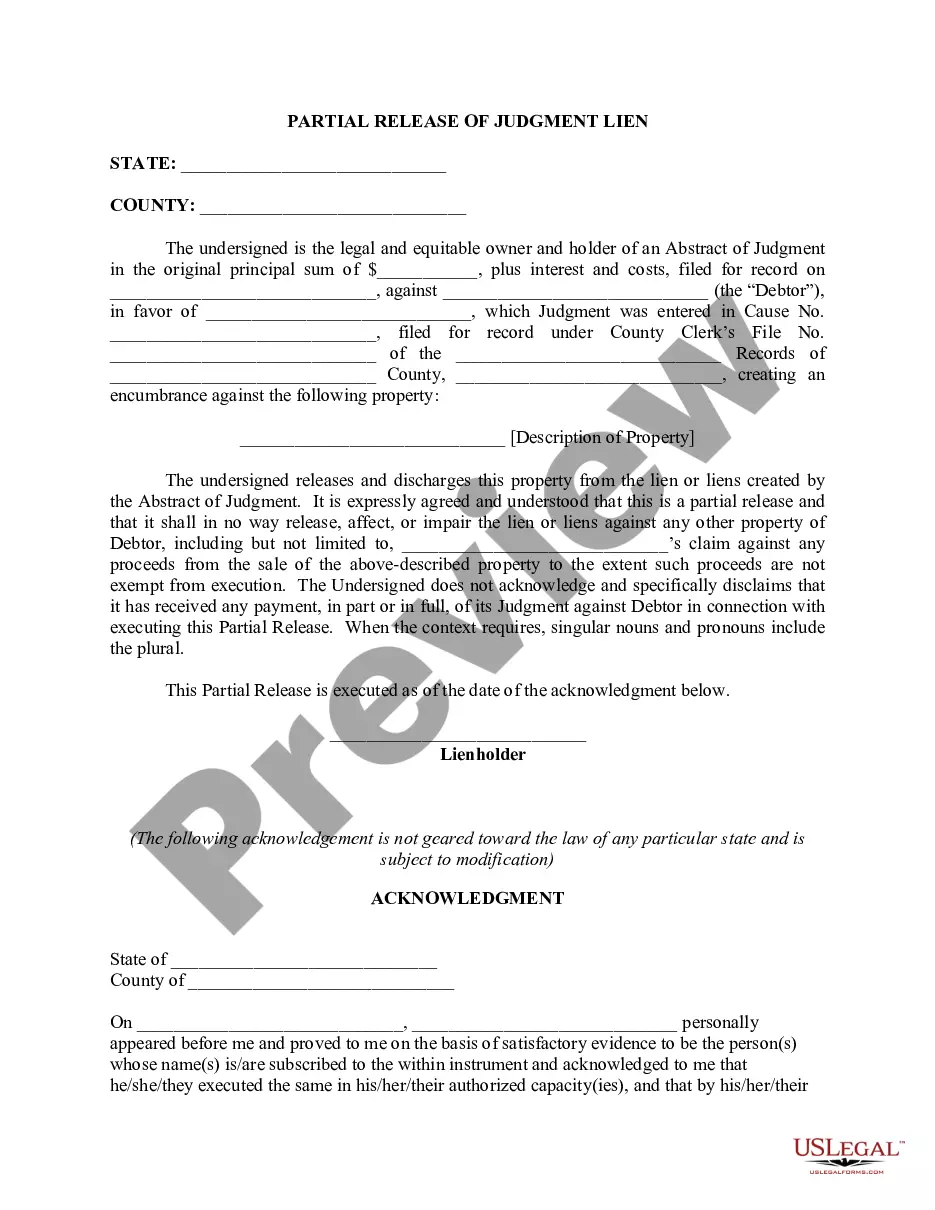
The Release of Judgment is an official legal document used in Indiana that allows for the formal release of a judgment against a defendant. This form indicates that a judgment has been satisfied and is no longer enforceable, distinguishing it from other legal forms related to judgments, such as a judgment lien or satisfaction of judgment. It is essential for ensuring that no further action can be taken against the defendant regarding the released judgment.
Key components of this form
- Court details: Identification of the court where the judgment was issued.
- Case number: Unique reference for the legal case associated with the judgment.
- Parties involved: Names of the plaintiff and defendants.
- Scope of release: Options to release all defendants or specific defendants.
- Judgment details: Volume and page numbers for the Judgment Lien Docket.
- Signature and date: Required signature of the individual releasing the judgment, along with the date of release.

When this form is needed
This form is used when a judgment has been paid in full or settled, and the creditor wishes to officially document the release. It may also be necessary when a court orders the release of a judgment due to certain changes in circumstances, such as the defendant successfully appealing the judgment or the parties reaching an agreement. Filing this form is crucial to notify the court and relevant parties that the enforcement of the judgment is no longer applicable.
Who needs this form
- Creditors who wish to release a judgment against a debtor after payment.
- Defendants who have satisfied a court judgment and need documentation of the release.
- Attorneys representing either party in the resolution of a judgment.
Instructions for completing this form
- Identify the court and enter the case number at the top of the form.
- Fill in the names of the plaintiff and all defendants involved.
- Specify whether the release applies to all defendants or a specific one.
- Provide the Judgment Lien Docket Volume and Page number for reference.
- Include the date and signature of the person releasing the judgment, along with their printed name.
Notarization guidance
In most cases, this form does not require notarization. However, some jurisdictions or signing circumstances might. US Legal Forms offers online notarization powered by Notarize, accessible 24/7 for a quick, remote process.
Get your form ready online
Our built-in tools help you complete, sign, share, and store your documents in one place.
Make edits, fill in missing information, and update formatting in US Legal Forms—just like you would in MS Word.
Download a copy, print it, send it by email, or mail it via USPS—whatever works best for your next step.
Sign and collect signatures with our SignNow integration. Send to multiple recipients, set reminders, and more. Go Premium to unlock E-Sign.
If this form requires notarization, complete it online through a secure video call—no need to meet a notary in person or wait for an appointment.
We protect your documents and personal data by following strict security and privacy standards.

Make edits, fill in missing information, and update formatting in US Legal Forms—just like you would in MS Word.

Download a copy, print it, send it by email, or mail it via USPS—whatever works best for your next step.

Sign and collect signatures with our SignNow integration. Send to multiple recipients, set reminders, and more. Go Premium to unlock E-Sign.

If this form requires notarization, complete it online through a secure video call—no need to meet a notary in person or wait for an appointment.

We protect your documents and personal data by following strict security and privacy standards.
Common mistakes to avoid
- Failing to include the required court information or case number.
- Not specifying the correct parties involved in the release.
- Omitting signatures or dates, which can render the form invalid.
Advantages of online completion
- Convenience of accessing and completing the form anytime.
- Editability allows users to customize the form to fit their specific case.
- Reliable formatting ensures compliance with legal standards.
Looking for another form?
Form popularity
FAQ
Collecting a judgment in Indiana requires you to understand various collection methods available, such as wage garnishment or bank levies. Start by filing a motion with the court that issued the judgment to initiate the collection process. The court can help enforce the judgment through various means, supporting your right to receive payment. Consider leveraging the Indiana Release of Judgment to effectively manage this process and ensure you receive what you are owed.
Once a judgment is entered against you in Indiana, it becomes part of your public record and can affect your credit. You may receive a notice explaining the judgment, and the winning party can pursue collection methods thereafter. Understanding your options, such as filing an appeal or seeking an Indiana Release of Judgment, is crucial, and USLegalForms can help illuminate these possibilities.
To set aside a default judgment in Indiana, a defendant must demonstrate a valid reason, such as lack of notice or a meritorious defense. The motion to set aside must be filed within a specific timeframe, typically within one year of the judgment. For assistance in navigating this legal process, the Indiana Release of Judgment section on USLegalForms can provide helpful guidance.
Filing a judgment lien in Indiana involves submitting the certified judgment to the appropriate county recorder's office. Along with this, any required fees and forms must be included. To ensure that your filing is accurate, the Indiana Release of Judgment section on USLegalForms can offer comprehensive support and templates.
A default judgment in Indiana occurs when the defendant fails to respond to the lawsuit within the required time frame, leading the court to rule in favor of the plaintiff. This decision allows the plaintiff to collect the owed amount without a trial. Understanding the implications of a default judgment is important, and the Indiana Release of Judgment section on USLegalForms can provide further insights.
To collect on a judgment in Indiana, the winning party can use various methods such as garnishment of wages, bank levies, or placing liens on the debtor's property. It is essential to follow proper legal procedures to ensure that the collection process is lawful. For a detailed step-by-step guide, check out the Indiana Release of Judgment resources available on USLegalForms.
After a default judgment is issued in Indiana, the winning party can take steps to enforce the judgment. This often involves filing a motion to collect, which may include garnishing wages or placing a lien on property. The plaintiff must act quickly to ensure that they take advantage of any legal rights afforded by the Indiana Release of Judgment. It's crucial to stay informed about the collection process to avoid complications down the line.