Idaho Borrower and Co Signer's Agreement
What is this form?
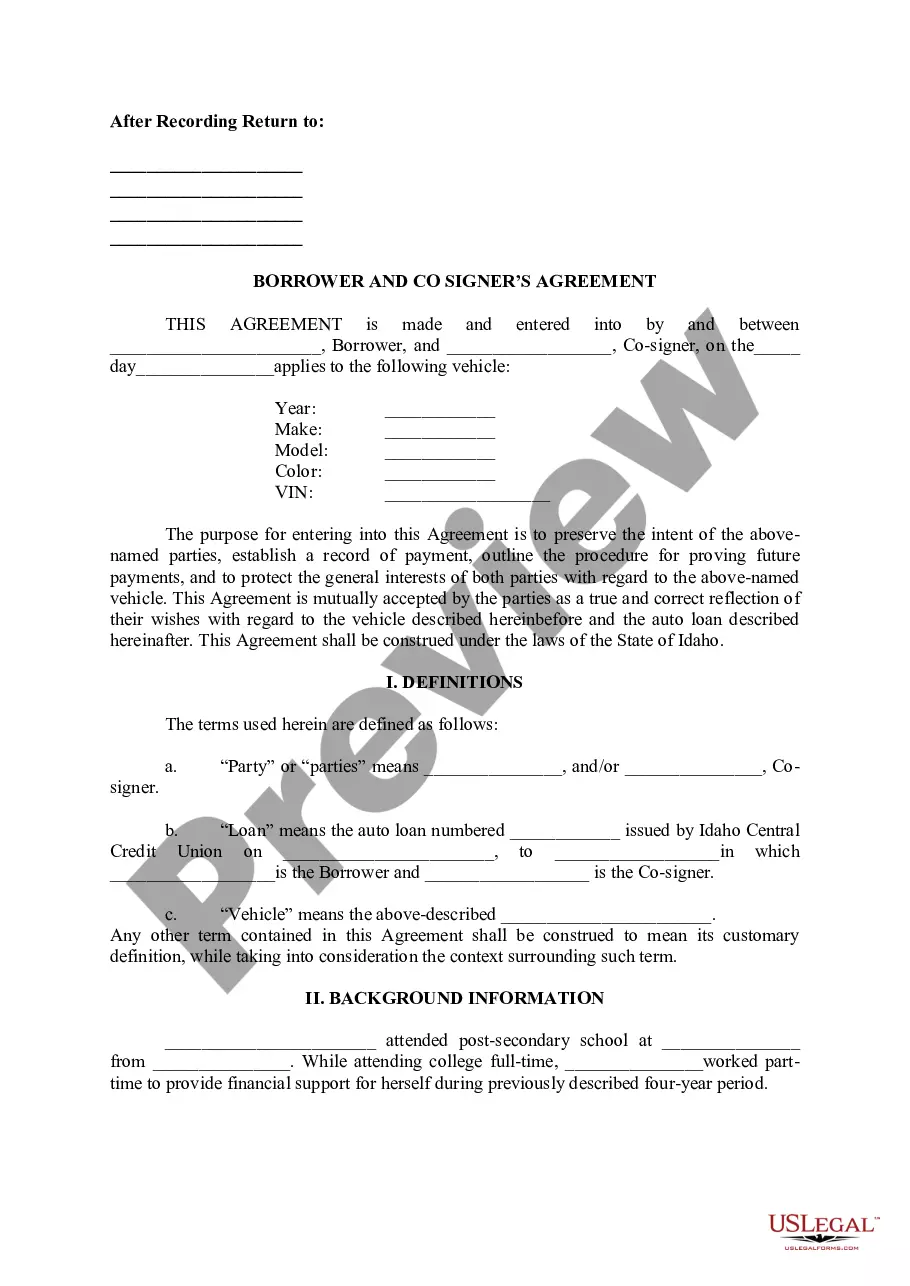
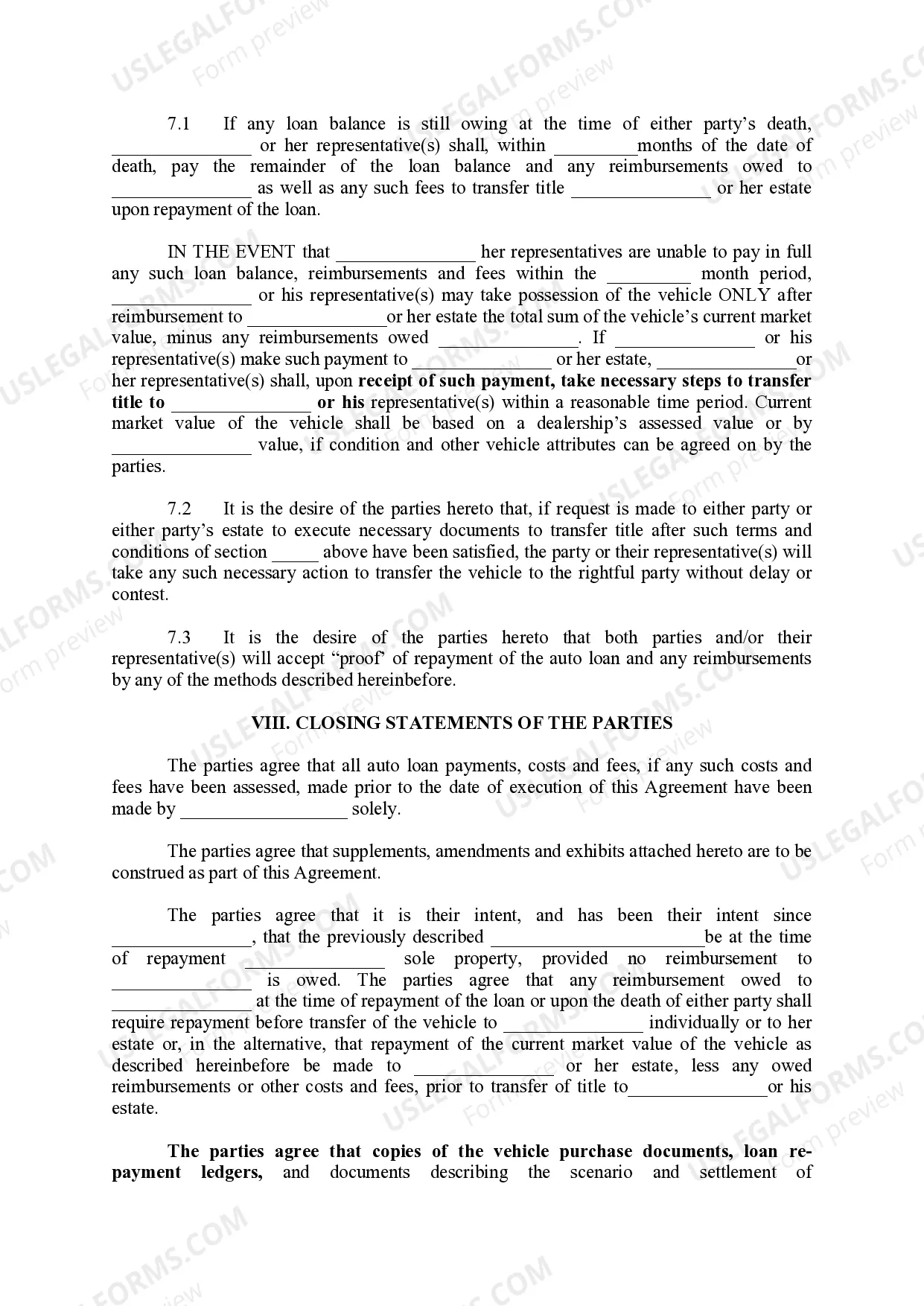
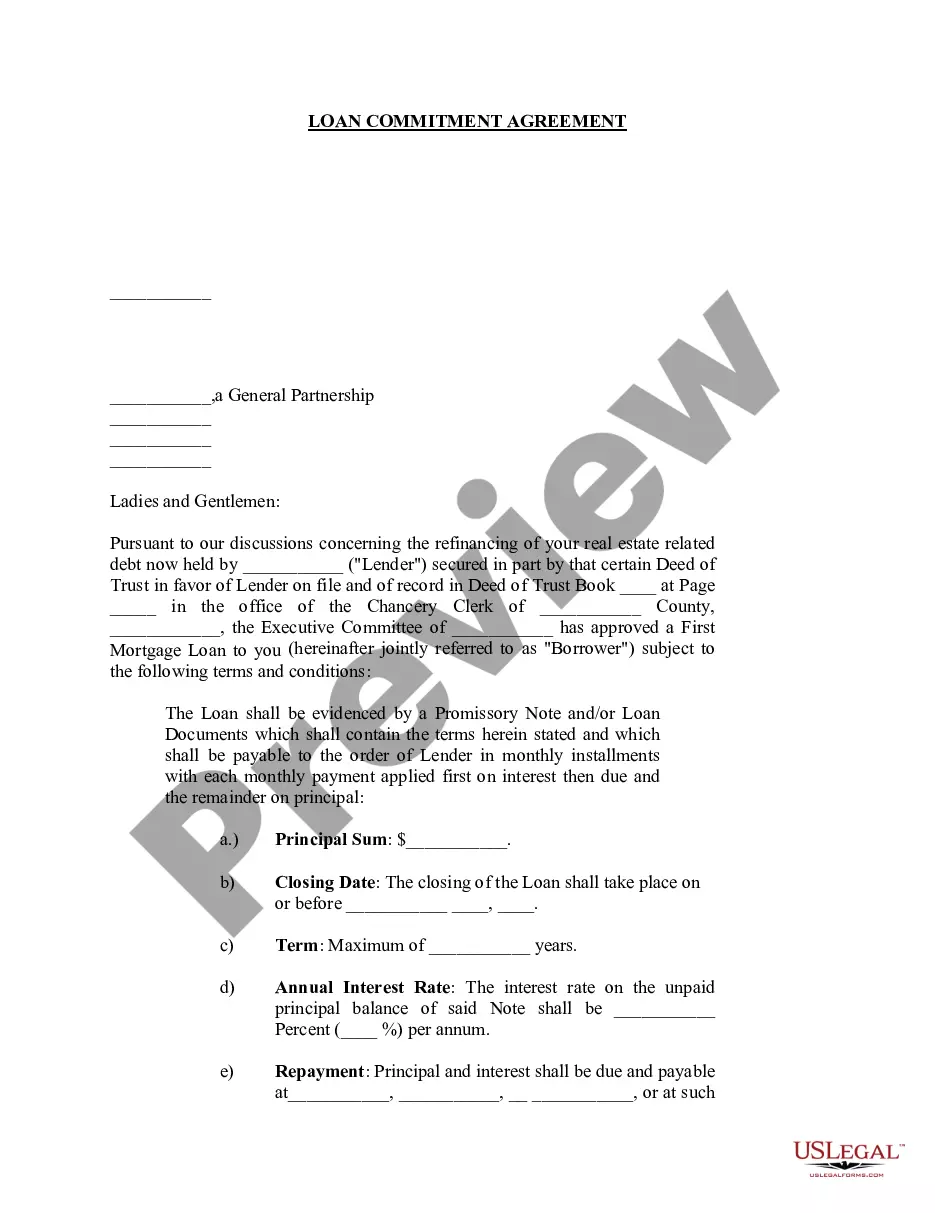
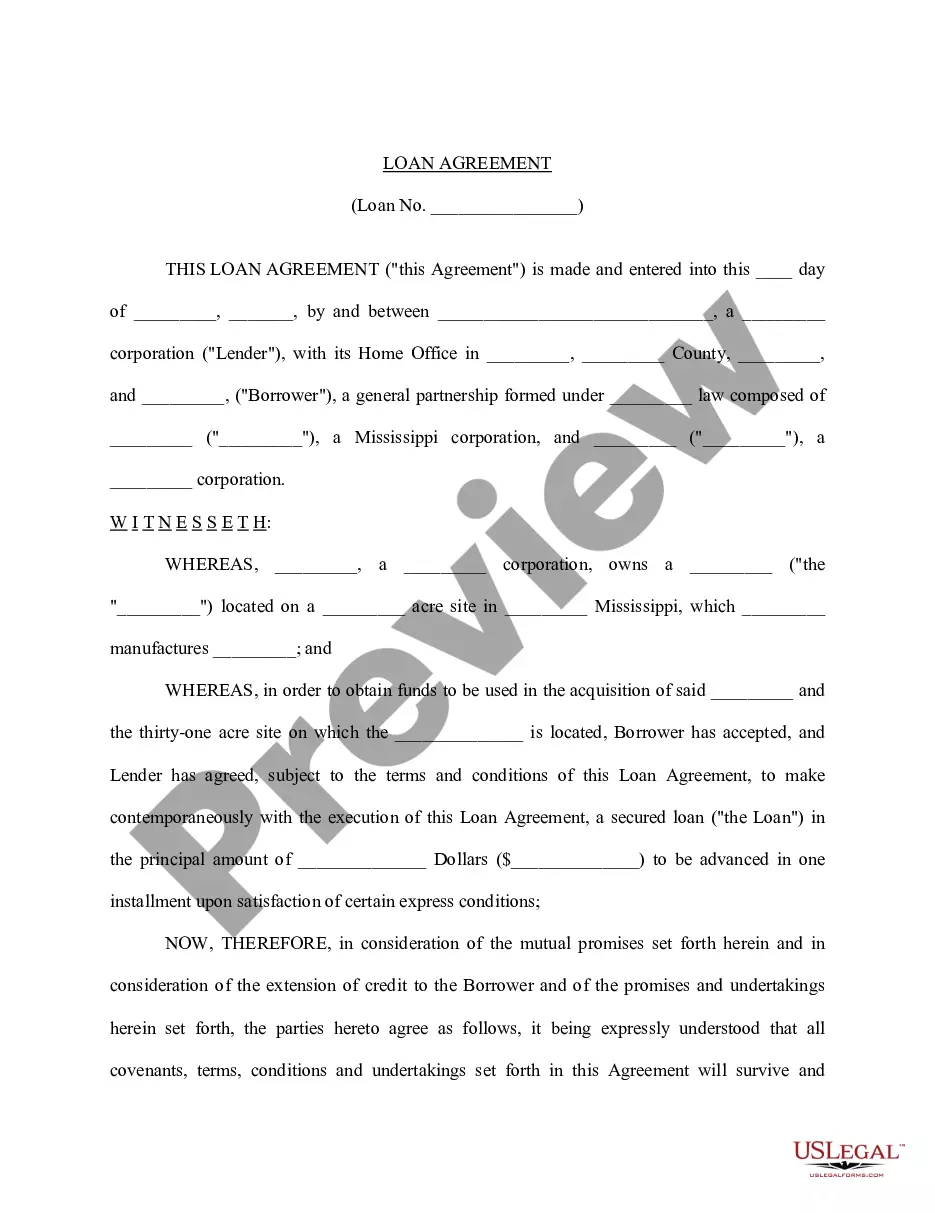
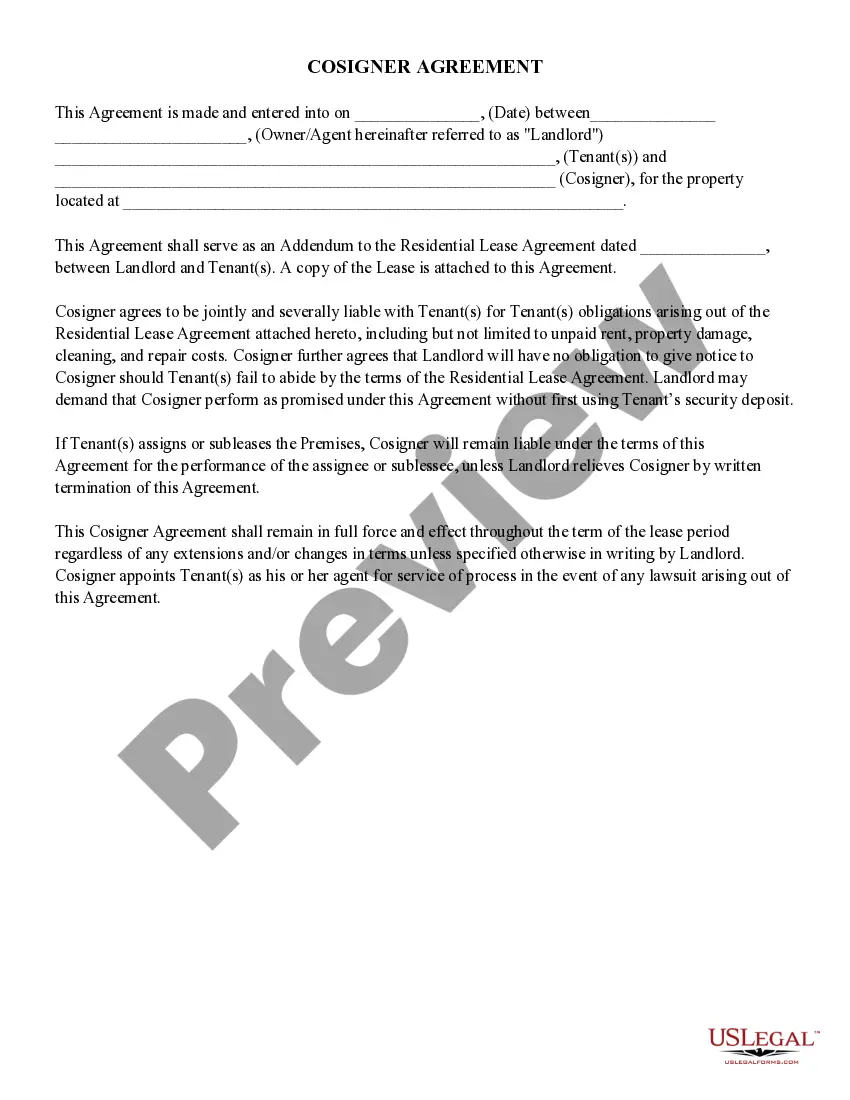
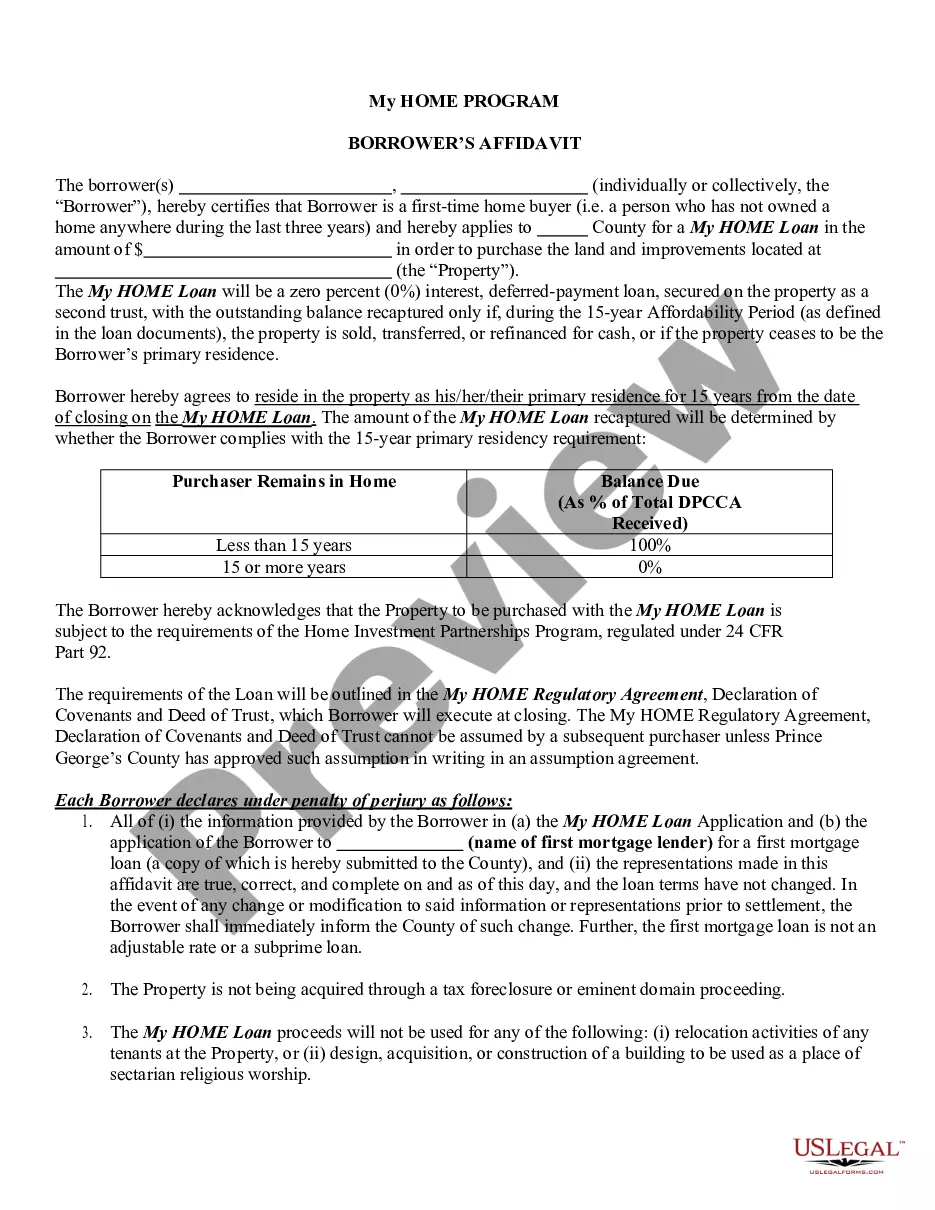
The Borrower and Co-Signer's Agreement is a legal document designed to outline the responsibilities and agreements between a primary borrower and a co-signer in the context of an auto loan. This form serves to establish a clear understanding of repayment obligations and the ownership of the vehicle involved in the loan. Unlike other loan agreements, this document specifically addresses the dynamics between co-signers and borrowers, ensuring both parties are protected legally and financially in case of default.
Form components explained
- Identification of parties involved: Borrower and Co-signer.
- Vehicle details: year, make, model, color, and VIN.
- Loan information, including loan number and issuing lender.
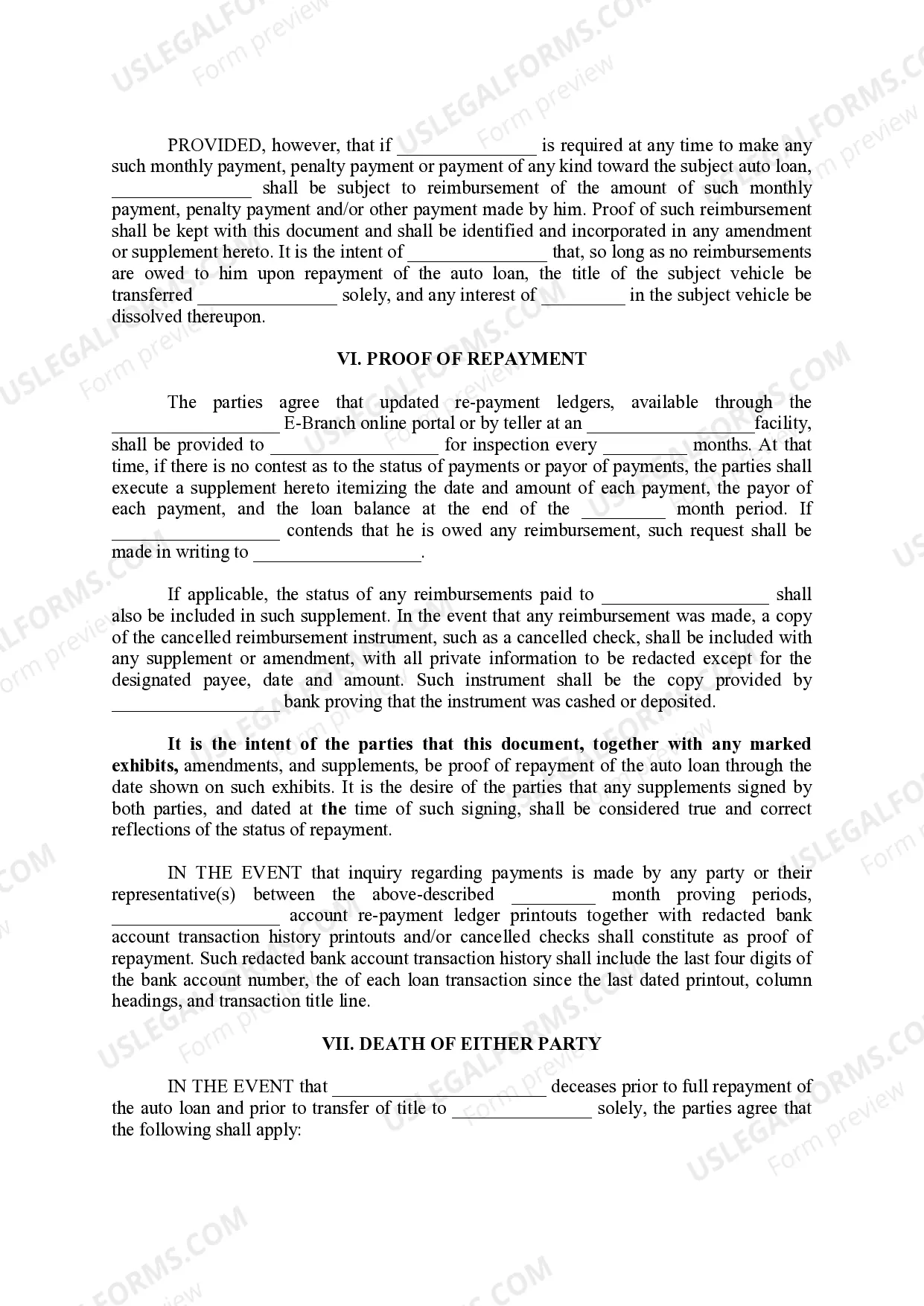
- Repayment terms and procedure for proving payments.
- Provisions regarding reimbursement and vehicle title transfer upon full repayment.
- Clauses covering scenarios such as the death of either party.

When this form is needed
This form is useful when an individual seeks to purchase a vehicle but requires a co-signer to meet loan qualifications. It is essential when the borrower has a limited income or insufficient credit history and needs someone to guarantee loan repayment. The agreement clearly defines the obligations of the co-signer and protects their interests as well. Use this form to formalize the agreement, ensuring both parties understand their rights and responsibilities regarding loan repayments.
Who can use this document
- Individuals purchasing a vehicle who are unable to secure a loan independently.
- Friends or family members willing to act as co-signers for the loan.
- Anyone looking to establish a clear understanding of financial responsibilities regarding vehicle loans.
- Individuals wanting to document the agreement formally to avoid future disputes.
Steps to complete this form
- Identify and clearly state the names of the borrower and co-signer at the beginning of the form.
- Fill in the details of the vehicle including year, make, model, color, and VIN.
- Enter loan details such as the loan number and lender's name.
- Specify the repayment terms, including the amount and frequency of payments.
- Sign and date the agreement to make it legally binding.
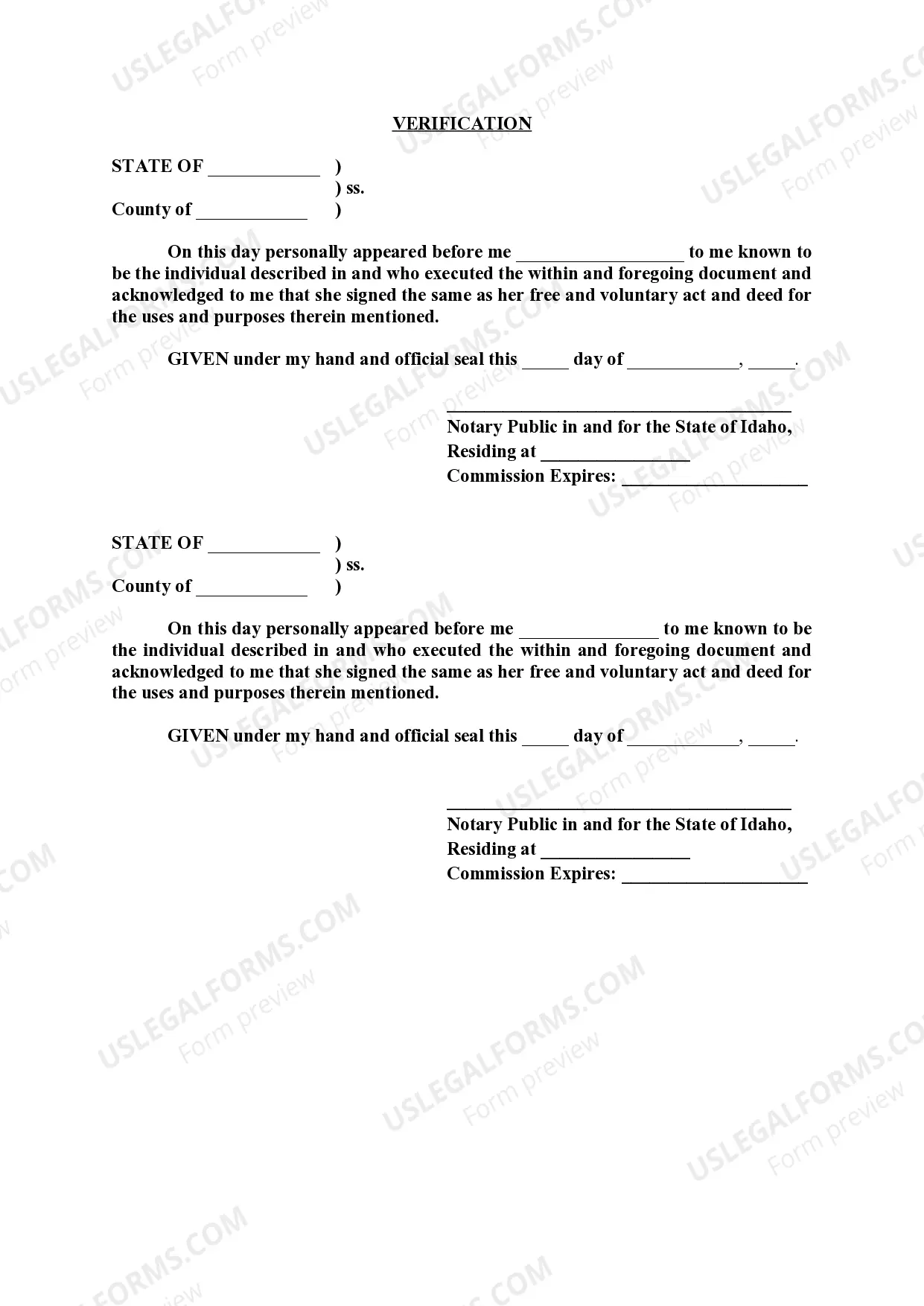
- If required, have the document notarized to validate your signatures.
Notarization requirements for this form
This form does not typically require notarization unless specified by local law. However, having the agreement notarized can provide an additional layer of authenticity and legality, particularly in disputes or enforcement scenarios.
Get your form ready online
Our built-in tools help you complete, sign, share, and store your documents in one place.
Make edits, fill in missing information, and update formatting in US Legal Forms—just like you would in MS Word.
Download a copy, print it, send it by email, or mail it via USPS—whatever works best for your next step.
Sign and collect signatures with our SignNow integration. Send to multiple recipients, set reminders, and more. Go Premium to unlock E-Sign.
If this form requires notarization, complete it online through a secure video call—no need to meet a notary in person or wait for an appointment.
We protect your documents and personal data by following strict security and privacy standards.

Make edits, fill in missing information, and update formatting in US Legal Forms—just like you would in MS Word.

Download a copy, print it, send it by email, or mail it via USPS—whatever works best for your next step.

Sign and collect signatures with our SignNow integration. Send to multiple recipients, set reminders, and more. Go Premium to unlock E-Sign.

If this form requires notarization, complete it online through a secure video call—no need to meet a notary in person or wait for an appointment.

We protect your documents and personal data by following strict security and privacy standards.
Mistakes to watch out for
- Failing to include all vehicle details accurately, which may lead to disputes.
- Not specifying the complete repayment terms clearly.
- Neglecting to obtain all necessary signatures before finalizing the agreement.
- Overlooking the need for notarization, where applicable.
Benefits of using this form online
- Convenient access to the form allows for easier completion at your own pace.
- Editability ensures that all details can be customized to fit your specific situation.
- Reliable templates drafted by licensed attorneys, ensuring legal correctness.
- Immediate download options facilitate quick use without waiting for postal services.
Looking for another form?
Form popularity
FAQ
Although there might not be a required credit score, a cosigner typically will need credit in the very good or exceptional range670 or better. A credit score in that range generally qualifies someone to be a cosigner, but each lender will have its own requirement.
Considerations. An individual who appears on the promissory note and not the title to the property is a co-signer by definition.For these reasons, lenders typically require co-borrowers to sign the sales contract and appear on the title to a property.
In a strict sense, the answer is no. The fact that you are a cosigner in and of itself does not necessarily hurt your credit. However, even if the cosigned account is paid on time, the debt may affect your credit scores and revolving utilization, which could affect your ability to get a loan in the future.
Co-signers:Have no title or ownership in the property (house, car, etc.). Are legally obligated to repay the loan if the primary signer falls behind. Must have their income, assets, credit score and debt-to-income ratio considered in the loan application.
Contract Binds Because the signature indicates agreement, under nearly all circumstances the co-borrower must sign the sales contract. Otherwise, proof of the co-borrower's obligation does not exist.
Cosigning the loans counts as legally obligated to make the payments.
Cosigning a loan raises your debt-to-income ratio since you're basically promising to pay the loan if the borrower doesn't. It also puts you at risk for damaging your credit score and having your wages garnished for non-payment.
A co-borrower is different than a cosigner in that a cosigner takes responsibility for the debt should the borrower default, but does not have ownership in the property. In a loan application with a co-borrower, all of the borrowers responsible for the loan must complete a credit application.
Generally speaking, a cosigner will be on the loan documents, such as the note and the mortgage and deed of trust. The cosigner will not be on title to the property, and will not sign the deed. The cosigner's role is strictly on the loan application, and not with ownership of the property.