Oregon Last Will and Testament for Domestic Partner with Minor Children from Prior Marriage
Understanding this form
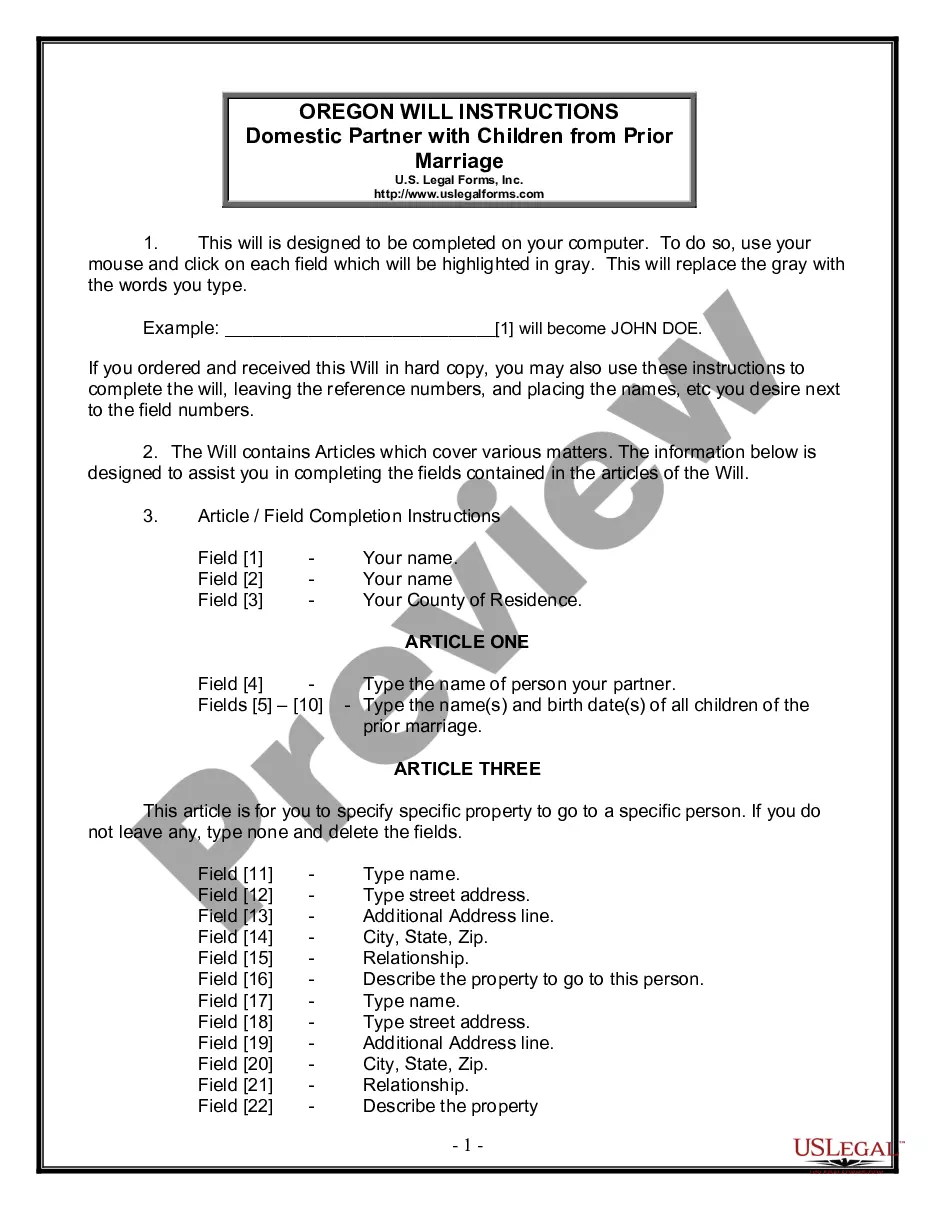
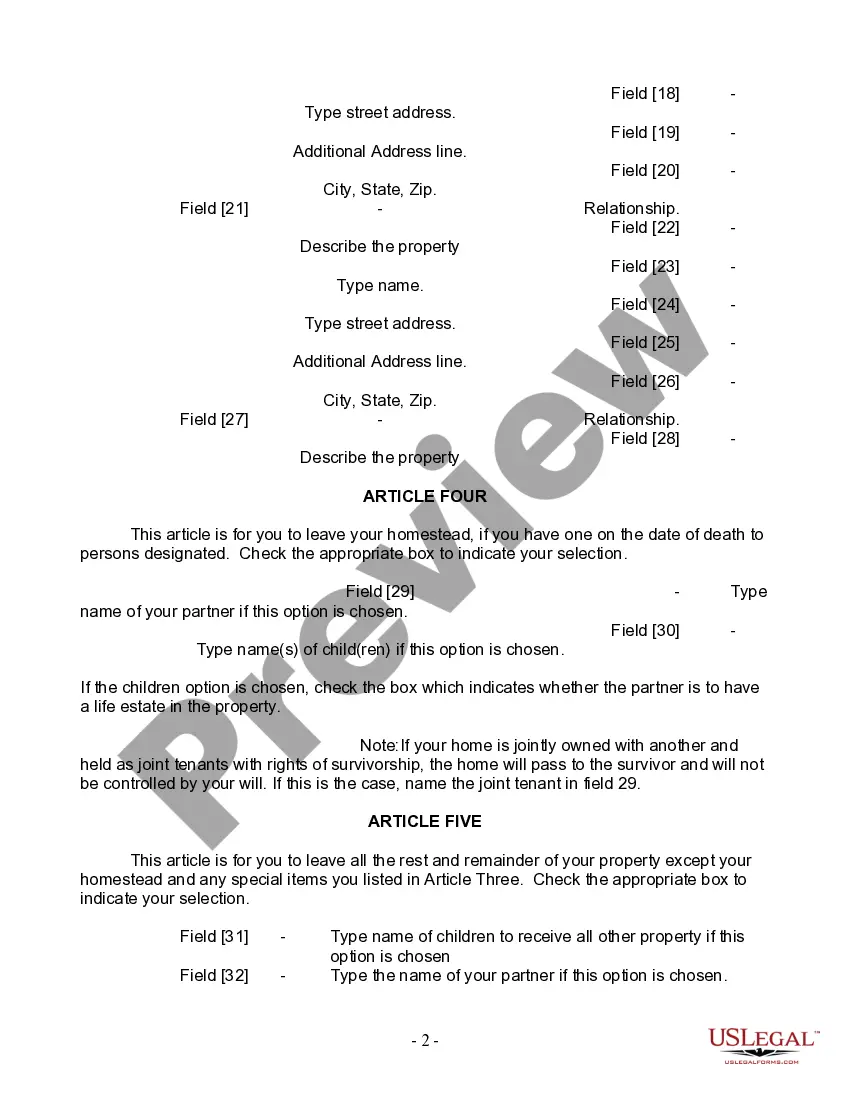
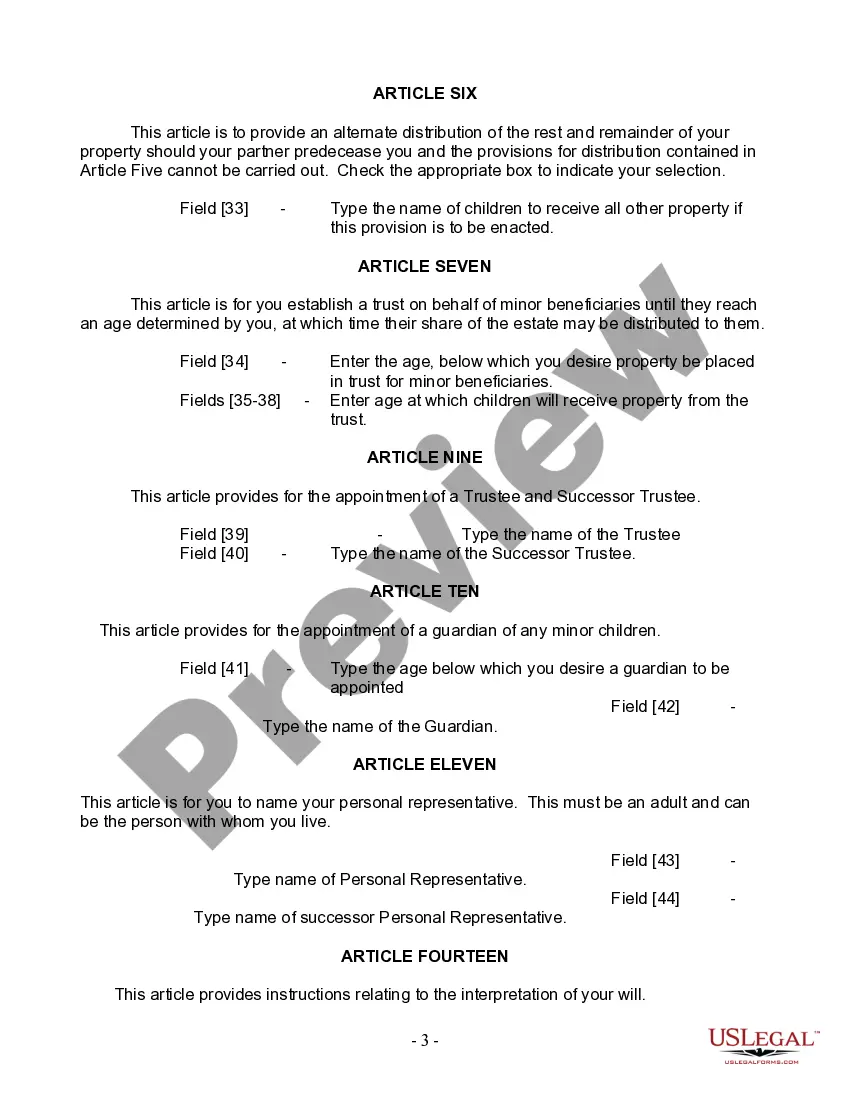
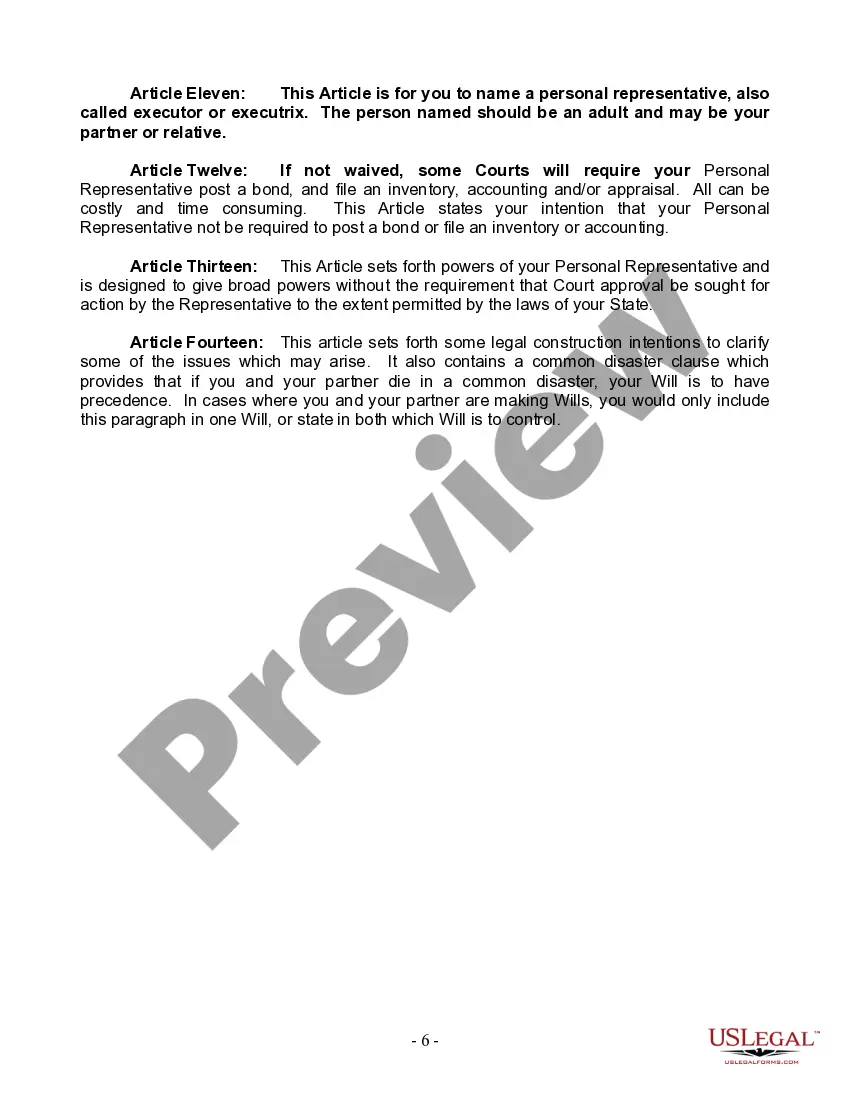
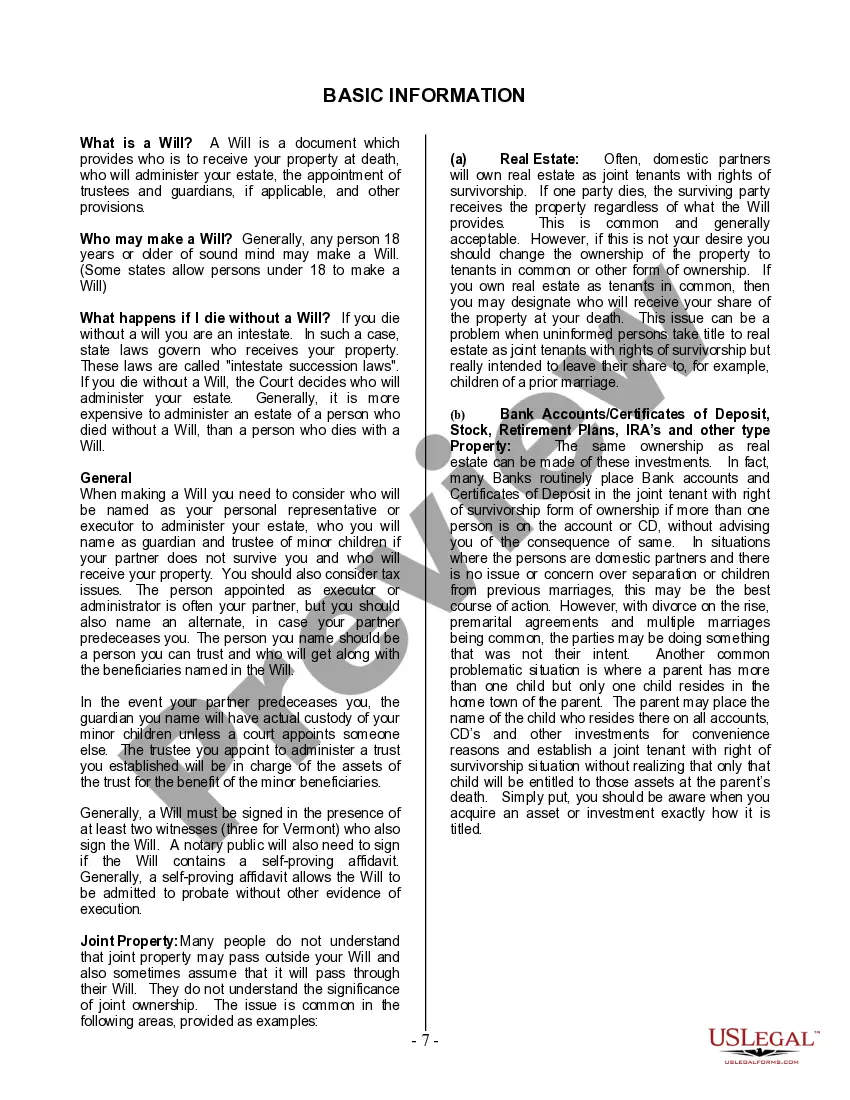
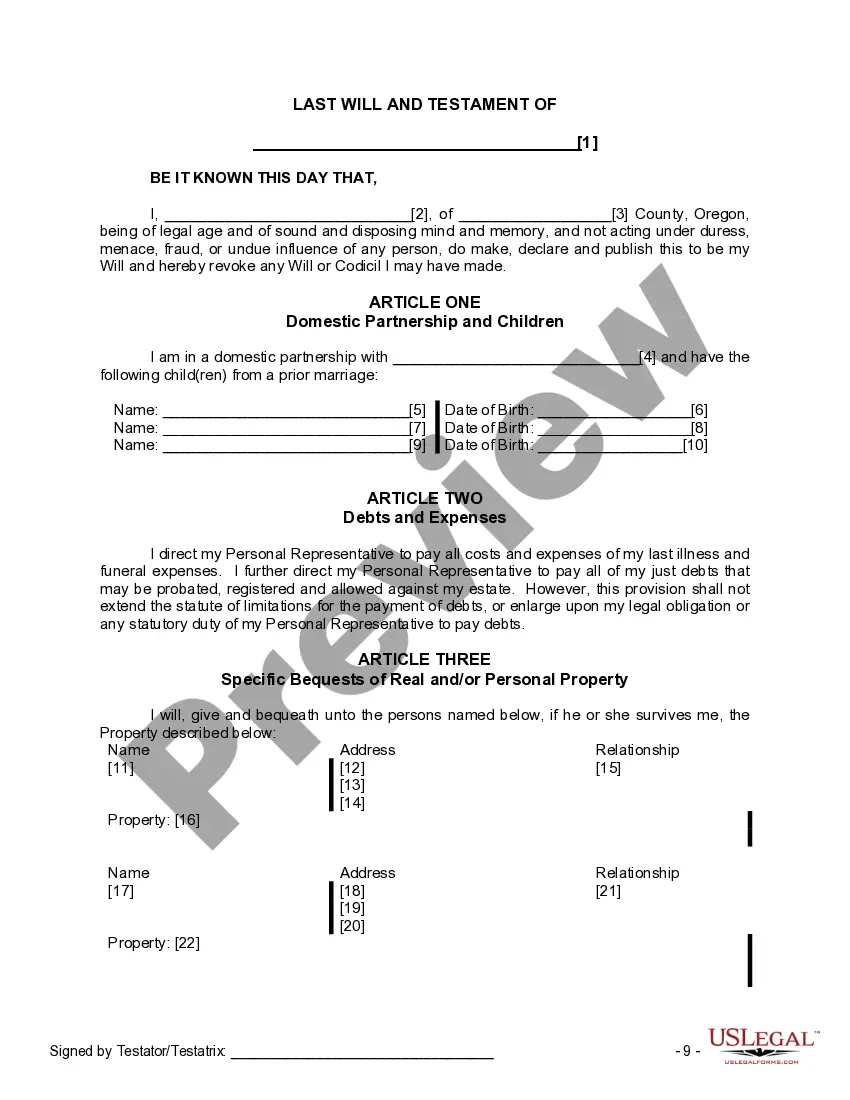
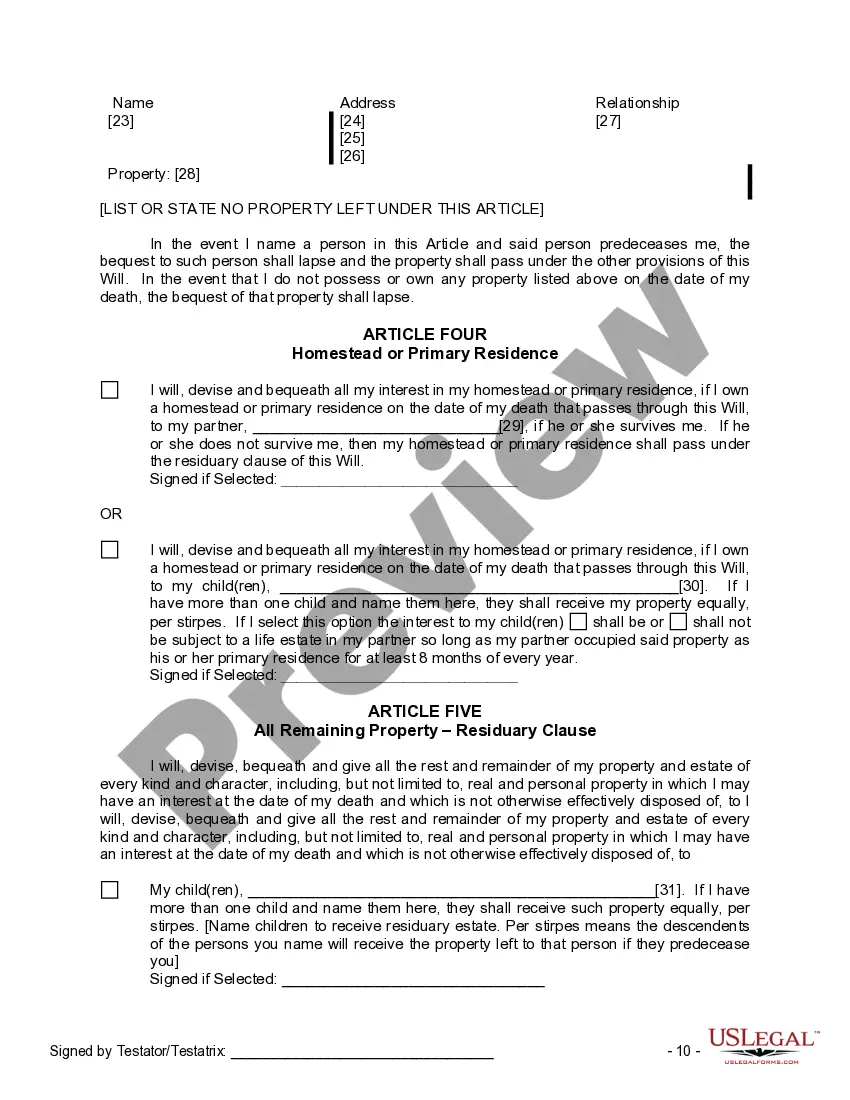
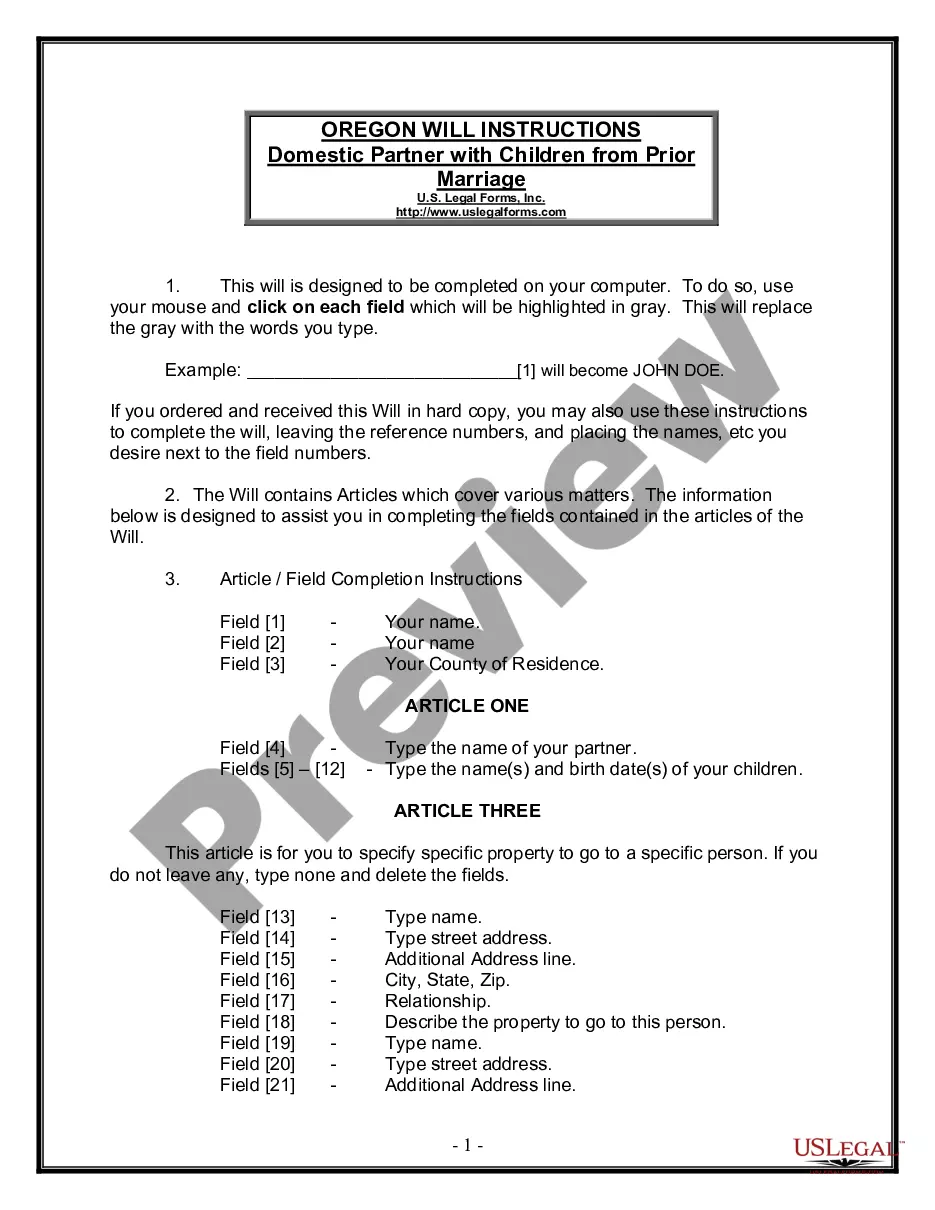
The Last Will and Testament for Domestic Partner with Minor Children from Prior Marriage is a legal document that outlines how your assets will be distributed upon your death, particularly for individuals in domestic partnerships who have children from previous relationships. This will includes provisions for the appointment of a personal representative, the designation of beneficiaries, and special instructions regarding guardianship and trusts for minor children, making it distinct from standard wills that do not cater to domestic partners or blended families.
Main sections of this form
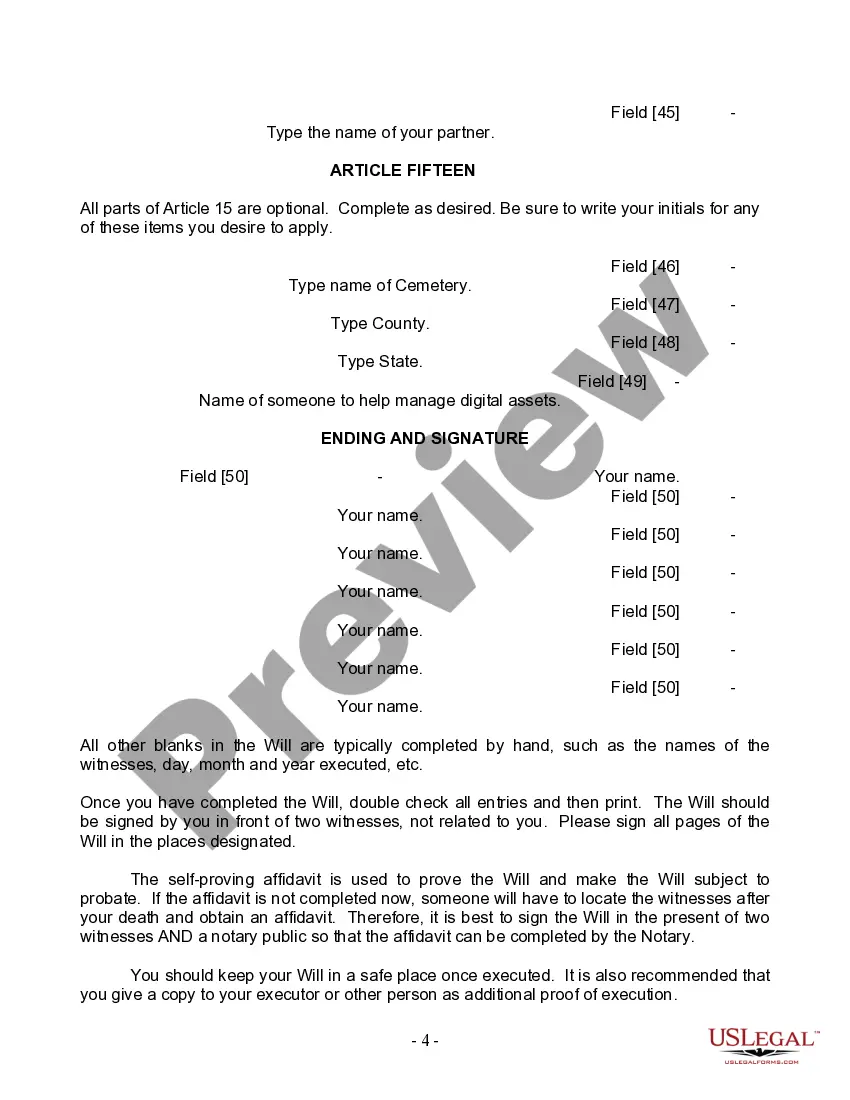
- Personal representative: Appointment of an individual to manage your estate.
- Beneficiary designations: Specification of who will receive your property and assets.
- Guardianship provisions: Appointment of a guardian for minor children, if applicable.
- Trust provisions: Creation of a trust for minor children to manage assets until they reach a specified age.
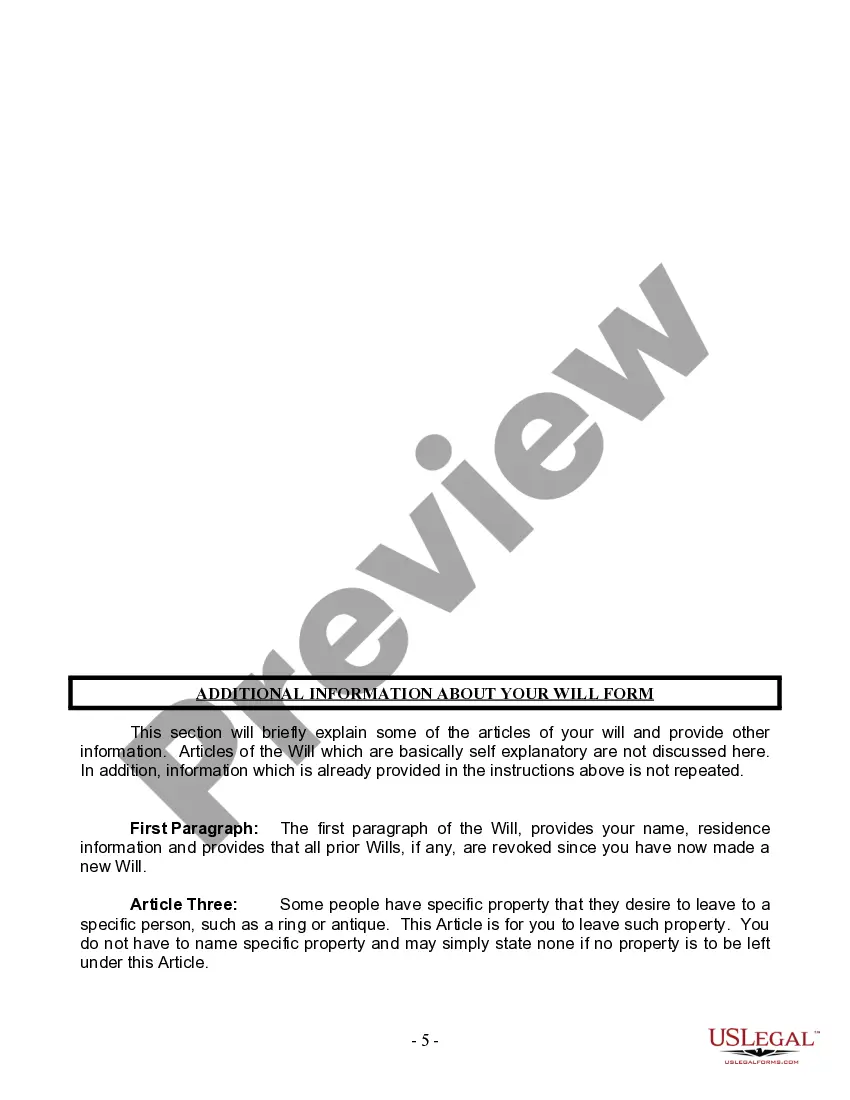
- Witnessing and notarization requirements: Details on how to properly execute the document to ensure its validity.




When this form is needed
This form is particularly useful for individuals in domestic partnerships who have children from prior marriages. You should use this will if you want to ensure that your partner and children are provided for after your passing, especially if there are specific family dynamics or concerns about inheritance among blended family members.
Who this form is for
- Individuals in domestic partnerships.
- Parents with minor children from a prior marriage.
- Anyone looking to specify asset distribution in a complex family situation.
- Those who want to ensure guardianship arrangements for minor children.
- Individuals seeking guidance on trusts for minor beneficiaries.
Steps to complete this form
- Identify yourself by entering your full name and county of residence.
- Specify your domestic partner's name and list your children from a prior marriage, including their dates of birth.
- Complete sections regarding specific bequests by detailing any property you wish to leave to particular individuals.
- Appoint a trustee for any assets allocated to minor children and determine the age at which these assets should be distributed.
- Ensure the will is signed in front of two witnesses who are not beneficiaries, and if applicable, notarized to comply with local laws.
Is notarization required?
Yes, this form must be notarized to be legally valid. The integrated online notarization service from US Legal Forms offers 24/7 availability for secure video calls, making it easy to get your document notarized without the need for in-person visits.
Get your form ready online
Our built-in tools help you complete, sign, share, and store your documents in one place.
Make edits, fill in missing information, and update formatting in US Legal Forms—just like you would in MS Word.
Download a copy, print it, send it by email, or mail it via USPS—whatever works best for your next step.
Sign and collect signatures with our SignNow integration. Send to multiple recipients, set reminders, and more. Go Premium to unlock E-Sign.
If this form requires notarization, complete it online through a secure video call—no need to meet a notary in person or wait for an appointment.
We protect your documents and personal data by following strict security and privacy standards.

Make edits, fill in missing information, and update formatting in US Legal Forms—just like you would in MS Word.

Download a copy, print it, send it by email, or mail it via USPS—whatever works best for your next step.

Sign and collect signatures with our SignNow integration. Send to multiple recipients, set reminders, and more. Go Premium to unlock E-Sign.

If this form requires notarization, complete it online through a secure video call—no need to meet a notary in person or wait for an appointment.

We protect your documents and personal data by following strict security and privacy standards.
Mistakes to watch out for
- Failing to include the names of all minor children from prior marriages.
- Not properly witnessing the signing of the will, which can invalidate it.
- Overlooking the need for notarization if your state requires a self-proving affidavit.
- Underestimating the importance of clearly defining assets and beneficiaries.
Benefits of using this form online
- Convenience of completing the form at your own pace.
- Ability to easily edit and customize the document to fit your specific needs.
- Access to legally compliant templates drafted by licensed attorneys.
- Secure storage options for your completed will, ensuring it is protected.
Quick recap
- This will is specifically for domestic partners with minor children from previous marriages.
- It addresses the appointment of guardians and trustees to protect the interests of minor children.
- Proper witnessing and notarization are essential for legal validity.
Looking for another form?
Form popularity
FAQ
The short answer is no. Wills that are handwritten and not witnessed are not recognized as valid in Oregon. A handwritten will that is witnessed by two individuals will be considered valid.
A notarized will does not need to be probated.When a person dies leaving behind a will that is not notarized, the law requires that its validity be ascertained by a notary or by a court. Similarly, any non-notarized modification made to a will must be probated, whether the will is notarized or not.
The short answer is no. Wills that are handwritten and not witnessed are not recognized as valid in Oregon. A handwritten will that is witnessed by two individuals will be considered valid.
A will is a set of instructions that explains how you want your property distributed after your death. In Oregon, you must be at least 18 years old and of sound mind to make a will.Your will must be in writing and must be signed by you and two witnesses. Some people cannot serve as witnesses to your will.
No, in Oregon, you do not need to notarize your will to make it legal. However, Oregon allows you to make your will "self-proving" and you'll need to go to a notary if you want to do that. A self-proving will speeds up probate because the court can accept the will without contacting the witnesses who signed it.
Witnesses: An Oregon will must be signed by at least two individuals who saw the testator sign the will or heard him acknowledge the signature. Writing: An Oregon will must be in writing. Beneficiaries: A testator can leave property to anyone.
Choose an online legal services provider or locate a will template. Carefully consider your distribution wishes. Identify a personal representative/executor. Understand the requirements to make your will legal. Make sure someone else knows about your will. Consult a lawyer if you have a more complicated estate.
Choose an online legal services provider or locate a will template. Carefully consider your distribution wishes. Identify a personal representative/executor. Understand the requirements to make your will legal. Make sure someone else knows about your will. Consult a lawyer if you have a more complicated estate.