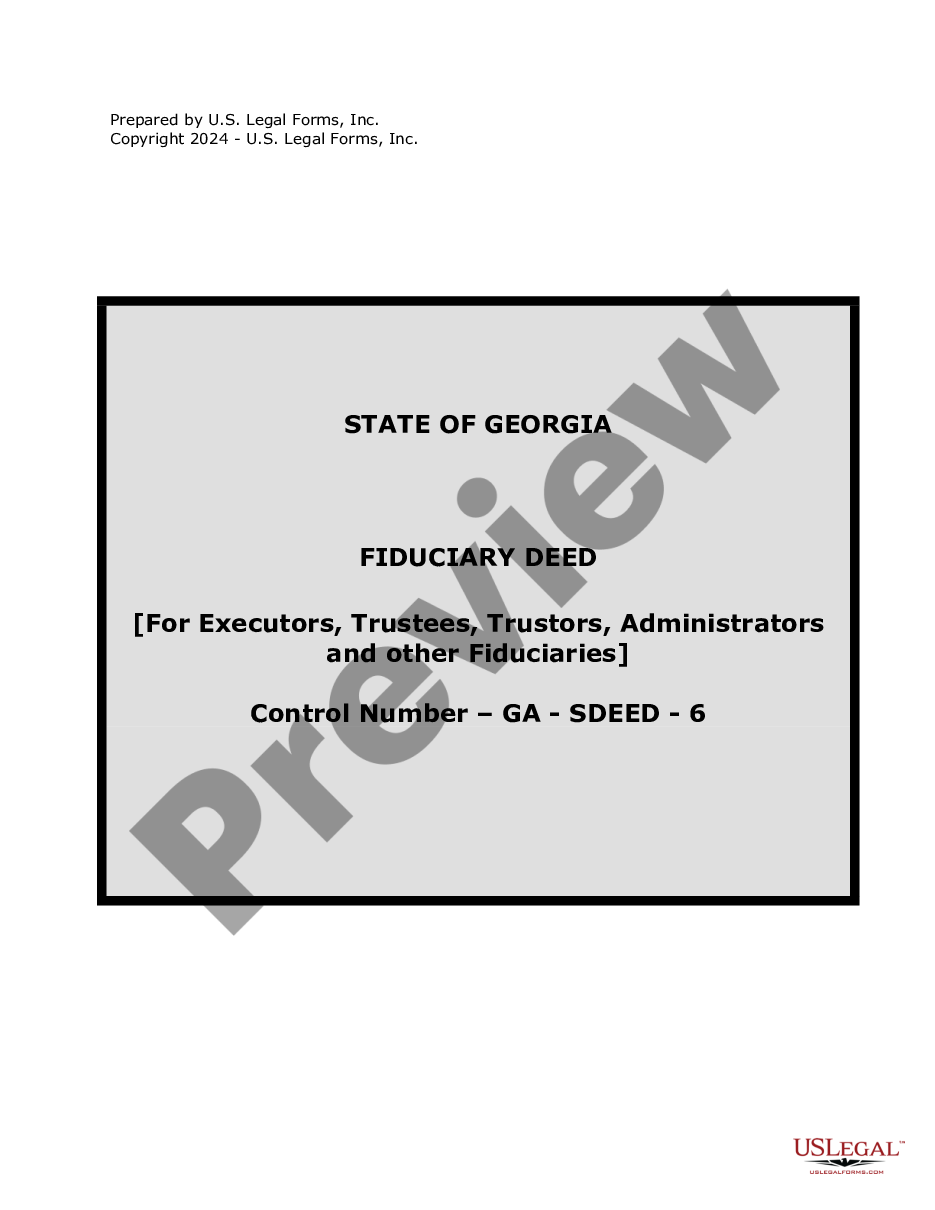
Georgia Fiduciary Deed for use by Executors, Trustees, Trustors, Administrators and other Fiduciaries
About this form
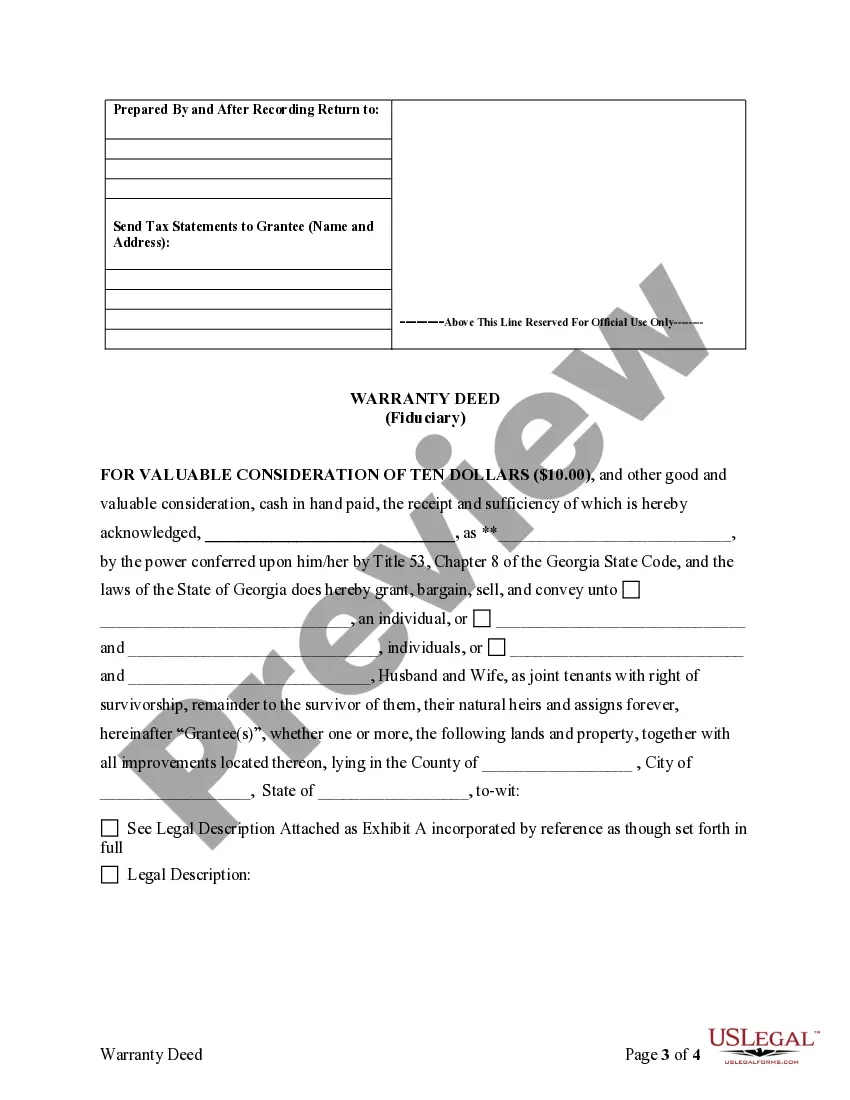
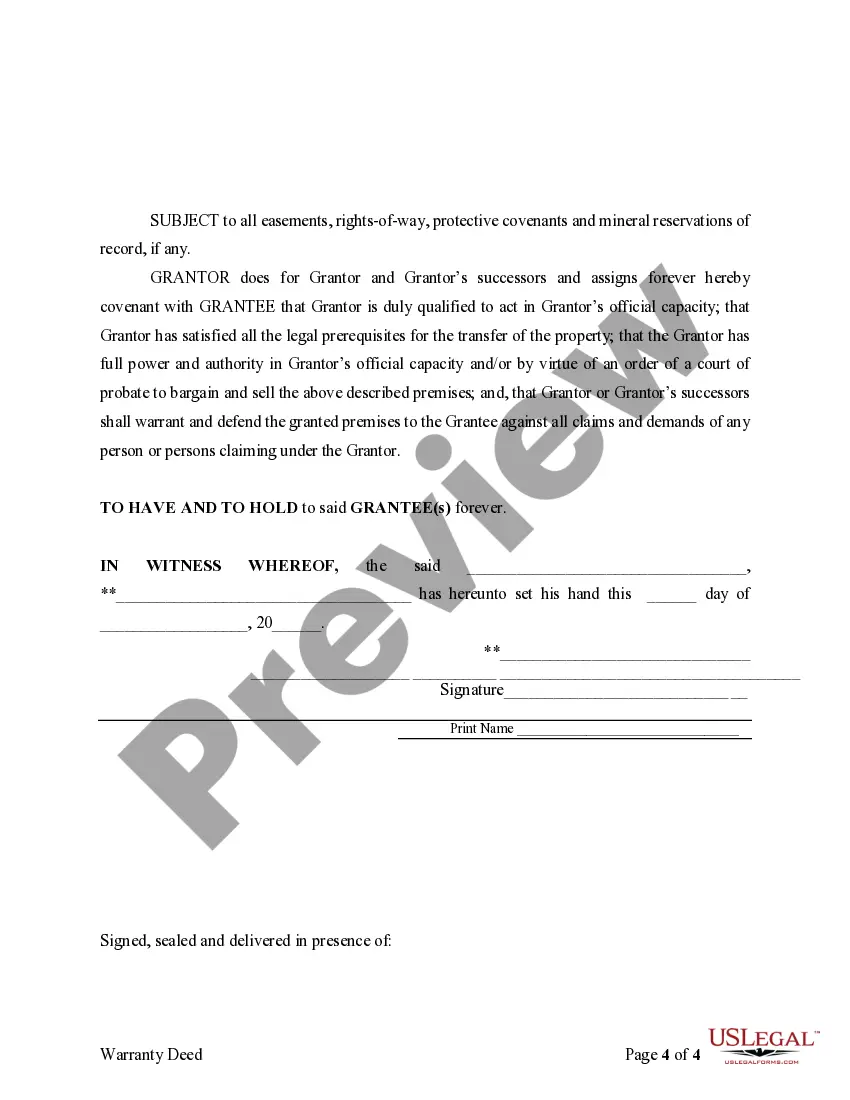
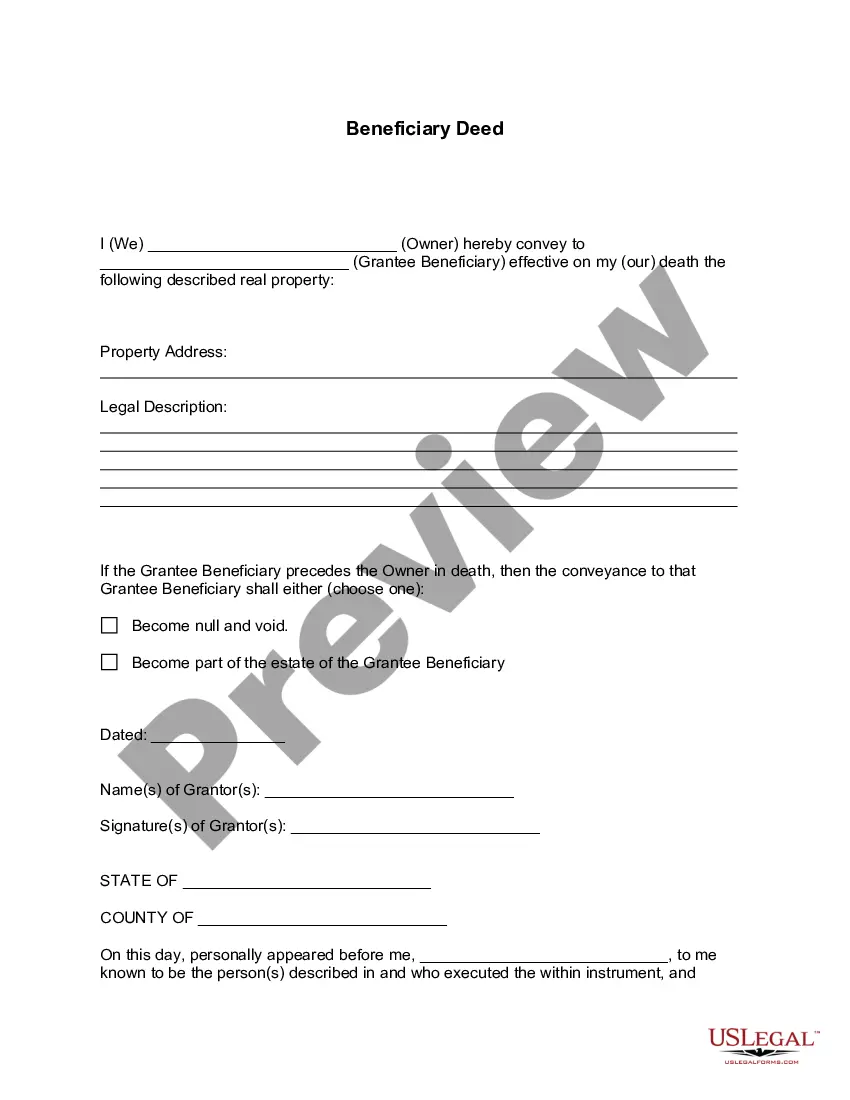
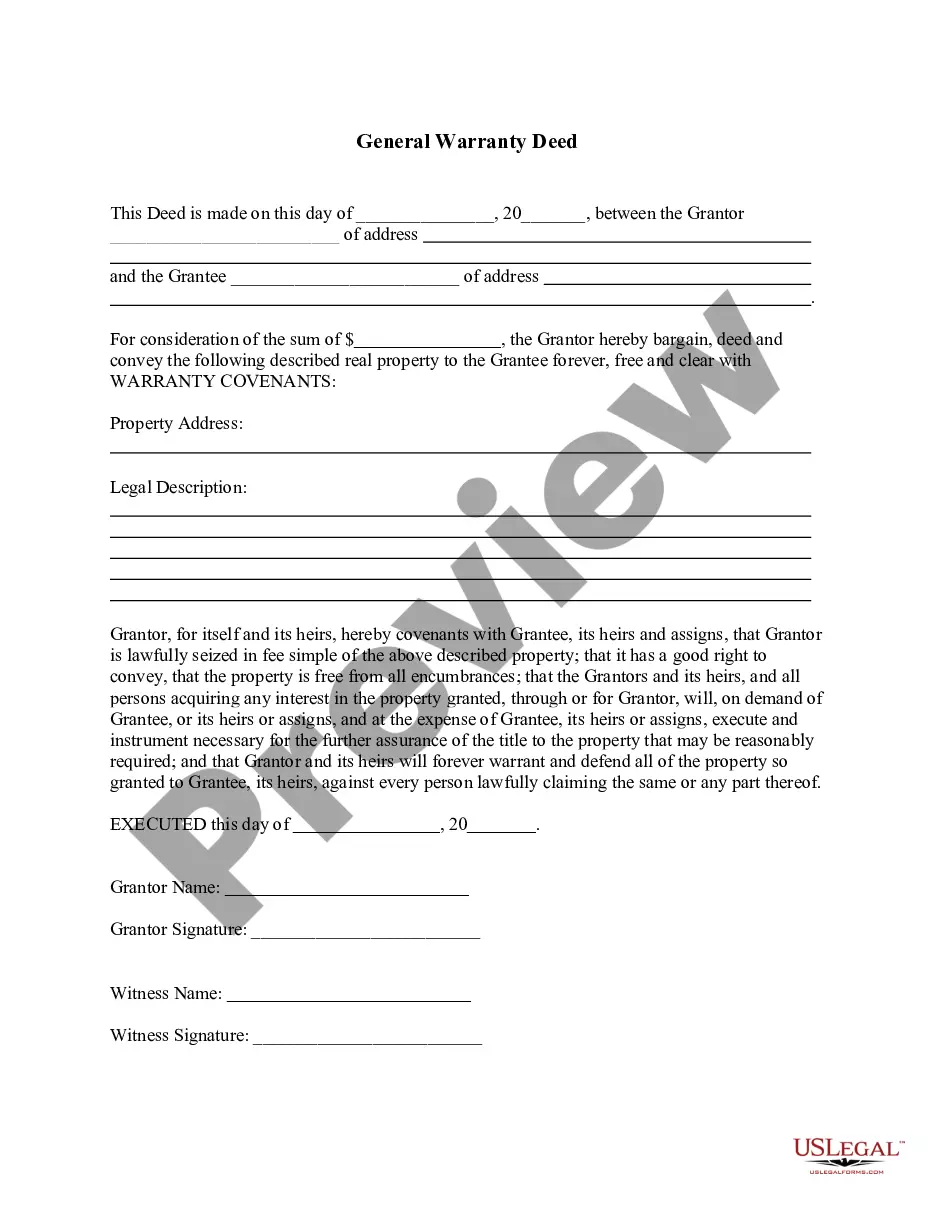
The Fiduciary Deed is a legal document specifically designed for use by executors, trustees, trustors, administrators, and other fiduciaries. This form facilitates the transfer of property under the authority granted by a will or trust. Unlike standard deeds, which typically require the individual owner to sign, this form empowers a fiduciary to execute the transfer on behalf of the estate or trust, ensuring that the legal obligations are met effectively.
Form components explained
- Identification of the grantor as executor, trustee, or other fiduciary.
- Detail of the property being transferred, including legal description.
- Covenants affirming the grantor's authority and the legality of the transfer.
- Specified rights of the grantee regarding the property.
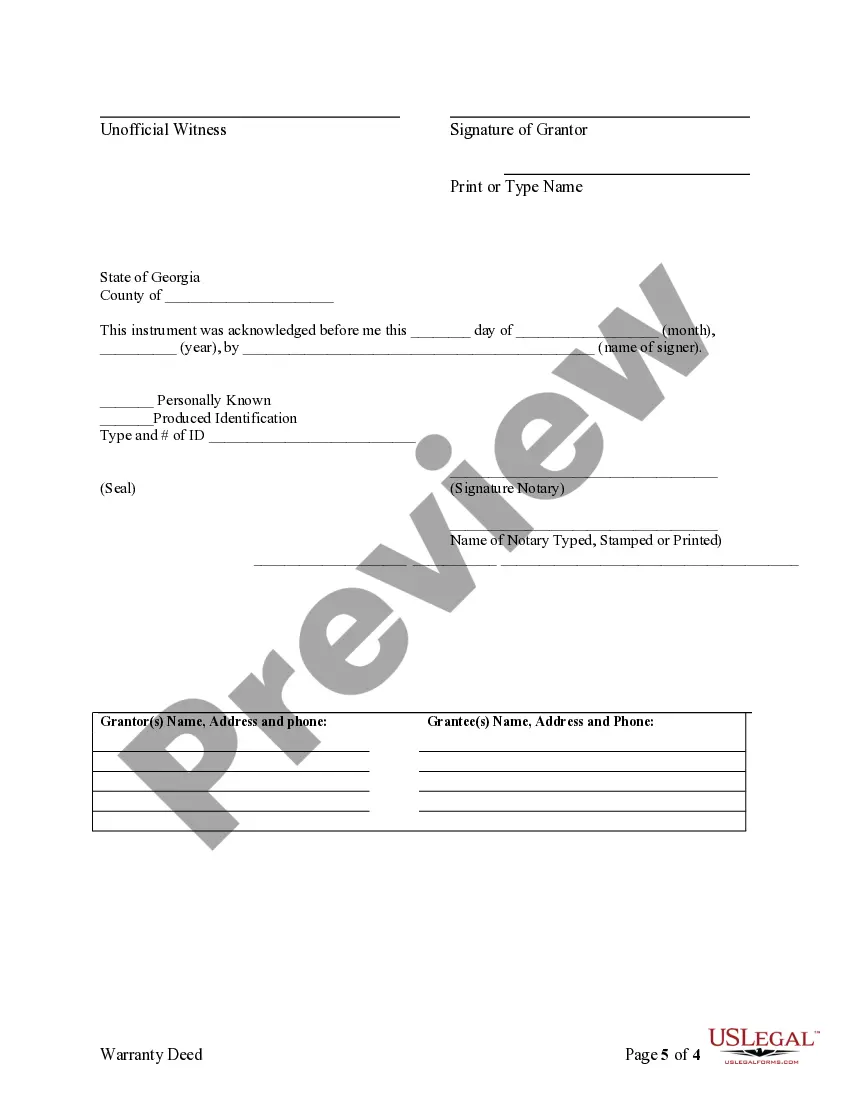
- Signature lines for the grantor to execute the deed.


When this form is needed
This form should be utilized when a fiduciary is required to transfer real estate as part of administering a will or trust. It is particularly relevant in situations where an executor must distribute property to beneficiaries, a trustee acts on behalf of a trust, or an administrator is settling an estate without a will. By using this form, fiduciaries ensure the proper legal transfer of property while complying with relevant laws.
Who can use this document
- Executors of a will tasked with property distribution.
- Trustees managing the assets of a trust.
- Trustors who need to transfer property as part of a trust establishment.
- Administrators handling estates of individuals who have passed away without a will.
- Guardians or conservators acting on behalf of others.
Instructions for completing this form
- Identify the grantor by their official title (executor, trustee, etc.) and provide their name.
- Specify the property being transferred, including its legal description.
- Confirm the grantor's authority to execute the transfer and add pertinent details as required.
- Sign and date the form in the designated location to finalize the deed.
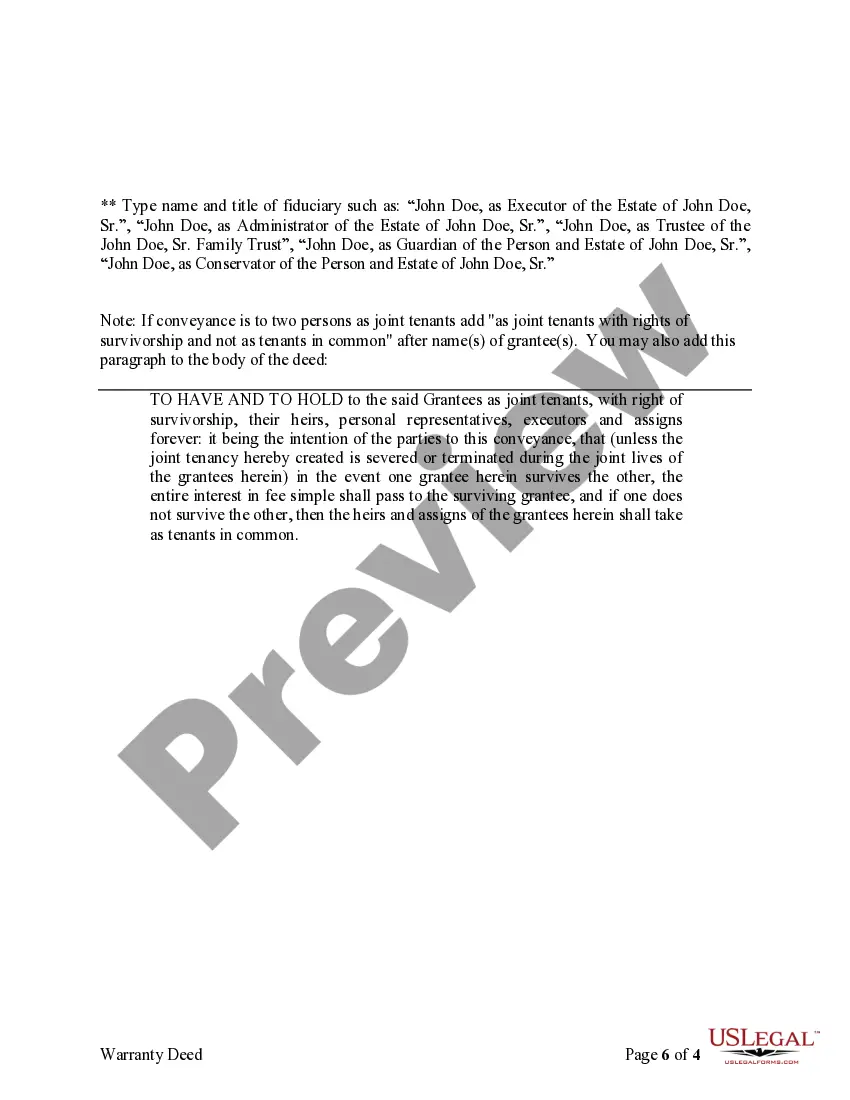
- If applicable, add any clauses addressing survivorship or joint ownership as needed.
Does this document require notarization?
To make this form legally binding, it must be notarized. Our online notarization service, powered by Notarize, lets you verify and sign documents remotely through an encrypted video session.
Get your form ready online
Our built-in tools help you complete, sign, share, and store your documents in one place.
Make edits, fill in missing information, and update formatting in US Legal Forms—just like you would in MS Word.
Download a copy, print it, send it by email, or mail it via USPS—whatever works best for your next step.
Sign and collect signatures with our SignNow integration. Send to multiple recipients, set reminders, and more. Go Premium to unlock E-Sign.
If this form requires notarization, complete it online through a secure video call—no need to meet a notary in person or wait for an appointment.
We protect your documents and personal data by following strict security and privacy standards.

Make edits, fill in missing information, and update formatting in US Legal Forms—just like you would in MS Word.

Download a copy, print it, send it by email, or mail it via USPS—whatever works best for your next step.

Sign and collect signatures with our SignNow integration. Send to multiple recipients, set reminders, and more. Go Premium to unlock E-Sign.

If this form requires notarization, complete it online through a secure video call—no need to meet a notary in person or wait for an appointment.

We protect your documents and personal data by following strict security and privacy standards.
Common mistakes
- Incorrectly identifying the grantor or their authority.
- Omitting the legal description of the property being transferred.
- Failing to sign and date the form before submission.
- Not including relevant clauses for joint ownership or survivorship when necessary.
Benefits of completing this form online
- Convenient access to legal forms that can be completed from home.
- Editable fields allow for easy customization to fit specific legal needs.
- Reliability of forms drafted by licensed attorneys ensures compliance with legal standards.
What to keep in mind
- The Fiduciary Deed is essential for legally transferring property by fiduciaries.
- Ensure that all forms are filled out accurately to avoid disputes.
- Consider notarization for added legal security, depending on state requirements.
Looking for another form?




Form popularity
FAQ
Choosing the best deed to transfer property often depends on your specific situation. Generally, a warranty deed is preferred for its extensive protection, but for those acting in a fiduciary role, the Georgia Fiduciary Deed for use by Executors, Trustees, Trustors, Administrators and other Fiduciaries is an excellent choice. This deed allows fiduciaries to transfer property while adhering to legal guidelines, ensuring a smoother transition for all parties involved.
Yes, the executor of a will is indeed a type of fiduciary. The executor has the responsibility to manage the estate according to the deceased person's wishes and is obligated to act in the best interest of the beneficiaries. This role is vital, as using a Georgia Fiduciary Deed for use by Executors, Trustees, Trustors, Administrators and other Fiduciaries ensures that property is handled legally and effectively.
The strongest deed is typically the warranty deed, as it provides the highest level of protection to the recipient. It guarantees that the grantor holds clear title to the property and will defend it against any claims. However, for fiduciaries, the Georgia Fiduciary Deed for use by Executors, Trustees, Trustors, Administrators and other Fiduciaries is also robust, allowing fiduciaries to act responsibly and with authority in property transfers.
A fiduciary deed is primarily used to transfer property when a fiduciary, such as an executor or trustee, manages the property on behalf of another person. This deed ensures that the property is transferred according to the instructions outlined in a will or trust. By using a Georgia Fiduciary Deed for use by Executors, Trustees, Trustors, Administrators and other Fiduciaries, you can facilitate a smooth property transfer while maintaining legal compliance.
The safest type of deed to use depends on the context of the property transaction. Generally, a warranty deed is considered safe because it provides comprehensive protections for the buyer. However, a Georgia Fiduciary Deed for use by Executors, Trustees, Trustors, Administrators, and other Fiduciaries is also secure in its purpose, as it legally authorizes a fiduciary to act without personal liability. Utilizing the appropriate deed type is crucial for ensuring legal protection and smooth transfers.
Fiduciary ownership occurs when one party, known as the fiduciary, manages property or assets on behalf of another party, typically for a beneficiary. In the context of a Georgia Fiduciary Deed for use by Executors, Trustees, Trustors, Administrators, and other Fiduciaries, this arrangement ensures that the fiduciary has a legal obligation to act in the best interest of the beneficiaries. Such ownership allows for efficient management and distribution of assets, particularly in estates and trusts. This legal framework is essential for maintaining trust during the probate process.
The primary difference between a warranty deed and a Georgia Fiduciary Deed lies in the guarantees provided. A warranty deed assures the buyer that the seller holds clear title to the property and can defend against any claims. In contrast, a fiduciary deed operates under the authority of a fiduciary, transferring property without personal guarantees. Understanding these differences is important for Executors, Trustees, and other Fiduciaries when managing property transactions.
A Georgia Fiduciary Deed for use by Executors, Trustees, Trustors, Administrators, and other Fiduciaries serves to transfer property ownership in specific fiduciary situations. The deed reflects the authority of a fiduciary to act on behalf of the estate or trust. This type of deed helps ensure that transactions are legally valid, protecting the interests of beneficiaries. By using a fiduciary deed, you simplify the process of asset management during estate settlement.
An executor's deed in Georgia is a document that allows an executor to transfer real property as specified in the will of the deceased. This deed serves as proof of the executor's authority to act on behalf of the estate, ensuring that property transfers are conducted legally and correctly. Using a Georgia Fiduciary Deed for use by Executors, Trustees, Trustors, Administrators and other Fiduciaries streamlines this process, protecting the interests of all parties involved. US Legal Forms provides valuable resources and templates to help executors navigate these requirements effortlessly.
A trustee deed in Georgia is a legal document that transfers property from a trust to a beneficiary. This type of deed is essential for trustees, as it provides proof of authority to act on behalf of the trust. Utilizing a Georgia Fiduciary Deed for use by Executors, Trustees, Trustors, Administrators and other Fiduciaries ensures that the transfer process adheres to state laws and regulations. For those looking to navigate this process smoothly, US Legal Forms offers reliable templates that help simplify the necessary documentation.