Florida Motion for Summary Judgment by Plaintiff
Overview of this form
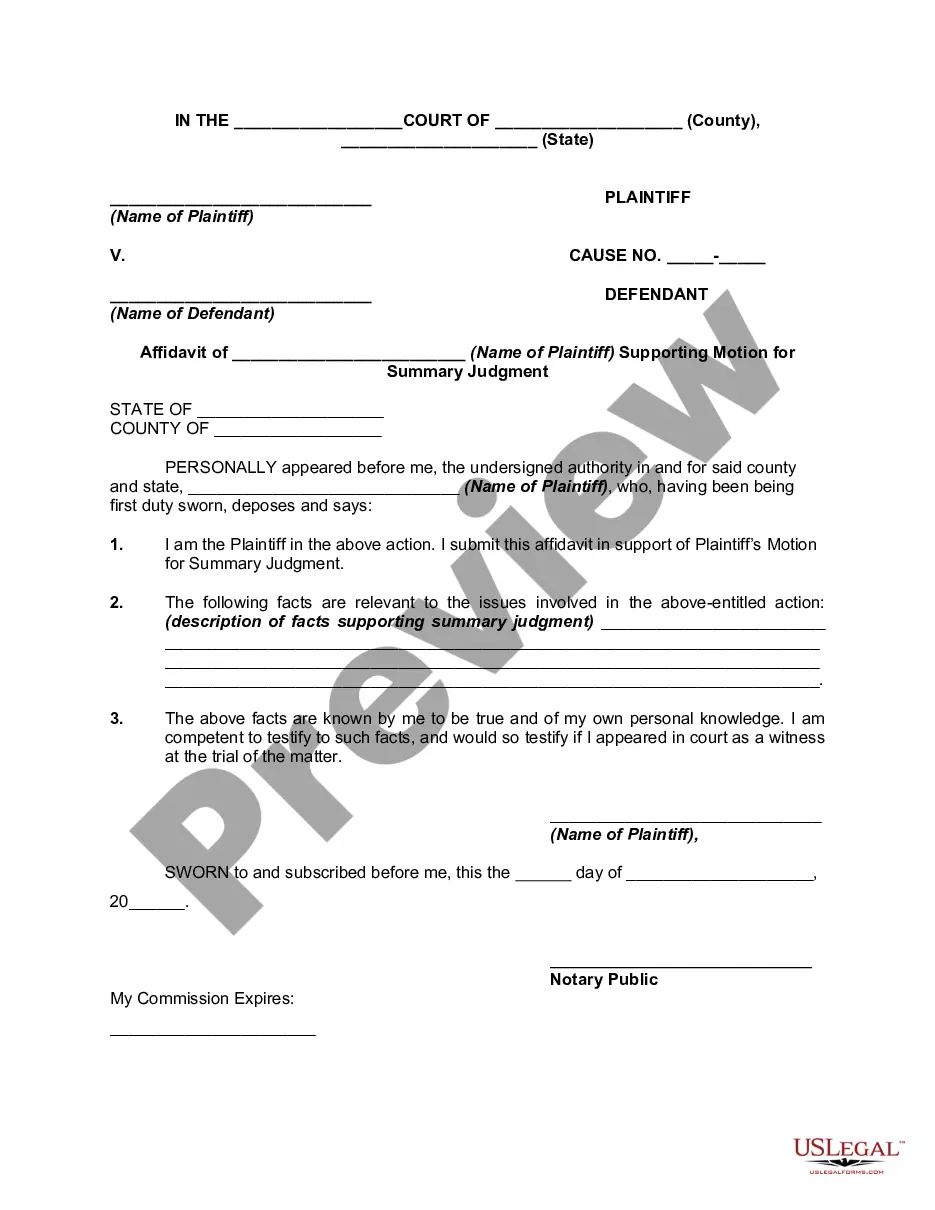
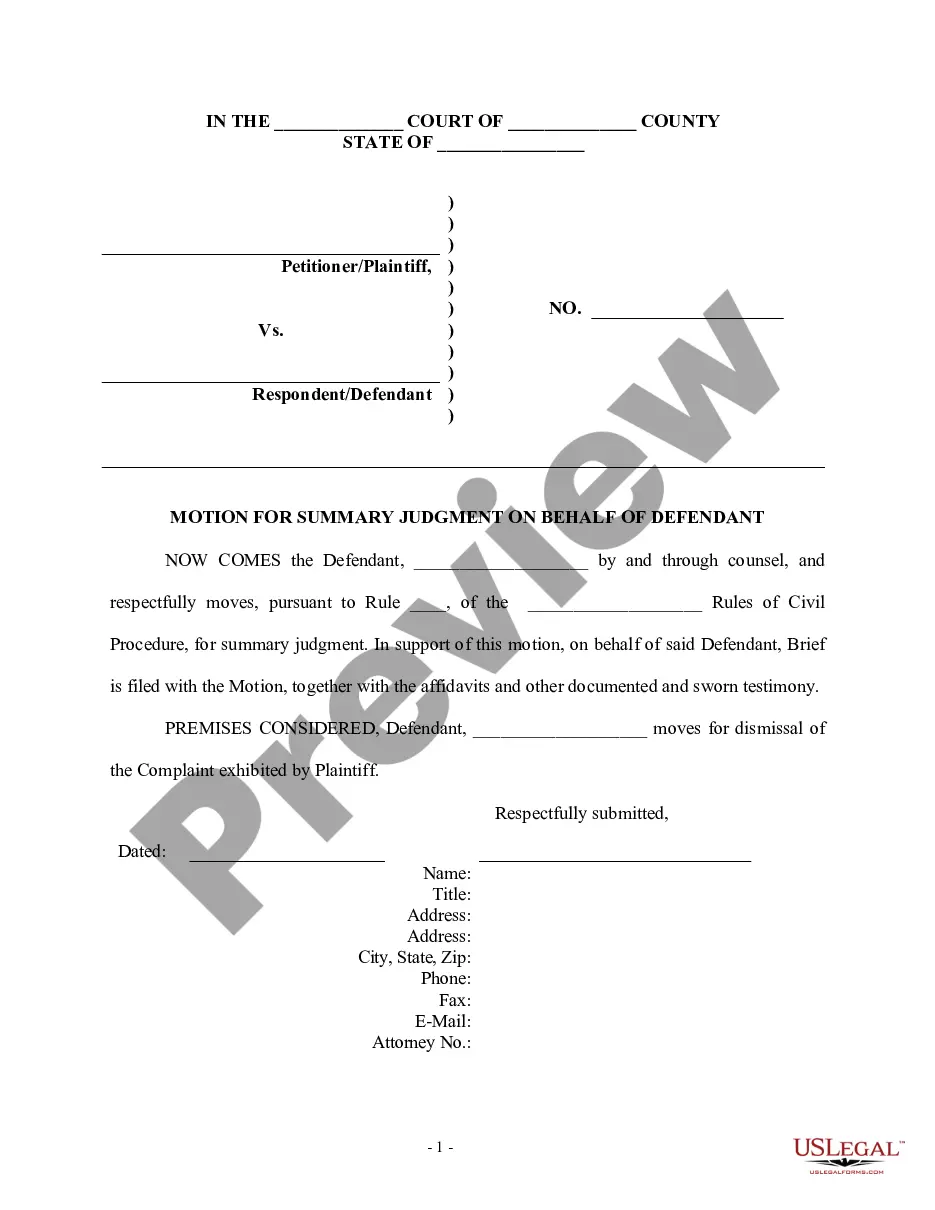
The Motion for Summary Judgment by Plaintiff is a legal document used in Florida civil litigation. It allows a plaintiff to request that the court decide their case in their favor without a trial when there are no genuine disputes regarding material facts. This form differs from other motions by specifically seeking a ruling based on evidence already presented, which helps to expedite the legal process and reduce unnecessary delays in litigation.
Main sections of this form
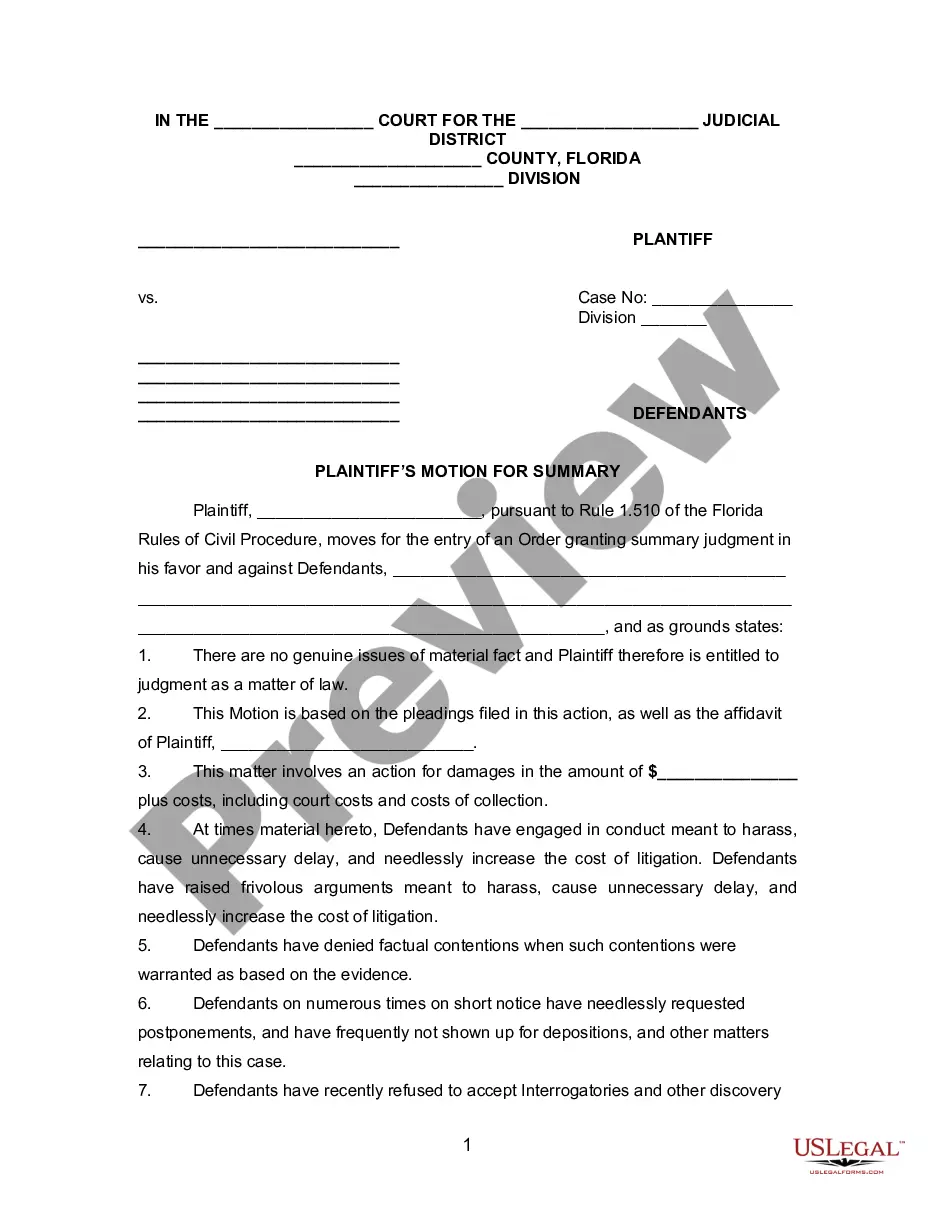
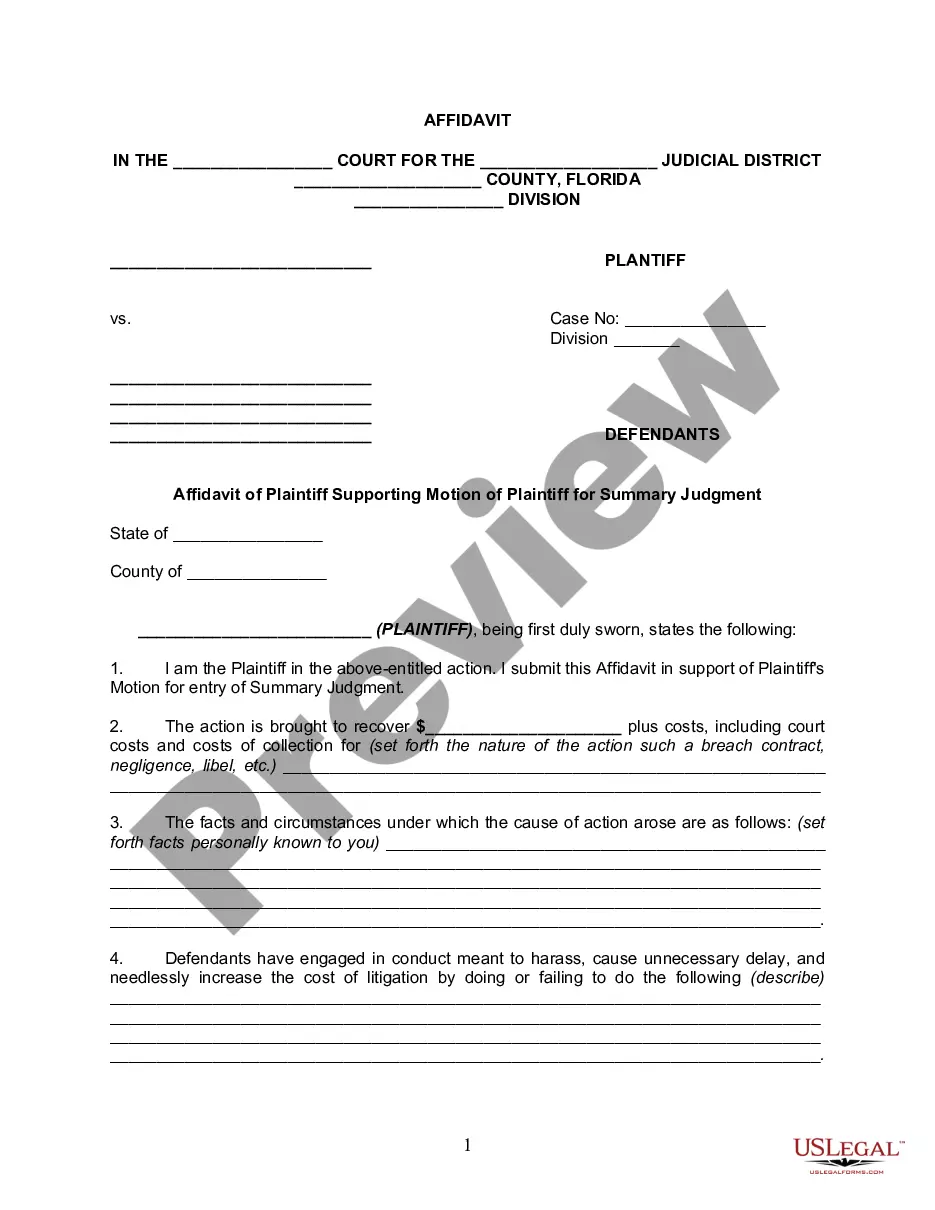
- Case identification details, including the name of the plaintiff and defendants, and case number.
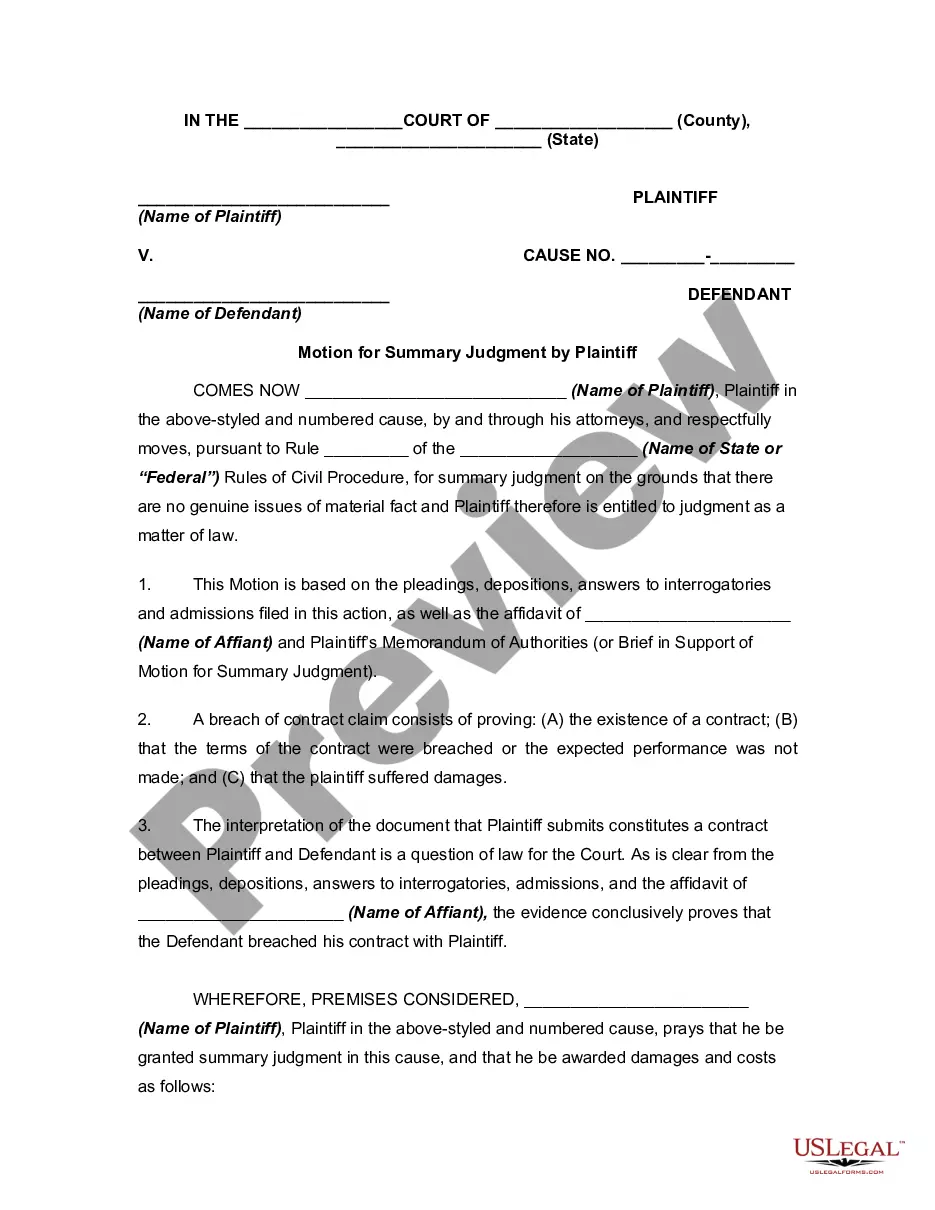
- Statement of claim for summary judgment and accompanying legal grounds.
- Allegations against defendants, outlining their conduct and any delays caused.
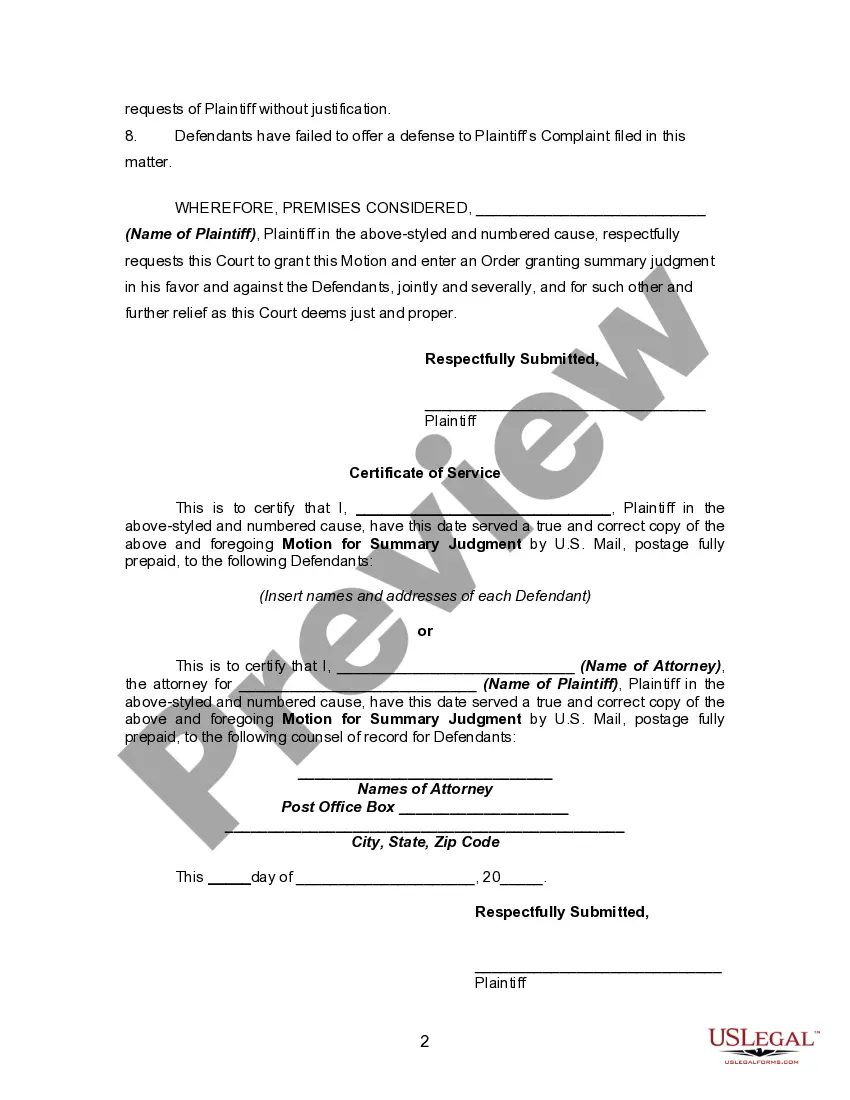
- Specific relief sought from the court, including an order for summary judgment.
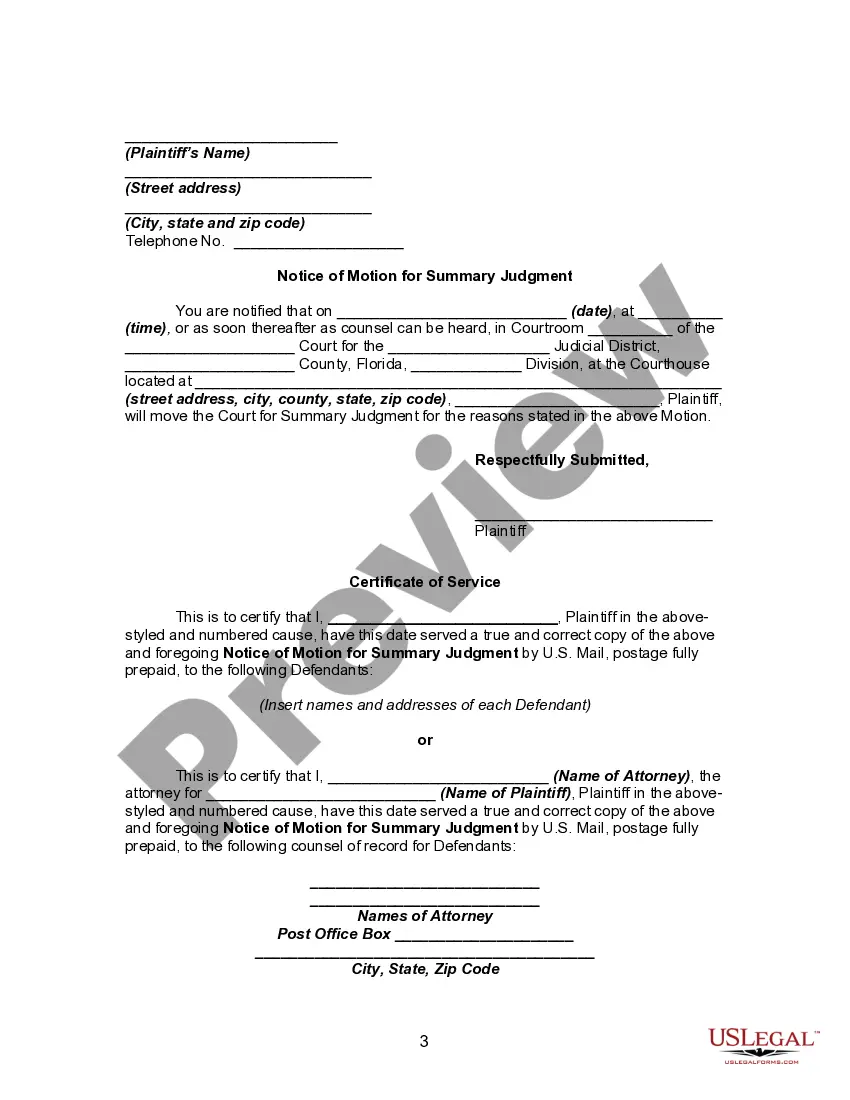
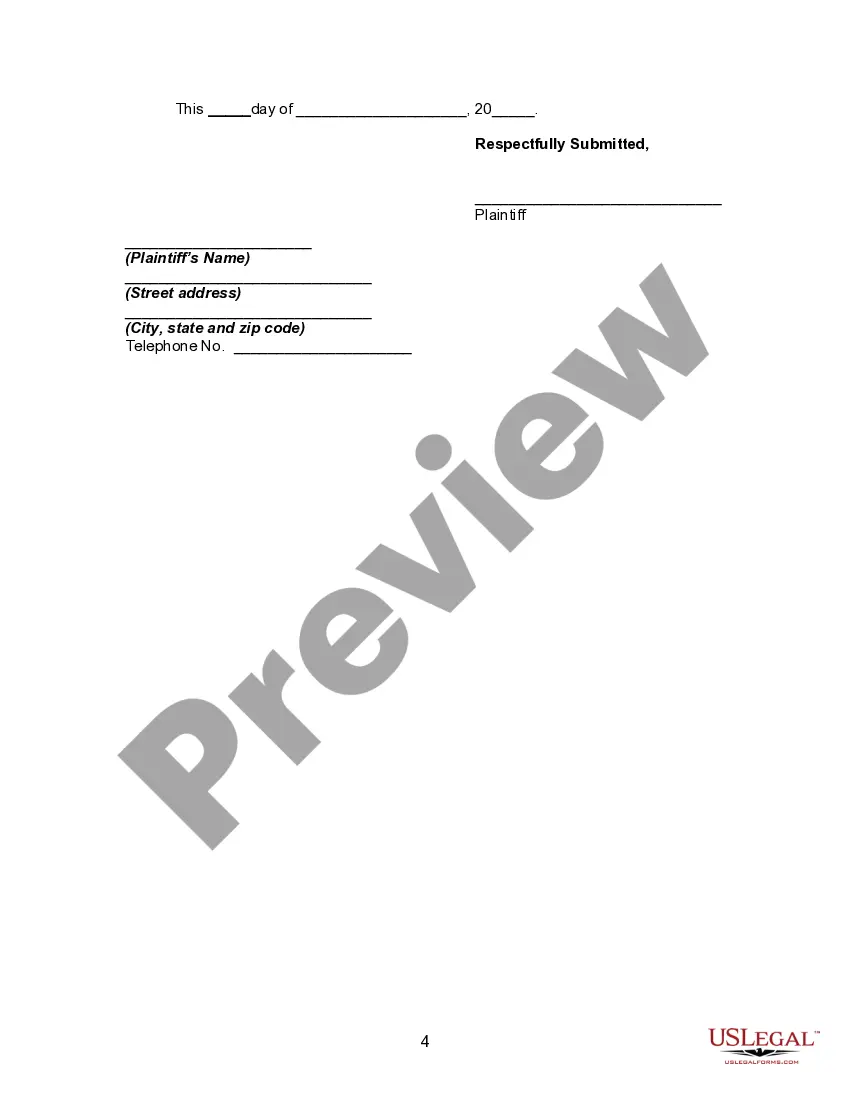
- Certificate of service indicating that copies of the motion have been provided to defendants.
- Notice of the motion specifying the time and location for the court hearing.
Common use cases
This form is typically used when a plaintiff believes they have a strong case and there are no real disputes about the key facts of the case. Common scenarios include situations where the evidence overwhelmingly supports the plaintiffâs claims, or where the defendants have not responded adequately to previous motions or discovery requests. It is also suitable when the plaintiff seeks to expedite the resolution of their case due to defendants' delays.
Who this form is for
This form is intended for:
- Individuals or entities acting as plaintiffs in a civil lawsuit in Florida.
- Legal professionals representing plaintiffs who wish to seek a judgment without going to trial.
- Parties involved in cases where they believe there are no factual disputes and a prompt resolution is necessary.
Steps to complete this form
- Enter the case identification details, including the names of the plaintiff and defendants and the case number.
- Clearly state the grounds for the motion and summarize the supporting evidence.
- Specify the amount of damages and any additional relief sought from the court.
- Include a certificate of service to confirm that all relevant parties have been notified of the motion.
- Fill in the notice section with the date, time, and location of the court hearing.
Notarization guidance
This form usually doesn’t need to be notarized. However, local laws or specific transactions may require it. Our online notarization service, powered by Notarize, lets you complete it remotely through a secure video session, available 24/7.
Get your form ready online
Our built-in tools help you complete, sign, share, and store your documents in one place.
Make edits, fill in missing information, and update formatting in US Legal Forms—just like you would in MS Word.
Download a copy, print it, send it by email, or mail it via USPS—whatever works best for your next step.
Sign and collect signatures with our SignNow integration. Send to multiple recipients, set reminders, and more. Go Premium to unlock E-Sign.
If this form requires notarization, complete it online through a secure video call—no need to meet a notary in person or wait for an appointment.
We protect your documents and personal data by following strict security and privacy standards.

Make edits, fill in missing information, and update formatting in US Legal Forms—just like you would in MS Word.

Download a copy, print it, send it by email, or mail it via USPS—whatever works best for your next step.

Sign and collect signatures with our SignNow integration. Send to multiple recipients, set reminders, and more. Go Premium to unlock E-Sign.

If this form requires notarization, complete it online through a secure video call—no need to meet a notary in person or wait for an appointment.

We protect your documents and personal data by following strict security and privacy standards.
Avoid these common issues
- Failing to provide enough detail in the grounds for the summary judgment.
- Neglecting to include all necessary supporting documents and evidence.
- Omitting the certificate of service or failing to properly serve the motion to all parties.
- Missing the deadline for filing the motion after the defined period post-commencement of the lawsuit.
Benefits of using this form online
- Convenient access to professionally drafted templates tailored for Florida regulations.
- Easy to download and edit to fit your specific case needs.
- Reliable legal language that meets state standards, reducing the risk of errors.
- Time-efficient, allowing you to focus on other case preparations.
Legal use & context
- The Motion for Summary Judgment is a recognized tool in civil litigation, providing a mechanism to resolve cases efficiently.
- This form must be backed by evidence that meets the court's standards for admissibility.
- Summary judgment can only be granted when there are no disputed material facts, making it essential to properly articulate your position.
Looking for another form?

Form popularity
FAQ
The new rule for motion for summary judgment in Florida aims to streamline the process, making it clearer and more efficient. It emphasizes the need for a party to demonstrate the absence of disputes in material facts convincingly. This update is significant for anyone considering employing the Florida Motion for Summary Judgment by Plaintiff, as it sets clearer standards for achieving a favorable ruling.
The difference between a motion for judgment on the pleadings and a motion for summary judgment lies in the evidence presented. A motion for judgment on the pleadings relies solely on the written statements of each party, while a motion for summary judgment includes additional evidence, like documents and affidavits, that support the claims. Understanding this distinction can be vital for crafting a successful Florida Motion for Summary Judgment by Plaintiff.
It is often harder for plaintiffs to win motions for summary judgment because they bear the burden of proof, meaning they must establish that no substantial factual disputes exist. Defendants, on the other hand, can simply argue that there are material facts that require examination in a trial. Therefore, when filing a Florida Motion for Summary Judgment by Plaintiff, it's crucial to present compelling evidence that supports the claims.
A motion for judgment on the pleadings filed by the plaintiff is a procedural tool that allows the plaintiff to seek a judgment based only on the pleadings submitted to the court. In this motion, the plaintiff argues that the opponent’s pleadings do not present sufficient facts to warrant a trial. This can expedite cases and avoid the trial process altogether, similar to the Florida Motion for Summary Judgment by Plaintiff.
A motion for judgment on the pleadings is a request for the court to decide the case based solely on the pleadings, or written statements of the parties involved. This type of motion asks the court to determine if, based on these pleadings, one party is entitled to judgment. While similar to the Florida Motion for Summary Judgment by Plaintiff, it relies explicitly on the written arguments made by each party.
A plaintiff's motion for summary judgment in Florida is a legal request asking the court to rule in favor of the plaintiff without a trial. This motion asserts that there are no genuine disputes over material facts, allowing the court to make a decision based on the law. Utilizing Florida Motion for Summary Judgment by Plaintiff enhances the chances of a swift resolution if the evidence supports the plaintiff's claims.
A motion for judgment is a request made to the court to issue a judgment in favor of one party, typically before a full trial takes place. In the context of Florida Motion for Summary Judgment by Plaintiff, it seeks to eliminate the need for a trial based on evidence that clearly supports the plaintiff's case. This judicial tool can save time and resources if the case is strong enough.
A court may deny a Florida Motion for Summary Judgment by Plaintiff if it finds that factual disputes exist or if the evidence presented is insufficient to establish that there is no genuine issue for trial. Additionally, if the court identifies that the law has been misapplied, it will likely deny the motion. It is essential for both parties to present compelling evidence and arguments during this phase. Platforms like US Legal Forms can assist in preparing necessary documents and strategies to address and counter such motions effectively.
In the context of a Florida Motion for Summary Judgment by Plaintiff, the plaintiff's opposition involves countering the defendant's claims and maintaining that there are genuine material issues that warrant a trial. This includes assembling evidence, outlining legal arguments, and clearly demonstrating why summary judgment should not be granted. Using organized and comprehensive documentation can effectively bolster a plaintiff's case. Legal platforms like US Legal Forms can provide the necessary templates and guidance for preparing strong opposition documents.
Summary judgments tend to be overturned if the appellate court finds that the trial court made an error in applying the law or in evaluating the evidence. However, statistics indicate that while a significant number of summary judgments are granted, very few are successfully overturned. The key to this is the strength of the evidence presented during the original proceedings. Therefore, understanding the nuances of a Florida Motion for Summary Judgment by Plaintiff is crucial for both plaintiffs and defendants.