District of Columbia Fiduciary Deed for Executors, Trustees, and other Fiduciaries
About this form
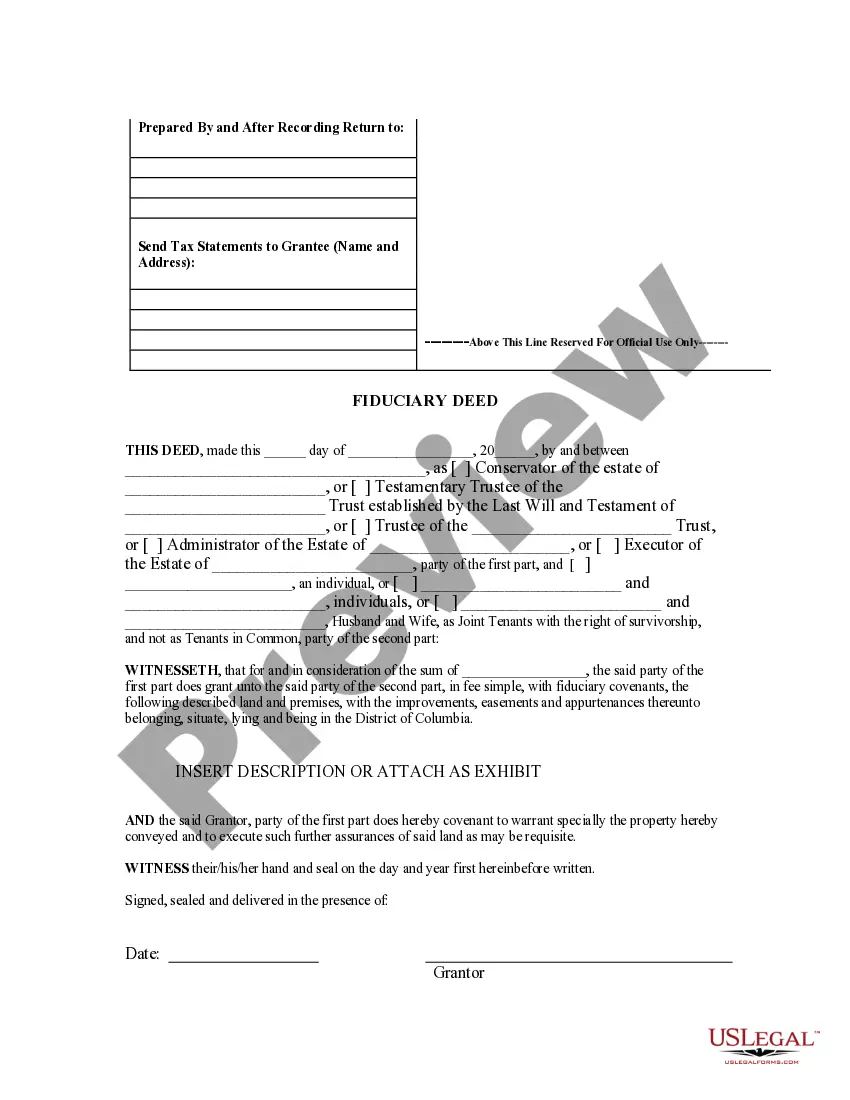
The Fiduciary Deed for Executors, Trustees, and other Fiduciaries is a legal document used primarily by individuals acting in a fiduciary capacity. This includes executors of wills, trustees, guardians, or conservators. This form enables these fiduciaries to transfer property or manage assets in accordance with their duties, providing a clear record of the transaction and their authority to act on behalf of another party. It differs from standard deeds by emphasizing the fiduciary relationship and the obligations accompanying it.
Form components explained
- Grantor and grantee information: Identifies the executor, trustee, or fiduciary and the party receiving the property.
- Property description: Provides a detailed description of the property being transferred, which may include attachments as necessary.
- Fiduciary covenants: Details the fiduciary duties involved in managing the property and the rights of the parties.
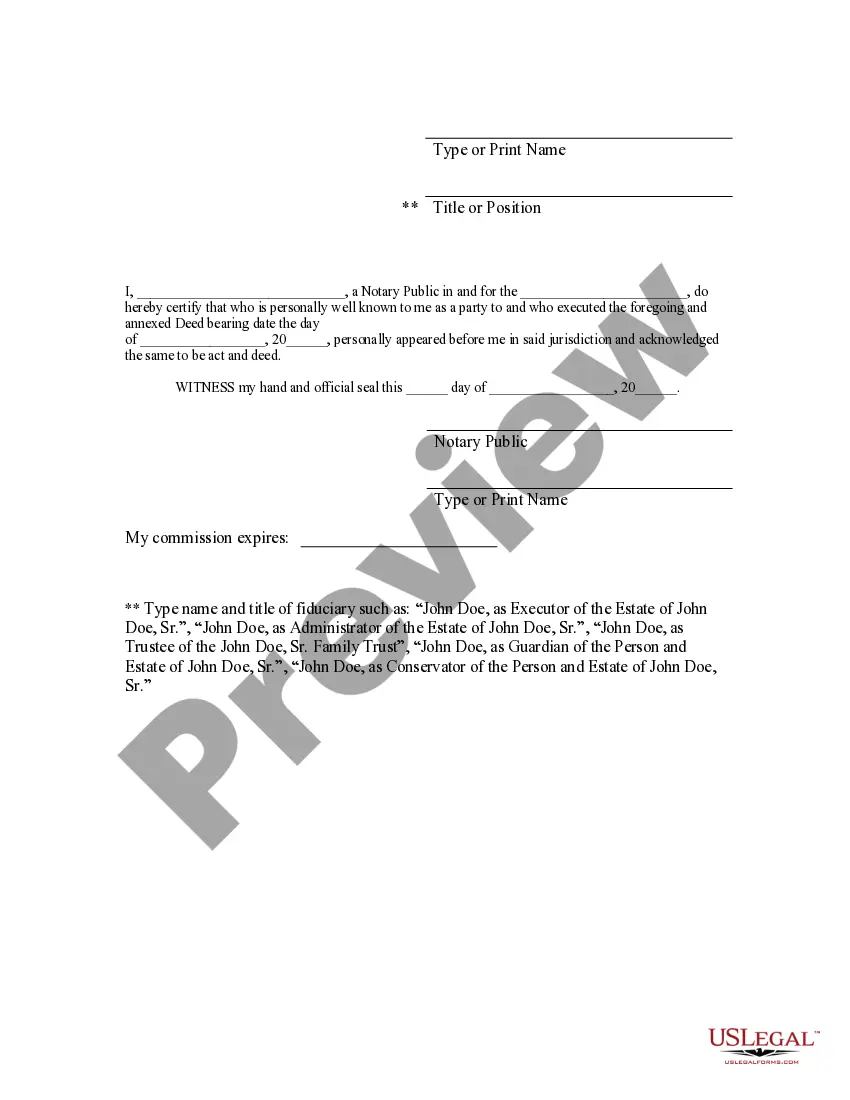
- Notarization space: Designated area for notarization to validate the document legally.
- Signature lines: Requires signatures from the fiduciary and witnesses, if applicable.



When this form is needed
This form is essential when a fiduciary needs to convey guardianship, estate distribution, or asset management responsibilities. Common scenarios include executing a will, transferring property held in trust, or making transactions on behalf of an incapacitated individual. It is used to ensure that the transfer of property adheres to legal requirements and is properly documented to protect the interests of both the grantor and grantee.
Who needs this form
- Executors of a will managing estate property.
- Trustees handling assets in a trust.
- Guardians acting on behalf of minors or incapacitated individuals.
- Conservators appointed for someone who cannot manage their own affairs.
Steps to complete this form
- Identify the parties involved: Clearly state the grantor (the fiduciary) and the grantee (the person or entity receiving the property).
- Specify the property: Enter a detailed description of the property being conveyed, ensuring it aligns with legal standards.
- Fill out dates and amounts: Complete any required fields for the date of the transaction and the consideration (payment) amount.
- Sign the document: Ensure the fiduciary and any required witnesses sign the form, as per legal requirements.
- Notarize the document: If applicable, have the document notarized to verify authenticity and legal standing.
Is notarization required?
This document requires notarization to meet legal standards. US Legal Forms provides secure online notarization powered by Notarize, allowing you to complete the process through a verified video call, available 24/7.
Get your form ready online
Our built-in tools help you complete, sign, share, and store your documents in one place.
Make edits, fill in missing information, and update formatting in US Legal Forms—just like you would in MS Word.
Download a copy, print it, send it by email, or mail it via USPS—whatever works best for your next step.
Sign and collect signatures with our SignNow integration. Send to multiple recipients, set reminders, and more. Go Premium to unlock E-Sign.
If this form requires notarization, complete it online through a secure video call—no need to meet a notary in person or wait for an appointment.
We protect your documents and personal data by following strict security and privacy standards.

Make edits, fill in missing information, and update formatting in US Legal Forms—just like you would in MS Word.

Download a copy, print it, send it by email, or mail it via USPS—whatever works best for your next step.

Sign and collect signatures with our SignNow integration. Send to multiple recipients, set reminders, and more. Go Premium to unlock E-Sign.

If this form requires notarization, complete it online through a secure video call—no need to meet a notary in person or wait for an appointment.

We protect your documents and personal data by following strict security and privacy standards.
Common mistakes
- Failing to provide a complete property description, which may lead to ambiguities.
- Not obtaining notarization when required, potentially invalidating the deed.
- Leaving signature lines blank or improperly filled out, which could result in disputes.
- Ignoring local legal requirements that may necessitate additional information or formatting.
Benefits of using this form online
- Convenience: Download and complete the form at your own pace from anywhere.
- Editability: Fill in the form digitally to avoid handwriting issues and ensure clarity.
- Reliability: Access a template created by licensed attorneys, ensuring it meets legal standards and accuracy.
Looking for another form?


Form popularity
FAQ
An executor's deed allows a personal representative of an estate to transfer property according to the directions in a will, without the warranty typical of a warranty deed. This means that while an executor’s deed may offer less assurance regarding title, it serves a specific purpose in the estate settlement process. Utilizing a District of Columbia Fiduciary Deed for Executors, Trustees, and other Fiduciaries is crucial for ensuring compliance with legal requirements while protecting other beneficiaries' interests.
One notable disadvantage of a warranty deed is the seller's obligation to address any title issues that may arise after the sale, potentially leading to legal disputes. This added responsibility can deter some sellers from using this type of deed. For those managing estates, opting for a District of Columbia Fiduciary Deed for Executors, Trustees, and other Fiduciaries can offer a safer route, as it limits personal liability.
The strongest form of deed is often considered to be a warranty deed because it provides the highest level of protection to the grantee. It includes explicit guarantees from the seller regarding the title. However, a District of Columbia Fiduciary Deed for Executors, Trustees, and other Fiduciaries can also be robust as it legally empowers fiduciaries to act in the best interests of the estate or trust without personal liability.
The key distinction between a warranty deed and a District of Columbia Fiduciary Deed for Executors, Trustees, and other Fiduciaries lies in their purpose and use. A warranty deed guarantees the grantor holds clear title to the property and will defend against any claims. In contrast, a fiduciary deed allows executors and trustees to convey property without assuming responsibility for potential title issues, as they are acting on behalf of the estate or trust.
A District of Columbia Fiduciary Deed for Executors, Trustees, and other Fiduciaries serves as a legal instrument that allows fiduciaries to transfer property held in trust or for the benefit of another party. This deed ensures that the transfer adheres to the responsibilities of executors and trustees, providing clarity and legality. It primarily protects the interests of other beneficiaries while simplifying the management of inherited or trust property.
Yes, you can write your own will in Washington D.C., provided it adheres to the state's legal requirements. However, having legal expertise can enhance its effectiveness and validity. By consulting with professionals, you can ensure that your will and any related documents, such as a District of Columbia Fiduciary Deed for Executors, Trustees, and other Fiduciaries, properly reflect your wishes and comply with the law.
While it is possible to create a deed without a lawyer, consulting with a legal professional is often beneficial. An attorney can help ensure that your District of Columbia Fiduciary Deed for Executors, Trustees, and other Fiduciaries meets all legal requirements and addresses your specific needs. This guidance can prevent potential issues or disputes in the future.
To become an executor of an estate in Washington D.C., you must first be appointed by the probate court. This process typically involves submitting the will, providing necessary identification, and completing an application. Once appointed, you will have the authority to create a District of Columbia Fiduciary Deed for Executors, Trustees, and other Fiduciaries to manage the estate effectively.
In real estate, the three primary types of deeds include warranty deeds, quitclaim deeds, and special purpose deeds. Each type serves different legal purposes and offers varying levels of protection to the parties involved. When dealing with a District of Columbia Fiduciary Deed for Executors, Trustees, and other Fiduciaries, understanding these differences helps ensure you choose the right deed for your situation.
Yes, the personal representative of an estate acts as a fiduciary. This individual is responsible for managing the estate's assets and obligations in accordance with the law. In the context of a District of Columbia Fiduciary Deed for Executors, Trustees, and other Fiduciaries, the personal representative must uphold a duty of care and loyalty when handling estate matters.