Connecticut Discovery Interrogatories for Divorce Proceeding for either Plaintiff or Defendant - Another Form
About this form
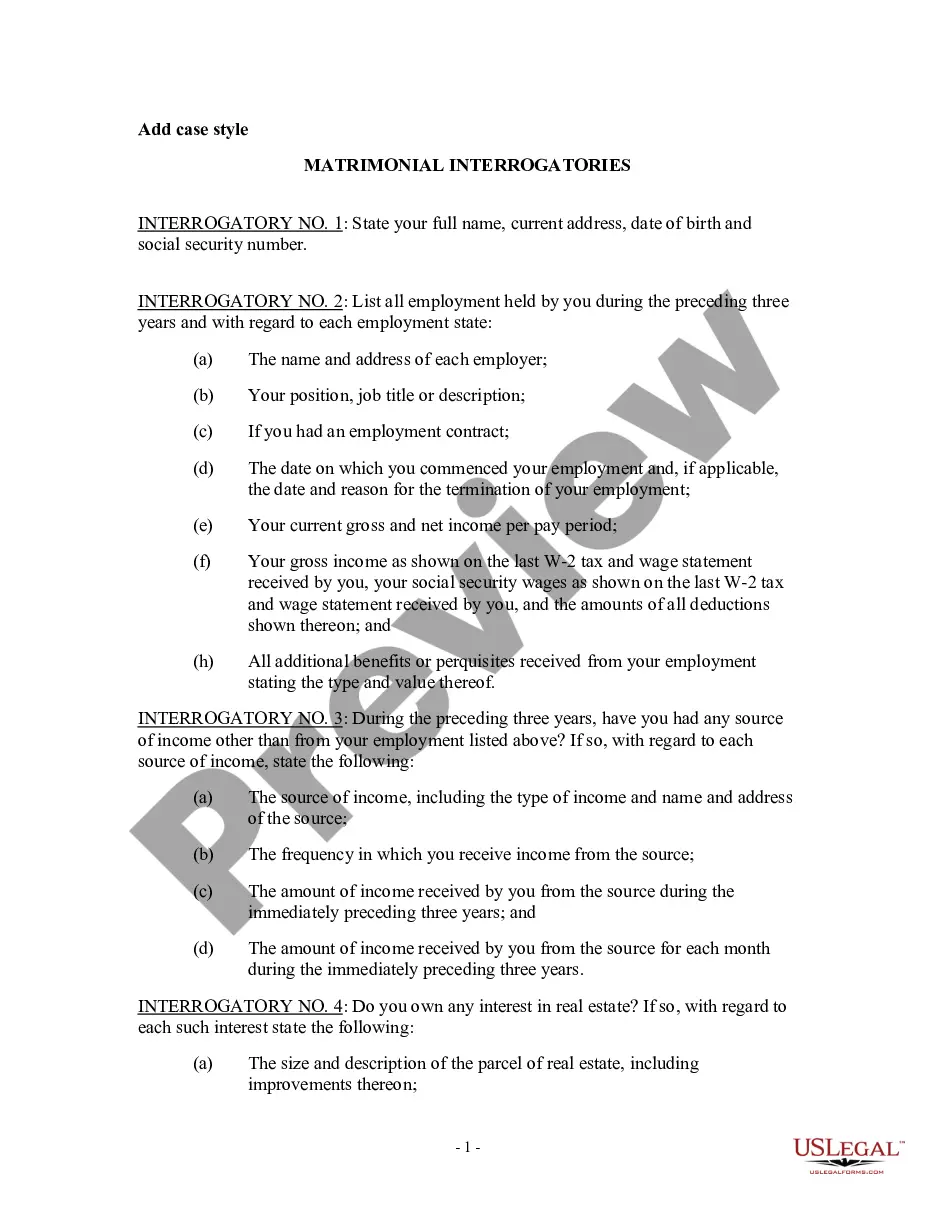
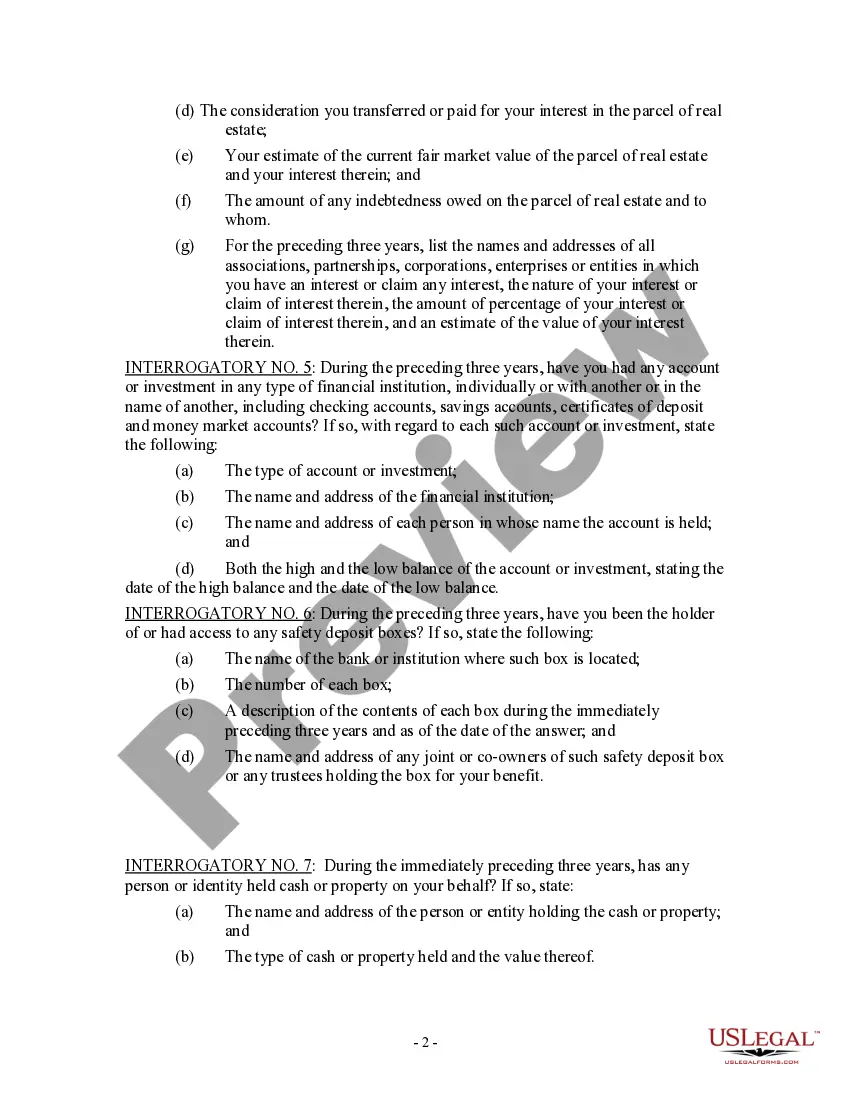
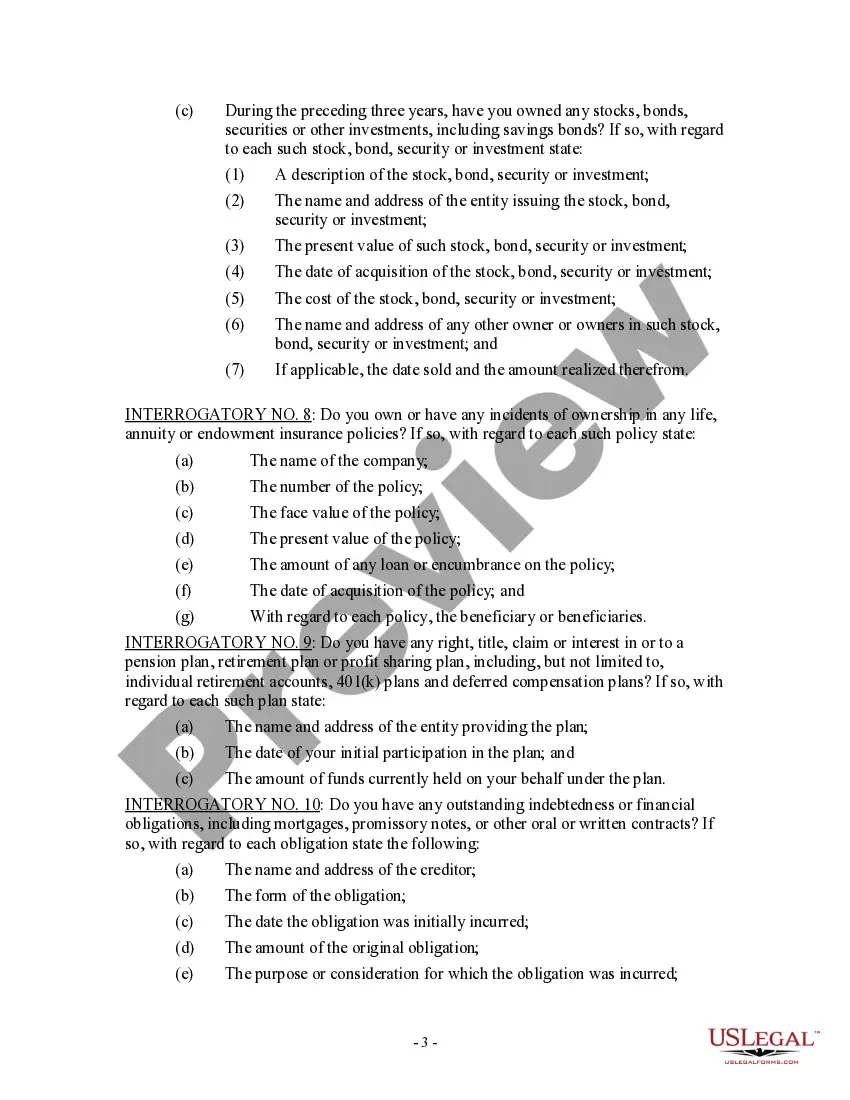
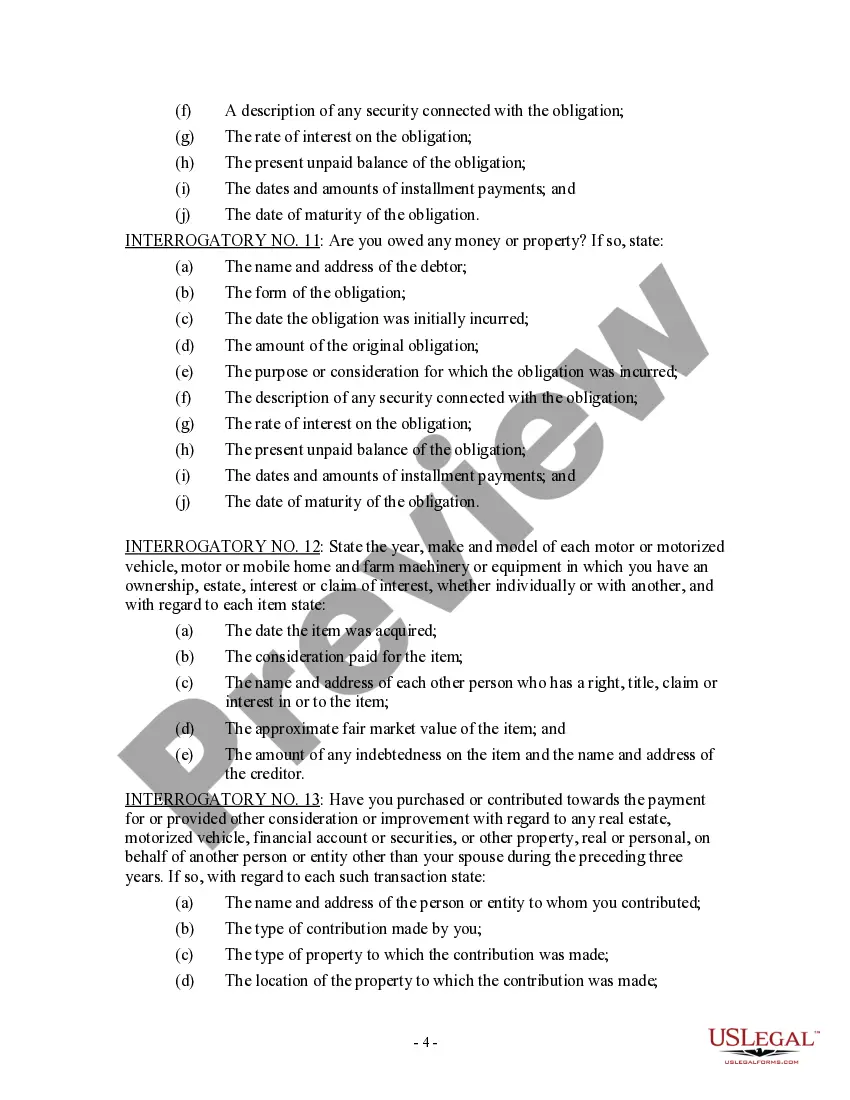
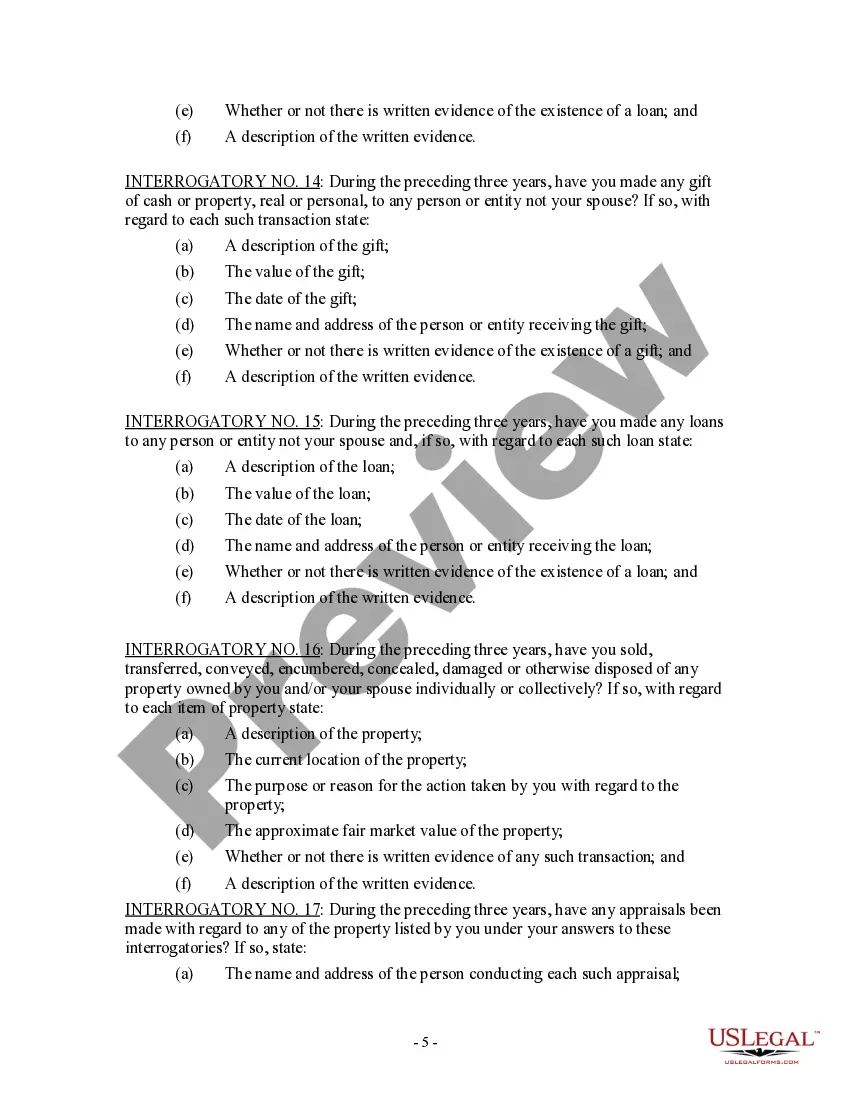
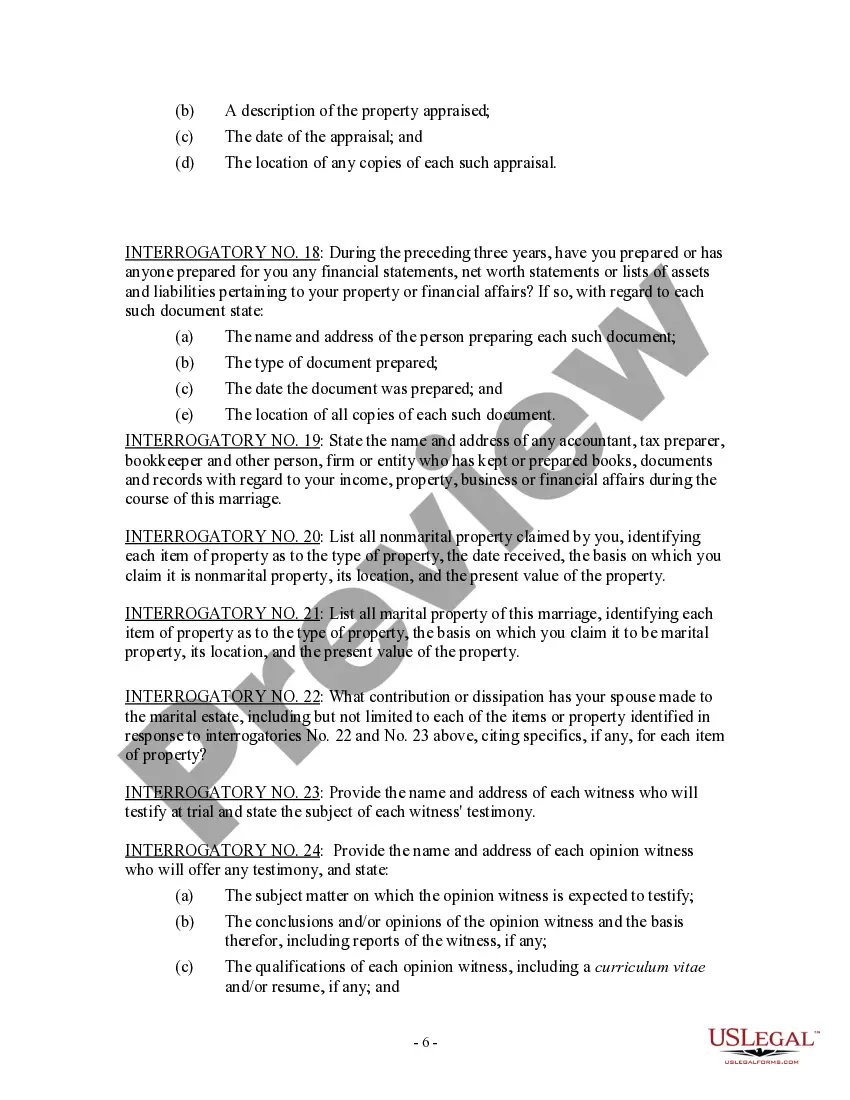
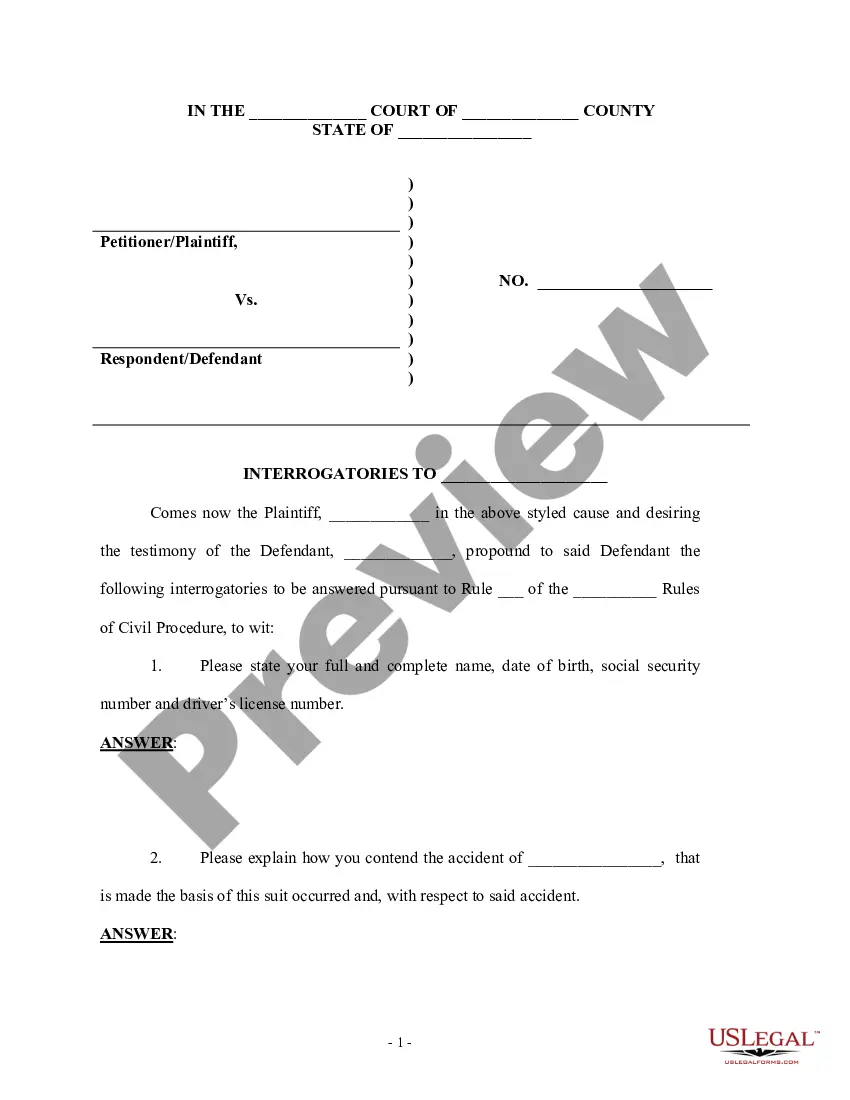
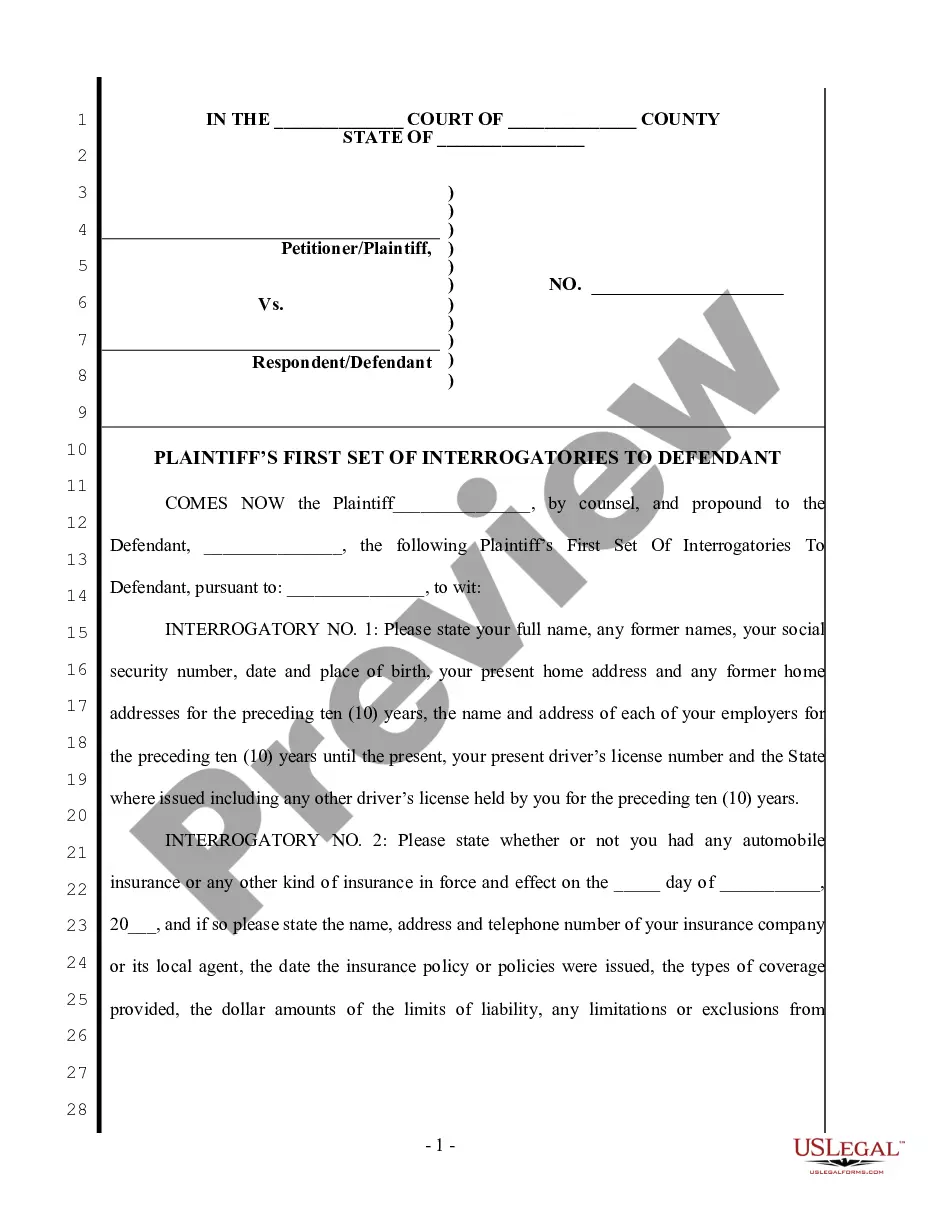
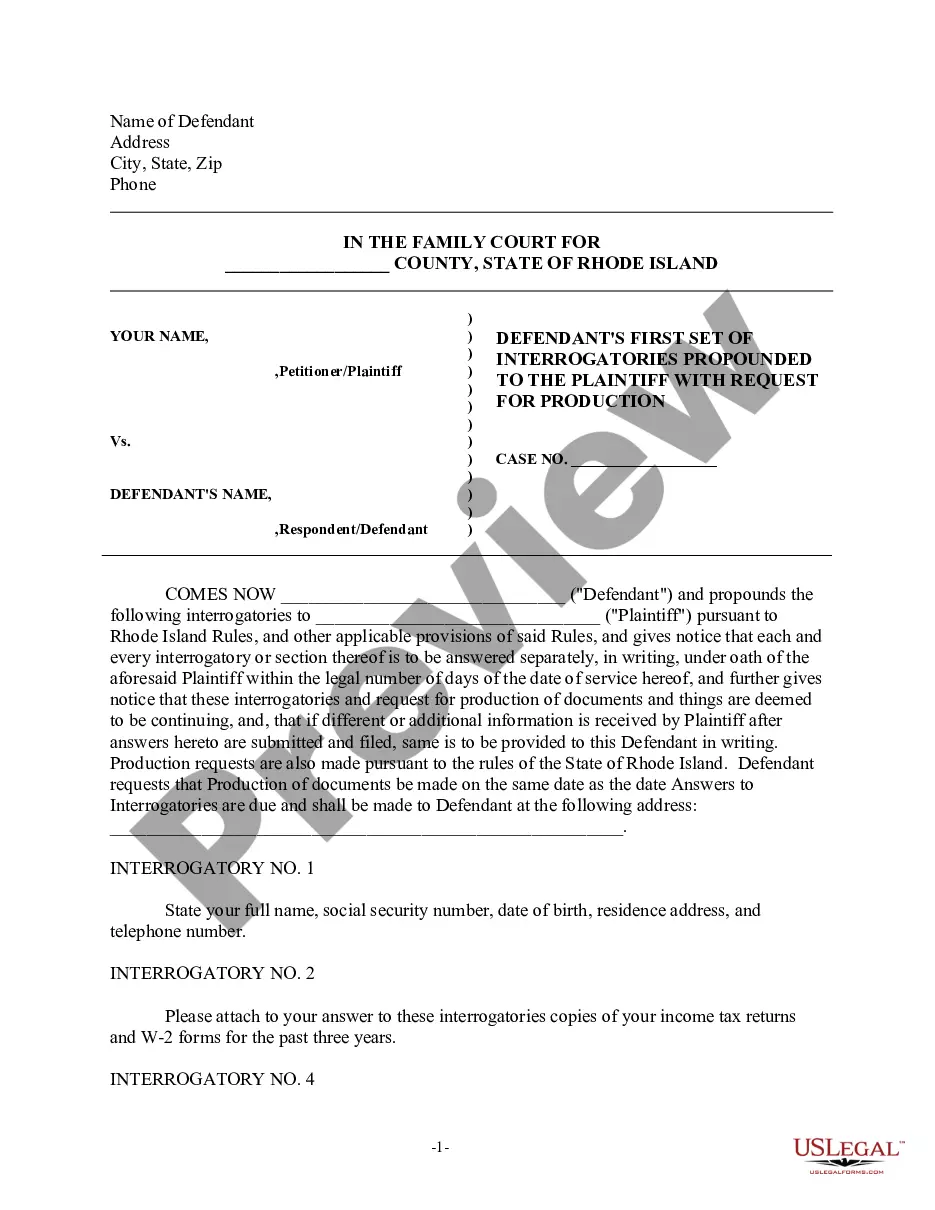
The Discovery Interrogatories for Divorce Proceeding is a legal document used during divorce proceedings to gather information from the other party, either the Plaintiff or Defendant. This form includes a series of questions designed to uncover financial information, property ownership, debts, and other relevant details necessary for the divorce case. Unlike other forms, it not only seeks written responses to specific questions but also requests the production of documents, making it a comprehensive tool for discovery in divorce litigation.
What’s included in this form
- Personal information of the responding party, including name, address, and social security number.
- Employment history and income details for the last three years.
- Ownership interests in real estate and associated financial information.
- Details on accounts and investments in financial institutions.
- Indebtedness and outstanding financial obligations.
- Information about nonmarital and marital property claims.
Common use cases
This form should be used when one party in a divorce proceeding needs to obtain detailed information from the other party. It is particularly useful in cases where financial transparency is crucial for asset division, spousal support, or determining the overall marital estate. You may find this form necessary to ensure that all relevant financial information is disclosed and that both parties are fully aware of each other's positions regarding assets and liabilities.
Who this form is for
This form is intended for:
- Individuals filing for divorce who require information from their spouse.
- The Plaintiff or Defendant in a divorce case seeking transparency and accountability in financial matters.
- Legal representatives assisting clients in family law cases related to divorce and asset division.
How to prepare this document
- Enter your full name, address, date of birth, and social security number at the top of the form.
- Respond to each interrogatory by providing detailed answers based on your financial and employment history.
- Ensure that you provide accurate valuations for any property or financial interest you list.
- If applicable, gather and attach any documents requested in the interrogatories to support your answers.
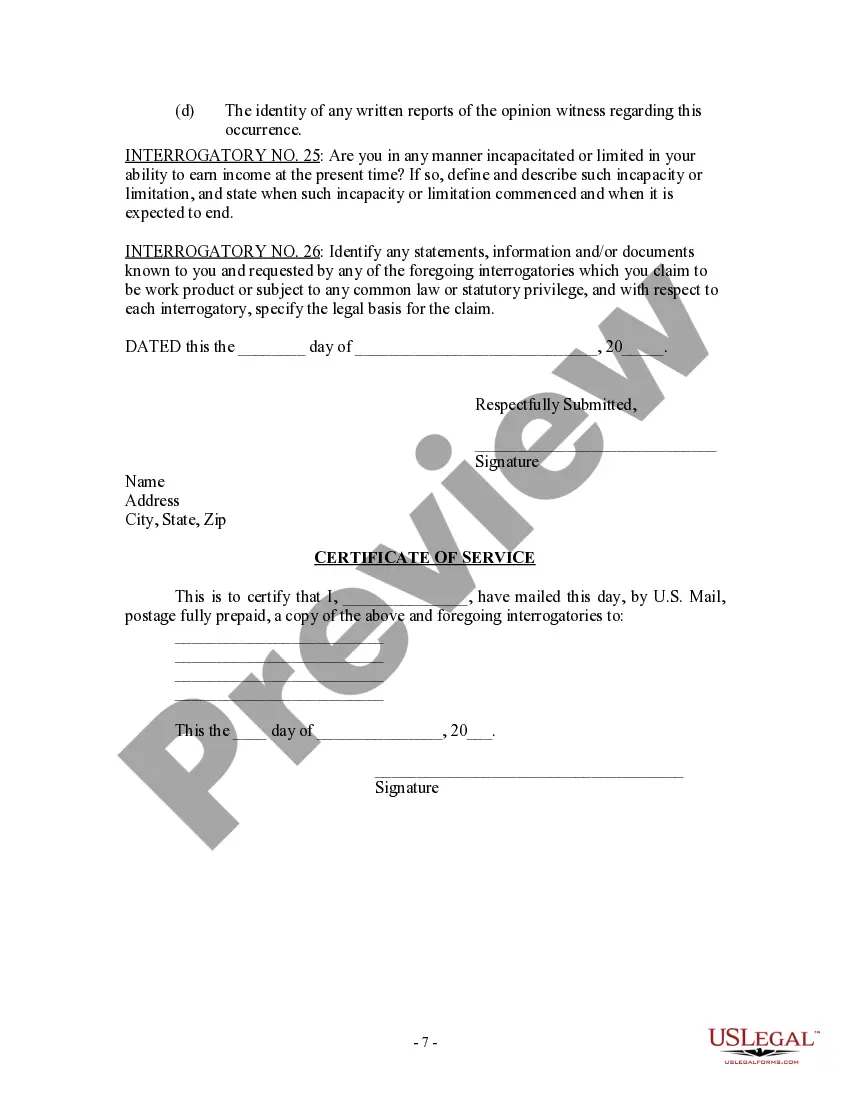
- Sign and date the form in the designated area before submitting it to the appropriate court.
Is notarization required?
This form does not typically require notarization unless specified by local law. Always check with your jurisdiction to ensure compliance with any specific requirements.
Get your form ready online
Our built-in tools help you complete, sign, share, and store your documents in one place.
Make edits, fill in missing information, and update formatting in US Legal Forms—just like you would in MS Word.
Download a copy, print it, send it by email, or mail it via USPS—whatever works best for your next step.
Sign and collect signatures with our SignNow integration. Send to multiple recipients, set reminders, and more. Go Premium to unlock E-Sign.
If this form requires notarization, complete it online through a secure video call—no need to meet a notary in person or wait for an appointment.
We protect your documents and personal data by following strict security and privacy standards.

Make edits, fill in missing information, and update formatting in US Legal Forms—just like you would in MS Word.

Download a copy, print it, send it by email, or mail it via USPS—whatever works best for your next step.

Sign and collect signatures with our SignNow integration. Send to multiple recipients, set reminders, and more. Go Premium to unlock E-Sign.

If this form requires notarization, complete it online through a secure video call—no need to meet a notary in person or wait for an appointment.

We protect your documents and personal data by following strict security and privacy standards.
Avoid these common issues
- Failing to answer all interrogatories completely or accurately.
- Neglecting to include necessary supporting documents.
- Submitting the form without signatures or proper dates.
- Using vague or ambiguous language in your responses.
- Ignoring local rules that may require additional steps or specific formatting.
Benefits of using this form online
- Convenient access to legal forms from anywhere, allowing for quick completion.
- Editability to customize questions based on your specific case needs.
- Reliability in using professionally drafted forms tailored for legal compliance.
Legal use & context
The Discovery Interrogatories are an essential component in divorce proceedings, serving to legally compel the exchange of information necessary for financial disclosures. They ensure both parties are aware of the details that may influence divorce settlements, and using this form helps maintain transparency throughout the divorce process.
Main things to remember
- The form aids in the essential discovery process during divorce litigation.
- It is tailored for gathering critical financial and personal information.
- Completing the form accurately is vital for fair legal proceedings.
Looking for another form?


Form popularity
FAQ
Yes, discovery, including Connecticut Discovery Interrogatories for Divorce Proceeding for either Plaintiff or Defendant - Another Form, is often worth it. This process uncovers essential information that helps clarify financial and personal circumstances. Engaging in discovery provides both parties with insights that can lead to fair negotiation outcomes. Utilizing platforms like uslegalforms can streamline this process and provide the necessary legal documents.
If someone fails to respond to Connecticut Discovery Interrogatories for Divorce Proceeding for either Plaintiff or Defendant - Another Form, it can lead to significant complications. The court may impose sanctions for non-compliance, which could affect the case outcome. It might also prompt the requesting party to seek a motion to compel an answer. Therefore, timely and complete responses are essential in a divorce proceeding.
To respond to Connecticut Discovery Interrogatories for Divorce Proceeding for either Plaintiff or Defendant - Another Form, start by reviewing the interrogatories you received. Begin your answers by restating the questions before providing your responses. This method clarifies your answers for the reviewing party. Remember, your answers should reflect the truth and can be supported by evidence available to you.
The best way to answer Connecticut Discovery Interrogatories for Divorce Proceeding for either Plaintiff or Defendant - Another Form is to read each question carefully. Then, provide clear and honest responses based on your knowledge and documents. It’s crucial to maintain accuracy and avoid ambiguities. You may also consider consulting a legal professional to ensure your answers are comprehensive and align with legal standards.
If a plaintiff does not answer interrogatories, they may face serious consequences in their divorce proceeding. The court can impose sanctions, which may include fines or even dismissal of the case. Additionally, failing to respond might weaken the plaintiff's position, especially in a divorce context, where transparency is crucial. To avoid such issues, consider using resources like US Legal Forms to ensure compliance with Connecticut Discovery Interrogatories for Divorce Proceeding for either Plaintiff or Defendant - Another Form.
Interrogatories and discovery are related, but they are not the same. Interrogatories are a specific type of discovery tool used in legal proceedings, such as Connecticut Discovery Interrogatories for Divorce Proceeding for either Plaintiff or Defendant - Another Form. Discovery encompasses various methods, including requests for documents and depositions. Understanding these differences can help you navigate your divorce case more effectively.
Filling out an interrogatories form starts with downloading the appropriate version of the Connecticut Discovery Interrogatories for Divorce Proceeding for either Plaintiff or Defendant - Another Form. Carefully fill in your personal details, then address each question with accurate information. Make sure all provided information is truthful, as it may be used in legal evaluations. After completing the form, review it for any potential errors before submission.
To answer interrogatories for divorce, begin by organizing your thoughts and gathering necessary documents. The Connecticut Discovery Interrogatories for Divorce Proceeding for either Plaintiff or Defendant - Another Form is designed to assist you in formulating clear responses. Carefully read each question and provide precise answers, ensuring you address every aspect thoroughly. This approach will help clarify your position in the divorce proceedings.
Good discovery questions for divorce often focus on finances, assets, and child custody arrangements. For instance, you may inquire about income sources or property ownership. Utilizing the Connecticut Discovery Interrogatories for Divorce Proceeding for either Plaintiff or Defendant - Another Form can help you structure these questions effectively. Always aim for clarity to ensure you receive useful responses.
An example of an interrogatory might be, 'Please state your full employment history for the past five years.' This type of question is common in the Connecticut Discovery Interrogatories for Divorce Proceeding for either Plaintiff or Defendant - Another Form, as it seeks specific information relevant to the case. Remember, the purpose of interrogatories is to gather factual information to assist in the legal process.