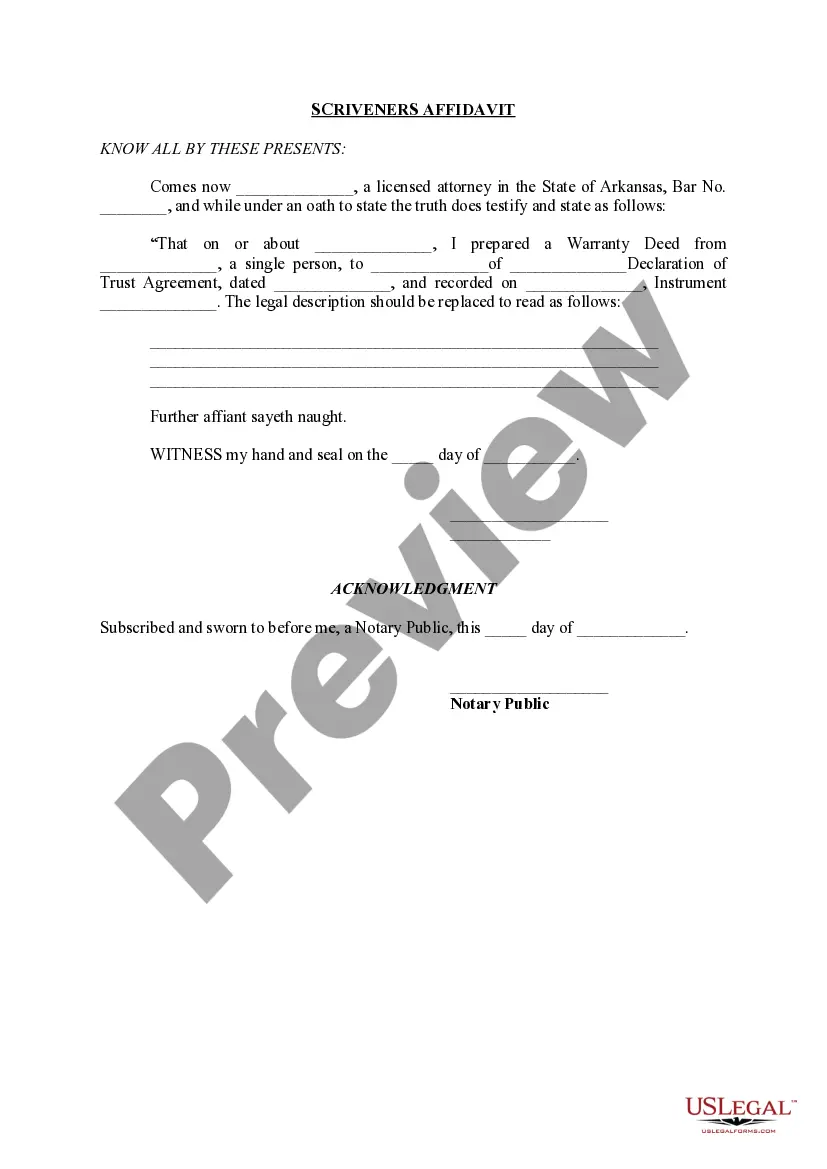
Arkansas Scriveners Affidavit
What is this form?
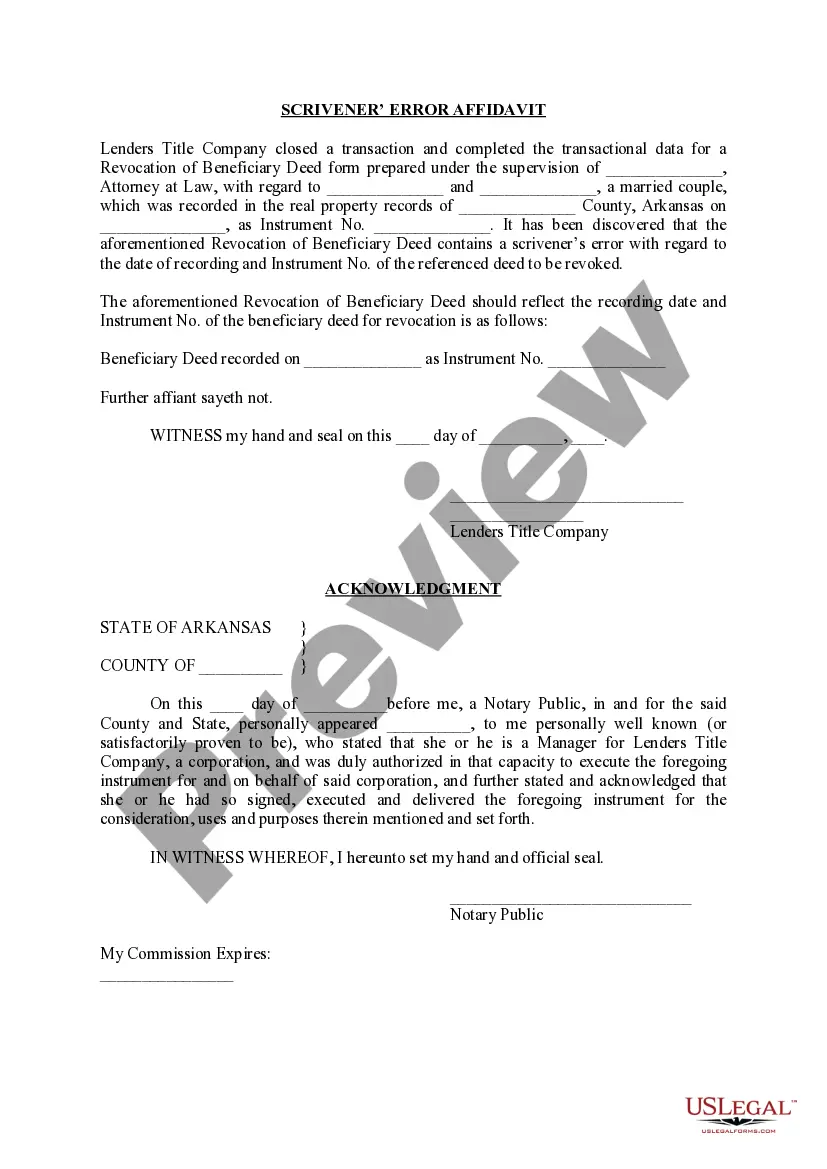
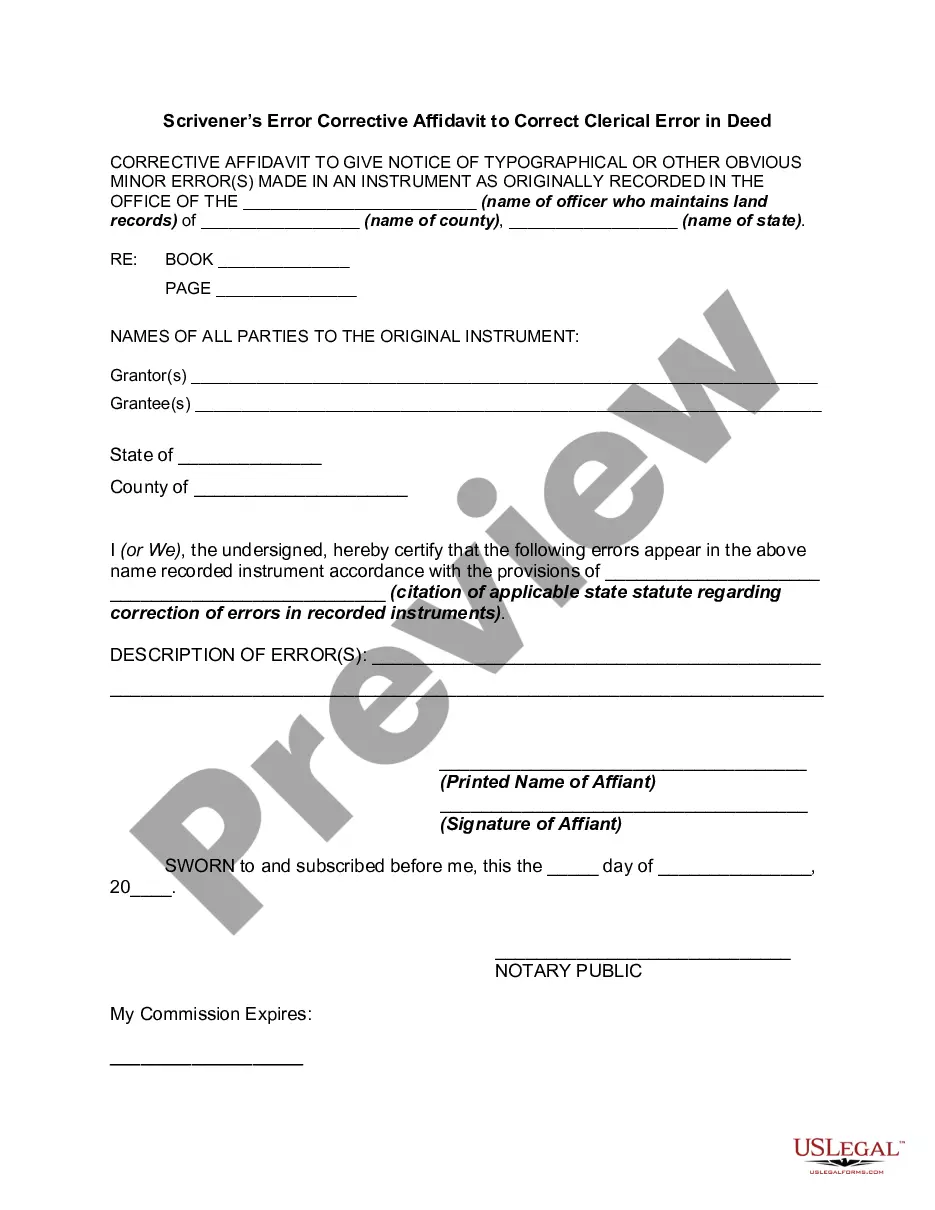
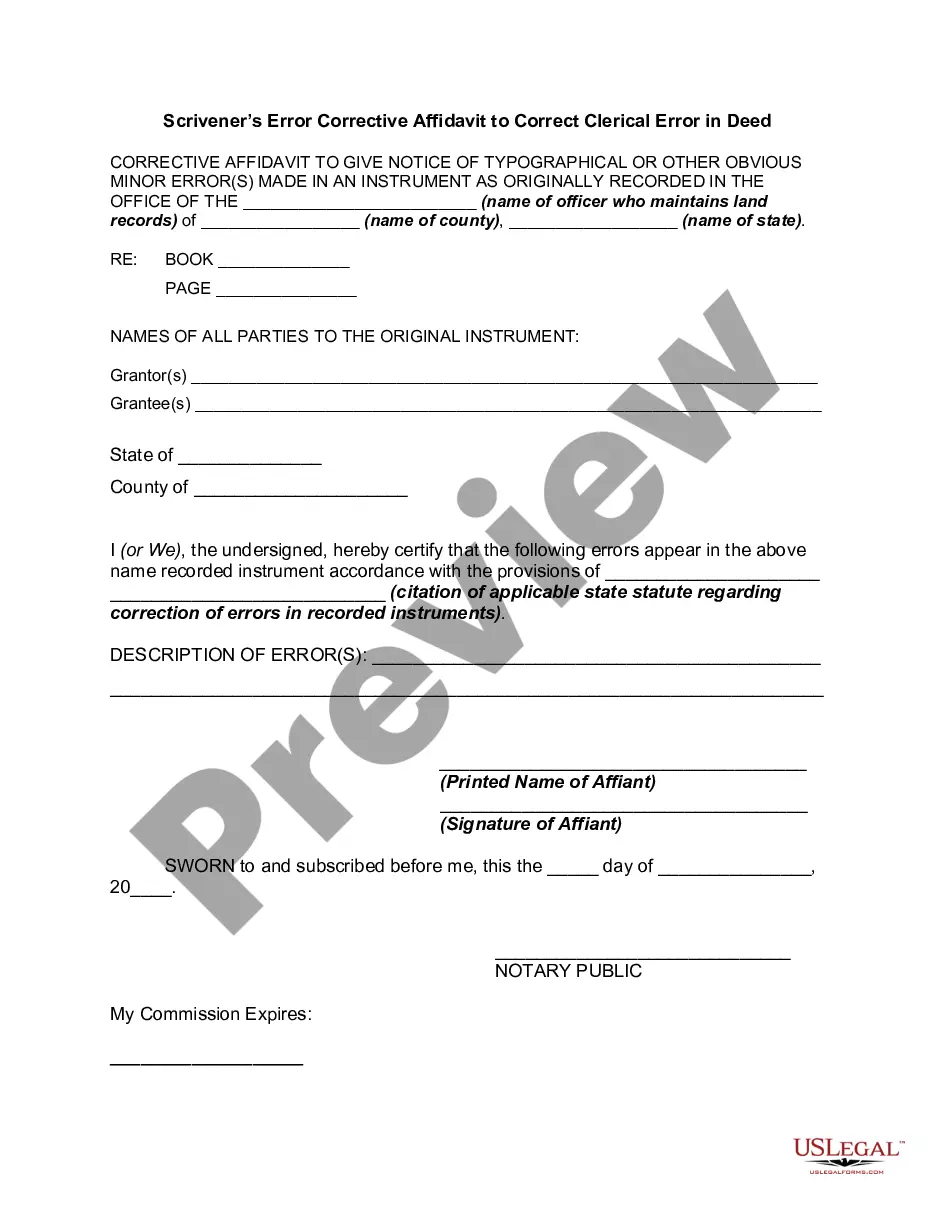
A scrivener's affidavit is a legal document used to confirm the correction of clerical errors in existing legal instruments like property deeds or bills of sale. Unlike other affidavits that require personal testimony or evidence, this affidavit focuses solely on rectifying documented errors, ensuring that the legal records accurately reflect the intended information.
Key components of this form
- Identification of the attorney preparing the affidavit, including their license number and state.
- A date indicating when the original document was prepared.
- The original parties involved in the transaction and a description of the property.
- A section stating the specific clerical errors and the correct legal description of the property.
- Signature of the attorney with an official seal, verifying the truthfulness of the affidavit.
- Notary acknowledgment confirming the attorney's signature and the date of signing.
When to use this document
This form is typically used when an existing legal document has clerical errors that need to be corrected. Common scenarios include errors in property descriptions on deeds or inconsistencies in recorded legal documents. If you need to ensure that your property records are accurate and legally valid, a scrivener's affidavit may be necessary.
Who can use this document
- Property owners seeking to correct errors in deed descriptions.
- Attorneys handling property transactions or disputes.
- Real estate professionals involved in documentation processes.
- Individuals looking to ensure the legality of property records.
Steps to complete this form
- Identify the parties involved, including the attorney and the property owners.
- Clearly state the date when the original legal document was prepared.
- Specify the propertyâs details and the errors that need correction.
- Replace the incorrect legal description with the accurate one.
- Have the attorney sign the affidavit and apply their seal.
- Ensure notarization by a qualified notary public, confirming the attorney's signature.
Notarization guidance
Yes, this form must be notarized to be legally valid. It requires a notary public to confirm the authenticity of the attorney's signature. US Legal Forms offers integrated online notarization, allowing you to complete this process securely via a video call, making it convenient and accessible.
Get your form ready online
Our built-in tools help you complete, sign, share, and store your documents in one place.
Make edits, fill in missing information, and update formatting in US Legal Forms—just like you would in MS Word.
Download a copy, print it, send it by email, or mail it via USPS—whatever works best for your next step.
Sign and collect signatures with our SignNow integration. Send to multiple recipients, set reminders, and more. Go Premium to unlock E-Sign.
If this form requires notarization, complete it online through a secure video call—no need to meet a notary in person or wait for an appointment.
We protect your documents and personal data by following strict security and privacy standards.

Make edits, fill in missing information, and update formatting in US Legal Forms—just like you would in MS Word.

Download a copy, print it, send it by email, or mail it via USPS—whatever works best for your next step.

Sign and collect signatures with our SignNow integration. Send to multiple recipients, set reminders, and more. Go Premium to unlock E-Sign.

If this form requires notarization, complete it online through a secure video call—no need to meet a notary in person or wait for an appointment.

We protect your documents and personal data by following strict security and privacy standards.
Typical mistakes to avoid
- Forgetting to include the correct legal description of the property.
- Omitting the attorneyâs signature or seal.
- Notarizing the document without the attorney's signature.
- Leaving out essential details about the correction.
Benefits of using this form online
- Convenience of downloading and completing the form at your own pace.
- Easily editable fields to accurately reflect the necessary corrections.
- Access to attorney-drafted documents for reliability and legality.
- No need to visit a physical office, accessible from anywhere.
Looking for another form?

Form popularity
FAQ
Arkansas Scriveners Affidavit is a standard document used in Arkansas to record a sworn statement by the writer (the scrivener) about documents they prepared or transcribed. It is used when proof of authorship or accuracy is needed for filing, recording, or court purposes and helps authenticate the drafting process.
Typically, the Arkansas Scriveners Affidavit is signed by the scrivener—the person who prepared the document—and sworn before a notary public or another authorized official who administers the oath and witnesses the signature. Additional signatories are uncommon unless required by a specific filing; the notary or official also records the date and official seal, where applicable, to validate the sworn statement.
Arkansas law regulates scrivener's affidavits under the state code. The provisions govern who may sign and how statements must be sworn or acknowledged. Since precise language can vary by filing, consult the Arkansas Code or a licensed attorney for the exact rules and requirements applicable to the Arkansas Scriveners Affidavit.
The Arkansas Scriveners Affidavit provides sworn assurance that the document was prepared by the scrivener and that the content accurately reflects the drafting. It is used to support authenticity in filings, recordation, or proceedings in Arkansas where proof of authorship or transcription is needed.
Use Arkansas Scriveners Affidavit when a document's drafting requires a sworn verification by the writer, especially for filings, court submissions, or record-keeping in Arkansas. The form helps establish who drafted the document and that the transcription reflects the intended text, supporting credibility and admissibility.
What makes Arkansas Scriveners Affidavit different from a generic scrivener's affidavit is that this version is tailored to Arkansas law and filing practices. It aligns with state expectations for authentication, notarization, and submission in Arkansas matters, whereas generic affidavits from other states may use different language, requirements, or acceptable forms.