Alabama Bill to Quiet Title
Understanding this form
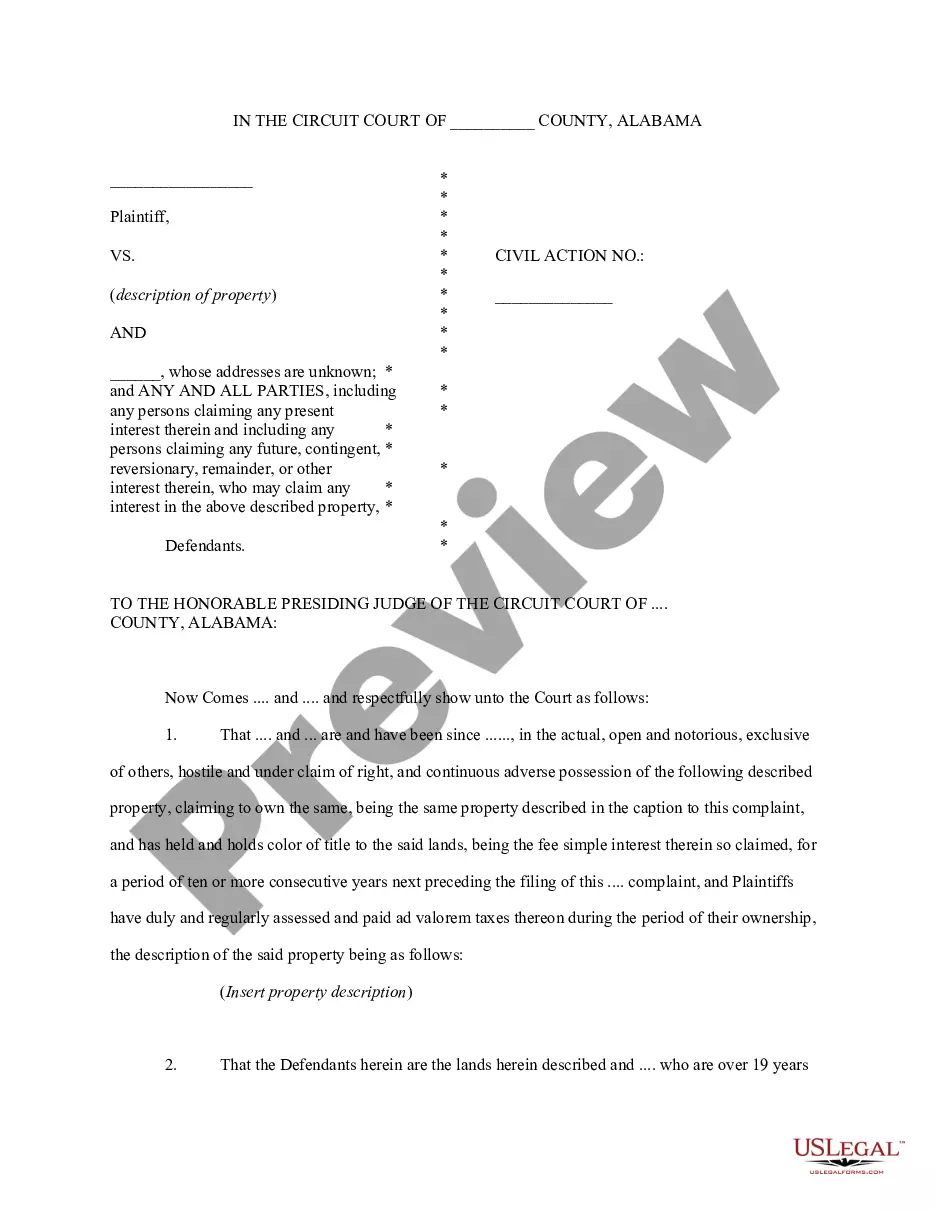
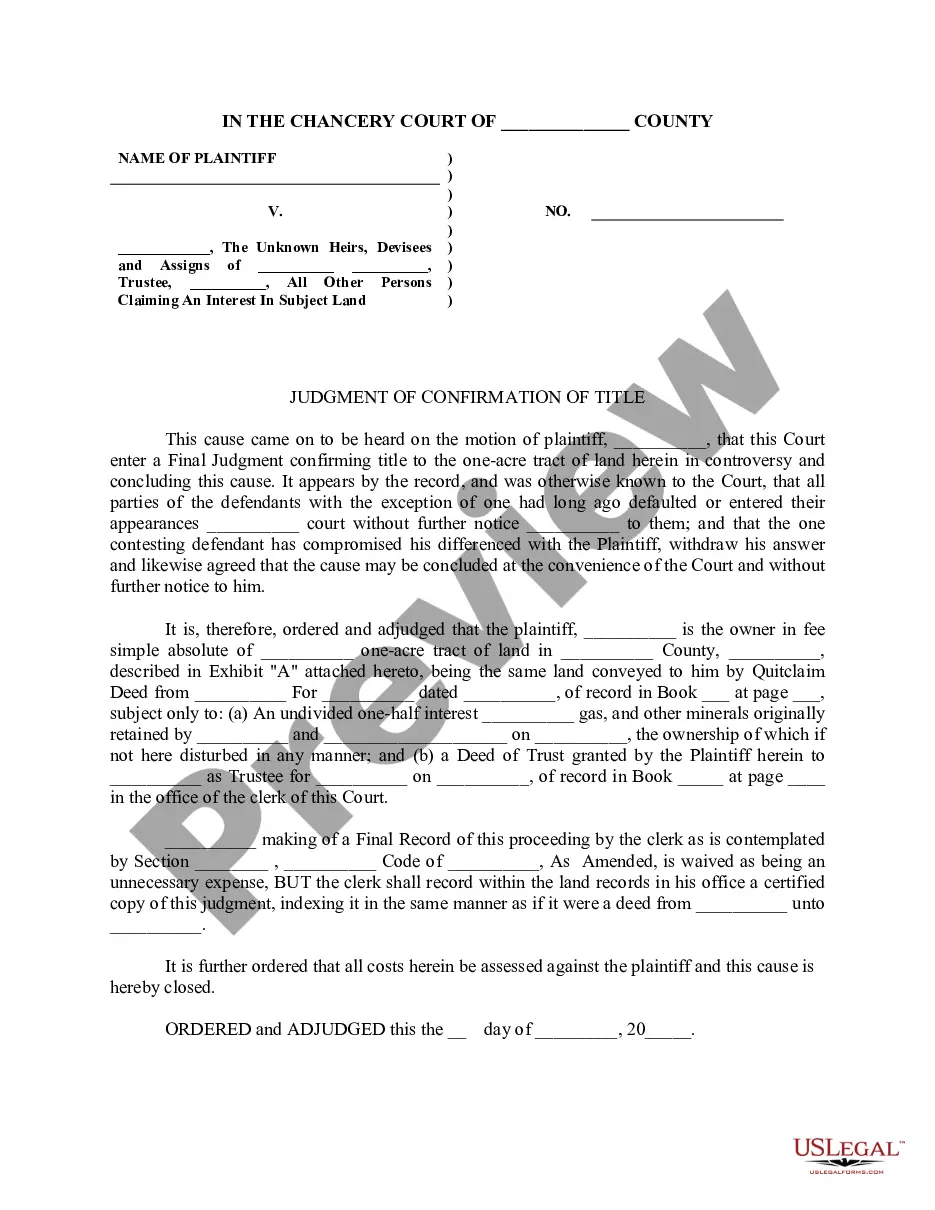
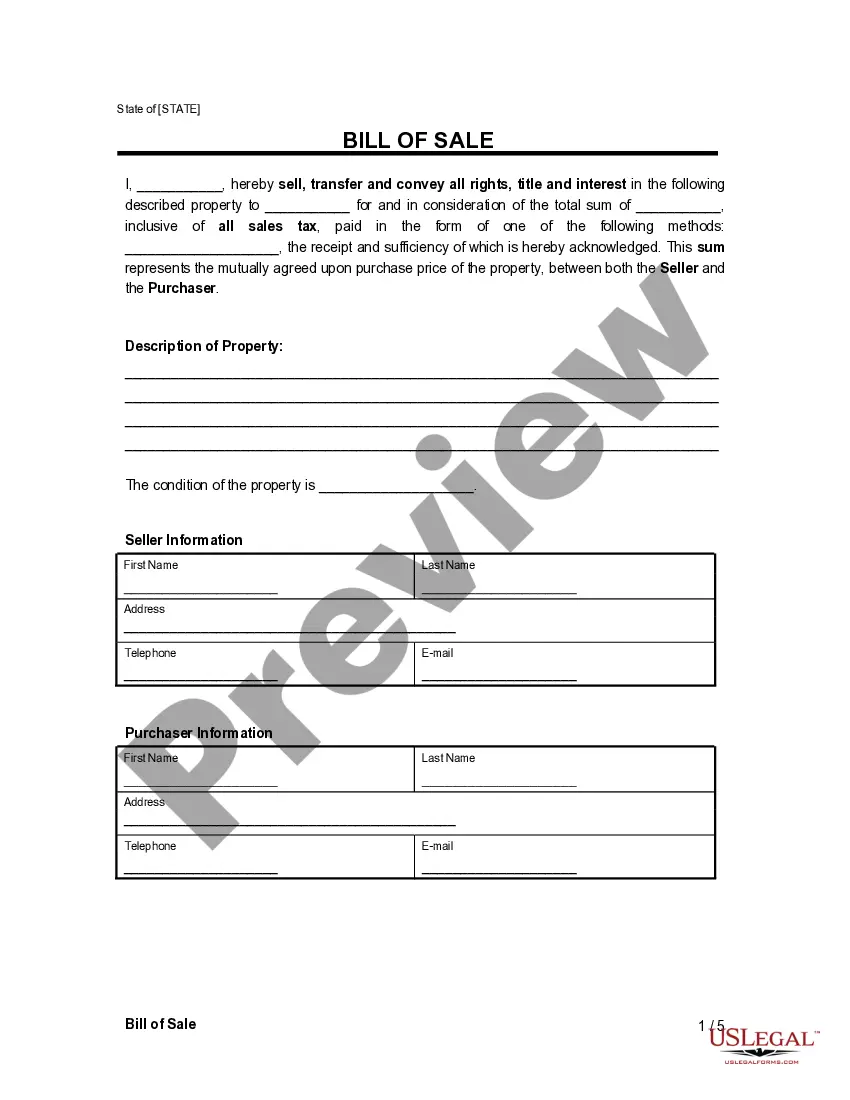
The Bill to Quiet Title is a legal document used to resolve disputes over property ownership. It serves to eliminate claims by other parties asserting rights to a specific piece of land, providing clear ownership for the rightful owner. Unlike other property forms, this document is specifically aimed at settling disputes surrounding title claims, ensuring the official recognition of ownership in a court of law.
What’s included in this form
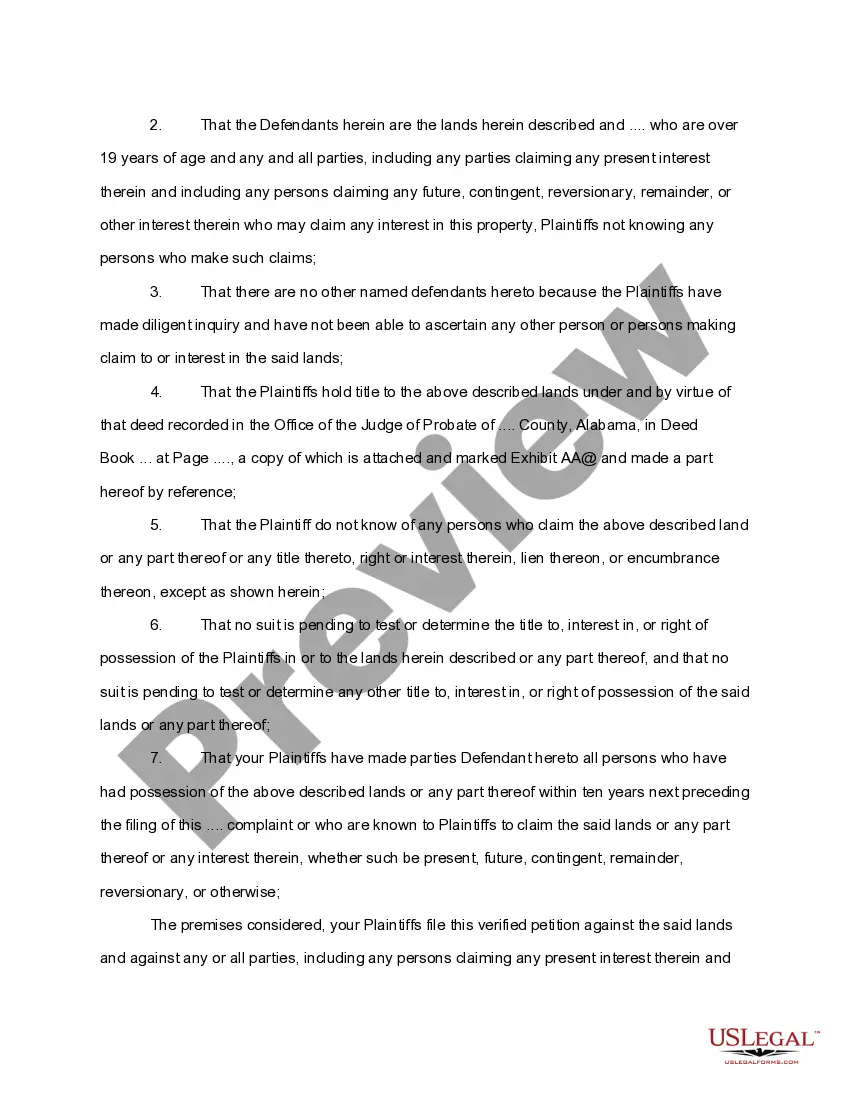
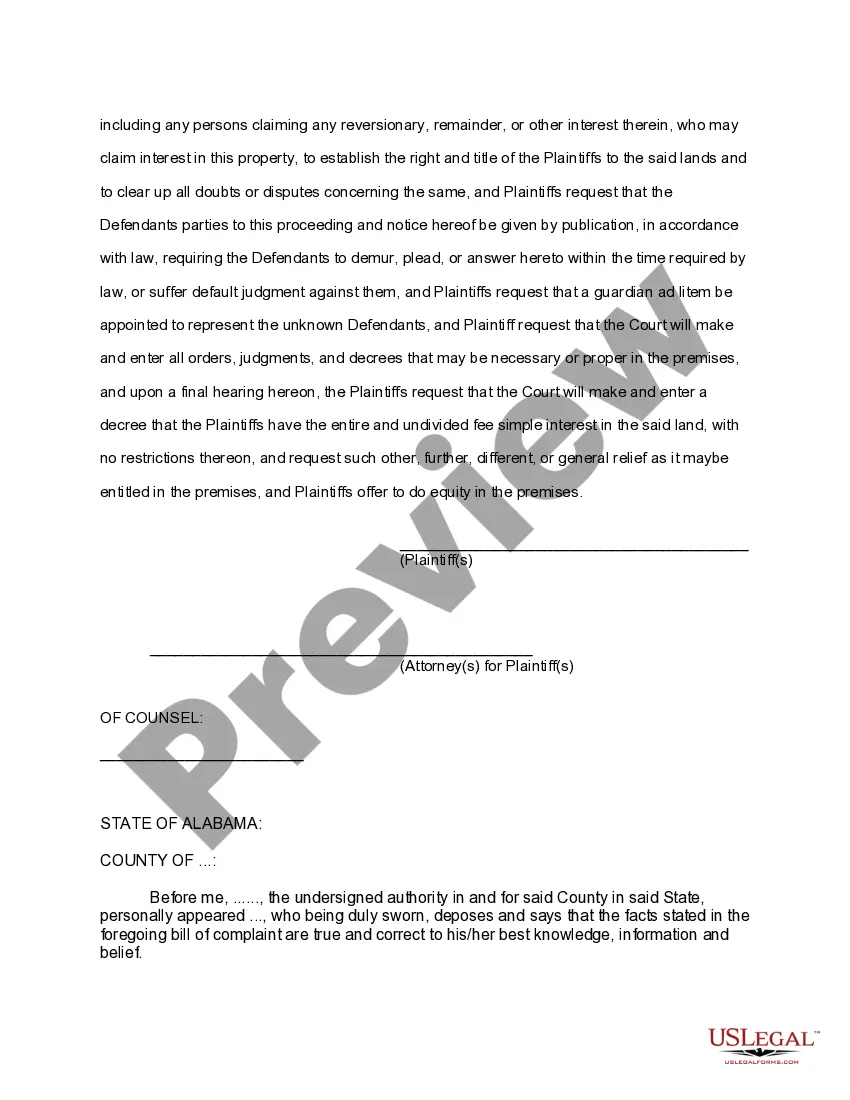
- Petition: Outlines the request to the court regarding the property title.
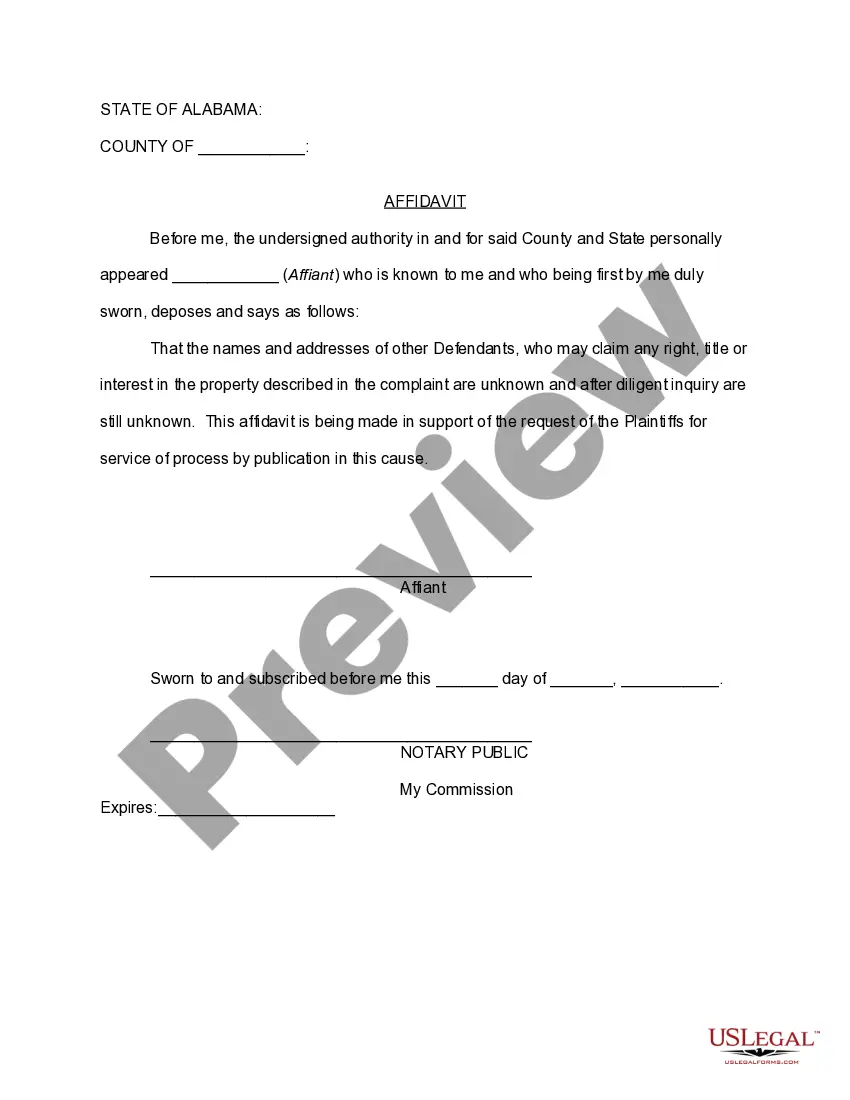
- Defendant Information: Includes details about individuals or entities that may have conflicting claims.
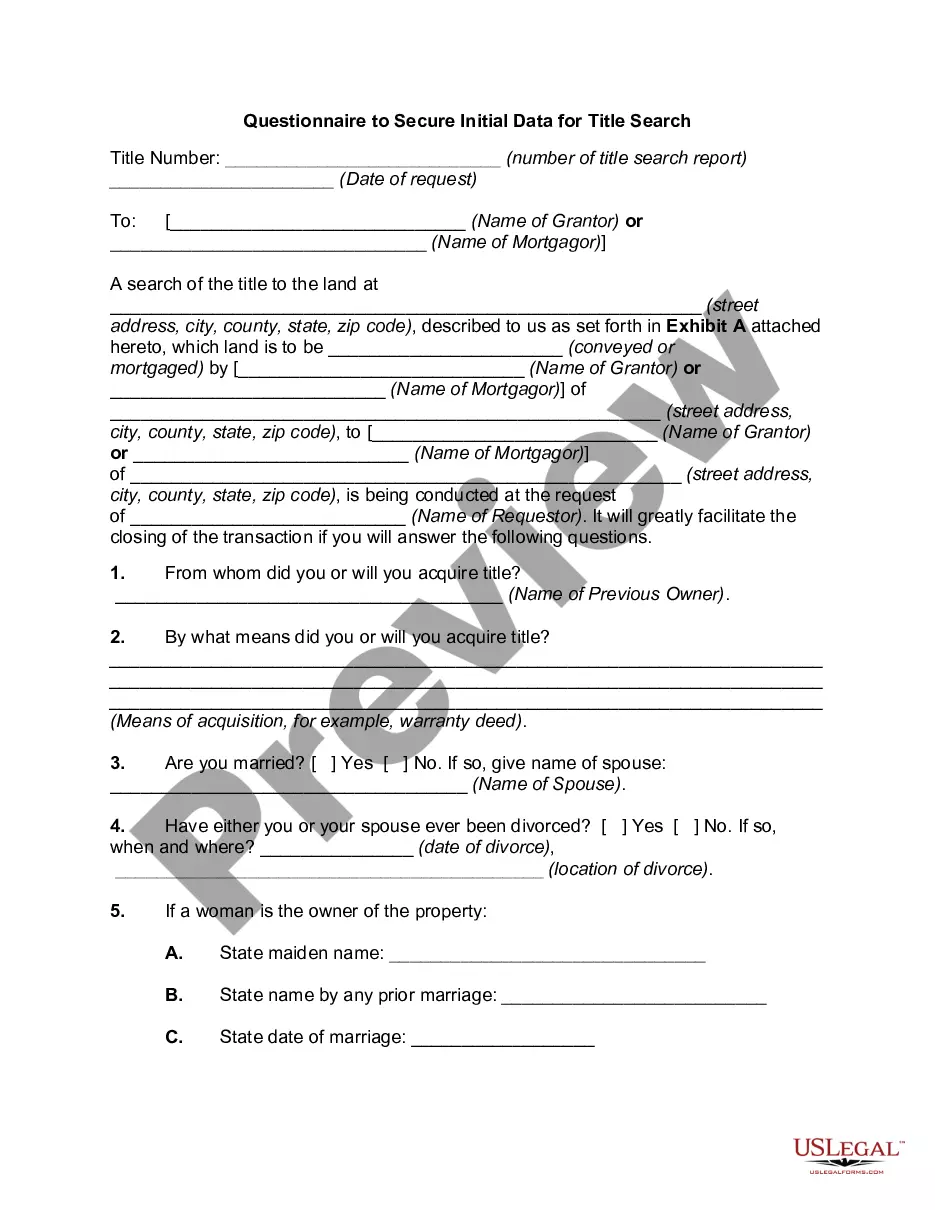
- Property Description: Provides a legal description and location of the property in question.
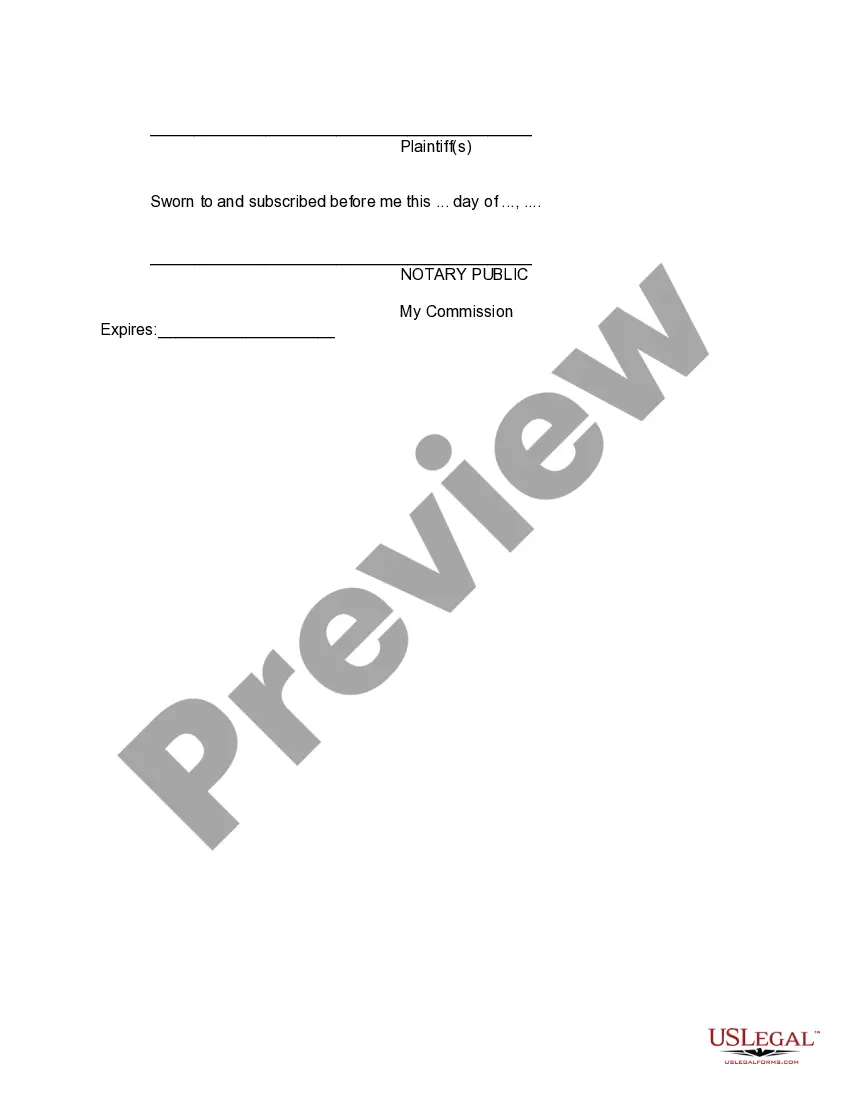
- Supporting Evidence: Lists documents or testimonies that support the claim to title ownership.
- Court Details: Specifies the court where the action is filed, ensuring jurisdictional compliance.

When this form is needed
This form is used when an individual or entity believes that their ownership of a property is being challenged by another party. Typical scenarios include when a neighbor claims ownership of a disputed boundary, when heirs of a deceased owner bring claims against the estate, or when a lender asserts a right to a property due to outstanding debts. Filing a Bill to Quiet Title helps clarify ownership and prevent future disputes.
Who should use this form
- Property owners facing claims from third parties regarding their property.
- Individuals seeking to establish clear title after purchasing property with potential ownership disputes.
- Heirs looking to confirm ownership of inherited property against claims from other family members or claimants.
How to prepare this document
- Identify the parties involved: List the rightful owner and any parties making claims against the title.
- Specify the property: Include a detailed description of the property, including boundaries and address.
- Gather supporting evidence: Collect documents like deeds, photographs, or other relevant materials that support your claim.
- Fill out the petition: Complete all sections of the Bill to Quiet Title, ensuring accuracy and clarity.
- File the form: Submit the completed form to the appropriate court, observing any local filing fees or requirements.
- Serve notice: Provide copies of the filed petition to all parties mentioned in the document as required by law.
Notarization requirements for this form
This form does not typically require notarization unless specified by local law. However, having it notarized may enhance its credibility during court proceedings.
Get your form ready online
Our built-in tools help you complete, sign, share, and store your documents in one place.
Make edits, fill in missing information, and update formatting in US Legal Forms—just like you would in MS Word.
Download a copy, print it, send it by email, or mail it via USPS—whatever works best for your next step.
Sign and collect signatures with our SignNow integration. Send to multiple recipients, set reminders, and more. Go Premium to unlock E-Sign.
If this form requires notarization, complete it online through a secure video call—no need to meet a notary in person or wait for an appointment.
We protect your documents and personal data by following strict security and privacy standards.

Make edits, fill in missing information, and update formatting in US Legal Forms—just like you would in MS Word.

Download a copy, print it, send it by email, or mail it via USPS—whatever works best for your next step.

Sign and collect signatures with our SignNow integration. Send to multiple recipients, set reminders, and more. Go Premium to unlock E-Sign.

If this form requires notarization, complete it online through a secure video call—no need to meet a notary in person or wait for an appointment.

We protect your documents and personal data by following strict security and privacy standards.
Common mistakes to avoid
- Failing to properly describe the property, leading to confusion about the boundaries.
- Not including all parties that have an interest in the property, which could delay proceedings.
- Neglecting to file the form within the required time frame, potentially impacting ownership rights.
- Inaccurate or incomplete information in the petition, which could result in denial by the court.
Advantages of online completion
- Convenience: Access and complete the form from any device at your convenience.
- Editability: Easily modify sections to ensure accuracy and completeness before filing.
- Reliability: Utilize templates drafted by licensed attorneys to ensure legal compliance.
Legal use & context
- A Bill to Quiet Title is essential for resolving legal disputes over property ownership in court.
- It is enforceable once filed and adjudicated by the court, providing legal clarity on ownership.
- Limitations may exist based on jurisdiction, such as time limits for filing or requirements for evidence.
Quick recap
- The Bill to Quiet Title is crucial for resolving property ownership disputes.
- Properly identifying all parties and providing comprehensive property details are key to success.
- Understanding local laws is vital to ensure compliance and success in your filing.
Looking for another form?




Form popularity
FAQ
The quiet title process in Alabama involves filing a lawsuit to seek a court declaration that confirms your ownership of a property. You begin by submitting a complaint, which details your claim and the reasons for quieting the title. The Alabama Bill to Quiet Title outlines the necessary procedures and requirements for this process, helping you navigate through legal complexities. Engaging with platforms like uslegalforms can assist you in preparing the required documents and ensuring a smooth legal journey.
Quieting title refers to the legal process of establishing clear ownership of a property. This process eliminates any disputes or claims against the title, ensuring that the property owner has full rights to their property. The Alabama Bill to Quiet Title provides a framework for individuals to assert their ownership rights and resolve any challenges. By using this legal avenue, you can protect your investment and avoid future property disputes.
Success in a quiet title action relies on presenting clear evidence of ownership and addressing any competing claims. Be thorough in your documentation, and consider hiring an attorney experienced in property law. Familiarizing yourself with the Alabama Bill to Quiet Title can provide valuable insights and bolster your case. Active participation and preparation are key to achieving a favorable outcome.
To initiate a quiet title action in Alabama, you must first gather relevant property documents and evidence of ownership. Next, you need to file a complaint in the appropriate Alabama court, detailing your claim. The Alabama Bill to Quiet Title provides a structured approach to ensure you follow all necessary legal steps. Consulting legal resources or professionals can help clarify this process.
The duration of a quiet title action in Alabama can vary depending on several factors, including the complexity of the case and the court's schedule. Generally, you can expect the process to take several months to a year. It is crucial to prepare thoroughly to avoid delays. Using resources like the Alabama Bill to Quiet Title can help streamline your efforts.
A quiet title action seeks to establish clear ownership of a property, resolving any disputes or claims against it. The process typically includes gathering evidence, serving notice to interested parties, and possibly attending court hearings. Following the Alabama Bill to Quiet Title helps clarify your rights and ensures you follow the proper legal framework. Utilizing platforms like uslegalforms can facilitate this process by providing the necessary documentation and guidance.
To file a quiet title in Alabama, begin by preparing a complaint that details your claim to the property. You will then need to file this complaint with the appropriate court and notify any individuals or entities with a potential interest in the property, as required by the Alabama Bill to Quiet Title. It's advisable to consult legal forms or assistance to ensure you complete the filing accurately and comply with all local rules.
The process of a quiet title action typically involves several key steps: filing a complaint in court, providing notice to all parties with a potential interest in the property, and attending a hearing. Following the Alabama Bill to Quiet Title can streamline these steps and clarify the necessary documentation. A well-structured approach can lead to a more favorable and prompt resolution.
In a quiet title action, the person bringing the lawsuit must establish their claim to the property by a preponderance of the evidence. This means you need to provide more convincing evidence than the opposing party. The Alabama Bill to Quiet Title outlines the key elements you must demonstrate, such as clear ownership and lack of competing claims. Consulting legal resources or experts can ensure you understand the burden of proof needed in your case.
The duration of a quiet title suit can vary significantly based on the complexity of the case and the court's schedule. Generally, you might expect the process to take anywhere from a few months to over a year. If you follow the Alabama Bill to Quiet Title, this can provide a clearer route to resolution, potentially expediting your case. Proper preparation and understanding of the requirements can help reduce delays.