Limited Liability Company Llc Advantages And Disadvantages
Description

Get your form ready online
Our built-in tools help you complete, sign, share, and store your documents in one place.
Make edits, fill in missing information, and update formatting in US Legal Forms—just like you would in MS Word.
Download a copy, print it, send it by email, or mail it via USPS—whatever works best for your next step.
Sign and collect signatures with our SignNow integration. Send to multiple recipients, set reminders, and more. Go Premium to unlock E-Sign.
If this form requires notarization, complete it online through a secure video call—no need to meet a notary in person or wait for an appointment.
We protect your documents and personal data by following strict security and privacy standards.
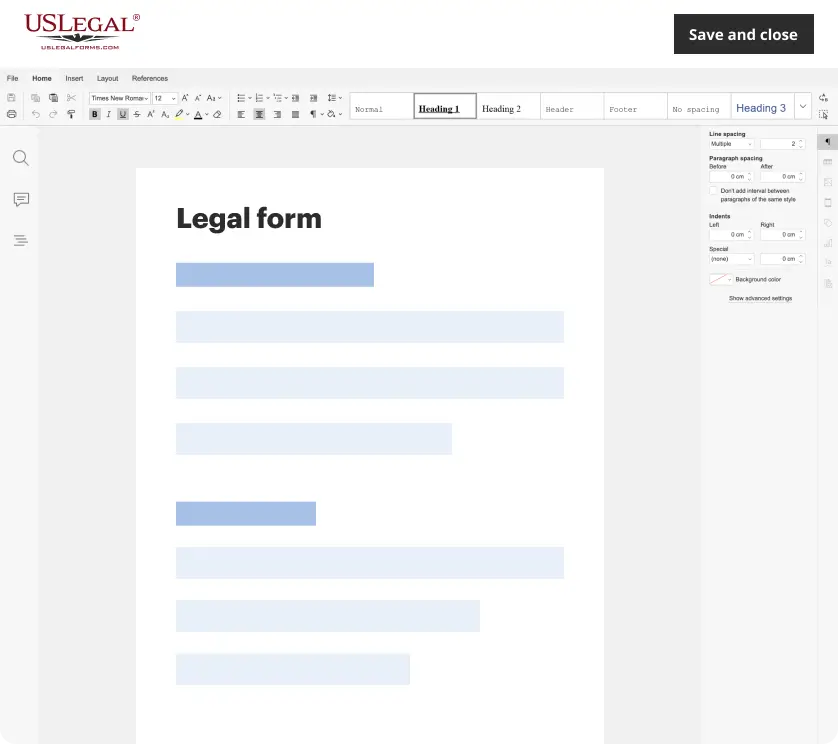
Make edits, fill in missing information, and update formatting in US Legal Forms—just like you would in MS Word.
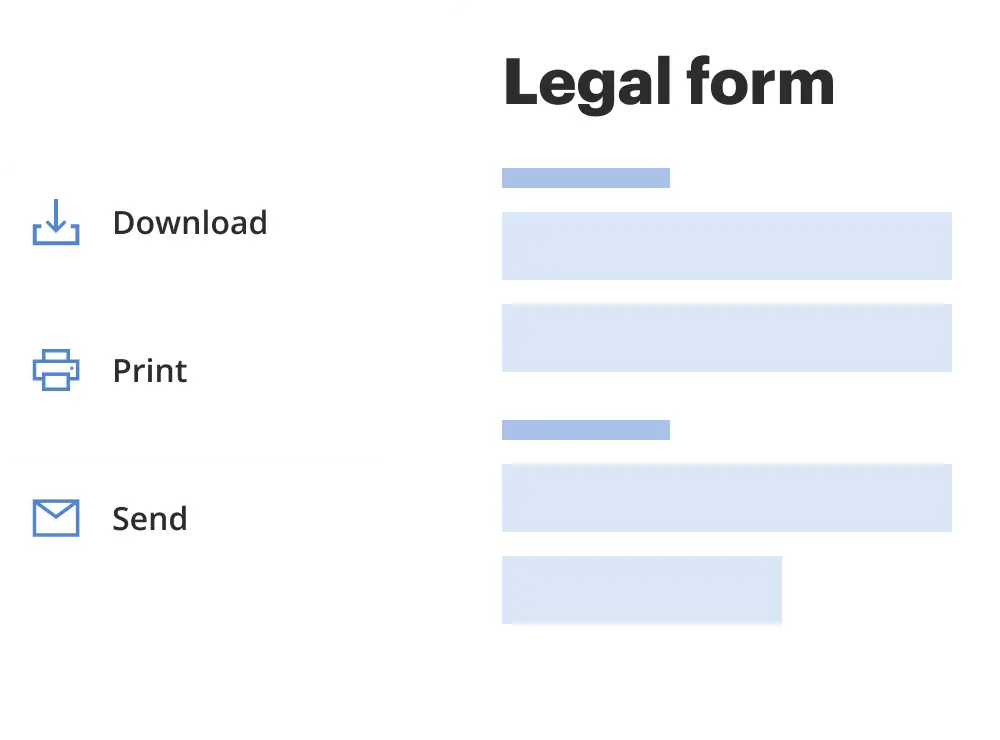
Download a copy, print it, send it by email, or mail it via USPS—whatever works best for your next step.

Sign and collect signatures with our SignNow integration. Send to multiple recipients, set reminders, and more. Go Premium to unlock E-Sign.

If this form requires notarization, complete it online through a secure video call—no need to meet a notary in person or wait for an appointment.
We protect your documents and personal data by following strict security and privacy standards.
Looking for another form?
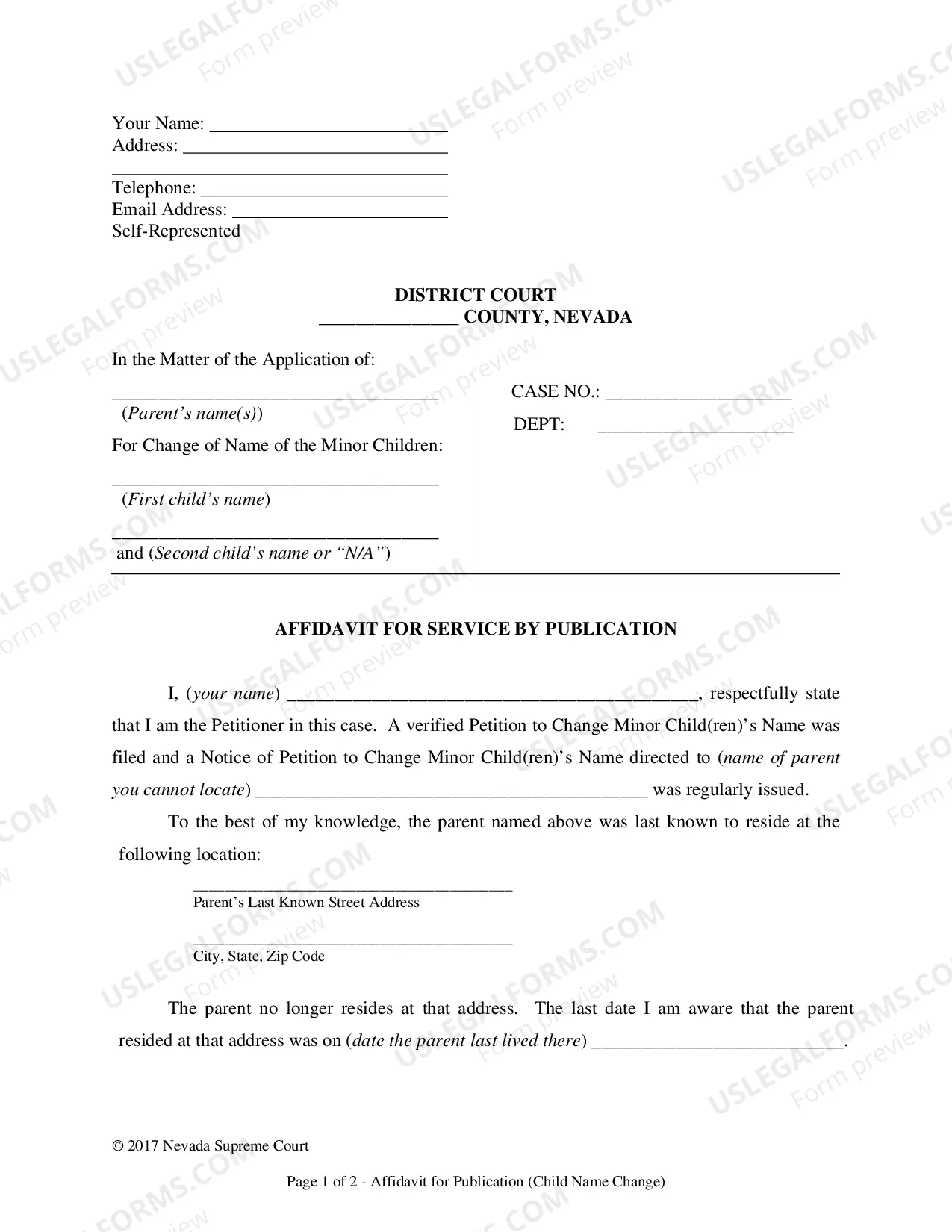

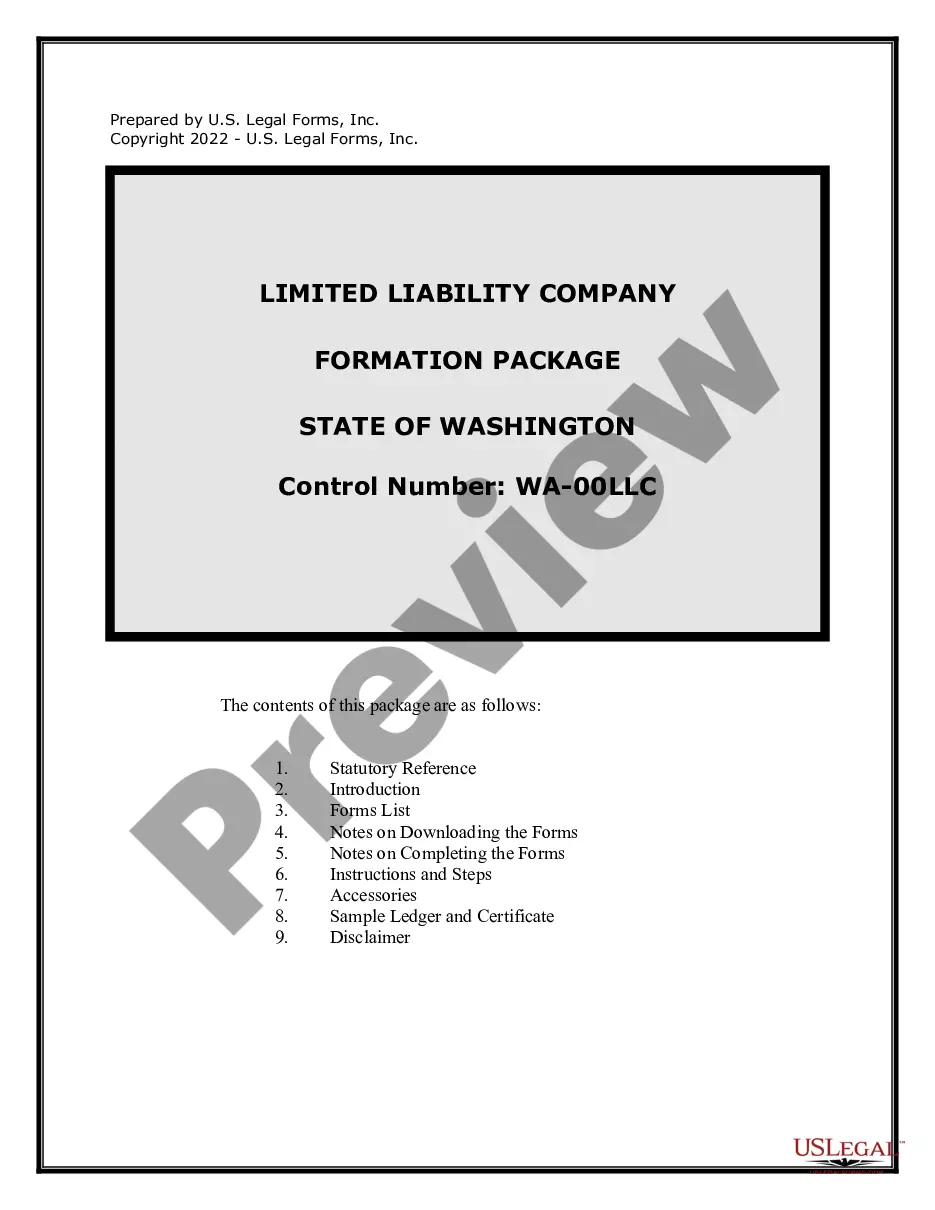
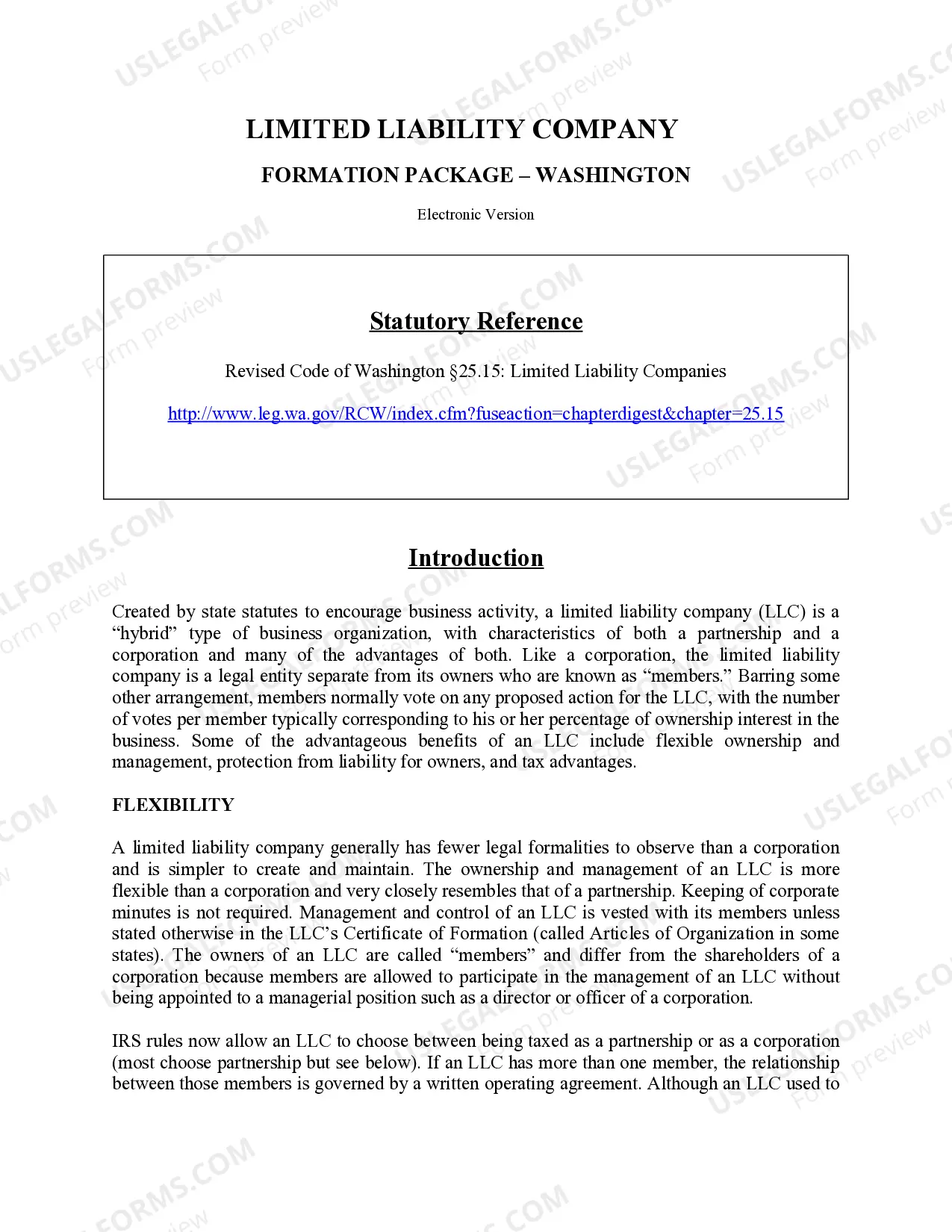
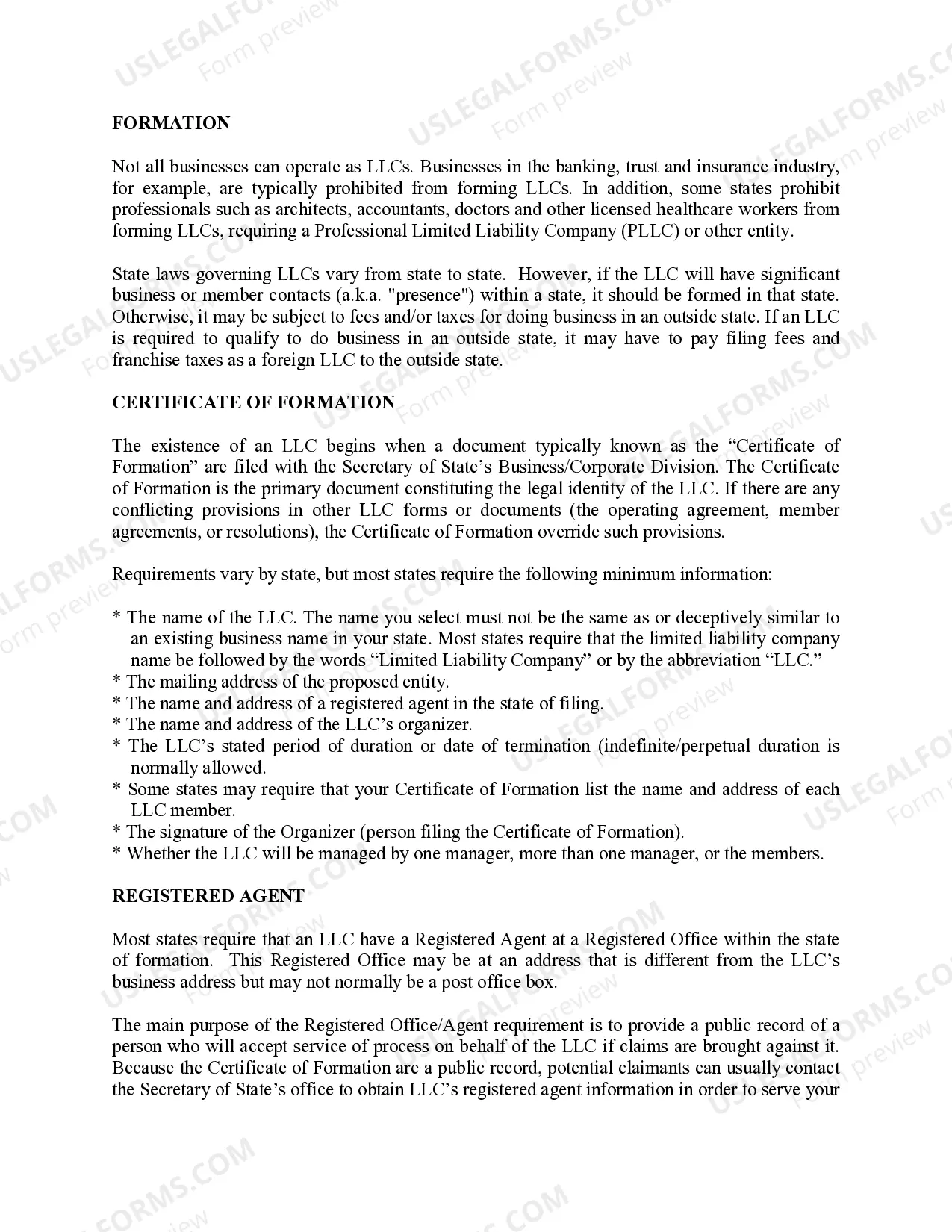
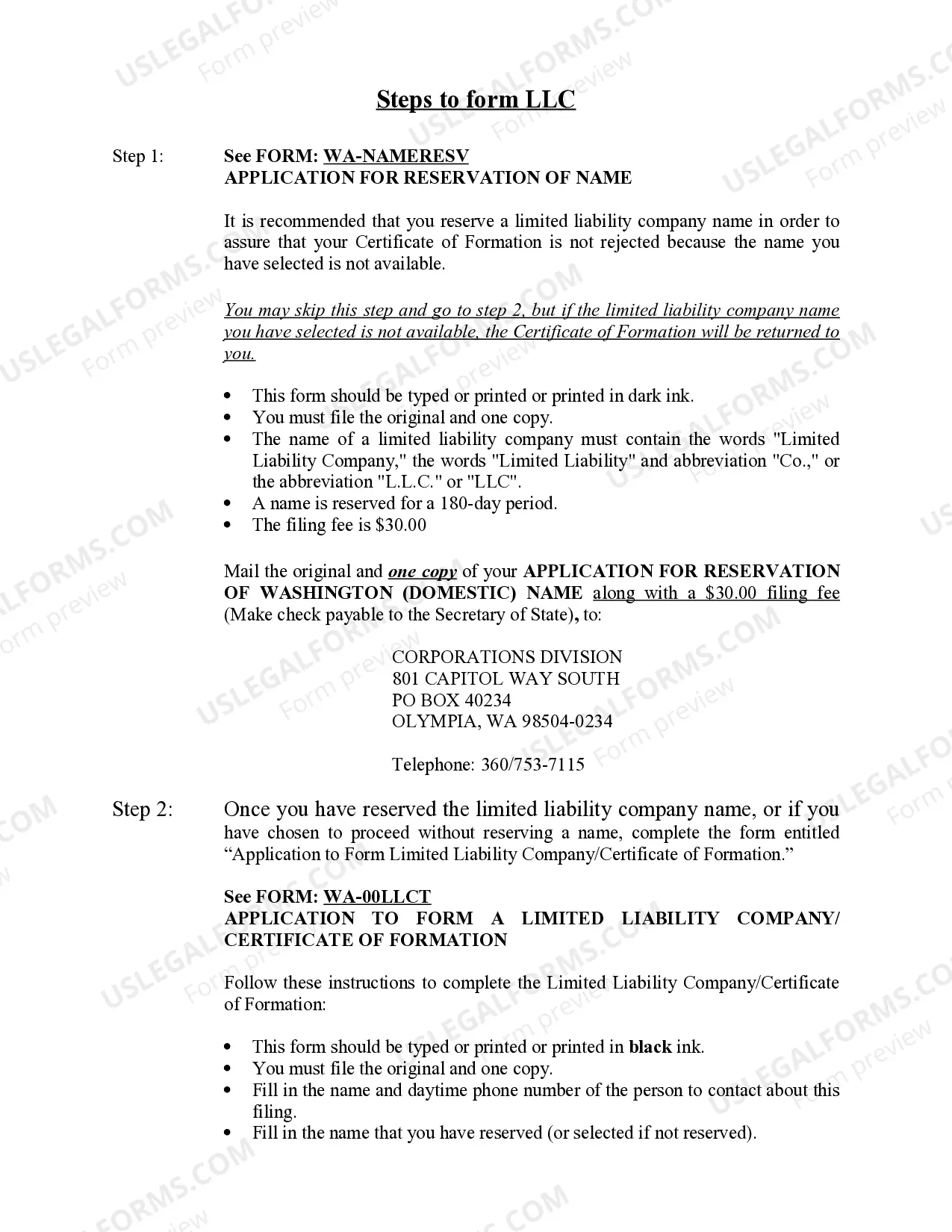
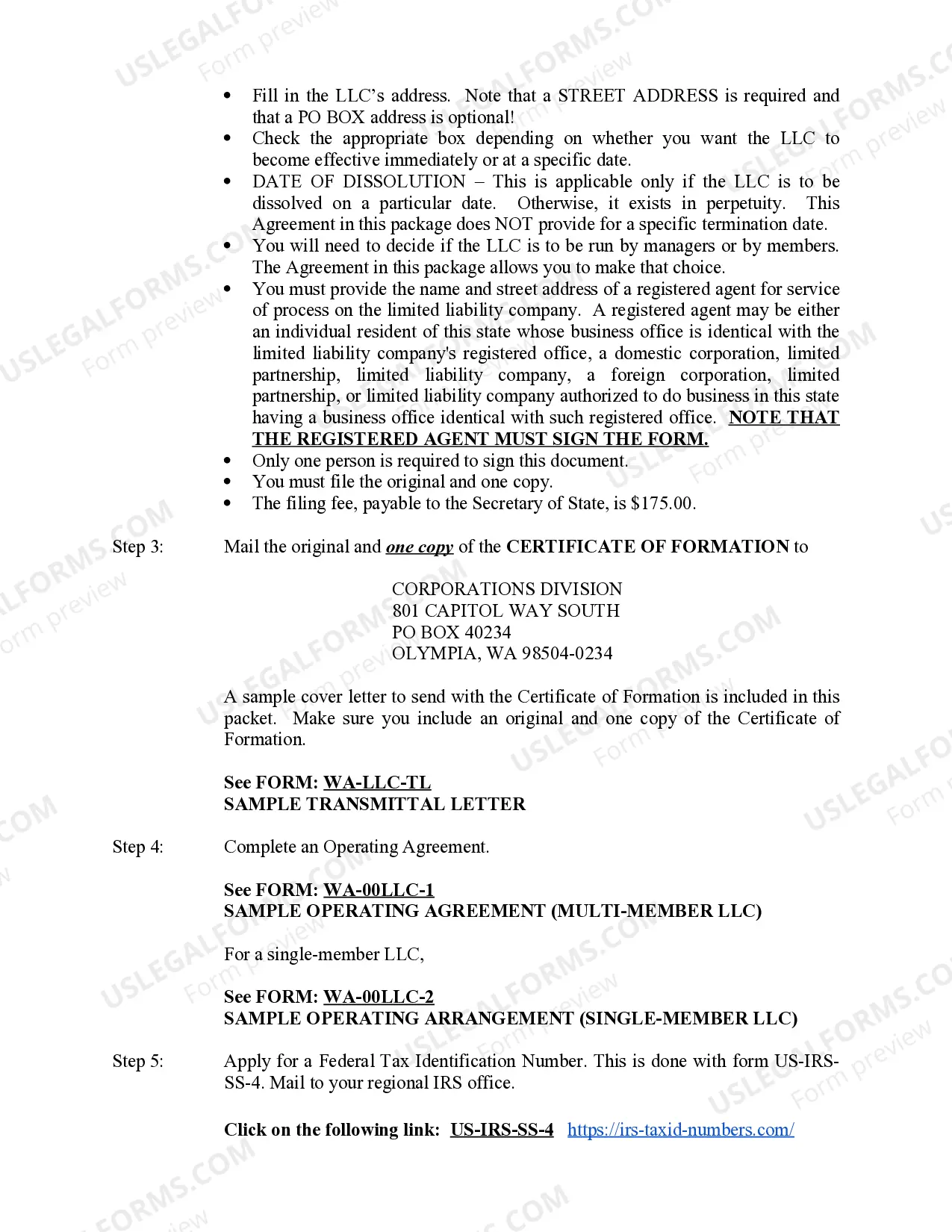
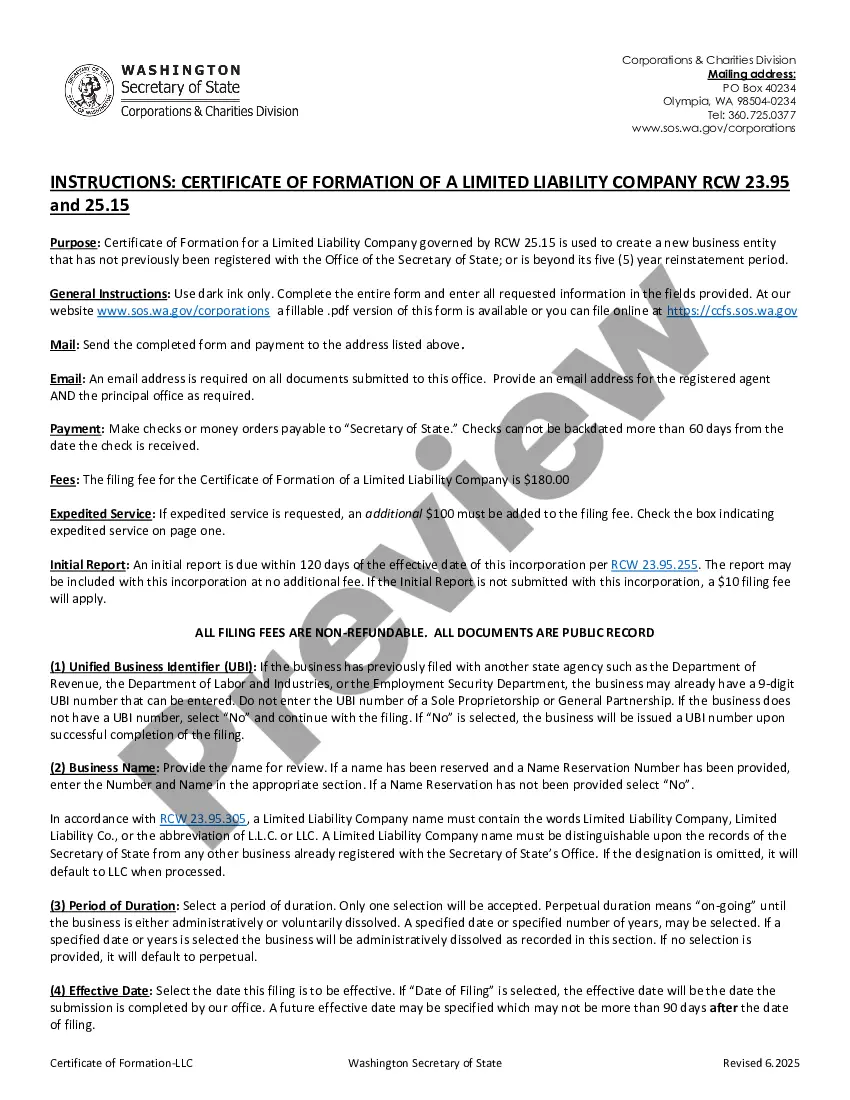
How to fill out Washington Limited Liability Company LLC Formation Package?
- Access your US Legal Forms account. If you're a returning user, log in and locate the template you need.
- Review the form’s details through the Preview mode. Confirm it meets your local jurisdiction and specific requirements.
- Search for alternate templates if necessary. Use the Search tab if you find discrepancies and need another document.
- Purchase the document. Click on 'Buy Now' and select a subscription plan that fits your needs. Remember, you will need to create an account.
- Complete your payment. Enter your payment details via credit card or your PayPal account to finalize the transaction.
- Download your form. Save it to your device for immediate use and easily access it in the My Forms section whenever needed.
In conclusion, US Legal Forms provides a robust solution for those seeking legal documentation with confidence and ease. By efficiently guiding users through the process of acquiring LLC-related forms, it helps ensure that your business complies with legal requirements effectively.
Ready to create your LLC documents? Visit US Legal Forms today to get started!
Form popularity
FAQ
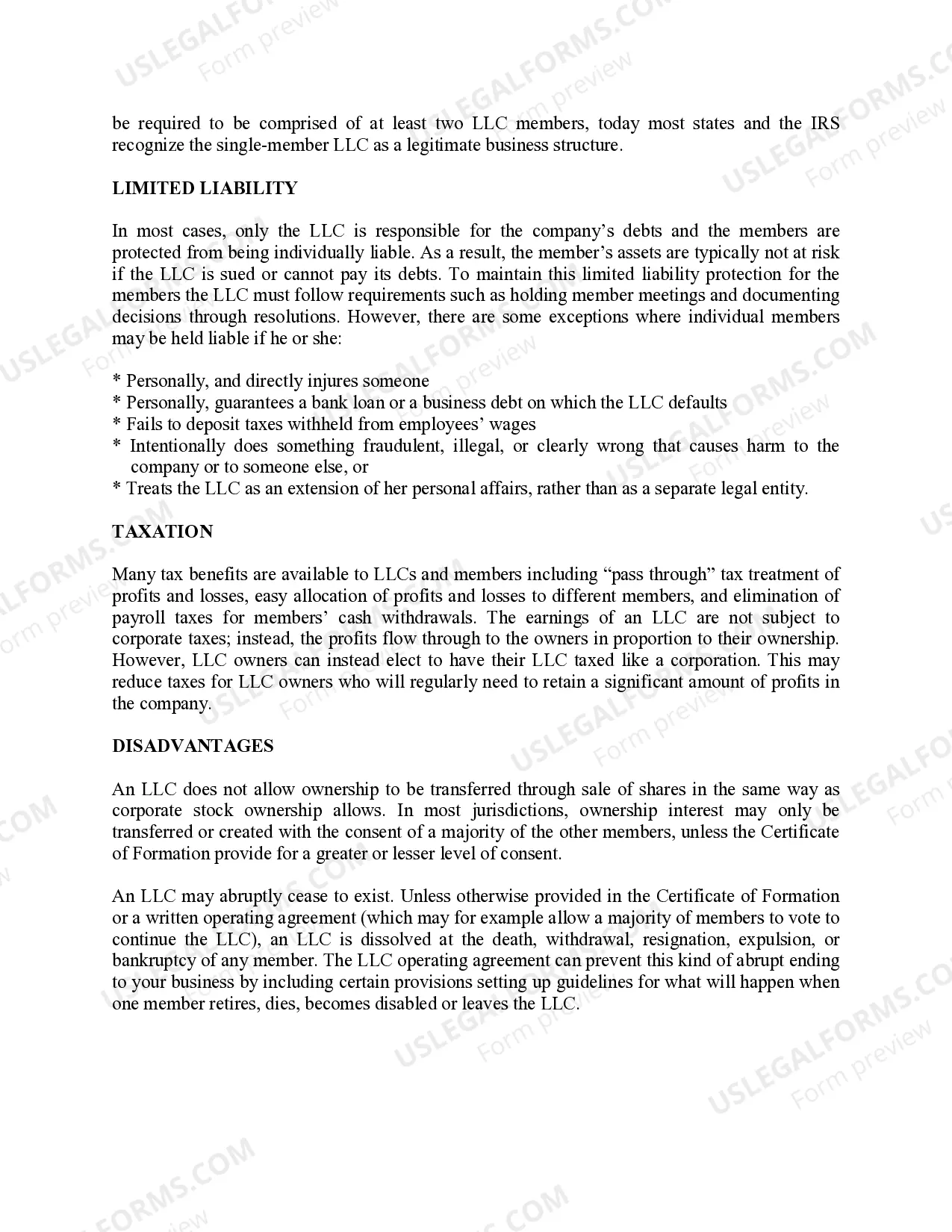
An LLC can have a direct effect on your personal taxes, usually depending on how your company is structured for tax purposes. If your LLC is taxed as a pass-through entity, your business income will be reflected on your personal tax return. This structure might simplify your tax preparation, but it also means you'll need to account for potential self-employment taxes. Be sure to weigh the limited liability company LLC advantages and disadvantages to understand this impact fully.
For many small businesses, forming a limited liability company (LLC) is worthwhile. It offers personal liability protection, which safeguards your personal assets, while allowing for flexible tax treatment. However, your unique circumstances will determine if it's the best choice for you. Consider examining the limited liability company LLC advantages and disadvantages to ensure it aligns with your business goals.
Yes, an LLC can help reduce your taxes in several ways when structured appropriately. For example, members can take advantage of business deductions that are not available to sole proprietors. It's essential to evaluate the limited liability company LLC advantages and disadvantages in terms of your specific financial situation to determine how best to leverage this structure for tax savings.
Having a limited liability company (LLC) can significantly impact your tax situation. LLCs can choose to be taxed as a sole proprietorship, partnership, or corporation, depending on what benefits you the most. This flexibility allows you to optimize tax obligations, but it also means you should keep accurate records. A detailed evaluation of the limited liability company LLC advantages and disadvantages will help you make informed decisions.
Choosing not to form an LLC might stem from a desire for simpler structures, like a sole proprietorship, which offers fewer regulatory requirements. Additionally, some individuals may prefer the corporation model to attract investors through stock offerings. By evaluating the limited liability company LLC advantages and disadvantages, you can determine the best entity type that suits your entrepreneurial vision.
An LLC does not protect its members from personal liability in cases of fraud, illegal activities, or personal guarantees for loans. It’s also important to note that personal assets remain vulnerable if the business fails due to mismanagement. Analyzing the limited liability company LLC advantages and disadvantages, alongside your specific business activities, helps in managing risks more effectively.
While LLCs provide limited liability protection, they may also come with drawbacks. For instance, members typically have self-employment taxes on profits, which can lead to higher overall tax burdens. It is essential to research the limited liability company LLC advantages and disadvantages carefully, as understanding these factors can influence your decision-making process.
Some entrepreneurs may choose not to form an LLC due to the additional costs associated with maintaining the business entity, such as filing fees and annual requirements. Additionally, the flexibility of changing the business structure may be appealing, as an LLC has more formalities than a sole proprietorship or partnership. Weighing the limited liability company LLC advantages and disadvantages can help in making the right choice for your business needs.
Investors often prefer corporations because they find them to have a clearer structure for shares and easier exit strategies. Since LLCs do not issue stock, it can be more challenging for investors to evaluate investment potential. Understanding the limited liability company LLC advantages and disadvantages can help you navigate this concern and tailor your business structure to meet investor expectations.
LLC owners can avoid double taxation, a common issue with corporations, by choosing to be taxed as a partnership or sole proprietorship. This means profits pass directly to owners, who report them on their personal tax returns. By using this structure, LLC owners can benefit from the limited liability company LLC advantages and disadvantages, maximizing tax efficiency while limiting personal financial risk.