Tenant Rights Without A Lease
Description
Get your form ready online
Our built-in tools help you complete, sign, share, and store your documents in one place.
Make edits, fill in missing information, and update formatting in US Legal Forms—just like you would in MS Word.
Download a copy, print it, send it by email, or mail it via USPS—whatever works best for your next step.
Sign and collect signatures with our SignNow integration. Send to multiple recipients, set reminders, and more. Go Premium to unlock E-Sign.
If this form requires notarization, complete it online through a secure video call—no need to meet a notary in person or wait for an appointment.
We protect your documents and personal data by following strict security and privacy standards.

Make edits, fill in missing information, and update formatting in US Legal Forms—just like you would in MS Word.

Download a copy, print it, send it by email, or mail it via USPS—whatever works best for your next step.

Sign and collect signatures with our SignNow integration. Send to multiple recipients, set reminders, and more. Go Premium to unlock E-Sign.

If this form requires notarization, complete it online through a secure video call—no need to meet a notary in person or wait for an appointment.

We protect your documents and personal data by following strict security and privacy standards.
Looking for another form?




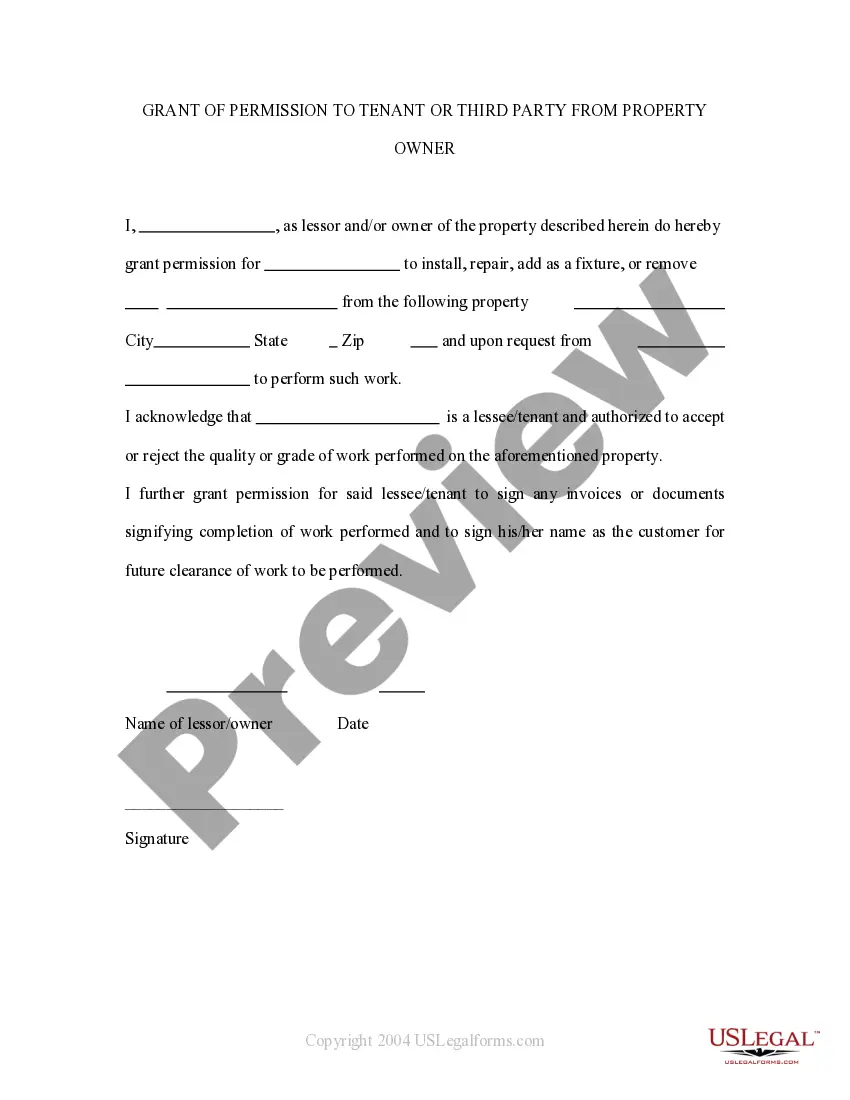
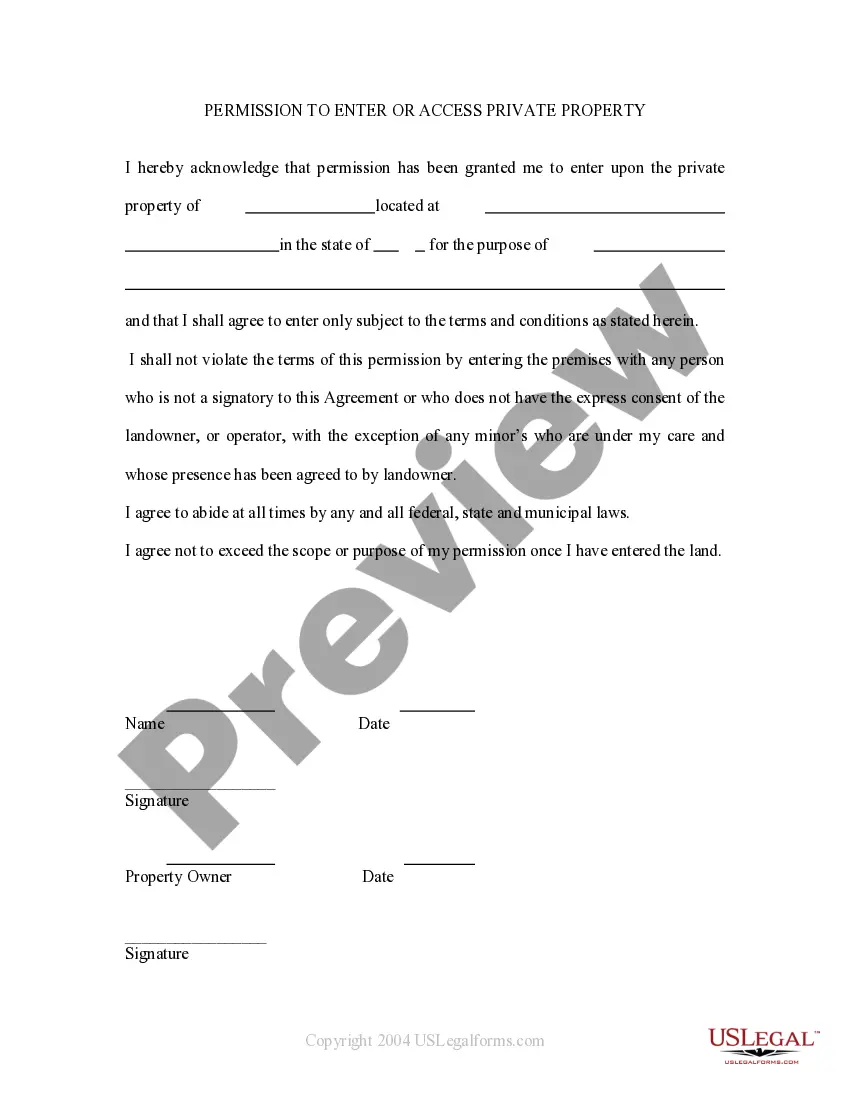
How to fill out Grant Of Permission To Tenant Or Third Party From Property Owner?
Employing legal document templates that adhere to federal and state guidelines is essential, and the web presents countless choices to select from.
However, why squander time searching for the properly prepared Tenant Rights Without A Lease template online when the US Legal Forms digital repository has such documents compiled in one location.
US Legal Forms is the most extensive online legal database featuring over 85,000 customizable templates created by attorneys for any professional and personal circumstances. They are simple to navigate with all forms classified by state and intended use.
For additional samples, utilize the search function at the top of the page if needed. Once you’ve found the appropriate form, click Buy Now and choose a subscription plan. Create an account or Log In, and complete your payment using PayPal or a credit card. Select the format for your Tenant Rights Without A Lease and download it.
- Our experts keep current with legal updates, ensuring that your documents are always up to date and compliant when acquiring a Tenant Rights Without A Lease from our site.
- Getting a Tenant Rights Without A Lease is straightforward and rapid for both existing and new users.
- If you already possess an account with an active subscription, Log In and save the document template you need in your desired format.
- If you are a first-time visitor to our website, follow these steps.
- Review the template using the Preview feature or through the text outline to ensure it satisfies your requirements.
Form popularity
FAQ
Arkansas repairs and maintenance laws Tenants must keep the property in the same condition as they received it. Landlords are not required to repair the dwelling or common spaces (unless specified in the lease agreement), but if they choose to do so, they must do it correctly.
Overall, landlords have the right to maintain their property in a clean and safe condition, collect payments when rent is due, and collect a security deposit to cover excessive damages to the property or unpaid bills.
If there is no lease, a Texas landlord can evict a tenant without providing a reason. Simply give notice to vacate, and follow eviction proceedings if the tenant fails to leave. When there is a verbal agreement but no written lease, whatever terms specified verbally must still be honored.
The notice must give the reason for eviction. If there is no written lease, the reason for eviction can be simply that the landlord has decided not to renew the lease.
You cannot be evicted without notice. The landlord cannot change the locks or shut off your utilities to make you leave. Most of the time, a landlord needs to go to court before evicting you. If you did something dangerous or threatening, the landlord only needs to give you three (3) days to move out.