Trial Subpoena Form For Documents
Description
Get your form ready online
Our built-in tools help you complete, sign, share, and store your documents in one place.
Make edits, fill in missing information, and update formatting in US Legal Forms—just like you would in MS Word.
Download a copy, print it, send it by email, or mail it via USPS—whatever works best for your next step.
Sign and collect signatures with our SignNow integration. Send to multiple recipients, set reminders, and more. Go Premium to unlock E-Sign.
If this form requires notarization, complete it online through a secure video call—no need to meet a notary in person or wait for an appointment.
We protect your documents and personal data by following strict security and privacy standards.

Make edits, fill in missing information, and update formatting in US Legal Forms—just like you would in MS Word.

Download a copy, print it, send it by email, or mail it via USPS—whatever works best for your next step.

Sign and collect signatures with our SignNow integration. Send to multiple recipients, set reminders, and more. Go Premium to unlock E-Sign.

If this form requires notarization, complete it online through a secure video call—no need to meet a notary in person or wait for an appointment.

We protect your documents and personal data by following strict security and privacy standards.
Looking for another form?



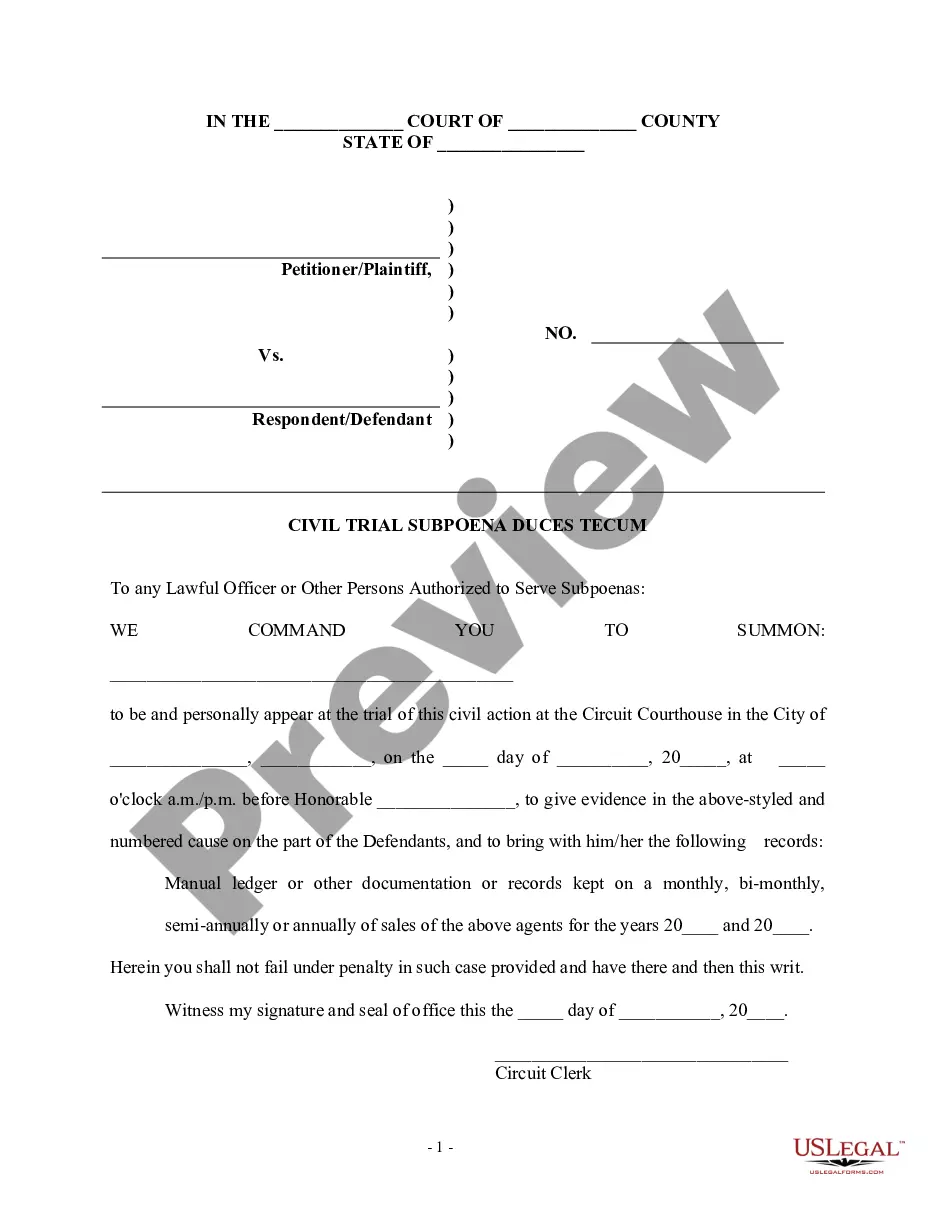
How to fill out Civil Trial Subpoena Duces Tecum?
It’s clear that you cannot become a legal expert instantly, nor can you swiftly learn how to prepare a Trial Subpoena Form For Documents without having a specialized education.
Assembling legal documents is a lengthy procedure that demands specific knowledge and expertise.
So why not entrust the drafting of the Trial Subpoena Form For Documents to the experts.
Preview it (if this option is available) and review the accompanying description to ascertain whether the Trial Subpoena Form For Documents is what you need.
Set up a free account and choose a subscription plan to buy the template.
- With US Legal Forms, one of the most extensive legal template collections, you can discover everything from court documents to templates for internal business communication.
- We understand how crucial it is to comply with federal and local regulations.
- That’s why, on our platform, all templates are location-specific and up-to-date.
- Here’s how to begin with our website and obtain the form you need in just minutes.
- Search for the form you require using the search bar at the top of the page.
Form popularity
FAQ
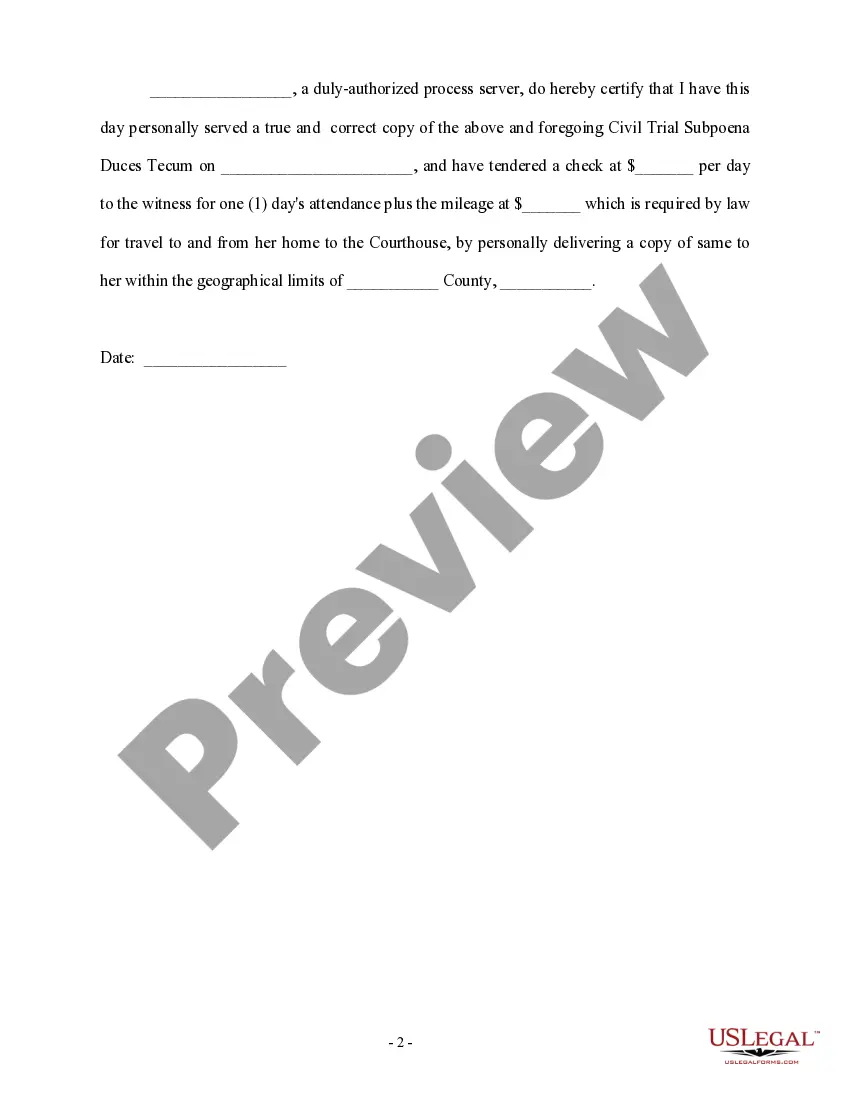
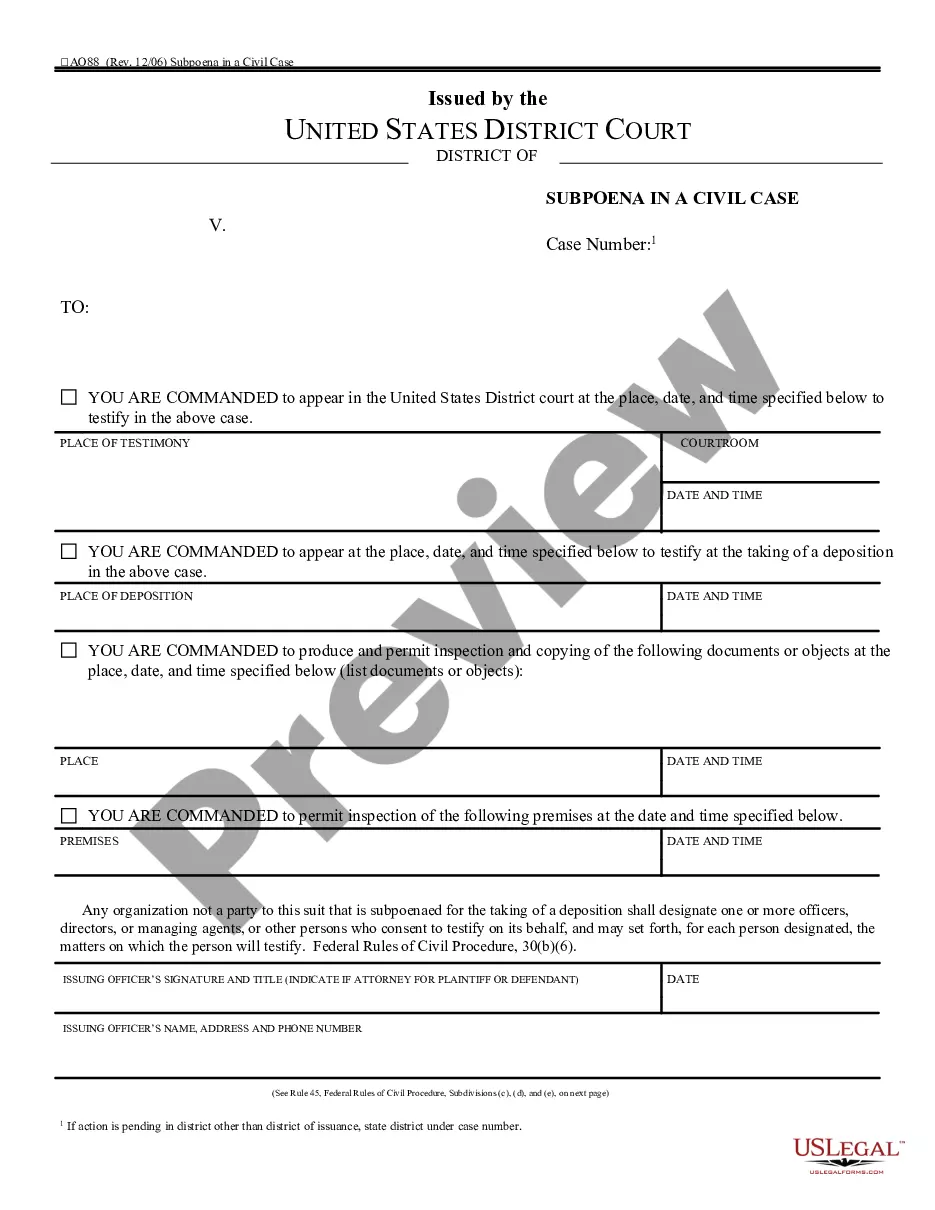
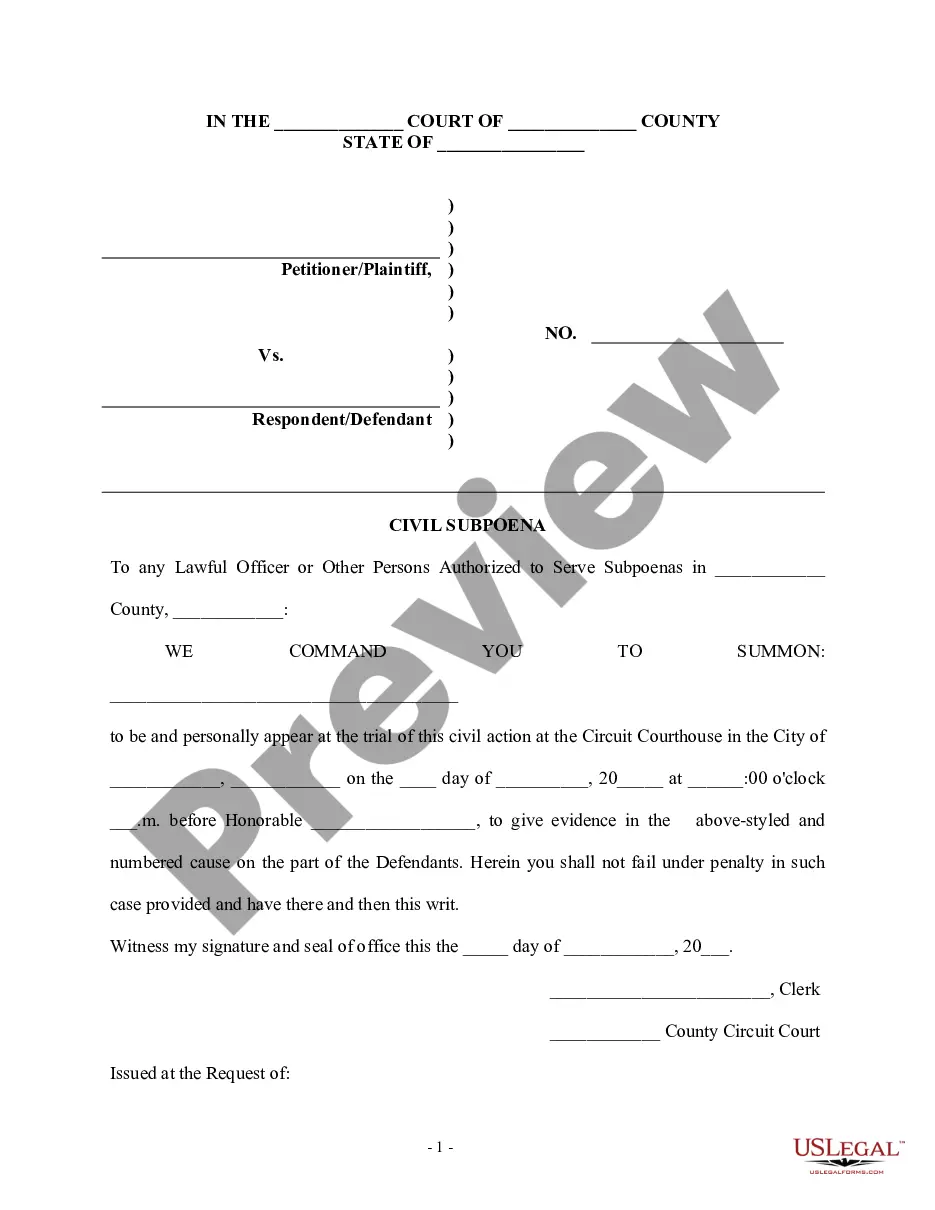
Civil Subpoena (Duces Tecum) for Personal Appearance and Production of Documents, Electronically Stored Information, and Things at Trial or Hearing and Declaration (SUBP-002) Orders a person who is not a party to a case to appear and testify at and bring specific documents or things to a trial or court hearing.
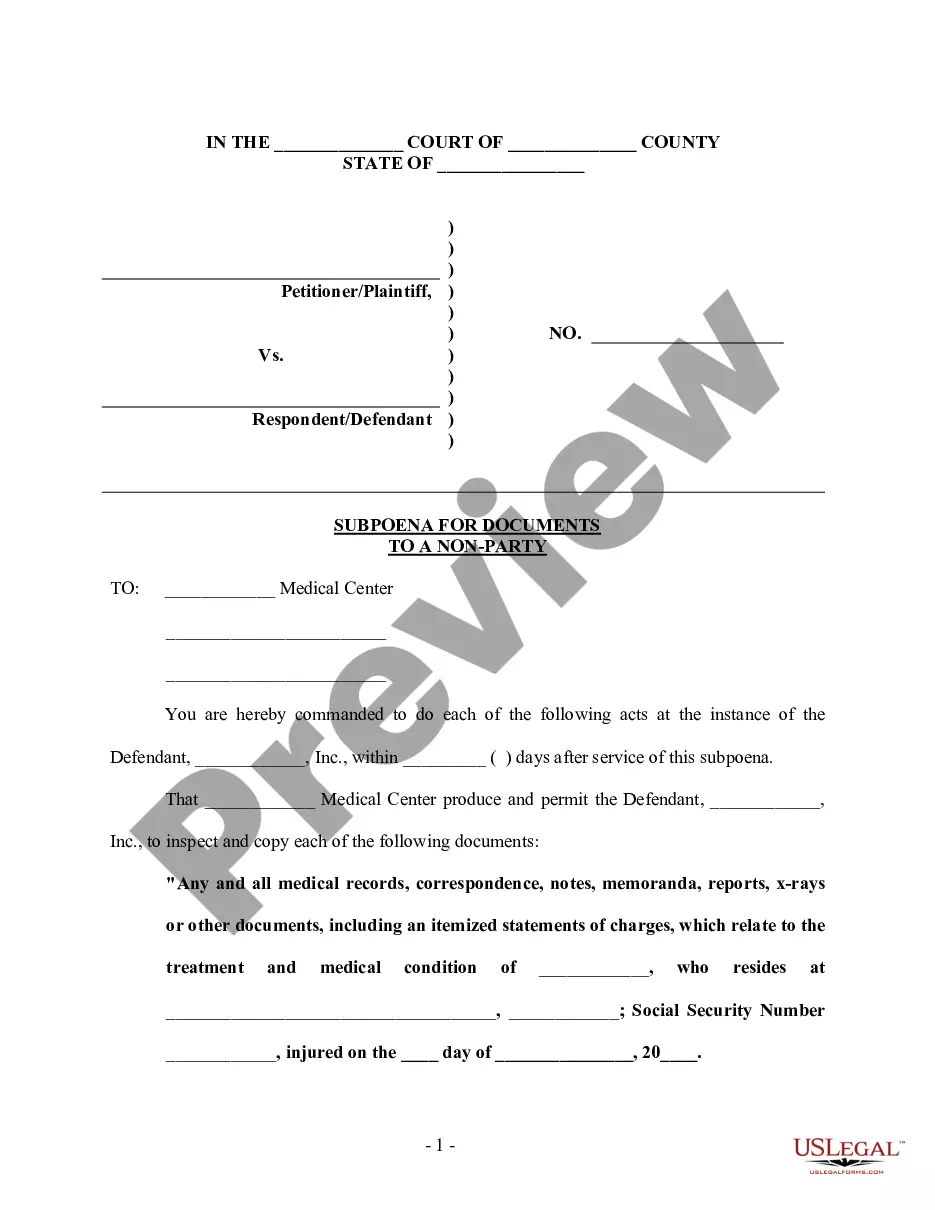
Object to the subpoena when appropriate. You may not have to provide all requested documents and/or you may not have to testify. Your attorney can help you understand your obligations and may be able to narrow the scope of the subpoena by negotiating with the party that issued the subpoena.
For example, an attorney representing a spouse in a child custody hearing might issue a subpoena to the other spouse to appear in court to determine joint custody arrangements. Other examples of subpoenas may include requests for: Blood test information.
They can object to the subpoena in writing, after which the party that issued the subpoena must ask the court to rule on whether or not the subpoena can be enforced. The third party can also go to court themselves by filing a motion for a protective order or a motion to quash the subpoena.
A subpoena is a court order that requires a party (or a witness who is not a party) to come to court to testify. It can also require the person to bring certain papers to the court hearing or trial.