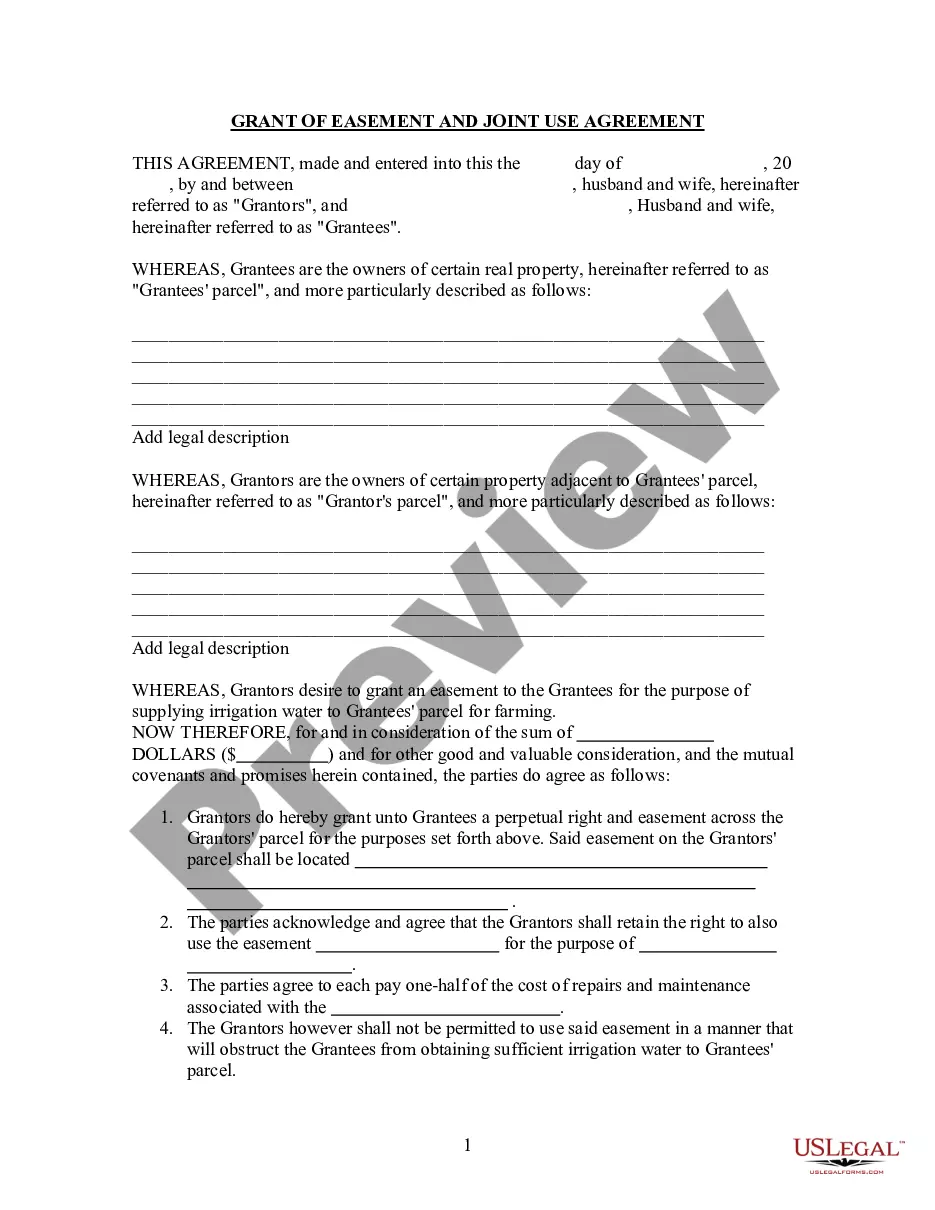
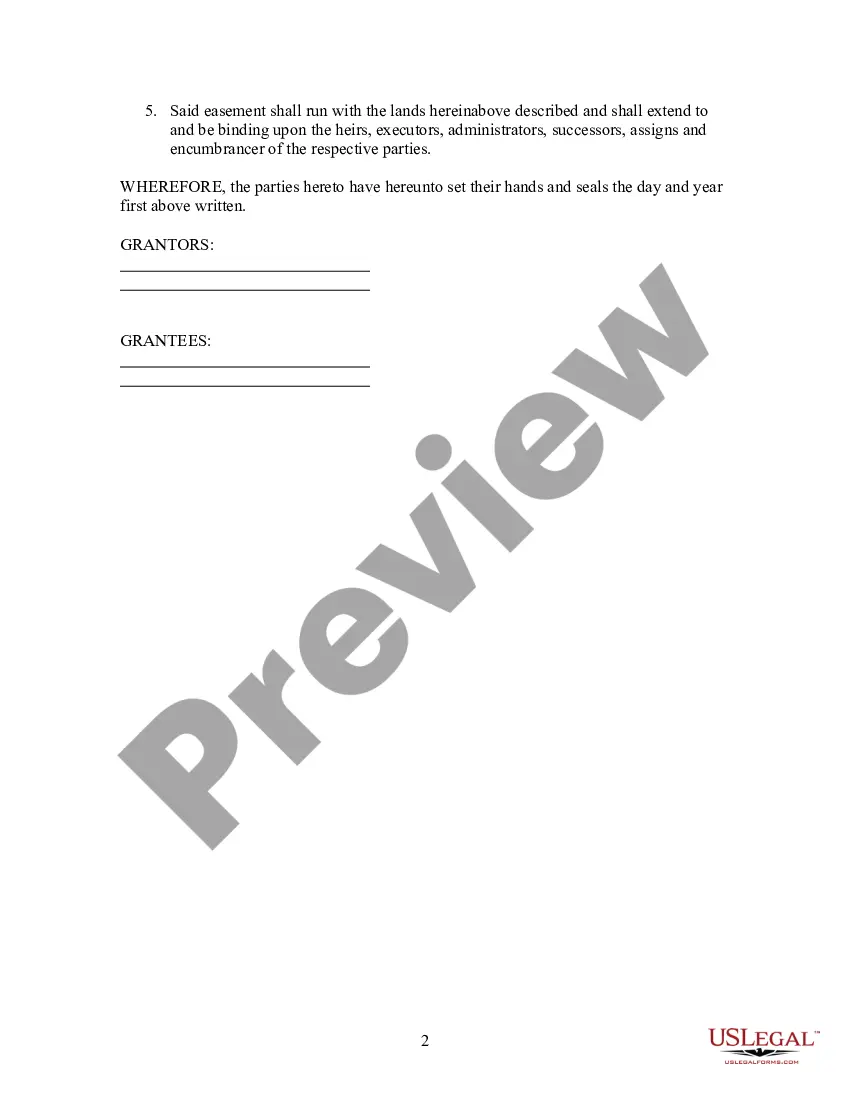
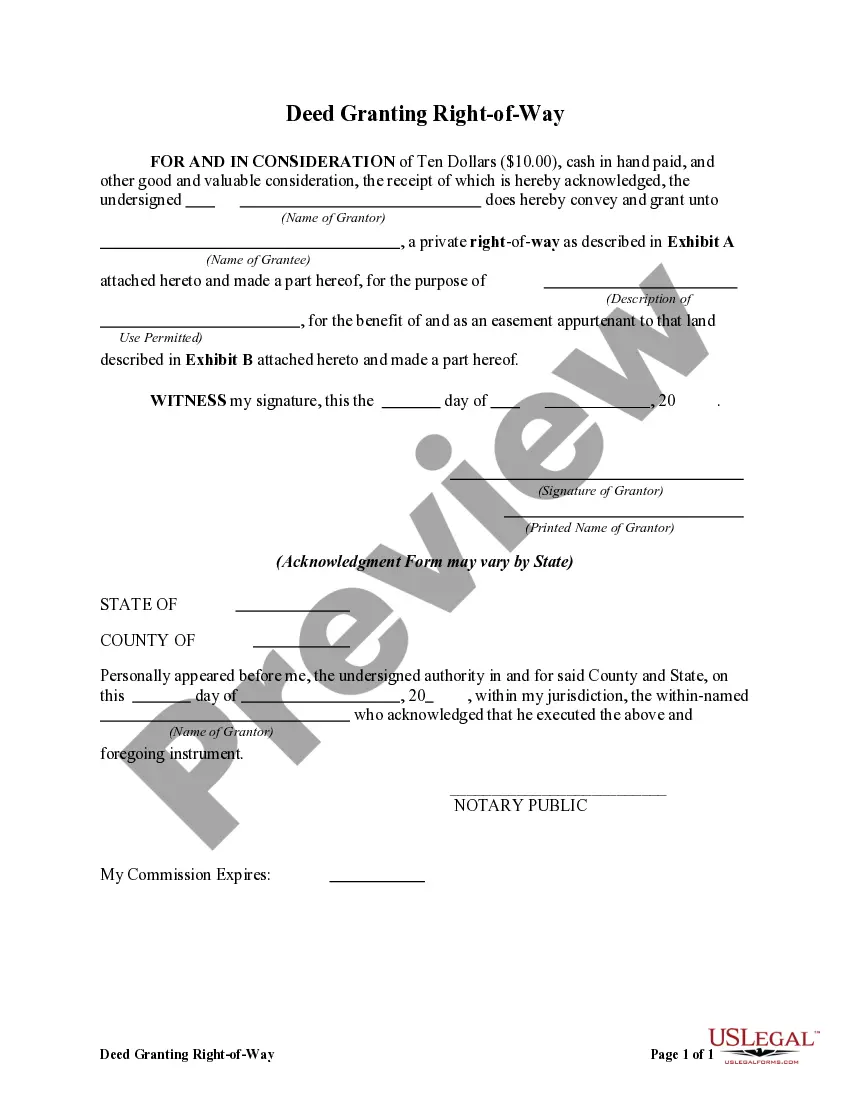
Temporary Easements With Covenants
Description
Get your form ready online
Our built-in tools help you complete, sign, share, and store your documents in one place.
Make edits, fill in missing information, and update formatting in US Legal Forms—just like you would in MS Word.
Download a copy, print it, send it by email, or mail it via USPS—whatever works best for your next step.
Sign and collect signatures with our SignNow integration. Send to multiple recipients, set reminders, and more. Go Premium to unlock E-Sign.
If this form requires notarization, complete it online through a secure video call—no need to meet a notary in person or wait for an appointment.
We protect your documents and personal data by following strict security and privacy standards.
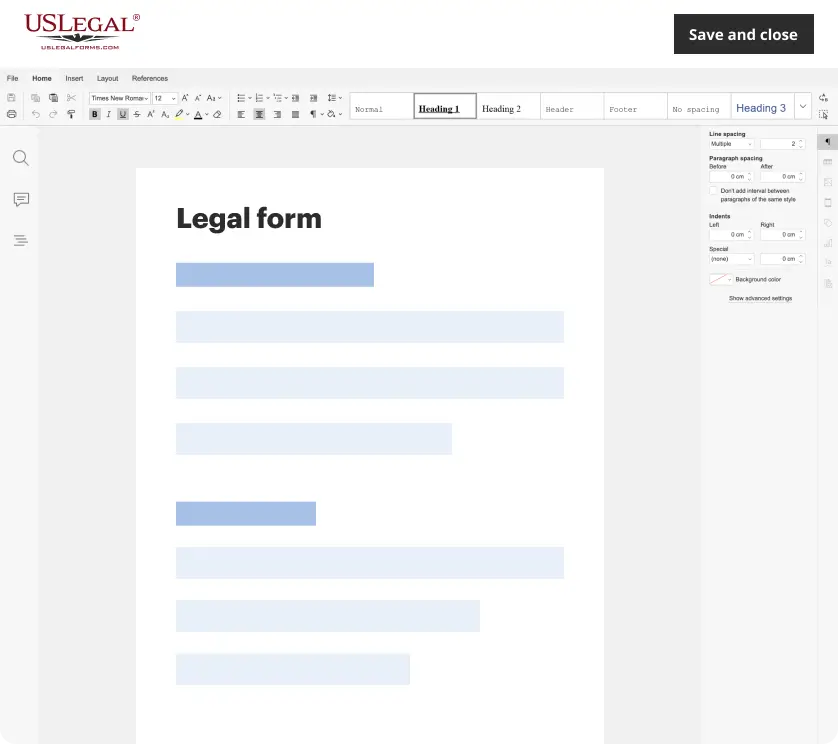
Make edits, fill in missing information, and update formatting in US Legal Forms—just like you would in MS Word.
Download a copy, print it, send it by email, or mail it via USPS—whatever works best for your next step.
Sign and collect signatures with our SignNow integration. Send to multiple recipients, set reminders, and more. Go Premium to unlock E-Sign.

If this form requires notarization, complete it online through a secure video call—no need to meet a notary in person or wait for an appointment.
We protect your documents and personal data by following strict security and privacy standards.
Looking for another form?
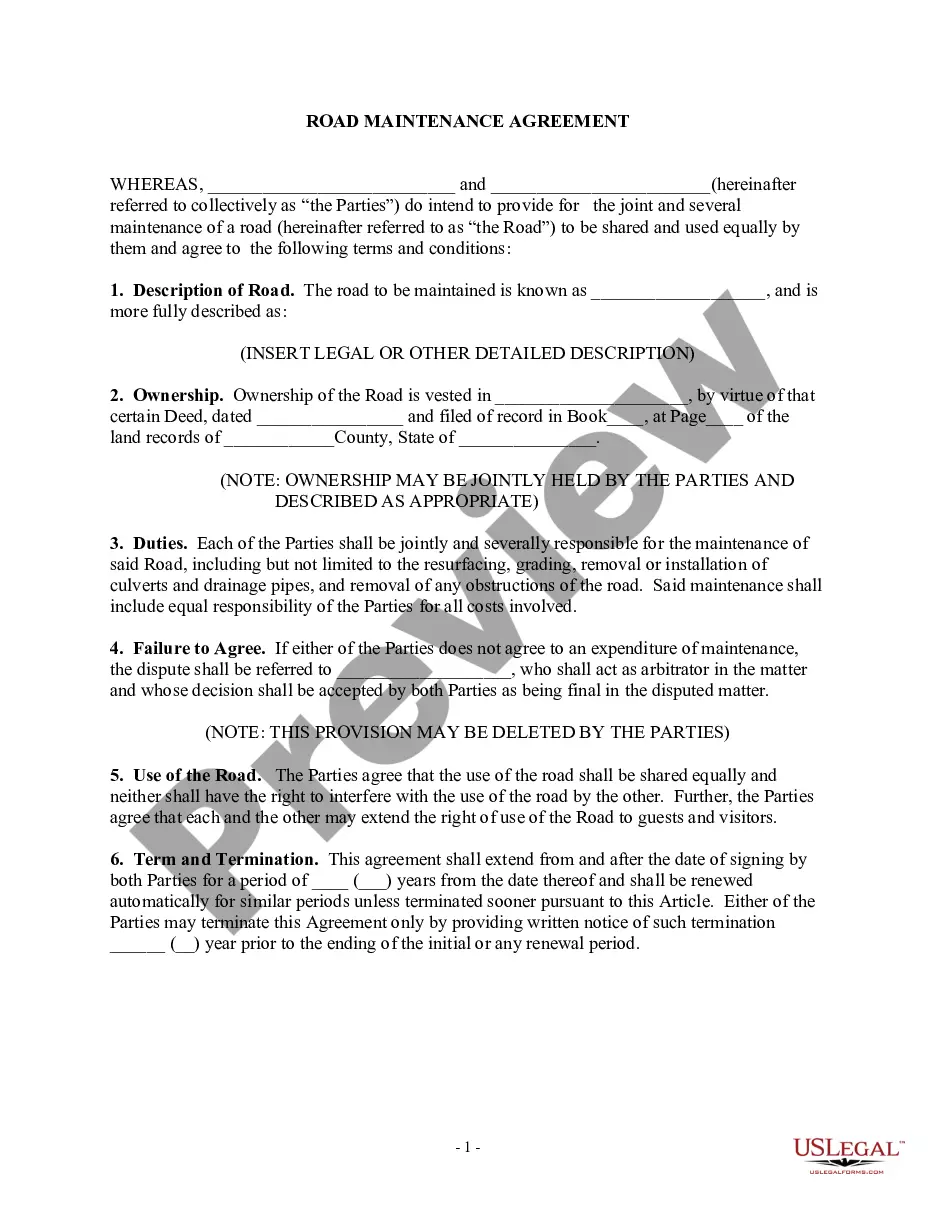

How to fill out Grant Of Easement And Joint Use Agreement?
The Temporary Easements With Covenants you see on this page is a reusable formal template drafted by professional lawyers in accordance with federal and local laws. For more than 25 years, US Legal Forms has provided individuals, organizations, and legal professionals with more than 85,000 verified, state-specific forms for any business and personal scenario. It’s the fastest, most straightforward and most reliable way to obtain the documents you need, as the service guarantees the highest level of data security and anti-malware protection.
Acquiring this Temporary Easements With Covenants will take you just a few simple steps:
- Search for the document you need and check it. Look through the file you searched and preview it or review the form description to verify it fits your needs. If it does not, use the search option to get the correct one. Click Buy Now once you have located the template you need.
- Sign up and log in. Choose the pricing plan that suits you and register for an account. Use PayPal or a credit card to make a prompt payment. If you already have an account, log in and check your subscription to proceed.
- Get the fillable template. Pick the format you want for your Temporary Easements With Covenants (PDF, Word, RTF) and save the sample on your device.
- Fill out and sign the paperwork. Print out the template to complete it by hand. Alternatively, utilize an online multi-functional PDF editor to quickly and precisely fill out and sign your form with a eSignature.
- Download your papers one more time. Utilize the same document again anytime needed. Open the My Forms tab in your profile to redownload any earlier downloaded forms.
Subscribe to US Legal Forms to have verified legal templates for all of life’s situations at your disposal.
Form popularity
FAQ
The difference between easement and covenant rests on who owns the property being used. Your right of use, or right of way, over someone else's property is an easement. A contract limiting how you use your own property is a restrictive covenant.
And easement is terminated by release if the dominant tenant agrees to give up the interest. A written release is required, usually the dominant tenant execute a quick claim deed in favor of the servient tenant, and the servient tenant records the deed.
Public easements, or those with a public benefit such as public ways, railroads, public (and private) utility and other service easements do not expire. They must be extinguished in the manner provided by law.
There are eight ways to terminate an easement: abandonment, merger, end of necessity, demolition, recording act, condemnation, adverse possession, and release.
Negative easements will usually exist between owners of adjacent property in uncommon circumstances. Restrictive covenants will almost always be present when you buy property in common development.