Letter Collection Using For Loop
Description
Get your form ready online
Our built-in tools help you complete, sign, share, and store your documents in one place.
Make edits, fill in missing information, and update formatting in US Legal Forms—just like you would in MS Word.
Download a copy, print it, send it by email, or mail it via USPS—whatever works best for your next step.
Sign and collect signatures with our SignNow integration. Send to multiple recipients, set reminders, and more. Go Premium to unlock E-Sign.
If this form requires notarization, complete it online through a secure video call—no need to meet a notary in person or wait for an appointment.
We protect your documents and personal data by following strict security and privacy standards.

Make edits, fill in missing information, and update formatting in US Legal Forms—just like you would in MS Word.

Download a copy, print it, send it by email, or mail it via USPS—whatever works best for your next step.

Sign and collect signatures with our SignNow integration. Send to multiple recipients, set reminders, and more. Go Premium to unlock E-Sign.

If this form requires notarization, complete it online through a secure video call—no need to meet a notary in person or wait for an appointment.

We protect your documents and personal data by following strict security and privacy standards.
Looking for another form?
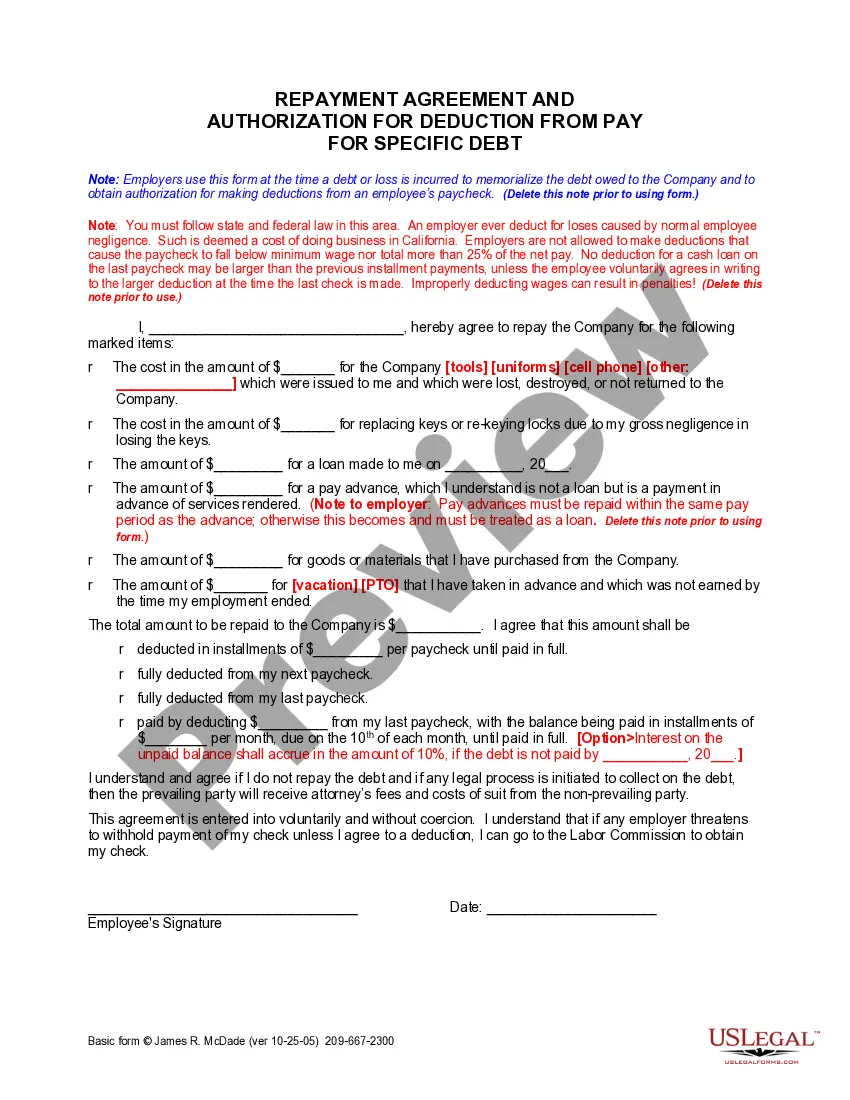

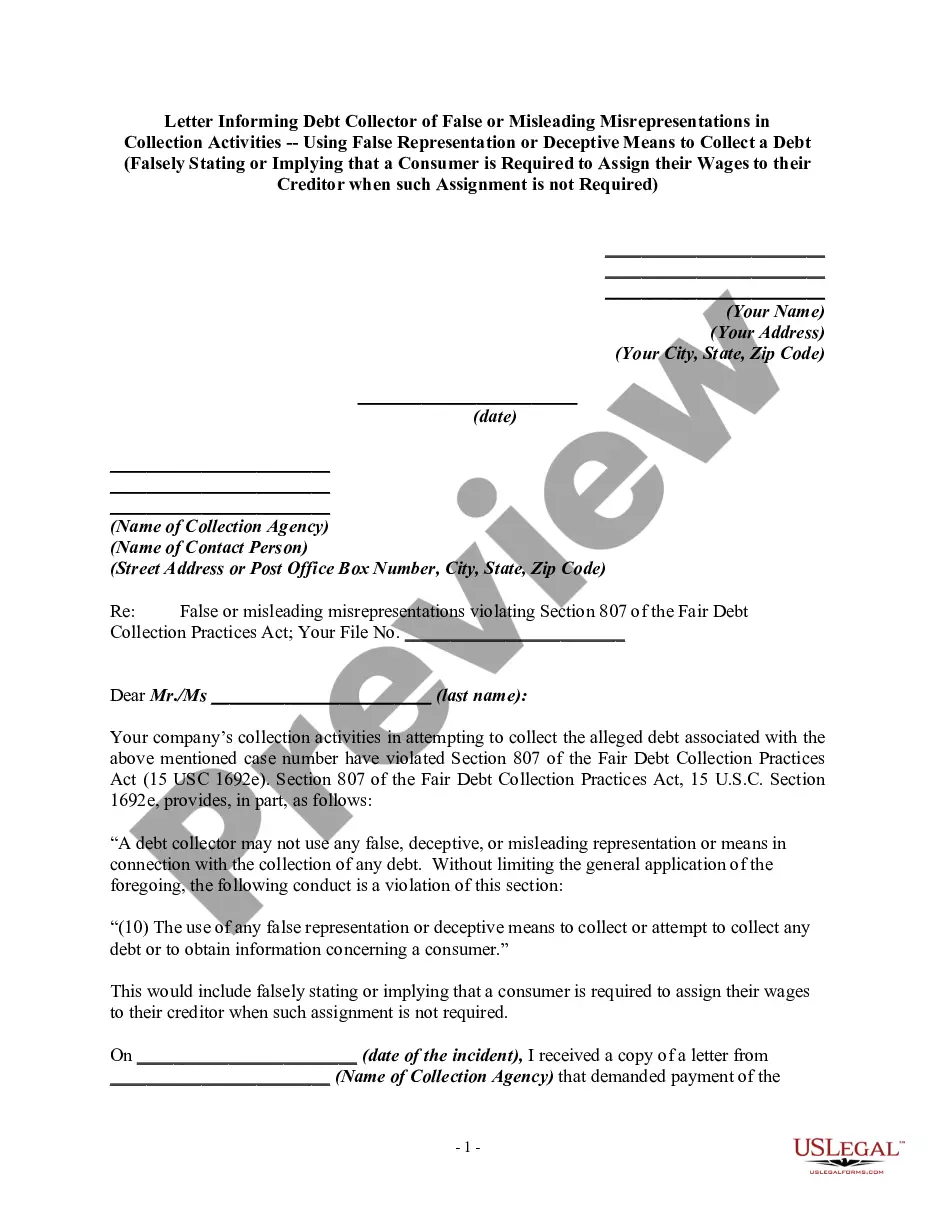
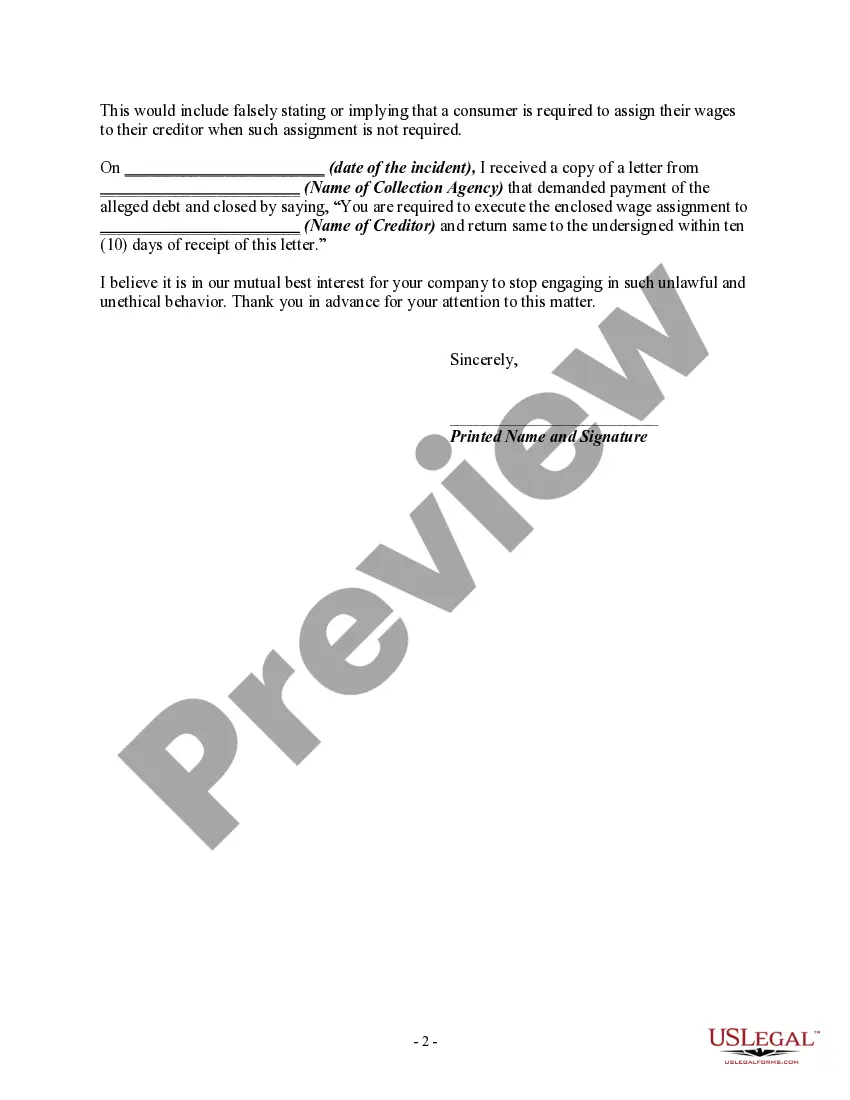
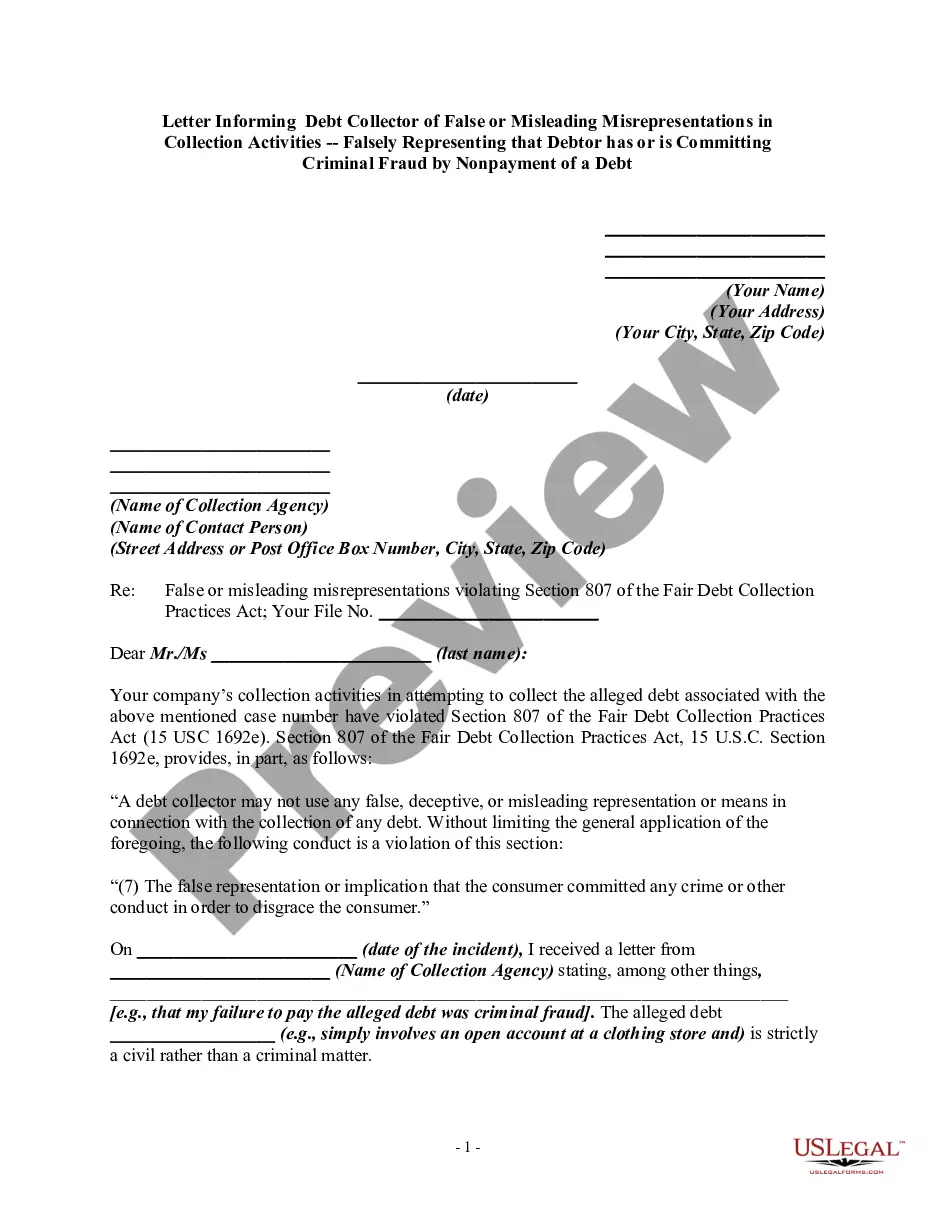
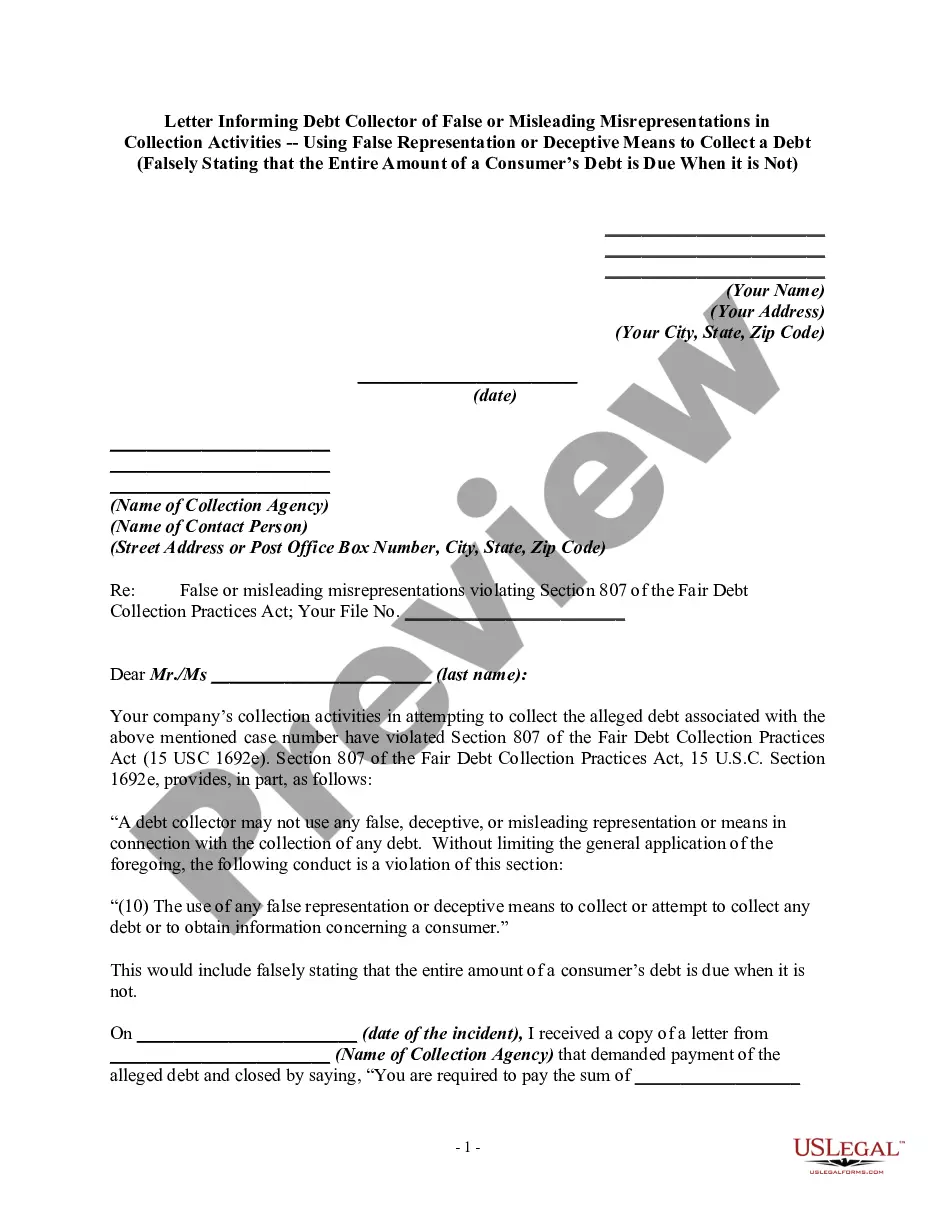
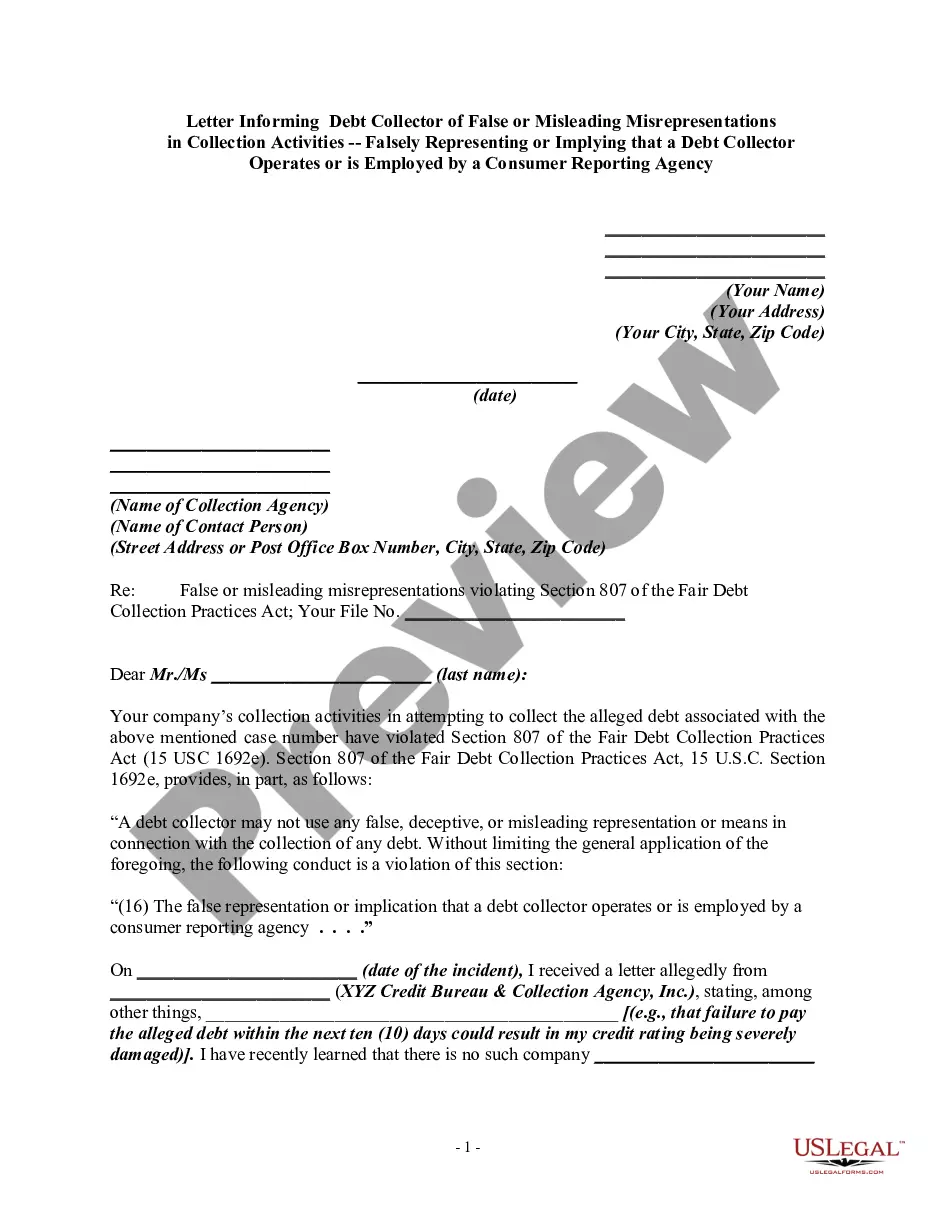
How to fill out Letter Informing Debt Collector Of False Or Misleading Misrepresentations In Collection Activities - Using False Representation Or Deceptive Means To Collect A Debt?
- Log in to your US Legal Forms account if you're a returning user. Ensure your subscription is active, or renew it if necessary.
- For new users, begin by previewing the available forms. Check the descriptions to select the document that aligns with your needs and complies with local regulations.
- If you encounter discrepancies or need a different template, utilize the search function to find the correct form.
- Proceed to purchase the desired document by clicking on the Buy Now button. Choose from various subscription plans and create your account to access all resources.
- Complete your transaction securely using credit card details or PayPal, ensuring your purchase is processed smoothly.
- Download the form to your device for easy access. You can also return to your profile at any time to retrieve your documents from the My Forms menu.
By utilizing US Legal Forms, you are equipped with more than 85,000 customizable legal documents. This extensive collection ensures you have the right tools for any legal situation.
Experience the ease of obtaining legal forms today. Start your journey with US Legal Forms and ensure your documents are legally sound and accurate!
Form popularity
FAQ
To iterate from 'a' to 'z' in Java, use a for loop that specifies the range of ASCII values for lowercase letters. You loop through the values, converting each to a character in each iteration. Implementing the letter collection using for loop provides clarity on how to manage character sequences, allowing for straightforward character processing in your applications.
To print the letters from 'a' to 'z', set up a for loop that runs from the ASCII value of 'a' to 'z'. As you loop through, convert the integer values back to characters. This technique showcases the letter collection using for loop, offering a practical example of character manipulation in Java programming.
You can easily print the alphabets in Java by using a for loop that iterates from 'A' to 'Z'. Within the loop, use 'System.out.print()' to display each character. This method illustrates the core concept of the letter collection using for loop, emphasizing how you can iterate over a defined range and achieve your desired output systematically.
To print characters in Java using a for loop, start with a loop that iterates through the ASCII values of the characters you want to print. For instance, you can use a range from 'A' to 'Z', converting each integer back to a character with typecasting. The letter collection using for loop effectively showcases how simple control structures can manipulate character data in programming.
In Java 8, you can iterate through a collection using the forEach method, which takes a lambda expression as an argument. This method allows you to execute a specific action for each element in the collection. Additionally, you can utilize streams for a more functional approach, transforming and processing data seamlessly. Leveraging the letter collection using for loop alongside Java 8 features can enhance your overall coding experience.
To print numbers 1 through 10 in Java, you can use a simple for loop that starts at 1 and goes up to 10. Within the loop, use the 'System.out.println()' method to display each number. The letter collection using for loop concept can be applied here by treating numbers like data in a collection, making it easy to iterate through and display them efficiently.
You can iterate over collections in Java using various methods, such as using a for loop, an enhanced for loop, or employing iterators. The traditional for loop allows you to control the index and access each element, while the enhanced for loop simplifies the syntax. Additionally, Java's Stream API provides modern alternatives for iterating through collections. Utilizing the letter collection using for loop can effectively demonstrate iteration principles.
To print each character in a string, you can use a for loop that traverses through the string. Each character can be accessed during the loop's iterations, and you can use print statements to display them. This technique is a practical example of letter collection using for loop.
In C++, printing characters using a for loop involves defining a character array or string, then utilizing a traditional for loop to iterate through each element. You can use the cout function to display each character as you loop, demonstrating an organized letter collection using for loop.
To iterate from 'a' to 'z' in Python, you can use a for loop that leverages the range function along with ASCII values or simply the letters directly in a string. This method allows you to work with each letter conveniently and effectively, showcasing letter collection using for loop.