Physical Harassment In The Workplace
Description
Get your form ready online
Our built-in tools help you complete, sign, share, and store your documents in one place.
Make edits, fill in missing information, and update formatting in US Legal Forms—just like you would in MS Word.
Download a copy, print it, send it by email, or mail it via USPS—whatever works best for your next step.
Sign and collect signatures with our SignNow integration. Send to multiple recipients, set reminders, and more. Go Premium to unlock E-Sign.
If this form requires notarization, complete it online through a secure video call—no need to meet a notary in person or wait for an appointment.
We protect your documents and personal data by following strict security and privacy standards.

Make edits, fill in missing information, and update formatting in US Legal Forms—just like you would in MS Word.

Download a copy, print it, send it by email, or mail it via USPS—whatever works best for your next step.

Sign and collect signatures with our SignNow integration. Send to multiple recipients, set reminders, and more. Go Premium to unlock E-Sign.

If this form requires notarization, complete it online through a secure video call—no need to meet a notary in person or wait for an appointment.

We protect your documents and personal data by following strict security and privacy standards.
Looking for another form?


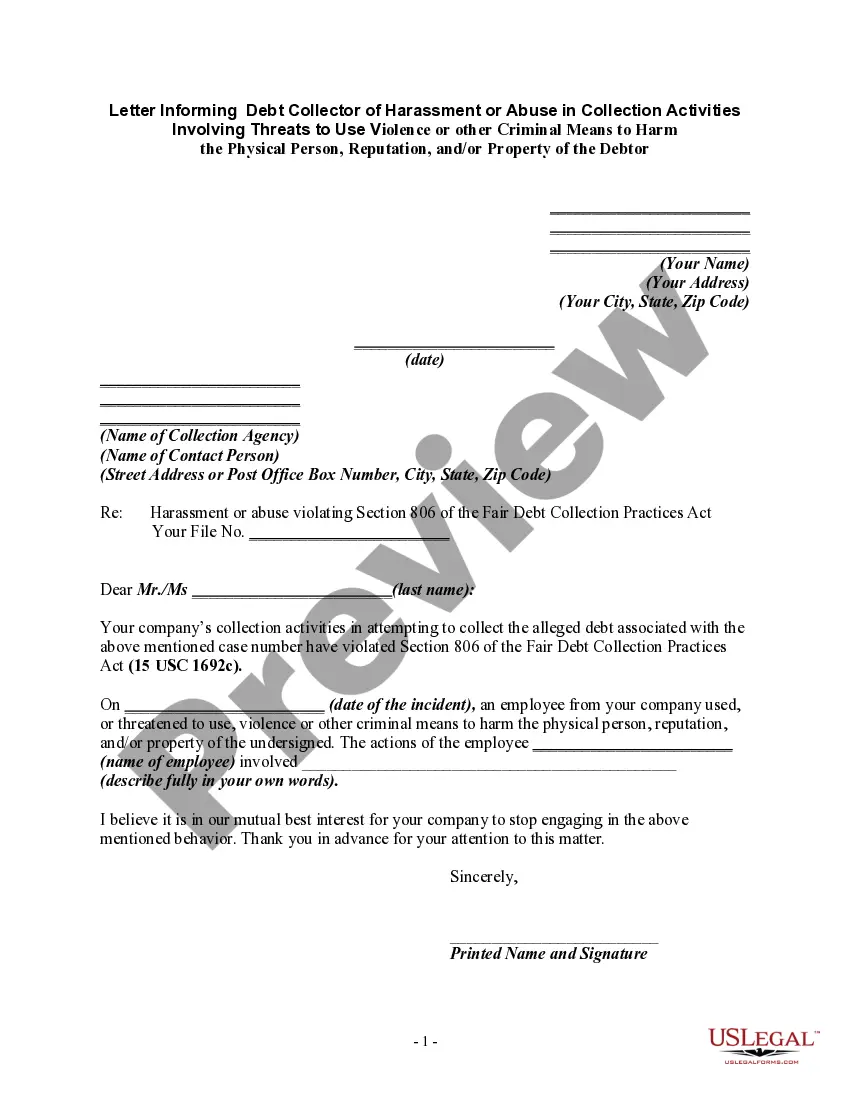
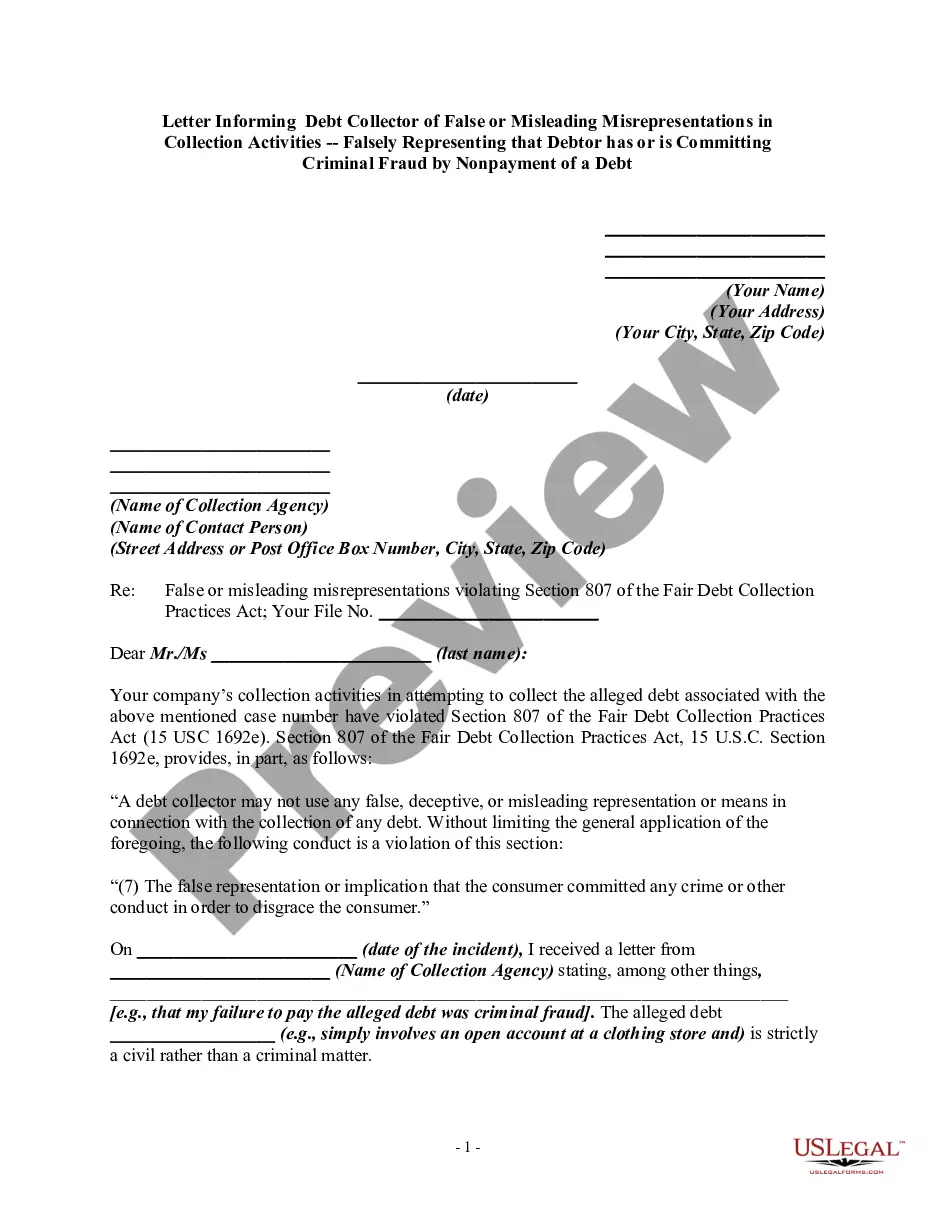
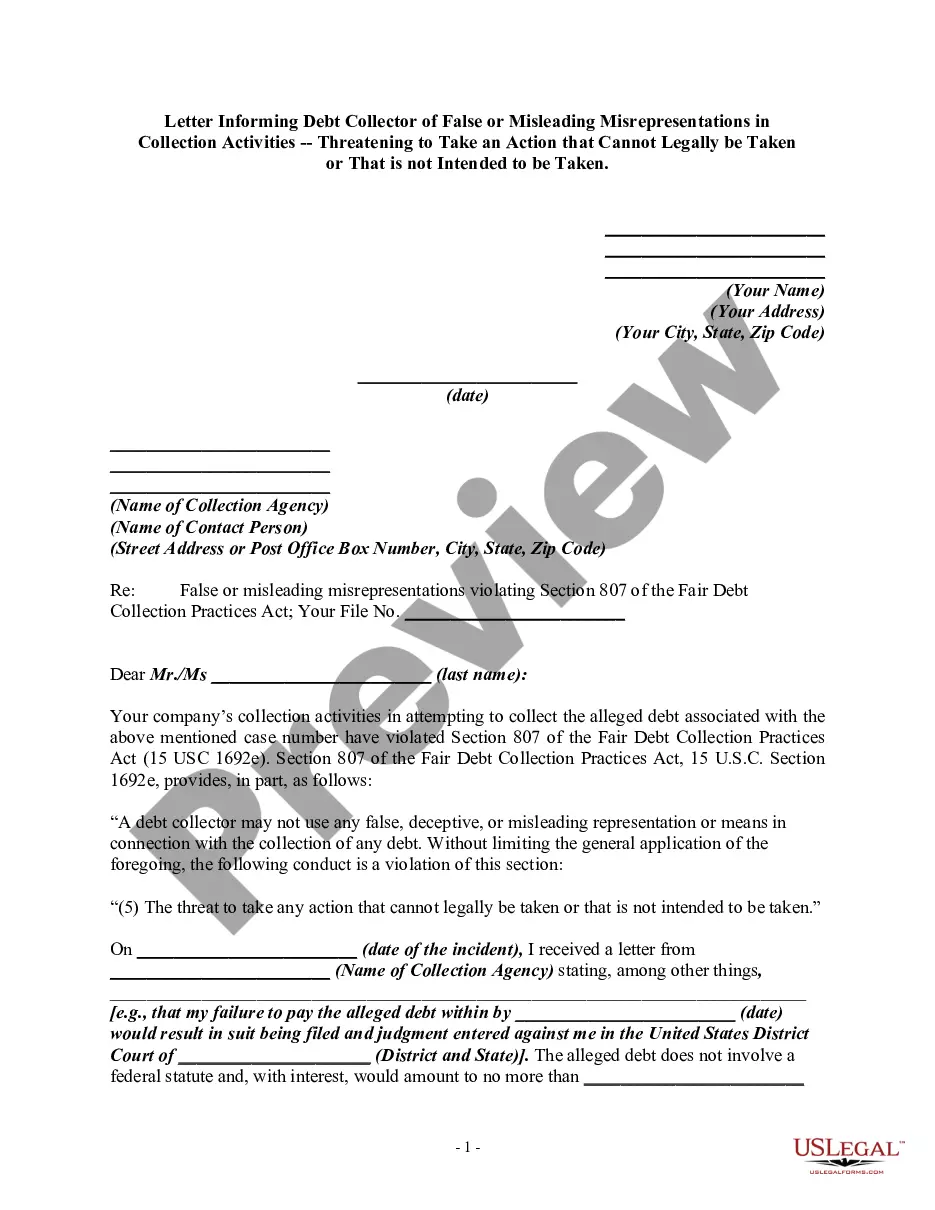
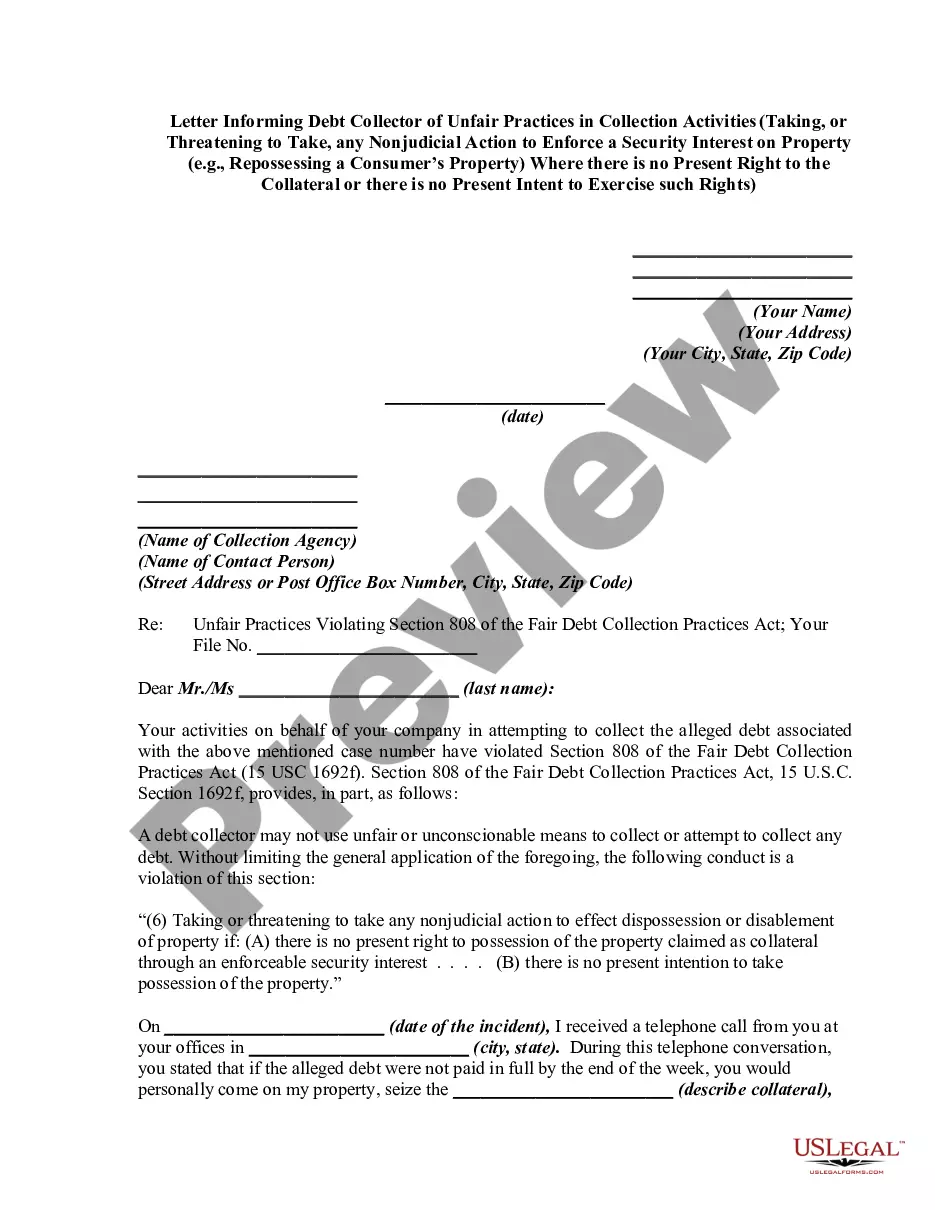
How to fill out Letter Informing Debt Collector Of Harassment Or Abuse In Collection Activities Involving Threats To Use Violence Or Other Criminal Means To Harm The Physical Person, Reputation, And/or Property Of The Debtor?
Whether for professional objectives or personal matters, everyone must handle legal issues at some point in their lives. Filling out legal documents requires meticulous attention, beginning with choosing the right form template. For example, if you select an incorrect version of the Physical Harassment In The Workplace, it will be declined once submitted. Therefore, it is crucial to find a trustworthy source of legal documents such as US Legal Forms.
If you need to acquire a Physical Harassment In The Workplace template, follow these simple steps: Obtain the template you require using the search bar or catalog navigation. Review the form’s description to ensure it aligns with your situation, state, and county. Click on the form’s preview to examine it. If it is the wrong form, return to the search feature to locate the Physical Harassment In The Workplace sample you need. Download the template if it meets your specifications. If you already possess a US Legal Forms account, simply click Log in to access previously saved templates in My documents. If you do not have an account yet, you can download the form by clicking Buy now. Choose the appropriate pricing option. Complete the account registration form. Select your payment method: you can utilize a credit card or PayPal account. Choose the document format you desire and download the Physical Harassment In The Workplace. Once downloaded, you can fill out the form with the assistance of editing software or print it and complete it manually.
With an extensive catalog from US Legal Forms available, you never have to waste time searching for the right template online. Utilize the library’s easy navigation to find the suitable template for any situation.
- Utilize the search field to find the necessary template.
- Examine the form’s description for relevance.
- View the form’s preview to assess it.
- Return to search if the form is incorrect.
- Download the template if it fits your needs.
- Log in to access saved templates if you have an account.
- Buy the form if you do not have an account.
- Select the correct pricing option for your needs.
- Complete the registration form for an account.
- Choose a payment method for the transaction.
- Download the document in your preferred format.
Form popularity
FAQ
To prove workplace harassment, documentation is key. Collect evidence such as emails, text messages, or witness statements that demonstrate the occurrence of physical harassment in the workplace. Additionally, keeping a detailed record of incidents, including dates and descriptions, can strengthen your case. If you need assistance navigating this process, platforms like uslegalforms can provide valuable resources.
Being harassed at work means experiencing unwanted behavior that makes you feel uncomfortable, threatened, or unsafe. This can include physical harassment in the workplace, such as inappropriate touching or aggressive gestures. It's important to recognize these behaviors early and understand that you have the right to work in a safe environment. If you feel you are being harassed, seeking assistance from HR or legal professionals is a vital step.
Job harassment includes any unwanted attention or behavior that disrupts an employee's work experience. This can range from verbal insults to physical harassment in the workplace. To qualify as harassment, the behavior must be severe enough to create a hostile environment or interfere with an employee's ability to perform their job. Understanding what constitutes job harassment helps employees protect their rights.
Examples of harassment in the workplace can vary widely but often include offensive jokes, inappropriate comments, and physical intimidation. Physical harassment in the workplace particularly refers to actions like pushing, hitting, or other forms of unwanted physical contact. Recognizing these behaviors is crucial for creating a safe work environment. If you witness or experience any of these actions, it is important to report them promptly.
Harassment at work involves any unwelcome behavior that creates a hostile or intimidating environment. This includes actions that are physical, verbal, or emotional in nature. Specifically, physical harassment in the workplace can manifest as unwanted touching, threats of violence, or even aggressive gestures. It is essential that employees understand their rights and seek help if they experience such behavior.
Physical harassment in the workplace includes any unwanted physical contact that creates an intimidating, hostile, or offensive environment. This can range from unwanted touching, pushing, or hitting, to blocking someone's path or invading their personal space. It is crucial to understand that such behavior can lead to serious legal consequences for both the harasser and the employer. To protect yourself and your coworkers, consider using resources like US Legal Forms, which provides comprehensive information and solutions for handling workplace harassment.
Here are three types of workplace harassment, examples, and solutions to help you educate your employees for preventing workplace harassment. Verbal/Written. Physical. Visual.
Preventing and Addressing Physical Harassment Employees who feel they have been subjected to physical harassment have several options for seeking help and acting. They can report the behaviour to their employer, file a complaint with the Equal Employment Opportunity Commission (EEOC), or consult with an attorney.
The most common forms related to physical harassment include: Sexual assault, abuse, or rape. Inappropriately touching or grabbing someone, e.g. touching someone's breast intentionally. Using intimidating gestures.
Make detailed notes on the harassment, including the time, place and what was said and done. Obtain statements from anyone who witnessed the harassing actions or words. Take photos, audio or video of any actions or words if possible. Keep any physical evidence, such as notes, gifts or other items.