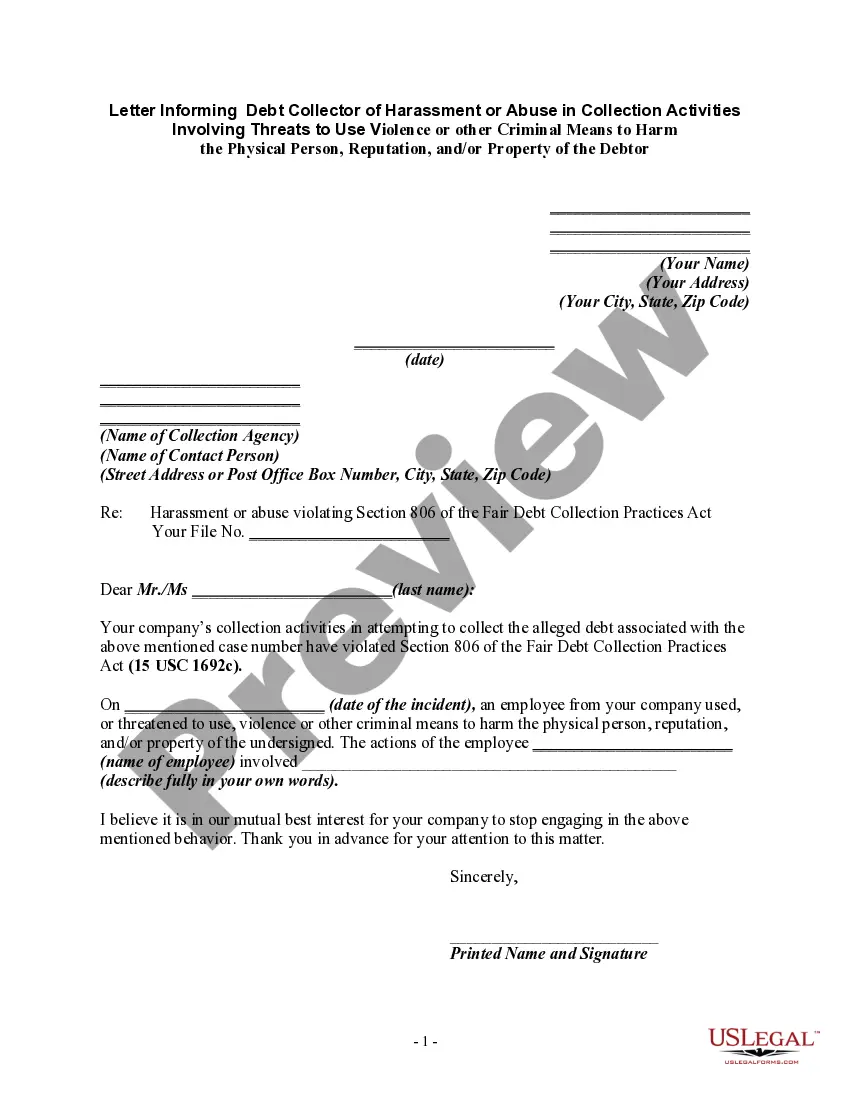
Collector Harassment Means For Employees
Description
Get your form ready online
Our built-in tools help you complete, sign, share, and store your documents in one place.
Make edits, fill in missing information, and update formatting in US Legal Forms—just like you would in MS Word.
Download a copy, print it, send it by email, or mail it via USPS—whatever works best for your next step.
Sign and collect signatures with our SignNow integration. Send to multiple recipients, set reminders, and more. Go Premium to unlock E-Sign.
If this form requires notarization, complete it online through a secure video call—no need to meet a notary in person or wait for an appointment.
We protect your documents and personal data by following strict security and privacy standards.
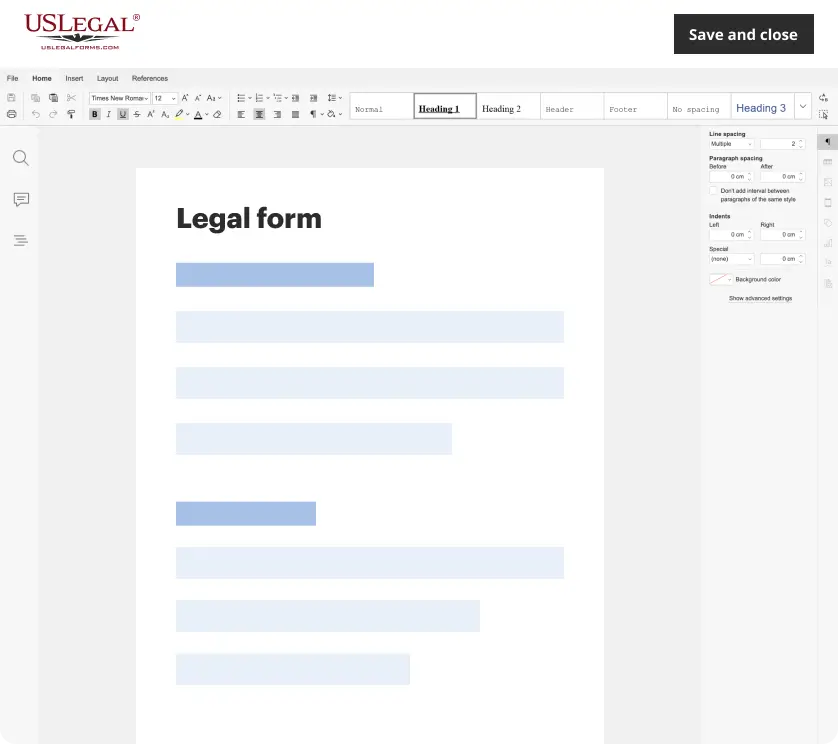
Make edits, fill in missing information, and update formatting in US Legal Forms—just like you would in MS Word.
Download a copy, print it, send it by email, or mail it via USPS—whatever works best for your next step.
Sign and collect signatures with our SignNow integration. Send to multiple recipients, set reminders, and more. Go Premium to unlock E-Sign.
If this form requires notarization, complete it online through a secure video call—no need to meet a notary in person or wait for an appointment.
We protect your documents and personal data by following strict security and privacy standards.
Looking for another form?
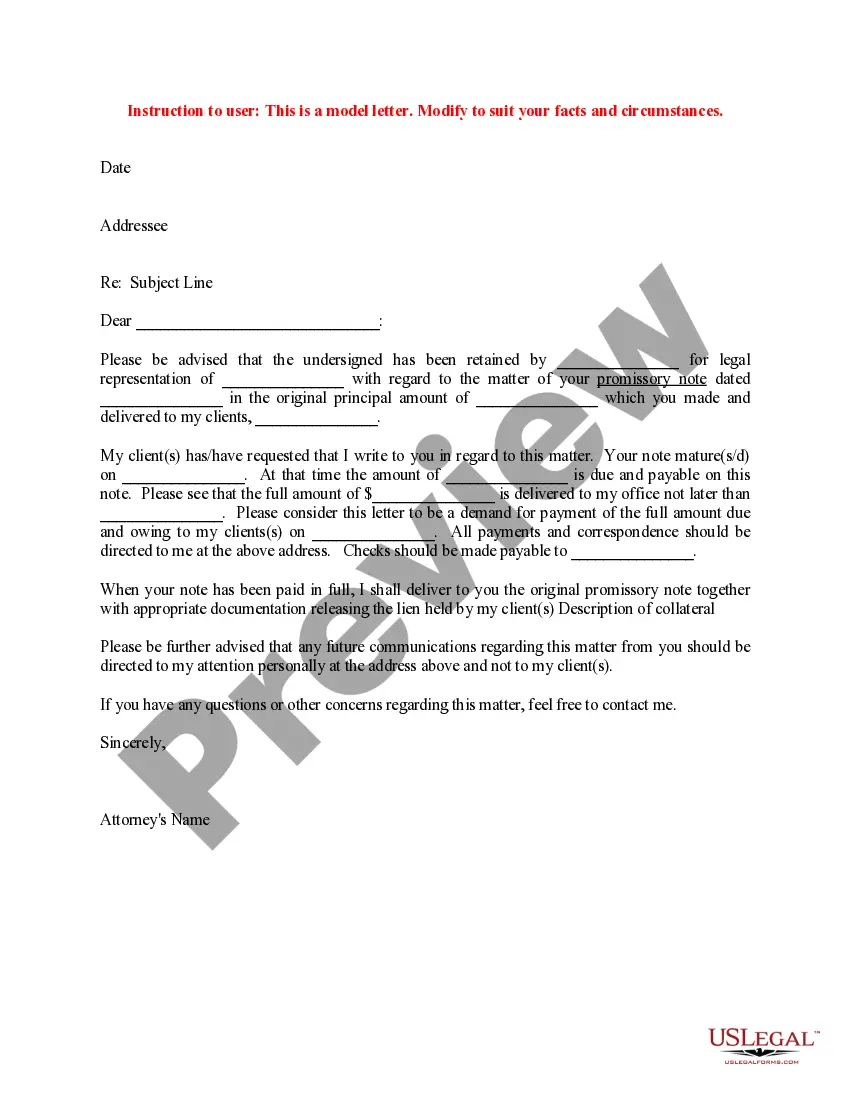
How to fill out Letter Informing Debt Collector Of Harassment Or Abuse In Collection Activities Involving Threats To Use Violence Or Other Criminal Means To Harm The Physical Person, Reputation, And/or Property Of The Debtor?
Whether for commercial reasons or for individual issues, everyone must handle legal matters at some stage in their life.
Completing legal documents necessitates meticulous focus, starting from selecting the right template.
Once it is saved, you can complete the form using editing software or print it and fill it out manually. With a vast US Legal Forms catalog available, you don’t have to waste time searching for the correct template across the web. Utilize the library’s user-friendly navigation to find the right form for any circumstance.
- For instance, if you select an incorrect version of the Collector Harassment Means For Employees, it will be rejected once you submit it.
- Thus, it is crucial to obtain a trustworthy source of legal documents like US Legal Forms.
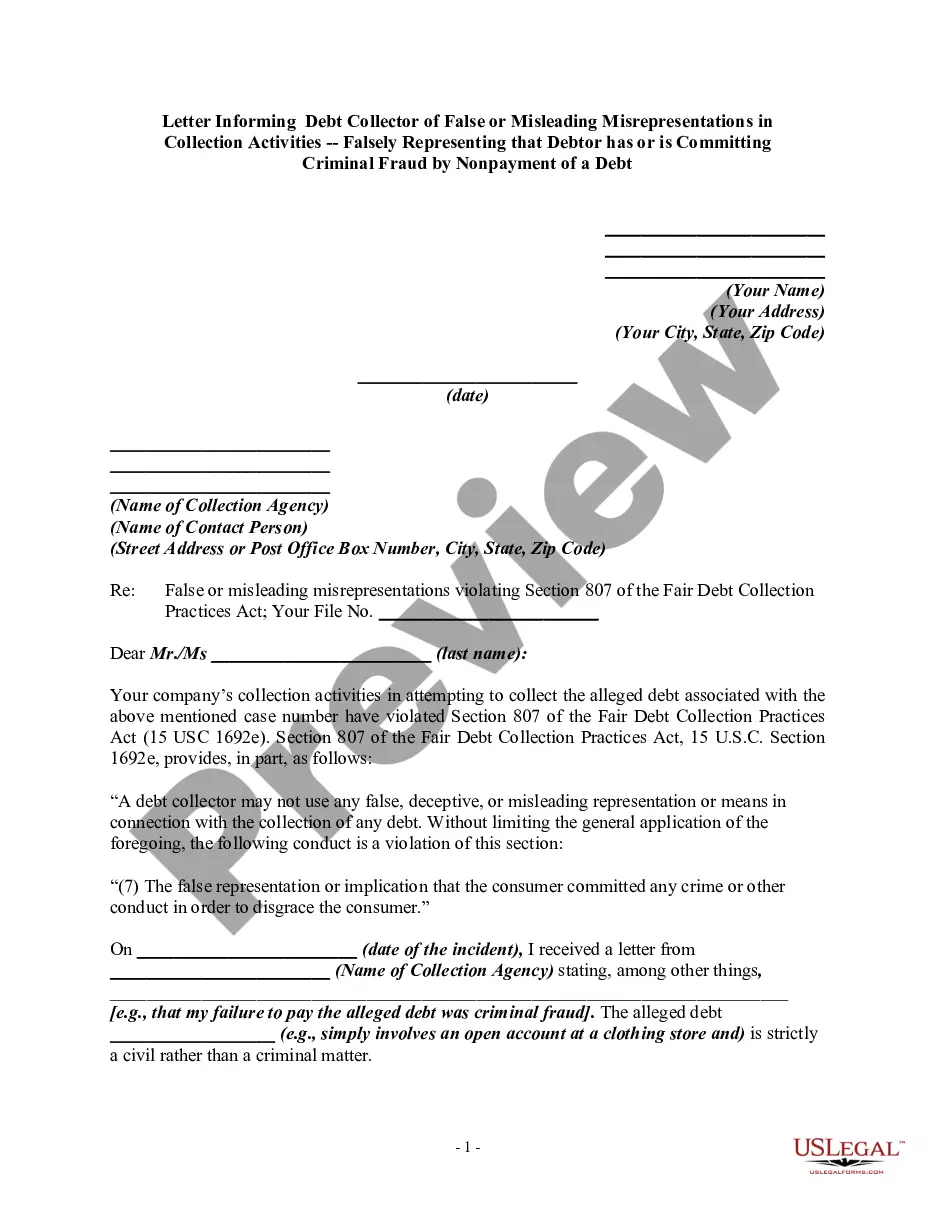
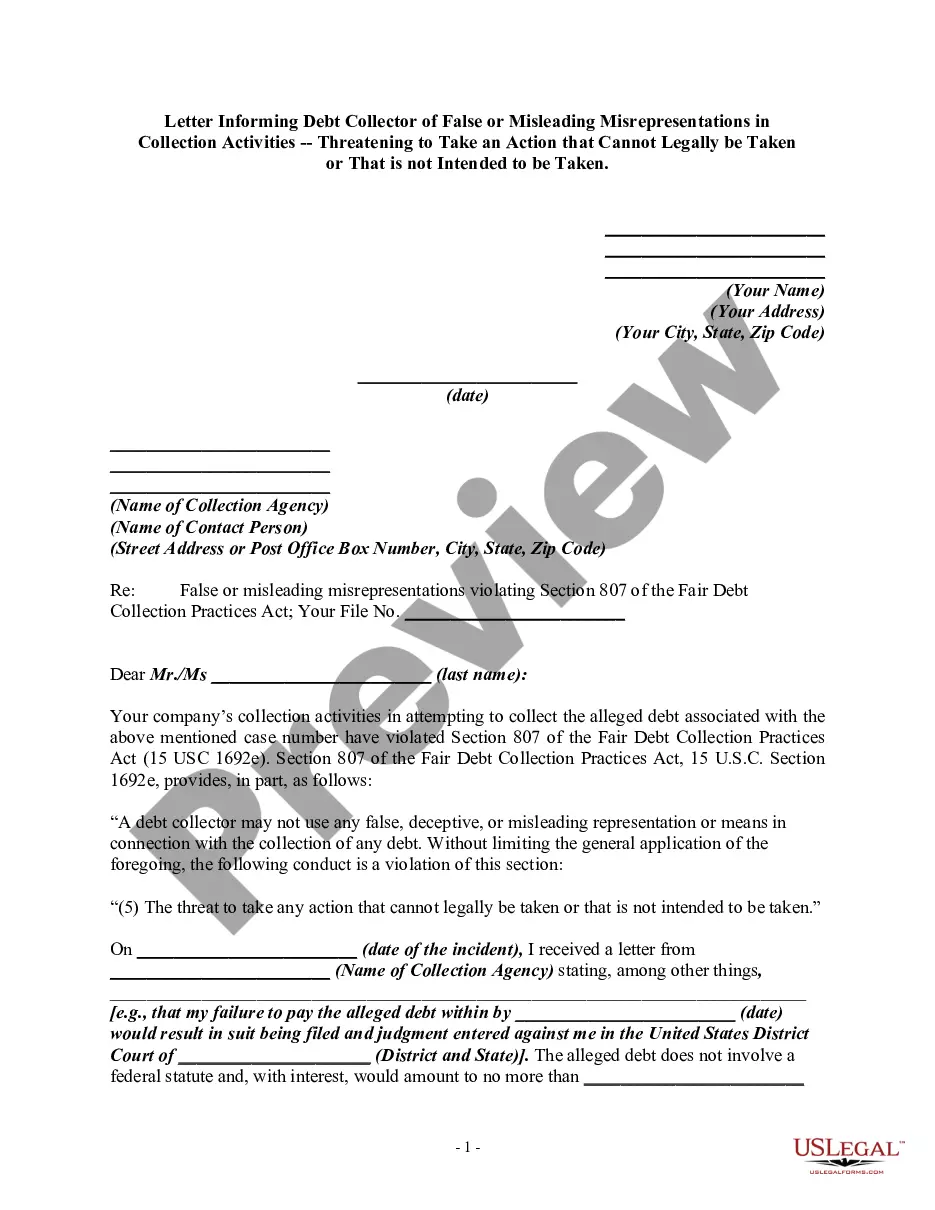
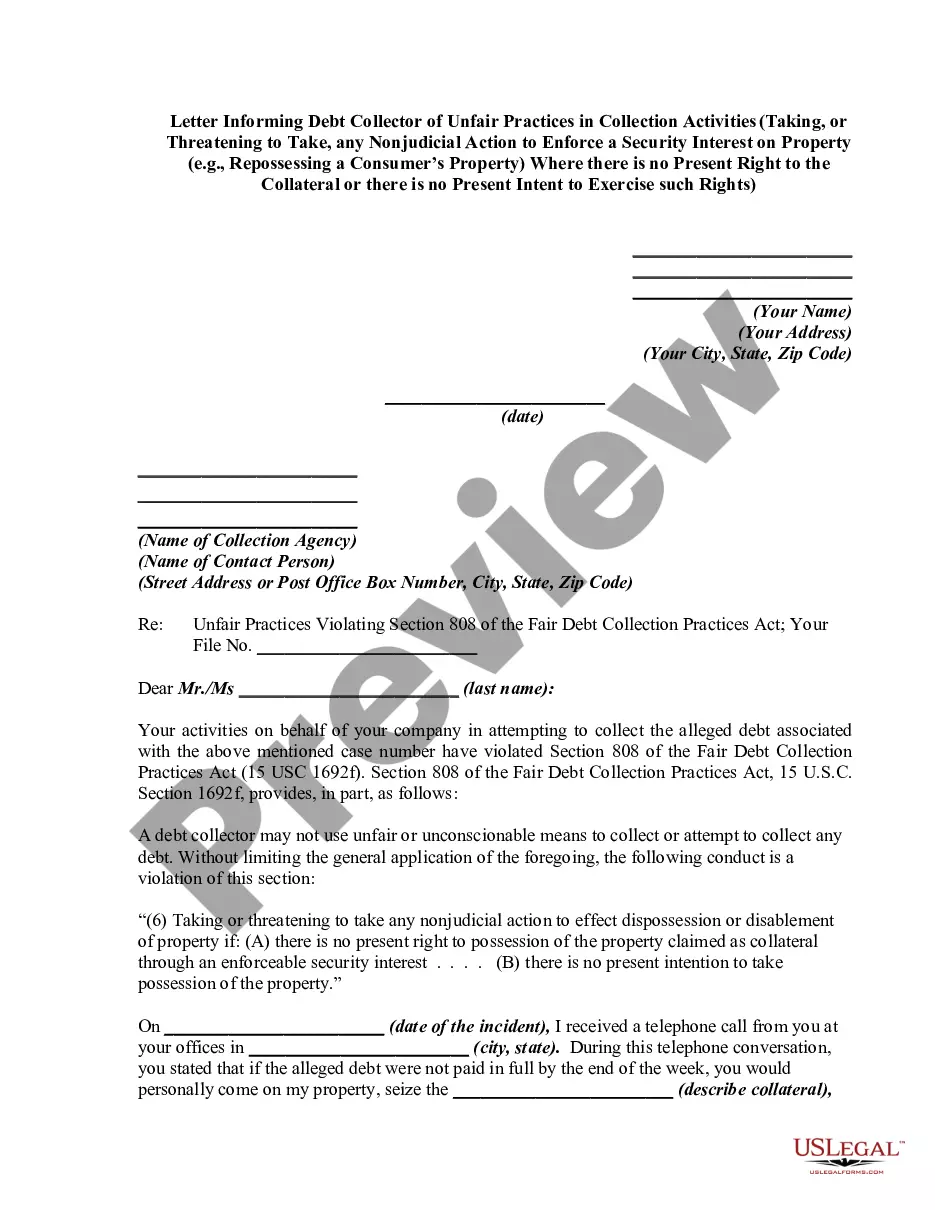
- If you need to acquire a Collector Harassment Means For Employees template, adhere to these straightforward steps.
- Locate the sample you require by using the search bar or catalog browsing.
- Review the form’s details to confirm it aligns with your situation, state, and locality.
- Click on the form’s preview to inspect it.
- If it is the wrong document, return to the search feature to find the Collector Harassment Means For Employees template you need.
- Download the file when it fulfills your requirements.
- If you possess a US Legal Forms account, simply click Log in to access previously saved documents in My documents.
- If you don’t have an account yet, you may obtain the form by clicking Buy now.
- Choose the appropriate pricing option.
- Fill out the account registration form.
- Select your payment method: you can use a credit card or PayPal account.
- Choose the file format you desire and download the Collector Harassment Means For Employees.
Form popularity
FAQ
No, a debt collector cannot harass you at work. They are prohibited from contacting your employer about your debt, except to obtain your contact information. If a collector attempts to reach you at your workplace repeatedly, this may constitute collector harassment means for employees. It's crucial to know your rights, and resources like US Legal Forms can assist you in taking the necessary steps to address such harassment effectively.
The 7 7 7 rule for collections refers to the timeline in which a creditor can pursue collection actions before the debt may be deemed uncollectible. Specifically, it outlines that after seven days from the first contact, a collector must provide written notice, and after an additional seven days, they can initiate further actions. Understanding this rule helps ensure that you know your rights under collector harassment means for employees. US Legal Forms can help you navigate these regulations and protect your interests.
To effectively manage debt collector harassment, begin by documenting every interaction you have with the collector. Note the time, date, and content of each conversation. You should inform the collector, in writing, to cease communication with you. Additionally, consider seeking assistance from platforms like US Legal Forms, which can guide you in creating legal documents to protect your rights against collector harassment means for employees.
Debt collectors cannot harass you at work under the Fair Debt Collection Practices Act (FDCPA). They are prohibited from contacting you at your workplace if they know your employer disapproves of such communication. If you are facing collector harassment as an employee, document the incidents and seek assistance from legal resources, such as US Legal Forms, which can provide guidance on your rights and help you take appropriate action.
If you experience collector harassment as an employee, you can report debt collectors to the Consumer Financial Protection Bureau (CFPB) or your state's attorney general. Provide detailed information about the harassment, including dates and specific behaviors. Document all interactions, as this evidence can support your case. Additionally, consider using legal services like US Legal Forms to help navigate the reporting process effectively.
Debt collectors cannot harass or abuse you. They cannot swear, threaten to illegally harm you or your property, threaten you with illegal actions, or falsely threaten you with actions they do not intend to take. They also cannot make repeated calls over a short period to annoy or harass you.
Documentation is always a good way to begin the process of stopping harassment calls from debt collectors. Hiring a lawyer or sending a certified letter to the collection agency should stop harassing phone calls, but there is plenty of evidence that it does not always work.
On the other hand, here's what you shouldn't do. Don't give a collector any personal financial information, make a "good faith" payment, make promises to pay, or admit the debt is valid.
Debt collectors cannot harass or abuse you. They cannot swear, threaten to illegally harm you or your property, threaten you with illegal actions, or falsely threaten you with actions they do not intend to take. They also cannot make repeated calls over a short period to annoy or harass you.