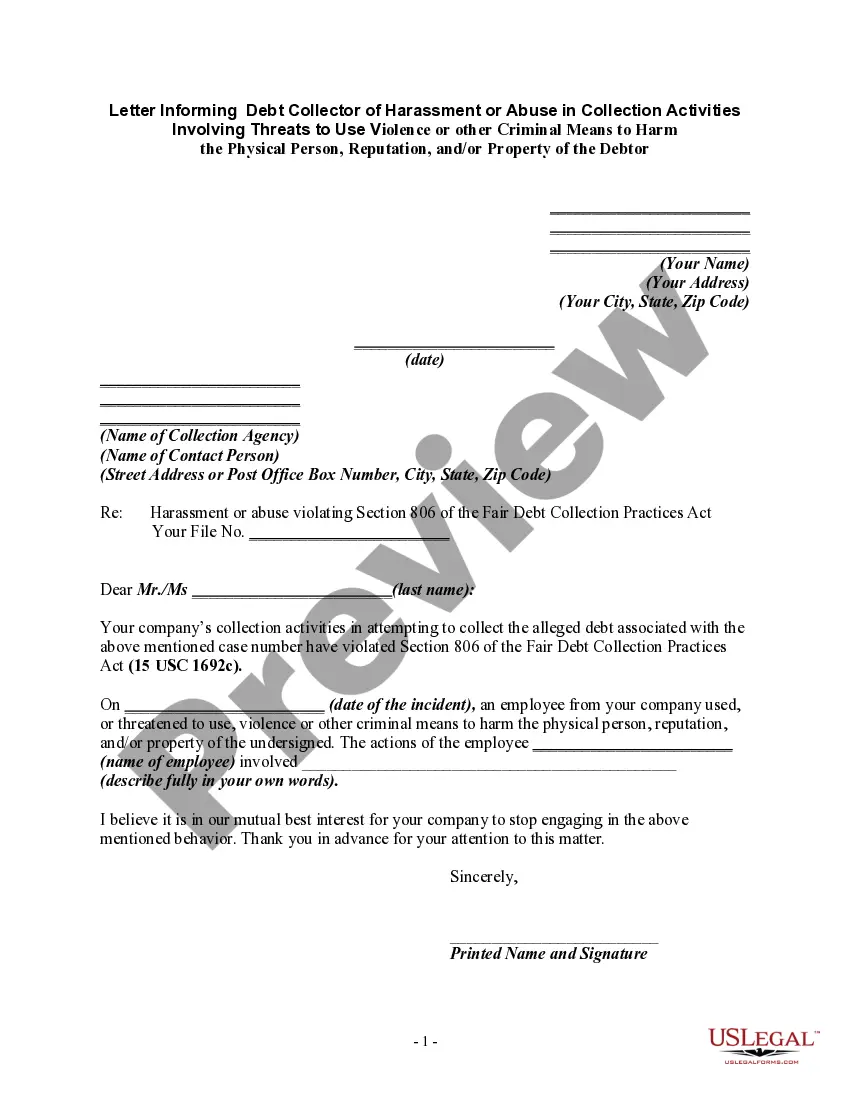
Collector Harassment Involving Forensic Science
Description
Get your form ready online
Our built-in tools help you complete, sign, share, and store your documents in one place.
Make edits, fill in missing information, and update formatting in US Legal Forms—just like you would in MS Word.
Download a copy, print it, send it by email, or mail it via USPS—whatever works best for your next step.
Sign and collect signatures with our SignNow integration. Send to multiple recipients, set reminders, and more. Go Premium to unlock E-Sign.
If this form requires notarization, complete it online through a secure video call—no need to meet a notary in person or wait for an appointment.
We protect your documents and personal data by following strict security and privacy standards.

Make edits, fill in missing information, and update formatting in US Legal Forms—just like you would in MS Word.

Download a copy, print it, send it by email, or mail it via USPS—whatever works best for your next step.

Sign and collect signatures with our SignNow integration. Send to multiple recipients, set reminders, and more. Go Premium to unlock E-Sign.

If this form requires notarization, complete it online through a secure video call—no need to meet a notary in person or wait for an appointment.

We protect your documents and personal data by following strict security and privacy standards.
Looking for another form?
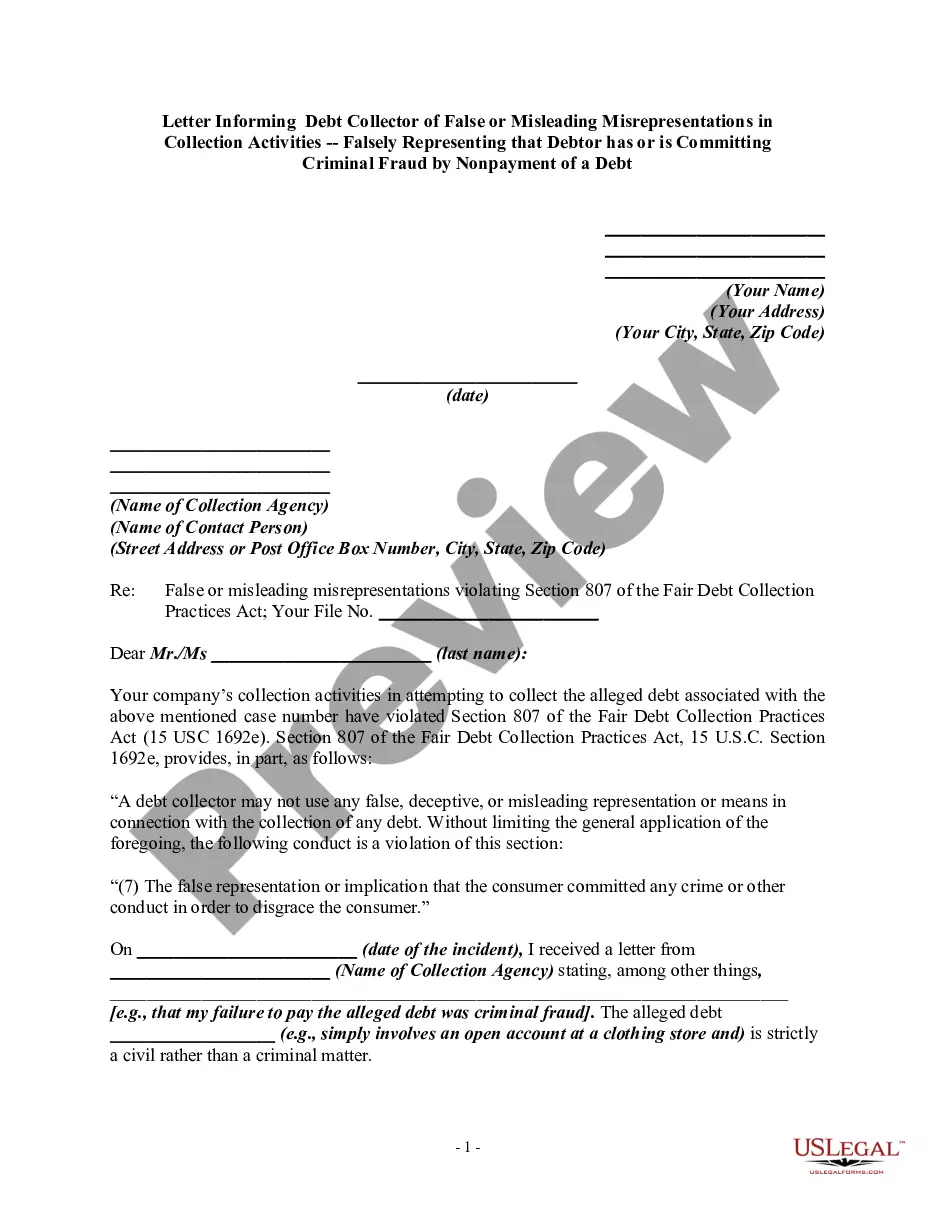
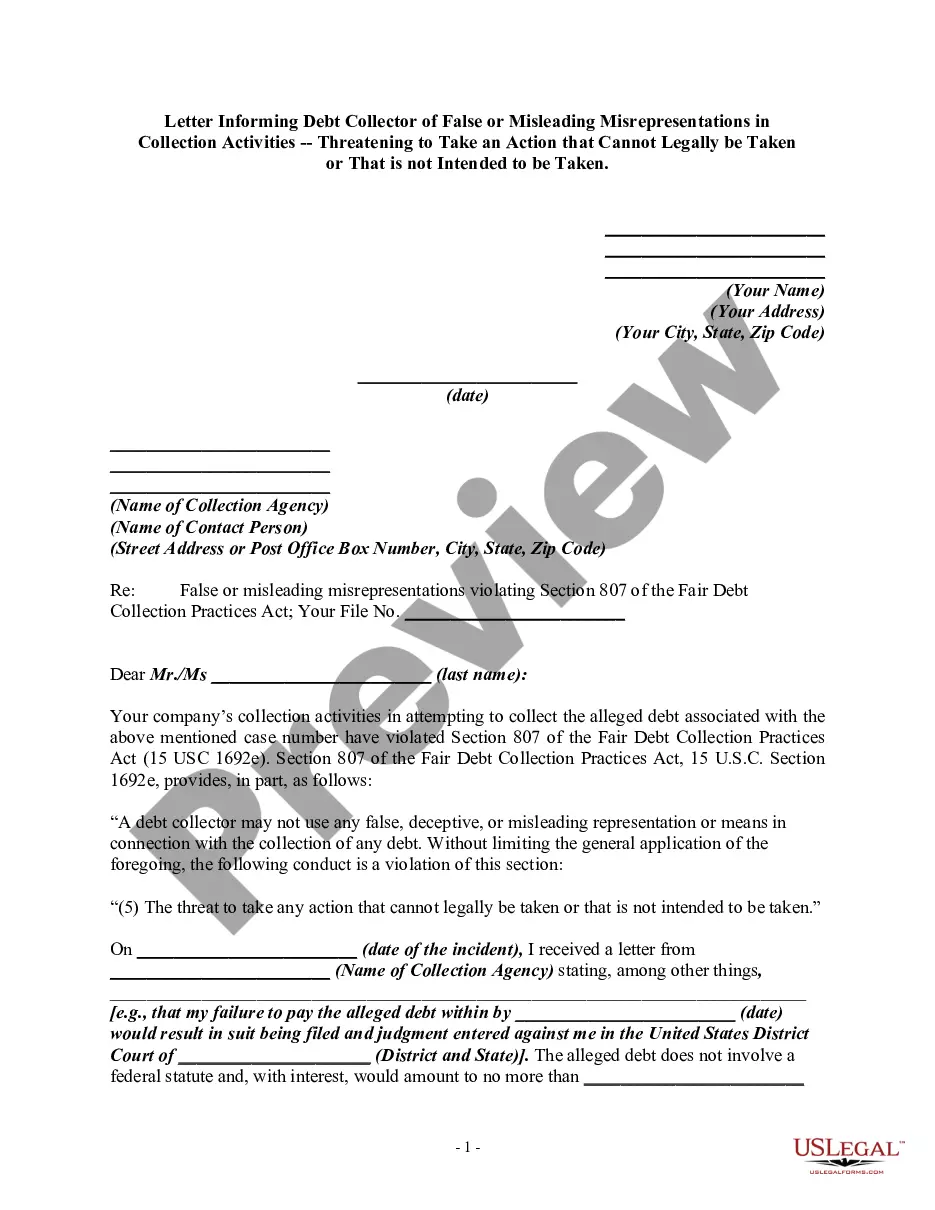
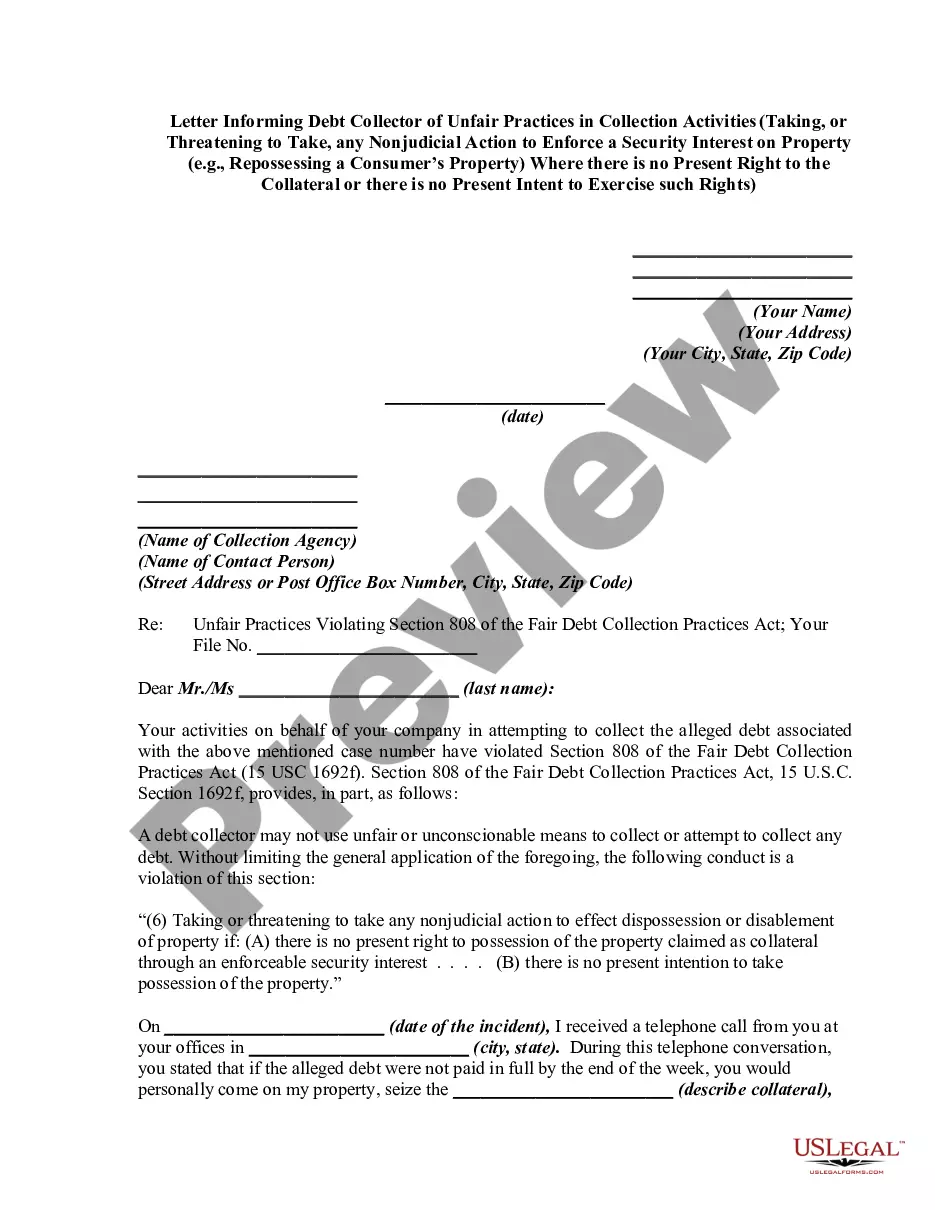
How to fill out Letter Informing Debt Collector Of Harassment Or Abuse In Collection Activities Involving Threats To Use Violence Or Other Criminal Means To Harm The Physical Person, Reputation, And/or Property Of The Debtor?
Handling legal documents and processes can be a lengthy addition to your entire day.
Collector Harassment Relating to Forensic Science and similar forms frequently necessitate you to search for them and comprehend the method to finalize them efficiently.
Therefore, if you are managing financial, legal, or personal issues, having a comprehensive and user-friendly online directory of forms readily available will be extremely beneficial.
US Legal Forms is the leading online platform for legal templates, offering over 85,000 state-specific forms and a variety of resources to help you complete your documents swiftly.
Is it your first time using US Legal Forms? Register and create your account in a few minutes to access the form directory and Collector Harassment Relating to Forensic Science. Then, follow the steps outlined below to finalize your form: Ensure you have located the correct form using the Preview feature and reviewing the form description. Select Buy Now when ready, and choose the subscription plan that fits your needs. Click Download, then complete, eSign, and print the form. US Legal Forms has 25 years of experience assisting users with their legal documents. Obtain the form you need now and streamline any process without exerting much effort.
- Browse the collection of pertinent documents available to you with just one click.
- US Legal Forms supplies you with state- and county-specific forms accessible at any time for downloading.
- Protect your document management processes by utilizing a high-quality service that enables you to create any form in minutes without extra or hidden fees.
- Simply Log In to your account, find Collector Harassment Relating to Forensic Science, and download it immediately in the My documents section.
- You can also access previously saved forms.
Form popularity
FAQ
The 7 7 7 rule for collections refers to a guideline that suggests contacting a debtor seven times within seven days, with a focus on different communication methods such as phone calls, letters, and emails. Understanding this rule helps clarify how collectors operate and can help you identify if their actions cross into collector harassment involving forensic science. By being informed, you can better manage your interactions with debt collectors. US Legal Forms provides resources that can assist you in navigating these complexities.
Collector harassment involving forensic science occurs when debt collectors use aggressive tactics to intimidate or manipulate you. This can include repeated phone calls, threats of legal action, or using false information to pressure you. If you feel overwhelmed or threatened by their actions, it's essential to know your rights. You can seek assistance from platforms like US Legal Forms to understand your options and protect yourself from these situations.
The 11-word phrase to stop debt collectors is, 'I do not owe this debt and do not wish to be contacted.' This statement can halt unwanted communication and is useful in cases of collector harassment involving forensic science. Always follow up in writing for clarity and documentation. Platforms like USLegalForms can help you draft effective communication to debt collectors.
The 777 rule refers to a guideline that suggests you should limit communication with debt collectors to three times per week. This rule helps manage the frequency of contact, reducing stress related to collector harassment involving forensic science. Be aware of your rights under the Fair Debt Collection Practices Act, and consider using resources like USLegalForms to understand how to enforce these rights.
To report someone for harassment, gather all relevant evidence, such as call logs, text messages, or emails. Document specific instances of harassment and note the impact on your daily life. This evidence is essential in cases of collector harassment involving forensic science, as it supports your complaint. USLegalForms can assist you in organizing your documentation effectively.
Dealing with harassing debt collectors can be stressful, but you have options. First, inform them in writing to cease communication, as this can limit further harassment. Additionally, you can report them to the Consumer Financial Protection Bureau, which can help address collector harassment involving forensic science. Utilizing legal resources, such as USLegalForms, can guide you through the necessary steps.
If a debt collector is harassing you, start by documenting each interaction. Keep notes on dates, times, and what was said. This documentation is crucial when addressing collector harassment involving forensic science, as it provides evidence of the harassment. Consider reaching out to a lawyer or using platforms like USLegalForms to understand your rights and options.
Examples of unethical behavior in forensic science include fabricating evidence, altering results to favor one side, or prematurely concluding an investigation without thorough analysis. Such actions can have dire consequences, including legal repercussions and harm to innocent individuals. It is important to address collector harassment involving forensic science by promoting accountability and ethical standards in the field.
An ethical violation in forensic science could occur when a forensic expert fails to disclose a personal relationship with a law enforcement officer involved in a case. This lack of transparency can lead to perceived bias and questions about the integrity of the evidence presented. It is crucial to avoid situations that could result in collector harassment involving forensic science because they undermine public trust.
Ethical issues in forensic science can include mishandling evidence, misrepresentation of findings, and the potential for bias in analysis. Such concerns can compromise investigations and lead to wrongful convictions or acquittals. Addressing collector harassment involving forensic science requires a commitment to ethical practices and adherence to established standards.