Board Compensation For Public Companies
Description
Get your form ready online
Our built-in tools help you complete, sign, share, and store your documents in one place.
Make edits, fill in missing information, and update formatting in US Legal Forms—just like you would in MS Word.
Download a copy, print it, send it by email, or mail it via USPS—whatever works best for your next step.
Sign and collect signatures with our SignNow integration. Send to multiple recipients, set reminders, and more. Go Premium to unlock E-Sign.
If this form requires notarization, complete it online through a secure video call—no need to meet a notary in person or wait for an appointment.
We protect your documents and personal data by following strict security and privacy standards.

Make edits, fill in missing information, and update formatting in US Legal Forms—just like you would in MS Word.

Download a copy, print it, send it by email, or mail it via USPS—whatever works best for your next step.

Sign and collect signatures with our SignNow integration. Send to multiple recipients, set reminders, and more. Go Premium to unlock E-Sign.

If this form requires notarization, complete it online through a secure video call—no need to meet a notary in person or wait for an appointment.

We protect your documents and personal data by following strict security and privacy standards.
Looking for another form?






How to fill out Compensation Committee?
- Log in to your account at US Legal Forms if you've used our service before.
- Check your subscription status to ensure it's active. If not, renew it per your plan.
- For first-time users, preview form options and confirm that they meet your specific legal requirements.
- Utilize the Search tab to find alternative templates if needed, ensuring you select the correct documentation.
- Click the Buy Now button to select a subscription plan and create your account for access to our extensive library.
- Enter your payment details, using credit card or PayPal, to finalize your purchase.
- Download your selected forms to your device and access them anytime via the My Forms menu.
By following these steps, you can efficiently acquire the documentation necessary for board compensation arrangements in public companies.
Don't hesitate to take control of your legal needs—visit US Legal Forms today to start your journey towards secure and effective legal documentation.
Form popularity
FAQ
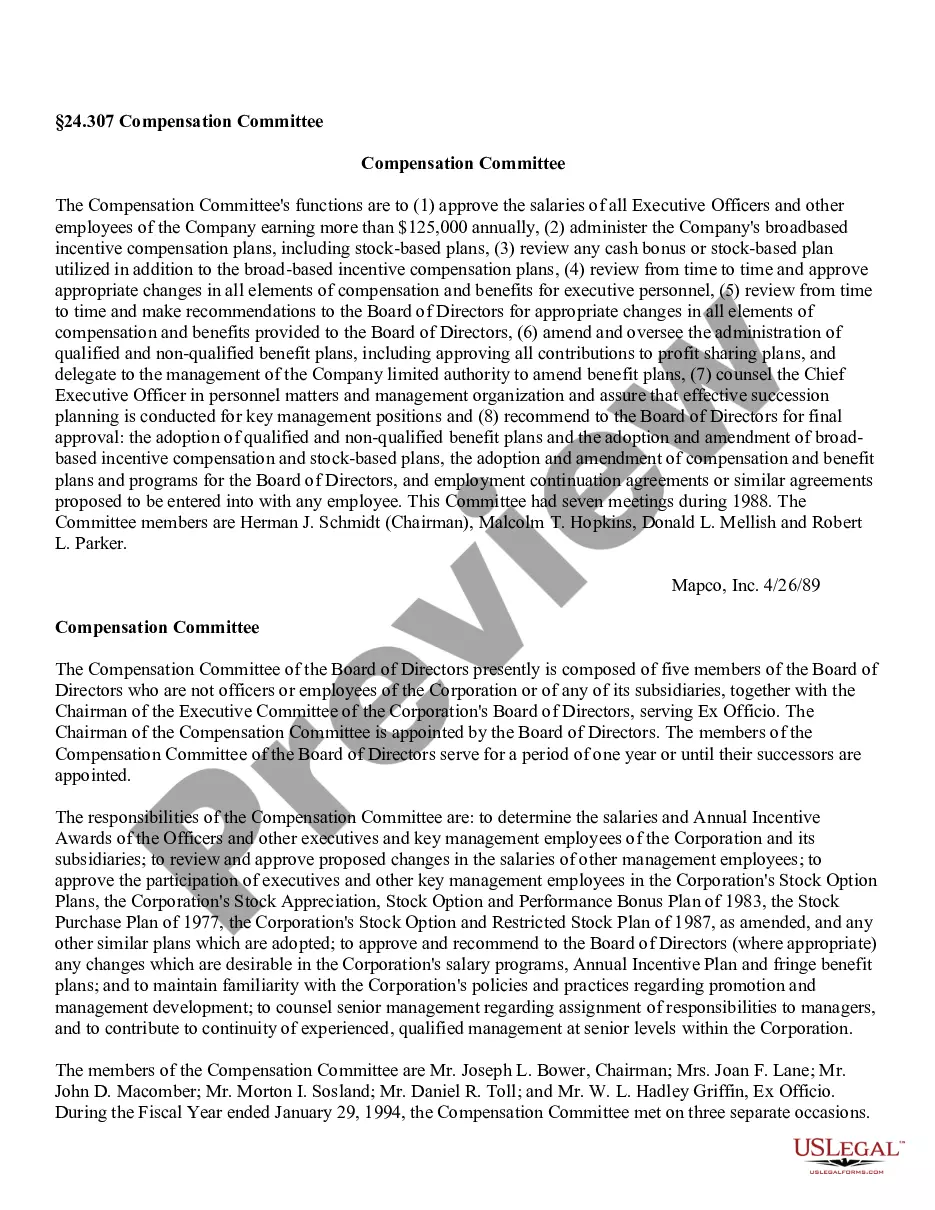
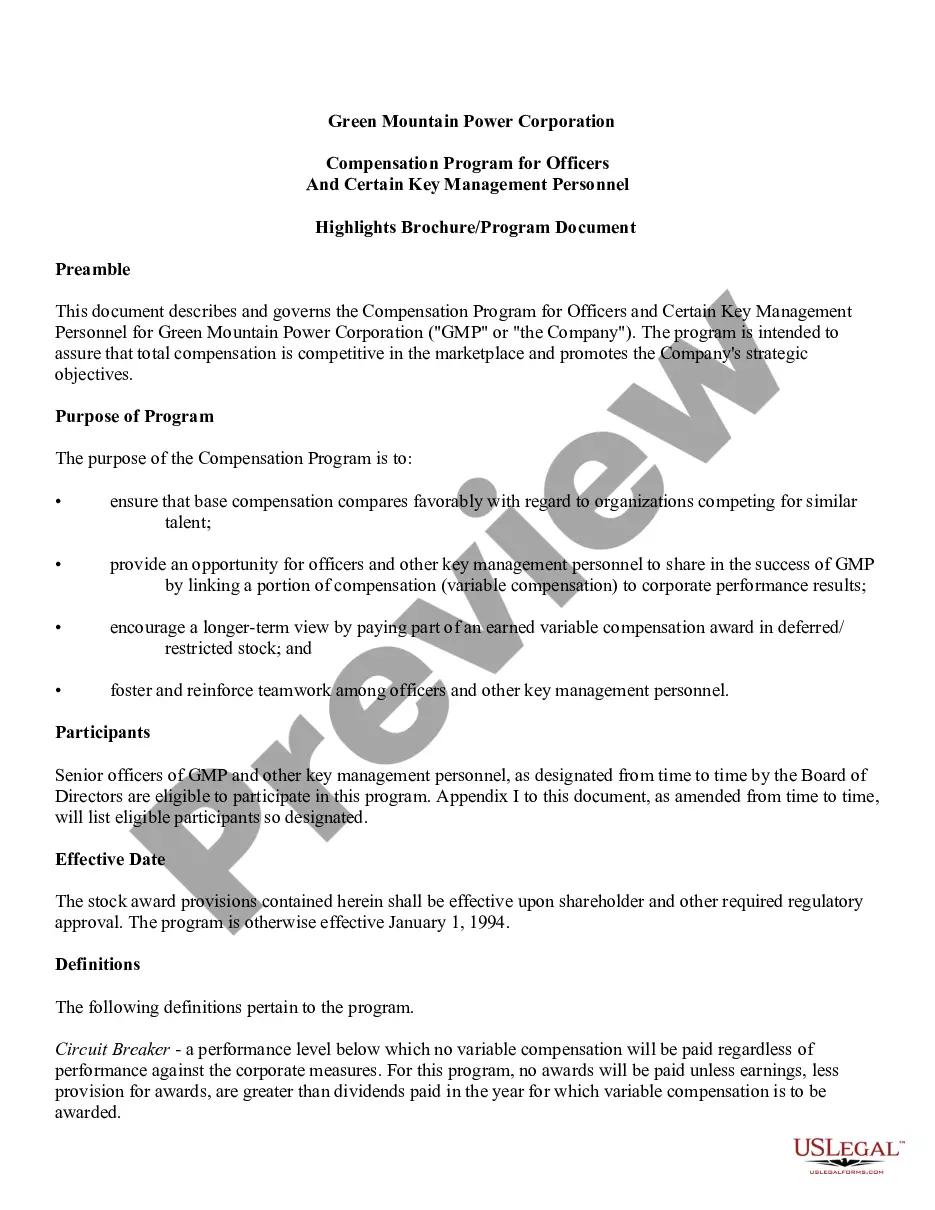
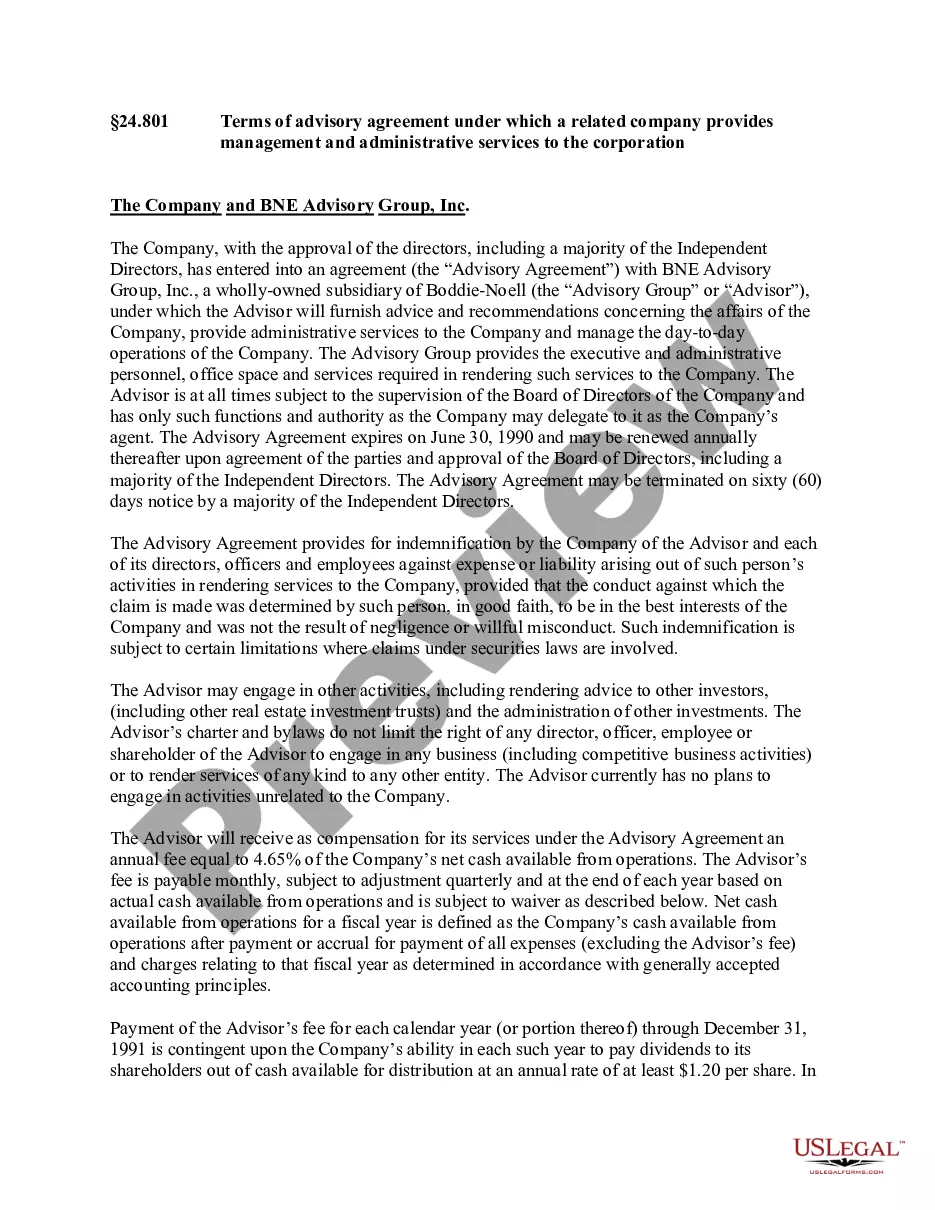
Public companies disclose executive compensation in their annual proxy statements and Form 10-K filings with the Securities and Exchange Commission (SEC). These documents provide transparency about board compensation for public companies and help investors understand how management is rewarded for performance. By reviewing these reports, stakeholders can assess whether the compensation aligns with the company’s goals.
Public companies compensate stockholders primarily through dividends and share appreciation. Dividends provide regular income, while stock appreciation increases the value of their investment. Additionally, board compensation for public companies can include stock options, aligning the interests of the board with those of shareholders.
Unfortunately, salary information for private companies is not publicly disclosed in the same manner as public companies. However, industry reports, employee reviews, and salary surveys can provide approximations. While uslegalforms specializes in public company compensation data, understanding the nuances of private sector salaries requires a different approach, often relying on informal sources.
To find out salaries in a company, look at their publicly available financial disclosures like proxy statements. These documents provide a breakdown of the compensation packages offered to executives and board members, thus revealing board compensation for public companies. Uslegalforms can assist you in navigating these documents with ease, ensuring you find the information you need.
To discover public company salaries, check the public filings available on financial regulatory sites or databases. Companies are required to report salaries of their executives, which can be analyzed to understand board compensation for public companies. Uslegalforms offers additional tools and reports that summarize this information in a digestible format.
You can determine salaries for a public company by accessing annual reports and proxy statements, which disclose compensation information of top executives. Many financial news websites also aggregate this data, providing insights into board compensation for public companies. For more user-friendly access, uslegalforms is an excellent resource that streamlines the search for salary disclosures.
To find executive compensation for public companies, review their annual proxy statements filed with the SEC. These statements detail board compensation for public companies, including salary, bonuses, and stock options. Moreover, financial analytics platforms and uslegalforms can simplify this process by compiling data and offering insights based on industry benchmarks.
You can find compensation data for public companies on various financial websites, including the U.S. Securities and Exchange Commission's EDGAR database. This resource holds valuable documents such as proxy statements that disclose board compensation for public companies. Additionally, platforms like uslegalforms provide comprehensive analyses and reports on executive compensation trends, making your research easier.
The amount of equity a board member should receive depends on the company's valuation and compensation strategy. Generally, newly appointed board members may receive equity grants worth between $100,000 and $300,000, promoting a sense of ownership. Establishing a clear policy on equity grants is a best practice for board compensation for public companies, ensuring transparency and fairness.
The minimum number of directors required for a public company typically starts at three in most states. This ensures that boards have enough diversity of thought and experience to make informed decisions. Additionally, having multiple directors enhances accountability and governance. Proper board compensation for public companies reflects the responsibilities that come with being a director.