Behavior Form For Students
Description
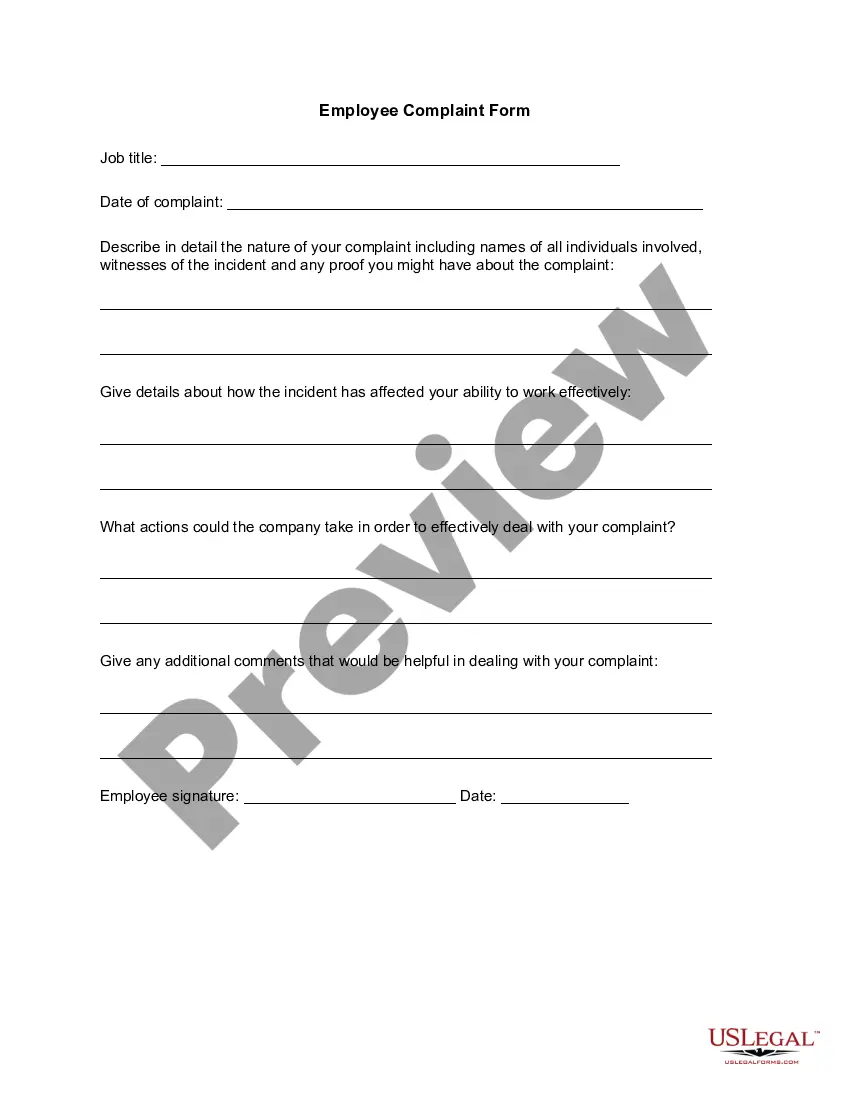
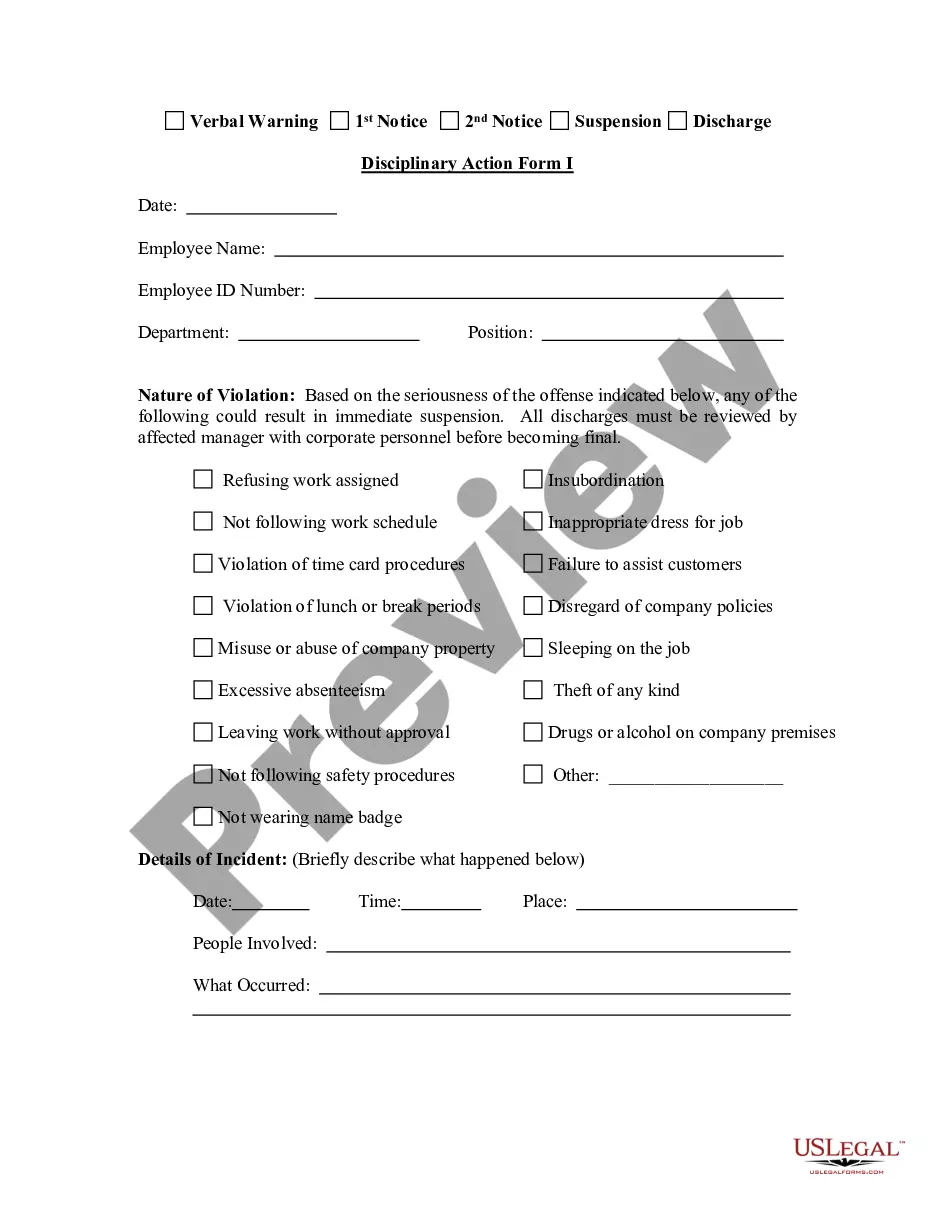
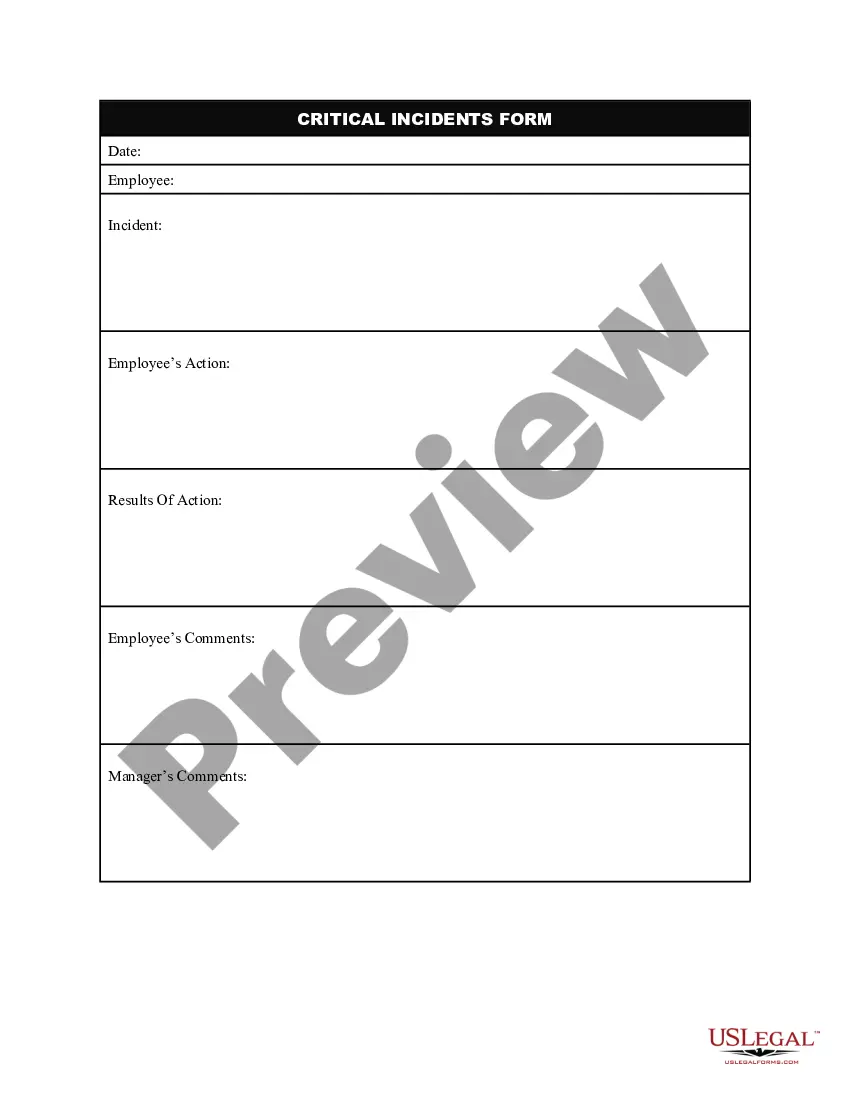
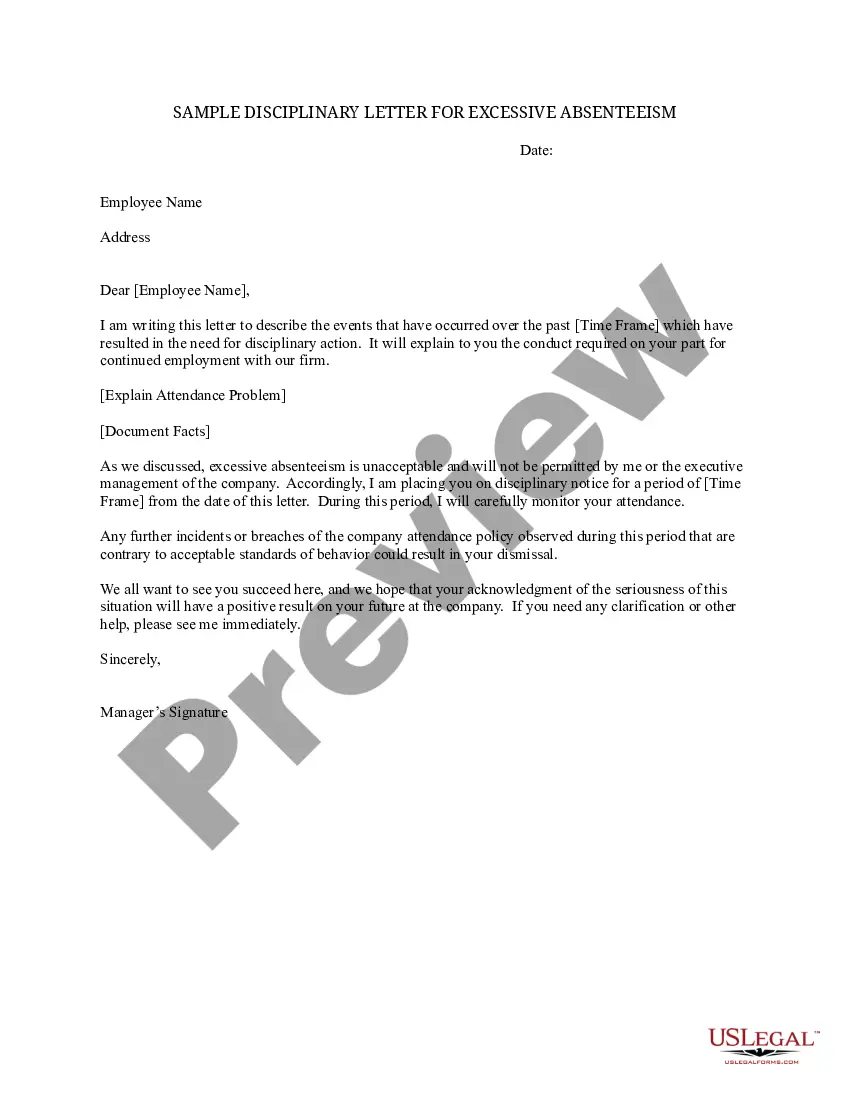


How to fill out Employee Discipline Consultation Form?
It’s well-known that you can’t transform into a legal expert in a day, nor can you quickly learn how to compose a Behavior Form For Students without possessing a unique set of abilities.
Drafting legal paperwork is a labor-intensive task that necessitates specific education and expertise. So why not entrust the development of the Behavior Form For Students to the professionals.
With US Legal Forms, one of the largest libraries of legal documents, you can access everything from court forms to in-office communication templates. We understand the importance of compliance and adherence to federal and state regulations.
Select Buy now. After the transaction is completed, you can access the Behavior Form For Students, fill it out, print it, and either send or mail it to the required individuals or organizations.
You can revisit your forms from the My documents section at any moment. If you are an existing customer, simply Log In, and locate and download the template from the same section.
Regardless of the purpose of your documents—be it financial, legal, or personal—our website can assist you. Try US Legal Forms today!
- To begin, visit our website and obtain the form you need in just a few minutes.
- Use the search bar at the top of the page to find the form you are seeking.
- If available, preview the document and read the accompanying description to see if the Behavior Form For Students meets your requirements.
- If you require a different template, start your search anew.
- Create a free account and choose a subscription plan to purchase the form.
Form popularity
FAQ
To start a behavior report, begin with gathering all relevant information about the student and the incident. Clearly state the purpose of the report at the outset, following the format provided in a behavior form for students. Outline the specifics, such as the context and the events leading up to the behavior. This approach sets a solid foundation for a clear and effective report.
When writing a behavior report, focus on specific incidents and observations. Include the date, time, and setting, along with details about the student's actions and any contributing factors. Be sure to articulate the impact of the behavior on the student and others around them. Utilize the behavior form for students to ensure that your report is structured and comprehensive.
Setting up a behavioural classroom starts with creating a structured environment that promotes positive behaviour. Use a behaviour form for students to establish clear rules and expectations, and communicate these consistently to students. Incorporate monitoring systems to track behaviours and reinforce positive actions. This method fosters an atmosphere where students feel supported and accountable, leading to better outcomes.
To measure student behaviour, utilize a behaviour form for students that includes defined criteria and metrics. Regular assessment through direct observation and documentation helps track improvements over time. You can analyze data recorded to identify changes in behaviour and adjust strategies accordingly. This ongoing process ensures that interventions remain effective and tailored to the individual student.
Yes, a student can have a behaviour plan without an Individualized Education Program (IEP). While IEPs serve specific educational needs, a behaviour plan can be created as a stand-alone document using a behaviour form for students. This plan may include strategies for improving student behaviour, goal-setting, and monitoring progress. Regardless of the context, having a structured plan can significantly benefit the student.
Writing about student behaviour involves being clear and specific. When filling out a behaviour form for students, focus on observable actions and avoid subjective terms. Provide a narrative that includes what occurred, when it happened, and the outcome of the behaviour. This approach helps build a comprehensive profile that can inform future behavioural strategies.
To document student behaviour effectively, start by using a behaviour form for students. This form allows you to record incidents methodically, capturing specific actions along with dates and contexts. Consistent documentation helps in identifying patterns in behaviour, which aids in developing appropriate interventions. Additionally, regular updates ensure that all stakeholders are informed about the student's progress.
Good behavior examples for students include raising hands to ask questions, completing homework on time, and being kind to peers. Recognizing and reinforcing positive behaviors is vital, and a behavior form for students can be a useful tool for tracking these behaviors. Fostering such behaviors creates a positive learning environment and greatly enhances the educational experience.
A behavior intervention plan can be written by a team that includes teachers, school psychologists, and special education professionals. Collaborating on a behavior form for students ensures that all perspectives are considered, and that the plan is comprehensive. Parents also play a crucial role in this process by contributing valuable information about their child's behaviors.
A behavior statement typically outlines specific behaviors that a student needs to improve. For instance, 'The student will raise their hand before speaking in class' is a clear behavior statement. Using a behavior form for students helps in documenting and measuring these behaviors over time, providing insight into a student’s progress.