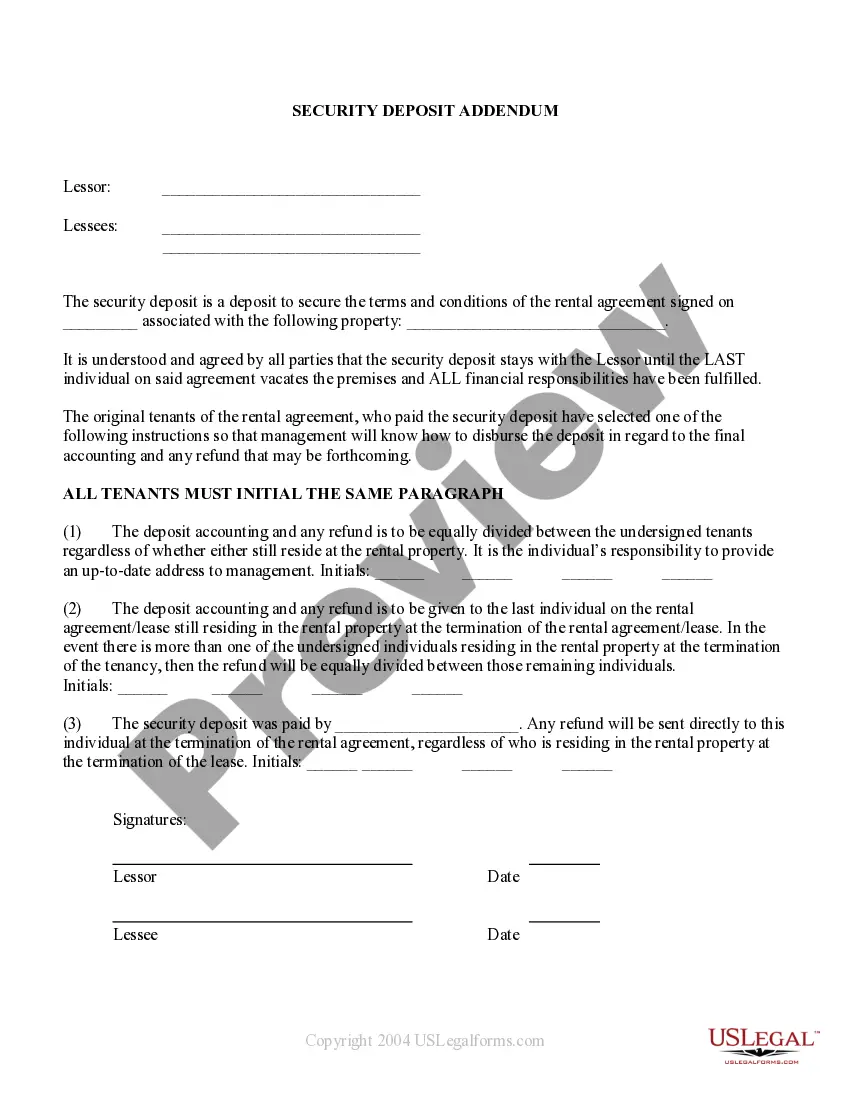
Deposit Required For Rental Property
Description
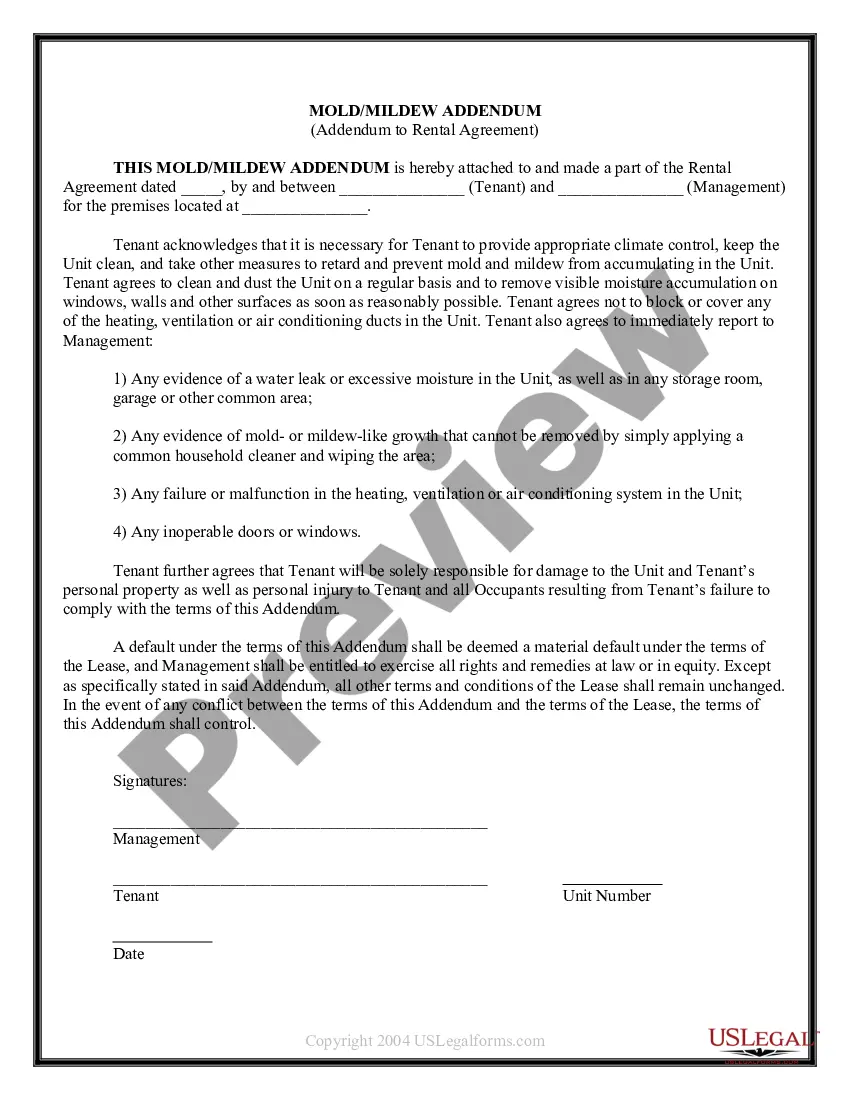
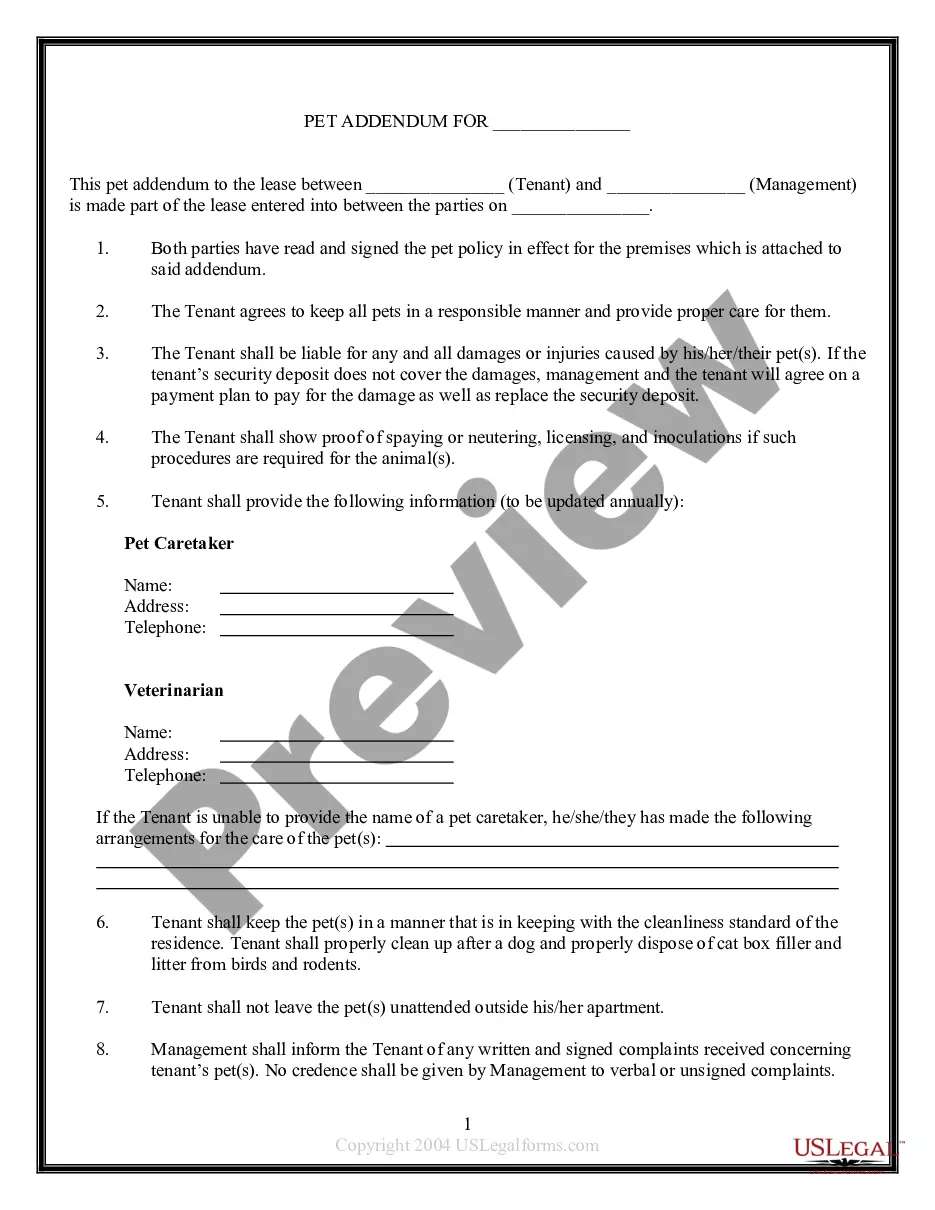
How to fill out Addendum To Apartment Lease Regarding Security Deposit?
Whether for commercial reasons or personal matters, everyone must confront legal circumstances at some point in their lives.
Completing legal forms requires meticulous scrutiny, starting from choosing the appropriate template.
Once saved, you can fill out the form by utilizing editing software or print it and complete it by hand. With an extensive US Legal Forms catalog available, you never need to waste time searching for the right template online. Make use of the library’s user-friendly navigation to find the perfect template for any occasion.
- Obtain the template you require via the search bar or catalog browsing.
- Review the form’s details to confirm it fits your circumstances, state, and county.
- Click on the form’s preview to examine it.
- If it is not the correct document, return to the search option to find the Deposit Required For Rental Property template you need.
- Download the template once it aligns with your requirements.
- If you already possess a US Legal Forms profile, simply click Log in to access previously saved files in My documents.
- If you lack an account, you can download the form by clicking Buy now.
- Choose the suitable pricing option.
- Complete the profile registration form.
- Select your payment method: you may opt for a credit card or PayPal account.
- Choose the document format you desire and download the Deposit Required For Rental Property.
Form popularity
FAQ
Yes. At the beginning of a tenancy, landlords may collect a deposit in the form of cash or property to cover costs such as damage to the unit, unpaid rent, cleaning that goes beyond normal wear and tear, and any other agreed-upon fees ? such as legal fees, utilities, or late rent fees.
Typically, tenants must give 30 days' notice or more before vacating the premises. This gives the landlord time to find a new tenant. The 30 days notice should be given at the beginning of the month and rent should be paid for that month.
By law, the landlord must pay you interest on your last month's rent deposit every year. The amount of interest is determined on a yearly basis in ance with the Consumer Price Index for Ontario. It is the same amount as the yearly rent increase (the ?Guideline?).
If return conditions are not met If the tenant does not meet the conditions, the landlord has the right to keep part or all of the security deposit to cover costs. If the costs exceed the security deposit, the landlord can take legal action to claim for the money owing.
A security deposit serves as a means to fix or replace something in a rental unit that was damaged, lost, or stolen by the renter. Security deposits are typically refunded upon departure if the property was left in "reasonably" good shape?to the point of normal depreciation)