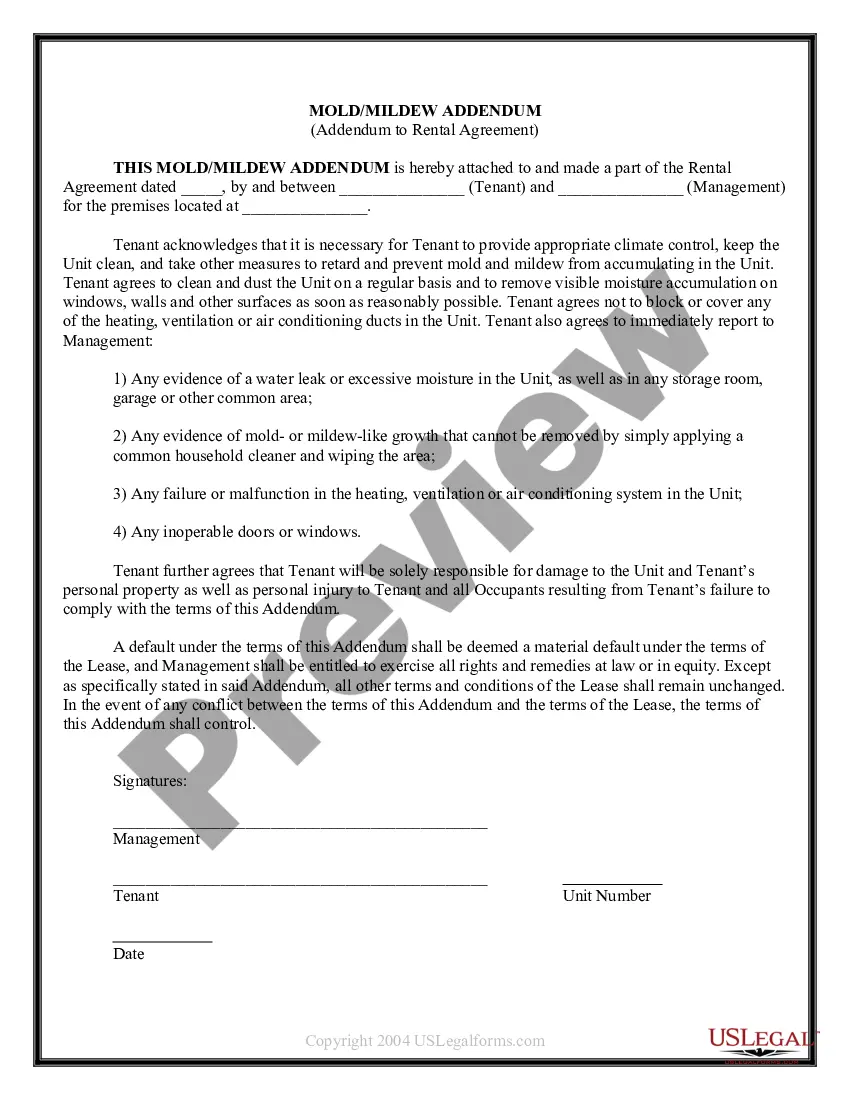
Apartment Regarding Mold With Air Conditioning
Description
Get your form ready online
Our built-in tools help you complete, sign, share, and store your documents in one place.
Make edits, fill in missing information, and update formatting in US Legal Forms—just like you would in MS Word.
Download a copy, print it, send it by email, or mail it via USPS—whatever works best for your next step.
Sign and collect signatures with our SignNow integration. Send to multiple recipients, set reminders, and more. Go Premium to unlock E-Sign.
If this form requires notarization, complete it online through a secure video call—no need to meet a notary in person or wait for an appointment.
We protect your documents and personal data by following strict security and privacy standards.

Make edits, fill in missing information, and update formatting in US Legal Forms—just like you would in MS Word.

Download a copy, print it, send it by email, or mail it via USPS—whatever works best for your next step.

Sign and collect signatures with our SignNow integration. Send to multiple recipients, set reminders, and more. Go Premium to unlock E-Sign.

If this form requires notarization, complete it online through a secure video call—no need to meet a notary in person or wait for an appointment.

We protect your documents and personal data by following strict security and privacy standards.
Looking for another form?








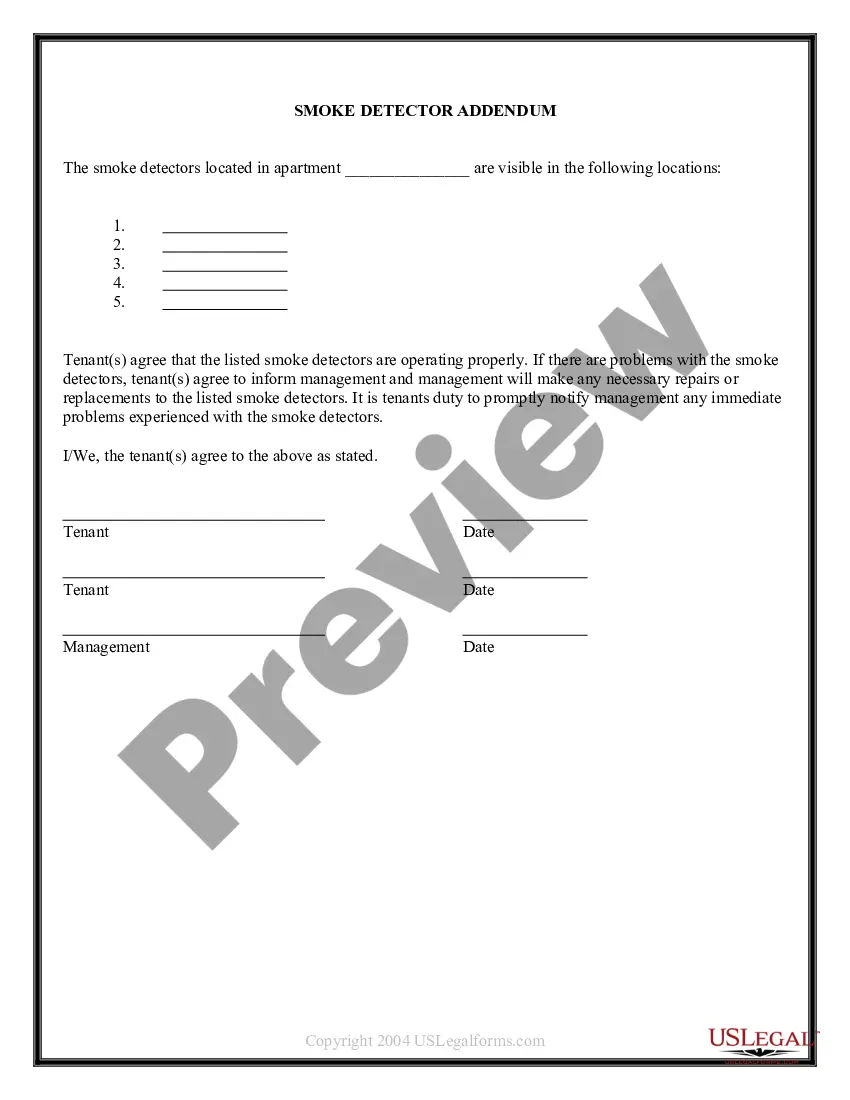
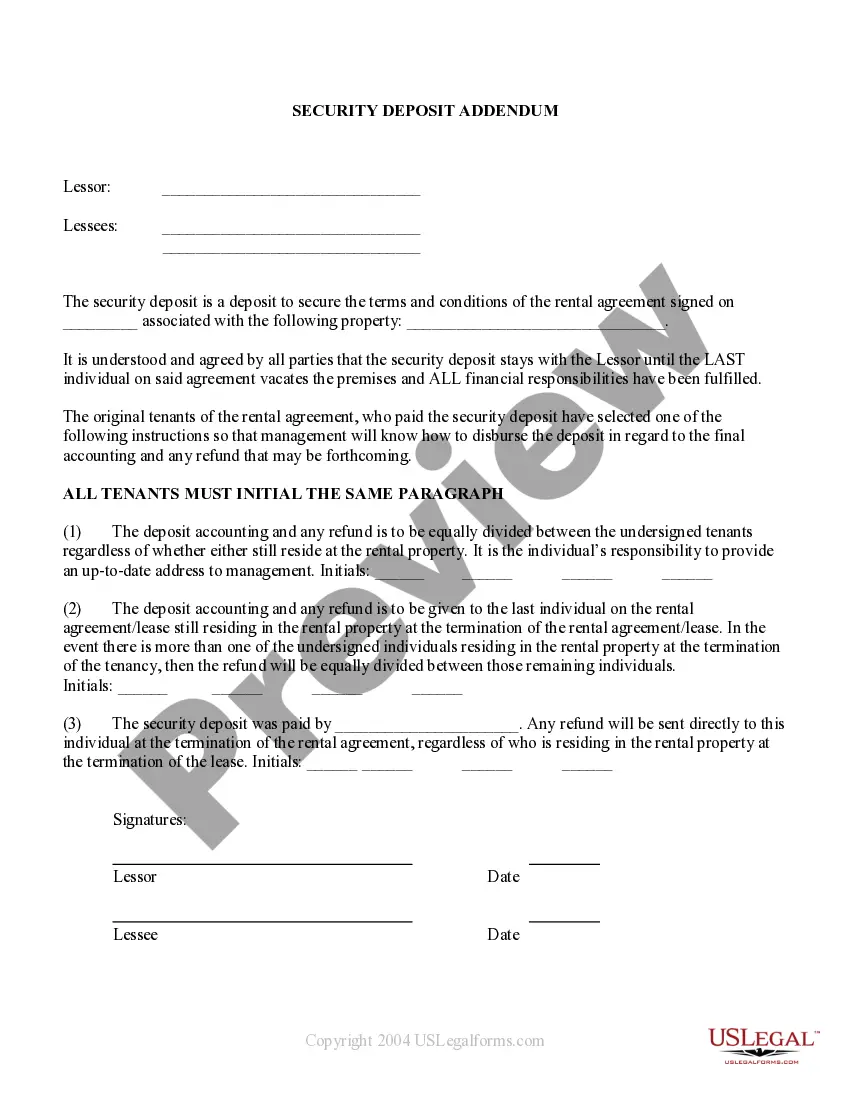
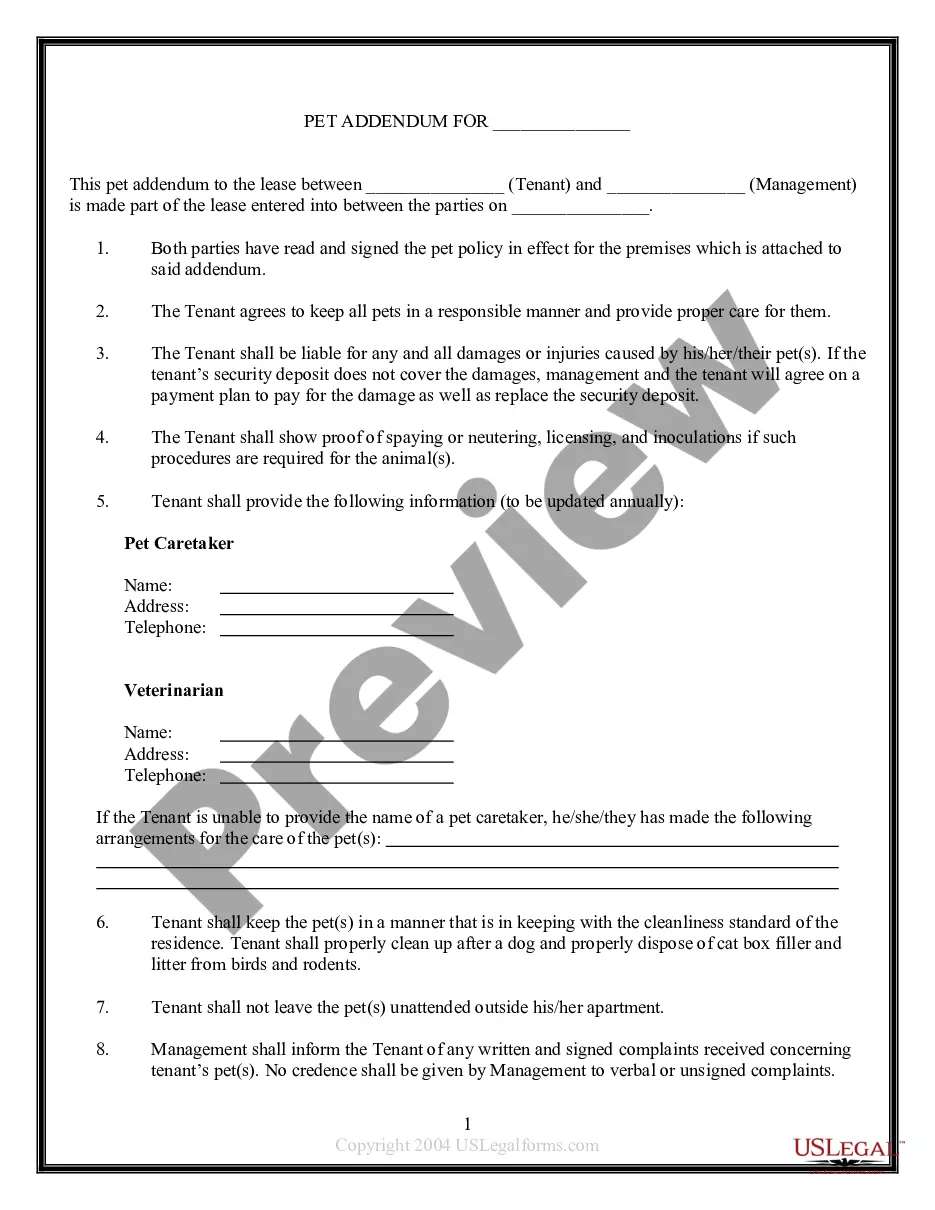
How to fill out Addendum To Apartment Lease Regarding Mold?
The Apartment Concerning Mold With Air Conditioning that you find on this page is a reusable formal template created by expert attorneys in accordance with federal and local regulations.
For over 25 years, US Legal Forms has offered individuals, organizations, and legal practitioners more than 85,000 validated, state-specific forms for any business and personal scenario. It’s the fastest, easiest, and most dependable method to acquire the documents you require, as the service ensures the utmost level of data security and anti-malware safeguards.
Register for US Legal Forms to access verified legal templates for all of life’s situations at your fingertips.
- Search for the document you require and examine it.
- Select the template you need and click Buy Now.
- Choose the pricing option that works for you and create an account.
- Select the format you prefer for your Apartment Concerning Mold With Air Conditioning (PDF, DOCX, RTF) and download the sample to your device.
- Print the template and fill it out by hand, or utilize an online PDF editor to fill in and sign your form accurately.
Form popularity
FAQ
Yes, air purifiers can effectively remove mold spores from the air in your apartment regarding mold with air conditioning. Look for air purifiers that feature HEPA filters, as they are specifically designed to trap tiny particles, including mold spores. Using an air purifier can improve your indoor air quality and help create a healthier living environment. Regular use, combined with a properly maintained AC unit, can significantly lower mold levels in your space.
If your air conditioning system is not adequately insulated, it can be a breeding ground for mold. Insulated refrigerant lines are often exposed to moisture when not correctly suspended. This moisture can cause the insulation to deteriorate, leaving the refrigerant line vulnerable to mold growth.
Mold needs moisture, darkness, still air and warmth to grow. Your air conditioner can easily provide the perfect environment for mold if parts of the unit malfunction. For example, a clog in the condensate drain can cause water to back up in the unit, inviting mold growth.
You can use diluted bleach or distilled white vinegar, or you can buy an Environmental Protection Agency-registered mold removal solution from your local hardware store. Aim for a ratio of cleaning solution and warm water. Take apart the AC unit: Use a screwdriver to remove the grille from the front of the unit.
When your AC has a blocked drainage tube it can cause water to leak inside which can lead to mold growth when not noticed or repaired quickly. Another way your air conditioner can fail to dehumidify your home is when it has a lack of refrigerant due to a leak.
Mold in a central air conditioning unit requires professional service. If you discover mold in your central air unit, stop using the unit immediately. You may also turn your thermostat's fan function off to reduce the amount of air being circulated in your home.