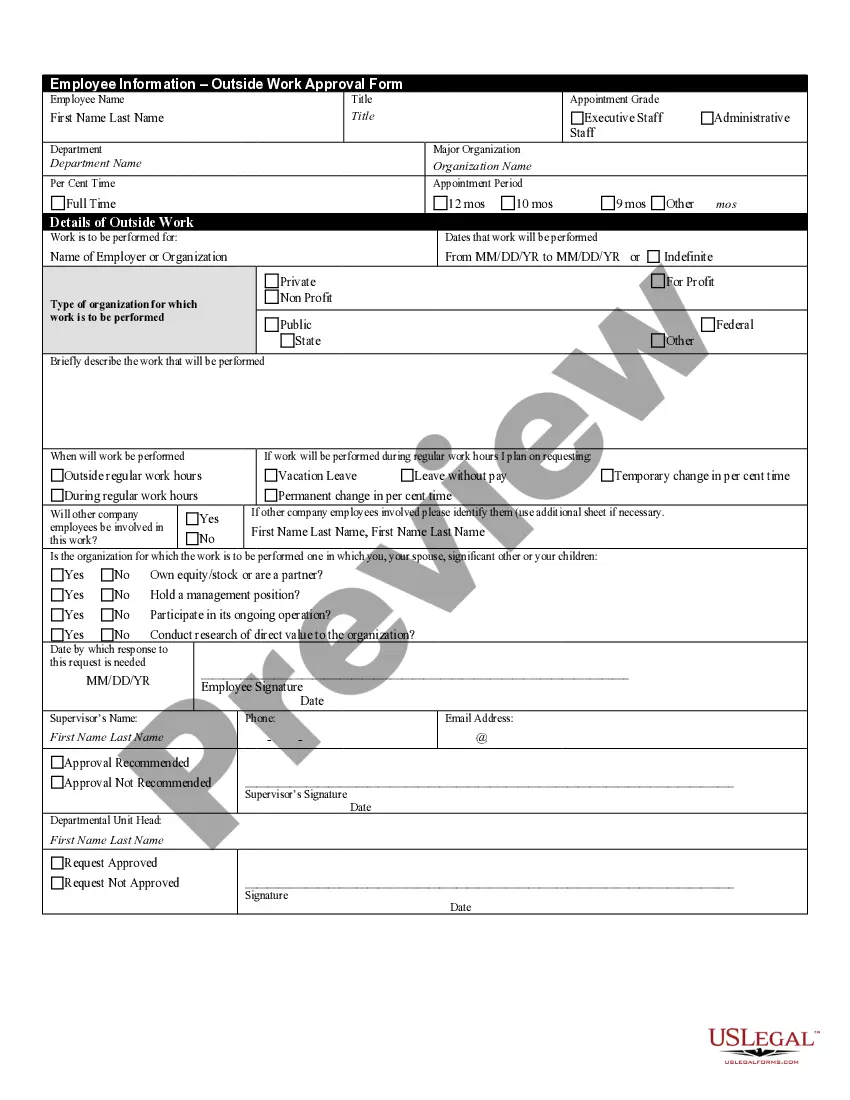
Work Employee Outside For A Walk
Description
Get your form ready online
Our built-in tools help you complete, sign, share, and store your documents in one place.
Make edits, fill in missing information, and update formatting in US Legal Forms—just like you would in MS Word.
Download a copy, print it, send it by email, or mail it via USPS—whatever works best for your next step.
Sign and collect signatures with our SignNow integration. Send to multiple recipients, set reminders, and more. Go Premium to unlock E-Sign.
If this form requires notarization, complete it online through a secure video call—no need to meet a notary in person or wait for an appointment.
We protect your documents and personal data by following strict security and privacy standards.

Make edits, fill in missing information, and update formatting in US Legal Forms—just like you would in MS Word.

Download a copy, print it, send it by email, or mail it via USPS—whatever works best for your next step.

Sign and collect signatures with our SignNow integration. Send to multiple recipients, set reminders, and more. Go Premium to unlock E-Sign.

If this form requires notarization, complete it online through a secure video call—no need to meet a notary in person or wait for an appointment.

We protect your documents and personal data by following strict security and privacy standards.
Looking for another form?


How to fill out Outside Work - Strict Policy?
It’s widely acknowledged that you cannot instantly become a legal expert, nor can you swiftly learn how to draft a Work Employee Outside For A Walk without possessing a specialized skill set.
Generating legal documents is a lengthy process that demands specific training and expertise.
So why not entrust the creation of the Work Employee Outside For A Walk to the experts.
You can access your documents from the My documents section at any time.
If you’re a returning customer, simply Log In, and find and download the template from the same section.
- Utilize the search bar located at the top of the page to find the document you need.
- If available, preview it and read the accompanying description to ensure that Work Employee Outside For A Walk is what you require.
- If you’re looking for another template, start your search anew.
- Sign up for a complimentary account and select a subscription plan to purchase the form.
- Click Buy now. Once the payment is completed, you can download the Work Employee Outside For A Walk, fill it out, print it, and send or submit it to the relevant parties.
Form popularity
FAQ
Walking out of work can be interpreted as job abandonment if the employee does not return or communicate with their employer. Employers should clearly define their policies regarding attendance and employee behavior. Always strive for clear communication to avoid misunderstandings that may result in job abandonment claims.
Setting up a walking challenge at work can promote health and team spirit. Start by gathering interest from employees and forming teams. Use tracking tools or apps to monitor progress and encourage participation through incentives. This initiative can blend fun and fitness while fostering a supportive atmosphere.
The ethics of contacting employees outside of work hours can depend on company culture and individual agreements. Employees should feel comfortable setting boundaries regarding work communications. A positive work environment considers the well-being of employees, promoting a healthy work-life balance.
Walking out of work is not inherently illegal, but it may breach an employment contract or company policy. Employees should consider the implications of their actions on their job status. Open communication with management about any grievances before walking out can lead to better outcomes.
When an employee walks off the job, it's crucial to address the issue quickly. Start by reaching out to the employee to discuss their reasons for leaving. This conversation can provide valuable insights into workplace conditions and help resolve any underlying issues. You may need to document the incident and evaluate your policies to prevent future occurrences.
If an employee is injured outside of work, ensure they receive appropriate medical attention as soon as possible. Gather relevant information regarding the incident, as this can impact workers' compensation claims. It may be useful to consult with legal experts or a platform like US Legal Forms for guidance on the best steps to take in such situations.
Walking off the job can be considered misconduct, especially if it disrupts operations or violates company policy. However, context matters. For instance, if an employee leaves due to unsafe conditions or harassment, it might be a justified response. Always evaluate the circumstances before labeling it as misconduct.
When an employee walks out of work, it’s important to remain calm and address the situation promptly. First, try to communicate with the employee to understand their reasons. Use this time to assess whether it was a temporary emotional reaction or if there are underlying issues that need resolution. If necessary, involve HR for guidance on how to proceed.
Yes, being friends with coworkers outside of work can benefit both personal relationships and workplace collaboration. These connections often lead to enhanced communication and teamwork back at the office. However, it is essential to maintain professional boundaries to ensure a harmonious working environment. Allowing employees to work outside for a walk together can serve as a great way to build these friendships organically.
The walking challenge for employees is an initiative designed to encourage physical activity and foster team spirit. Participants track their steps, and often there are rewards for meeting goals, promoting health and camaraderie. Emphasizing time to work employees outside for a walk can contribute to overall wellness and boost morale. Engaging in challenges like this cultivates a positive workplace culture.
