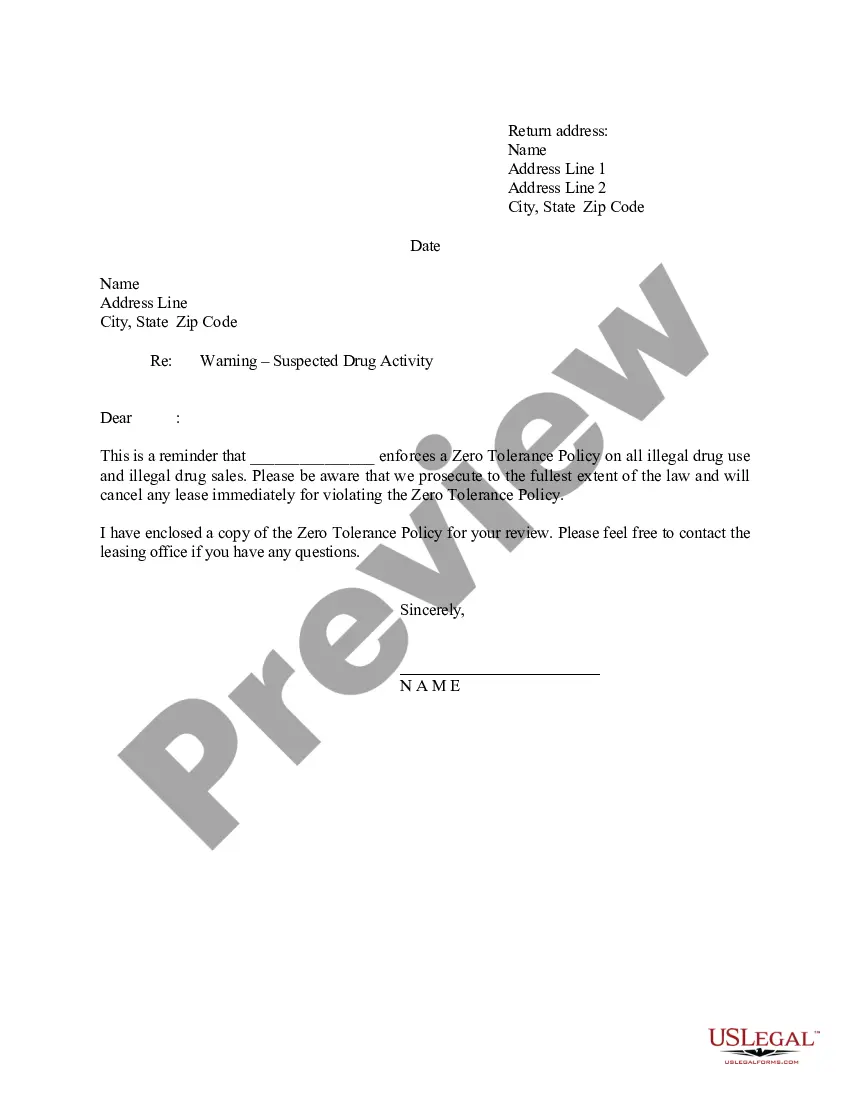
Letter Warning Regarding Formation
Description
Get your form ready online
Our built-in tools help you complete, sign, share, and store your documents in one place.
Make edits, fill in missing information, and update formatting in US Legal Forms—just like you would in MS Word.
Download a copy, print it, send it by email, or mail it via USPS—whatever works best for your next step.
Sign and collect signatures with our SignNow integration. Send to multiple recipients, set reminders, and more. Go Premium to unlock E-Sign.
If this form requires notarization, complete it online through a secure video call—no need to meet a notary in person or wait for an appointment.
We protect your documents and personal data by following strict security and privacy standards.

Make edits, fill in missing information, and update formatting in US Legal Forms—just like you would in MS Word.

Download a copy, print it, send it by email, or mail it via USPS—whatever works best for your next step.

Sign and collect signatures with our SignNow integration. Send to multiple recipients, set reminders, and more. Go Premium to unlock E-Sign.

If this form requires notarization, complete it online through a secure video call—no need to meet a notary in person or wait for an appointment.

We protect your documents and personal data by following strict security and privacy standards.
Looking for another form?
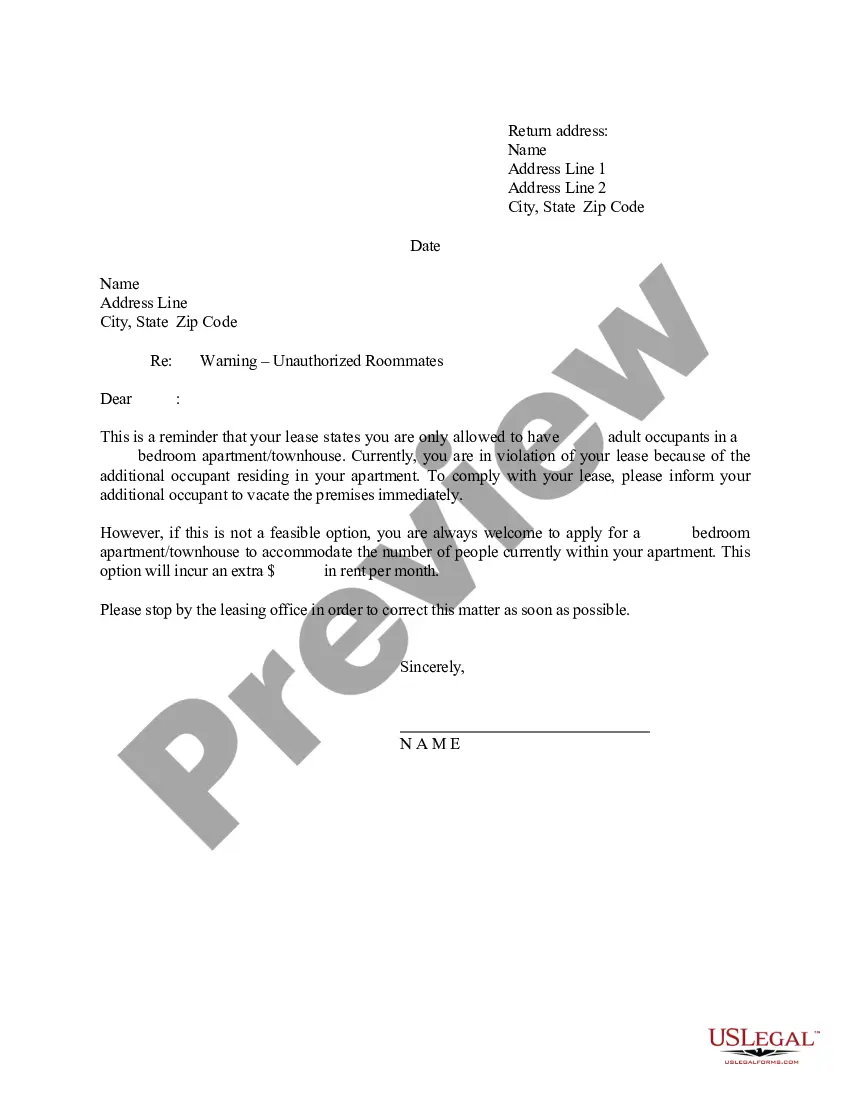
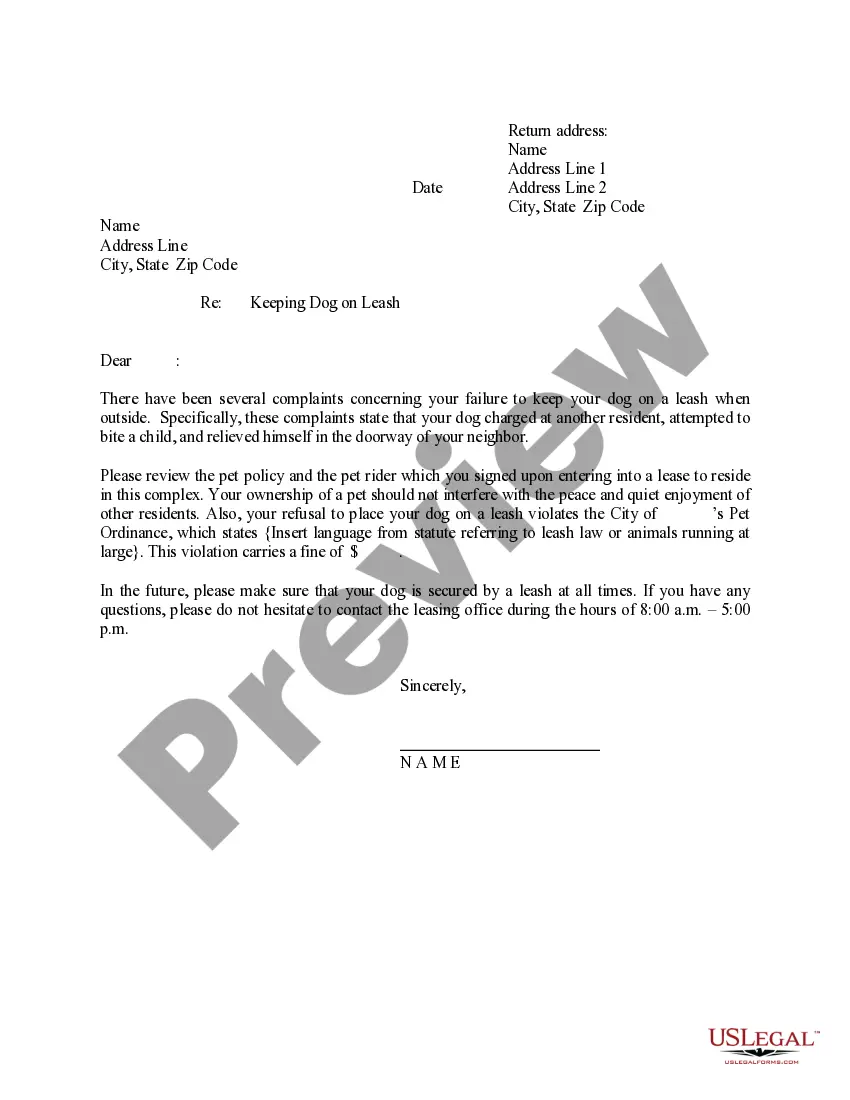
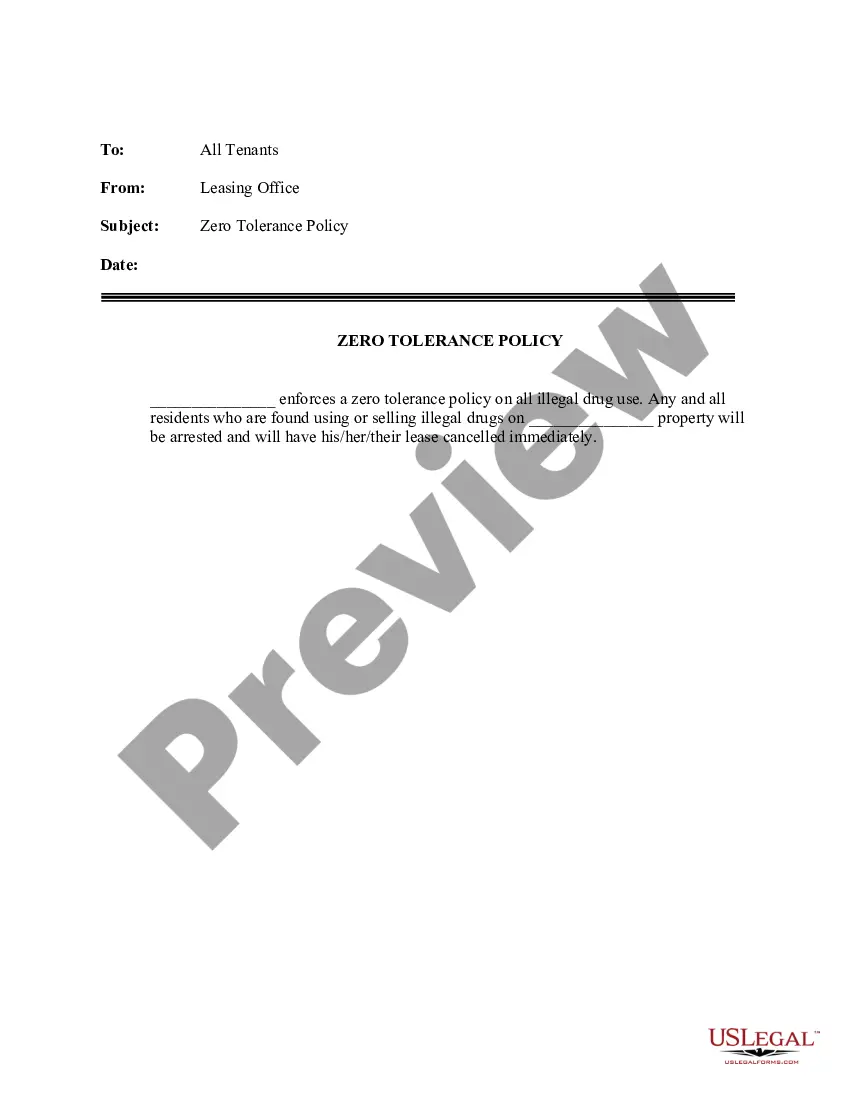
How to fill out Letter - Warning To Renter Of Zero Tolerance Policy Regarding Drug Activity?
It’s widely known that you cannot transform into a legal expert in a flash, nor can you swiftly learn how to adequately draft a Letter Warning Regarding Formation without a specialized foundation.
Drafting legal documents is an extensive undertaking that demands particular education and competencies. So, why not entrust the development of the Letter Warning Regarding Formation to the experts.
With US Legal Forms, one of the most extensive legal document libraries, you can discover everything from judicial papers to templates for internal business communication. We understand how crucial compliance and adherence to federal and local regulations are. That’s why, on our site, all forms are location-specific and current.
You can regain access to your forms anytime from the My documents tab. If you’re a returning customer, you can easily Log In and find and download the template from the same tab.
No matter the purpose of your forms—be it financial, legal, or personal—our platform is here to support you. Experience US Legal Forms today!
- Begin by utilizing the search bar at the top of the page to locate the form you need.
- If the preview option is available, take a look at it and read the accompanying description to determine if the Letter Warning Regarding Formation is what you are looking for.
- If you require a different document, restart your search.
- Create a free account and choose a subscription plan to buy the form.
- Select Buy now. After the payment is processed, you can obtain the Letter Warning Regarding Formation, complete it, print it, and send it or mail it to the applicable individuals or organizations.
Form popularity
FAQ
It involves proving the will is valid, identifying and inventorying the deceased person's property, having the property appraised, paying debts and taxes, and distributing the remaining property as the will directs. In Vermont, the cost for probate can range from $2,700 to $6,950 or more.
Here's a partial list of assets that may avoid the probate process: Property held in a trust3 Jointly held property (but not common property) Death benefits from insurance policies (unless payable to the estate)4 Property given away before you die. Assets in a pay-on-death account.
There are two types of trusts under the jurisdiction of the probate division of the Vermont Superior Court: testamentary and nontestamentary.
Assets properly transferred into the trust are controlled by the terms of the trust. The trustee manages the distribution of estate assets. Thus, assets in the trust are non-probate assets, and there is no need for a probate court proceeding.
One of the most common ways to avoid probate is to create a living trust. Through a living trust, the person writing the trust (grantor) must "fund the trust" by putting the assets they choose into it. The grantor retains control over the trust's property until their death or incapacitation.
To make a living trust in Vermont, you: Choose whether to make an individual or shared trust. Decide what property to include in the trust. Choose a successor trustee. Decide who will be the trust's beneficiaries?that is, who will get the trust property. Create the trust document.
V.R.P.P. Rule 80.4, Delivery of Will by Custodian; Copy of Will Filed for Safekeeping. If the decedent (the person who died) did not own any real estate other than a timeshare and the estate is worth less than $45,000.00, you can use the small estate procedure to probate the estate.
Irrevocable Trusts Using an irrevocable trust allows you to minimize estate tax, protect assets from creditors and provide for family members who are under 18 years old, financially dependent, or who may have special needs.