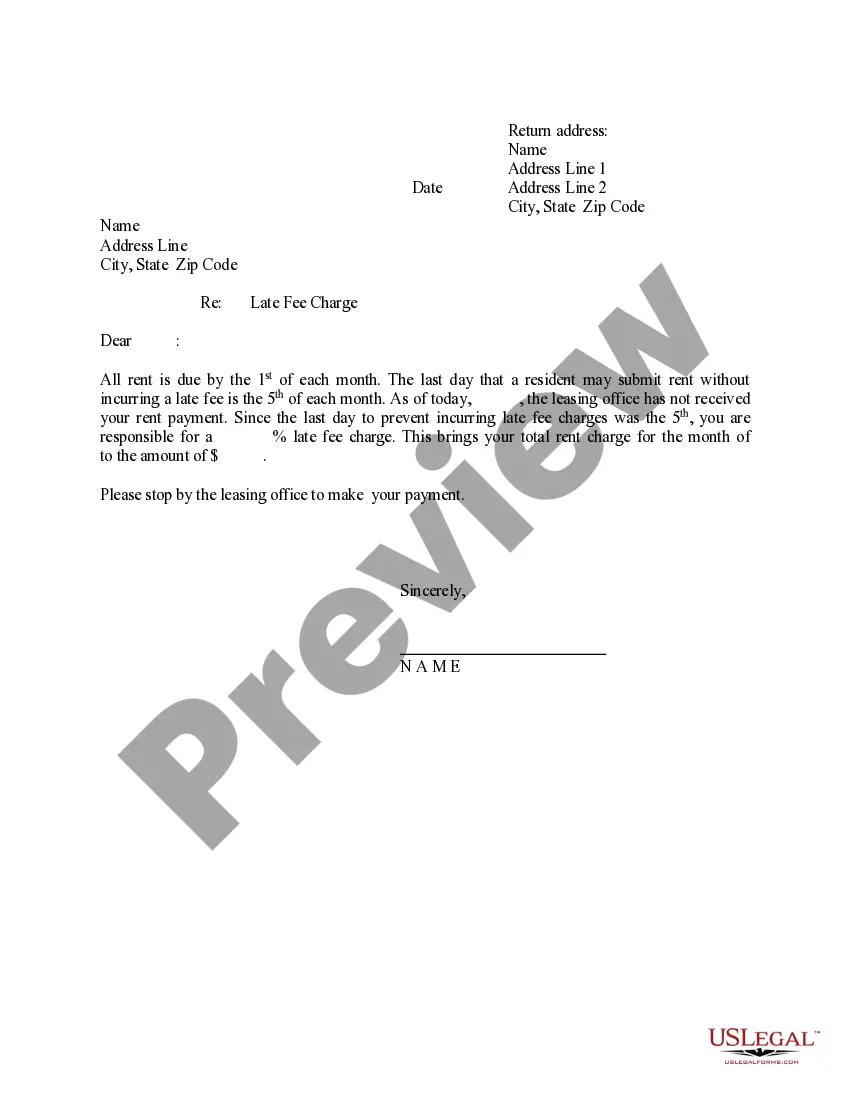
Late Fee Charges For Rent
Description

Get your form ready online
Our built-in tools help you complete, sign, share, and store your documents in one place.
Make edits, fill in missing information, and update formatting in US Legal Forms—just like you would in MS Word.
Download a copy, print it, send it by email, or mail it via USPS—whatever works best for your next step.
Sign and collect signatures with our SignNow integration. Send to multiple recipients, set reminders, and more. Go Premium to unlock E-Sign.
If this form requires notarization, complete it online through a secure video call—no need to meet a notary in person or wait for an appointment.
We protect your documents and personal data by following strict security and privacy standards.

Make edits, fill in missing information, and update formatting in US Legal Forms—just like you would in MS Word.

Download a copy, print it, send it by email, or mail it via USPS—whatever works best for your next step.

Sign and collect signatures with our SignNow integration. Send to multiple recipients, set reminders, and more. Go Premium to unlock E-Sign.

If this form requires notarization, complete it online through a secure video call—no need to meet a notary in person or wait for an appointment.

We protect your documents and personal data by following strict security and privacy standards.
Looking for another form?

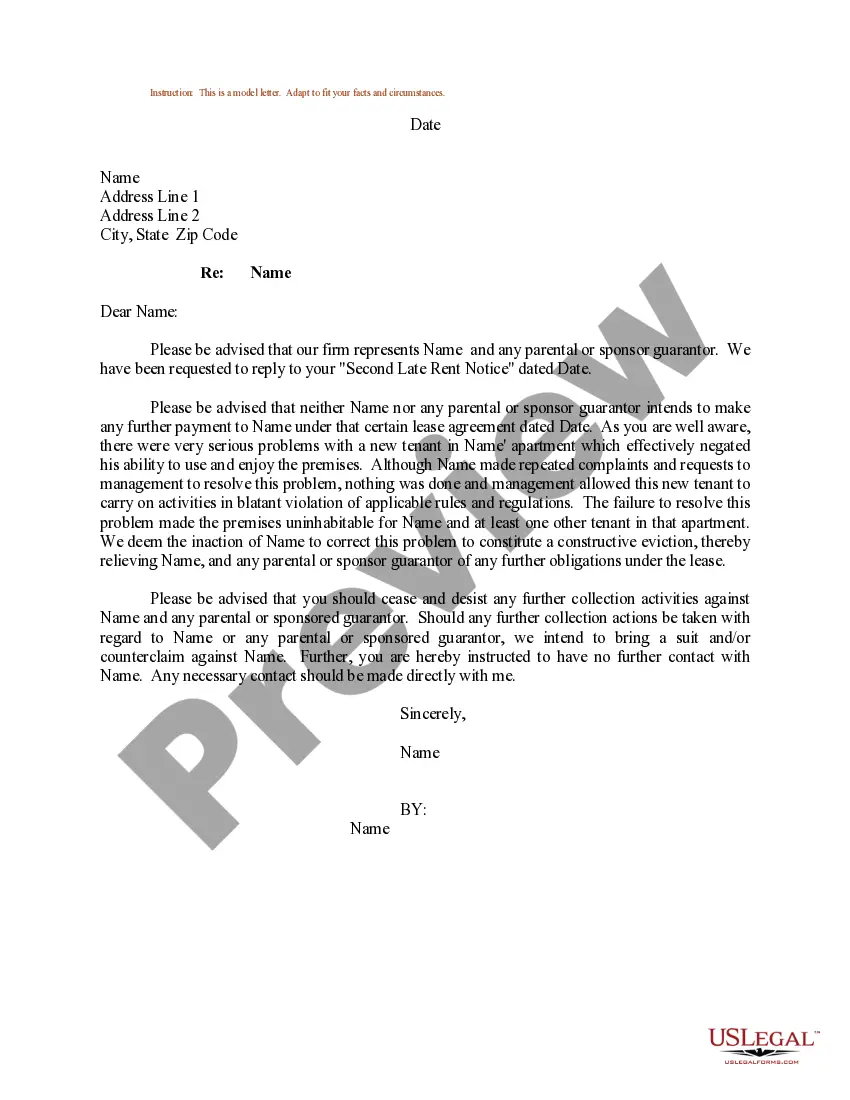
How to fill out Letter - Notification To Renter Of Late Rent Payment And Late Charge?
The Late Payment Fees For Rent displayed on this page is a reusable legal draft developed by expert attorneys in compliance with national and local regulations.
For over 25 years, US Legal Forms has offered individuals, entities, and legal representatives with over 85,000 validated, state-specific documents for any commercial and personal circumstance.
Join US Legal Forms to access verified legal templates for all of life's circumstances whenever you need them.
- Search for the document you require and review it.
- Browse through the file you looked for and preview it or assess the form summary to confirm it meets your requirements. If it doesn’t, utilize the search function to find the correct one. Click Buy Now after you have found the form you need.
- Register and sign in.
- Choose the pricing option that fits you and set up an account. Use PayPal or a credit card for a swift payment. If you already possess an account, Log In and verify your subscription to proceed.
- Obtain the editable document.
- Select the format you prefer for your Late Payment Fees For Rent (PDF, DOCX, RTF) and save the sample on your device.
- Complete and sign the form.
- Print the template to fill it out by hand. Alternatively, use an online versatile PDF editor to quickly and accurately complete and sign your document with an eSignature.
- Re-download your paperwork if needed.
- Utilize the same document as required at any time. Access the My documents section in your profile to redownload any previously saved templates.
Form popularity
FAQ
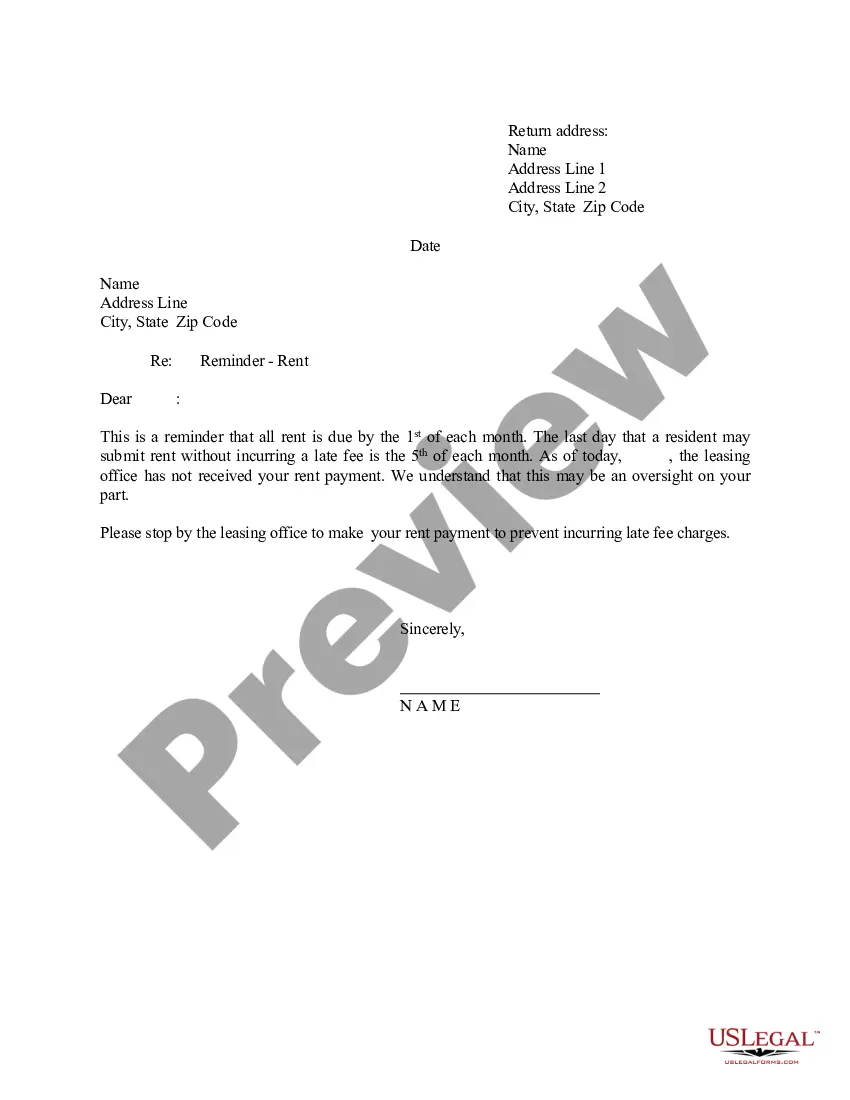
To inform your customers about late fee charges for rent, clear communication is crucial. Begin by including the late fee policy in your rental agreement, ensuring it's easily accessible. You may also want to send reminders prior to the payment due date, highlighting any potential late fee charges for rent. Consistent communication fosters transparency, helping your customers understand the importance of timely payments.
In New York City, there isn't a strict limit on how late you can be on rent before facing penalties, but late fee charges for rent can be applied after just a few days of non-payment. Many landlords impose their own policies, so it’s advisable to review your lease agreement thoroughly. If you are facing difficulties, reaching out and discussing your situation can sometimes lead to flexible solutions. Resources like USLegalForms can assist renters in understanding their rights regarding late payments and eviction.
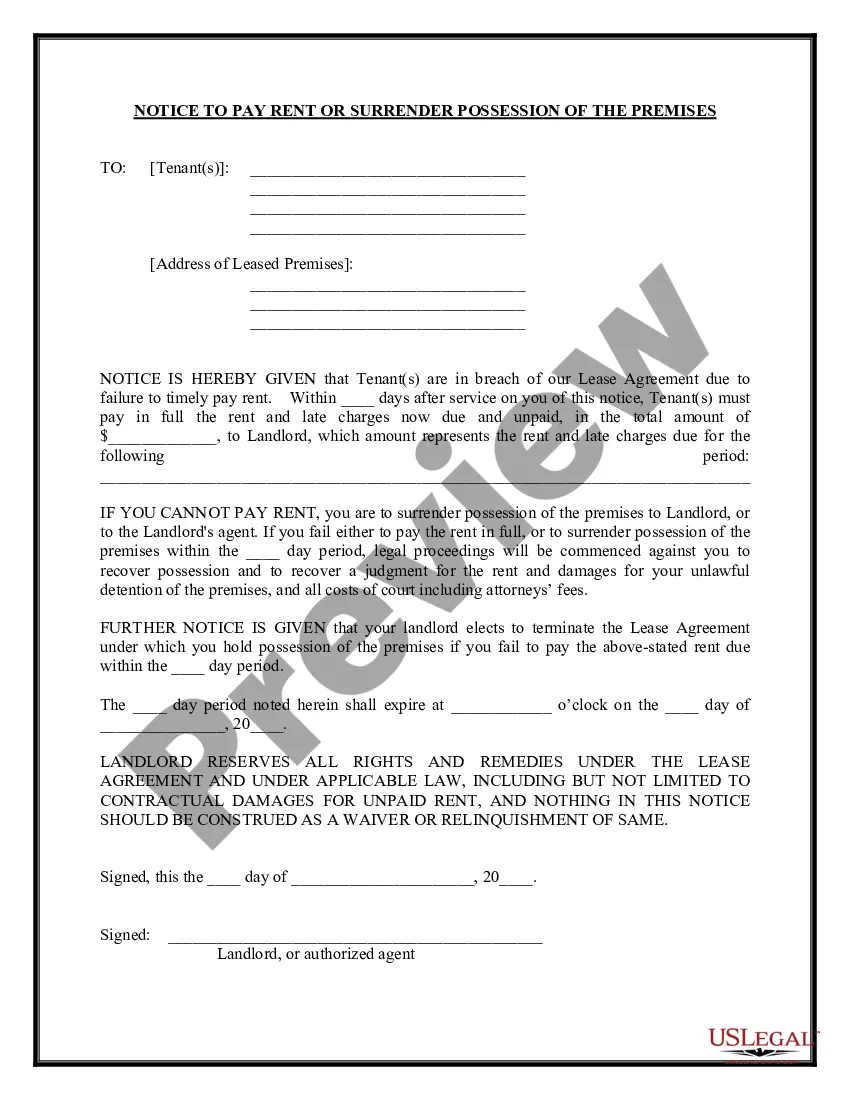
The length of time you can be late on rent varies by state, but most places allow landlords to set specific terms in rental agreements. Typically, if payment is not received within a few days, late fee charges for rent may accrue. After a certain period, often around 30 days, landlords may start eviction procedures. Understanding your lease and state laws can provide clarity, and platforms like USLegalForms can help clarify these regulations.
When writing a late payment fee, it is essential to include specific details such as the amount due, the date it was incurred, and the calculation method used. Clearly outline the consequences of non-payment to ensure understanding. Platforms like US Legal Forms can help you draft these documents with templates that ensure you include all necessary information to address late fee charges for rent.
To explain a late payment fee, outline the terms of the lease that stipulate such charges. Make it clear that late fees serve to encourage timely payments and cover additional administration costs. Being transparent about these fees can help tenants understand their importance and may lead to prompt payments in the future, thus reducing late fee charges for rent.
An example of wording for late fees could be: 'A late fee of 5% will be applied to rent payments not received within five days of the due date.' It’s vital to ensure that this wording is included in your lease agreement so tenants are aware of the potential charges. This clarity helps prevent misunderstandings regarding late fee charges for rent.
When writing about a late rent payment, be clear and concise. Begin with your name, rental address, and the date. Then, explain the circumstances that led to the delay, while expressing your commitment to settle the amount. By being honest and transparent, you help maintain a good relationship with your landlord amidst late fee charges for rent.
Writing a letter for late fee charges for rent is quite straightforward. Start by addressing the landlord or property manager directly. Clearly state the amount due, specify that it is related to a late fee, and include a brief explanation. It’s important to express your intent to make the payment and ask for any clarification needed.