Attorney Information For The United States
Description
Get your form ready online
Our built-in tools help you complete, sign, share, and store your documents in one place.
Make edits, fill in missing information, and update formatting in US Legal Forms—just like you would in MS Word.
Download a copy, print it, send it by email, or mail it via USPS—whatever works best for your next step.
Sign and collect signatures with our SignNow integration. Send to multiple recipients, set reminders, and more. Go Premium to unlock E-Sign.
If this form requires notarization, complete it online through a secure video call—no need to meet a notary in person or wait for an appointment.
We protect your documents and personal data by following strict security and privacy standards.

Make edits, fill in missing information, and update formatting in US Legal Forms—just like you would in MS Word.

Download a copy, print it, send it by email, or mail it via USPS—whatever works best for your next step.

Sign and collect signatures with our SignNow integration. Send to multiple recipients, set reminders, and more. Go Premium to unlock E-Sign.

If this form requires notarization, complete it online through a secure video call—no need to meet a notary in person or wait for an appointment.

We protect your documents and personal data by following strict security and privacy standards.
Looking for another form?

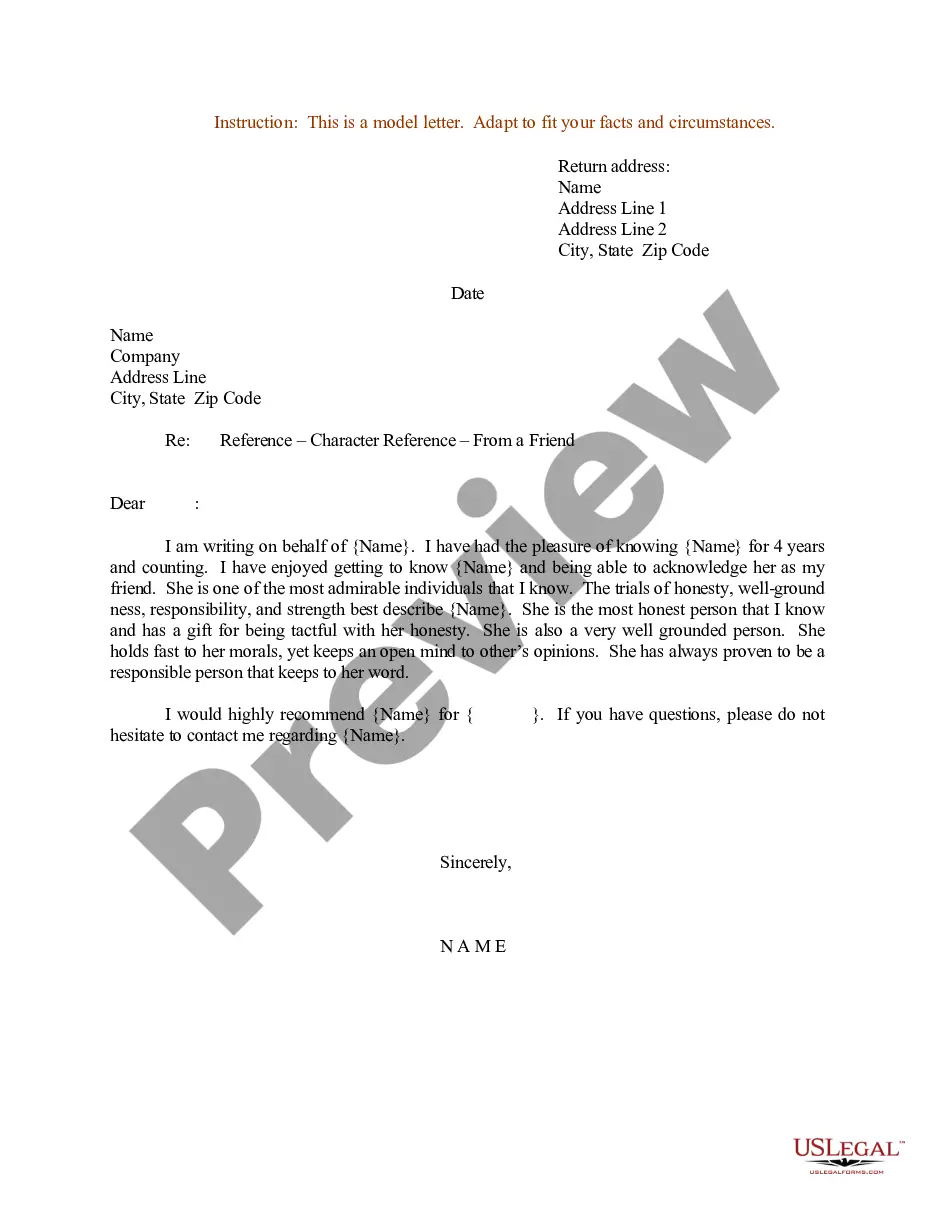

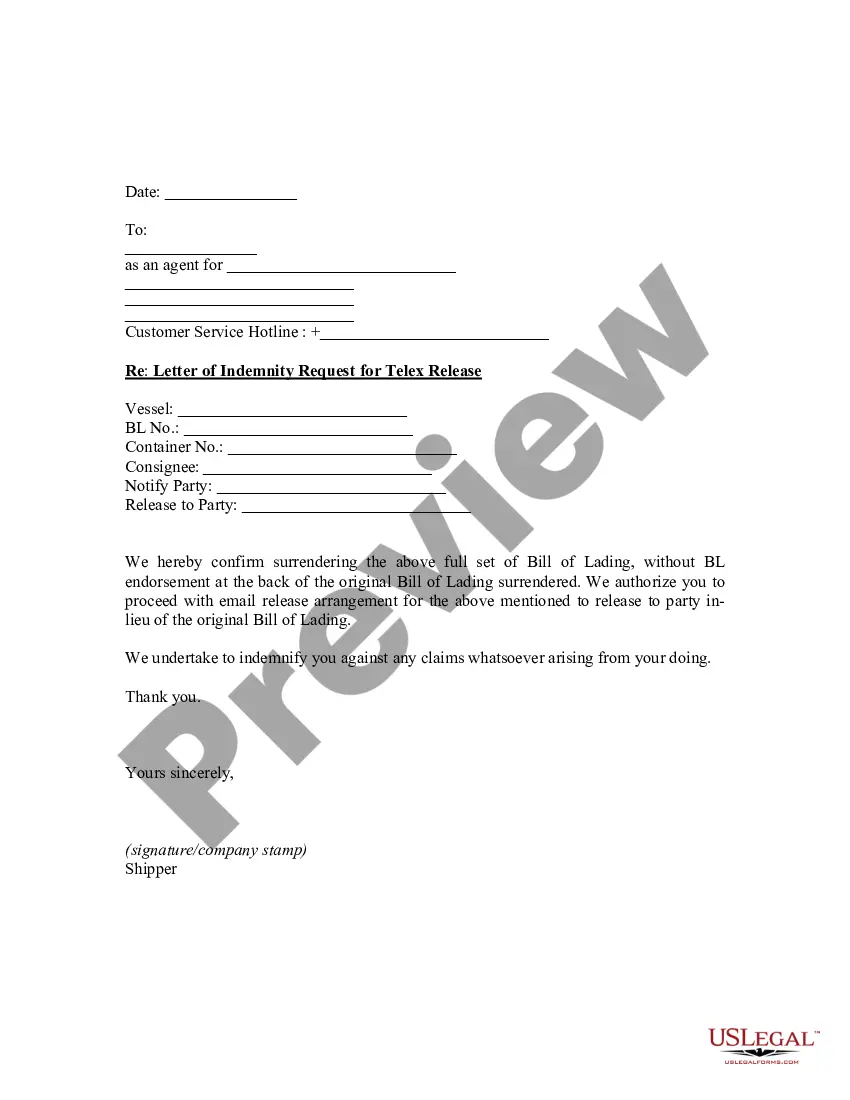



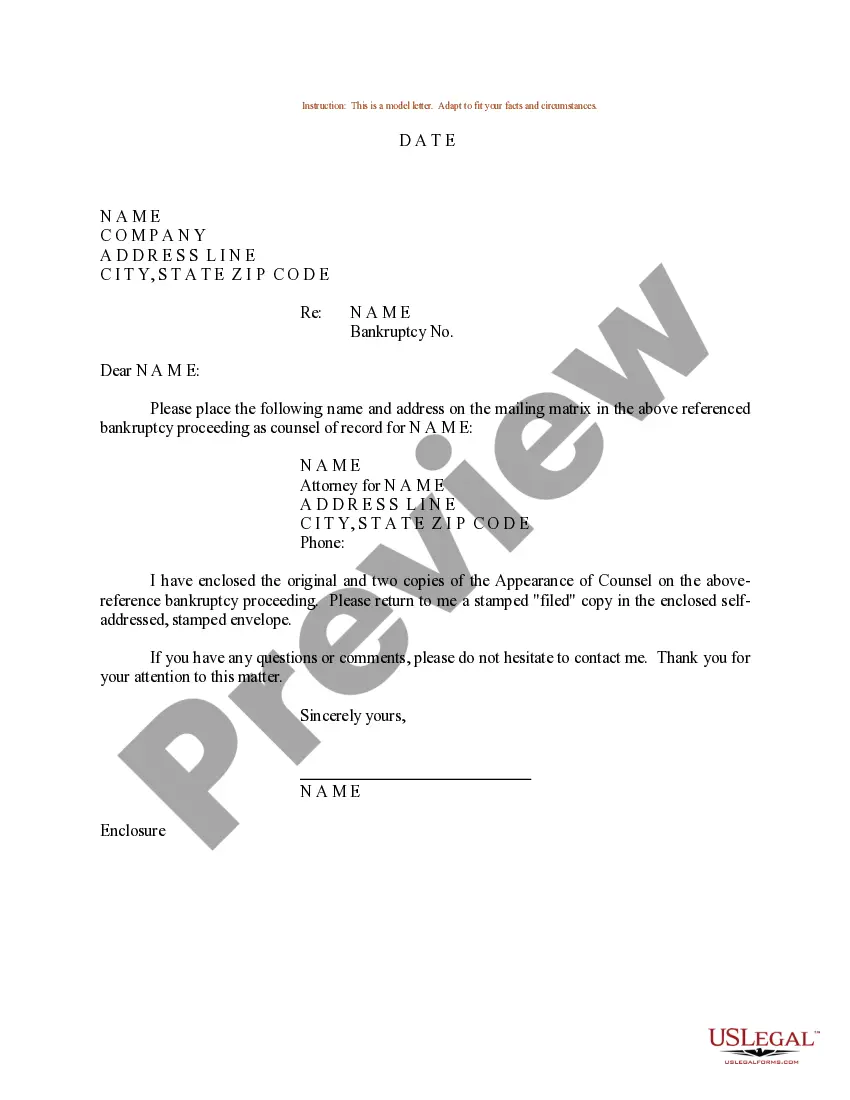
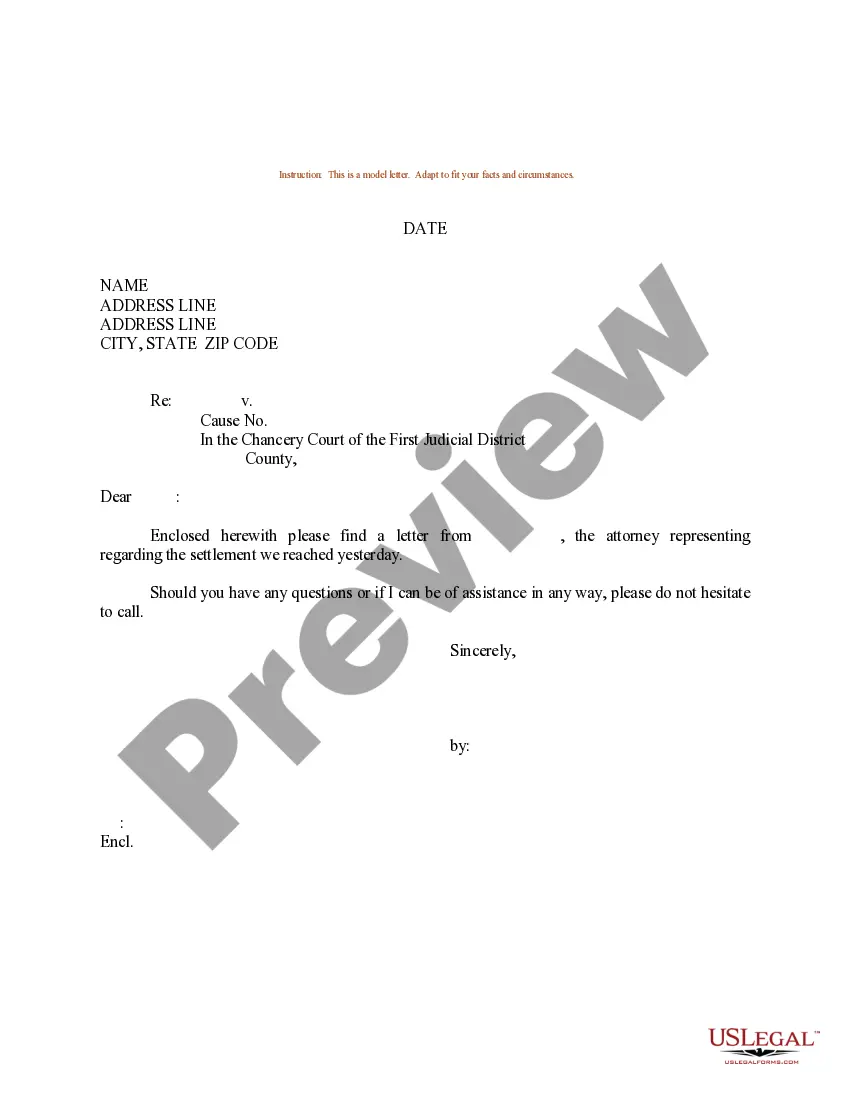
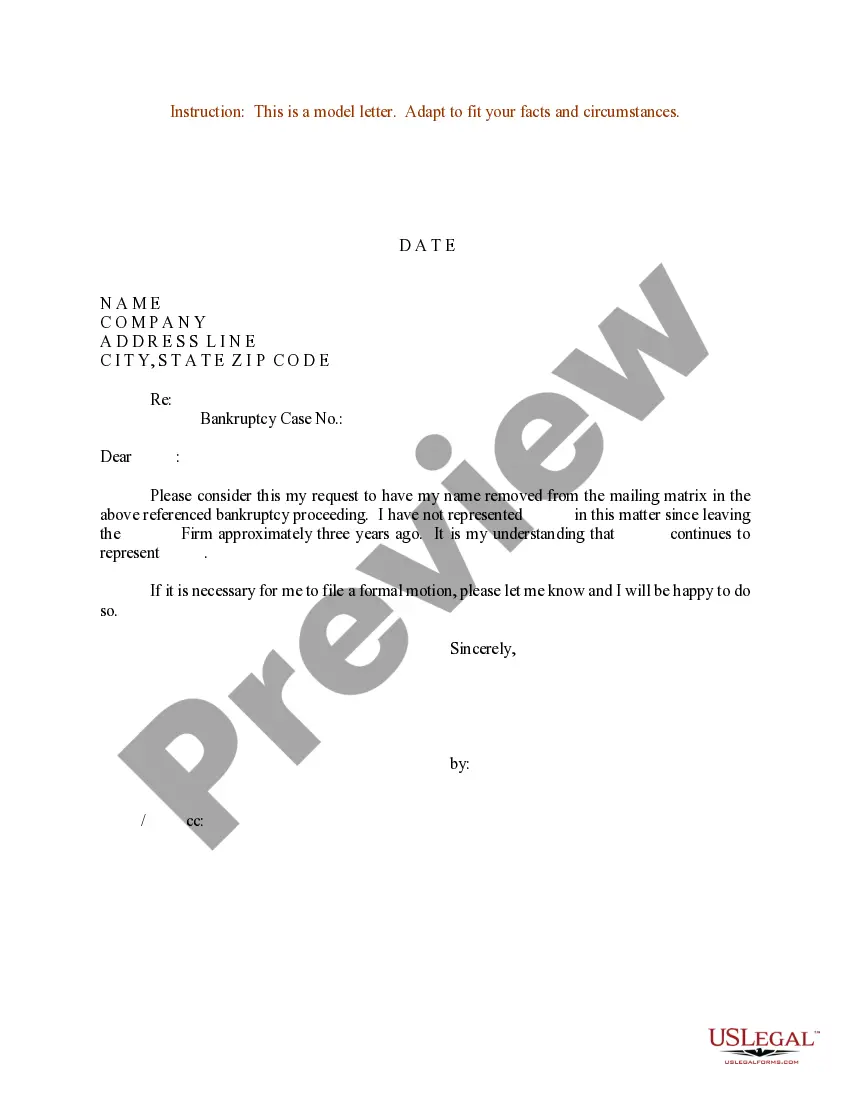
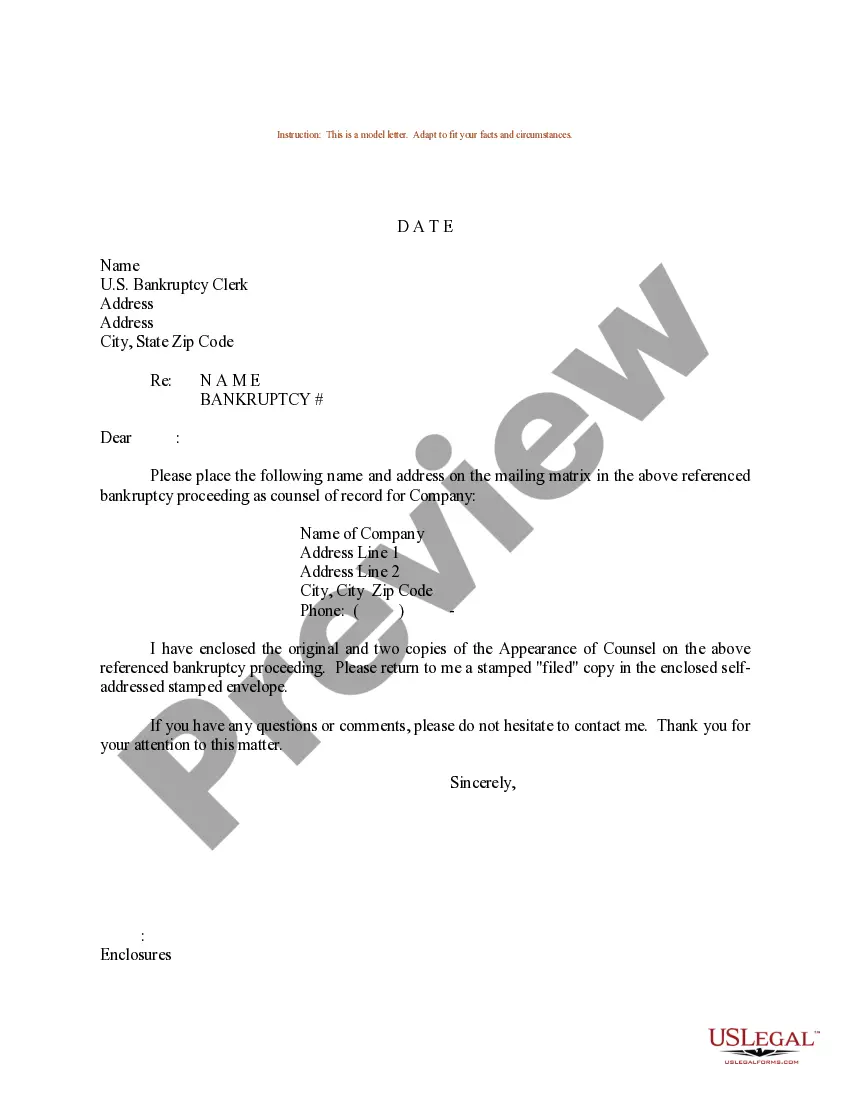
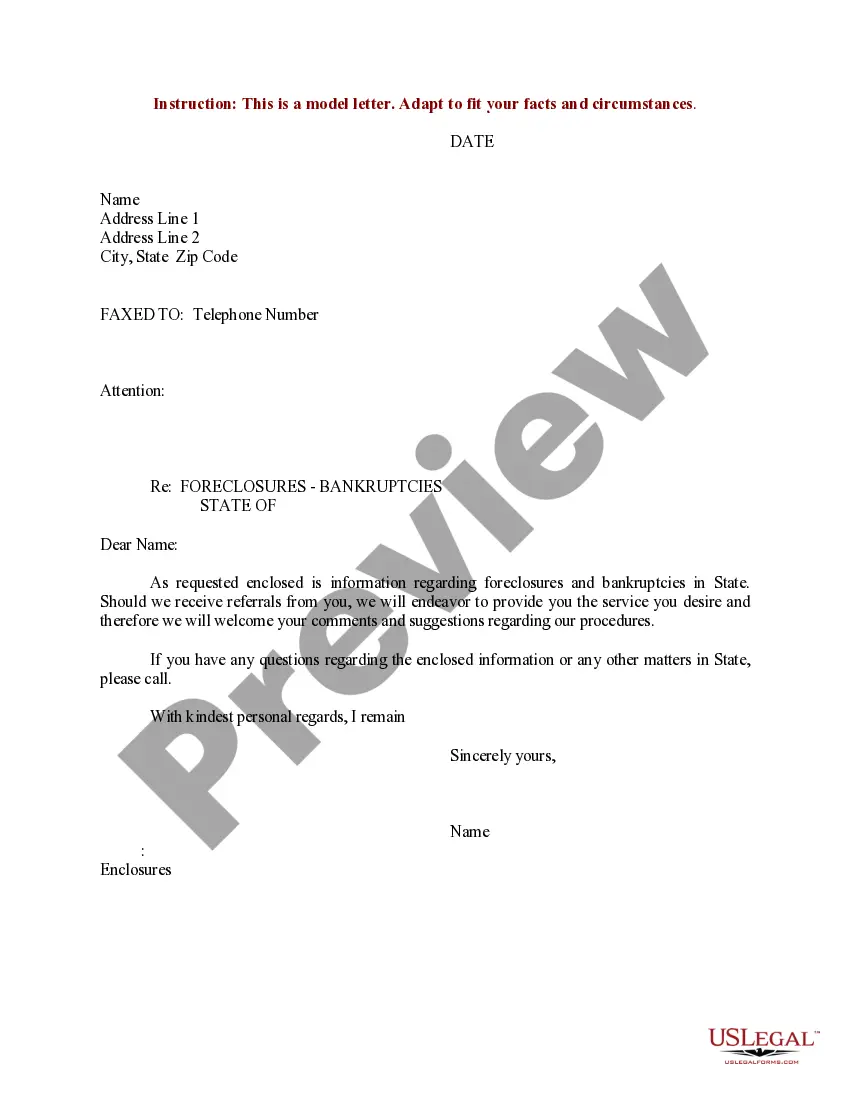
How to fill out Sample Letter For Appointment Of Attorney's Information On Mailing Matrix Concerning Bankruptcy Proceeding?
- If you're a returning user, log in to your account and find the form template you need. Ensure your subscription is current; if it's expired, renew according to your plan.
- For first-time users, begin by browsing the extensive form library. Check the Preview mode and read the form description to confirm it matches your specific needs and local jurisdiction.
- If your search yields incomplete options, utilize the Search tab to locate additional documents that fulfill your requirements.
- Once you identify the correct form, click on 'Buy Now' and select a suitable subscription plan. Registration is required to access the complete library.
- Finalize your purchase by entering your payment details via credit card or PayPal.
- Download the document to your device. You can always access it later through the My Forms menu in your profile.
US Legal Forms offers a robust collection of legal documents, empowering both individuals and attorneys to quickly execute necessary paperwork effectively.
Take advantage of our extensive library today to ensure your legal needs are met efficiently. Sign up now and explore the resources at your disposal!
Form popularity
FAQ
To check if a lawyer is licensed in the US, visit the website of the state bar association where the lawyer practices. Each state's bar association maintains a directory of licensed attorneys, which includes their standing and any disciplinary history. For more comprehensive attorney information for the United States, consider platforms like USLegalForms, where you can access useful resources.
You can easily look up a lawyer's license status through the state bar association's official website. Most states have online tools where you can enter a lawyer’s name or bar number to confirm their licensing and any disciplinary actions. Accessing reliable attorney information for the United States is crucial for ensuring that you are working with a qualified legal professional.
Yes, there are several websites dedicated to reviewing lawyers and providing ratings based on client feedback. Sites like Avvo and Martindale-Hubbell offer comprehensive reviews and ratings of attorneys that can help you make informed decisions. When exploring attorney information for the United States, these platforms can provide insight into a lawyer's reputation and past client experiences.
The term 'power' in this context can be misleading. An attorney has the legal authority to act on clients' behalf, whereas a lawyer, in a broader sense, may not necessarily have that authority without being formally licensed. Thus, when seeking assistance for legal matters, obtaining detailed attorney information for the United States will provide insight into the legal capabilities of your chosen professional.
While the terms 'lawyer' and 'attorney' are often used interchangeably, there is a subtle difference. All attorneys are lawyers, but not all lawyers can act on behalf of clients in legal proceedings unless they have been licensed as attorneys. Therefore, if you need representation or legal advice, exploring attorney information for the United States will help you find the right professional.
Lawyers often refer to themselves as attorneys because the term emphasizes their role in representing clients in legal matters. The title 'attorney' comes from the Latin term 'attorney at law,' which signifies a licensed individual who can counsel and advocate for clients. This distinction is important when researching attorney information for the United States, as it highlights their formal obligations to clients.
In general terms, a lawyer is anyone who has attended law school and may have passed the bar exam, while an attorney has formally been appointed to act on another's behalf in a legal matter. Thus, all attorneys are lawyers, but not all lawyers are attorneys. Understanding this distinction is crucial when seeking out attorney information for the United States to find the right legal representation.
Whether you need a lawyer or attorney depends on your legal situation. If you are dealing with a complex legal issue, consulting an attorney is often beneficial. They can provide you with expert advice and representation tailored to your specific needs. Consider your circumstances, and if uncertain, researching attorney information for the United States can guide your decision.
You can verify a US lawyer by checking the state bar association's website for the lawyer's credentials and disciplinary history. Each state has its own system for attorney information for the United States, which provides details on a lawyer's licensing status. This ensures the attorney is in good standing and licensed to practice law. Additionally, services like USLegalForms can help you access vital attorney information.
Filling out a power of attorney letter starts with clearly stating who you are appointing as the attorney-in-fact. You should include your name, address, and the specific powers you are granting this person. Be sure to sign and date the document in the presence of a witness or notary, depending on your state’s requirements. By utilizing tools available on the US Legal Forms platform, you can easily access templates and guidelines to assist you in creating a legally sound power of attorney letter, ensuring proper attorney information for the United States.