Convertible Note Notes Form For Speech Therapy
Description
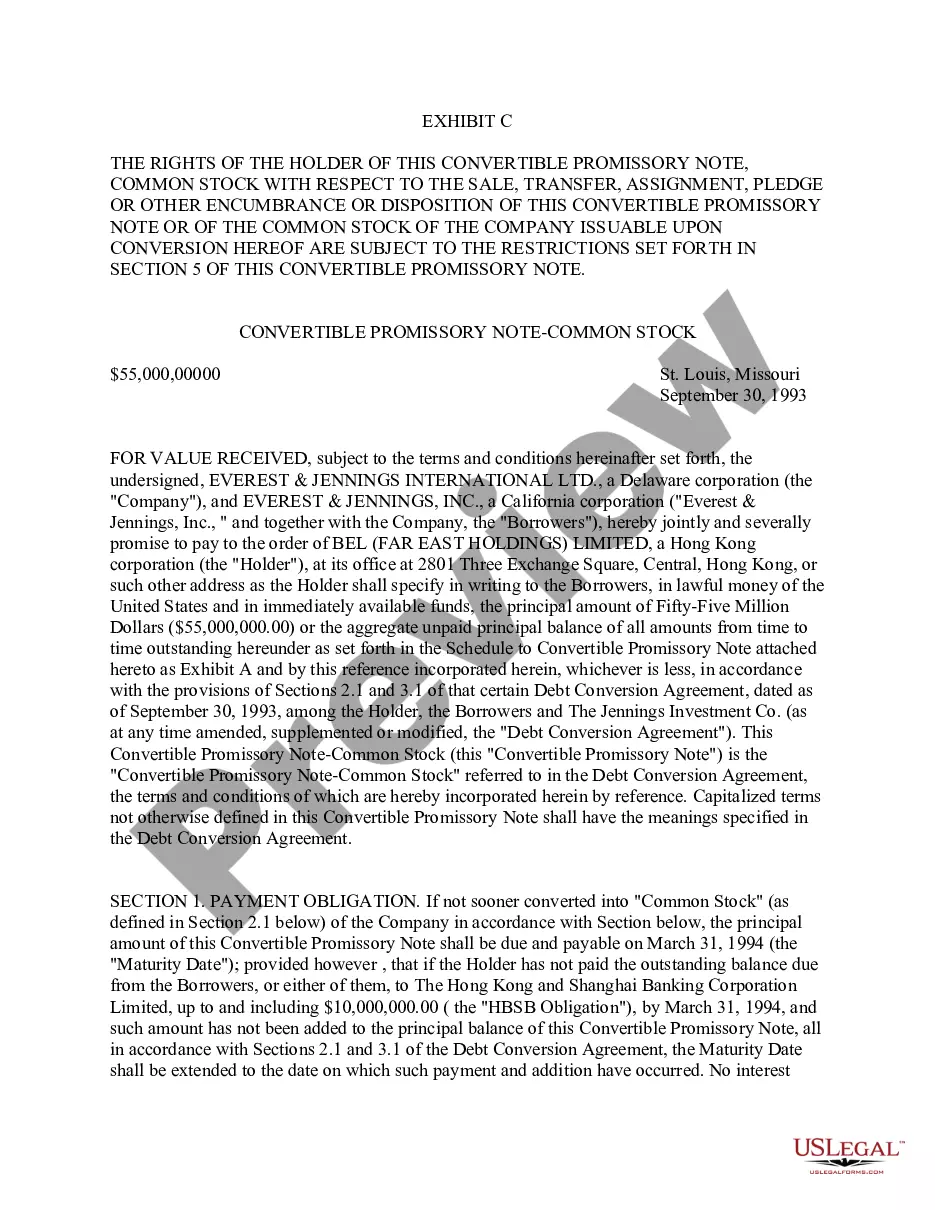
Get your form ready online
Our built-in tools help you complete, sign, share, and store your documents in one place.
Make edits, fill in missing information, and update formatting in US Legal Forms—just like you would in MS Word.
Download a copy, print it, send it by email, or mail it via USPS—whatever works best for your next step.
Sign and collect signatures with our SignNow integration. Send to multiple recipients, set reminders, and more. Go Premium to unlock E-Sign.
If this form requires notarization, complete it online through a secure video call—no need to meet a notary in person or wait for an appointment.
We protect your documents and personal data by following strict security and privacy standards.

Make edits, fill in missing information, and update formatting in US Legal Forms—just like you would in MS Word.

Download a copy, print it, send it by email, or mail it via USPS—whatever works best for your next step.

Sign and collect signatures with our SignNow integration. Send to multiple recipients, set reminders, and more. Go Premium to unlock E-Sign.

If this form requires notarization, complete it online through a secure video call—no need to meet a notary in person or wait for an appointment.

We protect your documents and personal data by following strict security and privacy standards.
Looking for another form?






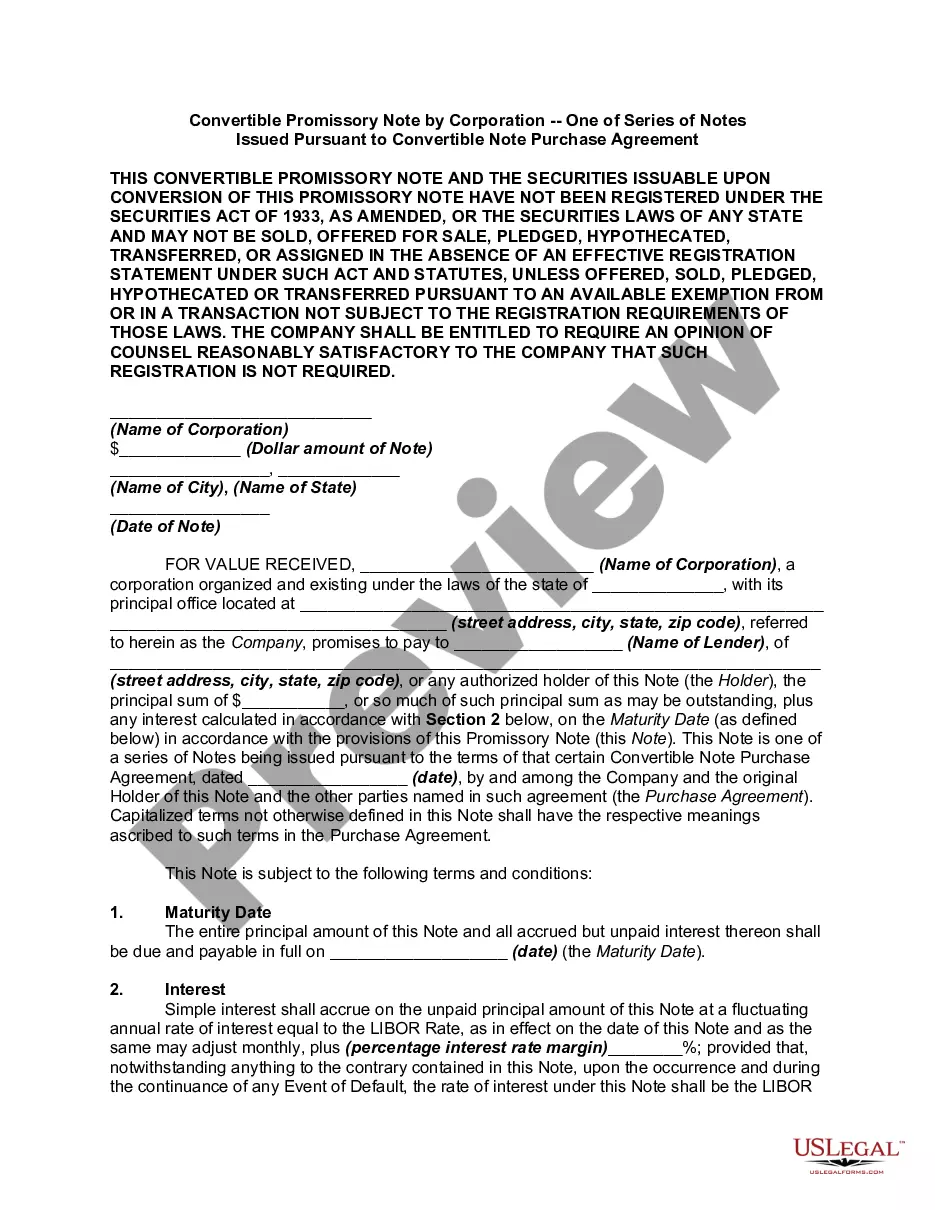
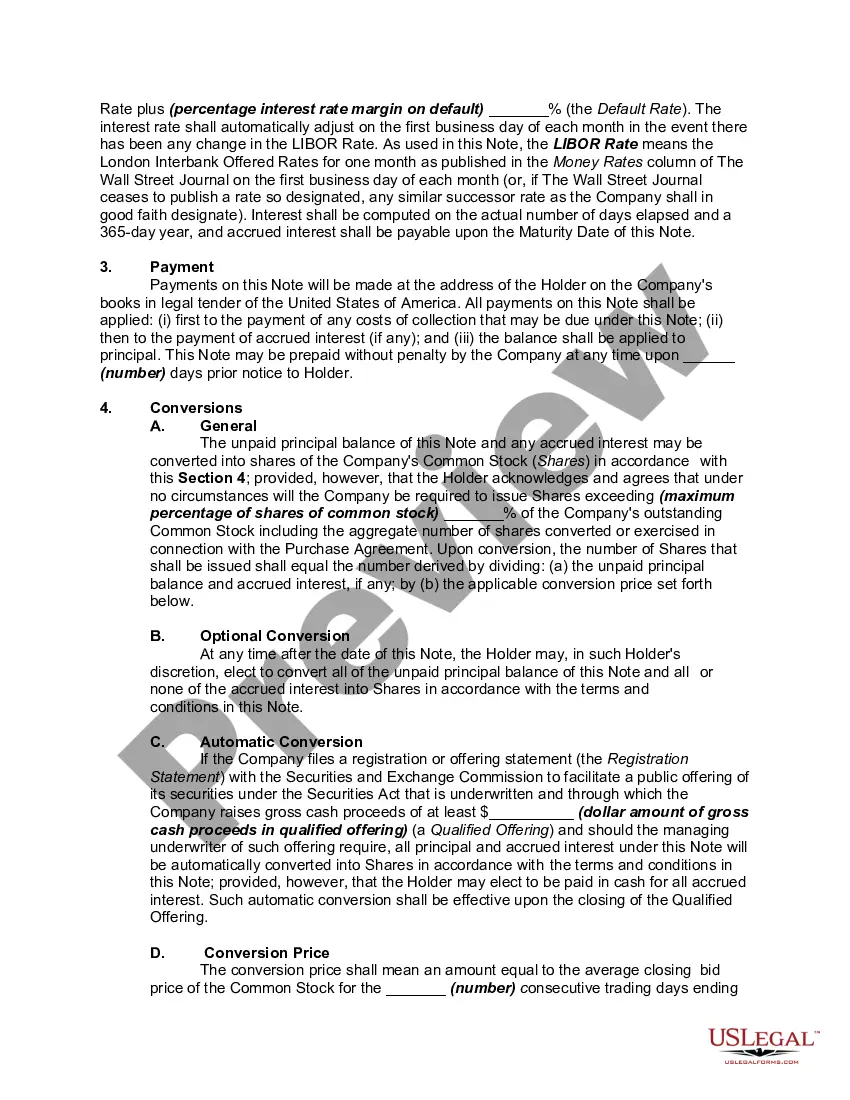
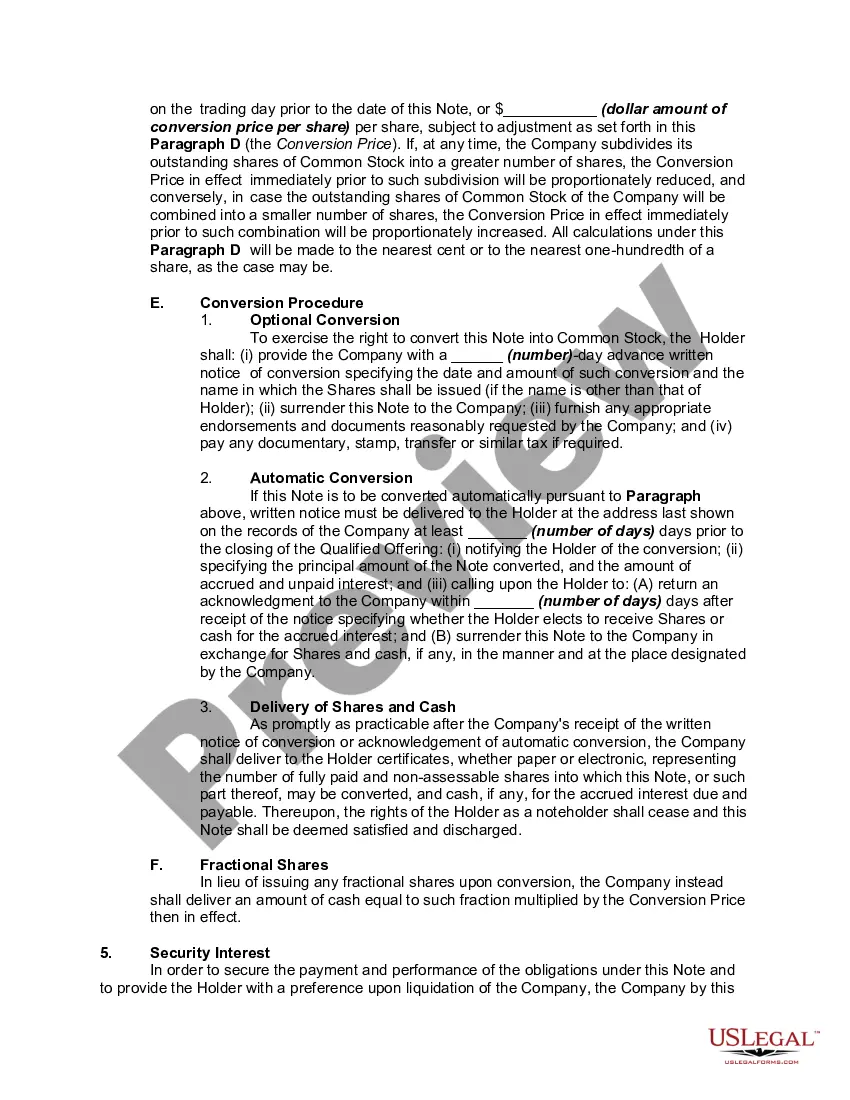
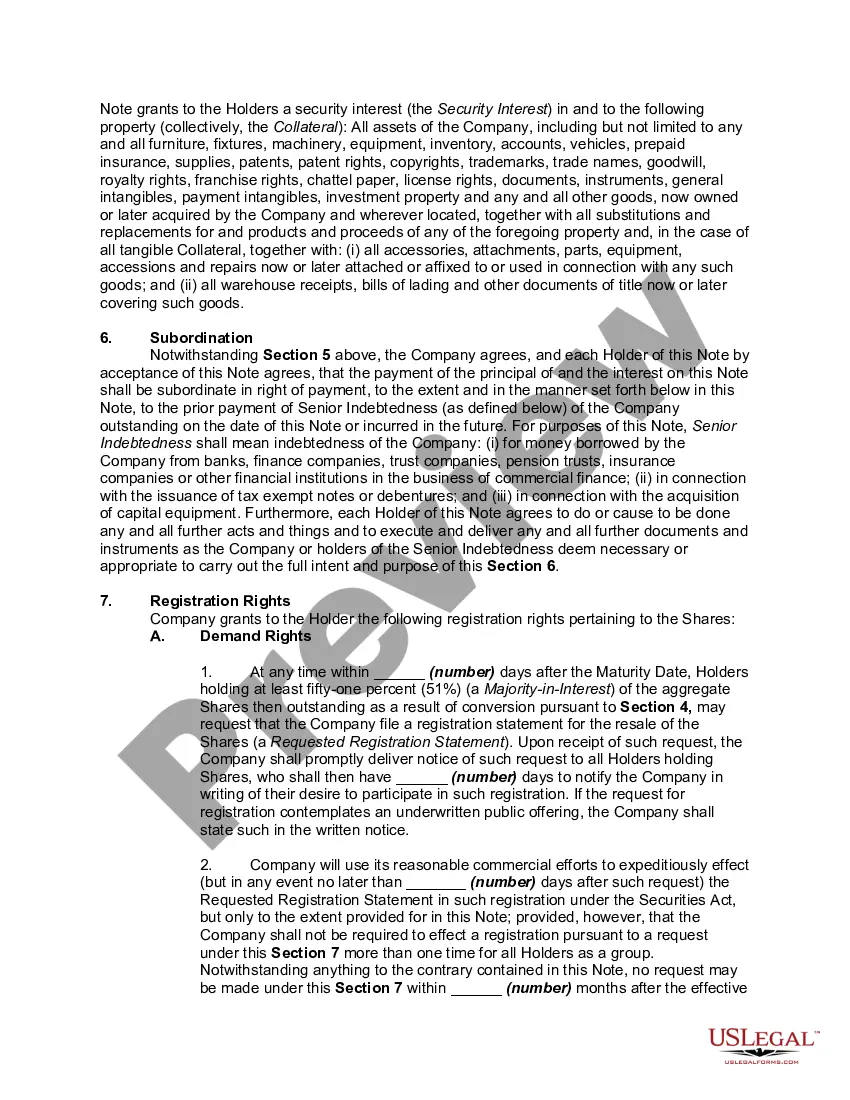
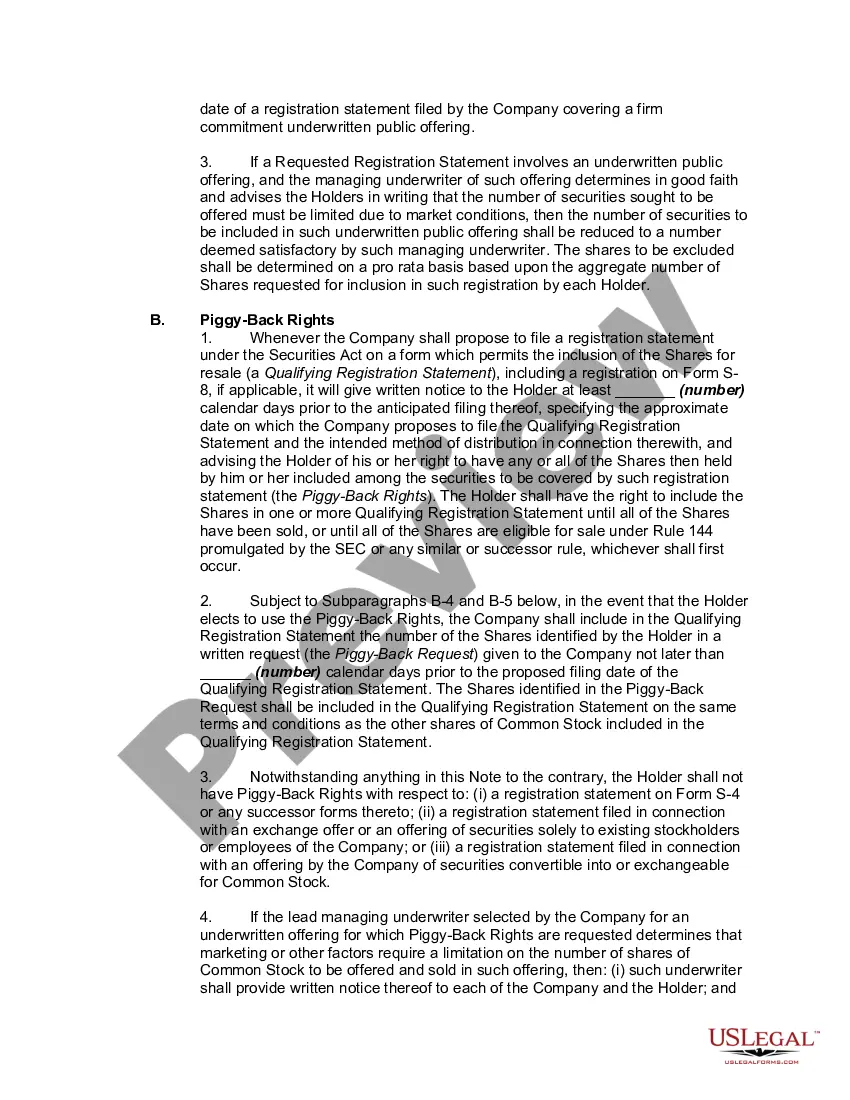
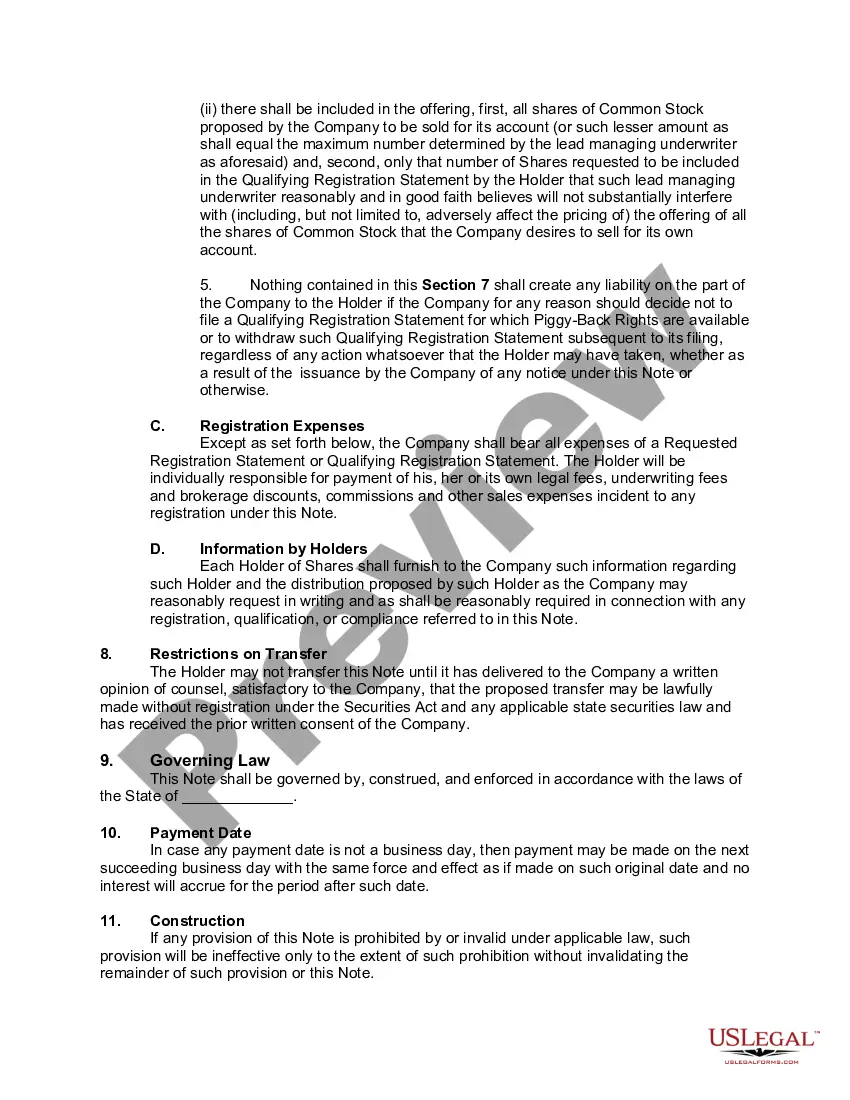
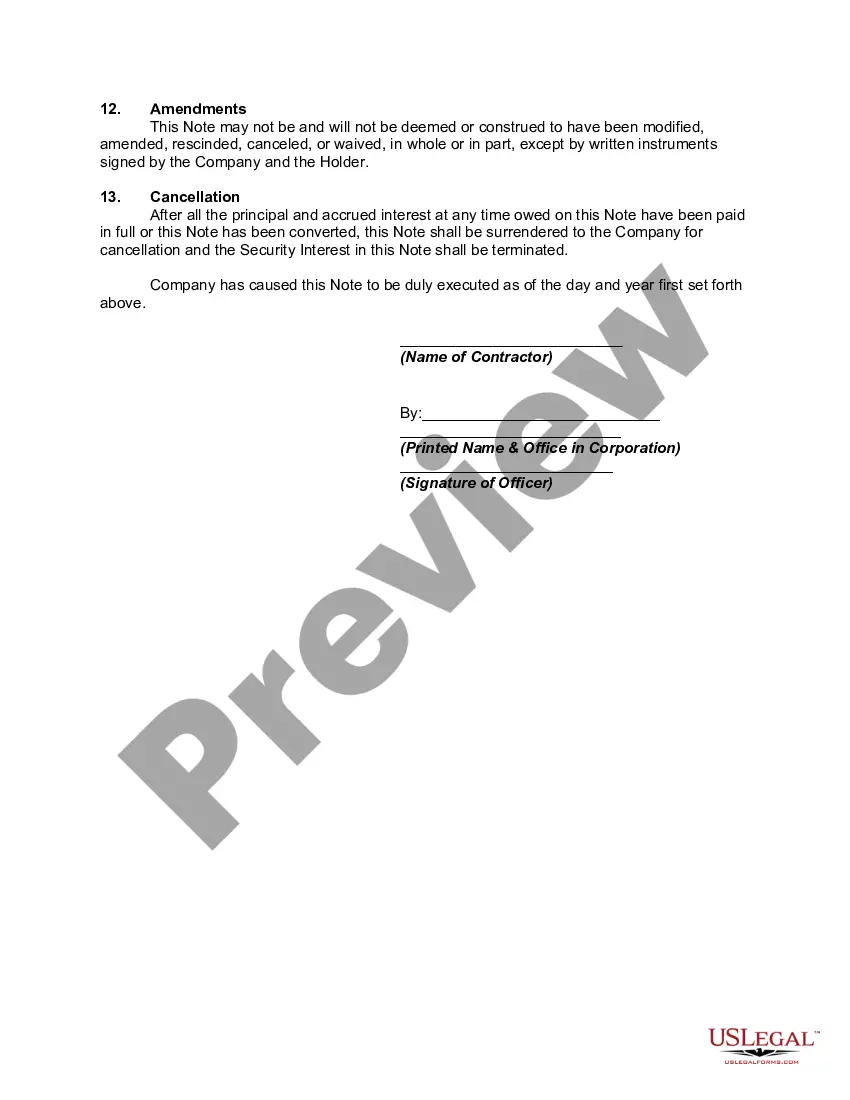
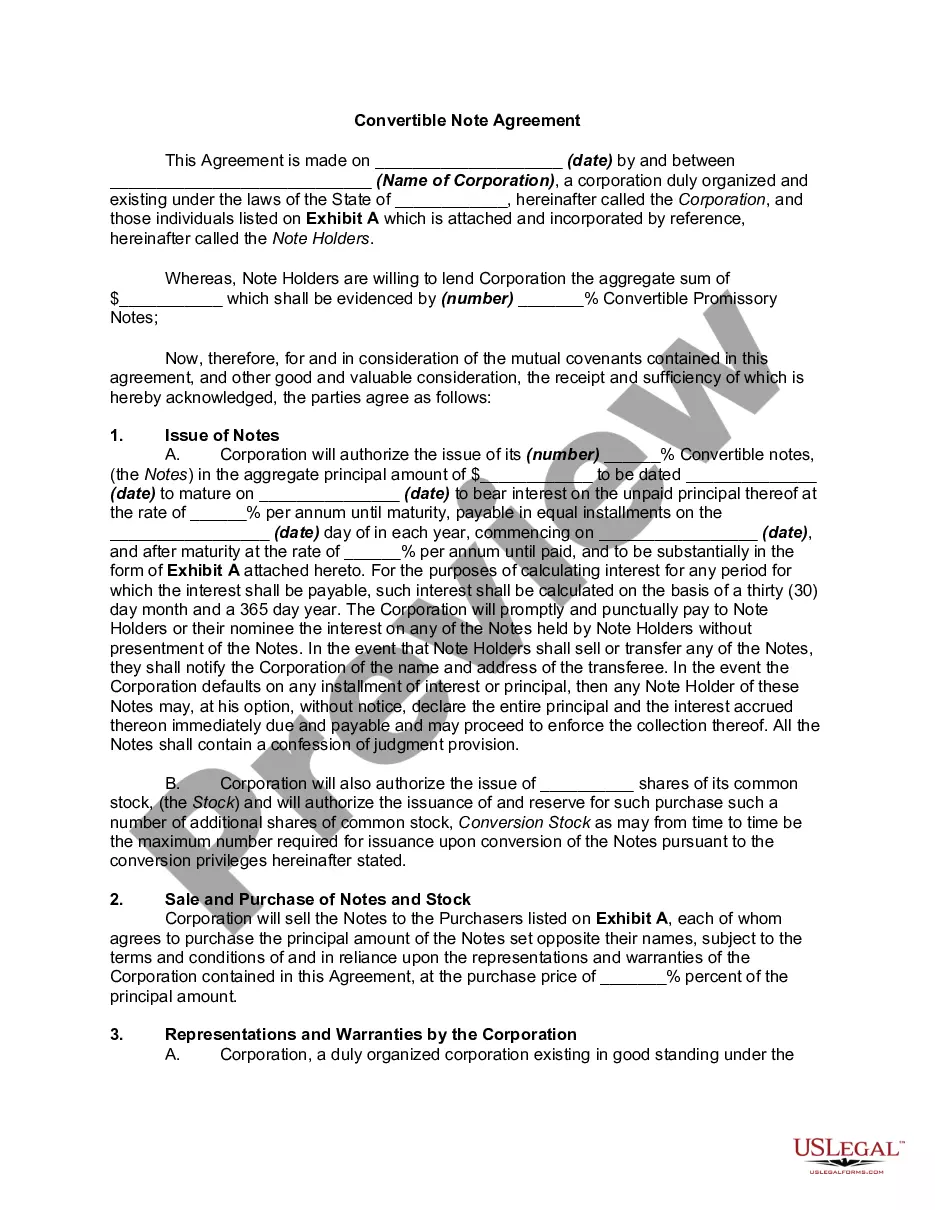
How to fill out Convertible Promissory Note By Corporation - One Of Series Of Notes Issued Pursuant To Convertible Note Purchase Agreement?
Whether for corporate purposes or personal matters, everyone eventually has to handle legal issues at some point in their lives.
Completing legal documentation necessitates meticulous care, starting from selecting the appropriate form template.
With an extensive US Legal Forms catalog available, you never have to waste time searching for the right template online. Take advantage of the library’s straightforward navigation to find the appropriate form for any circumstance.
- Locate the template you require by utilizing the search bar or browsing the catalog.
- Review the form’s details to ensure it corresponds with your circumstances, state, and county.
- Click on the form’s preview to examine it.
- If it is the wrong document, return to the search feature to find the Convertible Note Notes Form For Speech Therapy sample you need.
- Download the template when it suits your requirements.
- If you already possess a US Legal Forms account, just click Log in to access previously saved documents in My documents.
- If you don’t have an account yet, you can download the form by clicking Buy now.
- Select the appropriate pricing choice.
- Fill out the account registration form.
- Choose your payment option: you can utilize a credit card or PayPal account.
- Select the file format you desire and download the Convertible Note Notes Form For Speech Therapy.
- Once it is saved, you can either edit the form using software or print it and fill it out by hand.
Form popularity
FAQ
The procedure for issuing convertible notes begins with preparing the convertible note notes form for speech therapy, detailing terms and investor rights. Following that, the company must conduct due diligence to ensure compliance with legal and financial requirements. Once the agreements are finalized, the notes can be offered to interested investors. Finally, funds received can be used for the company's operational needs.
Convertible Senior Notes For example, let's assume that a $1,000 senior note has a conversion option that allows an investor to convert their holding into 20 shares of common stock. If the market price of the common stock is $60 per share, the investor can convert the senior notes into shares worth $1,200.
Convertible notes are usually structured as a single agreement called the note purchasing agreement. This covers all of the financing terms. Promissory notes are then issued to individual investors with the date and amount of their investment.
Here's an example: You sell $1m in convertible notes to an investor with a valuation cap of $10m, and a 30% discount rate. After 18 months, your startup gets a pre-money valuation of $20m, at $20 per share, during a Series A funding.
A convertible note is a kind of convertible security. Convertible securities are instruments that are expected to ultimately turn into stock. These include standard convertible notes, KISS's (Keep it Simple Security), and SAFEs (Simple Agreement for Future Equity).
Convertible Notes are loans ? so they are recorded on the Balance Sheet of a company as a liability when they are made. Depending on the debt's maturity date, they can either be shown as a current liability (loans maturing within 12 months) or as a Long-term liability (loans maturing over 12 months).