Convertible Note Corporation With Discount
Description
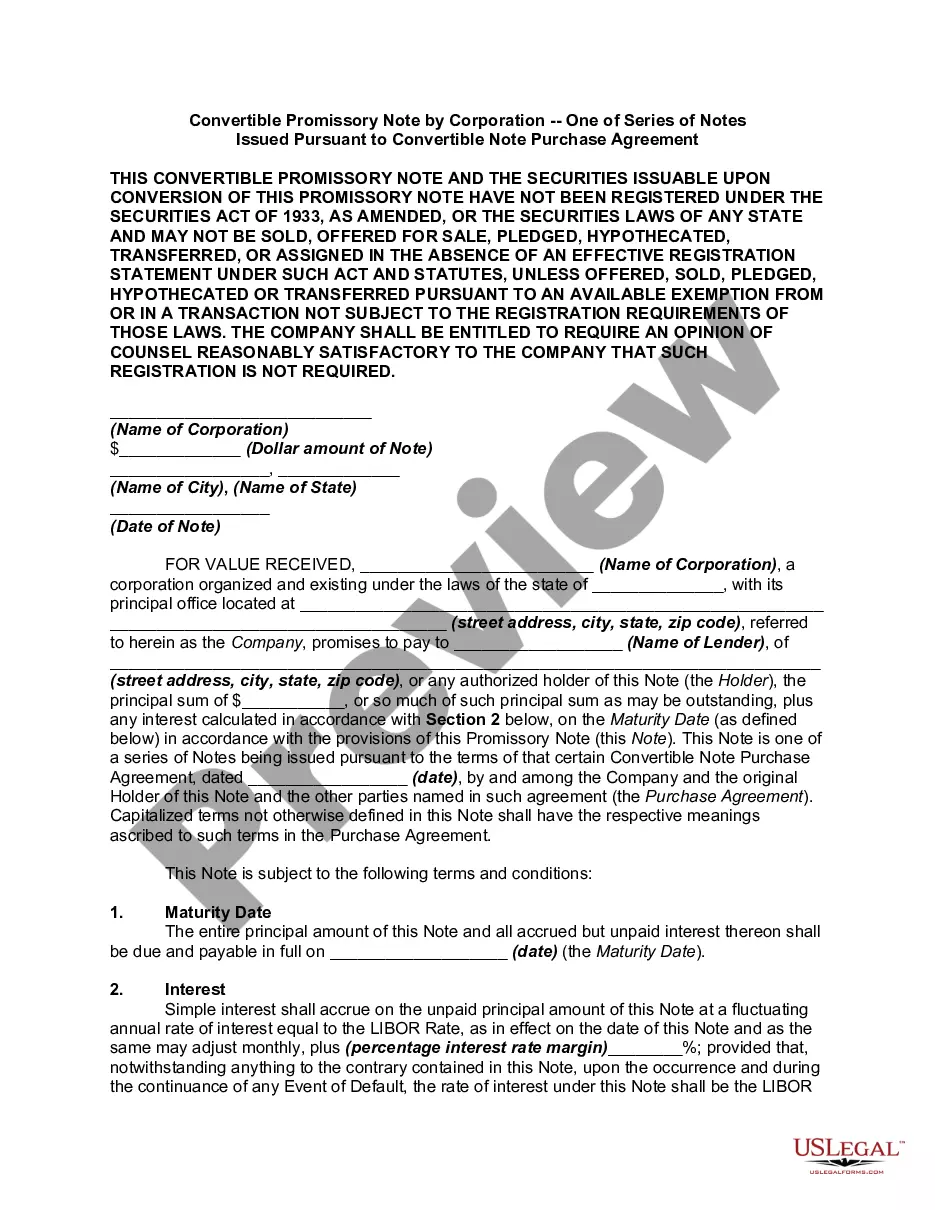
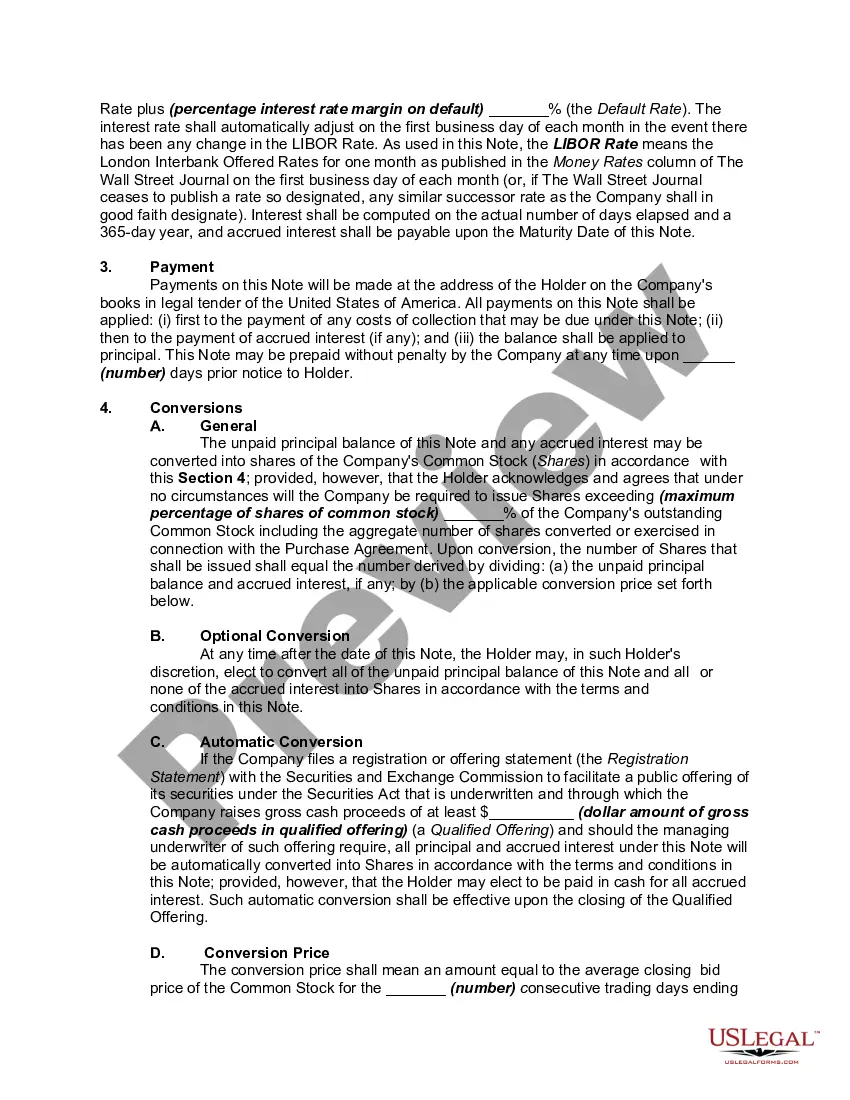
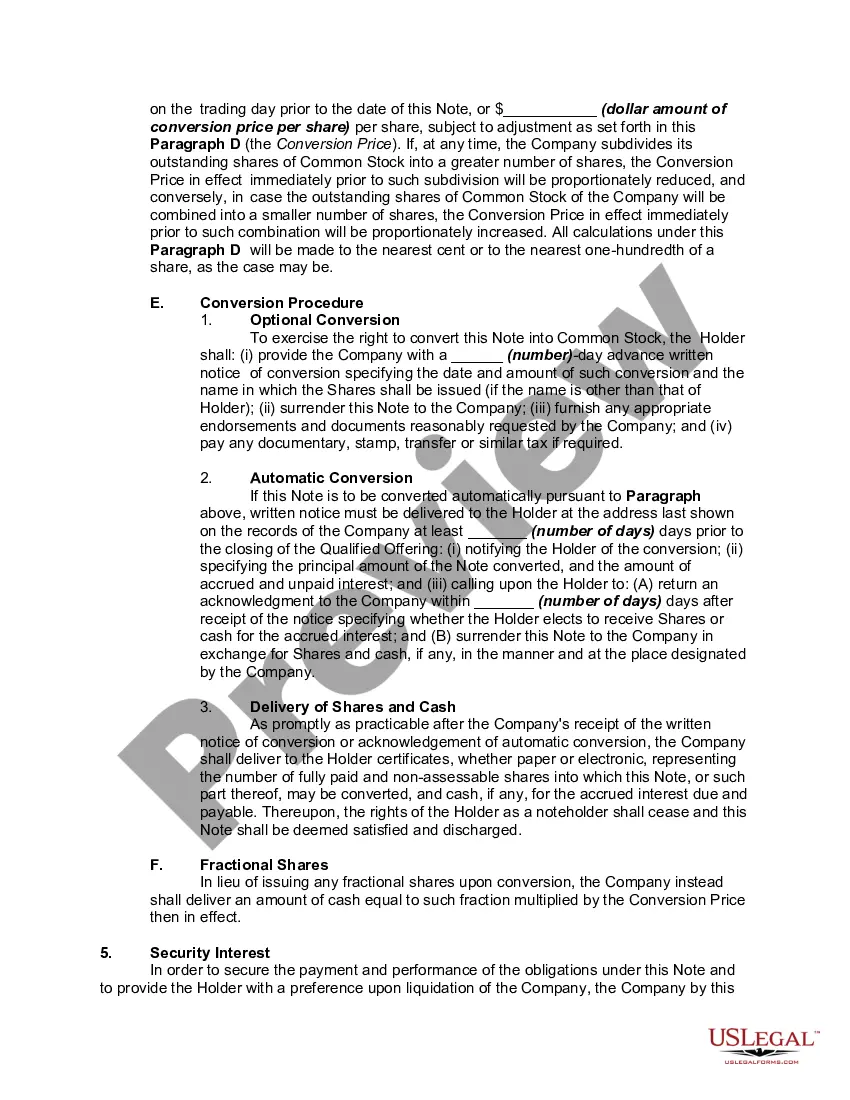
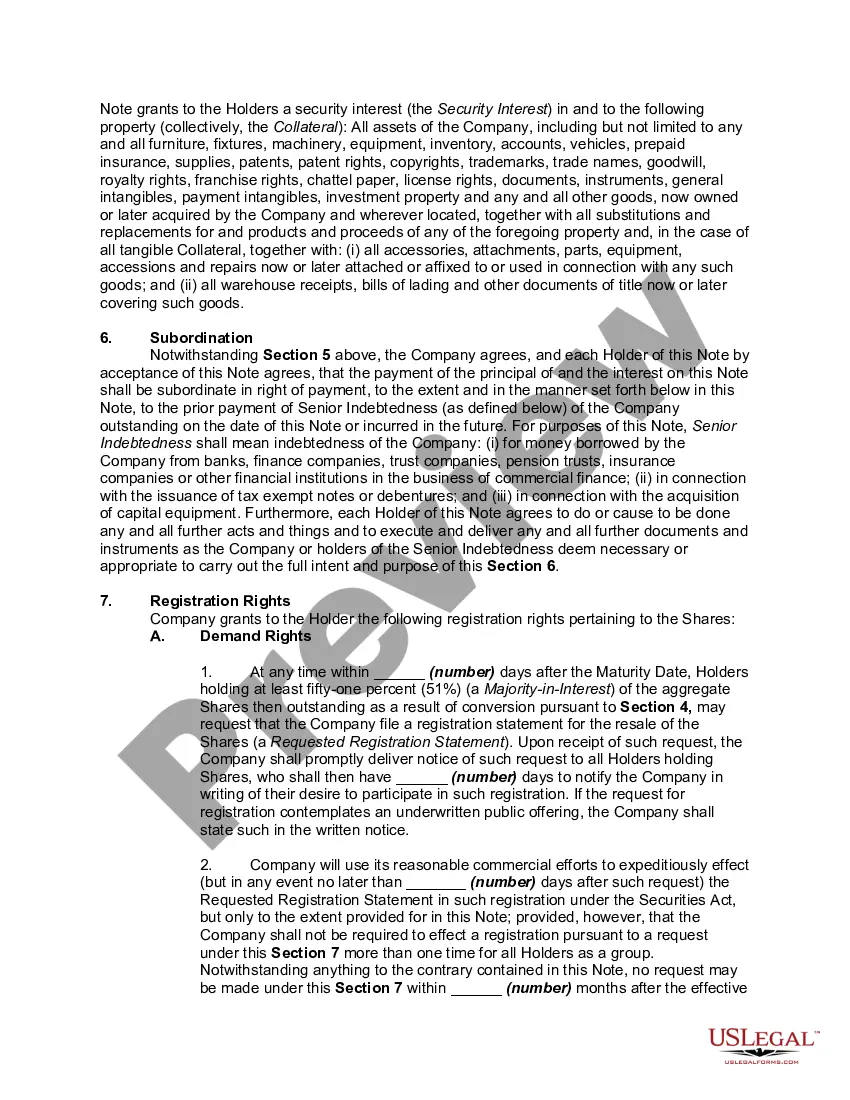
Get your form ready online
Our built-in tools help you complete, sign, share, and store your documents in one place.
Make edits, fill in missing information, and update formatting in US Legal Forms—just like you would in MS Word.
Download a copy, print it, send it by email, or mail it via USPS—whatever works best for your next step.
Sign and collect signatures with our SignNow integration. Send to multiple recipients, set reminders, and more. Go Premium to unlock E-Sign.
If this form requires notarization, complete it online through a secure video call—no need to meet a notary in person or wait for an appointment.
We protect your documents and personal data by following strict security and privacy standards.

Make edits, fill in missing information, and update formatting in US Legal Forms—just like you would in MS Word.

Download a copy, print it, send it by email, or mail it via USPS—whatever works best for your next step.

Sign and collect signatures with our SignNow integration. Send to multiple recipients, set reminders, and more. Go Premium to unlock E-Sign.

If this form requires notarization, complete it online through a secure video call—no need to meet a notary in person or wait for an appointment.

We protect your documents and personal data by following strict security and privacy standards.
Looking for another form?

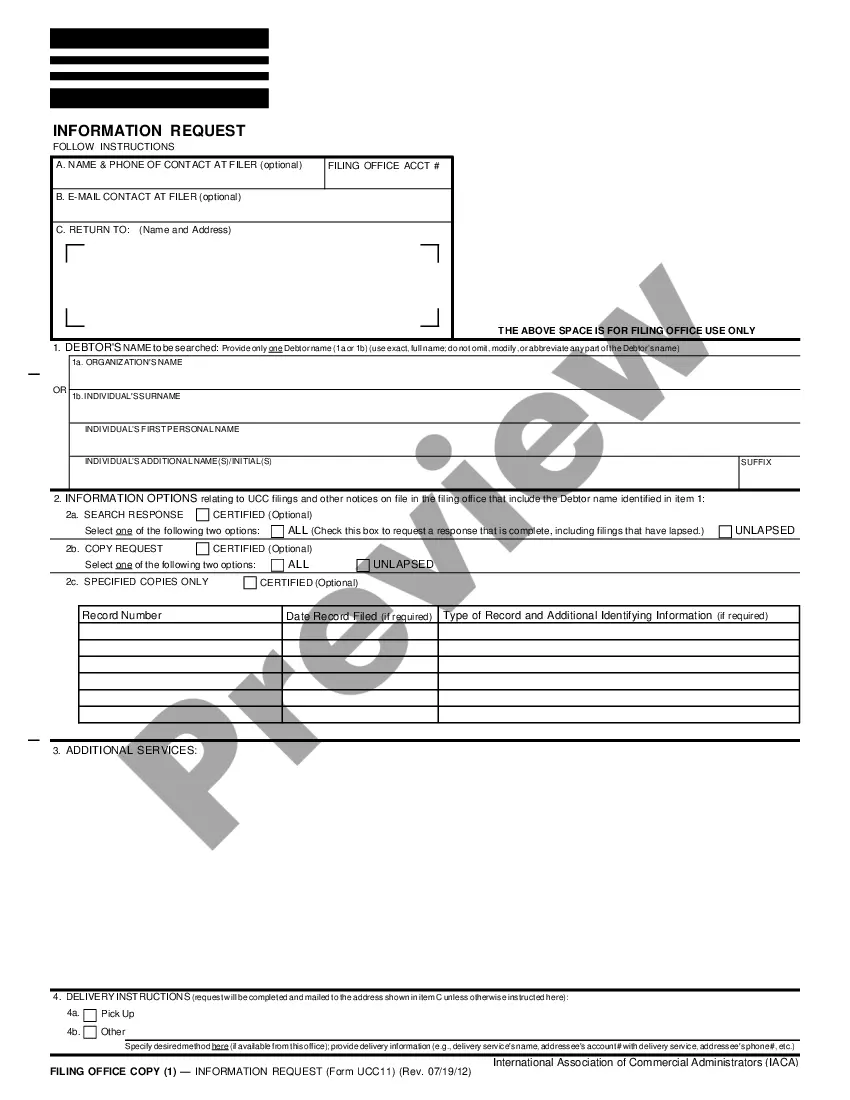

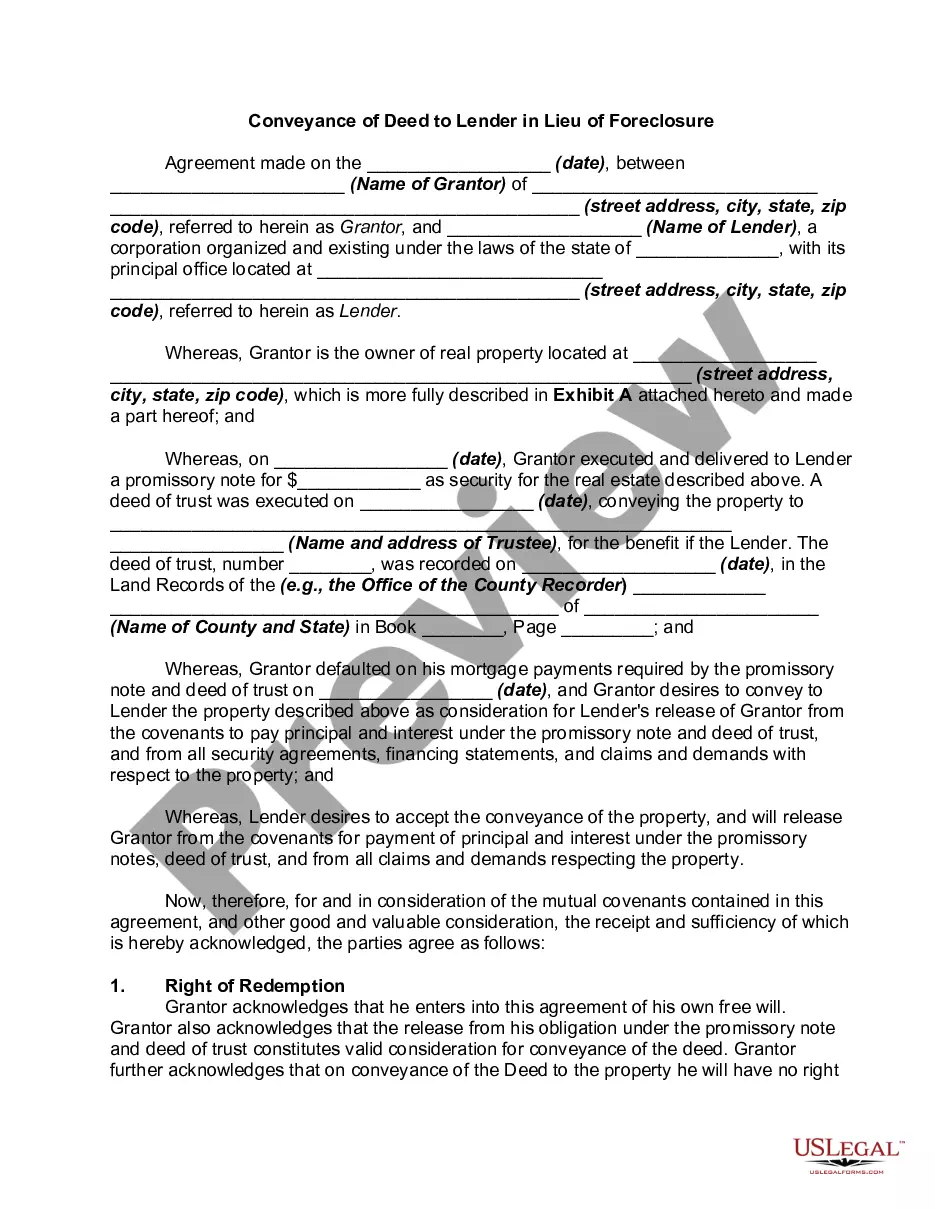
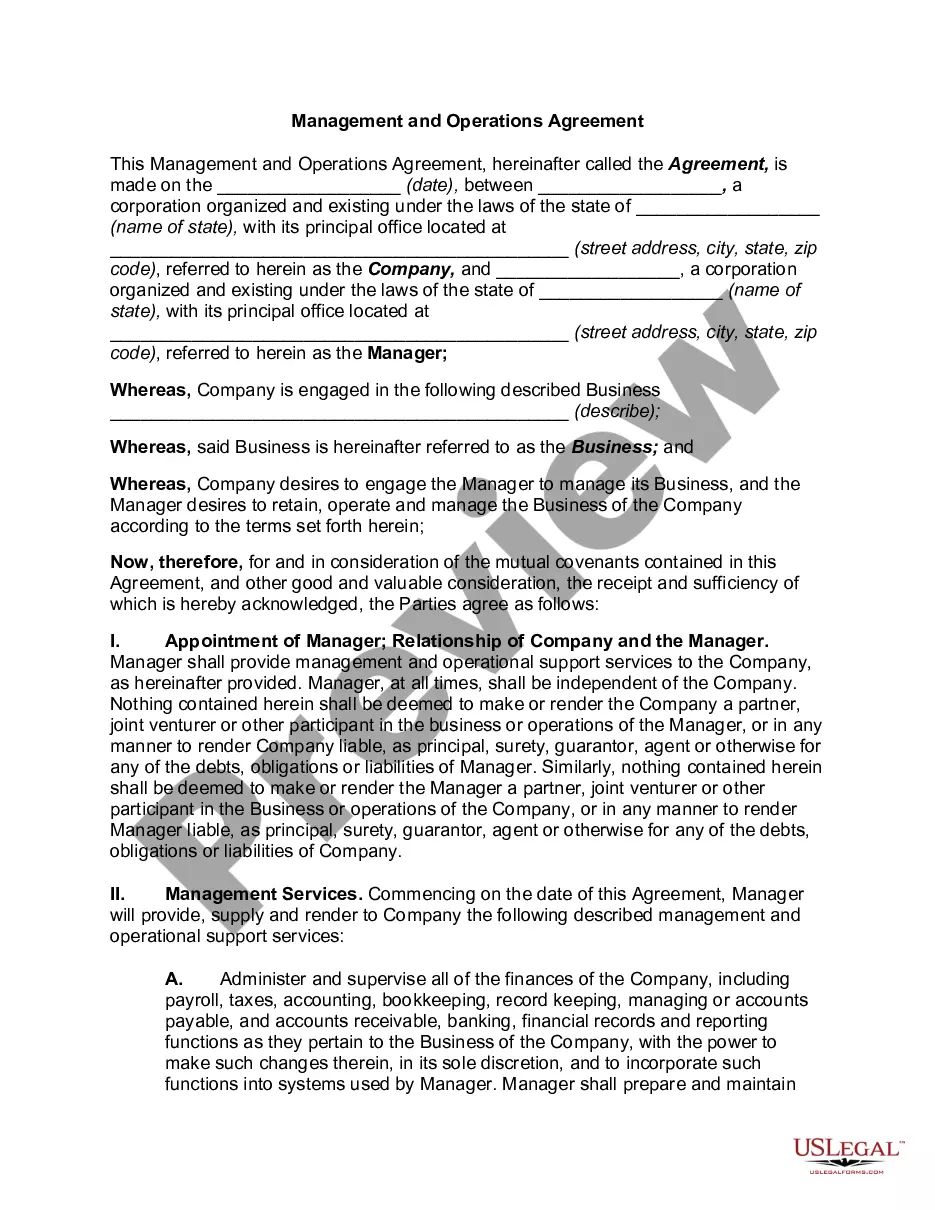
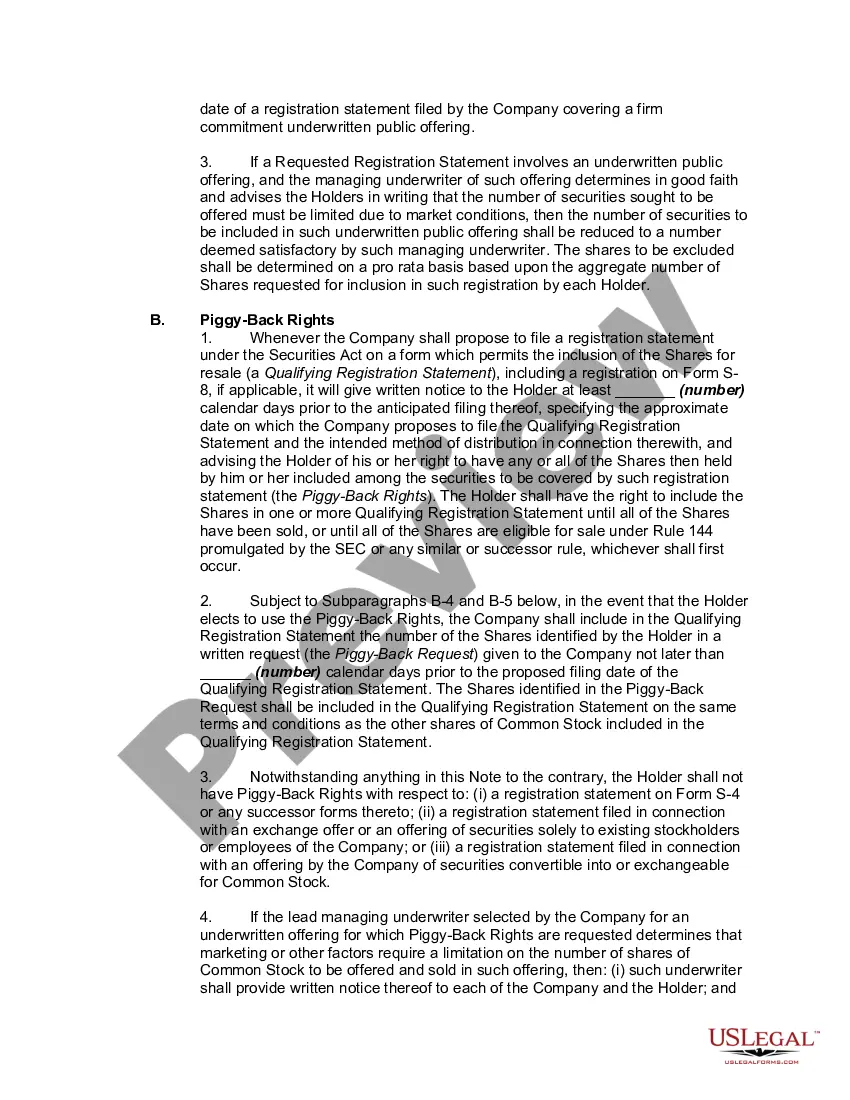
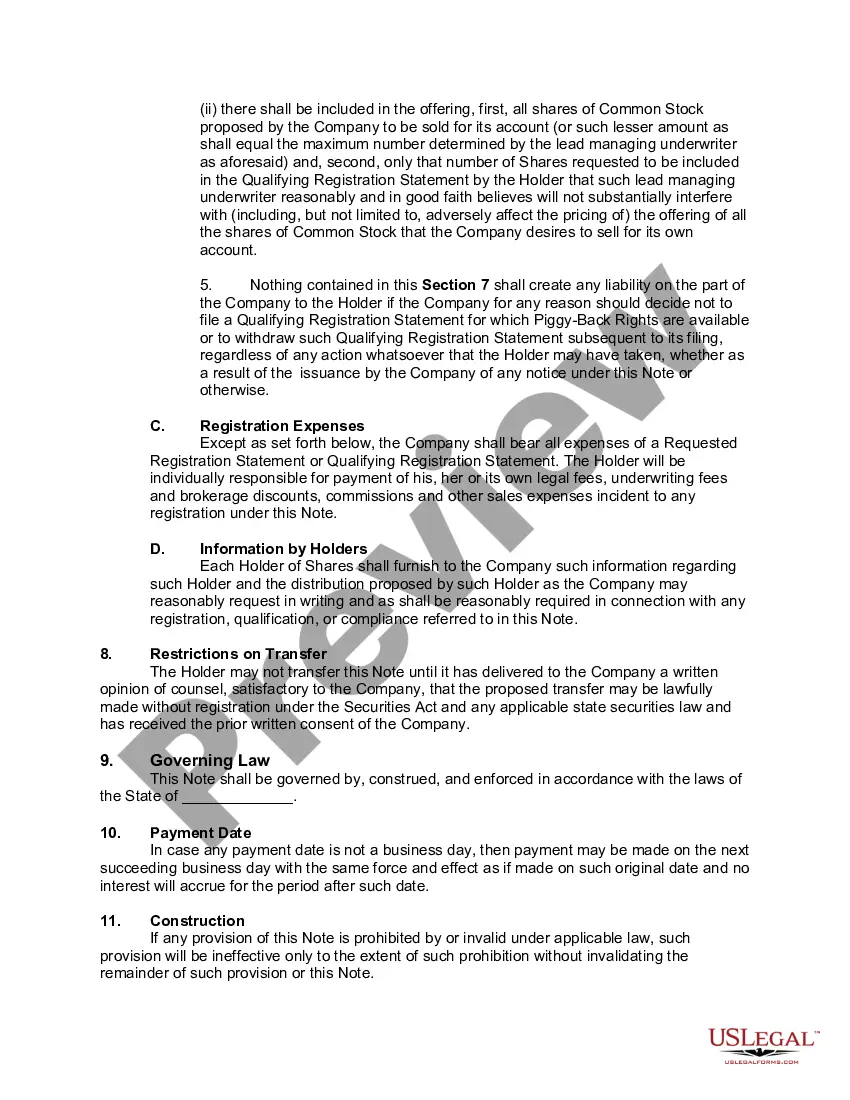
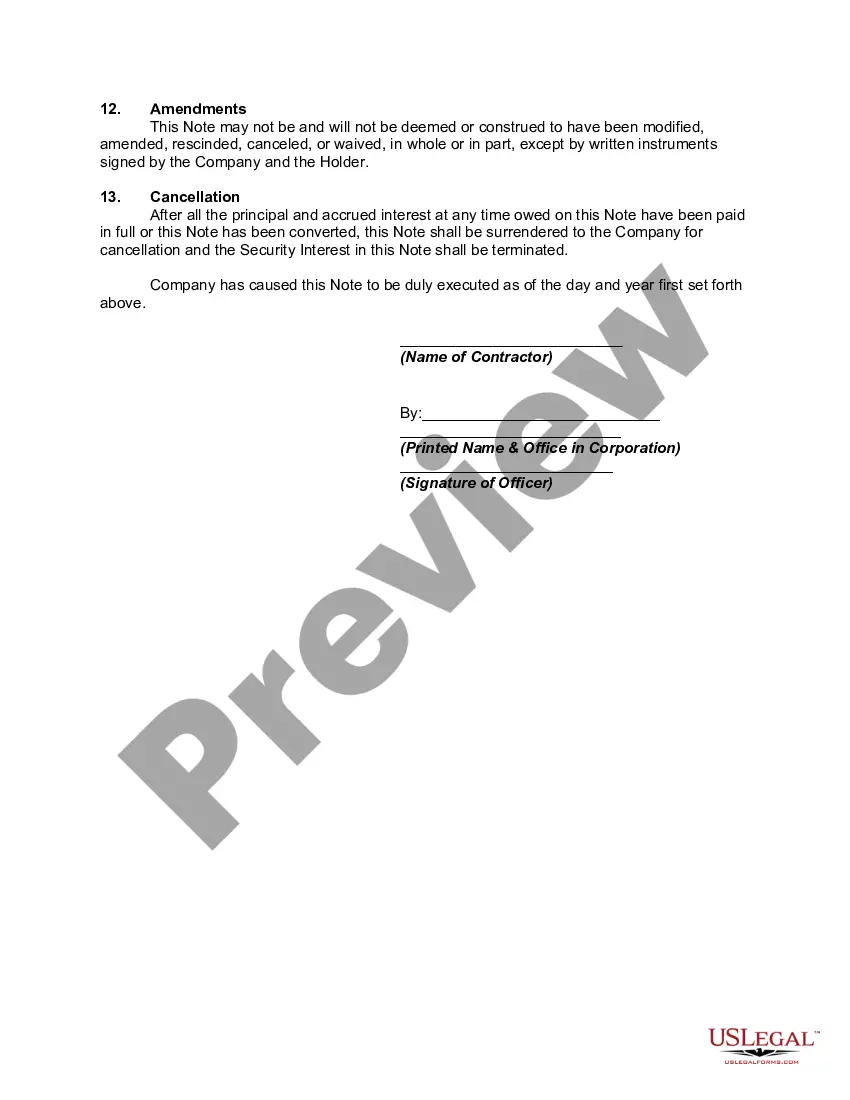
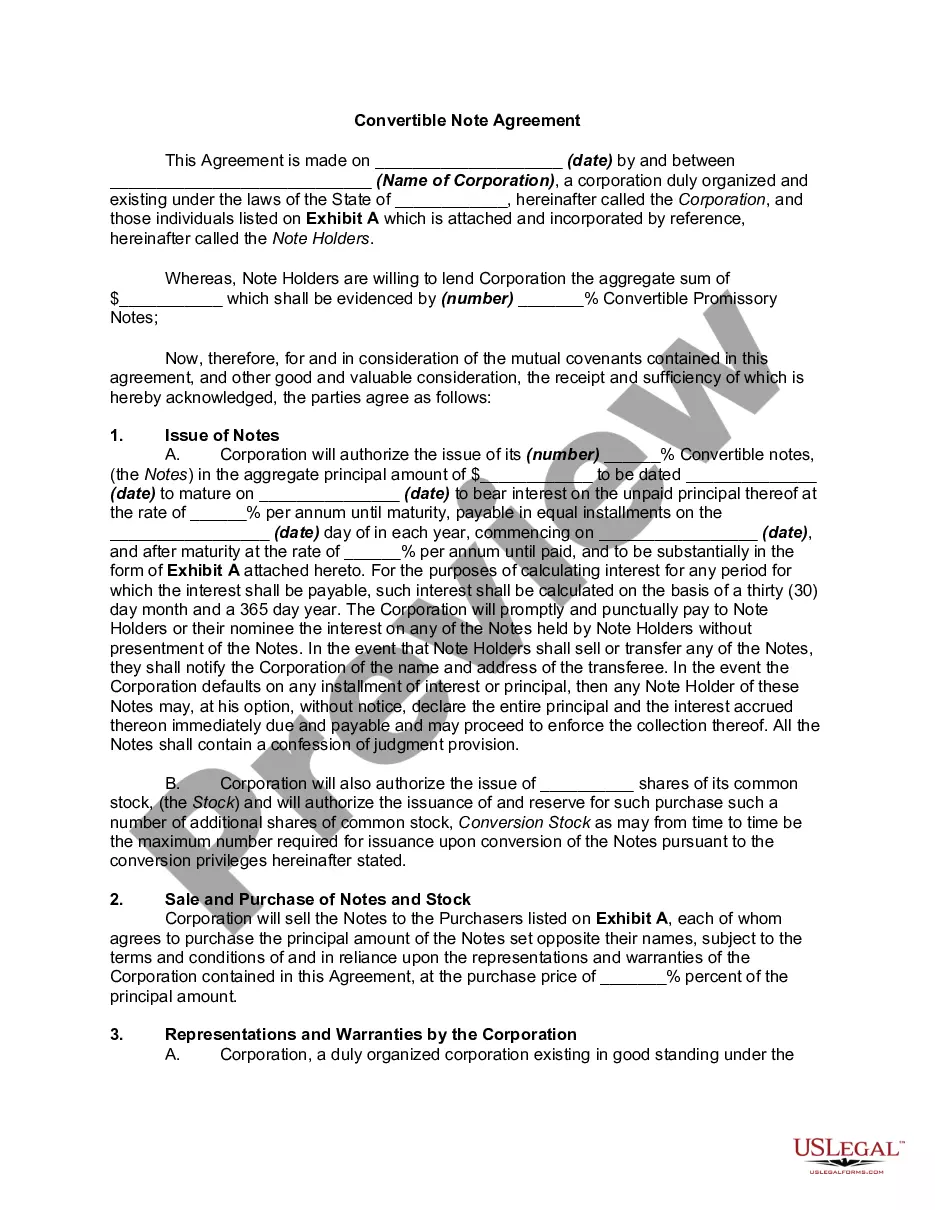
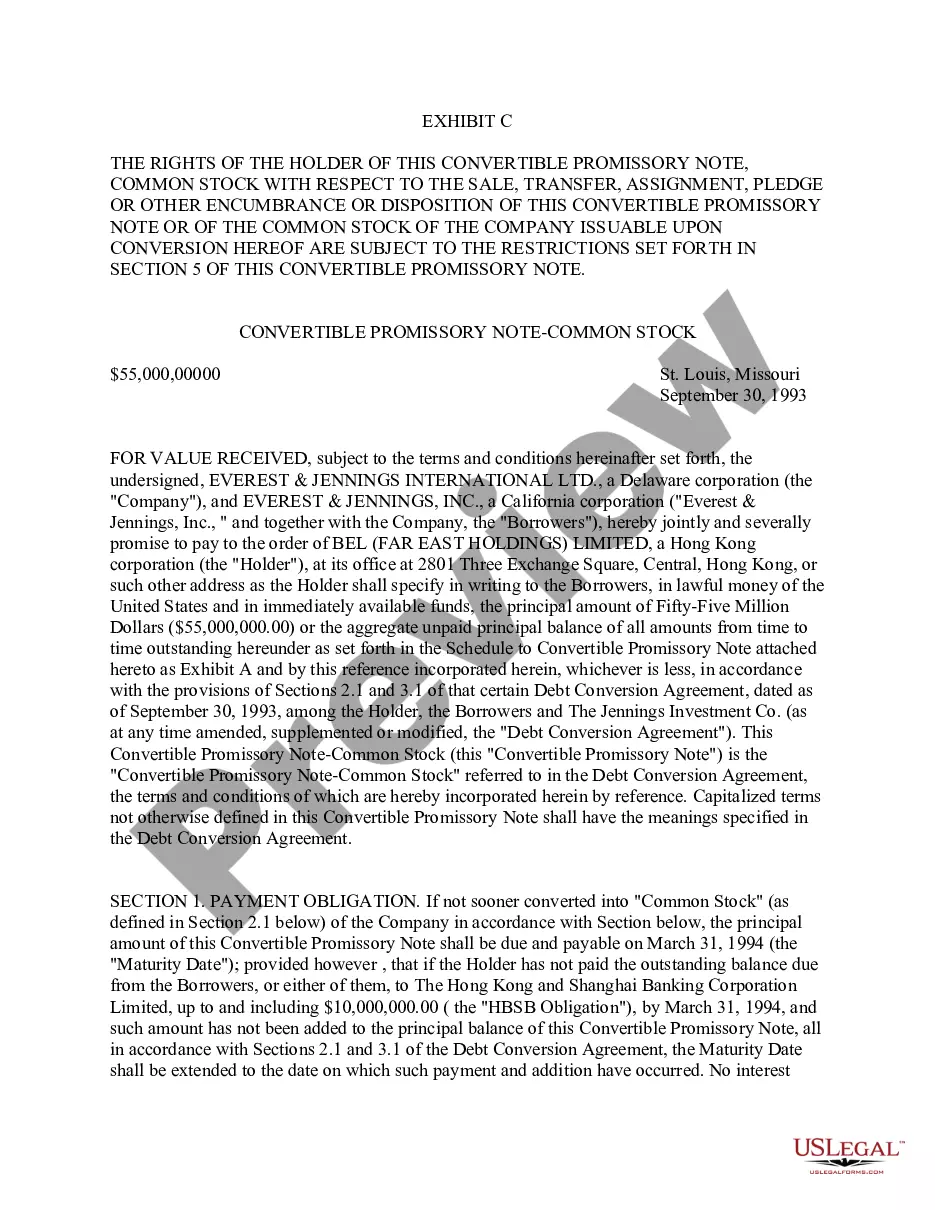
How to fill out Convertible Promissory Note By Corporation - One Of Series Of Notes Issued Pursuant To Convertible Note Purchase Agreement?
Utilizing legal documents that comply with federal and local laws is essential, and the web provides numerous choices to select from.
However, what is the value in spending time searching for the appropriately formulated Convertible Note Corporation With Discount sample online when the US Legal Forms digital library already consolidates such templates in one location.
US Legal Forms is the largest digital legal repository featuring over 85,000 fillable templates created by lawyers for any business and personal situation. They are simple to navigate, with all documents categorized by state and intended use.
All documents accessed via US Legal Forms are reusable. To re-download and complete previously acquired forms, simply visit the My documents section in your account. Take advantage of the most comprehensive and user-friendly legal document service!
- Our professionals keep current with legislative changes, ensuring that your form is always updated and compliant when you obtain a Convertible Note Corporation With Discount from our platform.
- Acquiring a Convertible Note Corporation With Discount is straightforward and quick for both existing and new users.
- If you have an account with an active subscription, Log In and save the document sample you need in your desired format.
- If you are a first-time visitor to our site, follow the steps outlined below.
- Review the template using the Preview function or through the text description to ensure it meets your requirements.
Form popularity
FAQ
The discount rate on a SAFE note can vary but is often between 10% to 30%. Similar to convertible notes, a SAFE note allows investors to convert their investment into equity at a future date, usually at a discount to the valuation set during that round. Understanding the specific terms of your SAFE note is crucial for maximizing benefits as a convertible note corporation with discount.
Yes, a company can issue shares at a 5% discount, provided it aligns with its financial strategy and investor agreements. Offering shares at a discount can attract potential investors looking for a favorable entry point. For those involved in a convertible note corporation with discount, this strategy can help facilitate quicker fundraising.
Rule 144 governs the resale of securities, allowing holders of convertible notes to sell their securities after a holding period. This rule ensures transparency and protects the market from excessive supply. For a convertible note corporation with discount, understanding Rule 144 is essential for managing investor expectations effectively.
Convertible notes offer numerous benefits, including deferred valuation and ease of closing funding rounds. They allow startups to raise capital without immediate equity dilution. For a convertible note corporation with discount, this means investors recognize the potential of early-stage financing while enjoying attractive terms.
The average discount rate for convertible notes typically ranges from 10% to 30%. This rate varies depending on negotiation terms and market conditions. Understanding this range is crucial for any convertible note corporation with discount to attract investors effectively.
Yes, a SAFE can indeed have both a cap and a discount. This structure provides investors with added protection, ensuring they receive a favorable valuation when converting their investment into equity. Many investors appreciate this feature, as it aligns their interests with those of the convertible note corporation with discount. Understanding how these terms work can help you make informed decisions about your investments in convertible securities.
The discount in a SAFE is used as a mechanism to address the higher risk of investment that SAFE investors take when investing in an early-stage startup. It is a discount off the price per share paid by new investors in the equity financing. The discount may range anywhere between 5% to 30%, with 20% being the norm.
The discount entitles them to convert their investment at a lower price than what the following round's equity investors will pay. The conversion valuation cap (or ?cap?) is a new mechanism for rewarding early investors for the risk they take and, presumably, the efforts they make to help the firm grow in value.
Discount rate: A reduced price (e.g., 10% to 35% lower) for when notes convert into equity. For instance, if the market rate is $2.50 per share and the convertible note has a 20% discount, the note holder can buy shares at $2.00.
Effectively this permits an investor to convert the principal amount of their loan (plus any accrued interest) into shares of stock at a discount to the purchase price paid by investors in that round. Discounts range from 0% to as high as 35% with 20% being common.