Convertible Agreement With 500
Description
Get your form ready online
Our built-in tools help you complete, sign, share, and store your documents in one place.
Make edits, fill in missing information, and update formatting in US Legal Forms—just like you would in MS Word.
Download a copy, print it, send it by email, or mail it via USPS—whatever works best for your next step.
Sign and collect signatures with our SignNow integration. Send to multiple recipients, set reminders, and more. Go Premium to unlock E-Sign.
If this form requires notarization, complete it online through a secure video call—no need to meet a notary in person or wait for an appointment.
We protect your documents and personal data by following strict security and privacy standards.

Make edits, fill in missing information, and update formatting in US Legal Forms—just like you would in MS Word.

Download a copy, print it, send it by email, or mail it via USPS—whatever works best for your next step.

Sign and collect signatures with our SignNow integration. Send to multiple recipients, set reminders, and more. Go Premium to unlock E-Sign.

If this form requires notarization, complete it online through a secure video call—no need to meet a notary in person or wait for an appointment.

We protect your documents and personal data by following strict security and privacy standards.
Looking for another form?




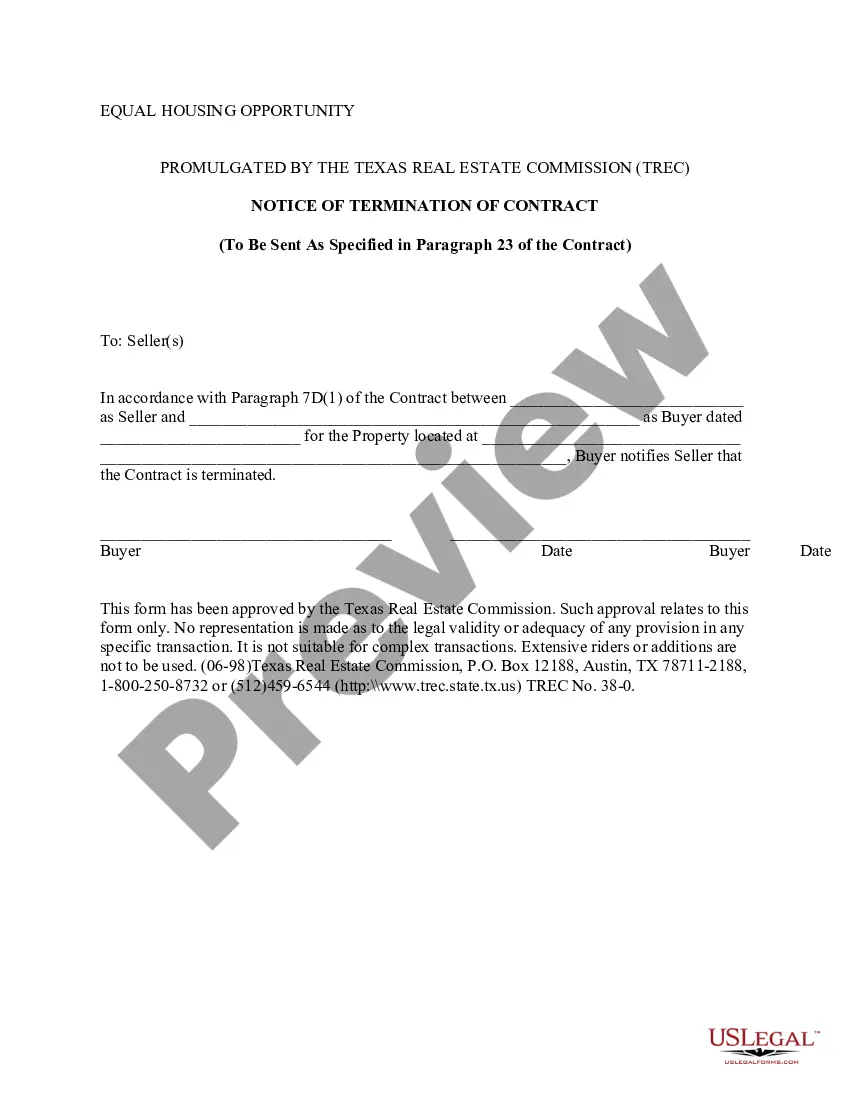




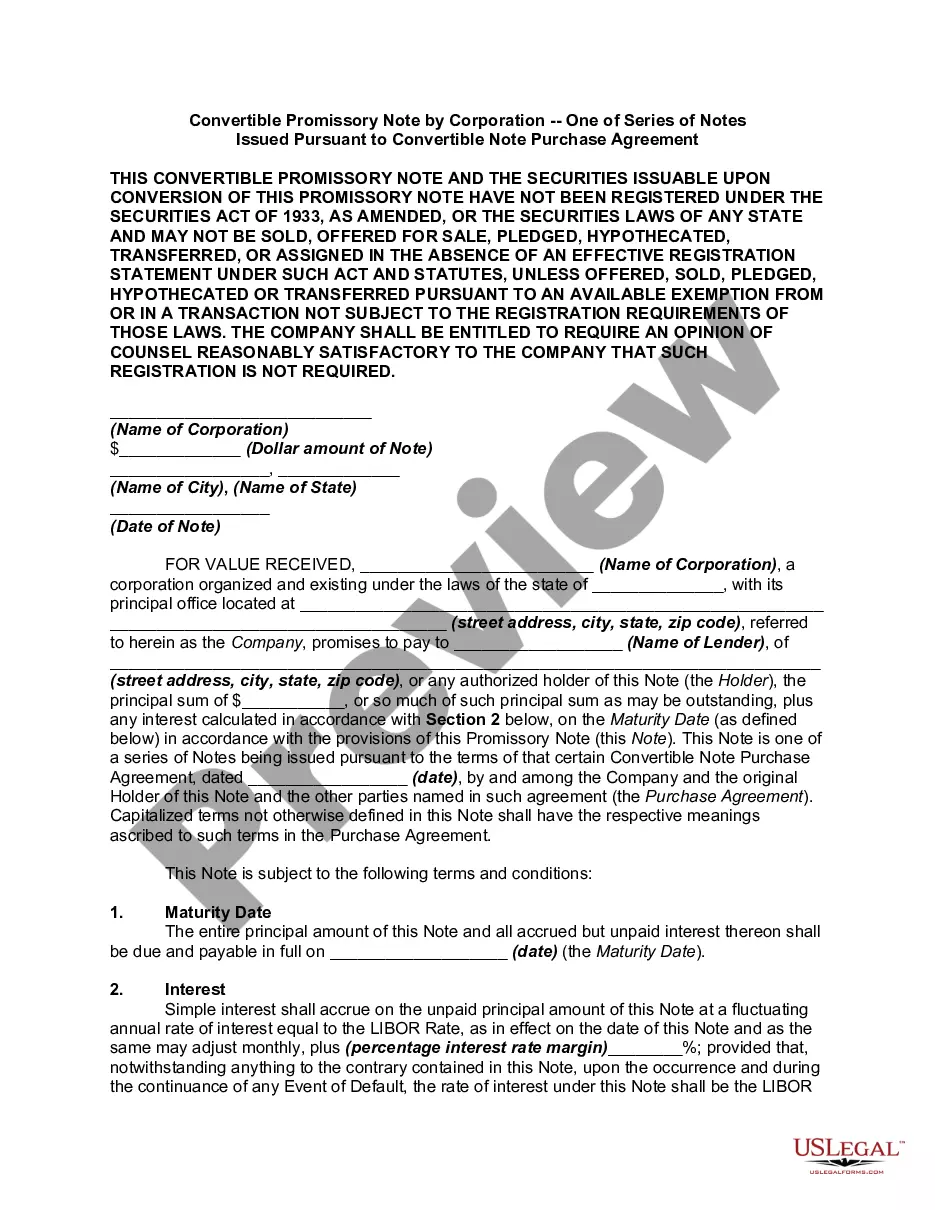
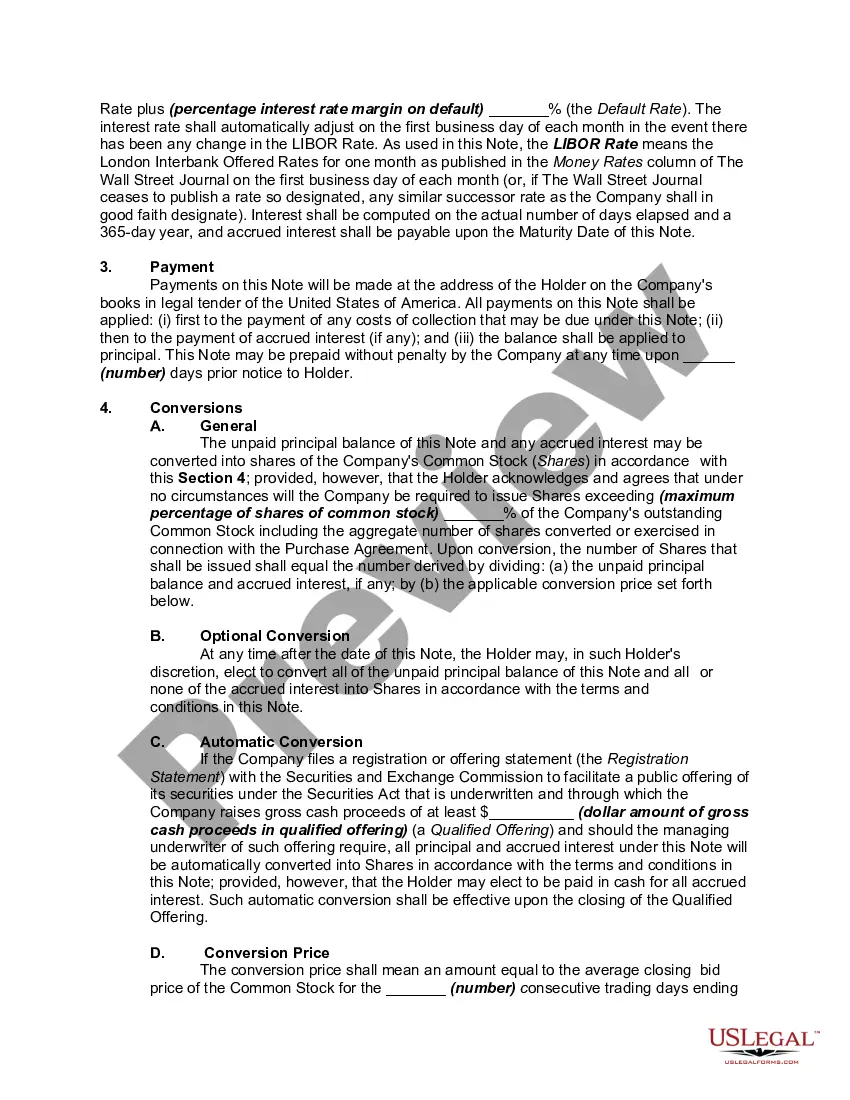
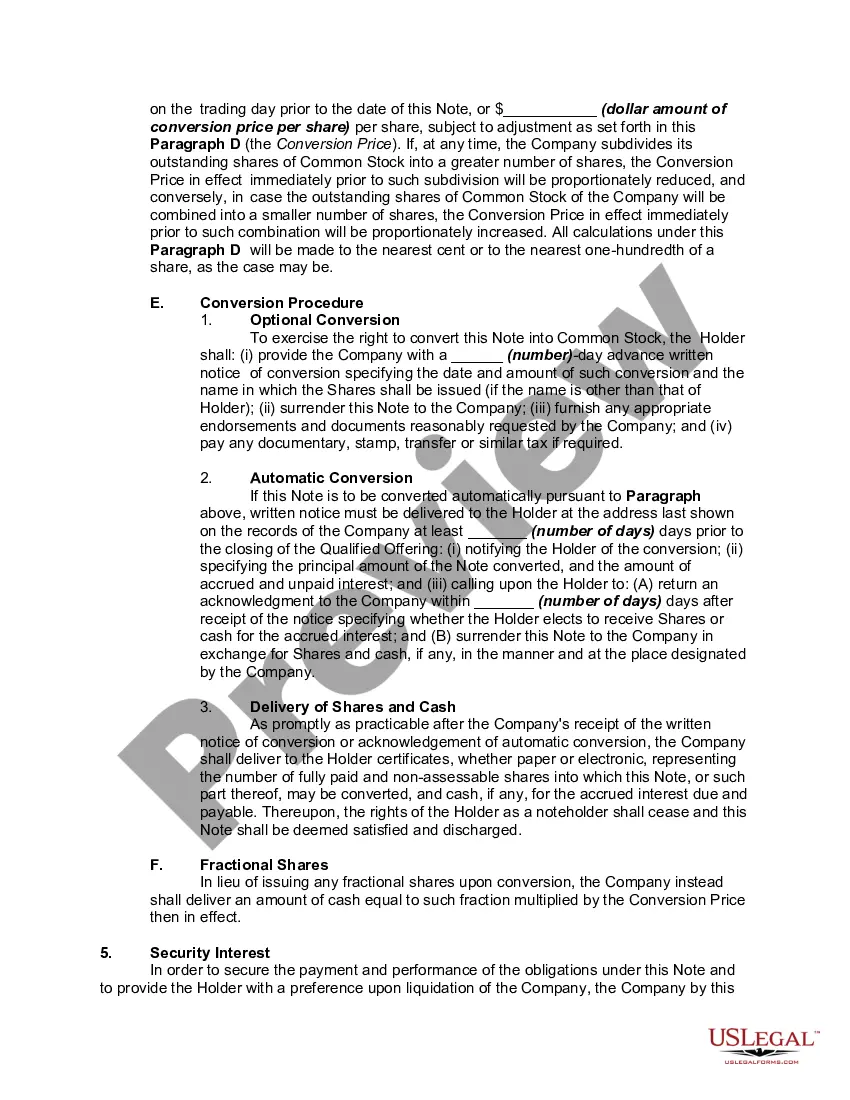
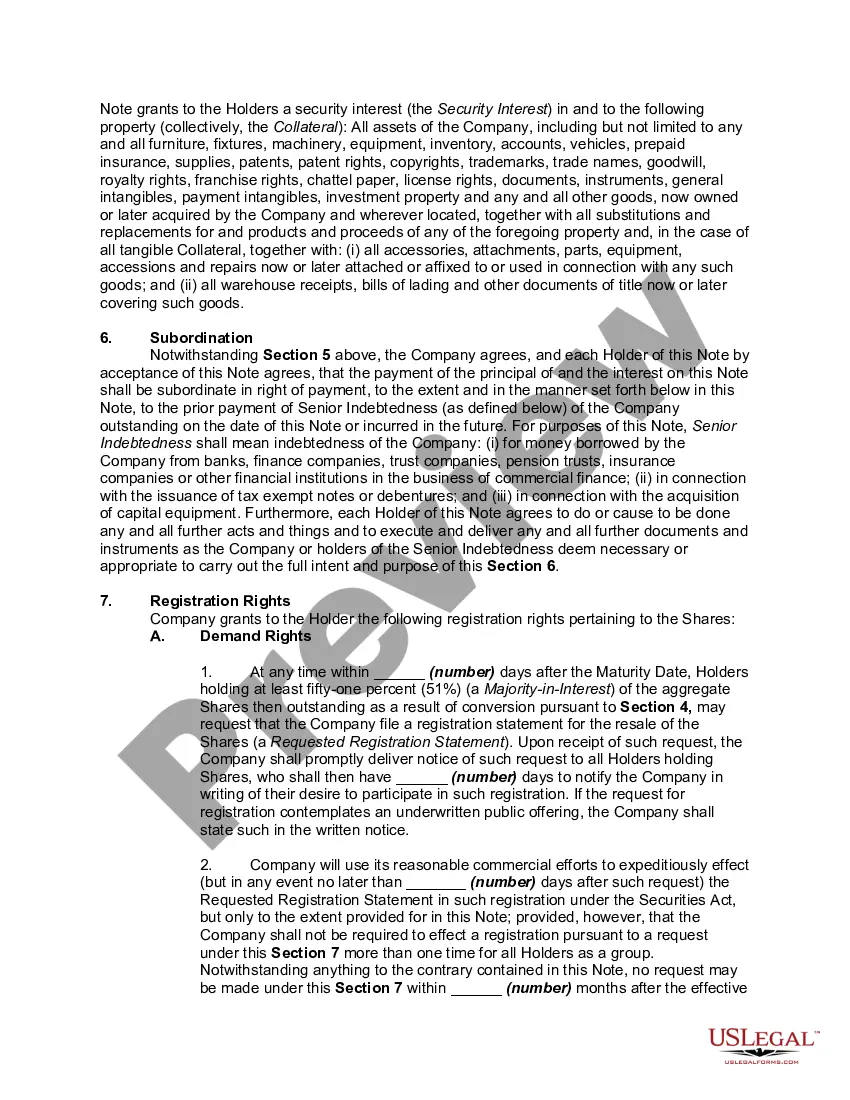
How to fill out Convertible Promissory Note By Corporation - One Of Series Of Notes Issued Pursuant To Convertible Note Purchase Agreement?
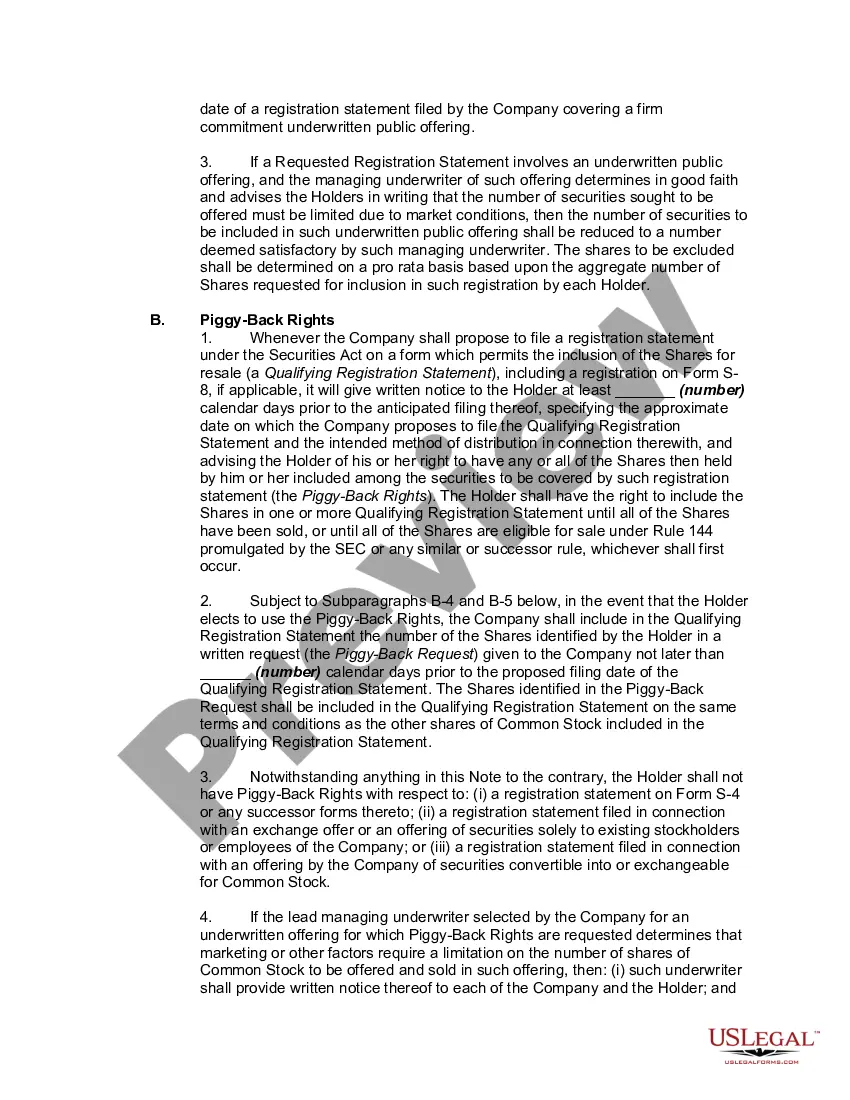
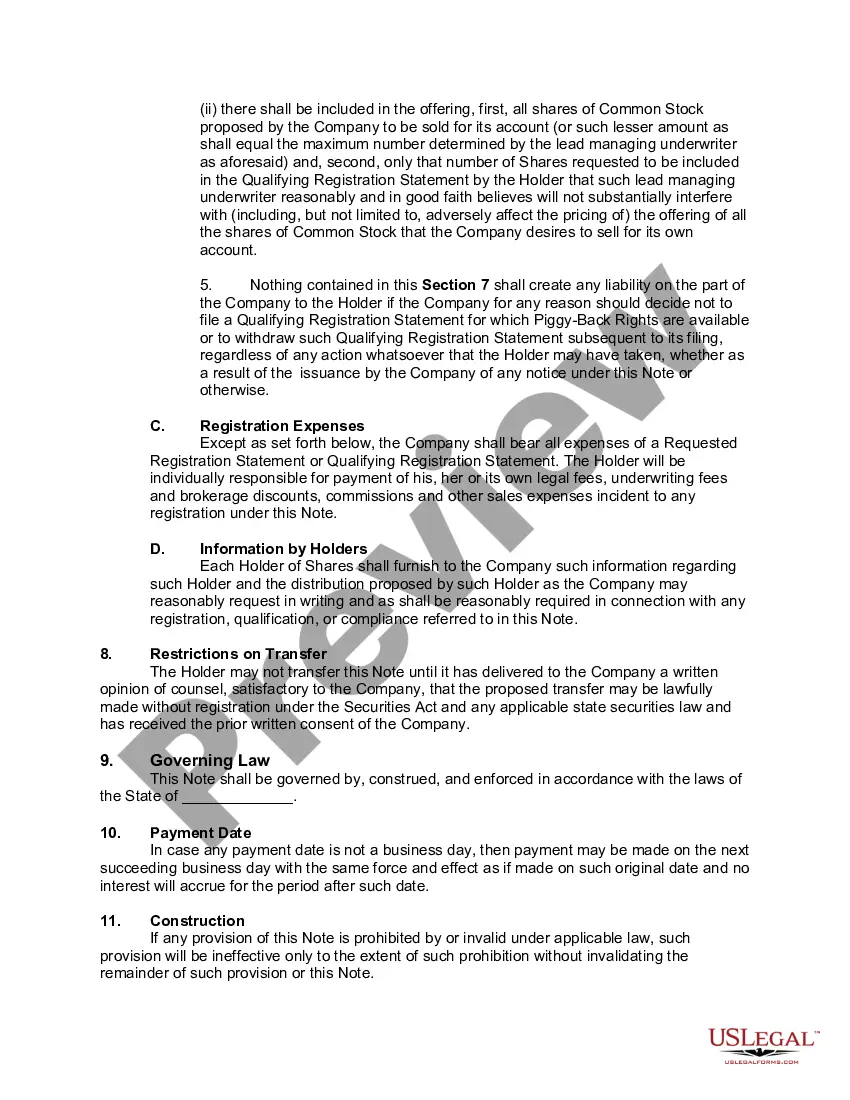
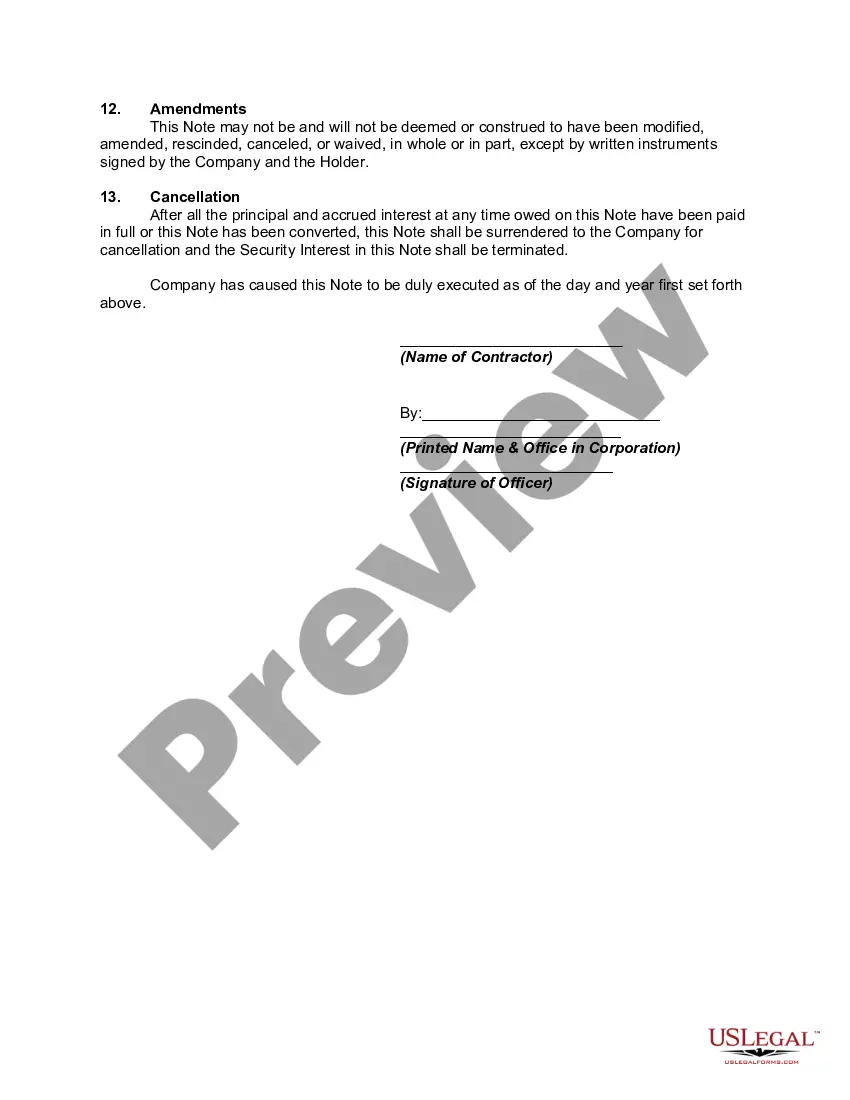
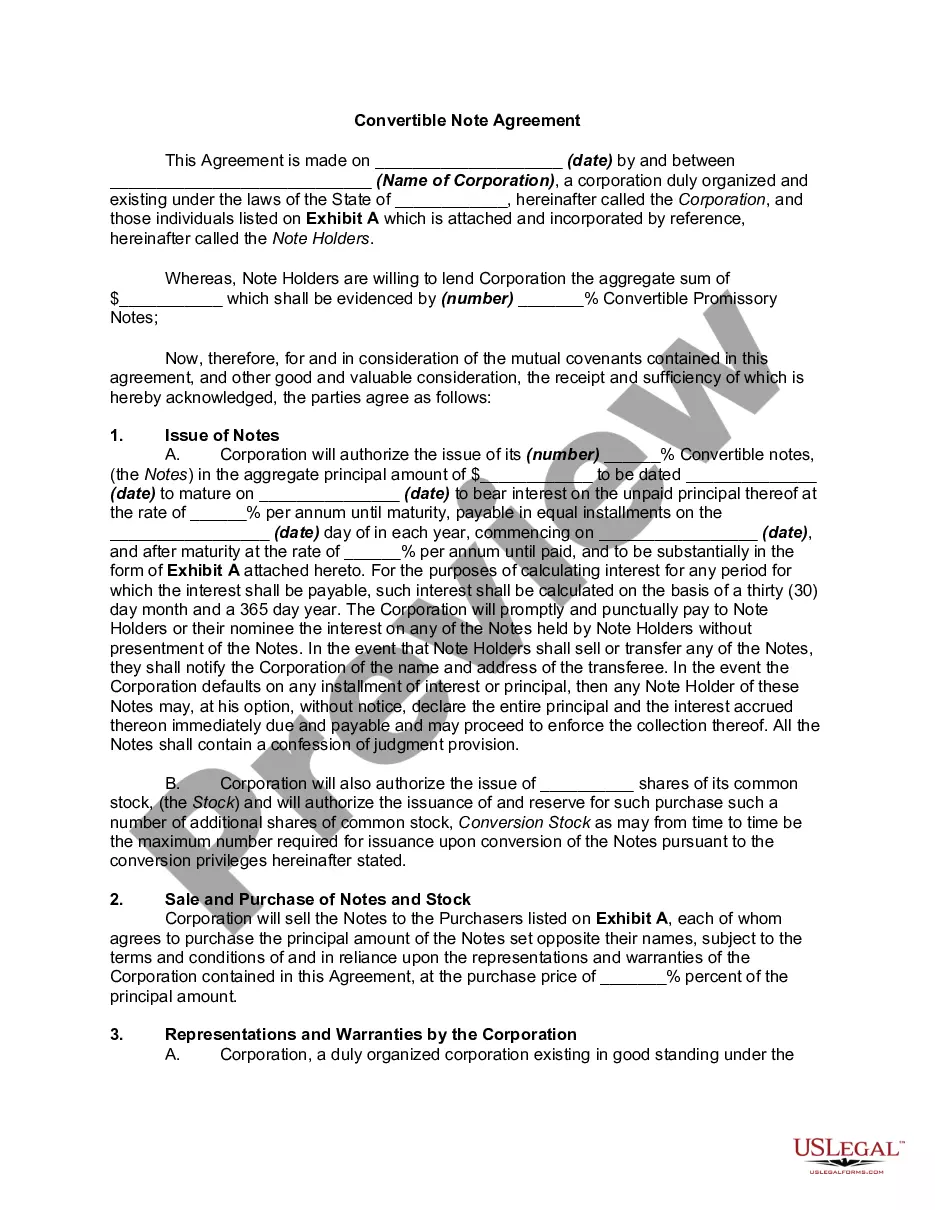
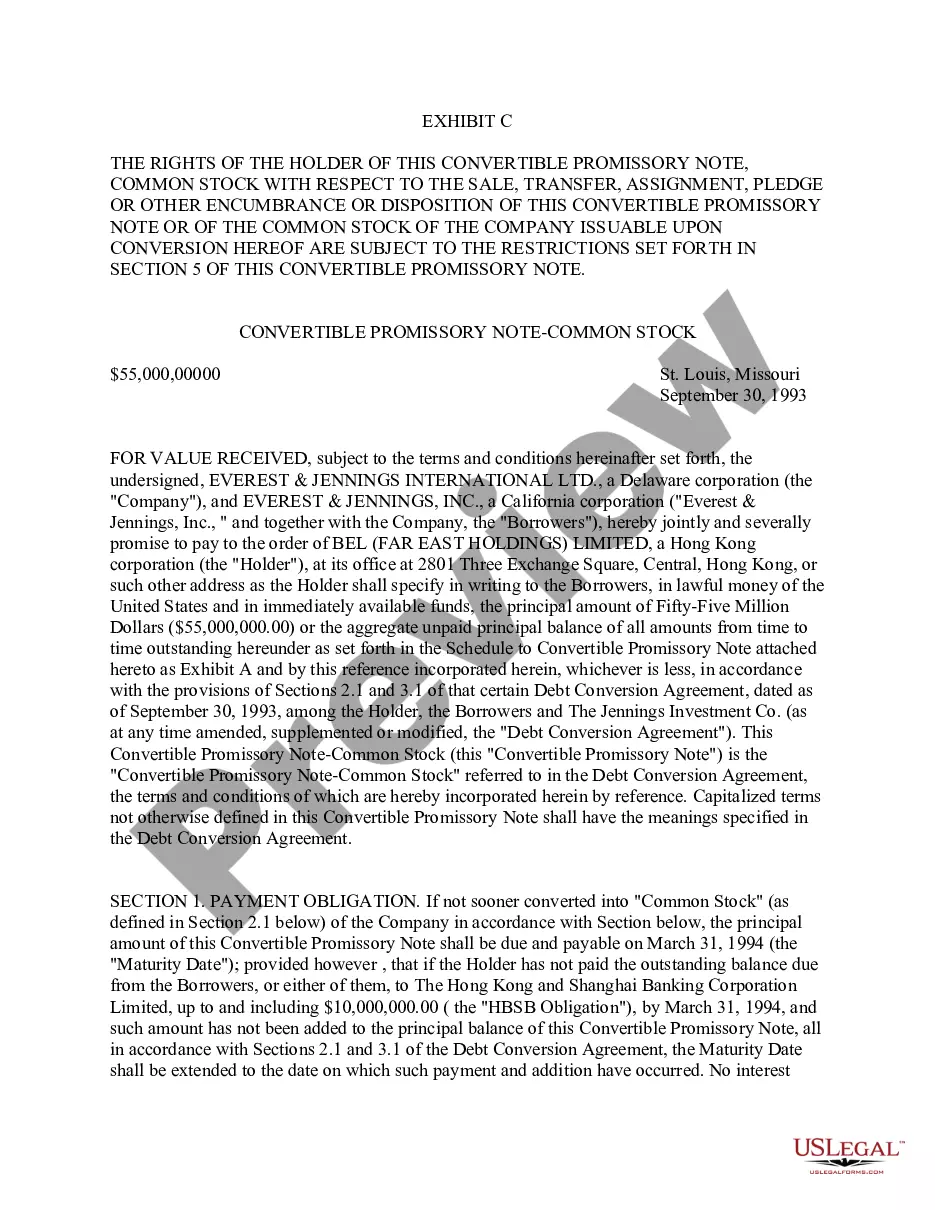
The Convertible Agreement With 500 you observe on this page is a reusable legal template crafted by expert attorneys in compliance with federal and state laws and regulations.
For over 25 years, US Legal Forms has supplied individuals, organizations, and lawyers with more than 85,000 validated, state-specific forms for any business and personal scenario. It’s the fastest, simplest, and most reliable method to acquire the documents you require, as the service ensures the utmost level of data protection and anti-malware security.
Reuse the same document whenever necessary. Access the My documents tab in your profile to redownload any previously acquired forms. Enroll in US Legal Forms to have verified legal templates for all of life’s situations readily available.
- Search for the document you require and examine it.
- Browse through the file you searched and preview it or read the form description to confirm it meets your needs. If it doesn't, use the search feature to locate the correct one. Click Buy Now once you have identified the template you need.
- Choose a pricing plan that fits you and create an account. Use PayPal or a credit card to make a swift payment. If you already possess an account, Log In and verify your subscription to continue.
- Select the format you prefer for your Convertible Agreement With 500 (PDF, Word, RTF) and save the template on your device.
- Print the template to complete it manually. Alternatively, utilize an online multifunctional PDF editor to quickly and accurately fill out and sign your form with a valid signature.
Form popularity
FAQ
When a company offers convertible notes, it can be viewed positively as it demonstrates a proactive approach to funding. This option allows businesses to secure capital while providing investors with a chance to engage in future equity opportunities. Overall, it can foster a collaborative environment between companies and investors, especially when outlined clearly in the convertible agreement with 500.
The value of a convertible note depends on individual circumstances and perspectives. For companies, it can be a beneficial way to raise funds without immediate equity dilution. For investors, it offers the potential for higher returns, but it carries risks that should be carefully considered, making it essential to review the convertible agreement with 500.
A convertible note agreement is a legal document that outlines the terms of the investment, including interest rates, maturity dates, and conversion conditions. This agreement provides a framework for how and when investors can convert their debt into equity. Understanding the details within the convertible agreement with 500 is essential for both companies and investors.
The minimum investment for a convertible note varies by company, but it typically ranges from $1,000 to $25,000. The convertible agreement with 500 will specify these details, ensuring clarity for potential investors. This flexibility allows a wider range of investors to participate in funding opportunities.
Valuing a convertible promissory note typically involves considering the company's future valuation and the terms set in the convertible agreement with 500. Investors look at factors such as the discount rate, valuation cap, and market conditions to estimate potential returns. This valuation process helps ensure that both investors and companies align their interests.
Companies often offer convertible notes to attract investment while delaying valuation. This approach allows businesses to raise funds quickly without determining their worth upfront. It provides investors with a potential equity stake in the future, making it an appealing option for both parties involved.
A convertible note should be classified as a Long Term Liability that then converts to Equity as stipulated from the contract (usually a new fundraising round).
The basic concept for valuing a convertible note is the same in theory as the valuation of any other financial asset. The value of the note is equal to the present value of the future income that the convertible note will receive, discounted to the present value based on its associated risk.
You may be asking, ?Why would I want to risk selling equity at a discount?? Well, you do this because many convertible note investors will require a valuation cap in order for them to invest in the company via the note.
Here's an example: You sell $1m in convertible notes to an investor with a valuation cap of $10m, and a 30% discount rate. After 18 months, your startup gets a pre-money valuation of $20m, at $20 per share, during a Series A funding.