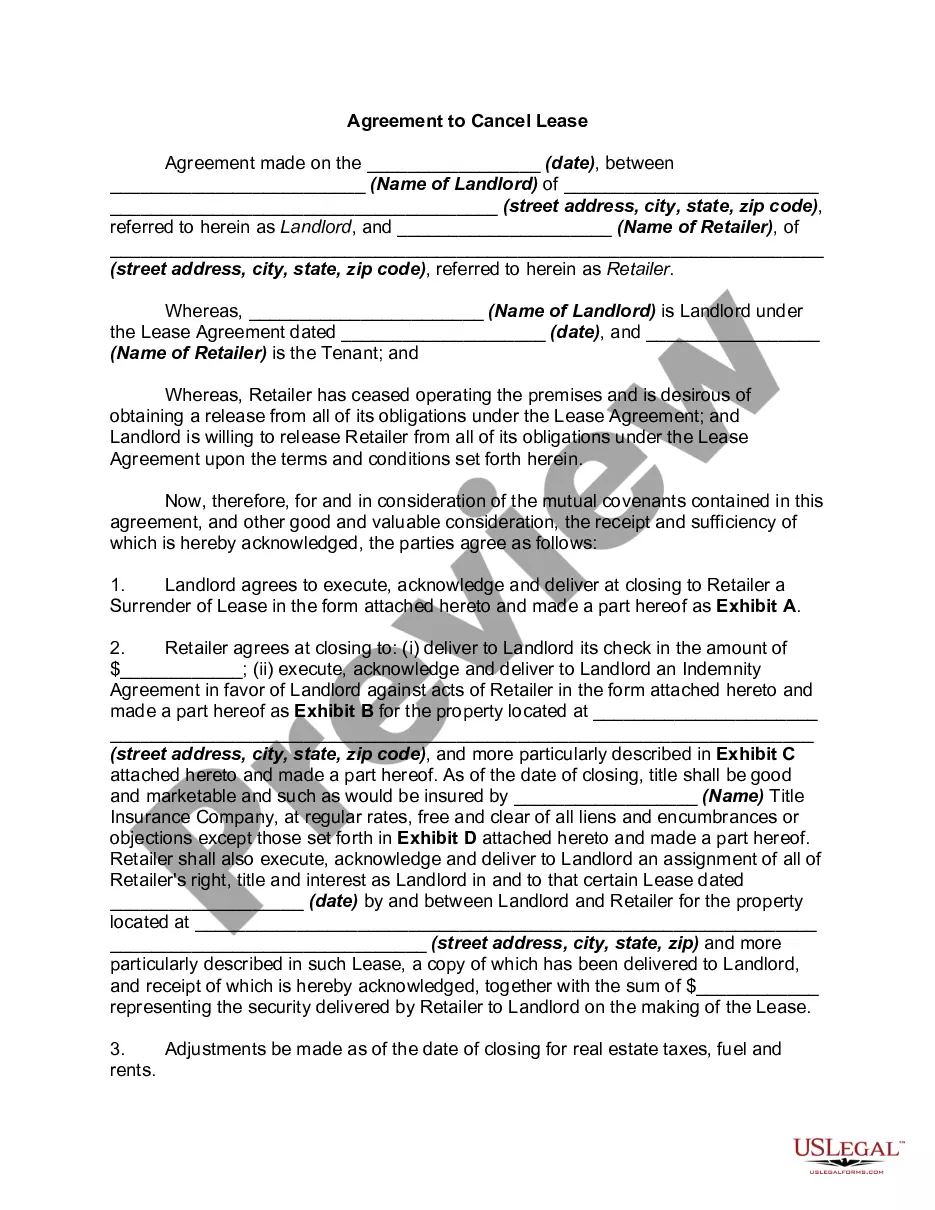
Agreement Terminate Lease With Landlord
Description

Get your form ready online
Our built-in tools help you complete, sign, share, and store your documents in one place.
Make edits, fill in missing information, and update formatting in US Legal Forms—just like you would in MS Word.
Download a copy, print it, send it by email, or mail it via USPS—whatever works best for your next step.
Sign and collect signatures with our SignNow integration. Send to multiple recipients, set reminders, and more. Go Premium to unlock E-Sign.
If this form requires notarization, complete it online through a secure video call—no need to meet a notary in person or wait for an appointment.
We protect your documents and personal data by following strict security and privacy standards.

Make edits, fill in missing information, and update formatting in US Legal Forms—just like you would in MS Word.

Download a copy, print it, send it by email, or mail it via USPS—whatever works best for your next step.

Sign and collect signatures with our SignNow integration. Send to multiple recipients, set reminders, and more. Go Premium to unlock E-Sign.

If this form requires notarization, complete it online through a secure video call—no need to meet a notary in person or wait for an appointment.

We protect your documents and personal data by following strict security and privacy standards.
Looking for another form?
How to fill out Agreement To Cancel Or Terminate Lease?
- Log in to your existing account on US Legal Forms if you’ve used the service before. Make sure your subscription is active.
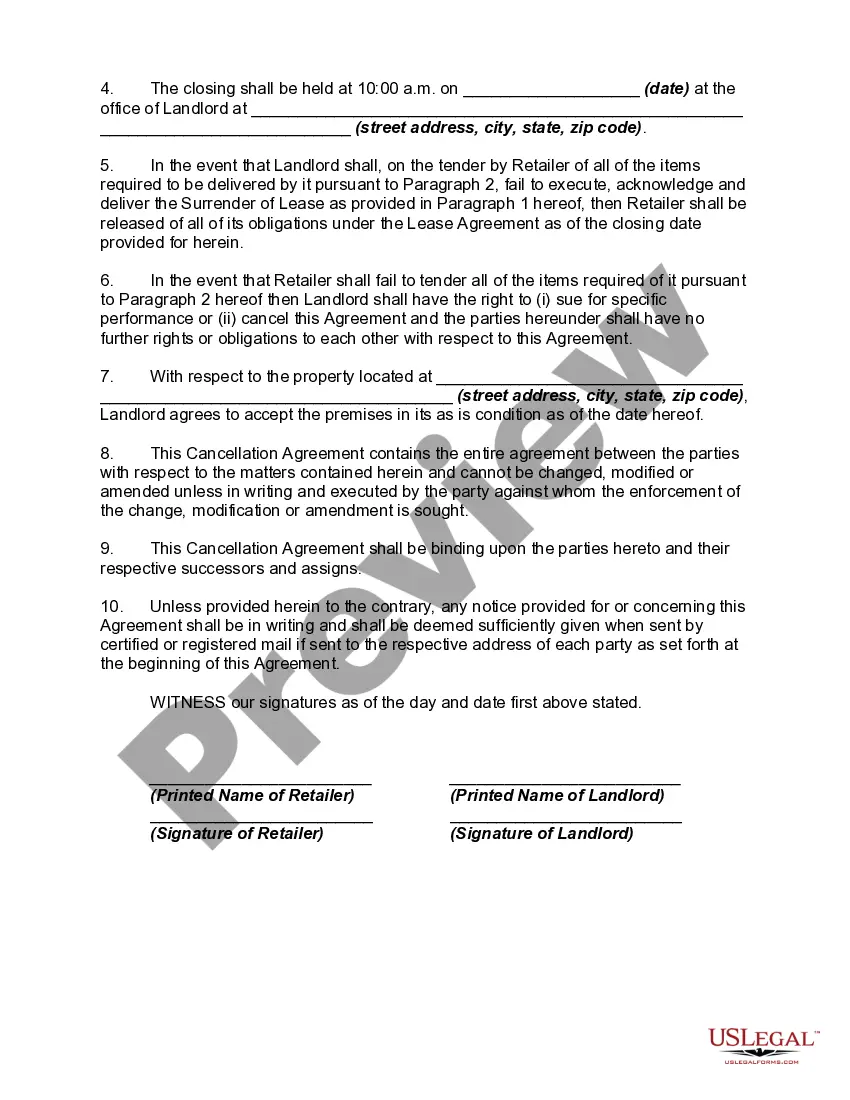
- If you’re a new user, start by exploring the Preview mode to find the right lease termination template that meets your specific needs.
- If the initial template doesn’t suit your requirements, utilize the Search tab to find an alternative that fits your needs.
- Once you've selected the appropriate document, select the Buy Now button and choose your preferred subscription plan. You’ll need to create an account to access the templates.
- After choosing a plan, enter your payment information, either through credit card or PayPal, to finalize your purchase.
- Download your completed form to your device. You can find and access it at any time in the My Forms section of your account.
Following these steps will ensure that you can easily terminate your lease with your landlord using the precise legal form tailored to your situation.
Don’t hesitate to take advantage of US Legal Forms' resources. Start your journey towards a smooth lease termination today!
Form popularity
FAQ
Yes, you and your landlord can mutually agree to terminate a lease. Open communication is key to this process, as both parties must acknowledge the agreement to end the lease. It's essential to document this agreement in writing to avoid misunderstandings later. Utilizing platforms like US Legal Forms can simplify creating the necessary documentation for your agreement to terminate the lease with the landlord.
Writing a letter to your landlord about moving out early requires clarity and politeness. Begin by stating your intention to terminate the lease agreement and include your planned move-out date. Mention the reasons leading to your decision, and express your desire to work together to finalize the agreement to terminate the lease with the landlord. A well-written letter fosters a positive tone, making it easier to reach an agreement.
A strong reason to break a lease often involves unexpected circumstances. Common excuses include job relocation, financial hardship, or health issues. When you discuss your situation, keep in mind that both parties can agree to terminate the lease with the landlord's consent. Clearly presenting your case enhances your chances of reaching a mutual agreement.
To agreement terminate lease with landlord in Connecticut, you first need to check your lease for any break clause provisions. If none exist, consider negotiating with your landlord for an early termination. Providing valid reasons, such as job relocation or health issues, can improve your chances. US Legal Forms offers the necessary tools and documents to assist you in making this transition as smooth as possible.
A lease most commonly terminates at the end of its specified term, but it can also end through mutual agreement or lease violations. If both parties don't wish to continue, an agreement to terminate lease with landlord can be reached. Understanding local laws regarding lease termination is crucial, and utilizing US Legal Forms can provide clarity. They offer valuable insights and resources to navigate these scenarios efficiently.
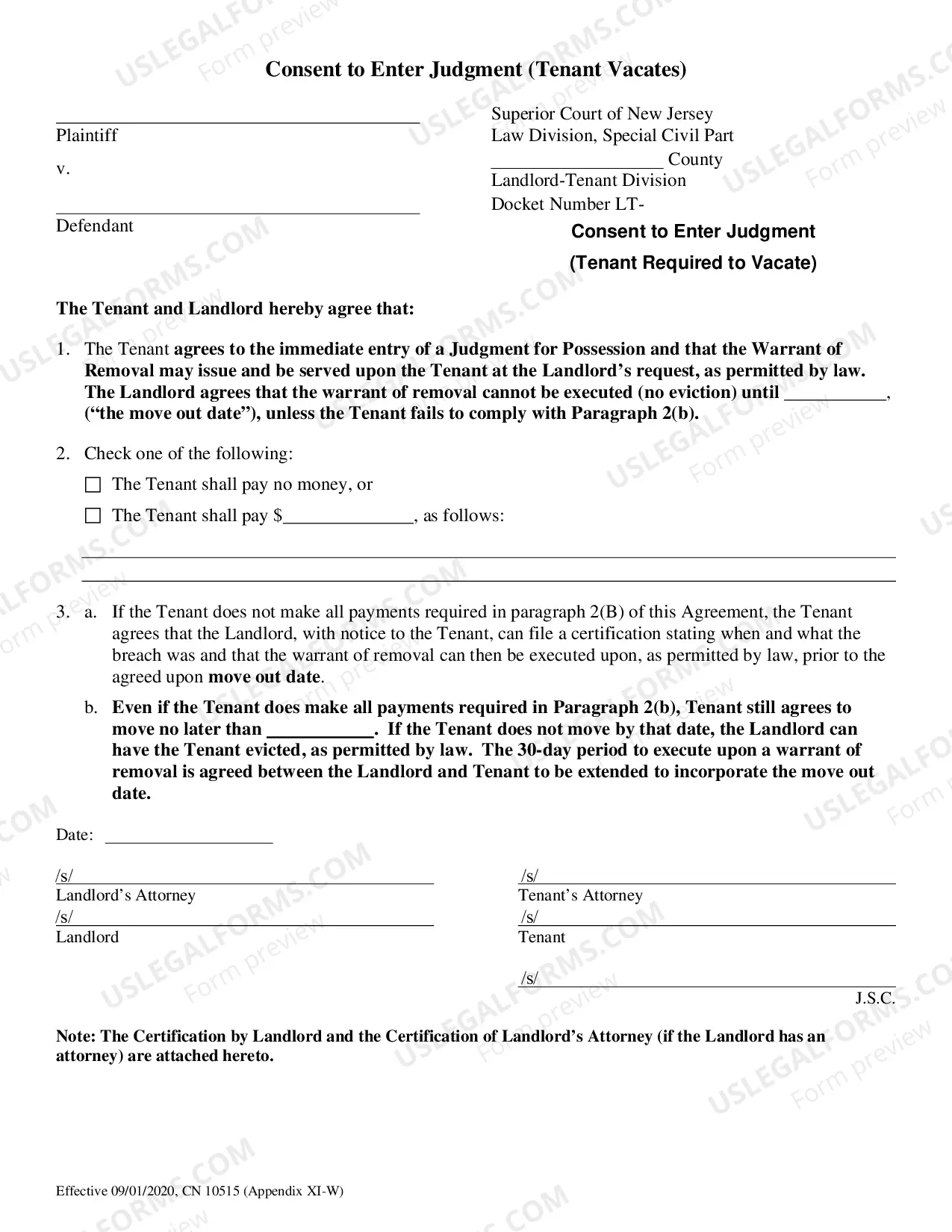
Yes, you and your landlord can mutually agree to terminate the lease. This agreement can benefit both parties, especially if done amicably. To proceed with this option, it’s best to put the agreement in writing to avoid future disputes. US Legal Forms offers templates and resources to facilitate this process effectively.
When you want to agreement terminate lease with landlord, the best excuse often depends on your situation. Common reasons include job relocation, health issues, or unsafe living conditions. It is important to communicate honestly with your landlord about your circumstances. Exploring options through US Legal Forms can help you understand your rights and ensure a smoother transition.
A landlord can terminate a lease in Florida under several circumstances, including non-payment of rent, violation of lease agreements, or if the premises are unsafe or uninhabitable. Additionally, landlords may need to provide notice to tenants to address specific issues before terminating the lease. Knowing your rights as a tenant or a landlord can help navigate these situations effectively. Our platform offers handy forms and guidelines to assist both parties in understanding the lease termination processes.
In Florida, a landlord generally cannot cancel a lease after signing without just cause. The lease terms typically bind both parties for the agreed duration, unless legal reasons arise, such as tenant non-compliance. It’s important to understand that once the lease is signed, both parties have rights and obligations. By utilizing our platform, you can access resources that clarify your rights and options regarding lease termination.
If you move out before your lease is up in Florida, you may face penalties such as the loss of your security deposit or additional charges as specified in the lease agreement. Your landlord might also have the right to pursue rent for the remainder of the lease term. It’s essential to consult your lease and communicate openly with your landlord for potential solutions. Use our legal forms to draft a notice or agreement that formally addresses your intent to terminate the lease.